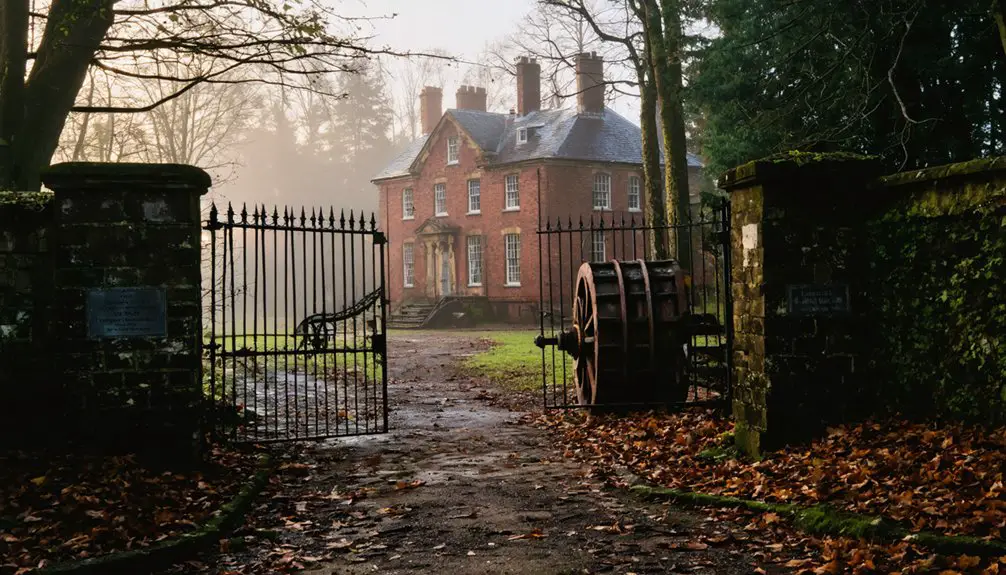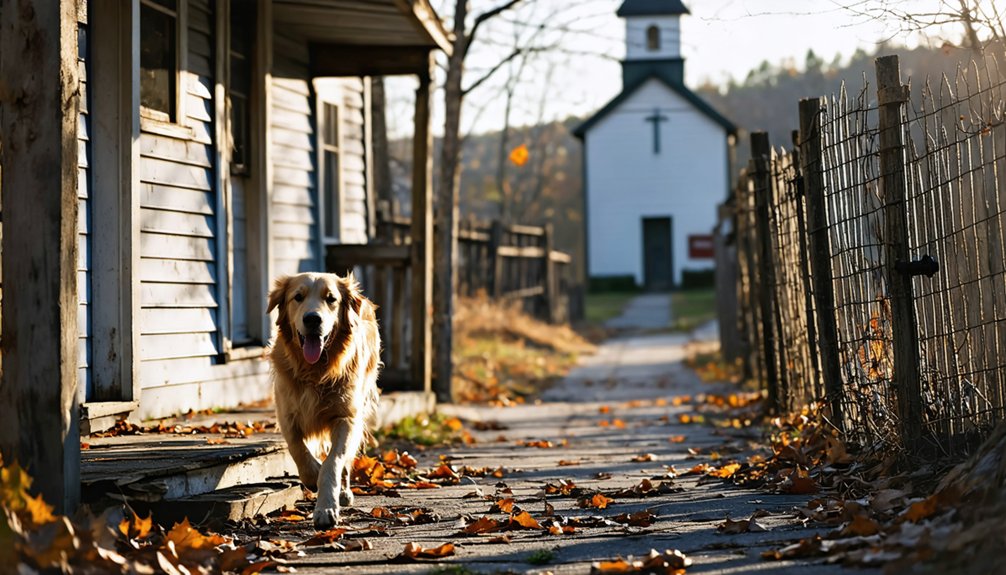
You can explore New Jersey’s fascinating ghost towns with your leashed dog at several historic sites. Batsto Village in the Pine Barrens offers sandy trails ranging from easy half-mile loops to challenging 11.5-mile routes through preserved ironworks ruins. The Deserted Village of Feltville features moderate forest paths with interpretive panels, while Waterloo Village provides flat canal towpath walks perfect for canine companions. Each location requires leashes and offers unique glimpses into New Jersey’s forgotten past, complete with planning tips for your adventure.
Key Takeaways
- Batsto Village in the Pine Barrens welcomes leashed dogs on sandy trails ranging from easy half-mile loops to challenging 11.5-mile routes.
- Feltville Historical District offers dog-friendly forest trails with moderate difficulty, featuring eight historic houses and clear trail signage for navigation.
- Waterloo Village provides flat canal towpath trails ideal for dogs, though special events may temporarily restrict canine access.
- Pine Barrens ghost towns like Harrisville offer off-road adventures but require preparation including dog boots and tick prevention measures.
- All historic sites enforce strict leash requirements with six-foot maximum leashes, and dogs are prohibited from entering historic buildings.
Feltville Historical District: A Leashed Adventure Through Time
Hidden within New Jersey’s Watchung Reservation, the Feltville Historical District offers you and your leashed companion a rare glimpse into America’s 19th-century industrial past.
Step back in time with your leashed companion at this hidden New Jersey gem showcasing authentic 19th-century industrial heritage.
You’ll explore eight historic houses, a church-store building, and Masker’s Barn while discovering fascinating Feltville history spanning from David Felt’s 1845 mill town to the elegant Glenside Park resort era.
Your dog will enjoy moderate forest trails and dirt paths as you investigate archaeological remnants of mills, dams, and Blue Brook’s industrial corridor.
The terrain features uneven surfaces and elevation changes perfect for adventurous canines. Union County Parks maintains clear trail signage and interpretive panels throughout this National Register site.
The site’s cultural significance extends beyond its industrial heritage, featuring themed murals created by artist Roberto de la Selva that depict native Mexican life and spirituality.
Remember to bring water and waste bags—seasonal conditions can create muddy or icy paths requiring extra preparation for your four-legged explorer. The area’s transformation included the addition of rustic porches to worker duplexes that mimicked the grand Adirondack camps popular during the resort period.
Waterloo Village: Canal Town Exploration With Your Canine Companion
Stepping into Waterloo Village feels like traveling back to the bustling 1830s canal era, where you and your leashed companion can explore authentic 19th-century structures along New Jersey’s historic Morris Canal route.
Your dog can accompany you through outdoor areas surrounding the restored general store, blacksmith shop, and watermill, though interior access remains restricted for preservation purposes.
The flat canal towpath offers ideal dog friendly trails for easy walks alongside scenic waterways.
Short loop options around the village core suit dogs needing lighter exercise, while connections to longer recreation area trails accommodate high-energy companions.
Remember to bring waste bags and verify current policies before visiting, as special events may temporarily restrict canine access.
This fascinating glimpse into canal history provides both educational value and outdoor adventure. The village’s strategic location made it a vital halfway point for mules and boats traveling the Morris Canal during its peak operation. The site includes 19 historical buildings that showcase the complete infrastructure needed for canal operations during the transportation boom.
Batsto Village: Pinelands Trails Perfect for Four-Legged Friends
Your furry companion will love exploring the sandy trails that wind through Batsto Village’s historic industrial ruins, where iron forges once blazed in the heart of New Jersey’s Pine Barrens.
The paw-friendly paths range from easy half-mile loops around Batsto Lake to challenging 11.5-mile adventures along the Mullica River, all featuring the soft sand surfaces that make hiking comfortable for dogs year-round. These trails connect to the renowned Batona Trail, which spans 50.2 miles through Lebanon, Wharton, and Bass River State Forests, offering endless exploration opportunities for adventurous dogs and their owners.
This former industrial center operated from the mid-1700s and is now nestled within the vast Wharton State Forest, surrounded by pristine rivers and lakes that add natural beauty to your historical adventure.
Winter transforms these Pinelands trails into serene corridors where you and your leashed dog can discover 18th-century structures while enjoying the crisp air and peaceful solitude of this remarkable ghost town.
Historic Trails and Dogs
While many historic sites restrict canine companions, Batsto Village welcomes leashed dogs to explore its centuries-old grounds and surrounding wilderness trails.
You’ll discover historic dog friendly trails winding through this former bog iron and glassmaking center, where canine friendly hikes lead past 18th-century buildings and into pristine Pinelands wilderness.
The famous Batona Trail offers 50.2 miles of paw-friendly sand paths marked with distinctive pink blazes.
Your dog will love splashing in tea-colored streams while you explore minimal elevation changes through cedar and pine forests. Along the way, you’ll cross two foot bridges over the scenic Mullica River, adding excitement to your pup’s adventure.
Road crossings let you customize hike lengths perfectly for your pup’s stamina.
From the 209-foot Apple Pie Hill fire tower to the Carranza Memorial, these trails blend fascinating history with natural beauty that both you and your four-legged explorer will treasure. Don’t forget to pack bug spray for both you and your dog, as ticks are commonly encountered throughout these New Jersey wilderness areas.
Pinelands Winter Walking Events
When winter transforms the Pinelands into a serene wonderland, Batsto Village becomes an ideal destination for dog owners seeking peaceful trail adventures.
You’ll discover frozen sand paths and snow-dusted pine forests along the 4.1-mile White Trail loop, where minimal elevation changes keep winter hikes comfortable for both you and your four-legged companion.
The village hosts special pinelands events during colder months, including “Winter in the Pines” family-friendly gatherings and quiet evening mansion tours.
Your dog can explore well-marked trails starting from the visitor center, where packed dirt and sand surfaces remain accessible even with snow patches. The restored 19th-century village showcases historical iron and glass production with many buildings open for exploration.
The 53-mile Batona Trail connection offers extended adventures, while shorter loops like the Red Trail provide quick winter escapes through authentic Pinelands habitats. For those seeking nearby adventures, the trailhead provides access to Bass River State Forest and other pristine wilderness areas.
Pine Barrens Ghost Towns: Off-Road Adventures for Adventurous Dogs
Deep within New Jersey’s Pine Barrens, forgotten settlements emerge from sandy soil and scrub oak like time capsules waiting to be discovered with your four-legged explorer.
These off road adventures lead you through Batsto Village‘s preserved ironworks, where firm trails wind past 18th-century ruins perfect for leashed exploration.
Your dog’ll love the scent-rich terrain around Whitesbog’s cranberry bog remnants, though watch for thorny scrubs hiding in the heath.
For truly adventurous spirits, Harrisville’s remote paper mill ruins offer challenging access through muddy tracks requiring high-clearance vehicles.
Pack dog boots for rocky terrain and prepare for limited cell coverage—these pine barrens ghost towns reward the bold with authentic wilderness discovery.
Pet Policies and Leash Requirements at Historic Sites

You’ll need to navigate varying county leash ordinances that typically require six-foot maximum leashes when exploring historic ghost towns with your dog.
Many sites restrict pet access to specific areas, often prohibiting dogs from entering historic buildings, visitor centers, or archaeologically sensitive zones.
Fortunately, most locations offer designated pet-friendly trails where you can safely explore ruins and abandoned structures while keeping your canine companion properly secured and under control.
County Leash Ordinances
Before planning your ghost town adventure with your four-legged companion, you’ll need to understand that each historic site operates under specific county and state leash ordinances designed to protect both pets and preserved structures.
Union County strictly enforces leash laws at the Deserted Village of Feltville throughout the entire Watchung Reservation, with no exceptions permitted.
Burlington County’s Batsto Village follows state forest policies requiring leashed dogs for wildlife protection and dog safety.
Sussex County’s Waterloo Village operates under state park regulations mandating leashed pets, while Monmouth County’s Historic Allaire Village maintains similar requirements.
Local townships like Blairstown and Hammonton prohibit dogs running at large in public spaces, ensuring your exploration remains compliant and enjoyable for everyone.
Restricted Access Areas
While most New Jersey ghost towns welcome leashed dogs in their outdoor areas, you’ll encounter specific restricted zones where pets face limited or prohibited access due to structural hazards and preservation concerns.
For those exploring dogfriendly activities in New York, there are plenty of parks and trails perfect for a day out with your furry friend. Many pet-friendly venues also offer special events, making it easy to socialize with other dog lovers. Always remember to check for any local regulations to ensure a safe and enjoyable experience for everyone involved.
Historic buildings with fragile porches or unstable foundations often implement restricted pet access to prevent damage and liability issues. You’ll find that occupied residences within historic districts typically prohibit animal entry entirely.
Safety regulations require you to respect these boundaries, as they protect both your dog and irreplaceable historical structures.
However, wheelchair-accessible restored buildings usually maintain adjacent outdoor spaces where you can explore with your leashed companion.
Service animals retain access rights throughout most areas, though advance notice may be requested for guided tours.
Pet-Friendly Trail Options
When exploring New Jersey’s historic ghost towns with your four-legged companion, you’ll discover that pet policies vary considerably depending on who manages each site.
County and municipal locations typically require six-foot leashes, while state parks emphasize waste removal and owner control on their dog friendly trails.
Federal properties follow National Park Service rules, allowing leashed pets in developed areas but restricting access inside buildings.
You’ll find dirt and crushed-stone paths are paw-friendly, though rocky surfaces may cause wear during longer adventures.
Historic site guidelines often discourage retractable leashes on narrow boardwalks due to tangling issues.
Private historic villages usually permit leashed dogs on exterior grounds while prohibiting entry into buildings, giving you freedom to explore outdoor areas.
Planning Your Ghost Town Road Trip With Dogs

A successful ghost town adventure with your dog requires careful preparation that goes far beyond simply loading up the car and hitting the road.
Essential dog travel tips include confirming each site allows leashed pets and checking seasonal closures before departure. Pack potable water since historic sites often lack on-site sources, and bring tick prevention for overgrown Pine Barrens areas.
Research pet policies and seasonal restrictions beforehand, then pack water and tick protection for wilderness areas lacking basic amenities.
Your pet safety measures should include a sturdy harness, first-aid supplies, and mapping nearby veterinary clinics for remote locations.
Sequence your stops strategically—visit paved-access sites like Waterloo Village before tackling rutty Pine Barrens dirt roads.
Check cell coverage and parking capacity, especially during special events.
Frequently Asked Questions
Are There Dog Waste Stations Available at These Historic Ghost Towns?
You won’t find documented dog waste stations at these historic ghost towns. Pack your own cleanup supplies when exploring station locations like Feltville, Waterloo Village, Batsto, and Walpack Center for responsible adventures.
Can Dogs Enter the Historic Buildings or Are They Restricted Outdoors Only?
Historic wooden floors creak underfoot as you discover most buildings restrict dogs outdoors only. Dog friendly policies vary by site, but building access typically excludes pets due to preservation concerns—check specific rules beforehand.
What Are the Best Times to Visit to Avoid Crowds With Dogs?
Visit during winter months for best crowd-free exploration with your dog. Ideal times are weekday mornings and off-peak seasons when tourists avoid dirt roads and cold weather deters casual visitors.
Are There Veterinary Services Nearby in Case of Dog Emergencies During Visits?
What happens when adventure meets mishap? You’ll find dog emergency services within 20-45 miles of most ghost towns, plus nearby veterinary clinics offering same-day appointments for urgent care during your explorations.
Which Ghost Towns Offer the Easiest Terrain for Elderly or Disabled Dogs?
Feltville/Glenside Park and Waterloo Village offer accessible trails with paved walkways and level terrain perfect for elderly dogs. You’ll find dog friendly amenities including wheelchair-accessible areas and predictable footing that reduces joint strain.
References
- https://www.jerseysbest.com/community/take-a-road-trip-through-n-j-s-spooky-ghost-towns-to-see-peculiar-pieces-of-history/
- https://foxattimbercreek.substack.com/p/ghost-towns-of-the-pine-barrens
- https://ucnj.org/parks-recreation/deserted-village/
- https://batstovillage.org
- https://www.nj.gov/dca/njht/funded/sitedetails/feltville.shtml
- https://en.wikipedia.org/wiki/Feltville_Historic_District
- https://sueadler.com/feltville-historic-district-in-watchung-reservation/
- https://feltvillefeatures.com/historic-overview-of-feltville/
- https://www.thekenilworthhotel.com/blog/explore-the-deserted-village-nearby-our-hotel-kenilworth-nj
- https://visitnj.org/nj-historic-sites-memorials/deserted-village-feltville-glenside-park