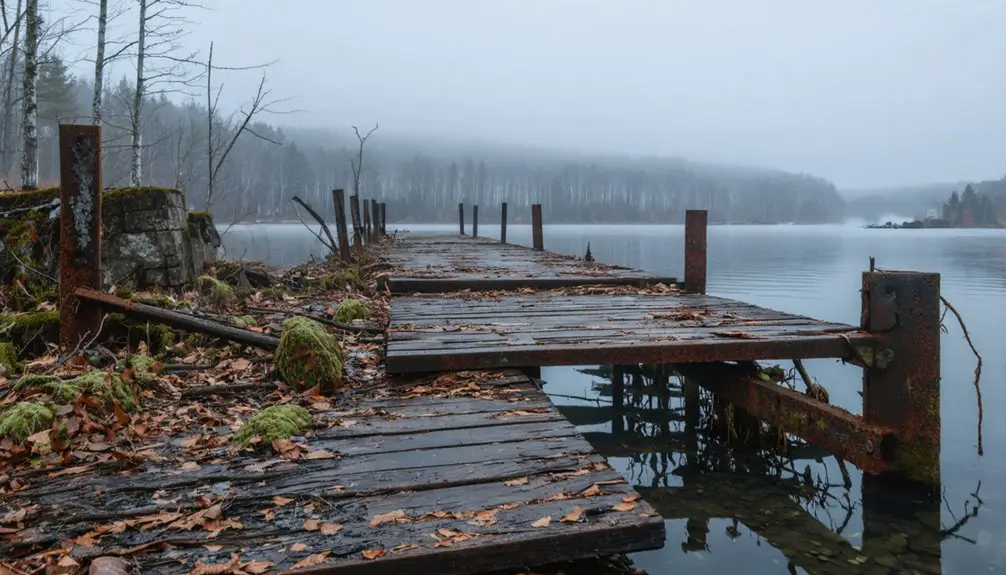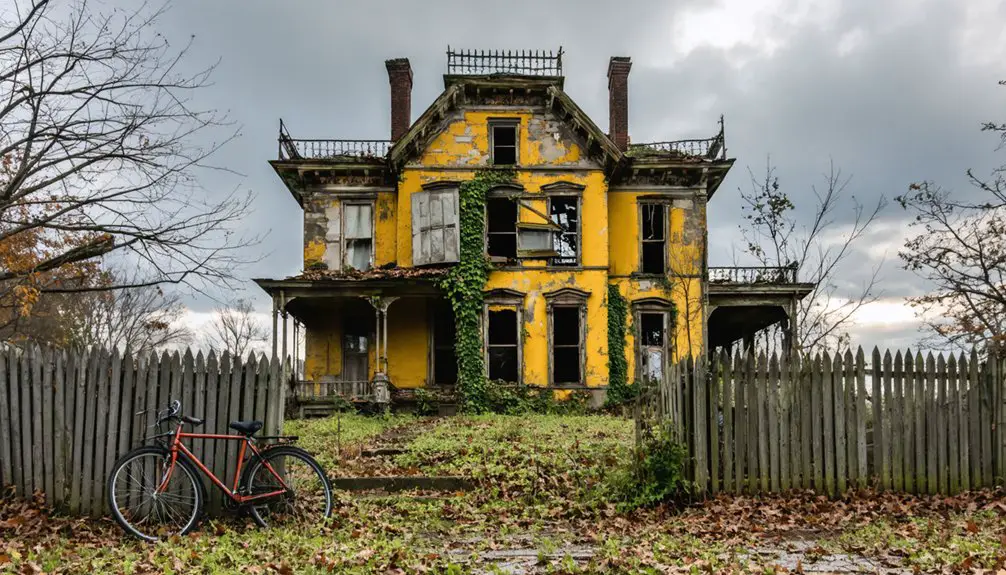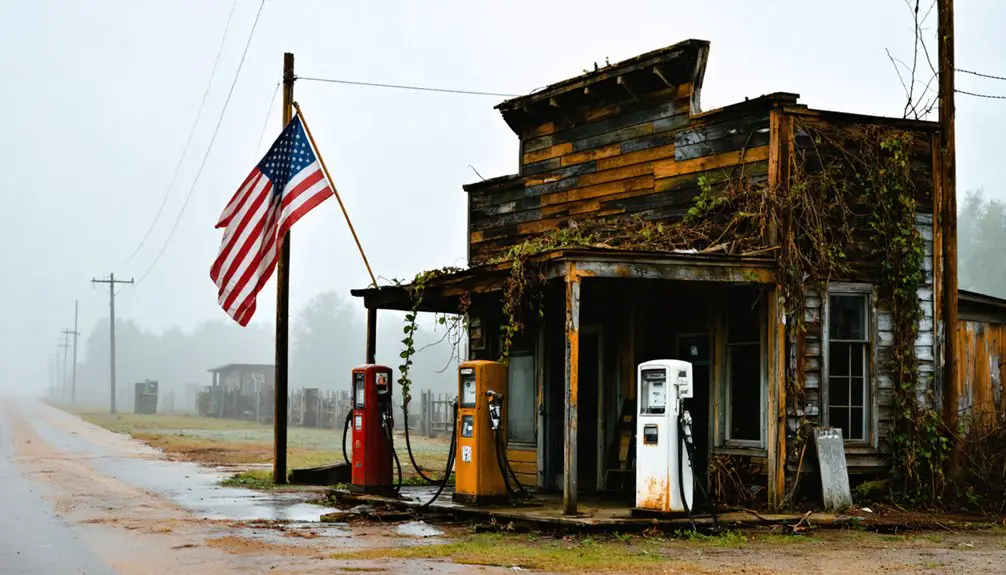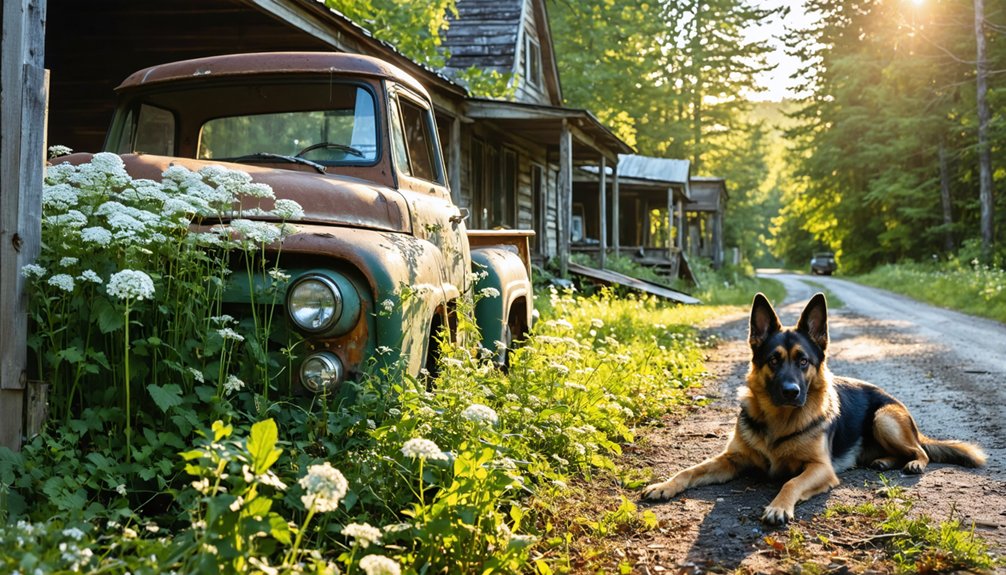
You’ll find incredible dog-friendly ghost town adventures throughout New York’s wilderness, from Tahawus’s preserved iron mining ruins in the Adirondacks to Overlook Mountain House’s dramatic hotel remains overlooking the Catskills. These abandoned sites feature safe hiking trails where your leashed companion can explore crumbling foundations, old railway corridors, and Camp Santanoni’s stunning Great Camp architecture. Pack extra water and check those paw pads frequently on rocky terrain. Discover extensive safety tips and hidden gems awaiting your exploration.
Key Takeaways
- Tahawus iron mining ghost town offers 212 preserved acres with dog-friendly trails to explore blast furnace ruins and crumbling foundations.
- Overlook Mountain House ruins require a 1.6-mile hike with dogs on leash, featuring panoramic Catskills views and grand staircase remnants.
- Camp Santanoni’s Great Camp architecture provides year-round access for leashed dogs to explore six connected log buildings under massive rooflines.
- Abandoned railway sites like Cold Brook station and Ashokan Quarry Trail welcome leashed dogs while exploring transportation history remnants.
- State parks require six-foot leashes, vaccination documentation, and waste cleanup when visiting historic hotel ruins and quarry sites.
Tahawus: Exploring the Adirondack Iron Mining Ruins
While your four-legged companion sniffs around the towering stone walls of the McIntyre Blast Furnace, you’ll find yourself standing in one of the Adirondacks’ most haunting industrial graveyards.
The Tahawus ruins stretch across 212 preserved acres where iron ore mining once thrived from 1826 until final abandonment in 1962.
Your dog can freely explore the crumbling foundations and old railroad beds while you discover the historical significance of this ghost town.
Theodore Roosevelt learned of President McKinley’s condition here in 1901, launching his midnight ride to the presidency. The preserved McNaughton Cottage still stands as a monument to that pivotal moment.
Pack water for both you and your companion—these remote trails demand preparation for true freedom seekers. The Open Space Institute now manages 6,000 acres of this historic tract, ensuring these industrial ruins remain accessible for future generations of adventurers and their canine companions. The original settlement included essential infrastructure like farms and mills that supported the mining community during its operational years.
Overlook Mountain House: Catskills Hotel Remains With Panoramic Views
You’ll find the concrete skeleton of Overlook Mountain House perched dramatically on the summit, its empty window frames looking out over sweeping Catskills vistas that’ll take your breath away.
The 1.6-mile hike with your dog leads to ruins where you can explore the main hotel shell and nearby Lodge foundations, but you’ll need to keep your pup close since missing floors create dangerous ten-foot drops inside the structures. The site has been under state ownership since 1940, contributing to its preservation as a historical landmark. This location represents the third hotel built on the site, with previous versions destroyed by devastating fires in 1875 and 1923.
Before heading up the trail, pack plenty of water and wear sturdy boots—the concrete ruins have sharp edges and unstable areas that require careful navigation around the crumbling remains.
Historic Hotel Ruins
Perched high in the Catskills where luxury hotels once welcomed wealthy guests, the skeletal remains of Overlook Mountain House stand as a haunting memorial to the region’s golden age of mountain resorts.
You’ll discover a four-story concrete shell where nature’s reclaiming what man abandoned—trees sprouting through empty windows, walls standing defiant against decades of weather.
The ruins reveal fascinating architectural features: an intact courtyard with a dry fountain, grand staircases leading nowhere, and foundations scattered throughout the surrounding woods.
Their historical significance runs deep, marking three attempts at hospitality grandeur between 1871 and the 1930s. The site holds particular artistic importance as the destination of painter Thomas Cole’s final hike in 1833, connecting these ruins to the Hudson River School of art.
The location’s prosperity stemmed from bluestone quarrying operations that flourished after the Civil War, transforming this mountain into a bustling industrial and tourism hub.
Walk your dog through this concrete ghost, exploring rooms without roofs while soaking in panoramic views that once drew Manhattan’s elite to escape city life.
Trail Safety Tips
How can you affirm a safe adventure while exploring these haunting ruins with your four-legged companion? Start early to beat crowds and heat—your dog’s paws will thank you on cooler rocks.
Pack extra water since reliable sources are scarce on this 5-mile climb. Keep your pup leashed; timber rattlesnakes love sunning themselves near the summit’s stone remains.
Trail etiquette matters here—yield space on narrow sections and control your dog around other hikers photographing the crumbling hotel walls. Remember to sign in at the trailhead kiosk before beginning your ascent up the gravel road.
Check those paw pads frequently; sharp rocks can slice tender skin. Wildlife encounters are real—black bears and rattlers call these ruins home.
The journey features an elevation gain of almost 1,400 feet over the first 2 miles, so pace yourself and your canine companion accordingly. Carry microspikes during winter months when ice transforms paths into skating rinks. Your freedom to explore responsibly affirms these ghostly remains stay accessible for future adventurers and their canine companions.
Camp Santanoni: Great Camp Architecture in the Wilderness
Deep in the Adirondack wilderness, Camp Santanoni stands as a tribute to the golden age of Great Camp architecture, where rustic luxury once welcomed Albany’s elite to 12,500 acres of pristine forest.
A monument to gilded-age grandeur, where Adirondack wilderness meets architectural excellence on thousands of acres of untamed forest.
You’ll discover Robert H. Robertson’s masterpiece featuring Japanese-influenced continuous rooflines and 1,500 spruce trees crafted into breathtaking log construction.
The Santanoni Architecture showcases birch-bark walls, hand-hewn beams, and fieldstone fireplaces spanning 5,000 square feet of covered porches.
This Rustic Design connects six buildings under one massive 16,000-square-foot roof, creating America’s earliest centralized Great Camp.
Your dogs can roam the 4.7-mile trek from Gate Lodge to Main Camp, exploring where Theodore Roosevelt once walked.
The phoenix-shaped lodge faces west, symbolizing enlightenment and freedom you’ll feel wandering these historic grounds. The preserve offers year-round access with seasonal activities ranging from summer horseback riding to winter cross-country skiing through the wilderness.
Beyond the main complex, you’ll find additional structures including the Boat House, Artist’s Studio, and Bath House that maintained architectural consistency with the camp’s distinctive aesthetic.
Roseton and Hudson Valley Industrial Heritage Sites
Along the Hudson River’s industrial corridor, Roseton’s crumbling foundations whisper tales of a brick empire that once shipped millions of clay blocks to build New York City’s skyline.
You’ll discover Roseton history through scattered remnants where the Rose family built their industrial kingdom in the 1800s. Your dog can explore safely alongside you as you uncover this forgotten world.
The brick industry transformed this riverside community into a thriving company town before Central Hudson’s power plant expansion erased most traces:
- Our Lady of Mercy Chapel – The sole surviving structure from 1887 stands as your historical anchor point
- Foundation ruins – Scattered brick remnants mark former worker housing locations
- Riverside access – Follow old transportation routes where barges carried bricks to Manhattan
You’re walking through Hudson Valley’s industrial backbone, where immigrant families built America’s urban landscape.
Abandoned Railroad Towns Across Upstate New York
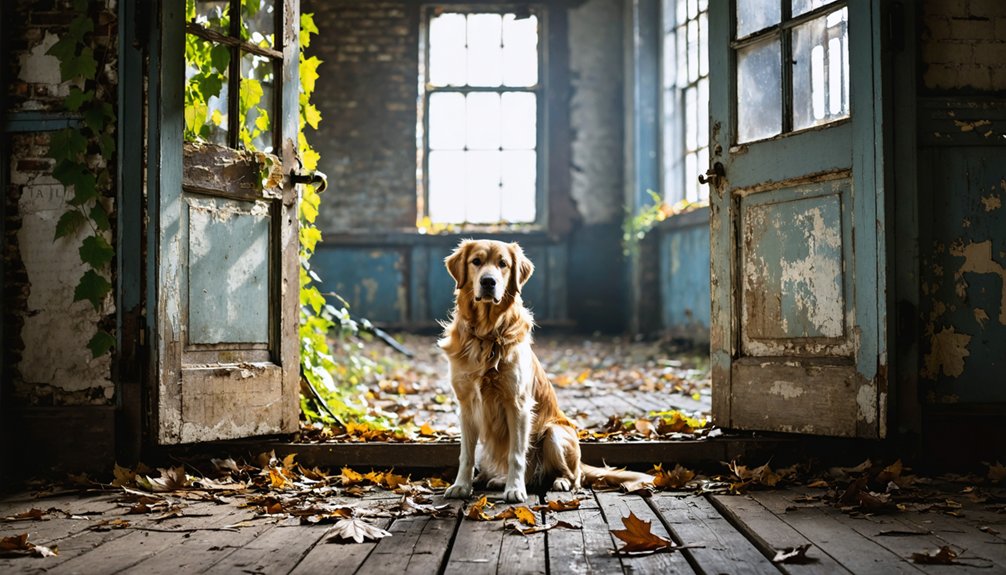
When steam whistles once echoed across upstate valleys, railroad towns thrived as essential links in New York’s transportation network—today, you’ll find their ghostly remains scattered throughout the Catskills, Capital Region, and Western York.
These abandoned railways tell stories of prosperity lost when mainlines shifted or closed entirely. In Batavia, you’ll discover preserved remnants where the New York Central once ruled.
The Ulster & Delaware Railroad’s legacy lives on through Cold Brook station near Boiceville, built around 1915 and still standing. Your ghost town explorations can include hiking the Ashokan Quarry Trail for panoramic views, or wandering Watervliet Junction where bridge foundations mark vanished tracks.
Each crumbling depot and overgrown rail bed offers your dog endless sniffing opportunities while you uncover New York’s forgotten transportation empire.
Essential Safety Preparations for Remote Ghost Town Adventures
Before you load your dog into the truck for that remote ghost town adventure, proper preparation separates memorable exploration from dangerous rescue scenarios.
These forgotten places reward the prepared explorer while punishing the reckless.
Your safety checklist should include:
- Route planning with emergency contacts – Share detailed GPS tracks and expected return times with someone reliable.
- Download offline maps and identify satellite communication options for dead zones where cell towers can’t reach your desperate calls for help.
- Wilderness medical preparation – Pack an extensive first-aid kit sized for both human and canine emergencies.
- Train in basic wilderness medicine because help might be hours away when your adventure turns sideways.
- Vehicle recovery equipment – Carry tow straps, portable air compressors, and traction aids.
- Remote locations demand self-reliance.
Leash Laws and Pet Regulations on New York Public Lands
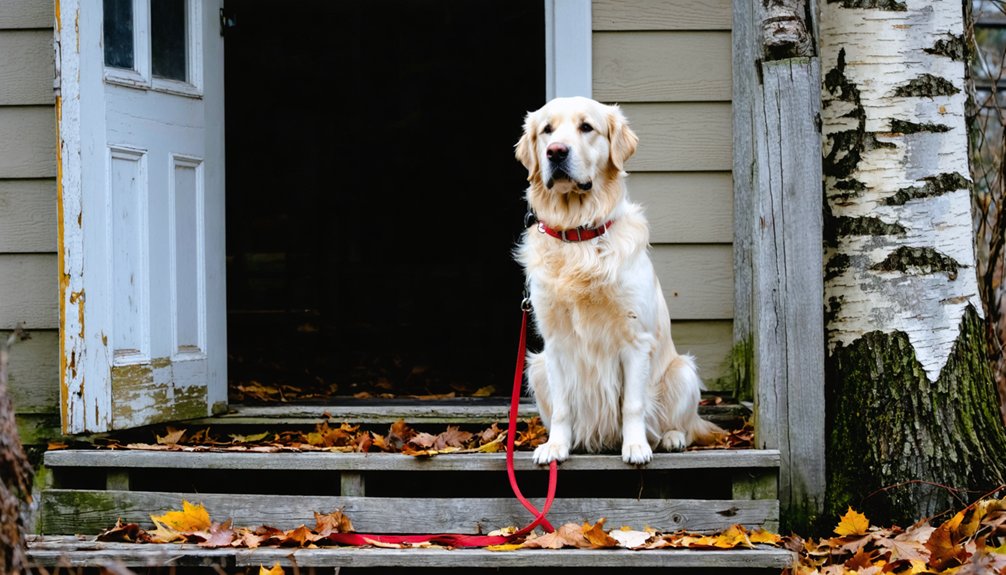
When you’re exploring New York’s abandoned settlements with your four-legged companion, you’ll navigate a patchwork of regulations that shift from state parks requiring leashes to local municipalities with their own unique rules.
I learned this the hard way during a weekend trip to an old mining town near the Adirondacks, where what seemed like public land actually fell under strict county ordinances that nearly resulted in a hefty fine.
Before you set out, research both the state park requirements and local ordinances for your specific destination, as these rules can vary dramatically even within the same region.
State Park Requirements
While exploring New York’s abandoned settlements with your four-legged companion creates unforgettable memories, you’ll need to maneuver through the state’s extensive pet regulations that govern these public lands.
State park regulations guarantee both pet safety and environmental protection across these historic landscapes.
Essential requirements include:
- Vaccination Documentation – Carry current rabies vaccination proof and licensing papers, as park rangers can request verification at any time during your ghost town adventures.
- Six-Foot Leash Rule – Keep your dog on a leash no longer than six feet, maintaining control while maneuvering through crumbling foundations and overgrown trails where wildlife might startle your companion.
- Waste Management Responsibility – Pack cleanup bags and dispose of waste in designated containers, leaving these fragile historical sites pristine for future explorers.
Local Ordinance Variations
Beyond statewide regulations, you’ll discover that local municipalities across New York add their own layers of pet restrictions that can transform your ghost town expedition from legal exploration to costly violation.
In places where pets are more welcome, you can find a plethora of dogfriendly attractions in Maine that will cater to both you and your furry companion. From stunning coastal trails to charming pet-friendly dining options, your travels will be more enjoyable when you include spots that embrace pets. Always research ahead to ensure a smooth experience and avoid any potential surprises along your journey.
Each county and town enforces additional pet ownership limits beyond the state’s two-pet maximum, creating a patchwork of rules that’ll test your navigation skills.
I learned this firsthand when exploring abandoned mining settlements near the Adirondacks—what seemed like permissible territory quickly became restricted zones with hefty fines.
Before venturing into those haunting remnants of forgotten communities, research local regulations thoroughly. Contact town clerks, check municipal websites, and scout ahead.
Your freedom to explore these atmospheric ruins depends on understanding the specific ordinances governing each ghostly destination you’re planning to visit.
Veterinary Services and Emergency Planning for Rural Explorations
Although the weathered foundations and crumbling storefronts of New York’s forgotten settlements offer enchanting glimpses into the past, they’re often tucked away in remote corners where the nearest veterinary clinic might be an hour’s drive through winding mountain roads or across sprawling farmland.
Emergency access planning becomes essential when exploring these isolated locations with your canine companion:
- Map 24/7 facilities within 60 miles and store contact information both digitally and on paper, since cell coverage often vanishes in these forgotten places.
- Prioritize preventive care before departure—update vaccinations, microchip registration, and pack prescription medications alongside copies of health certificates.
- Master basic field stabilization through local veterinary courses, then assemble a portable first-aid kit containing gauze, splinting materials, and emergency supplies for immediate response.
Preserving Historic Sites While Adventuring With Your Dog
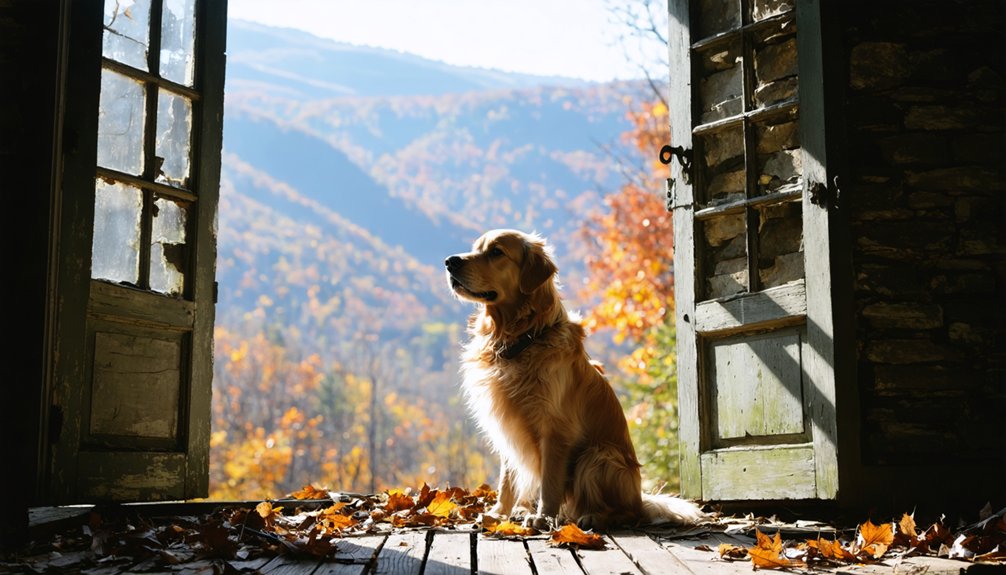
When you step through the scattered remains of a 19th-century logging camp or pause beside the moss-covered foundation of an abandoned farmhouse, you’re walking through layers of New York’s history that deserve the same respect you’d show a museum exhibit.
Site preservation starts with keeping your dog leashed to protect fragile ruins and wildlife. You’ll want to stay on established trails and pack out all waste—including pet waste—to prevent contamination of historic landscapes.
Don’t let your pup climb on crumbling stonework or enter fenced areas. These simple acts of responsible visitation guarantee future adventurers can experience the same haunting beauty you’re discovering today.
Report any damage you notice to land managers rather than attempting fixes yourself.
Frequently Asked Questions
What Ghost Towns Are Accessible Year-Round Versus Seasonally Closed?
You’ll find year round access at Doodletown and Camp Santanoni, while Tahawus mining ruins face seasonal closures from harsh winter conditions. Pack snowshoes for winter exploration, but expect icy trails limiting your freedom.
Are There Pet-Friendly Accommodations Near Multiple Ghost Town Sites?
You’ll discover countless pet-friendly hotels throughout Lake Placid and Woodstock near multiple ghost towns. While ghost town camping isn’t available, these charming accommodations let you explore Tahawus, Overlook Mountain, and Frontier Town with your adventurous companion.
Which Sites Have the Best Preserved Structures for Photography?
You’ll find Tahawus offers stunning stone mine buildings with intact masonry, while Doodletown provides geometric foundation remnants against Hudson vistas. These historic architecture gems deliver exceptional photography tips through preserved structural details and dramatic landscapes.
Can I Bring My Dog to Ghost Towns During Hunting Season?
Yes, but with caution—hunting seasons overlap 70% of prime ghost town visiting months. You’ll need bright orange vests for dog safety, keep leashes under six feet per hunting regulations, and avoid peak deer season weekends for peaceful exploration.
What’s the Average Hiking Difficulty for Reaching These Abandoned Locations?
You’ll encounter moderate hiking trail ratings averaging 2.8-5.8 miles through varied terrain types—from wide, dog-friendly paths at Overlook Mountain to bushwhacking challenges in Doodletown’s abandoned foundations and mineshafts.
References
- https://www.bringfido.com/blog/pet-friendly-vacation-americas-spookiest-cities/
- https://secretnyc.co/tahawus-ny-forgotton-ghost-town-halloween-season/
- https://www.iloveny.com/blog/post/dog-friendly-winter-getaways-in-new-york-state/
- https://earlybirdonthetrail.com/hike-overlook-mountain-woodstock-ny/
- https://www.gopetfriendly.com/blog/explore-pet-friendly-ghost-towns-with-your-furry-travel-buddy/
- https://943litefm.com/ghost-town-of-new-york-you-may-never-heard-of/
- https://www.adirondack.net/history/tahawus/
- https://visitadirondacks.com/fall/abandoned-places-ghost-towns
- https://www.untappedcities.com/the-history-of-tahawus-once-a-thriving-mining-community-now-an-adirondack-ghost-town/
- https://secretnyc.co/tahawus-ghost-town-ny/