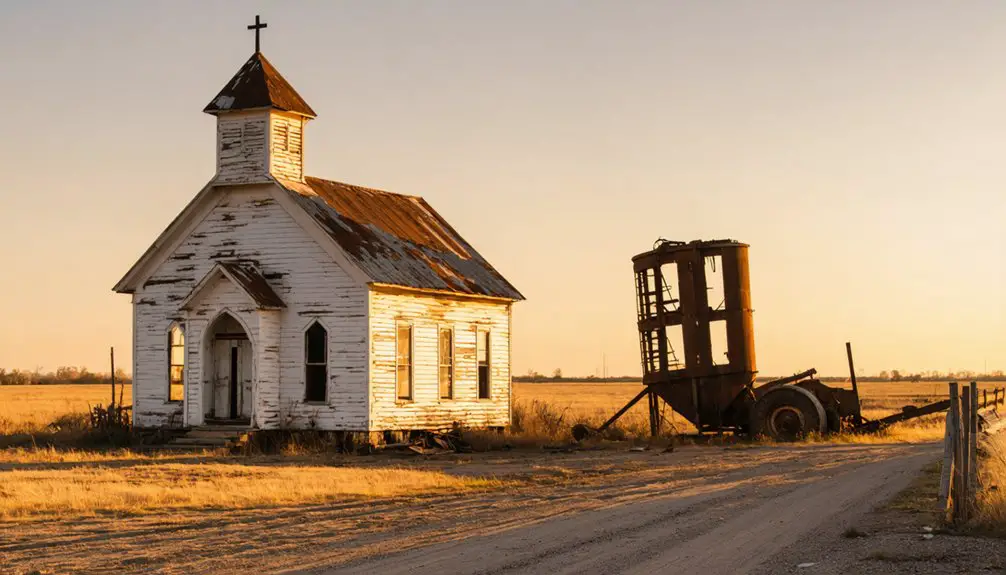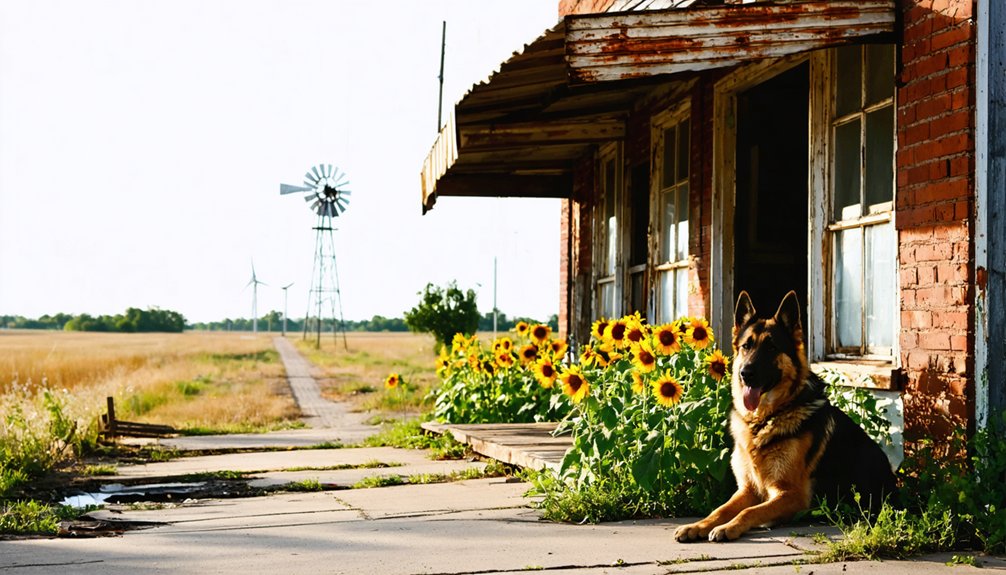
You’ll find Oklahoma’s ghost towns like Picher, Cardin, and Skedee offer fascinating adventures with your furry companion, though you’ll need to respect private property boundaries and pack essential safety gear. Your dog should wear protective boots and a GPS tracker while you navigate these abandoned settlements, as wildlife threats and rusty debris pose real dangers. Always secure landowner permission for private sites, pack plenty of water for both of you, and research veterinary resources within an hour’s drive. Proper preparation transforms these haunting destinations into unforgettable explorations that’ll reveal hidden gems across the state.
Key Takeaways
- Research land ownership through county records since Oklahoma ghost towns may be on private property requiring explicit owner consent.
- Pack protective boots, sturdy harness, GPS tracker, and emergency supplies including first-aid kits and tick removal tools for your dog.
- Ensure your dog’s rabies and core vaccinations are current before visiting remote locations with potential wildlife encounters.
- Bring one gallon of water per person daily plus extra for dogs, and pack portable filtration devices for emergencies.
- Map veterinary resources within 60 minutes of ghost towns and program emergency contacts into multiple communication devices.
Essential Safety Preparations for Visiting Abandoned Towns With Dogs
When you’re planning an adventure to explore forgotten settlements with your four-legged companion, thorough preparation separates memorable experiences from dangerous mishaps. Your dog’s safety gear should include protective boots, a sturdy harness, and GPS tracker—essentials when traversing crumbling structures and debris-filled streets.
I learned this firsthand when my retriever stepped on rusty metal in an abandoned Colorado mining town.
Hazard awareness begins before you arrive. Research land ownership, map exit routes, and identify known dangers like mine shafts or unstable buildings. Train your dog to respond to critical commands like “stay” and “leave it” since these abandoned areas often contain toxic substances and unexpected hazards.
Pack emergency supplies including first-aid kits, tick removal tools, and antihistamine guidance. Confirm vaccinations are current since wildlife encounters increase in these remote locations. Always check paws thoroughly after exploring these sites for cuts, debris, or foreign objects that could cause infection.
Your freedom to explore these historical treasures depends on respecting both the dangers and the remarkable stories these ghost towns preserve.
Top Ghost Town Destinations Within Easy Walking Distance
Several ghost towns across Oklahoma offer the perfect combination of historical intrigue and easy accessibility for you and your canine explorer.
As you embark on your adventure, consider exploring the history of Quay, where remnants of the past tell tales of resilience and change. Each building carries stories, and walking through these sites can spark curiosity in both you and your dog. With plenty of open space to roam, it’s a great opportunity to connect with history while enjoying the great outdoors.
Ingalls features wooden storefronts along main street remnants just ten miles east of Stillwater, where you’ll find flat terrain perfect for leashed walks through Wild West history. Your dog will love sniffing around the preserved structures while you capture photos of this legendary outlaw town. The Battle of Ingalls occurred here in 1893 when U.S. Marshals confronted the notorious Doolin-Dalton Gang.
Kenton attractions include a compact museum and functioning post office clustered near the town center, creating an ideal walking loop for you both. Kenton stands out as the only place in Oklahoma on Mountain Time, making it a unique destination for travelers crossing time zones with their pets.
The panhandle location offers wide-open spaces where your adventurous spirit can roam freely. Route 66 corridor sites provide roadside access to multiple ghost towns, letting you hop from one historic location to another without exhausting hikes.
Understanding Access Rights and Trespassing Laws
Before you and your furry companion start exploring those weathered buildings and crumbling foundations, you’ll need to determine whether you’re stepping onto public or private land.
Many ghost towns sit on private property where landowners retain full rights to control access, even if the structures look completely abandoned and forgotten. Posted signs aren’t always present, but that doesn’t mean you’re free to wander—Oklahoma law allows prosecution for trespassing even without warning signs, so you’ll want to research ownership and secure permission before your visit. Simply being found on someone else’s property serves as evidence of trespassing under Oklahoma law. If you’re caught trespassing on private land used for farming, ranching, or forestry, you could face fines ranging from $750 to $2,000 for a first offense.
Public Vs Private Land
As you approach that weathered main street where tumbleweeds dance past abandoned storefronts, the most essential distinction you’ll face isn’t whether your dog prefers exploring saloons or general stores—it’s whether you’re standing on public or private land.
Public land access opens sunrise to sunset without permits, while private land permissions require explicit owner consent. This difference determines whether you’re legally hiking with your companion or risking misdemeanor charges.
- Public lands managed by state/federal agencies welcome recreational use including dog walking.
- Private ghost town parcels need surface owner permission regardless of abandonment.
- County records verify ownership for former mining or railroad sites.
- No signage required since November 2021—ignorance isn’t protection from trespassing violations.
Oklahoma trespassing charges carry potential fines and jail time even for seemingly innocent exploration of abandoned areas. Second offenses can escalate penalties to 20 days in jail for repeat violations.
Posted Signs Recognition
I learned this lesson exploring a ghost town near Picher, where barely readable signs still held legal authority.
Even deteriorated postings can result in criminal charges if they’re reasonably conspicuous.
Your freedom to roam depends on recognizing these boundaries, regardless of how abandoned the property appears. As of November 1, 2021, Oklahoma law requires no signage for property owners to enforce trespassing violations.
Remember that law enforcement or courts can issue prohibitions against entering specific properties, which would override general access assumptions.
Wildlife Hazards and Health Precautions for Pets
While the abandoned streets of Oklahoma’s ghost towns may seem peaceful, they’re actually bustling with wildlife that can pose serious threats to your four-legged companion.
Wildlife awareness becomes essential when coyote packs roam these forgotten settlements, and great horned owls perch silently in deteriorating barns, eyeing small dogs as potential prey.
Your parasite prevention strategy starts before you even arrive:
- Protect against disease vectors – Apply tick and flea preventatives, as these ruins harbor elevated populations carrying ehrlichiosis and plague.
- Vaccinate thoroughly – Guarantee rabies and other core vaccines are current before encountering feral animal packs.
- Monitor water sources – Avoid stagnant pools where heartworm-carrying mosquitoes breed around collapsed cisterns.
- Pack emergency supplies – Bring first aid for puncture wounds from rusted debris and wildlife encounters.
Packing the Right Supplies for Remote Locations
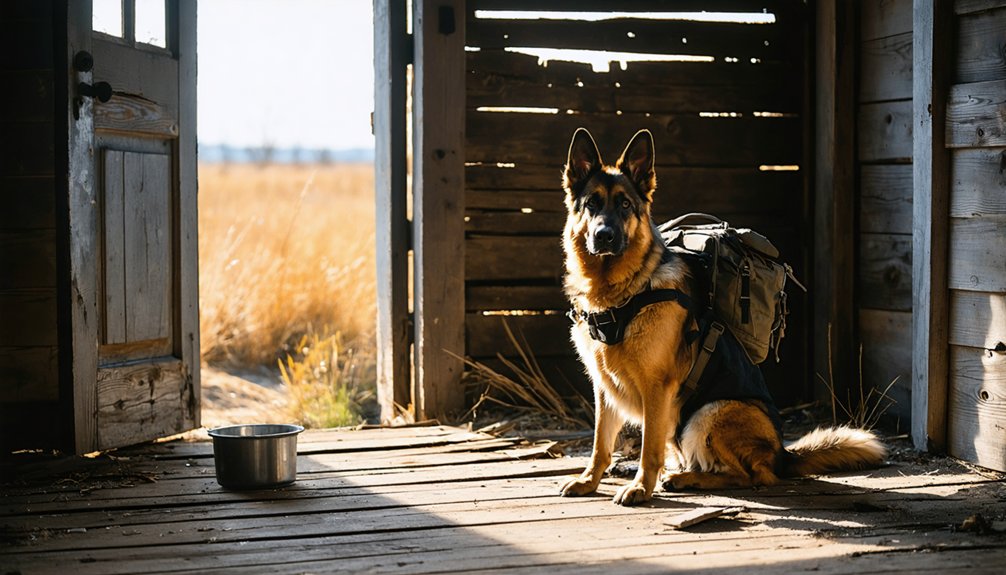
When you’re heading into ghost towns with your four-legged explorer, you’ll need to pack like you’re entering a time capsule where modern conveniences don’t exist.
Your backpack becomes a lifeline carrying water for both you and your dog, a well-stocked first aid kit that covers both human and canine emergencies, and navigation tools that’ll guide you back to civilization when cell towers are just a memory.
I learned this lesson the hard way during a scorching afternoon in Nevada’s Rhyolite, watching my German Shepherd pant heavily while I frantically searched my poorly planned daypack for anything that could help us both stay safe and hydrated.
Water and Food Essentials
Because ghost towns often lack basic infrastructure, you’ll need to pack every drop of water and bite of food your adventure requires.
These forgotten places offer incredible freedom, but that independence demands serious preparation for both you and your four-legged companion.
- Water purification becomes critical – carry portable filtration devices like LifeStraw Max or Steripen Ultra for treating questionable sources you might discover.
- Pack one gallon per person daily, plus extra for your dog’s needs and unexpected delays in remote Oklahoma territories.
- Food storage requires airtight containers to prevent spoilage and protect against wildlife attracted to scents.
- Bring backup chemical tablets like Aquatabs for emergency water treatment when mechanical systems fail.
Your self-reliance transforms these abandoned settlements into accessible adventures rather than survival ordeals.
Safety and First Aid
Remote ghost towns don’t come with 911 services or nearby hospitals, making your first aid kit the difference between a minor mishap and a genuine emergency.
Pack hemostatic dressings for serious bleeding, sterile gauze for wound care, and trauma shears to cut through tough materials. Your dog might step on broken glass or rusted metal, so include antiseptic wipes and non-adherent dressings.
Don’t forget a SAM splint for fractures and instant cold packs for sprains. Carry antihistamines in case your pup encounters something they’re allergic to.
Program emergency contacts into your phone before losing cell service, and keep a written backup.
These abandoned places test your self-reliance—proper first aid kits guarantee you’re ready for whatever adventure throws at you.
While your smartphone might work perfectly in town, ghost towns exist in the digital void where cell towers become distant memories and GPS satellites play hide-and-seek behind canyon walls.
You’ll need robust navigation strategies that won’t abandon you when technology fails. Pack a handheld GPS with topographic maps, download offline mapping apps, and carry paper backups marked with waypoints. Your dog depends on your ability to find the way home.
Essential navigation and communication gear includes:
- Satellite communicator for emergency SOS when cell service vanishes
- High-capacity power bank and solar charger for multi-day expeditions
- Waterproof cases protecting devices from Oklahoma’s unpredictable weather
- Two-way radios for coordinating with companions around sprawling ruins
Establish communication protocols before departure—file detailed trip plans and schedule regular check-ins with reliable contacts.
Historical Context and Respectful Exploration Guidelines
As you plan your adventures through Oklahoma’s abandoned settlements with your four-legged companion, understanding the complex stories behind these ghost towns will deepen your appreciation for the ruins you’ll encounter.
These ghost town origins trace back to economic booms tied to oil, coal, and timber extraction, followed by inevitable busts when resources depleted. Railroad routing decisions determined which communities thrived or withered, while natural disasters and reservoir construction claimed others entirely.
Respect the cultural significance of these sites—many contain Native American, African American, and other marginalized communities’ heritage. Never disturb cemeteries or remove artifacts.
These forgotten places hold sacred stories of displaced communities—honor their memory by leaving only footprints behind.
Always secure landowner permission before exploring private property, and consult local historical societies for guidance. Your dog’s presence shouldn’t compromise these sacred spaces that hold generations of stories.
Emergency Planning and Veterinary Resources
Before your boots touch the weathered boards of an abandoned homestead, you’ll need a bulletproof emergency plan that accounts for your dog’s safety in places where cell towers don’t reach and the nearest veterinarian might be an hour’s drive through winding back roads.
Your survival kit becomes your lifeline when exploring Oklahoma’s forgotten settlements:
- Map veterinary resources within 60 minutes—Town & Country Veterinary Clinic in McAlester and Crosstown Vet near Guthrie offer reliable emergency services.
- Pack 14 days of food, medications, vaccination records, and basic first-aid supplies including gauze and styptic powder.
- Program emergency contacts into multiple devices and register microchip information with national databases.
- Master pet CPR and recognize life-threatening conditions like heatstroke, rattlesnake bites, and severe bleeding.
Freedom means self-reliance, especially when adventure leads you far from civilization’s safety net.
Frequently Asked Questions
What Time of Year Offers the Best Weather for Ghost Town Visits?
You’ll find the best seasons are mid-September through mid-November when ideal temperatures hover in the 60s-70s°F. You’ll escape summer’s scorching heat and spring’s tornado threats while enjoying perfect exploration weather.
Are There Any Ghost Towns With Restroom Facilities or Picnic Areas Nearby?
You’ll find restroom accessibility at state parks near Watonga and Corps lake areas by Kaw City, plus picnic amenities at Route 66 stops near Texola and Glenrio for comfortable ghost town adventures.
Can I Bring Multiple Dogs or Is There a Leash Limit?
You can bring multiple dogs since there’s no statewide limit, but you’ll need sturdy leashes under 8 feet. These multiple dog policies and leash requirements guarantee your pack stays safe while exploring Oklahoma’s forgotten places.
Which Ghost Towns Have the Most Photogenic Ruins for Social Media?
You’ll discover Texola’s crumbling storefronts hide Instagram gold behind weathered facades. These photogenic spots along Route 66 showcase stunning historic architecture—abandoned motels, vintage signage, and brick stations create perfect backdrops for your adventure feed.
Do Any Oklahoma Ghost Towns Offer Guided Tours or Interpretive Programs?
You’ll find guided tours through Pocketsights app covering ghost towns like Shamrock and Ingalls, plus Fort Reno offers interpretive programs. Most experiences let you explore freely while learning each site’s haunting history.
References
- https://en.wikipedia.org/wiki/List_of_ghost_towns_in_Oklahoma
- https://pocketsights.com/tours/tour/Shamrock-Oklahoma-Ghost-Towns-Creek-Lincoln-Payne-and-Pawnee-Counties-2749
- https://abandonedok.com/class/disappearing-town/
- https://oklahomawonders.com/best-day-trips-from-oklahoma-city-oklahoma-day-trips/
- https://www.bringfido.ca/blog/best-of-oklahoma/
- https://ipuppee.com/blogs/news/urban-dog-safety-tips-2025
- https://www.wagbar.com/city-dog-safety-guide-navigating-urban-hazards-and-dangers
- https://ccspca.com/blog-spca/encounter-a-roaming-dog-stay-safe-with-these-tips/
- https://animalwellnessmagazine.com/5-tips-to-keep-pet-safe-in-the-city/
- https://www.petmd.com/dog/care/10-pet-safety-tips-when-your-dog-home-alone