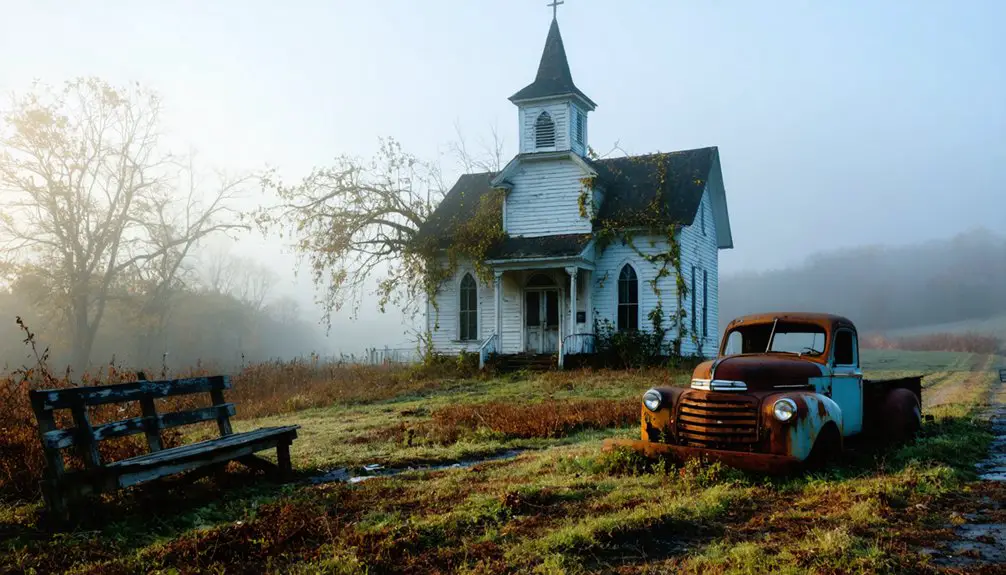
You’ll find Tennessee’s most enchanting dog-friendly ghost towns in the Great Smoky Mountains, where Elkmont’s abandoned vacation cottages and Cades Cove’s historic homesteads welcome leashed pets along scenic routes. Downtown Chattanooga’s ghost walking tours embrace well-behaved dogs as you explore Civil War-era haunts and flood-damaged districts. These preserved settlements offer glimpses into 1800s logging camps and mountain communities, with pet-friendly campgrounds nearby. Discovering the complete collection of hidden mining settlements and essential safety preparations will transform your haunted adventure.
Key Takeaways
- Elkmont in Great Smoky Mountains offers 70 historic structures from an abandoned 1830s logging town and mountain resort community.
- Cades Cove Loop Road provides access to 19th-century homesteads, working mills, and historic churches with strict leash requirements.
- Downtown Chattanooga ghost walking tours welcome leashed dogs while exploring Civil War spirits and historic district tales.
- All Tennessee historic sites require dogs to be leashed at all times with immediate waste disposal and wildlife safety precautions.
- Pet-friendly camping is available at Elkmont and Cades Cove campgrounds, though transportation requires personal vehicles only.
Elkmont: A Preserved Mountain Resort Community
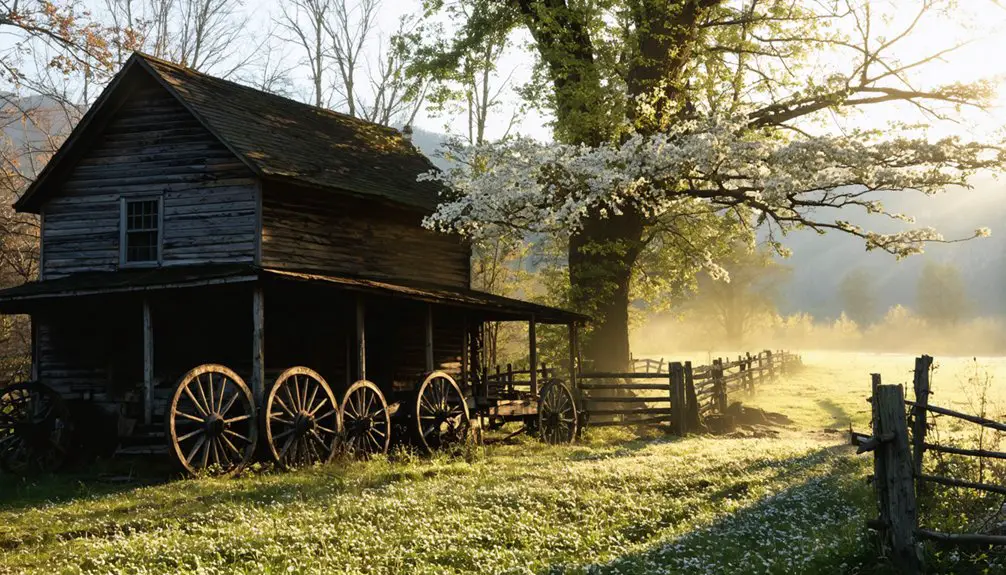
When you arrive at Elkmont with your four-legged companion, you’ll discover one of the most fascinating preserved ghost towns in the Great Smoky Mountains—a place where weathered vacation cottages stand frozen in time among towering hemlocks and rhododendron thickets.
This abandoned resort community showcases remarkable Elkmont history, from its 1830s logging origins through its transformation into an exclusive retreat for Knoxville’s elite. The Appalachian Club and Wonderland Hotel once hosted wealthy visitors seeking mountain escapes.
Resort architecture reveals decades of craftsmanship—rustic cabins with hand-hewn beams, stone foundations, and wraparound porches that echo with ghostly laughter. By the 1920s, this mountain retreat had become the second largest town in Sevier County, complete with essential amenities like a general store, post office, and theater.
You’ll find roughly 70 historic structures scattered throughout Daisy Town and Wonderland areas. Each location has unique characteristics that distinguish it from other mountain communities in Tennessee. Leash your dog and explore responsibly; these fragile remnants tell stories of Tennessee’s mountain heritage before the national park’s establishment.
Cades Cove: Historic Settlement Along the Loop Road
You’ll navigate the one-way Cades Cove Loop Road with your dog alongside over a million annual visitors who come to witness both preserved 19th-century homesteads and the valley’s famous wildlife populations.
Keep your leashed companion close as black bears, deer, and wild turkeys frequently cross the road and graze in the open fields between historic structures like the 1818 John Oliver Cabin and the working Cable Mill. Three historic churches dot the valley, including the Methodist Church with its distinctive two front doors that once separated men and women during services.
The 11-mile loop requires patience during peak seasons, but this slow pace works perfectly for spotting wildlife while respecting park leash regulations that protect both your pet and the cove’s wild residents. The valley’s fertile limestone soil originally attracted Cherokee settlers and later European farmers who established this thriving mountain community.
Vehicle Access and Wildlife
As you navigate the 11-mile Loop Road that circles Cades Cove’s historic valley, you’ll discover that vehicle access and wildlife encounters go hand in hand along this scenic route.
The paved drive connects preserved cabins, churches, and barns while offering prime viewing opportunities for the area’s abundant fauna. The Cherokee people once traveled these same paths for hunting long before European settlers arrived in the early 1820s.
Vehicle restrictions enhance your experience – Wednesdays from mid-May through mid-September are reserved for pedestrians and cyclists only.
Peak-hour limitations encourage early morning visits when wildlife is most active.
- Bear jams frequently stop traffic as black bears forage near valley edges
- White-tailed deer cross roads at dawn and dusk, requiring reduced speeds
- Wild turkeys roam historic farm sites, creating authentic frontier atmosphere
You’ll find limited parking at historic stops, so seasonal tram tours offer stress-free alternatives for experiencing this remarkable convergence of history and nature. Some visitors report seeing glowing orbs above the historic cemeteries during twilight hours, adding an otherworldly element to evening drives through the valley.
Pet Regulations and Safety
While Cades Cove’s historic charm beckons pet owners to explore Tennessee’s mountain heritage, strict regulations protect both your four-legged companion and the area’s thriving wildlife population.
You’ll need to master pet etiquette basics: keep your dog leashed within six feet at all times, stick to designated campgrounds and roadsides, and never leave them unattended. Pet owners must immediately dispose of waste in trash receptacles to maintain the area’s pristine condition.
Wildlife awareness becomes essential when black bears frequent these historic grounds—store all food and scented items in sealed vehicles, dispose of garbage in bear-proof dumpsters, and consider carrying bear spray. The area’s 159 campsites at Cades Cove Campground provide pet-friendly accommodations for overnight stays, though no hookups are available.
Your freedom to explore depends on following these safety protocols. Remember, trails and historic building interiors remain off-limits, but the Loop Road offers spectacular views from your vehicle’s safety.
Downtown Chattanooga Ghost Walking Tours
Several ghost tour operators transform downtown Chattanooga’s cobblestone streets and riverfront pathways into haunting nighttime adventures that welcome well-behaved dogs on leashes.
You’ll discover dog friendly tours through historic districts where Civil War spirits and flood victims reportedly roam. Your canine companion can join you on 1-2 hour walks exploring the Read House’s murderous past and UTC campus’s paranormal hotspots. Tours begin at the High Four Great Dane Statue at 105 Walnut Street, making it easy to locate your starting point.
- Chattanooga Ghost Tours offers their award-winning “Murder & Mayhem” experience with flexible pet policies for nighttime walks.
- ChattaBOOga Ghost Walk provides 1.5-2 hour adventures through riverfront areas where your dog might sense unexplained presences.
- Ghost City Tours runs family-friendly routes perfect for introducing pets to ghostly encounters.
The specialized ChattaBOOga Ghost Hunt utilizes EMF meters and witching wands to detect supernatural activity during your haunting adventure. Expect $29-$35 pricing while traversing uneven cobblestones and scenic staircases during these spine-tingling downtown explorations.
Gatlinburg’s Haunted History Experiences
Beyond the bustling tourist strips and mountain views, Gatlinburg’s shadowy streets harbor centuries of supernatural encounters that welcome leashed dogs on most guided ghost walks.
You’ll discover haunted legends surrounding the Greenbrier Restaurant’s tragic love story and LeConte Lodge’s nightly visitor while your canine companion explores historic downtown alleys.
The Ghost Walk of Gatlinburg ($18 adults) leads you past hotels where gruesome murders occurred and the frightful 1830s White Oak Flats Cemetery.
Your dog can join you for ghostly sightings along Roaring Fork Motor Nature Trail, where Lucy’s legend persists, and through Cades Cove’s homesteads where shadowy figures roam near primitive churches.
Appalachian GhostWalks offers lantern-led tours mixing historical facts with macabre events, creating spine-tingling adventures you and your four-legged friend can share.
Hidden Mining and Logging Settlements Across East Tennessee
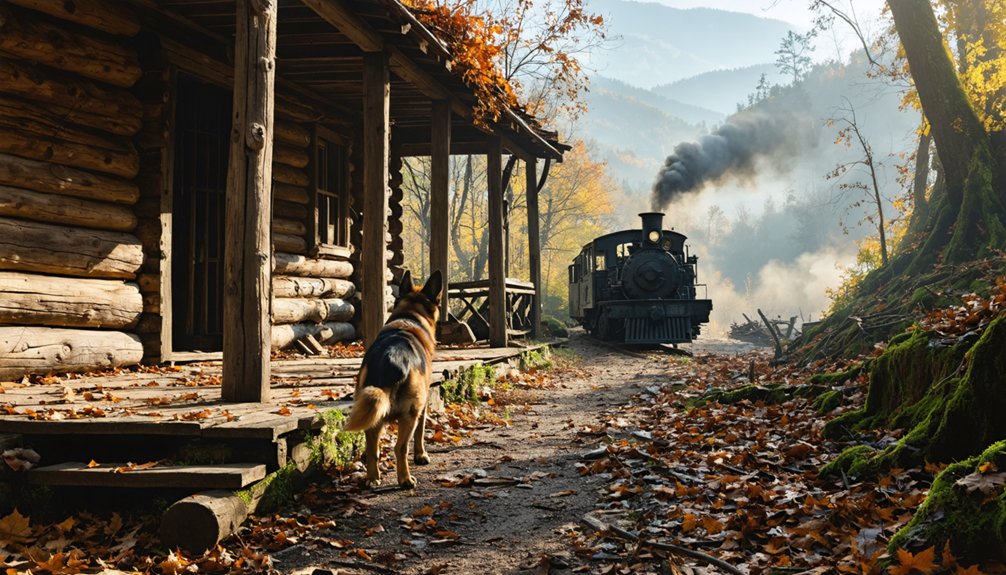
Deep within East Tennessee’s rolling hills, abandoned mining camps and logging settlements offer you and your dog countless acres of exploration through America’s industrial ghost towns.
These forgotten communities tell stories of coal miners, copper smelters, and timber workers who carved lives from Tennessee’s mountains.
You’ll discover historical remnants scattered across Campbell and Fentress counties, where stone foundations and rusted equipment mark former boom towns.
The No Business Trail winds through overgrown settlements where 300 residents once thrived, while Copper Hill’s reclaimed wasteland showcases nature’s recovery from industrial devastation.
- Beech Grove’s abandoned mine shafts and mule barns create fascinating exploration terrain
- Coal Creek’s battlefield trenches and mining artifacts offer historical discovery
- Wilder’s cemetery provides peaceful reflection amid labor history
Your four-legged companion will love sniffing through these atmospheric ruins.
Essential Pet Safety and Health Preparations
While ghost town exploration offers thrilling adventures for you and your canine companion, Tennessee’s remote wilderness demands serious preparation to keep your four-legged explorer safe and healthy.
Pack a thorough pet first aid kit with bandages, antiseptic wipes, and a digital thermometer. Know the signs requiring immediate veterinary care—severe bleeding, difficulty breathing, or suspected broken bones. Locate the nearest 24-hour animal hospitals before venturing into isolated areas like abandoned mining settlements.
Hydration management becomes critical in Tennessee’s humid climate. Carry one ounce of water per pound of dog daily, plus extra reserves. Include collapsible bowls and purification tablets for extended backcountry adventures.
Monitor for dehydration signs and offer frequent small sips after exertion.
Apply year-round tick preventives and inspect your dog thoroughly after each ghost town expedition.
Leash Laws and National Park Service Regulations
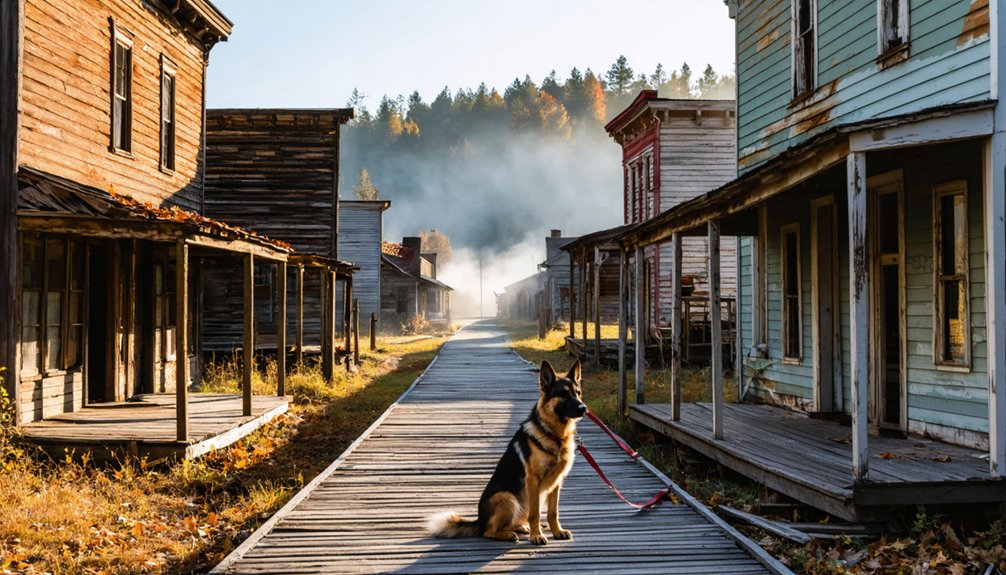
Smart explorers research local ordinances before venturing out:
- Municipal codes often mirror state law but add specific leash length requirements for parks and downtown areas.
- Federal sites typically prohibit pets entirely, except on designated trails where superintendent rules permit.
- Enforcement mechanisms include seizure, fines, and mandatory vaccination proof for release.
Proper leash enforcement protects both heritage sites and your wallet.
Practice excellent pet etiquette by keeping dogs leashed, cleaning waste, and respecting private property boundaries surrounding these atmospheric destinations.
Transportation and Pet-Friendly Accommodations
Getting to Tennessee’s ghost towns with your four-legged explorer requires careful route planning, since most historic sites sit at the end of winding mountain roads that’ll test your vehicle’s clearance and your GPS’s reliability.
Major highways like US-411 provide access, but you’ll navigate narrow, unpaved spurs where cell service vanishes and roadside assistance becomes wishful thinking.
Your transportation options shrink dramatically in these remote areas—forget ride-shares or public transit. Pack contingency plans and ranger contact info for emergencies.
For overnight stays, Elkmont Campground offers the closest pet friendly lodging to historic sites, though leash fees apply.
Gateway towns like Townsend and Gatlinburg provide more vacation rental cabins that welcome dogs, but expect size restrictions and cleaning deposits that vary wildly between properties.
Seasonal Timing for Optimal Ghost Town Visits
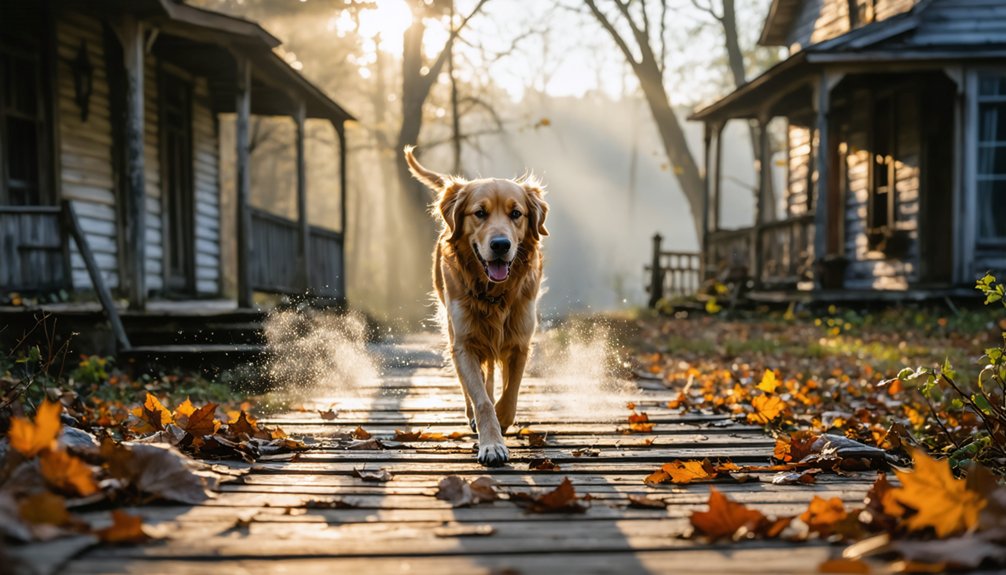
Once you’ve secured your dog-friendly accommodations, timing your ghost town adventure becomes the difference between shivering through a snowstorm and basking in perfect hiking weather with your canine companion.
As you plan your itinerary, consider exploring dogfriendly ghost towns that offer unique historical insights and beautiful landscapes. Many of these locations are not only welcoming to pets but also provide ample opportunities for outdoor exploration. With endless trails and stunning views, your adventure can become a memorable experience for both you and your four-legged friend.
Elkmont’s seasonal highlights transform your visitor experiences dramatically throughout the year.
Spring offers wildflower-lined trails and mild 50-70°F temperatures perfect for exploring with your pup.
Summer extends daylight hours but brings crowds and afternoon thunderstorms.
Fall delivers spectacular foliage and crisp air that enhances the eerie atmosphere around abandoned cabins.
- April-May: Wildflowers bloom near ghost town structures with minimal crowds
- October: Peak foliage creates stunning backdrops for historic building photography
- Winter: Fresh snow blankets preserved cabins, though road closures may limit access
Choose your season based on weather tolerance and desired solitude levels for maximum freedom exploring these haunting remnants.
Frequently Asked Questions
Are There Admission Fees for Dogs at Tennessee Ghost Town Sites?
Most Tennessee ghost town sites don’t charge dog admission fees beyond standard park entrance costs. You’ll find pet-friendly guidelines vary by operator, so check dog admission policies beforehand for commercial attractions requiring separate pet fees.
Can I Bring Dog Treats and Toys to Historic Preservation Areas?
Like maneuvering through a minefield, you’ll need to check each site’s dog friendly policies first. Most preservation areas restrict treats and toys, so master proper pet etiquette by bringing minimal, scent-free items only.
What Emergency Veterinary Services Are Available Near Remote Ghost Town Locations?
Remote vet clinics like Waverly’s 24/7 services and Sparta’s after-hours care provide emergency pet services near Tennessee’s backcountry. You’ll find mixed animal practices offering farm visits and urgent care when exploring isolated historic areas.
Do Ghost Tour Operators Provide Water Bowls or Pet Amenities During Walks?
Ghost tour operators don’t provide water bowls or pet amenities during walks. You’ll need bringing your own supplies for pet friendly tours, as dog friendly policies focus solely on leash requirements rather than comfort provisions.
Are There Age or Size Restrictions for Dogs on Guided Tours?
Wondering about bringing your furry companion? You won’t find dog size requirements or restrictive tour guide policies on Tennessee’s ghost walks. Your four-legged friend can freely explore these haunted streets alongside you, leashed but liberated.
References
- https://www.gopetfriendly.com/blog/pet-friendly-ghost-tours-howl-o-ween/
- https://www.tnvacation.com/trip-inspiration/articles/guide-dog-friendly
- https://www.visitchattanooga.com/blog/post/pet-friendly-chattanooga-trails-patios-attractions-stays/
- https://www.pigeonforge.com/elkmont-ghost-town/
- https://www.thesmokymountains.com/elkmont-ghost-town
- https://www.tripadvisor.com/Attraction_Review-g143031-d8426768-Reviews-Elkmont_Ghost_Town-Great_Smoky_Mountains_National_Park_Tennessee.html
- https://smithcreekresort.com/things-to-do/elkmont-ghost-town/
- https://www.bringfido.com/attraction/tours/state/tennessee/
- https://wbkr.com/historic-mountain-ghost-town-awaits-your-next-east-tn-visit/
- https://en.wikipedia.org/wiki/Elkmont