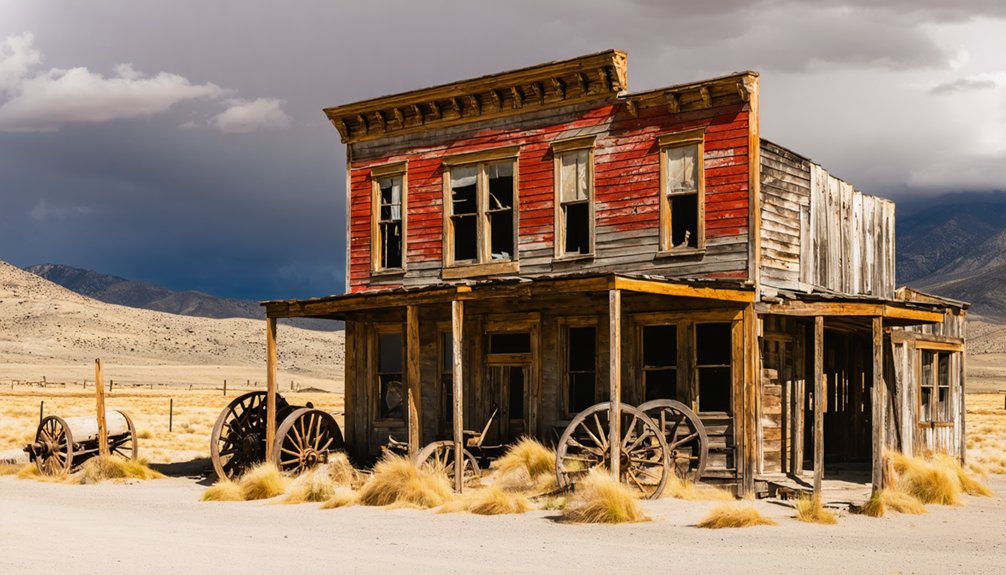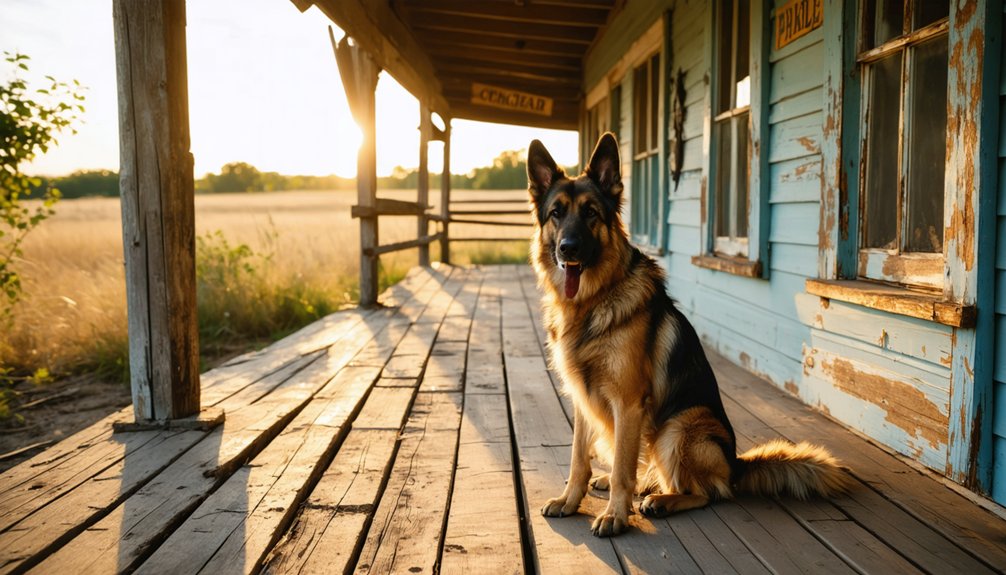
You’ll discover that the Midwest’s abandoned mining towns and prairie settlements offer some of the country’s most rewarding ghost town adventures for you and your four-legged companion, from Michigan’s copper country where over 52 million pounds of ore once emerged from now-silent shafts, to Kansas wheat towns where only weathered headstones mark former communities. Central Mine provides leashed trail access past thirteen historic houses, while Freda’s black stamp sand beaches offer perfect running space for dogs among towering smokestacks and stone foundations that whisper tales of America’s industrial past.
Key Takeaways
- Central Mine offers dog-friendly trails past 13 historic houses with leashed dogs allowed on designated paths only.
- Freda features black stamp sand beaches providing ample running space for dogs among industrial ruins and foundations.
- Delaware County includes intimate creek-side adventures at Blues Creek suitable for exploring with leashed pets.
- Prairie ghost towns across Kansas, Nebraska, and Iowa allow exploration but require landowner permission for private farmland access.
- Illinois coal country ghost settlements offer windswept prairie exploration though caution needed for mine subsidence and sealed shafts.
Keweenaw Peninsula Mining Towns: Michigan’s Historic Treasures
Five historic mining towns scattered across Michigan’s Keweenaw Peninsula offer you and your four-legged companion an extraordinary journey through America’s copper rush era.
Delaware Mine’s weathered shafts tell stories of 7 million pounds of copper extracted between 1846-1887, while Cliff Mine’s ruins mark where the nation’s most productive operation once rewarded investors with millions.
These abandoned mining sites preserve tales of unprecedented copper wealth that transformed Michigan’s wilderness into America’s richest mineral empire.
Your dog can explore Calumet’s preserved streets at Keweenaw National Historical Park, discovering mining heritage through guided tours into defunct mines.
Houghton’s boom-era architecture houses fascinating mineral museums, and Eagle Harbor’s lighthouse overlooks waters where copper-laden ships once departed. Indigenous peoples began this region’s mining legacy over 8,000 years ago, creating tools and trade items from Keweenaw copper that spread across North America.
This Keweenaw history adventure lets you roam freely through authentic ghost towns where copper kings once ruled America’s mining frontier. Visitors can descend into Delaware Mine’s underground workings via the original Shaft No. 1, exploring the Level 1 haulage drift that follows the copper-bearing Allouez Conglomerate Formation.
Central Mine: Preserved Ruins With Overnight Options
Among the Keweenaw Peninsula’s scattered mining settlements, Central Mine stands apart as your best opportunity to sleep where copper miners once called home. The Keweenaw County Historical Society’s “Miner’s Home” rental lets you experience authentic 1800s living within the preserved ruins of this once-thriving community.
You’ll walk trails past 13 remaining houses, foundation ruins, and the 1868 Methodist Episcopal church where descendants still gather each July. The historic yellow building that serves as the visitor center displays an American flag and maintains rustic charm with its wooden ramp entrance.
The visitor experience includes exhibits at the seasonal Visitors Center and self-guided exploration of shaft locations where 52 million pounds of copper were extracted before 1898’s closure. The region experiences harsh winters with an average of 270 inches of snowfall annually, making summer and fall the ideal seasons for visiting.
Your leashed dog can join you exploring the grounds, though respect the historic preservation efforts by staying on designated paths.
Book ahead—this immersive overnight adventure fills quickly.
Cliff and Freda: Foundation Trails for Careful Exploration
When you crest the hill approaching Freda’s ruins, the towering smoke stack of the Champion Mill pierces the sky like a copper-age monument to Lake Superior’s industrial past.
Your dog will love scrambling down the steep footpath beside you, but careful navigation becomes essential as you explore the foundation trails weaving through stone remnants of this 1910 boomtown.
The black stamp sand beaches create perfect running territory for four-legged companions, while you’ll discover glittering beach glass scattered like forgotten treasures.
Pack water for both you and your pup—this isn’t a manicured tourist site.
The sandstone outcroppings and man-made waterfall provide Instagram-worthy backdrops, but respect the remaining residents and posted signs. This was once home to 500 residents during the copper boom, though now only traces of that bustling community remain.
The mill’s massive stamps once processed 4,000 tons daily of copper-bearing rock before operations ceased in 1967.
Nature’s reclaiming this place beautifully.
Delaware and Winona: Remote Shoreline Adventures
Although Delaware County’s ghost towns lack the dramatic lakeside cliffs of Michigan’s copper country, they offer intimate creek-side adventures where your dog can splash through Blues Creek’s shallow waters while you explore the scattered foundations of Joseph Cole’s 1808 settlement.
Your Delaware adventures lead to Fairview Cemetery’s weathered headstones and abandoned farmsteads northeast of the intersection. While Winona exploration proves elusive in Ohio records, the Scioto River banks near the legendary Pirate’s Mansion site provide haunting shoreline walks where apparitions reportedly roam. The wool factory ruins near Cones Mills add industrial archaeology to your explorations, where John W. Cone’s steam-powered operation once thrived before fire claimed it in 1874. Nearby Blue Limestone Park’s historic train tunnel echoes with mysterious voices and loud bangs from the 1920s accident that claimed multiple lives.
Weathered headstones mark forgotten lives while mysterious apparitions drift along the Scioto’s shadowy banks near the infamous Pirate’s Mansion ruins.
- Creek-side foundation hunting through pioneer settlements with shallow water crossings
- Riverside ghost walks along Scioto banks where mysterious screams echo
- Cemetery exploration at historic burial grounds with centuries-old markers
- Abandoned farmstead photography capturing decaying barns and forgotten homesteads
- Native American village sites where Mingo and Lenape communities once thrived
Prairie Ghost Towns Across Kansas, Nebraska, and Iowa
Moving west from Ohio’s intimate creek valleys, the Great Plains unfold into a vastly different ghost town landscape where endless grasslands swallow abandoned settlements whole.
Understanding ghost town origins here reveals fascinating stories—railroad companies bypassed promising communities, agricultural consolidation emptied main streets, and speculative town-platting left dozens of failed settlements scattered across Kansas and Nebraska. The Dust Bowl of the 1930s forced many agricultural communities into complete abandonment as families fled the devastated farmland. Many communities like Sibley lost the county seat competition to neighboring towns, sealing their eventual fate.
Prairie town decline creates unique exploration challenges with your dog. Sites like Kansas’s Bushong offer substantial ruins including a massive abandoned school, while Nebraska’s Spring Ranch provides haunting cemetery walks.
You’ll need permission for most locations since they’re on private farmland. Pack plenty of water—prairie sites lack shade entirely. Watch for old foundations and rusted metal that could injure paws, and keep your companion leashed around grazing cattle.
Illinois Coal Mining Settlements and Rural Ruins
Beyond the windswept prairies lies Illinois’s coal country, where blackened spoil piles and crumbling tipples mark a landscape shaped by underground extraction rather than surface agriculture.
You’ll discover ghost settlements like Cardiff in Livingston County, where company-built towns once thrived around shaft houses and rail depots. Your dog can explore mining relics scattered across Macoupin County’s abandoned sites, though you’ll need to watch for subsidence hazards and sealed shafts.
The Braidwood area offers accessible remnants of Illinois’s violent mining past, while southern Illinois river towns hide tunnel networks beneath modern streets.
These forgotten landscapes provide unique freedom to wander through industrial archaeology.
- Navigate carefully around spoil piles and avoid unmarked shaft openings
- Visit Union Miners Cemetery for concentrated cultural history
- Explore reclaimed mine lands converted to wildlife areas
- Search for foundation ruins in Jackson and Will counties
- Respect private property around active remediation sites
Cemetery-Anchored Historic Sites in Missouri and Kansas
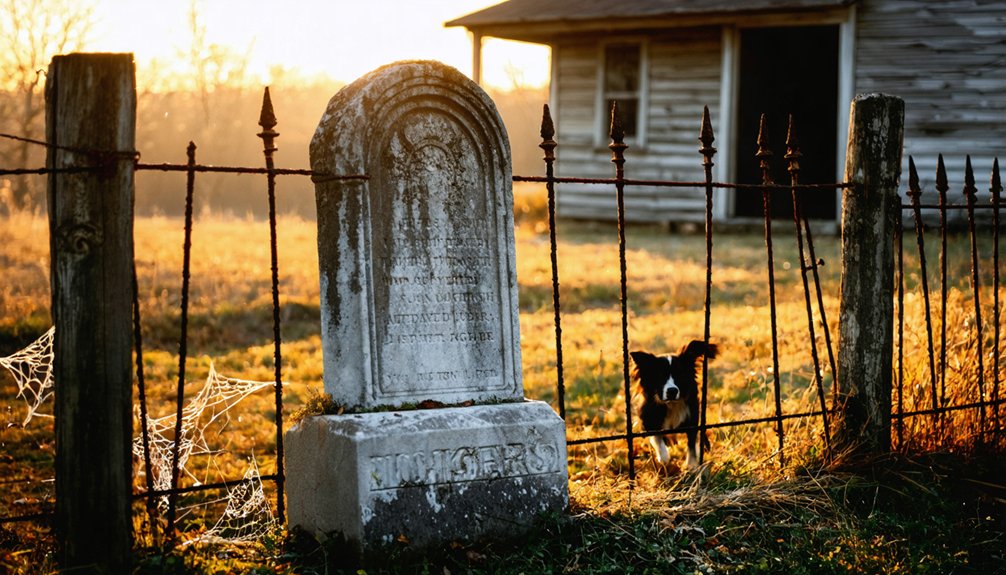
Where Missouri’s rolling hills meet Kansas’s endless horizons, forgotten cemeteries stand as silent sentinels over vanished communities, their weathered headstones telling stories that courthouse records never captured.
You’ll discover Hill Park Cemetery in Independence, where Frank James rests behind crumbling stone walls, and Mound Grove’s rolling terrain shelters Joseph Smith III’s grave. These haunted cemeteries whisper with ghostly legends—apparitions reportedly follow visitors at Mound Grove while staying within iron gates.
Kansas offers Stull Cemetery, notorious for supernatural tales and gateway-to-hell folklore, plus Ladore Cemetery marking a vanished wheat-country town.
Your four-legged companion can explore these atmospheric sites where history bleeds through broken monuments and overgrown pathways, creating perfect adventures for those seeking freedom from conventional tourist destinations.
Safety Hazards: Mine Shafts, Wildlife, and Terrain Risks
While cemetery grounds offer relatively stable footing for you and your dog’s historical wanderings, the real ghost towns scattered across the Midwest hide far more sinister threats beneath their romantic facades.
Mine shaft safety becomes critical when exploring Indiana’s Tri-State area, where hundreds of buildings sit atop abandoned shafts prone to collapse. Missouri’s forgotten mines lurk under deceptively thin ground cover that’ll give way under your weight.
Wildlife hazards multiply around these sites—while bat grates protect humans from falls, contaminated water sources threaten your four-legged companion’s health.
- Solid-appearing terrain often masks century-old shafts from unmarked 1840s operations
- Mercury-contaminated soil poses serious health risks to curious dogs
- Mine effluents have polluted thousands of miles of regional waterways
- Colorado’s abandoned sites caused 22 recent fatalities from structural failures
- National databases can’t track every hazardous feature threatening explorers
Essential Packing List and Planning Tips for Ghost Town Adventures
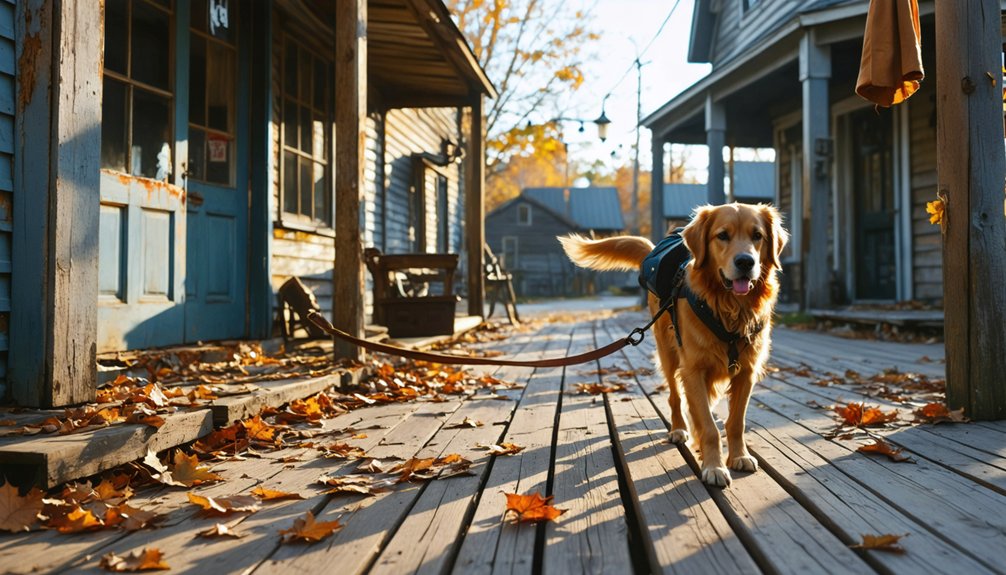
You’ll need specialized gear to keep your canine companion safe while exploring crumbling structures and remote terrain—from protective booties for traversing broken glass to extra water reserves for those unexpected extended hikes.
Before you even load the car, research land ownership and secure proper permits, since that picturesque abandoned schoolhouse might sit on private property where trespassing could land you in serious trouble.
Your emergency preparedness plan becomes critical when you’re miles from cell service with only your dog for company, so pack communication devices, first-aid supplies for both species, and always tell someone your exact route and expected return time.
Dog Safety Gear Essentials
Before stepping foot into your first ghost town with your canine companion, you’ll want to assemble a thorough safety kit that anticipates the unique hazards these abandoned places present.
Rusted metal fragments, broken glass, and unstable structures demand protective booties and a well-stocked dog first aid kit. Your hydration tips should include carrying extra water—never trust unknown sources in these forgotten settlements.
- Reflective harness with lift handle for maneuvering through debris-filled buildings
- Protective booties trained on beforehand to prevent sharp object injuries
- Collapsible water bowl and electrolyte supplements for extended exploration
- Emergency muzzle and thermal blanket for stress or injury situations
- Headlamp and backup batteries for evaluating wounds in dark structures
Site Research and Permits
Once you’ve secured your dog’s protective gear, the real adventure planning begins with understanding the legal landscape of your chosen ghost town.
You’ll need to determine land ownership first—federal, state, or private—as permit requirements vary dramatically. Many Midwest ghost towns operate as living-history attractions with specific access rules and leash policies.
Exploring abandoned sites near Mount Rainier can offer a fascinating glimpse into the region’s history and natural beauty. However, visitors should approach with caution, as some areas may pose safety risks or have restricted access. Always check local regulations and guidelines before planning your adventure.
Don’t assume you can simply wander onto abandoned property with your furry companion.
Research day-use permits through county historical societies or state park websites. Print everything offline since cell service often disappears in remote locations.
Carry proof of landowner permission and boundary maps to avoid trespassing issues. Some sites require pet registration fees or seasonal restrictions.
Freedom means respecting the rules that keep these historical treasures accessible for future adventures.
Emergency Preparedness Planning
While ghost towns offer incredible adventures, their remote locations can quickly transform minor mishaps into serious emergencies when you’re miles from cell towers and hours from help.
Your emergency action plan starts with a thorough first-aid kit meeting ANSI standards, plus seven days of prescription medications for both you and your dog. Pack water purification tablets alongside your baseline three-day water supply—that creek might dry up unexpectedly.
Your disaster preparedness toolkit needs offline GPS maps, a satellite messenger for SOS signals, and weatherproof food storage to prevent wildlife encounters.
- Carry veterinary records and microchip documentation for emergency animal care
- Pack canine CPR instructions and trauma supplies for serious injuries
- Bring electrolyte replacements for both species during heat emergencies
- Include tick removal tools and antihistamines for allergic reactions
- Store emergency contact lists for local veterinary clinics and land authorities
Frequently Asked Questions
Are Dogs Allowed Inside Historic Buildings and Museums at Ghost Town Sites?
Most historic buildings restrict dogs inside due to dog friendly policies balancing visitor access with historic preservation guidelines. You’ll find outdoor exploration unrestricted, letting your adventurous spirit roam freely through ghostly grounds and pathways.
What Veterinary Emergency Contacts Should I Have for Remote Midwest Ghost Towns?
You’ll need emergency numbers for 24/7 veterinary clinics within driving distance, plus Animal Poison Control’s hotline. Save local sheriff dispatch contacts too—they’ll coordinate air evacuations when cellular towers can’t reach civilization’s forgotten corners.
Do Ghost Town Sites Offer Dog Waste Stations or Water Fountains?
Better safe than sorry—most ghost towns lack dog waste stations and water fountains. You’ll find basic amenities only at state park sites. Pack your own waste bags and water for true freedom exploring.
Can I Camp Overnight With My Dog at Ghost Town Locations?
You can’t typically camp overnight at ghost town sites due to strict camping regulations. Most lack dog friendly amenities like waste stations. Instead, book nearby established campgrounds where you’ll find proper facilities and freedom to explore safely.
What Vaccinations Does My Dog Need Before Visiting Prairie Ghost Towns?
Your furry explorer needs essential shots before prairie adventures: rabies vaccination’s legally required, plus DAPP combo protects against nasty bugs. Consider Lyme vaccine since Midwest ticks love freedom-seekers roaming those windswept ghost towns.
References
- https://www.thetravelpockets.com/new-blog/dog-friendly-calico-ghost-town
- https://www.bringfido.com/blog/pet-friendly-vacation-americas-spookiest-cities/
- https://www.travelawaits.com/2702819/most-haunted-places-midwest/
- https://www.youtube.com/watch?v=2jAq3kQCqqs
- https://www.visitkeweenaw.com/blog/post/our-top-7-keweenaw-ghost-towns-to-explore/
- https://barkingembarkers.com/top-12-favorite-dog-adventures-in-the-midwest/
- https://hiddenmidwest.com/midwest-ghost-towns-a-hikers-guide-to/
- https://www.tripadvisor.com/ShowTopic-g59952-i3934-k653554-Last_Minute_Midwest_Resort_WITH_DOG_Vacation-Hayward_Wisconsin.html
- https://www.mininghistoryassociation.org/DelawareMine1.htm
- https://www.nps.gov/kewe/learn/historyculture/copper-mining-timeline.htm