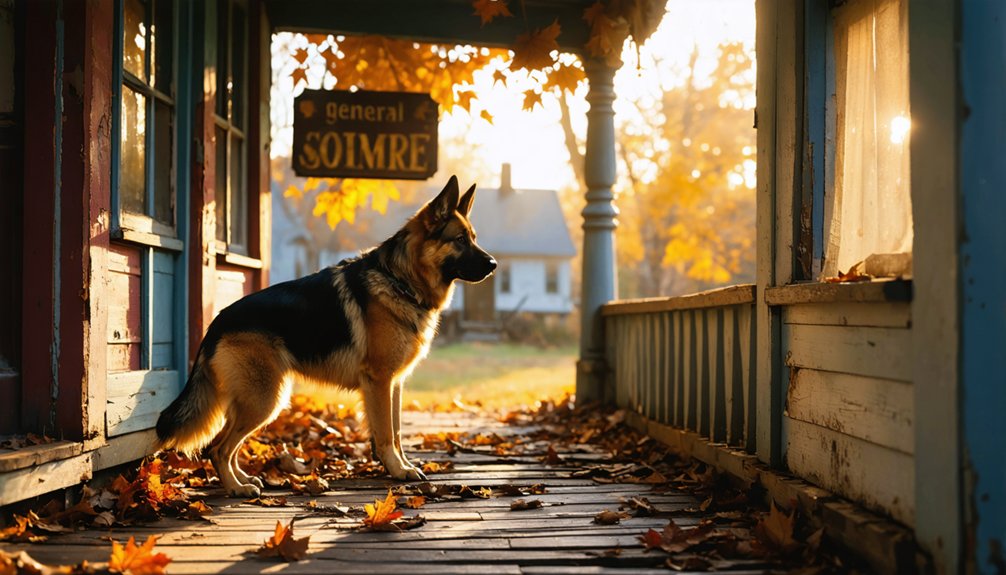
You’ll find fantastic dog-friendly ghost town adventures throughout the Northeast, from the Adirondacks’ abandoned mining settlements like Tahawus to New England’s mysterious stone foundations at Bara-Hack Village. Your leashed companion can explore weathered mill ruins, forgotten industrial sites, and coastal lighthouse districts while you uncover centuries of lost history. These crumbling settlements offer safe trails through historic remnants, though you’ll need to research current access policies and pack emergency supplies for changing conditions that await your ghostly exploration.
Key Takeaways
- Tahawus in the Adirondacks offers accessible trails through abandoned iron mining village ruins with leashed dogs welcome.
- Old Croton Aqueduct State Historic Park provides ghost town exploration along the 1842 aqueduct path with dogs allowed.
- Bara-Hack Village in Connecticut features mysterious stone foundations and allows leashed pet exploration of haunted ruins.
- Dogtown’s rocky Massachusetts plateau welcomes dogs to explore carved inspirational sayings among abandoned settlement remains.
- Alvira’s vanished Pennsylvania town permits leashed dogs on state game lands featuring concrete WWII munitions bunkers.
Adirondack Abandoned Mining Towns and Great Camps
While most ghost towns conjure images of tumbleweeds rolling through dusty Western streets, the Adirondack Mountains harbor their own collection of abandoned settlements where iron ore and titanium once drove bustling communities.
You’ll discover Tahawus history dates back to 1826 when iron ore was first discovered along the Upper Hudson’s banks. The village of Adirondac thrived until 1858, supporting blast furnaces, forges, and even the Adirondacks’ first bank.
Today, you can explore this ghost town with your canine companion through the Adirondack wilderness. The Open Space Institute manages 6,000 acres, keeping trails accessible while preserving the 50-foot blast furnace and McNaughton Cottage where Theodore Roosevelt once stayed. Mining operations experienced a wartime revival in 1941 when demand for titanium dioxide increased during World War II. The area briefly served as headquarters for the Preston Ponds Club in 1876, marking the first hunting and fishing club in the Adirondacks.
Explore 6,000 acres of preserved wilderness trails where Roosevelt once stayed, accompanied by your four-legged hiking partner.
Your dog will love roaming these historic grounds.
Hudson Valley’s Haunted Heritage Sites
You’ll discover the Hudson Valley’s rich paranormal history becomes even more memorable when shared with your four-legged companion on pet-friendly ghost tours through centuries-old sites.
Many historic mansions like Ten Broeck Mansion and atmospheric locations such as Huguenot Street welcome leashed dogs during their haunted walking tours, letting you both experience the region’s spectral folklore together. The Old Dutch Church Cemetery, dating back to 1658, offers candlelight tours where you can walk among Revolutionary War figures’ graves while your dog explores the historic grounds beside you. Historic Huguenot Street showcases remarkable 18th-century stone houses that provide an authentic backdrop for exploring the area’s ghostly past with your pet.
These dog-accessible adventures combine scenic trail walks with spine-tingling stories, creating the perfect blend of outdoor exploration and supernatural storytelling that’ll captivate both you and your curious canine.
Sleepy Hollow Trail Access
Following the historic 1842 aqueduct path that once carried fresh water to New York City, the Old Croton Aqueduct State Historic Park creates a linear corridor perfect for exploring Sleepy Hollow’s most legendary sites with your four-legged companion.
You’ll find convenient trail access points throughout the route, with metered street parking available in downtown Sleepy Hollow and Tarrytown. The McKeel Avenue municipal lot in Tarrytown sits adjacent to the trail, offering additional parking options for your ghost-hunting adventure.
Your leashed dog can join you as you cross the Pocantico River near the legendary Ichabod Crane encounter spot and explore the Old Dutch Church cemetery with gravestones dating to the 1600s. The trail provides scenic views of the Hudson River as you walk through this historic landscape.
Multiple street crossings provide flexible entry points along this haunted heritage route. For those seeking an extended adventure, the nearby Sleepy Hollow Trail offers morning hikes with significant elevation changes and spans over 5 miles from South Lake to Mountain House Road.
Pet-Friendly Ghost Tours
As darkness falls across the Hudson Valley, several tour operators welcome well-behaved dogs on their supernatural storytelling walks through historic cemeteries, haunted main streets, and moonlit heritage sites.
US Ghost Adventures and Lizzie Borden-branded operations allow leashed pets on outdoor portions, though you’ll need advance confirmation since indoor stops often restrict animals. Independent companies throughout the region offer dog-friendly ghost walks with varying policies.
Proper pet etiquette guarantees everyone enjoys their ghostly encounters—keep your dog leashed, bring cleanup supplies, and maintain control during storytelling moments.
Events like Wiltwyck Cemetery’s “Hounds and Headstones” explicitly welcome dogs with current rabies documentation. You’ll traverse uneven terrain and weather-exposed routes, so prepare accordingly. Some tour operators believe dogs are sensitive to paranormal activity and may enhance the supernatural experience.
Most operators reserve the right to remove disruptive pets, emphasizing the importance of bringing only calm, socialized dogs. Hyde Park’s tours offer family-friendly explorations that combine thrilling historical education with supernatural encounters along the Hudson River.
New England’s Forgotten Villages and Mill Ruins
While New England’s picturesque landscapes draw countless visitors each year, the region’s most intriguing destinations lie hidden beneath decades of overgrowth and forgotten history.
You’ll discover these forgotten villages scattered throughout Connecticut and Massachusetts, where crumbling foundations tell stories of communities that once thrived. Mill ruins dot the countryside, their weathered stones marking spots where industry once flourished before economic collapse claimed entire settlements.
You can explore Bara-Hack Village’s mysterious stone foundations in Connecticut, where voices still echo through empty spaces. Cornwall’s Dudleytown stands as the Village of the Damned, permanently closed due to its haunting reputation and eerie legends that continue to draw paranormal interest.
Massachusetts offers Dogtown’s rocky plateau, where ramshackle homes once sheltered society’s outcasts among stray dogs. The wilderness area features inspirational sayings carved into rocks that visitors can discover while hiking the trails.
These abandoned places welcome curious explorers seeking freedom from crowded tourist destinations, offering authentic encounters with New England’s haunting past.
Pennsylvania and New Jersey Industrial Ghost Sites
Beyond New England’s wooded ruins, Pennsylvania and New Jersey’s industrial ghost sites reveal a different chapter of American abandonment—one written in concrete bunkers, mining towns, and steel company settlements.
You’ll discover Yellow Dog Village’s preserved mining structures in Armstrong County, where limestone extraction created a company town frozen in time. Scotia Mines near State College showcases Carnegie’s industrial empire remnants, while Concrete City’s indestructible worker housing experiments stand defiant against demolition attempts.
Pennsylvania history unfolds dramatically at Alvira, where an entire town vanished for WWII munitions production, leaving mysterious bunkers across state game lands.
An entire Pennsylvania town disappeared overnight for wartime munitions, leaving only concrete bunkers scattered across hunting grounds.
Greenwood Furnace’s charcoal-fired iron operations tell stories of 19th-century industry. These accessible sites welcome you and your canine companions to explore America’s industrial past, where New Jersey ruins complement Pennsylvania’s abandoned legacy.
Coastal Ghost Towns and Lighthouse Districts

You’ll find that coastal ghost towns offer breathtaking exploration opportunities with your dog, but they require careful attention to lighthouse access regulations and maritime safety protocols.
In addition to exploring coastal ghost towns, you can discover numerous dogfriendly spots in Old Carthage that are perfect for a day out. Make sure to check local guidelines for any specific rules regarding dogs at these locations to ensure a fun and safe experience. Whether it’s a park or a beachfront area, there are plenty of options where your furry friend can enjoy the fresh air and playtime.
Many abandoned coastal sites like Portsmouth Island and Sea Breeze restrict or prohibit entry to deteriorating lighthouse structures, while ferry schedules and weather conditions can strand visitors unexpectedly.
Before setting out with your canine companion, check current access permissions for historic lighthouse grounds and pack emergency supplies for changing coastal conditions that could extend your adventure beyond planned return times.
Abandoned Lighthouse Access Rules
When exploring coastal ghost towns with your canine companion, you’ll discover that abandoned lighthouses operate under a complex web of federal regulations that directly impact your access.
The National Historic Lighthouse Preservation Act prioritizes transferring these structures to organizations committed to lighthouse preservation while ensuring public access remains available.
You’ll find that transferred lighthouses must welcome visitors for educational, recreational, and cultural purposes under reasonable conditions. However, don’t expect unrestricted freedom – new owners establish specific visiting hours and guidelines.
The Coast Guard retains rights to maintain active navigation aids, potentially limiting your exploration during maintenance periods.
Before planning your ghost town adventure, research each lighthouse’s current ownership status and access policies, as preservation requirements and public access provisions vary greatly between properties.
Coastal Safety Precautions
Although coastal ghost towns offer enchanting glimpses into maritime history, they present unique dangers that can quickly turn your adventure into an emergency.
Coastal erosion creates unstable cliffs that collapse without warning, especially after storms. You’ll encounter rip currents around abandoned harbors and submerged debris near derelict piers that pose serious injury risks.
Wildlife hazards include aggressive seabirds during nesting season and disease-carrying rodents in abandoned buildings. Saltwater corrosion weakens boardwalks, while storm surges can rapidly flood low-lying areas.
Download offline maps since cell coverage often fails in coastal hollows. Always carry personal flotation devices, check tide tables before visiting, and keep your dog leashed near wildlife colonies.
These precautions preserve your freedom to explore while protecting both you and your companion.
Safety Tips and Legal Considerations for Exploring With Dogs
Before venturing into these hauntingly beautiful destinations with your canine companion, you’ll need to navigate a complex web of safety protocols and legal requirements that can make or break your ghost town adventure.
Dog safety becomes paramount in abandoned settlements where dilapidated structures and hidden obstacles lurk beneath overgrown forests. Most locations enforce strict leash requirements – from Sleepy Hollow Cemetery’s pathways to Carolina Beach State Park’s trails.
Crumbling foundations and concealed dangers make leash laws non-negotiable when exploring these forsaken places with your four-legged explorer.
Essential considerations include:
- Structural hazards – Rocky terrain and crumbling buildings pose fall risks
- Wildlife encounters – Monitor for native species in untouched areas
- Weather exposure – High elevations create variable conditions
- Legal restrictions – Dogs prohibited inside historic buildings and museums
- Waste management – Pack out all pet waste, especially near tidal pools
Research specific regulations beforehand to guarantee unrestricted exploration.
Frequently Asked Questions
What Vaccines Does My Dog Need Before Visiting Remote Ghost Towns?
Armor your adventure companion with essential vaccination requirements: rabies and DA2PP core vaccines, plus leptospirosis for wildlife exposure. Complete the series 2-4 weeks before exploring for ideal disease prevention protection.
Are There Nearby Emergency Veterinary Clinics When Exploring Abandoned Sites?
You’ll find emergency veterinary clinics near most Northeastern ghost towns, though rural sites require longer drives. Research emergency contacts and local veterinarians beforehand, since cell coverage often fails at abandoned locations.
Which Ghost Towns Have the Best Cell Phone Coverage for Emergencies?
Salem offers excellent urban 5G coverage for emergency contacts, while 85% of wilderness accidents occur in dead zones. You’ll find reliable cell service there, unlike remote Dogtown’s spotty forest coverage that’ll leave you stranded.
Can I Bring My Dog Inside Historic Buildings During Guided Tours?
No, you can’t bring your dog inside historic buildings during guided tours. Dog policies at preserved historic sites strictly prohibit pets indoors to protect artifacts, though outdoor ruins remain accessible.
What’s the Best Time of Year to Avoid Ticks at These Locations?
Winter’s frozen grip becomes your ally—visit November through March for ideal tick prevention when these bloodsuckers lie dormant. You’ll dodge seasonal risks while exploring overgrown ruins with your adventurous companion safely.
References
- https://www.bringfido.com/blog/pet-friendly-vacation-americas-spookiest-cities/
- https://vetplayas.com/americas-best-pet-friendly-ghost-towns/
- https://www.gopetfriendly.com/blog/explore-pet-friendly-ghost-towns-with-your-furry-travel-buddy/
- https://youdidwhatwithyourweiner.com/the-best-5-dog-friendly-ghost-towns-near-seattle/
- https://visitadirondacks.com/fall/abandoned-places-ghost-towns
- https://wagwalking.com/wellness/the-ultimutt-guide-to-a-new-england-road-trip-with-your-dog
- https://www.parks.ca.gov/bodie
- https://www.untappedcities.com/the-history-of-tahawus-once-a-thriving-mining-community-now-an-adirondack-ghost-town/
- https://www.adirondack.net/history/tahawus/
- https://www.adirondackhub.com/story/2015/10/real-live-ghost-town