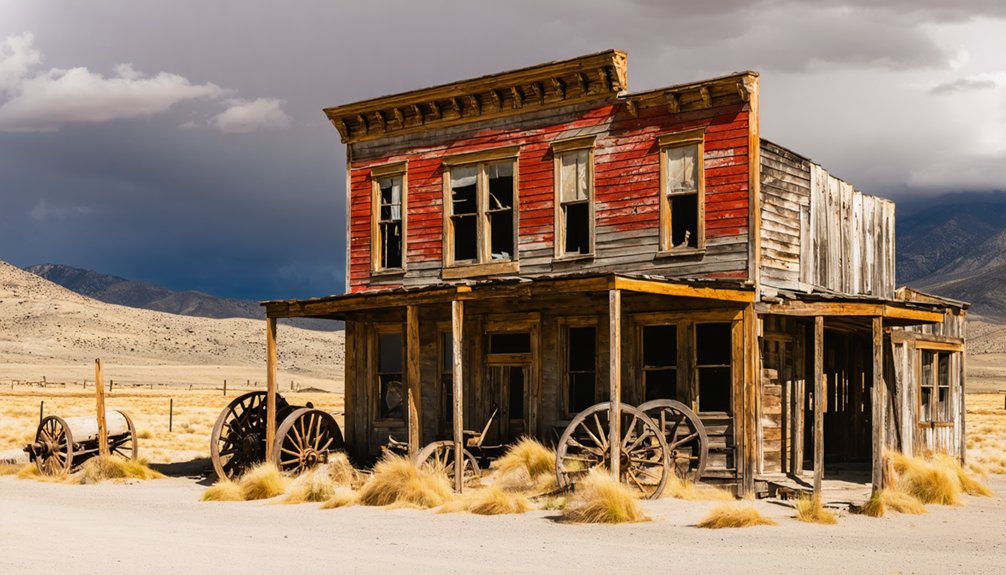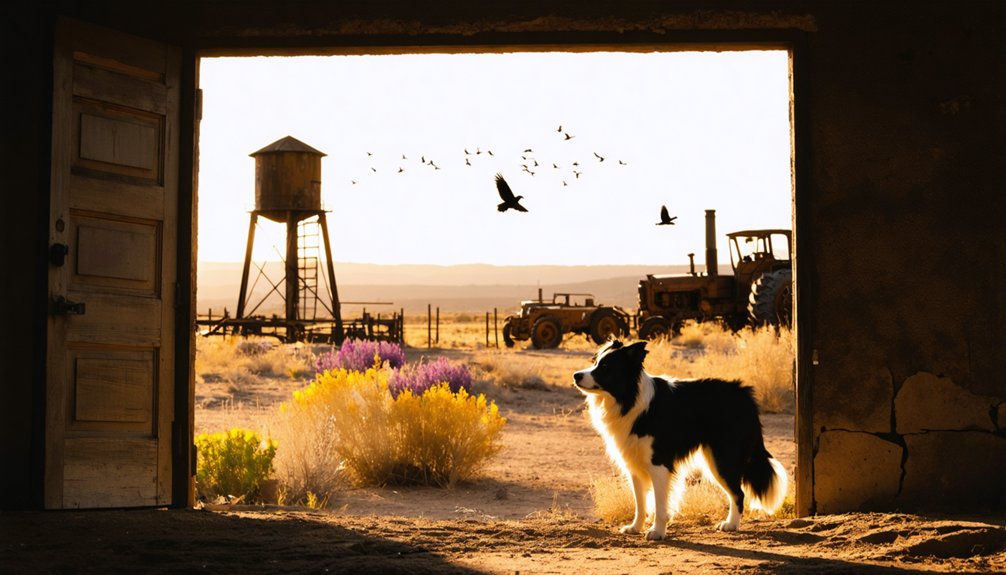
You’ll find several Southwest ghost towns that welcome your furry explorer, from pet-friendly Cerrillos along New Mexico’s 50-mile Turquoise Trail to artistic Bisbee’s dog-welcoming community. Jerome’s steep hillsides offer excellent hiking opportunities, while Terlingua lets you wander mercury mining ruins together. Most towns require leashes, and you’ll need to pack plenty of water—one liter per 10 kg of dog weight for desert conditions. Spring and fall provide the most comfortable temperatures for paw-friendly adventures through these historic mining landscapes.
Key Takeaways
- Cerrillos, Jerome, Bisbee, and Terlingua offer pet-friendly accommodations and welcome dogs for ghost town exploration adventures.
- Most historic mining towns require leashes at all times, with Jefferson County enforcing strict laws and $50+ fines.
- Spring and fall provide ideal visiting conditions with mild temperatures and fewer crowds for comfortable dog exploration.
- Pack one liter of water per 10kg of dog weight and schedule visits during dawn or dusk hours.
- Bring protective booties, quality harnesses, and snakebite kits while checking paws regularly for cactus spines and hazards.
Historic Mining Towns That Welcome Four-Legged Explorers
While modern cities often restrict where you can take your canine companion, these historic mining towns roll out the red carpet for four-legged adventurers seeking authentic Old West experiences.
Historic mining towns welcome your four-legged friends with open arms, unlike restrictive modern cities that limit canine adventures.
You’ll discover pet friendly accommodations in Cerrillos, where your dog can explore the 50-mile Turquoise Trail alongside you, sniffing out century-old mining remnants. Your pup can wander through this charming town of 200 residents where independently owned businesses welcome furry visitors.
Jerome’s steep hillsides offer perfect hiking terrain for energetic pups, while Bisbee’s artistic community embraces traveling pets with open arms.
Terlingua’s rugged landscape provides endless canine friendly activities among mercury mining ruins. Many of these historic mining operations required 70 miles of tunnels to extract precious metals from deep underground deposits.
Your furry explorer will love investigating Goldfield’s preserved saloons and blacksmith shops.
These towns understand that true freedom means adventuring together, creating memories where both you and your loyal companion can roam untethered through living history.
Leash Policies and Pet-Friendly Attractions at Southwest Ghost Towns
Planning your ghost town adventure means understanding the leash laws that’ll keep both you and your furry companion out of trouble with local authorities.
Nevada City requires leashes at all times, while Virginia City welcomes dogs with proper restraint. Don’t leave your pup sweltering in parked cars—these desert towns heat up fast.
Nevada’s leash regulations protect wildlife in management areas, and violations can result in citizen detention and impoundment. Local governments have the authority to enforce leash laws, and violations may result in fines or animal control actions.
Jefferson County enforces strict countywide rules with fines starting at $50. Your pet etiquette matters too—always pack waste bags and clean up after your dog.
Boulder City’s new 2025 laws restrict off-leash areas to designated dog parks, except Wilbur Square’s early morning and evening hours. Dog owners have expressed mixed reactions to these updated regulations balancing safety concerns with recreational opportunities.
Research local ordinances before exploring these historic gems with your four-legged explorer.
Essential Safety Tips for Desert Ghost Town Adventures With Dogs
Beyond the tumbleweeds and weathered saloon doors, the desert’s unforgiving landscape poses real threats that’ll test both you and your canine companion’s limits.
Heat management becomes your top priority—pack one liter of water per 10 kg of dog weight and schedule adventures for dawn or dusk when temperatures drop. Your pup’s paw pads can’t handle scorching surfaces that’d burn your hand in seconds. Consider pet shoes for protection when exploring areas with extensive hot pavement or rocky terrain.
Wildlife safety demands constant vigilance. Keep your dog leashed near rock crevices where rattlesnakes and scorpions lurk. I’ve watched too many curious noses get dangerously close to coiled threats. Many desert predators are nocturnal hunters, so plan to return to your vehicle or campsite well before sunset.
Pack a snakebite kit and know your nearest emergency vet’s location. Check those paws thoroughly after each exploration—desert hazards hide everywhere from cactus spines to rusted metal in crumbling structures.
Planning Your Route: Access and Terrain Considerations
Your success hinges on choosing routes that match both your vehicle’s capabilities and your dog’s endurance levels. Trail conditions vary dramatically across Southwest ghost towns, from paved accessibility to challenging dirt roads through mountain terrain.
Consider these critical route planning factors:
- Vehicle requirements: Apache Trail’s last 20 miles demand high-clearance vehicles through windy Superstition Mountains, while Nelson Ghost Town accepts standard cars from the highway.
- Distance considerations: Grafton requires a 3.3-mile roundtrip hike, perfect for active dogs but challenging in desert heat.
- Terrain challenges: Vulture City offers accessible paths with original mining equipment, while rocky mountain approaches test both you and your companion.
- Base camp strategy: Mesa’s pet-friendly Airbnbs provide convenient access to multiple Arizona locations.
Scout conditions beforehand—freedom means being prepared for anything the desert throws your way. Morning visits to historic sites like Goldfield Ghost Town provide peaceful exploration opportunities before crowds arrive, allowing your dog to roam freely through authentic western settings. Many locations offer free entry for wandering the main areas, though specific attractions like mine tours require additional fees.
Best Times to Visit and What to Pack for Your Canine Companion
While summer’s blistering heat can turn ancient mining camps into furnaces that’ll burn your dog’s paws within minutes, timing your ghost town adventures during the cooler shoulder seasons transforms these desert ruins into ideal canine playgrounds.
Spring and fall deliver prime weather—mild temperatures and extended daylight without the scorching midday sun that’ll send you both scrambling for shade. These seasons also offer fewer crowds at popular destinations, giving you and your dog more space to explore without navigating around other visitors.
Pack smart for freedom on the trail: carry one liter of water per dog for every four hours, plus collapsible bowls for frequent sips.
Dog hydration becomes critical in desert air that’ll dehydrate you faster than expected. Protective booties shield paws from jagged rocks and heated surfaces, while a quality harness gives you control when exploring crumbling foundations and mine shafts. The Southwest’s mostly absent humidity makes dehydration especially deceptive since sweat evaporates quickly in the dry air.
Frequently Asked Questions
Are There Veterinary Services Available Near These Ghost Towns for Emergencies?
You’ll find veterinary clinics scarce near ghost towns, often requiring 90-120 minute drives to emergency contacts in distant cities. Pack thorough first-aid supplies and pre-map routes to nearest 24/7 animal hospitals before venturing out.
Can I Bring Multiple Dogs or Are There Limits per Visitor?
Like corralling wild mustangs, visitor regulations typically lasso you to 2-4 dogs maximum. Dog policies vary wildly between privately-owned towns and public sites, so you’ll need to check specific limits before your pack arrives.
Do Any Ghost Towns Offer Dog-Sitting Services During Indoor-Only Activities?
None of these Southwest ghost towns offer dog-sitting services for indoor activities. You’ll need to plan around local pet policies or skip indoor-only attractions, as dog friendly accommodations don’t extend to supervised care.
Are There Dog Waste Stations or Should I Bring My Own Supplies?
Most ghost towns lack “poop stations,” so pack your own cleanup supplies. Bring sturdy waste bags, hand sanitizer, and a small trowel for remote adventures where you’ll need complete self-sufficiency exploring these abandoned places.
As you navigate through the abandoned settlements along I80, you may come across remnants of a once vibrant community. Take a moment to explore the structures and imagine the stories they hold, but always prioritize safety while roaming these forgotten places. Each settlement has its unique history and charm, waiting to be uncovered by the adventurous traveler.
Which Ghost Towns Have the Most Shade for Dogs During Summer Visits?
Vulture City offers the best shade structures with over a dozen restored buildings, while Goldfield’s historic Main Street creates cool walkways. Both provide excellent pet friendly trails with multiple covered areas for summer exploration.
References
- https://www.thetravelpockets.com/new-blog/dog-friendly-calico-ghost-town
- https://www.thetravelpockets.com/new-blog/dog-friendly-apache-trail-in-arizona
- https://www.youtube.com/watch?v=2LF3dcq6w5k
- https://airial.travel/attractions/united-states/apache-junction/goldfield-ghost-town-eB_fVerH
- https://www.bringfido.com/attraction/tours/state/nevada/
- https://goldfieldghosttown.com
- https://www.tripadvisor.com/Attraction_Review-g60778-d108693-Reviews-Fairbank_Historic_Townsite-Hereford_Arizona.html
- https://www.santafe.org/blog/post/historic_cerrillos/
- https://www.nps.gov/wrst/learn/historyculture/kennecott-mines-national-historic-landmark.htm
- https://www.homestratosphere.com/most-historic-small-towns-in-the-southwest-usa/