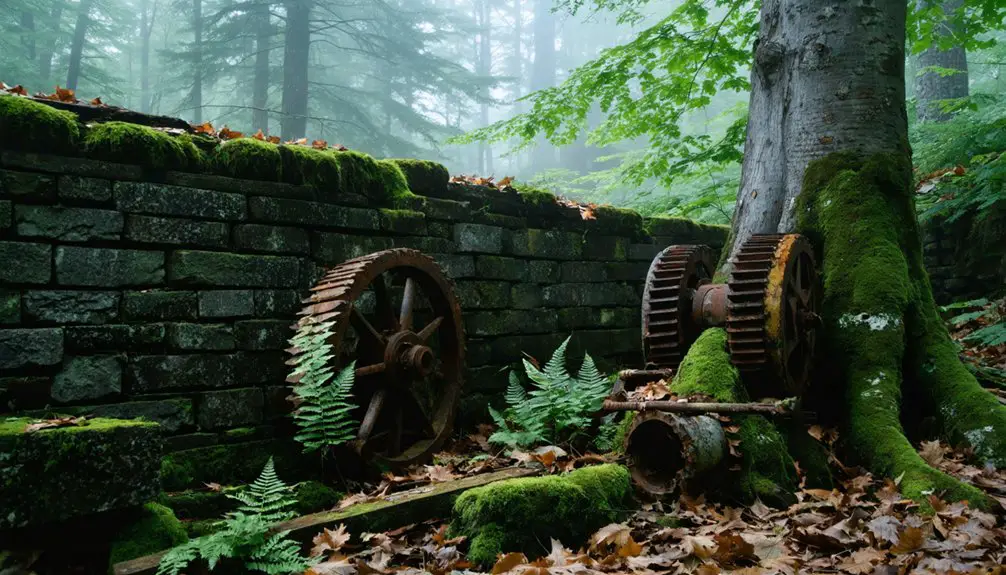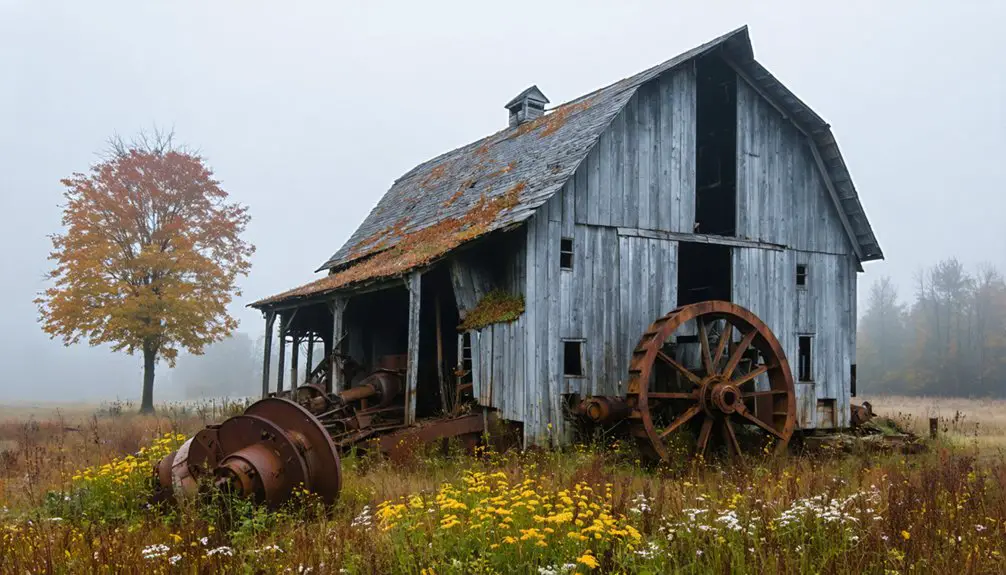
Vermont’s ghost towns provide incredible adventures for you and your dog, from Glastenbury’s former rail grades perfect for leashed walks to West Castleton’s slate quarry ruins offering off-leash freedom near Lake Bomoseen. You’ll discover Barre Town Forest’s 1,500 acres of reclaimed granite quarries and Freedlyville’s marble excavations where thick stone wall skeletons create natural obstacle courses. Always verify access rights since many sites sit on private land, and pack emergency supplies for safe exploration of these fascinating historical remnants.
Key Takeaways
- Railroad ghost towns like Glastenbury offer safer exploration with former rail grades as walking paths for dogs.
- Ricker Basin in Little River State Park allows leashed dogs among submerged historic village foundations.
- West Castleton’s slate quarry ruins provide off-leash freedom near Lake Bomoseen with stone foundations to explore.
- Barre Town Forest features 1,500 acres of reclaimed granite quarries with maintained trails past 25 abandoned sites.
- Always verify access rights, pack emergency supplies, and use proper restraints as terrain can be uneven.
Abandoned Mining Towns Where Dogs Can Roam Free
Before you pack your dog’s hiking gear for an adventure through Vermont’s abandoned mines, you’ll need to understand that these seemingly romantic ruins hide serious dangers beneath their weathered facades.
Pike Hill’s copper workings and Ely’s Pleasant Valley sites contain contaminated tailings that’ll poison your pup through paw contact or ingestion. Those picturesque open pits? They’re death traps with unstable ground and toxic runoff.
Don’t let those charming copper mine ruins fool you—contaminated tailings and unstable pit edges spell disaster for exploring dogs.
The old iron sites like Tyson Furnace offer slightly safer exploration, but sharp slag and rusted metal fragments create hazards for curious noses. This former mining town operated from 1835 until iron ore deposits were depleted, leaving behind industrial debris that poses ongoing risks to pets.
Even the scenic Belvidere Mountain asbestos quarries will coat your dog’s fur with deadly fibers.
Pet safety demands you research EPA remediation status before visiting any site, keep dogs leashed around industrial remnants, and always wash paws afterward. South Verser’s abandoned smelter remains on the EPA’s cleanup list due to extensive contamination from its copper mining operations.
Historic Railroad Communities Perfect for Canine Exploration
Unlike Vermont’s treacherous mining sites, the state’s abandoned railroad communities offer your four-legged explorer safer passage through history’s remnants.
These forgotten settlements blend railroad history with pet friendly exploration opportunities that’ll satisfy your wanderlust.
You’ll discover Glastenbury’s ghost town along the Long Trail, where former rail grades create perfect walking paths for you and your companion. This disincorporated settlement once thrived with 241 residents before economic decline led to its official abandonment in 1937.
Ricker Basin in Little River State Park welcomes leashed dogs among submerged village foundations, while West Castleton’s slate quarry ruins near Lake Bomoseen provide off-leash freedom.
Mountain Mills lies beneath Harriman Reservoir, but shoreline walks reveal railroad traces.
Lewiston’s coal transport legacy survives in open fields where your dog can roam freely, exploring subtle remnants of Vermont’s vanished rail-dependent communities. Along these historic routes, you might spot daffodils and cellar holes that mark where families once called these places home.
Forgotten Mill Villages With Dog-Friendly Trails
Where Vermont’s rushing streams once powered bustling mill operations, you’ll now find peaceful ruins perfect for exploring with your canine companion.
These forgotten settlements offer fascinating glimpses into industrial history while providing excellent walking terrain for leashed dogs.
West Castleton’s slate mill villages showcase stacked stone foundations and flooded quarries along Bomoseen State Park’s interpretive trail.
Your dog will navigate easily through this 0.75-mile loop, though wet stone surfaces warrant paw protection.
Greenbank’s Hollow near Danville reveals woolen mill ruins nestled in second-growth forest, where old road beds create natural pathways through foundation footprints.
The slate industry here employed over 800 workers by 1854, creating settlements that housed entire families in company-owned dwellings.
Many mills underwent significant upgrades in the late 1800s, including the addition of upper building floors and conversion to more efficient processing methods.
Essential considerations for mill village exploration:
- Bring durable paw protection for rocky, wet quarry areas
- Check seasonal museum hours before visiting preserved sites
- Prepare for primitive conditions at remote locations
- Follow old millraces and stream corridors for easiest walking
- Carry printed trail guides when available for historical context
Deserted Quarry Towns Offering Off-Leash Adventures
Deep within Vermont’s mountainous terrain, abandoned quarry towns offer some of the state’s most liberating off-leash experiences for adventurous dogs and their owners.
Freedlyville’s ghost village near Dorset provides the ultimate quarry exploration adventure, where your canine companion can roam freely through thick stone wall skeletons and cavernous marble excavations. The 2.2-mile hike up Mount Aeolus leads to a stunning pond perfect for off-leash fun, complete with railway remnants and equipment ruins to investigate together. The quarry’s distinctive horizontal burrowing design creates unique cave-like passages that add an extra dimension to your exploration. This region features 31 abandoned quarries within Dorset’s town limits, providing countless opportunities for discovery.
Barre Town Forest delivers even more possibilities across 1,500 acres of reclaimed granite quarries.
Twenty miles of maintained trails wind past over 25 abandoned sites, where dogs can splash in quarry ponds and explore historic machinery without crowds or restrictions in this remote mountainous playground.
Essential Tips for Visiting Vermont’s Ghost Towns With Your Pet
Before you lace up your hiking boots and clip on your dog’s harness for these remarkable quarry adventures, proper preparation transforms a potentially risky expedition into a safe and memorable experience.
Vermont’s ghost towns demand respect for both their historical significance and challenging terrain.
Essential pet safety and trail etiquette guidelines include:
- Verify access rights – Many ghost towns sit on private land requiring permission
- Pack emergency supplies – Bandages, tick tweezers, and potable water for remote locations
- Schedule pre-trip vet checks – Confirm vaccinations and fitness for rugged terrain
- Use proper restraints – Front-clip harnesses provide control on uneven stone foundations
- Follow Leave No Trace – Keep dogs from fragile ruins and pack out all waste
These preparations guarantee you’ll discover Vermont’s abandoned settlements while preserving them for future explorers. Consider exploring established dog-friendly destinations like Dog Mountain to practice your trail etiquette before venturing into more remote ghost town locations. Plan for off-season travel when ghost town areas are less crowded and provide a more immersive historical experience with your pet.
Frequently Asked Questions
Are There Any Ghost Town Accommodations That Allow Dogs to Stay Overnight?
You’ll find dog friendly accommodations near Vermont’s ghost towns through nearby B&Bs and cabins rather than within actual ruins. Search Hipcamp for pet-welcoming bases supporting your ghost town activities and exploration adventures.
What Veterinary Services Are Available Near Vermont’s Remote Ghost Town Locations?
You’ll find veterinary clinics scattered throughout Vermont’s regions, though remote ghost towns may require traveling to nearby towns for emergency services. Mobile vets like Clover Acres offer farm calls, bringing care directly to you.
Do Ghost Towns Have Cell Phone Coverage for Emergency Pet Situations?
You’re barking up the wrong tree expecting reliable cell service availability in Vermont’s ghost towns. Emergency contacts won’t connect when networks fail, so pack satellite communicators and know nearest towns with coverage for pet crises.
Are There Seasonal Restrictions for Visiting Ghost Towns With Dogs in Winter?
Yes, you’ll face leash requirements, property access restrictions, and facility closures during winter months. Prioritize winter dog safety with protective gear and limit exposure times on icy ghost town trails.
What Permits or Permissions Are Needed to Explore Private Ghost Town Properties?
You’ll need explicit written permission from property owners before exploring private ghost town access areas. Private property regulations strictly prohibit unauthorized entry, so contact landowners directly or face potential trespassing charges and legal consequences.
References
- https://www.vermonter.com/dog-mountain-st-johnsbury-vermont/
- https://www.atlasobscura.com/videos/vermont-dog-mountain-chapel-visit
- https://www.bringfido.com/blog/best-of-vermont/
- https://twoworldstreasures.com/dog-friendly-vermont/
- https://newenglandwithlove.com/ghost-towns-in-vermont/
- https://www.youtube.com/watch?v=2fvPo9iQC-w
- https://www.vermonter.com/vermont-asbestos-group-mine/
- https://kids.kiddle.co/List_of_ghost_towns_in_Vermont
- https://en.wikipedia.org/wiki/List_of_ghost_towns_in_Vermont
- https://thediggings.com/usa/vermont