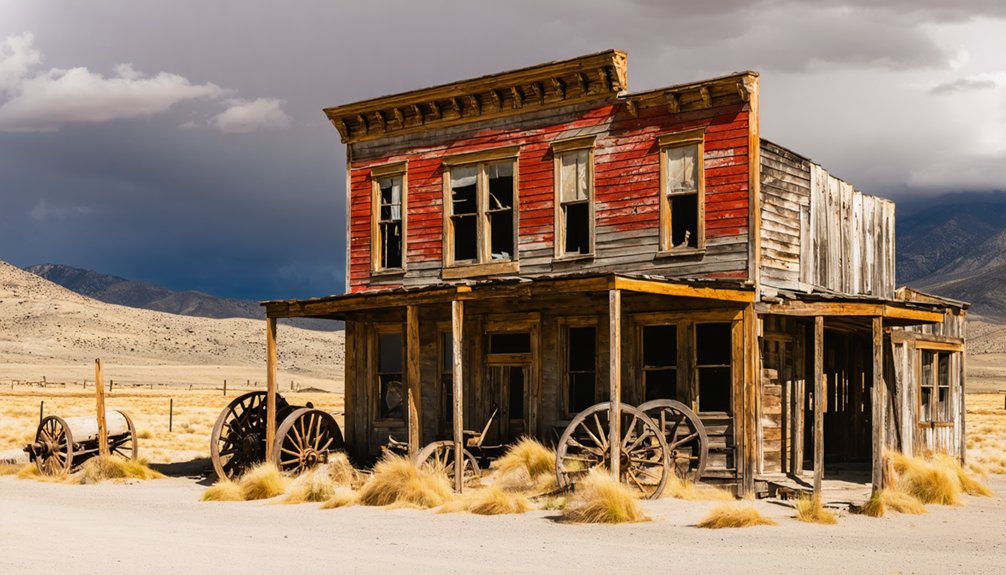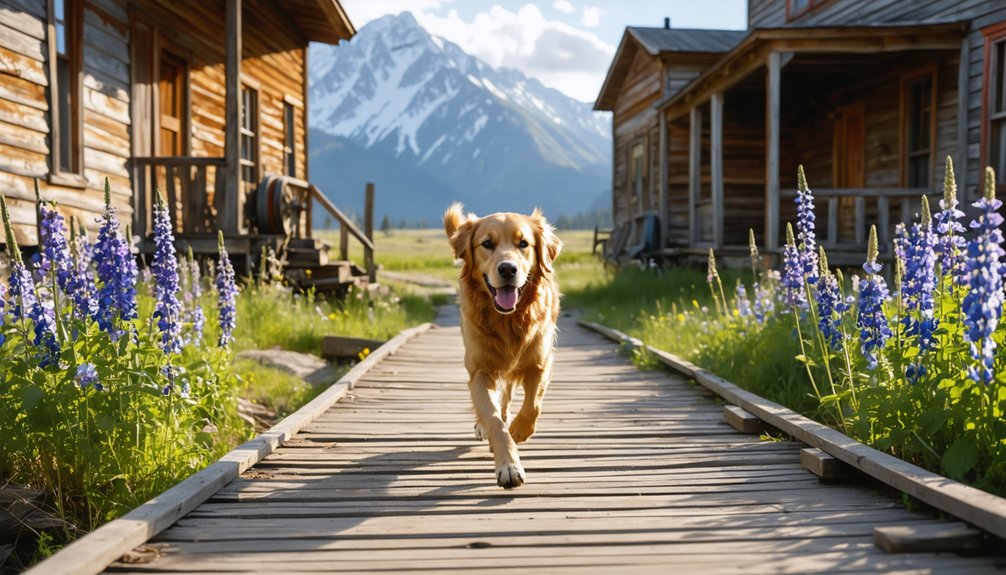
You’ll find numerous dog-friendly ghost towns scattered across the Rocky Mountains, from Colorado’s high-altitude sites like Animas Forks and Carson City to Nevada’s expansive Great Basin settlements. Most state parks, BLM lands, and Forest Service areas welcome leashed dogs on designated trails, though federal lands have stricter restrictions. These weathered mining camps offer incredible photography opportunities and interpretive trails winding through abandoned structures. Proper preparation for high altitude conditions and terrain safety will guarantee your adventure exploring these historic remnants becomes truly memorable.
Key Takeaways
- State parks, BLM, and Forest Service lands typically allow leashed dogs on designated trails to ghost towns.
- Dogs need acclimatization at elevations above 8,000 feet and require 1.5 times more water at high altitude.
- Red Mountain Mining District offers dog-friendly access to Ironton, Animas Forks, and Red Mountain Town ruins.
- Lulu City Trail and Mayflower Gulch provide 3-4 mile dog-friendly hikes to preserved mining structures.
- Pack first aid supplies, emergency gear, and extra water while checking pet policies before visiting.
Top Rocky Mountain Ghost Towns That Welcome Dogs
Five remarkable ghost towns scattered throughout Colorado’s San Juan Mountains offer you and your four-legged companion an unforgettable journey into the Old West’s mining heritage.
These dog friendly accommodations welcome adventurous spirits seeking authentic wilderness experiences.
Animas Forks showcases weathered cabins against stunning alpine backdrops, while Ironton preserves late 1800s silver rush structures.
Weathered mining structures from the 1800s silver rush create stunning contrasts against Colorado’s dramatic alpine wilderness landscapes.
Red Mountain Town, once boasting 10,000 residents and over 100 businesses, demonstrates remarkable historical mining significance from Colorado’s boom era.
Carson City perches dramatically at 12,000 feet atop the Continental Divide, rewarding challenging access with spectacular views.
Imogene sits along Colorado’s second-highest pass, inspiring the famous memoir “Tomboy Bride.”
Each location offers high-clearance vehicle access or hiking trails, letting you explore authentic mining camp remnants alongside your loyal companion. Interpretive brochures provide valuable historical context and navigation assistance for visitors exploring these remote mountain locations. Visitors should exercise caution around unprotected portals and mine shafts while exploring these historic sites.
Understanding Pet Policies and Access Restrictions
While these magnificent ghost towns beckon you and your canine explorer, traversing the complex web of pet regulations across different land jurisdictions requires careful planning before you hit the trail.
Federal lands impose the strictest access limitations—national parks prohibit dogs on all trails, restricting them to roads and campgrounds only. You can’t bypass these rules by carrying your pet in backpacks or strollers either.
However, state parks, BLM, and Forest Service lands typically offer more freedom, allowing leashed dogs on designated trails.
Municipal areas and private ghost-town sites set their own policies. Seasonal closures for wildlife protection add another layer of complexity. Beyond trail restrictions, dogs face additional limitations in public buildings like visitor centers where interpretive exhibits might enhance your ghost town experience. Pet owners must always clean up after their animals and dispose of pet waste properly in designated trash receptacles to maintain these historic sites.
Always verify current pet regulations through official park websites or ranger contacts, as violations can result in hefty fines and ejection from these historic treasures.
High Altitude and Terrain Safety for Your Canine Companion
When elevation climbs beyond 8,000 feet, your dog’s body faces the same oxygen-depleted challenges that test human adventurers, but with fewer ways to communicate distress.
Watch for excessive panting, lethargy, vomiting, or blue-tinged gums—warning signs demanding immediate descent.
High altitude acclimatization requires patience. Stage your ascent with 1,000-2,000 foot increments, allowing rest days at intermediate elevations.
Brachycephalic breeds and dogs with heart conditions face heightened risks at elevation.
Terrain safety becomes critical on ghost town approaches. Rocky surfaces, loose scree, and abandoned structures create hazards for paws and joints.
Inspect your dog’s feet frequently and pack first-aid supplies. Reduce pack weight during acclimatization, offer water constantly, and plan escape routes. Dogs need 1.5 times more water at high altitude than at sea level to prevent dehydration.
Your four-legged explorer depends on your vigilance to navigate these mountain challenges safely. Exercise early in the morning to avoid peak heat and reduced oxygen availability during midday hours.
Essential Gear and Preparations for Ghost Town Adventures
Before you set foot in those weathered mining camps and abandoned settlements, your success—and your dog’s safety—hinges on meticulous preparation and the right equipment.
Your packing essentials should include thorough first aid preparedness for both you and your four-legged explorer. Stock waterproof kits with bandages, styptic powder, and antiseptic wipes alongside trauma dressings and wilderness manuals.
Medical emergencies don’t wait for civilization—pack comprehensive first aid supplies for both human and canine adventurers before heading into remote territories.
Pack emergency hypothermia gear like mylar blankets and instant heat packs—mountain weather changes fast. Don’t forget satellite messengers since cell towers don’t reach forgotten places.
Water’s critical: bring one gallon per person daily plus extra for your dog. Include collapsible bowls, high-calorie emergency rations, and sturdy waste bags. Many remote routes have limited gas stations, so fuel up frequently at every opportunity.
Your vehicle needs recovery gear, spare fuel, and secure dog restraints for those rough backcountry roads leading to adventure. Before departing, ensure your vehicle is in top form by checking oil, fluids, tire pressure, and tread condition.
Activities You Can Enjoy Together at Historic Sites
You’ll discover that ghost towns offer perfect settings for shared adventures with your canine companion, from exploring marked interpretive trails that wind through abandoned mining structures to capturing stunning photographs of historic headframes and weathered building facades.
These atmospheric locations provide excellent opportunities for memorable picnics among the ruins, where you can rest and take in panoramic views of surrounding mountain landscapes while your dog enjoys the fresh alpine air. Many historic settlements like Lulu City feature wide, flat trails that make hiking accessible for visitors of all ages and their four-legged friends.
The combination of historical intrigue and outdoor recreation creates an ideal environment for bonding with your pet while experiencing Colorado’s rich mining heritage firsthand. Several ghost towns connect to areas with leash-free trails where your dog can roam more freely through designated zones.
Outdoor Exploration Adventures
As you and your canine companion venture into Colorado’s abandoned settlements, you’ll discover that these historic sites offer far more than weathered buildings and faded memories.
Mountain trails weave through spectacular landscapes where ghost towns hide mining relics and breathtaking vistas. Dog friendly hikes like the 3.7-mile Lulu City trail lead you through shady woodlands to preserved cabin foundations, while your pup explores alongside you on wide, flat paths.
Mayflower Gulch’s 3-mile adventure takes you both to 10,996 feet elevation, passing collapsed mining structures and ore chutes.
The gentle Castle Trail at Mount Falcon spans 1.5 miles to Walker Home ruins, perfect for four-legged explorers.
These outdoor adventures combine historical discovery with wilderness freedom, creating unforgettable experiences you’ll share together.
Photography and Picnicking
Three essential elements transform any ghost town visit into memorable adventures with your dog: stunning photography opportunities, peaceful picnic moments, and shared exploration time.
You’ll capture weathered structures using leading lines from old boardwalks and mine tramways to draw viewers into your compositions. Golden-hour lighting enhances textures of aged wood and stone while your dog explores nearby. Wide-angle lenses document environmental context, while telephoto options isolate architectural details without disturbing fragile foundations.
Your portable picnic setups work best away from historic structures, following Leave-No-Trace principles that protect these irreplaceable sites. Pack lightweight gear since many locations require four-wheel-drive access through challenging mountain terrain.
Essential photography techniques include bracketed exposures for interior shots and circular polarizers to reduce glare while your canine companion rests comfortably beside your tripod setup.
Colorado’s Dog-Friendly Mining Districts and Preserved Towns
Colorado’s rugged mining districts offer some of the nation’s most spectacular ghost town adventures, where you and your four-legged companion can explore towering alpine settlements that once housed thousands of fortune seekers.
In contrast, the abandoned sites in the deep south tell a different story, showcasing the remnants of the cotton industry and the lives intertwined with it. These derelict structures, often reclaimed by nature, provide haunting glimpses into a rich cultural history that deserves to be explored. Each visit reveals the echoes of a past that continues to shape the landscape and its communities.
These preserved sites showcase remarkable historic preservation efforts while celebrating Colorado’s rich mining heritage through accessible ruins and interpretive experiences.
Essential dog-friendly mining districts to explore:
- Red Mountain Mining District – Navigate the Alpine Loop to discover Ironton, Animas Forks, and Red Mountain Town, where leashed dogs can accompany you through National Register sites
- Gunnison Basin’s Tincup – Explore authentic 19th-century structures and cemetery remains from this 2,000-resident boom town
- Telluride’s Tomboy Corridor – Hike to substantial mill foundations and cabin ruins from former company towns
- Taylor Park District – Access placer-camp remnants via forested trails perfect for adventurous duos
Nevada and Great Basin Ghost Town Destinations
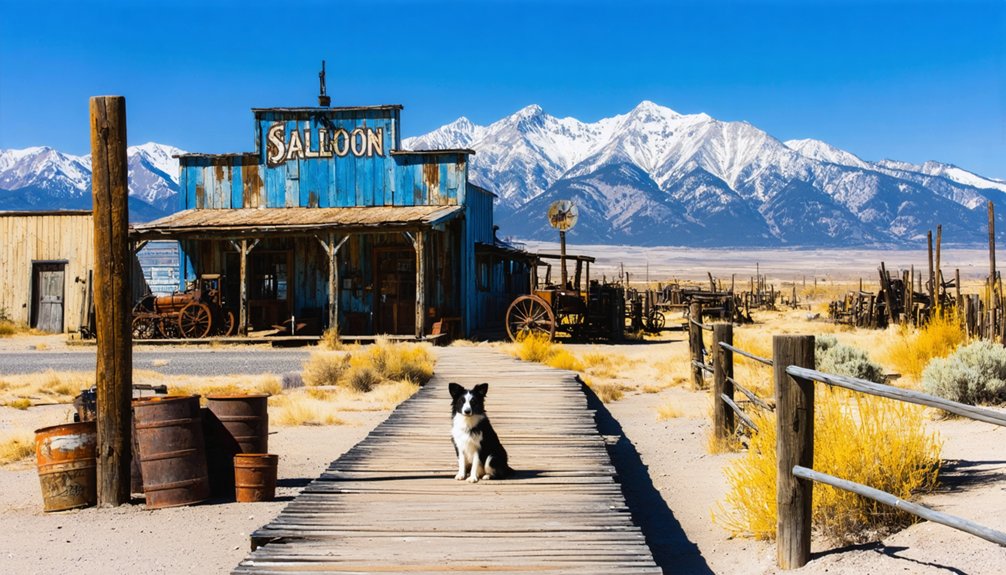
While Colorado’s alpine mining camps captivate visitors with their towering mountain settings, Nevada’s Great Basin region reveals a different kind of ghostly beauty where you and your dog can explore over 600 abandoned settlements scattered across high desert valleys and sagebrush-covered hills.
Jarbidge history unfolds through original 1910 miners’ huts tucked into northwestern Nevada’s remote Cowboy Country. Your canine companion will love roaming Rhyolite’s wide-open spaces near Death Valley, perfect for Rhyolite photography among the preserved train depot ruins.
Belmont structures stand weathered but proud in central Nevada foothills, showcasing 150-year-old buildings from $15 million mining operations. Experience Goldfield hauntings at the legendary hotel while exploring this living ghost town positioned perfectly between Reno and Las Vegas, where fewer than 300 residents maintain the Old West atmosphere.
Planning Your Multi-Site Rocky Mountain Ghost Town Tour
When you’re ready to explore multiple Rocky Mountain ghost towns with your four-legged companion, strategic route planning transforms a series of scattered destinations into an unforgettable adventure through Colorado’s mining heritage.
Smart itinerary planning clusters ghost towns within single mountain corridors like the Alpine Loop, where you’ll discover Animas Forks, Eureka, and neighboring sites without excessive daily driving.
Road conditions dictate your timing—sequence visits by elevation and seasonal accessibility to avoid weather-related closures.
Essential planning elements include:
- Building looped routes using scenic byways for flexible turnarounds when conditions deteriorate
- Adding buffer days for slow travel over unpaved roads and daylight-only access requirements
- Mapping emergency exits and service hubs like Silverton for fuel, supplies, and veterinary care
- Verifying pet policies at each destination before departure
Frequently Asked Questions
Can I Bring My Dog Inside Ghost Town Gift Shops and Restaurants?
You can’t bring your dog inside most ghost town gift shops and restaurants due to health codes and shop policies, but you’ll find outdoor patios welcome well-behaved dogs with proper dog etiquette.
Are There Veterinary Clinics Near Remote Rocky Mountain Ghost Towns?
You’ll find veterinary services scattered like distant stars across mountain towns, but emergency care often requires hour-long journeys over treacherous roads from remote ghost towns, so pack first-aid supplies.
What Should I Do if My Dog Gets Injured on Boardwalks?
Apply direct pressure to bleeding wounds, immobilize fractures with rigid splints, and keep your dog calm. Practice injury prevention by checking boardwalk conditions first and carrying basic first aid supplies for remote adventures.
Do Ghost Towns Charge Separate Entrance Fees for Dogs?
Ghost towns have wildly inconsistent dog policies—some charge tiny fees like Calico’s dollar, while others include dogs under general entrance regulations. You’ll find everything from free admission to separate guided-tour charges.
Can Large Dogs Ride on Narrow-Gauge Tourist Trains at Historic Sites?
Large dogs can ride select narrow-gauge trains, but strict dog train policies vary widely. Pet travel regulations often restrict animals to open cars only, requiring advance verification since many operators prohibit pets entirely.
References
- https://www.adventureswithdog.com/2016/08/calico-ghost-town/
- https://www.bringfido.com/blog/dog-friendly-gold-mines-and-ghost-towns/
- https://sheenashahangian.com/ashcroft-ghost-town-colorado/
- https://www.tripadvisor.co.za/ShowTopic-g143048-i3489-k7776808-Ghost_towns-Rocky_Mountain_National_Park_Colorado.html
- https://www.pikes-peak.com/pet-friendly-attractions-in-colorado-springs/
- https://www.visitouray.com/ghost-towns
- https://www.gopetfriendly.com/blog/explore-pet-friendly-ghost-towns-with-your-furry-travel-buddy/
- https://www.islands.com/2037323/lulu-city-colorado-enchanting-ghost-village-secret-boomtown-once-thriving-rocky-mountain-national-park/
- https://www.dirtinmyshoes.com/is-rocky-mountain-national-park-dog-friendly/
- https://www.nps.gov/romo/planyourvisit/pets.htm