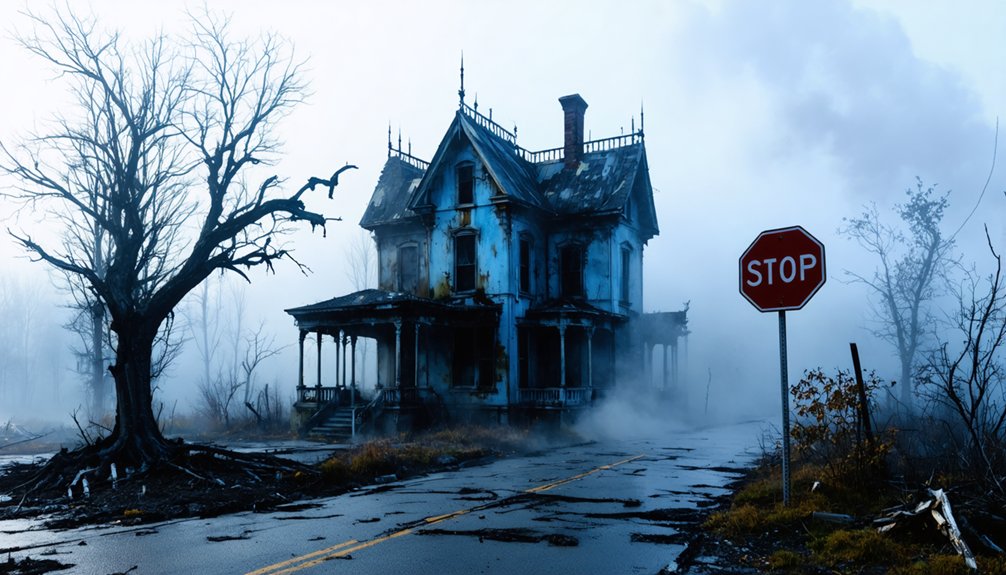
Eastern USA boasts numerous eerie ghost towns like Centralia, Pennsylvania, abandoned due to an underground mine fire, and Picher, Oklahoma, evacuated after toxic mining contamination. You’ll find haunting remnants in Yellow Dog Village and Lynch, Kentucky, where populations plummeted from resource depletion. Environmental disasters created other ghost towns including Times Beach, Missouri and Love Canal, New York. These forgotten settlements reveal America’s industrial past and the fragility of communities dependent on single industries.
Key Takeaways
- Centralia, Pennsylvania became a modern ghost town after underground coal mine fires started in 1962 made it uninhabitable.
- Yellow Dog Village in Pennsylvania preserves the remnants of a coal company town, offering glimpses into historic mining life.
- Abandoned steel towns like McKeesport and Clairton in Pennsylvania showcase the collapse of once-thriving industrial communities.
- Times Beach, Missouri was evacuated and abandoned due to dioxin contamination following a 1982 flood.
- Picher, Oklahoma transformed into a ghost town after lead and zinc mining operations caused deadly metal contamination throughout the area.
Pennsylvania’s Abandoned Mining Communities: From Centralia to Yellow Dog Village
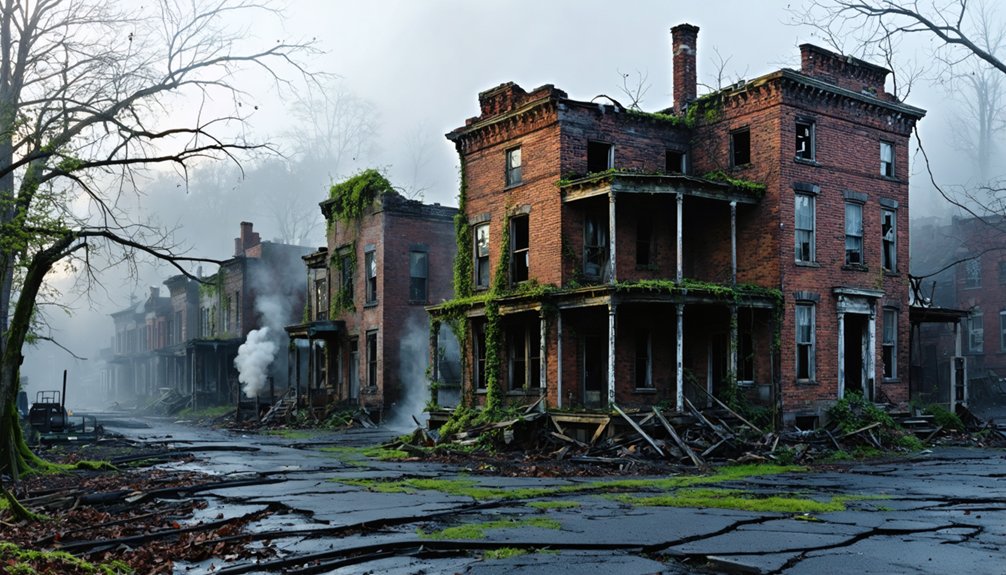
Pennsylvania’s once-thriving industrial landscape is now home to some of America’s most haunting ghost towns, with Centralia standing as perhaps the most infamous example of environmental disaster and community collapse.
This eerie settlement has dwindled from 1,000 residents to just five after a 1962 mine fire created an underground inferno that still burns today. It’s important to note that Centralia appears in multiple contexts beyond just this ghost town, as the name is associated with various places and institutions throughout the United States.
You’ll find similar mining history throughout the region. McKeesport and Clairton represent steel’s decline, with populations plummeting after plant closures devastated local economies. Brownsville evolved from a simple trading post into a bustling transportation hub before experiencing significant population decline after 1940.
Nanty Glo’s last deep mine closed in 1980, accelerating its transformation into a ghost town following nearby Bethlehem Steel’s shutdown.
Perhaps most forgotten is Yellow Dog Village, an abandoned coal camp where empty structures silently preserve the memory of company-town life—stark monuments to an industrial era when these communities powered America’s growth.
The Environmental Disasters That Created Eastern Ghost Towns
While Pennsylvania’s abandoned mining towns represent industrial decline, a more disturbing category of ghost towns across the eastern United States emerged from catastrophic environmental disasters that rendered entire communities uninhabitable overnight.
As part of this decline, forgotten oil towns in America often sit in disarray, relics of a prosperous past overshadowed by their current desolation. These towns, once bustling with activity and hope, are now mere shadows of their former selves, illustrating the impact of resource depletion and economic shifts. Many have been left to the elements, serving as poignant reminders of the fleeting nature of industrial success.
Times Beach, Missouri became a wasteland after dioxin-contaminated oil used for dust suppression spread throughout the town during a 1982 flood. The close-knit community of around 200 residents had to abandon their familiar neighborhood where homes were often left unlocked. These environmental ghost towns now serve as stark reminders of America’s industrial heritage and the consequences of poor environmental management.
In Love Canal, New York, an entire neighborhood was evacuated when toxic chemicals from an improperly sealed landfill caused devastating health effects.
Picher, Oklahoma’s lead and zinc mining operations left deadly metal contamination that poisoned residents for generations.
More recently, East Palestine, Ohio transformed into a ghost town following a 2023 train derailment that released hazardous chemicals into the environment.
Similarly, Cheshire, Ohio suffered abandonment after industrial spills contaminated local waterways, forcing residents to flee their poisoned homes.
Exploring the Forgotten Places: How to Visit Eastern Ghost Towns Safely
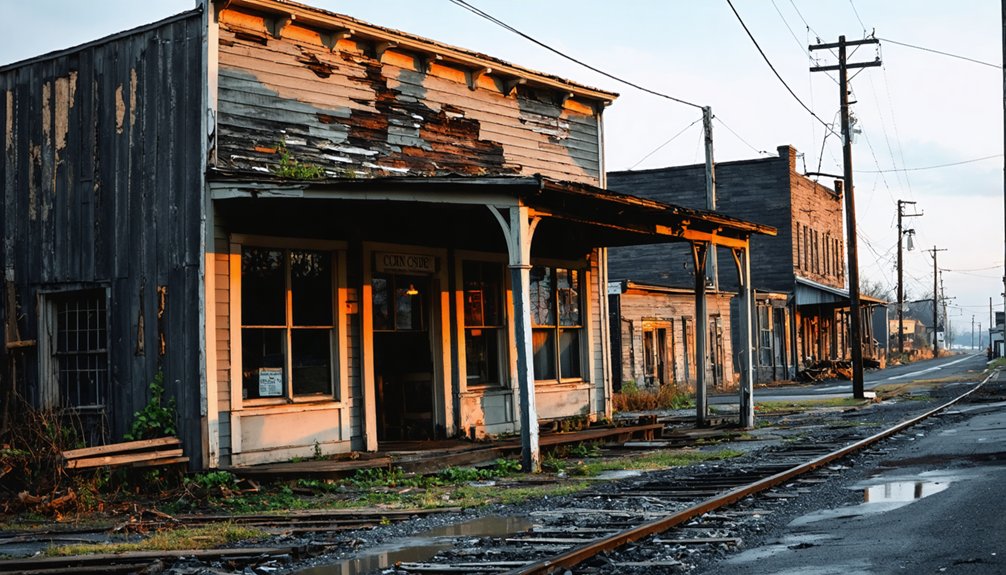
When visiting eastern ghost towns, you’ll need to research seasonal accessibility, pack appropriate gear for potentially unstable structures, and carry detailed maps since cellular service remains unreliable in many remote locations.
During off-season periods (typically late fall through early spring), you’ll encounter fewer tourists while gaining unique photographic opportunities as natural elements create distinctive atmospheres around abandoned buildings.
Your exploration should follow established pathways, respect any posted property boundaries, and leave artifacts undisturbed to preserve these fragile historical sites for future generations. Pennsylvania features several submerged ghost towns that present unique challenges for visitors compared to more accessible abandoned settlements. Remember that many ghost towns were abandoned due to economic problems that forced residents to seek opportunities elsewhere.
Essential Preparation Steps
Venturing into abandoned towns across Eastern America’s forgotten landscapes requires methodical preparation to guarantee both personal safety and preservation of these historical sites. Before exploring, assemble essential safety gear including sturdy hiking boots with ankle support, headlamps with extra batteries, thorough first aid kits, protective gloves, and respirators to shield against airborne contaminants.
Legal considerations must never be overlooked—research property ownership through county records, obtain written permission from landowners, and familiarize yourself with local regulations protecting these historical areas. Websites like Ghosttowns.com offer valuable information about historical ownership records that can assist in your research.
Additionally, assess structural integrity by examining buildings for sagging roofs, cracked foundations, and hazardous materials before entry. Establish reliable communication systems by informing trusted contacts of your itinerary and carrying charged phones with backup power.
Always check weather forecasts and identify potential environmental hazards including wildlife, contaminated areas, and unstable terrain. When visiting places like Govan, be aware of their proximity to main roads as many ghost towns are located off highways making them accessible but potentially isolated.
Responsible Exploration Practices
To safely navigate the crumbling remnants of America’s eastern ghost towns, explorers must adhere to a thorough set of responsible practices that protect both themselves and these fragile historical sites.
Ethical exploration begins with obtaining proper permission—many sites are privately owned, and trespassing carries legal consequences. Environmental conservation demands you leave no trace of your visit.
When exploring these forgotten places, remember to:
- Travel in groups, share your itinerary with someone reliable, and bring emergency communication devices
- Stay on designated paths, never remove artifacts (even small items), and document only with photographs
- Carry protective gear including sturdy boots, gloves, and masks to safeguard against structural hazards and contaminants
Always be mindful of potential hazardous materials like asbestos or lead paint that commonly exist in abandoned structures.
Your responsible choices preserve these haunting time capsules for future generations.
Ensure your vehicle is thoroughly prepared before embarking on your journey, with properly checked tire pressure and tread to navigate potentially unmaintained access roads.
Off-Season Visit Benefits
The allure of Eastern ghost towns multiplies dramatically during off-peak travel seasons, transforming what might be a crowded tourist experience into an intimate historical journey.
You’ll encounter significant off-season advantages including reduced crowds that create the perfect setting for ghost town photography without unwanted intrusions in your frame.
Your exploration benefits extend beyond aesthetics—accommodations near these forgotten settlements often cost 30-50% less, while transportation expenses diminish considerably.
The shoulder seasons provide safer conditions with moderate temperatures, avoiding summer’s oppressive heat while maintaining adequate daylight hours.
Most compelling are the cultural immersion opportunities that emerge when tourist numbers dwindle.
You’ll engage meaningfully with locals, participate in specialized seasonal events, and experience these haunting landscapes in profound silence that peak-season visitors rarely encounter.
Preserved in Time: Historical Sites That Tell America’s Industrial Story
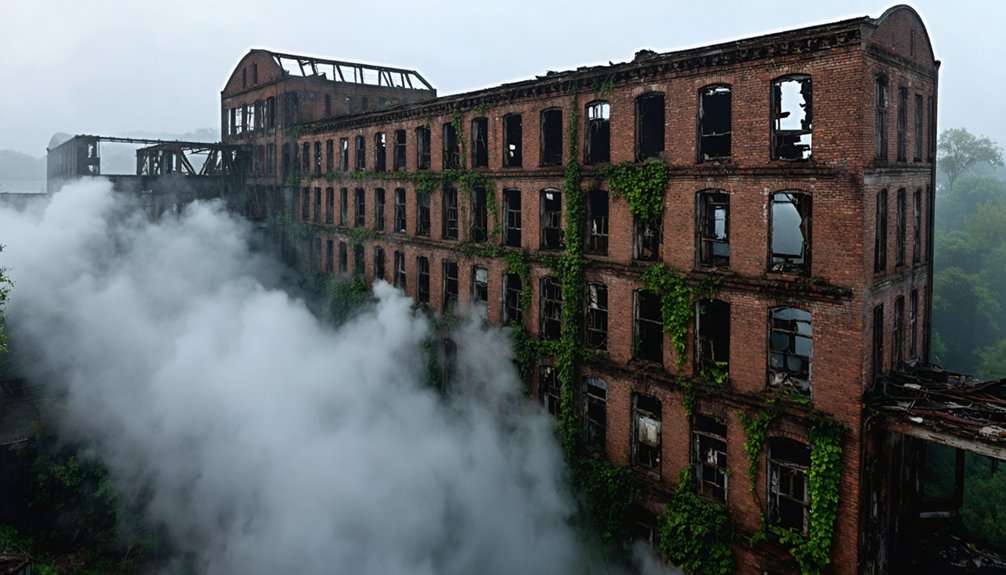
Eastern America’s coal legacy is prominently preserved in sites like Eckley Miner’s Village in Pennsylvania, where visitors can examine authentic residences and infrastructure from the 1854 settlement.
You’ll encounter tangible evidence of industrial-era working conditions through the rusting machinery and abandoned facilities that once supported thriving mining communities.
These historical preservation efforts maintain vital artifacts from America’s industrial revolution, offering you direct insight into the harsh realities and economic foundations that shaped the modern Eastern United States.
Coal’s Abandoned Legacy
Hidden beneath the haunting silence of America’s Eastern coal towns lies a complex legacy of industrial ambition, community resilience, and ultimate abandonment that continues to captivate historians and visitors alike.
These ghostly echoes of coal mining’s heyday reveal how quickly prosperity can vanish when industry collapses.
You’ll find three distinct patterns across these forgotten landscapes:
- Rapid depopulation – Lynch, Kentucky plummeted from 10,000 residents to merely 600 after operations ceased in the 1940s.
- Environmental catastrophe – Centralia, Pennsylvania became uninhabitable after underground mine fires began in 1962.
- Structural violence – Widespread poverty and collapsed social systems persisted long after companies abandoned these towns.
When you explore these preserved ruins, you’re witnessing more than empty buildings—you’re confronting the fragility of communities built entirely around single industries.
Ruins Worth Preserving
While countless towns faced extinction due to industrial collapse, a remarkable subset of Eastern ghost towns has been carefully preserved, offering visitors tangible connections to America’s manufacturing past.
Batsto Village stands as a premier example of historic preservation, with its 33 buildings showcasing 18th-century industrial heritage.
You’ll find New Jersey’s Pinelands particularly rich with preserved ruins—Harrisville’s paper mill remnants, Martha Furnace’s bog iron operations, and Weymouth Furnace’s impressive stone arches all tell stories of boom-and-bust economies that shaped the region.
For those willing to venture farther, Alaska’s Kennecott presents a striking contrast—weathered wooden structures set against wilderness backdrop, preserving memories of copper mining enterprises.
These sites aren’t merely abandoned places but carefully maintained historical narratives that document America’s industrial evolution through tangible remains.
What Remains: Architectural Remnants and Artifacts of Eastern Ghost Towns
As time silently reclaims abandoned settlements across America’s eastern regions, the physical remnants of once-thriving communities tell compelling archaeological stories for those who know where to look.
Unlike Western ghost towns with their standing structures, you’ll primarily encounter cellar holes—depressions marking where homes once stood—now obscured by vegetation and serving as vital architectural indicators of past habitation patterns.
When exploring these forgotten places, you’ll discover:
- Religious structures like Old Sheldon Church and Claquato Church that have outlasted residential buildings due to superior construction
- Industrial remnants at sites like Batsto Village, where 18th-century blacksmith workshops showcase period craftsmanship
- Cemeteries functioning as historical anchors, often featuring documented paranormal phenomena including floating light-orbs
Documentary evidence in local historical societies complements these physical remains, providing essential context for your explorations.
The Human Stories Behind the Abandoned Towns of the East Coast
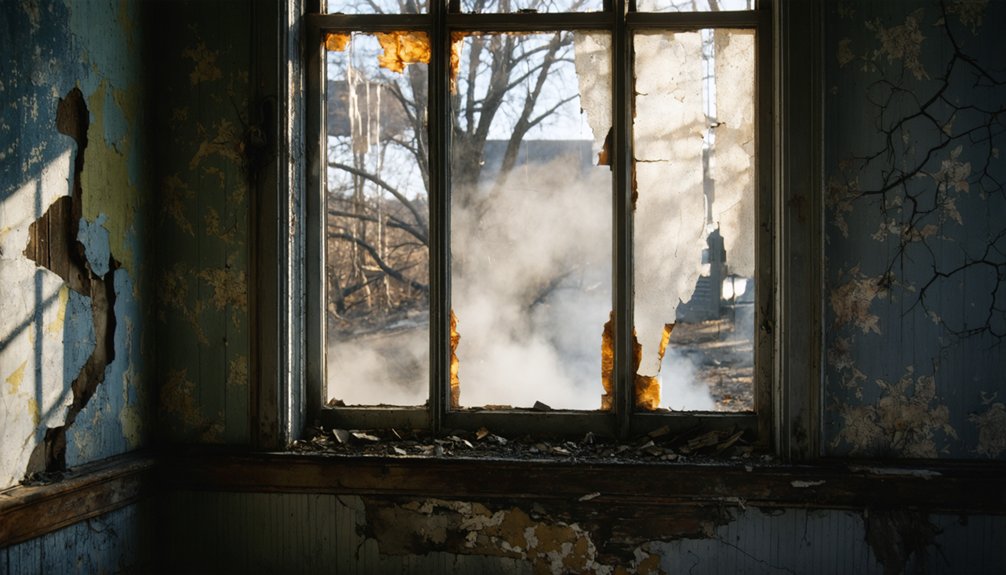
Behind every crumbling foundation and overgrown street in Eastern ghost towns lies a tapestry of human experiences woven through the region’s economic transformations.
You’ll find community memories preserved in places like Martha Furnace, where a vibrant social structure once included schools, hospitals, and 50 homes centered around bog iron smelting until 1845.
These industrial heritage sites tell stories of displacement, as when Elkmont’s logging families were forced to abandon their homes after the establishment of Great Smoky Mountains National Park.
The coal miners of Eckley Village, Pennsylvania—now a living history museum—reveal how immigrant families built lives around extractive industries.
Similarly, Harrisville’s paper mill closure in 1891 didn’t just end production; it dismantled an entire social fabric, leaving only echoes of the community that once thrived there.
Frequently Asked Questions
Can I Legally Explore and Photograph Eastern Ghost Towns?
You can legally explore many Eastern ghost towns if you obtain proper permissions and respect legal regulations. Research property status beforehand and secure photography permissions, especially for commercial use.
How Dangerous Are Underground Mine Fires Near Abandoned Towns?
Underground mine fires pose extreme dangers including toxic gas exposure, sudden ground collapses, and respiratory hazards. You’ll encounter lethal carbon monoxide, mercury emissions, and unstable terrain when exploring abandoned town hazards without proper mine fire safety precautions.
Are Eastern Ghost Towns Haunted or Sites of Paranormal Activity?
Ever wonder what lingers after communities vanish? You’ll find eastern ghost towns attract paranormal investigations, though scholarly evidence supporting haunted history remains limited. Many claims stem from folklore rather than documented phenomena.
What Survival Equipment Should I Bring When Visiting Remote Ghost Towns?
You’ll need thorough survival gear including water containers, purification methods, fire starters, navigation tools, and emergency supplies like first aid kits and repair materials for remote ghost town exploration.
How Do I Locate Unmarked Ghost Towns Not in Tourism Guides?
Examine county archives and historical society records for lost settlements. Study old USGS maps, which reveal forgotten places beyond beaten paths. Cross-reference local history sources and satellite imagery for exploration tips.
References
- https://www.geotab.com/ghost-towns/
- https://www.atlasobscura.com/things-to-do/pennsylvania/ghost-towns
- https://www.tnmagazine.org/19-ghost-towns-in-tennessee-that-are-not-underwater/
- https://stateofwatourism.com/ghost-towns-of-washington-state/
- https://www.legendsofamerica.com/gt-ghosttownseast/
- https://www.tripadvisor.co.nz/ShowTopic-g60763-i5-k3849606-Are_there_ghost_town_in_the_east_USA-New_York_City_New_York.html
- https://en.wikipedia.org/wiki/Lists_of_ghost_towns_in_the_United_States
- https://abandonedonline.net/location/abandoned-and-forgotten-communities-in-pennsylvania/
- https://www.pa.gov/agencies/dep/programs-and-services/mining/abandoned-mine-reclamation/aml-program-information/pas-mining-legacy-and-aml
- https://en.wikipedia.org/wiki/Centralia