Eastern Europe’s forgotten seaside retreats haunt the Adriatic coastline like whispers from the past. You’ll find Yugoslavia’s abandoned military paradise at Kupari, the skeletal remains of Hotel Pelegrin, Montenegro’s hidden Valdanos cove, and Cyprus’s time-frozen Varosha. These concrete ghosts stand as eerie monuments to political upheaval and conflict, their empty corridors and overgrown beaches telling stories the history books often miss. A journey through these coastal ruins reveals more than just abandoned architecture.
Key Takeaways
- Kupari in Croatia features abandoned luxury hotels that once accommodated 4,500 guests before becoming casualties of the Yugoslav Wars.
- Varosha in Cyprus stands as a ghost town frozen in time since 1974, with abandoned resorts and personal items left during evacuation.
- Hotel Pelegrin and other structures in the Bay of Abandoned Hotels near Dubrovnik showcase decaying Yugoslav modernist architecture.
- Hotel Europa in North Macedonia is known for reported paranormal phenomena including eerie whispers and unexplained cold spots.
- Valdanos near Ulcinj contains the remnants of a coastal resort built in 1978, now standing as an atmospheric abandoned complex.
Kupari: Yugoslavia’s Abandoned Military Playground
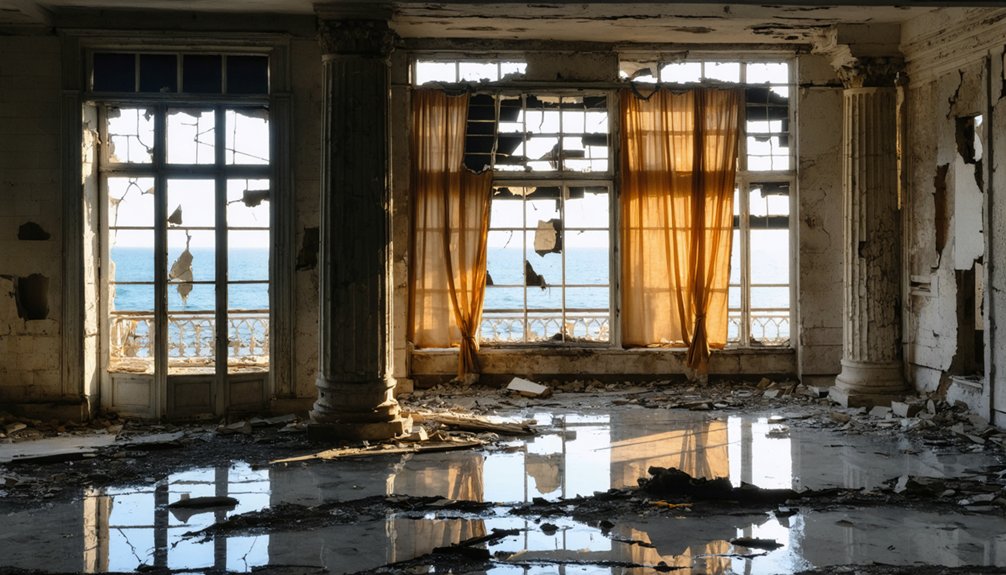
Along the shimmering Adriatic coastline, where crystal waters kiss the shores of modern-day Croatia, lies Kupari—a haunting symbol of Yugoslavia’s military might and subsequent collapse.
You’ll walk among seven skeletal hotels where once the Yugoslav military elite basked in Mediterranean luxury. What began as Tito’s vision for a military retreat evolved into a sprawling complex accommodating 4,500 privileged guests by the 1980s. Before the war, the area featured extensive amenities including a sea spa and various accommodations for visitors of different ranks.
When war erupted in 1991, retreating forces deliberately destroyed their paradise rather than surrender it. Today, nature reclaims the bullet-riddled walls as ivy creeps through shattered windows, while locals sunbathe on pristine beaches below.
Kupari’s legacy stands precariously at a crossroads—war memorial and abandoned playground soon to be erased by luxury redevelopment, forever changing this poignant reflection of freedom’s cost.
The resort was so exclusive that securing a reservation was nearly impossible without proper military connections or influential contacts in the Yugoslav system.
The Skeletal Remains of Hotel Pelegrin
A ghost among giants, Hotel Pelegrin rises from the shoreline like a concrete leviathan stripped to its bones.
This trapezoid masterpiece, once the crown jewel of Communist Yugoslavia’s seaside luxury, now stands as a hollow symbol of faded grandeur.
Concrete elegance abandoned to time, whispering tales of socialist splendor through crumbling corridors.
You’ll find its architectural significance immediately apparent despite its decay—David Finci’s 1963 vision now pockmarked with scars from Yugoslav navy artillery.
The war impact remains etched in its façade, rain pouring through its broken roof onto what were once marble steps and elegant common areas.
Its position just 6 miles from Dubrovnik provides a stark contrast to the well-preserved medieval charm of the Old Town.
As bulldozers wait nearby, this skeletal structure’s days are numbered.
A Singapore consortium plans to transform this hauntingly beautiful ruin into a Four Seasons resort. The massive €150 million project aims to revitalize not just Pelegrin but the entire Kupari coastline.
Visit while you can—this concrete carcass overlooking the Adriatic tells stories of both opulent pasts and violent ends.
Valdanos: Montenegro’s Forgotten Coastal Gem
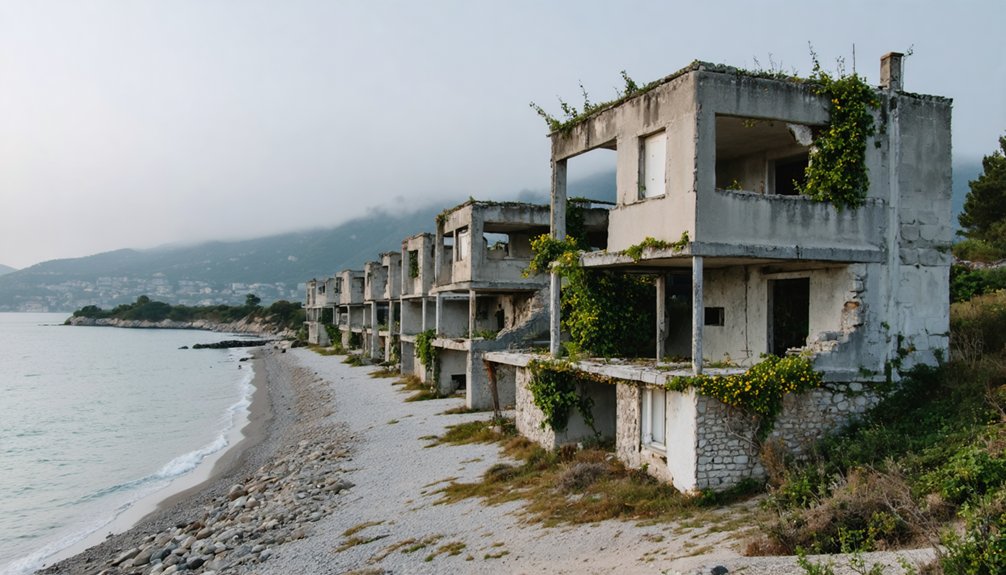
While Hotel Pelegrin awaits its transformation into luxury, another coastal ghost tells a different tale across the Adriatic.
Nestled near Ulcinj, Valdanos cradles a crescent-shaped beach within an ancient olive grove where history whispers through 85,000 gnarled trees. This abandoned resort’s concrete skeletons stand in stark contrast to nature’s persistence, offering glimpses into Yugoslavia’s military past. Visitors can explore the area during shoulder seasons when smaller crowds allow for unhurried discovery of its historical secrets. Today’s travelers marvel at the incredibly clean waters that have remained pristine despite years of neglect.
- Pirate ships once sheltered in these tranquil waters where submarine wreckage now rests
- Ancient trade routes converged here, bringing Ottoman and Venetian merchants laden with spices
- Yugoslav military expropriated land in 1978, building a seaside retreat with spiral staircases
- Cold War bunkers punctuate the landscape like scattered sentinels
- The resort’s bankruptcy in 2008 left eerie relics frozen in time
Ghost Town by the Sea: Varosha’s Frozen Moment in Time
As you wander through Varosha’s restricted avenues, you’ll witness the haunting contrast of crumbling luxury hotels where Europe’s elite once sipped cocktails alongside nature’s determined reclamation of this once-glittering paradise.
The Greek Cypriot residents fled with only what they could carry in 1974, leaving behind family photos, store inventories, and even cars in dealerships—time capsules of interrupted lives.
Political deadlock has transformed this Mediterranean jewel into a decaying monument, where faded sun umbrellas and rusted beach chairs still wait for vacationers who never returned. The area remains heavily guarded, with a 10-foot tall fence and multiple security checkpoints surrounding this ghostly reminder of conflict. Visitors are now drawn to this site of dark tourism with its visible war scars and dilapidated buildings that tell the story of the 1974 conflict.
Abandoned Opulence Decays Slowly
Once flourishing with luxury and glamour, Varosha now stands frozen in time, its decadent hotels and resorts slowly surrendering to nature’s persistent advance.
You’ll find a hauntingly beautiful tableau of decaying luxury where celebrities once lounged by pristine pools and danced in opulent ballrooms.
- Shattered windows frame views of the same turquoise waters that attracted Europe’s elite
- Dust-covered luxury car dealerships remain exactly as they were left in 1974
- Vegetation reclaims grand boulevards, with wild plants erupting through cracked marble floors
- Empty hotel shells, once worth billions, stand as silent monuments to political conflict
- Golden beaches that hosted royalty now stretch undisturbed before abandoned high-rises
This Mediterranean ghost town whispers stories of champagne nights and sun-drenched days, inviting you to witness how quickly paradise can transform into purgatory.
After the 1974 Turkish invasion, residents fled with only what they could carry, believing they would return within days to what was once a vibrant tourist hotspot.
The area has been transformed into an unusual ecosystem where wild shrubs and cacti thrive among the abandoned landscape, creating a stark contrast to its former manicured appearance.
Residents’ Abrupt Final Exodus
When Turkish forces advanced toward Famagusta in August 1974, life in Varosha transformed from Mediterranean bliss to panicked chaos in mere hours.
You can almost feel the evacuation chaos as residents abandoned breakfast tables mid-meal, leaving laundry fluttering on lines and lamps burning in empty homes. No warnings came; only the urgent need to flee south with whatever could be carried.
Behind them, over 100 hotels stood silent, their guests already evacuated as military boots echoed through once-bustling streets.
Decades later, lingering memories haunt these restricted zones—tables still set for meals never eaten, luxury cars gathering dust in showrooms, personal treasures waiting for owners who never returned.
The trauma of this frozen moment persists, a reflection of lives disrupted and dreams abandoned along this once-glorious coastline.
Politics Freezes Tourist Paradise
The fortress of geopolitics fell heavily upon Varosha in 1974, transforming this crown jewel of Mediterranean tourism into a forbidden zone overnight.
This frozen paradise remains caught in a political impasse between Turkish military control and UN resolutions demanding return to original inhabitants. As you walk the limited reopened streets, you’ll notice UN vehicles patrolling alongside security cameras monitoring the massive construction projects concealed behind high fences.
- Turkish military sealed and guarded the perimeter for decades
- UN personnel maintain visible presence monitoring developments
- Only two main streets and partial beach access permitted since 2020
- Nearly 400,000 visitors have explored the accessible zones
- Construction projects continue behind security barriers, their purpose unclear
This time capsule of 1970s seaside glamour stands as a reflection of freedom denied and a community displaced.
Hotel Europa: North Macedonia’s Lakeside Mystery
You’ll sense the ghost of post-communist dreams at Hotel Europa, where charred remains overlook the tranquil waters of Lake Prespa after a devastating fire sealed its fate in 2004.
Windows gape like hollow eyes across the lakeside facade, bearing silent witness to the abrupt end of this once-proud symbol of North Macedonian optimism.
Wandering through its abandoned concrete hands that once welcomed European tourists, you’re transported to a moment when the Balkans reached toward a future that never quite arrived.
Fire-Scorched Lakefront Past
Shrouded in mystery and decay, Hotel Europa‘s once-grand facade now stands as a haunting memorial to a catastrophic kitchen fire that forever altered its destiny.
The blaze that consumed this lakefront jewel between 2003-2005 remains an unsolved riddle, with fire investigation reports offering three competing theories but no conclusions.
Was it mundane kitchen equipment, faulty wiring, or something more sinister? Insurance mysteries linger, whispering of potential fraud.
- Moonlight reveals phantom sounds of laughter echoing through silent corridors
- UAE investors acquired the property in 2016, yet restoration remains a distant dream
- Local legends tell of unexplainable cold spots and eerie whispers in abandoned halls
- Shattered glass and vibrant graffiti now adorn what were once luxury accommodations
- Urban explorers brave the structure’s precarious floors to document its magnificent decay
Abandoned After 2004
While lakefront flames may have sealed Hotel Europa‘s fate, its abandonment whispers a more complex tale.
You’ll feel the weight of history standing before this brutalist colossus—a monument to post-communist dreams that crumbled years before fire touched its walls.
By 2004, the once-proud resort had already surrendered to a perfect storm: diverted tourism to Lake Ohrid, failed investments, and lingering refugee situations from the Yugoslav Wars.
The abandoned architecture now stands as North Macedonia’s concrete memory of optimism that couldn’t overcome reality.
Walking through its skeletal frame, lakeside nostalgia grips you—imagining weekend theater performances, apricot juice at sunrise, and casino nights where foreigners played while locals watched.
The empty gate’s angular arms still reach skyward, frozen in eternal welcome to guests who’ll never arrive.
The Bay of Abandoned Hotels: Croatia’s Adriatic Ruins

Along the shimmering Adriatic coastline near Dubrovnik, Croatia’s eerie Bay of Abandoned Hotels stands as a haunting reminder of forgotten luxury.
Just 15 minutes south of the medieval city, Kupari Bay houses seven decaying giants—once-proud showcases of Yugoslav modernist design—where Tito’s elite vacationed amid abandoned architecture and Adriatic allure.
You’ll discover:
- Hotel Pelegrin’s futuristic 1963 facade with 400+ empty rooms
- Grand Hotel’s 1920s elegance slowly surrendering to nature
- Rooftop access offering panoramic views of crystal-clear waters
- Visible remnants of swimming pools and restaurants from a bygone era
- Time-limited exploration opportunities before 2025 redevelopment
Hurry if freedom calls you to wander these haunting corridors—demolition has begun as Singapore investors transform this ghost resort into a Four Seasons, forever altering this hauntingly beautiful time capsule.
War and Tourism: How Conflict Created These Modern Ruins
War’s destructive footprint has paradoxically created some of Europe’s most haunting coastal attractions.
You’ll find Prora’s massive concrete skeleton stretching along Germany’s eastern shore—a Nazi-era colossus intended for 20,000 vacationers before wartime repurposed it for bombing refugees and military personnel.
Across the Adriatic, Croatia’s once-lavish Belvedere Resort stands as proof of conflict architecture, its grand spiral staircase eerily preserved while helicopter pads lie abandoned.
Shattered opulence frozen in time, where luxury’s ruins whisper stories of a nation’s violent rebirth.
When the 1991 independence war erupted, wealthy tourists were replaced by desperate refugees seeking shelter.
The shift from luxury to necessity defines these spaces.
Soviet forces deliberately demolished sections of Prora, while economic collapse halted Florida’s Bayport Resort construction entirely.
These coastal ruins now attract war tourism enthusiasts seeking freedom to explore where holiday dreams collided with history’s harshest realities.
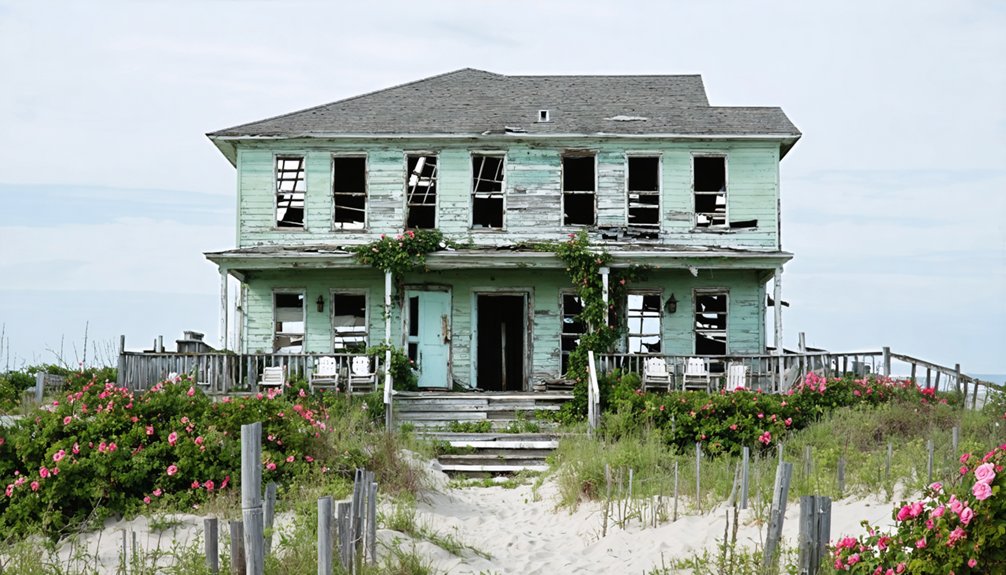
Beneath the shattered windows and crumbling facades of Eastern Europe’s abandoned seaside resorts lies an intoxicating playground for urban explorers.
You’ll find yourself walking through time as you navigate the architectural decay of once-glamorous destinations like Hotel Pelegrin and Haludovo Palace, where nature slowly reclaims human ambition.
- Krk Island’s palace hotel offers labyrinthine corridors where sunlight filters through collapsing ceilings
- Kupari’s modernist marvel provides sweeping Adriatic views through broken concrete shells
- Varosha’s time-capsule hotel district creates an entire frozen neighborhood to discover
- Dubrovnik’s overlooked Belvedere stands in stark contrast to the restored medieval city nearby
- Sarajevo’s mountain retreat tells a different story of abandonment away from coastlines
These forgotten monuments to leisure await your footsteps through their haunting emptiness.
From Decay to Redevelopment: The Future of Eastern Mediterranean Ghost Resorts
As decades of saltwater and neglect corrode the once-glamorous facades of Eastern Mediterranean ghost resorts, a controversial renaissance stirs on the horizon.
You’ll find Varosha—frozen in 1974’s political amber—now cautiously awakening. Where barbed wire once prohibited entry, limited access reveals nature’s reclamation of luxury.
Turkish authorities envision a €10 billion resurrection, declaring “the tide has changed,” while Greek Cypriots contest these development plans.
Beyond political tension lies extraordinary potential for ghost tourism and cultural revival. You might soon wander streets where celebrities once strolled, experiencing history’s palpable weight amid decaying grandeur.
The eerie allure of these abandoned coastal gems offers a rare freedom—to witness time suspended before inevitable transformation reshapes them.
Will these contested paradises become heritage destinations or concrete-covered commercial ventures? The answer remains tantalizingly unwritten.
Frequently Asked Questions
Are These Abandoned Resorts Legally Accessible to Visitors?
No, you can’t legally enter these haunting coastal relics. You’ll face trespassing violations unless specific visitor guidelines allow access through easements or public acquisition. Freedom seekers, consider legal implications first.
What Wildlife Has Reclaimed These Deserted Coastal Properties?
You’ll witness nature’s gentle reclamation: tilapia swimming through Bangkok’s flooded mall, cranes soaring above Korean DMZ, and lush vegetation embracing Houtouwan’s abandoned homes—wildlife sightings that transform coastal ecosystems into wild sanctuaries.
Do Local Communities Benefit From Urban Exploration Tourism?
Yes, you’ll discover locals capturing economic impact through guided tours, craft markets, and cafés while community engagement transforms abandoned spaces into storytelling canvases, breathing new life into forgotten coastal histories.
Among these revitalized spaces, visitors may find inspiration in the remnants of abandoned towns in the American West, each telling a unique story of resilience. Art installations often pay homage to these lost communities, revealing the hidden narratives that shaped the region. As local artists draw on this history, they foster a deeper connection between the past and present, inviting exploration into the cultural tapestry of the area.
How Dangerous Are the Deteriorating Structures for Explorers?
Though they whisper tales of forgotten coastal dreams, these crumbling sanctuaries aren’t worth your life. You’ll face deadly structural hazards—collapsing floors, jagged debris, and tide-trapped pathways that compromise explorer safety without warning.
Are There Paranormal Activity Reports at These Abandoned Resorts?
You’ll encounter abundant ghost sightings at these crumbling coastal havens. Spectral figures in period attire wander misty hallways, while haunted histories of tragic drownings and fires whisper through salt-laden air around you.
References
- https://www.euronews.com/travel/2024/05/13/post-apocalyptic-holiday-resort-overlooking-the-adriatic-sea-to-be-restored-to-its-former-
- https://www.amaliah.com/post/50250/bay-abandoned-hotels-exploring-croatia-derelict-military-resort-kupari
- https://www.kathmanduandbeyond.com/eerie-abandoned-hotels-balkans/
- https://www.businessinsider.com/ghost-town-varosha-cyprus-photos-2020-9
- https://www.messynessychic.com/2013/08/23/the-bay-of-abandoned-hotels/
- https://euscentia.com/kupari-resort-abandoned-war-ruins/
- https://www.atlasobscura.com/places/the-abandoned-hotels-of-kupari-kupari-croatia
- https://www.amusingplanet.com/2017/12/the-abandoned-hotels-of-kupari.html
- https://rationalnomad.com/abandoned-hotels-of-kupari/
- https://www.hiddeneurope.eu/the-magazine/issues/hidden-europe-50/a-resort-in-ruins-the-rise-and-fall-of-kupari/