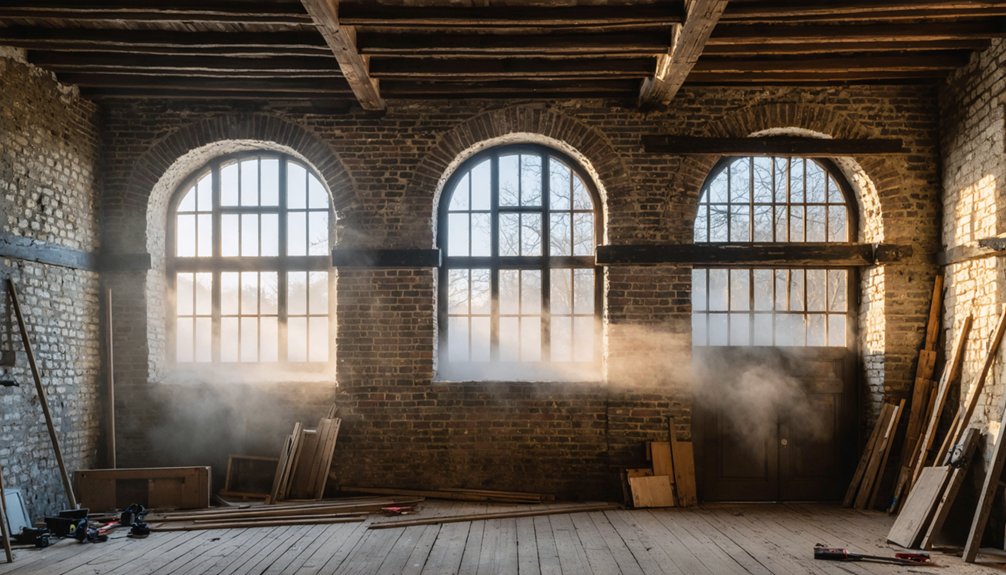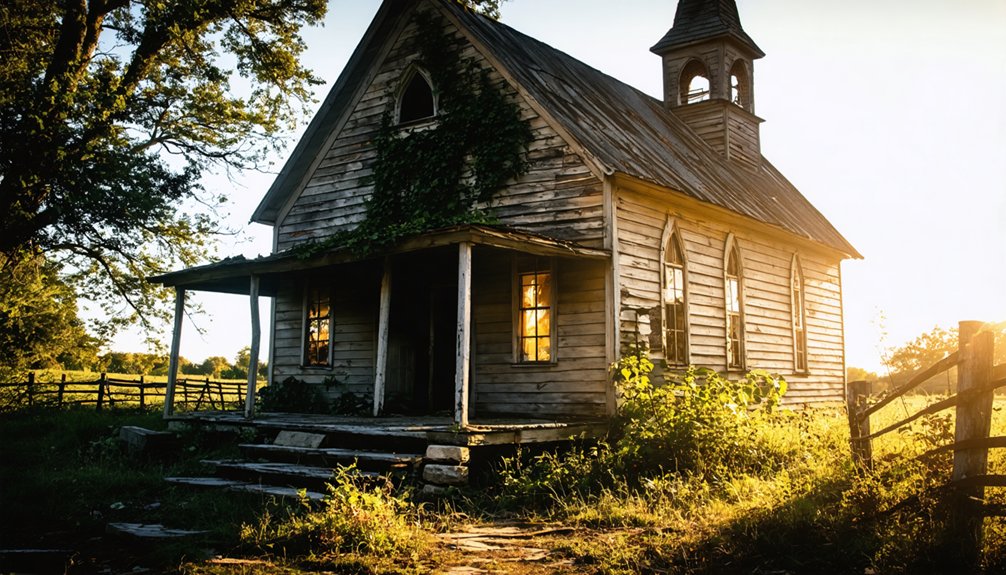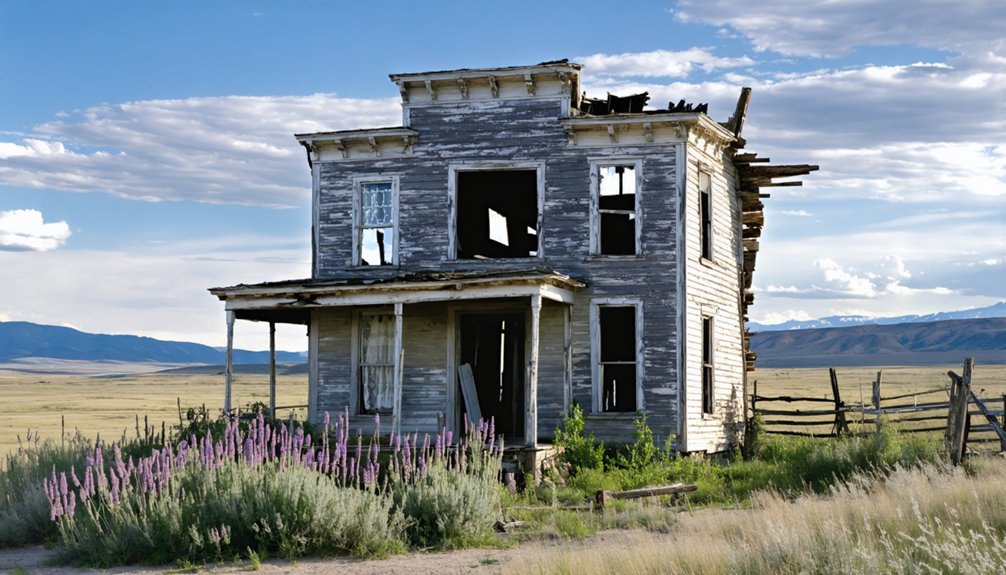
America’s colonial ghost towns offer you tangible connections to our nation’s complex beginnings. You’ll discover hand-hewn structures revealing regional architectural styles, from New England saltboxes to adobe settlements in the Southwest. These sites document boom-and-bust economies, where resource exploitation led to prosperity followed by abandonment. Archaeological work continues to uncover diverse communities—European immigrants, African Americans, and Native Americans—whose stories challenge conventional narratives. These silent ruins speak volumes about America’s environmental and economic vulnerabilities.
Key Takeaways
- Colonial ghost towns feature preserved architecture illustrating 18th and 19th-century building techniques using materials like coquina, tabby, and adobe.
- Resource depletion caused settlement abandonment, with mining, timber, and fishing towns following predictable boom-and-bust cycles leading to economic collapse.
- Archaeological discoveries using modern technologies like X-ray spectrometry and ground-penetrating radar reveal unexpected cultural exchanges between colonists and Indigenous peoples.
- Heritage tourism sites employ “arrested decay” preservation methods and immersive experiences to educate visitors about colonial life.
- Overlooked narratives include diverse communities like Nicodemus, Kansas and Allensworth, which represented resistance against racial discrimination.
The Rise and Fall of Early American Colonial Settlements
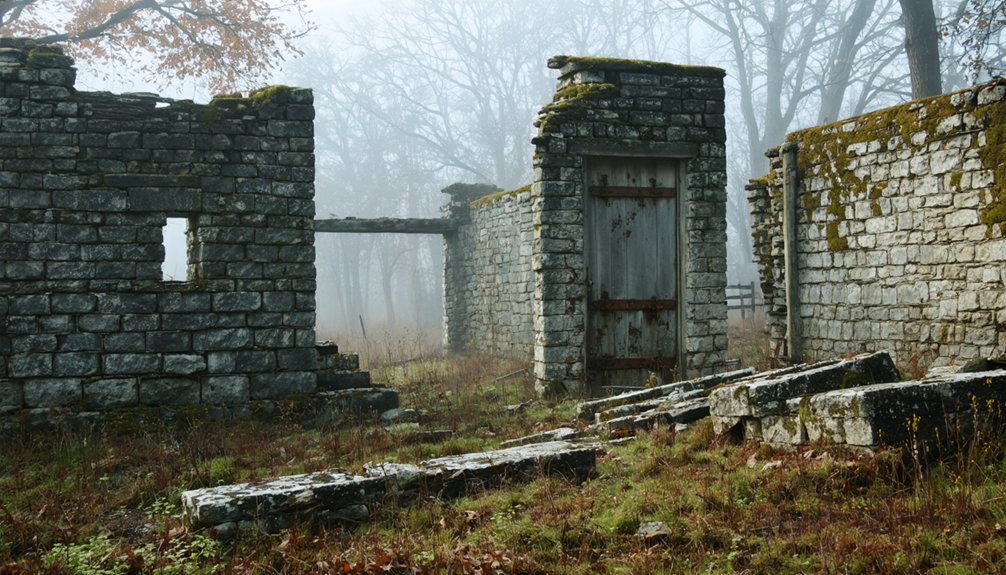
While many Americans are familiar with the success stories of colonial America, the landscape of early European settlement was littered with spectacular failures and near-misses that reveal the precarious nature of these ambitious ventures.
When you examine settlement dynamics across these early attempts, a pattern emerges of devastating mortality rates and abandoned sites. Roanoke’s mysterious disappearance, Ajacán Mission’s violent end, and Sagadahoc’s quick collapse highlight the fragility of European footholds. The vanishing of Virginia Dare and the entire Roanoke Colony became one of history’s enduring mysteries when John White discovered the settlement completely abandoned upon his delayed return in 1591.
The landscape of colonial aspirations was a graveyard of European ambitions, strewn with abandoned settlements and unmarked graves.
Even “successful” settlements like Jamestown and Plymouth demonstrated remarkable colonial resilience despite losing 80% and 50% of their populations, respectively. These settlements survived through a combination of adapted governance, indigenous relationships (often hostile), and European supply chains.
The competition between Spanish, English, French, and Dutch powers further complicated survival prospects, with colonial outposts serving as chess pieces in a larger geopolitical struggle for North American dominance. The Treaty of Tordesillas in 1494 exemplified this competition by dividing newly discovered lands between Spain and Portugal, setting the stage for centuries of colonial rivalry.
Preserved Architecture: Windows Into Colonial Life
Walking among the weathered remnants of America’s colonial settlements today offers a physical connection to our nation’s fragile beginnings.
These structures reveal colonial craftsmanship through hand-hewn oak frames with pegged joints and wattle-and-daub construction techniques. You’ll notice regional variations—New England’s steep-roofed saltboxes contrast with the Mid-Atlantic’s gambrel-roofed Dutch Colonial homes, each adapting to local conditions while expressing cultural identity. Spanish colonists in Florida often constructed homes using coquina and tabby materials, which proved remarkably durable against coastal elements. The resurgence of Colonial Revival architecture in Virginia after the 1876 Centennial Exposition demonstrates America’s enduring fascination with its colonial past.
- Centered panel doors with transom windows and decorative crowns symbolized prosperity and status
- Multi-pane windows arranged in perfect symmetry reflected Georgian ideals of order and balance
- Architectural symbolism in decorative cornices and entablatures announced the owner’s understanding of classical principles
These preserved buildings aren’t mere antiquities—they’re tangible records of social hierarchies, daily routines, and the evolutionary dialogue between European traditions and American pragmatism.
Resource Depletion and Economic Decline in Historic Colonies
As you explore these abandoned colonial settlements, you’ll recognize patterns of boom-and-bust cycles where communities once thrived on single resources like timber, coal, or agricultural monocultures until depletion triggered economic collapse.
The extraction-based economies that sustained these ghost towns operated within complex support networks where local elites often controlled resource wealth while limiting opportunities for marginalized populations. These areas often developed mono-economies that severely restricted economic opportunities for residents, creating conditions for generational poverty.
Colonial extraction processes not only depleted natural resources but fundamentally transformed landscapes and communities, leaving behind physical remnants that document the unsustainable economic models responsible for their ultimate abandonment. This pattern was particularly evident in the South, which experienced a dramatic reversal of fortune as its per-capita income fell from being double that of New England in 1774 to significant economic decline by 1840.
Resource Boom Patterns
The devastating pattern of colonial resource exploitation followed a predictable boom-and-bust cycle that ultimately transformed flourishing settlements into the ghost towns we study today.
When you visit these abandoned places, you’re witnessing the aftermath of economic dependency on extractive frontiers—where colonial powers systematically depleted natural wealth before moving to fresh territory. This unsustainable resource extraction created ephemeral prosperity followed by inevitable collapse. Colonial ideologies consistently treated these landscapes as mere resources for extraction rather than living ecosystems with intrinsic value. Jamestown’s early English colonists experienced devastating mortality rates when they focused on finding gold rather than essential farming to sustain themselves.
- Mining settlements flourished briefly until ore deposits diminished, leading to rapid abandonment.
- Timber towns disappeared after surrounding forests were harvested beyond recovery.
- Coastal settlements declined when overfishing depleted once-abundant marine resources.
These ghost towns reveal the environmental legacy of colonial exploitation—a stark reminder of how economic systems built solely on resource extraction ultimately undermine their own foundations.
Community Support Networks
While resource exploitation caused the physical collapse of colonial settlements, equally significant was the disintegration of community support networks that once sustained them.
As economic monocultures dominated colonial landscapes, community resilience deteriorated rapidly. You’ll find that in these now-abandoned settlements, social isolation intensified as local corruption diverted welfare resources to extraction-aligned elites, hollowing out communal safety nets.
The Revolution’s economic disruption—with GDP plummeting 30% between 1774-1789—shattered urban centers as coastal and river towns lost their commercial functions. In some areas, the severe currency depreciation during the war left fixed-income residents unable to maintain their standard of living or contribute to community welfare.
Rural areas suffered particularly, developing stark inequalities without a middle class to stabilize society. Educational disparities, especially racially segregated schooling, further fractured community cohesion.
Wherever you travel among these ruins, you’re witnessing spaces where demographic challenges and broken social bonds ultimately rendered communities unsustainable.
Colonial Extraction Impacts
Beyond the abandoned structures that now punctuate America’s colonial landscape lies a deeper story of ecological devastation and economic collapse. As you explore these ghost towns, you’re witnessing the aftermath of colonial exploitation systems that fundamentally altered ecosystems and Indigenous economies. Perhaps the most profound impact was the Great Dying, which resulted in over 90% depopulation of Indigenous people in the Americas after European arrival.
Resource extraction methodologies—from Spanish silver mining that poisoned waterways to British logging that replaced fire-resistant forests with vulnerable pine plantations—created ecological vulnerabilities that persist today.
- Mass bison slaughter during westward expansion devastated prairie ecosystems while dismantling Indigenous subsistence economies.
- Colonial mining operations consumed vast timber resources, causing widespread deforestation and mercury contamination.
- Plantation agriculture accelerated soil erosion up to 100 times natural levels, ultimately undermining the colonies’ own economic foundations.
These extraction patterns reveal how colonial resource depletion ultimately contributed to the abandonment of once-thriving settlements.
Cultural Heritage Sites of Colonial-Era Ghost Towns
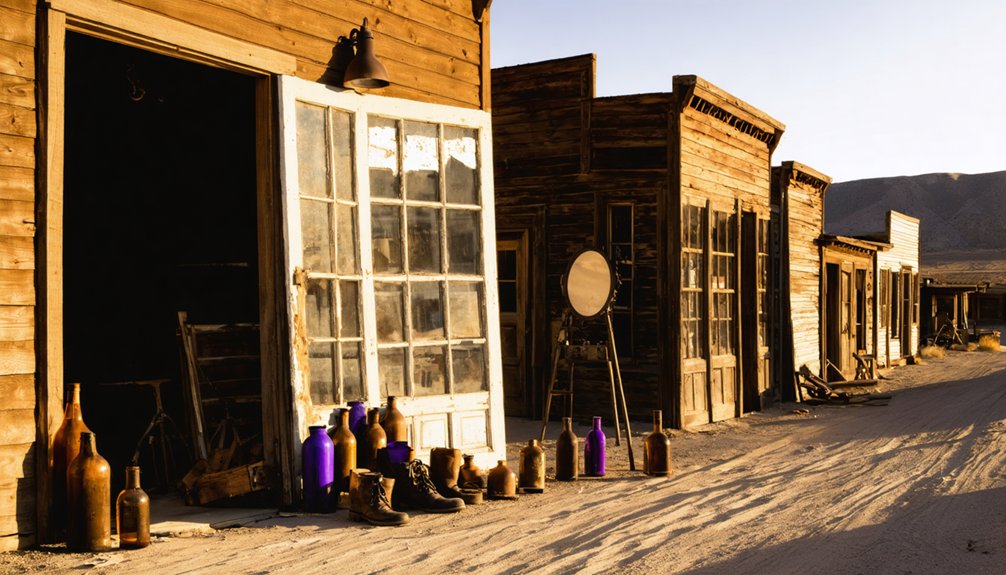
When you visit America’s colonial ghost towns, you’ll encounter remarkably preserved architectural remains that illustrate the building techniques and aesthetic sensibilities of 18th and 19th century settlers, from wooden saloons to adobe missions.
These sites function as open-air museums where architectural fusion demonstrates the cultural exchange between indigenous peoples and European colonizers, particularly visible in structures like Taos Pueblo where Spanish and Native American building traditions merged.
The careful preservation of these historical locations through National Monument designations and archaeological studies guarantees that the physical evidence of America’s complex colonial past remains accessible for contemporary analysis and appreciation.
Colonial Architecture Preserved
The architectural legacy of colonial-era ghost towns stands out as one of America’s most striking physical connections to its past. When you explore these preserved sites, you’ll witness colonial craftsmanship in its authentic form—from the multi-story adobe structures of Taos Pueblo to the timber-frame homes of Marblehead.
Preservation methods range from “arrested decay” in Bodie to carefully documented restorations using historical records.
- Adobe construction in Southwestern towns demonstrates indigenous building techniques adapted by colonial settlers, with structures sometimes reaching four stories high.
- New England colonial architecture features over 200 well-preserved 18th-century homes along narrow, winding streets that reflect original town planning.
- Architectural preservation balances authenticity with accessibility, allowing you to experience these spaces while respecting their historical integrity.
Cultural Crossroads Revealed
America’s colonial ghost towns serve as powerful cultural crossroads where indigenous traditions and European influences collided, creating unique hybrid communities that you can still explore today.
At sites like Taos Pueblo, you’ll witness indigenous adaptations that enabled Native populations to maintain cultural sovereignty despite Spanish colonial pressures.
The cultural intersections visible at Pecos National Historical Park reveal complex religious and trade dynamics between Pueblo communities and Spanish settlers.
Virginia City’s silver boom created multicultural enclaves where immigrants, displaced indigenous peoples, and Euro-American settlers formed distinctive frontier societies.
Meanwhile, ancestral Puebloan settlements throughout the Four Corners region preserve evidence of sophisticated trade networks that connected diverse tribal groups long before European arrival.
These ghost towns don’t merely document colonial expansion; they testify to the resilient, adaptive nature of America’s multicultural foundations.
Hidden Stories: Diverse Communities in Colonial Ghost Settlements
Why do typical narratives of America’s ghost towns often overlook the rich tapestry of diverse communities that once thrived within these abandoned settlements? The hidden narratives of places like Nicodemus, Kansas—established by formerly enslaved Kentuckians in 1877—challenge our conventional understanding of colonial expansion.
These multicultural dynamics reveal complex social structures that developed despite adversity.
- Black communities such as Allensworth, California created autonomous spaces of freedom and self-governance, representing resistance against racial discrimination.
- Mining boomtowns like Bodie hosted melting pots of European immigrants, freed African Americans, and Native Americans working alongside each other.
- Gender imbalances shaped community development, with women playing vital roles in maintaining cultural institutions despite male-dominated demographics.
When you explore these ruins today, you’re walking through layers of intersecting cultural histories largely absent from mainstream accounts.
Archaeological Discoveries Reshaping Colonial History
As archaeologists unearth previously hidden evidence across abandoned colonial settlements, conventional historical narratives continue to undergo profound revision.
The recovery of blacksmithing hammer scale on Hatteras Island substantiates that Roanoke colonists integrated with Croatoan tribes rather than mysteriously vanishing.
Archaeological innovations like X-ray spectrometry and ground-penetrating radar now differentiate colonial artifacts across overlapping periods, revealing complex social dynamics between colonists, Indigenous peoples, and enslaved Africans.
You’ll find colonial narratives transformed by material evidence—shipwrecks yielding Spanish silver reales provide precise mint locations and dates, while stratified excavation layers at Jamestown and Williamsburg sites illustrate settlement challenges through fire damage patterns and structural modifications.
These discoveries, enhanced through collaboration with descendant communities, offer you a more authentic understanding of America’s multilayered colonial past.
Tourism and Preservation Efforts in America’s Colonial Ruins
Beyond the archaeological trenches and laboratory analysis, colonial ruins have transformed into vibrant centers of heritage tourism and economic activity.
You’re witnessing a significant economic engine—Colonial National Historical Park alone generated $336.8 million in visitor spending in 2021, supporting over 5,000 local jobs.
Heritage tourism doesn’t just preserve history—it fuels local economies and creates thousands of meaningful jobs.
Despite challenges like declining visitor numbers at some sites, heritage tourism continues to grow at a 4.2% CAGR, driven by travelers seeking authentic cultural connections.
- Preservation funding initiatives established by Congress target specific National Heritage Areas, enhancing both conservation and tourism appeal.
- Significant investments, like Colonial Williamsburg’s $41.7 million upgrade, focus on inclusive storytelling that acknowledges marginalized groups.
- Government support for infrastructure and interpretation helps create immersive experiences that modern heritage tourists demand.
Strategic Military Outposts: Abandoned Colonial Fortifications
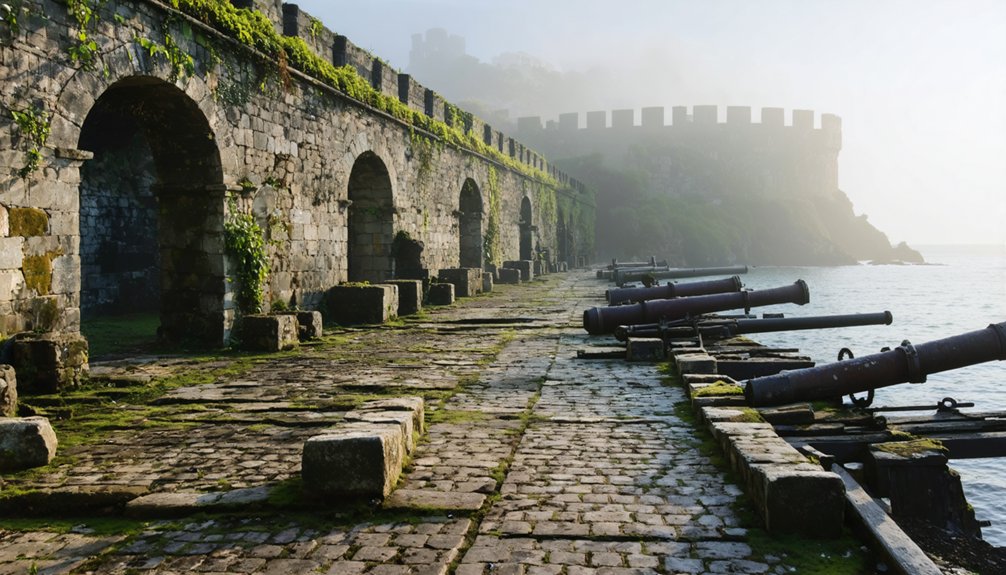
While European powers jostled for control of the North American continent, they established an intricate network of military outposts that would ultimately shape colonial boundaries and influence territorial development for centuries.
You’ll find these abandoned fortifications reflect distinct military strategies employed by British, French, and Spanish forces. British forts focused on frontier defense in contested territories, while French outposts emphasized maintaining alliances with Native American tribes.
Fort construction varied dramatically, from simple wooden palisades to sophisticated stone structures with bastions and moats, using local materials and adapting to regional threats.
Sites like Fort Toulouse in Alabama and Fort Loudoun in Tennessee stand as evidence to this contested era. Many were ultimately abandoned after changing hands multiple times or becoming obsolete as settlement patterns evolved.
Environmental Impacts on Colonial Ghost Town Preservation
The preservation of America’s colonial ghost towns faces a complex array of environmental challenges stemming directly from their historical patterns of land use and resource extraction.
One such challenge is the impact of coastal fishing history in Florida, where overfishing and habitat degradation have left lasting marks on the ecosystem. As these towns grapple with the consequences of a changing environment, the stories of their fishing heritage remain vital in understanding the delicate balance between preservation and sustainability. Efforts to revitalize these areas often draw on traditional knowledge from local fishermen to guide conservation strategies.
You’ll find these sites often contaminated with heavy metals and toxic residues from mining operations, complicating both ecological restoration efforts and visitor safety protocols.
Colonial conservation policies, which displaced indigenous knowledge systems like controlled burning, have left these landscapes vulnerable to increased wildfire threats and invasive species.
- Environmental justice concerns emerge where pollution disproportionately affects communities near former colonial industrial sites.
- Soil and water contamination from phosphates and mining waste creates barriers to sustainable tourism development.
- Climate change intensifies preservation challenges, accelerating decay of structures already compromised by historical environmental degradation.
Frequently Asked Questions
Why Weren’t Indigenous Sites Included in Early Colonial Ghost Town Preservation?
You’ll find indigenous representation was excluded due to Eurocentric biases, structural preservation challenges, colonial narratives privileging European architecture, and institutional frameworks that devalued Indigenous cultural landscapes as historically significant sites.
How Did Disease Outbreaks Contribute to Colonial Settlement Abandonment?
You’ll find disease impact was catastrophic, weakening colonial populations through mortality spikes, labor shortages, and social disruption, which directly altered settlement patterns as survivors abandoned affected areas seeking safety.
Are There Underwater Colonial Ruins Accessible to Recreational Divers?
Yes, you’ll find accessible underwater colonial ruins through Florida’s archaeological preserves, where shipwrecks like SS Copenhagen lie in 15-30 feet of water, perfect for recreational diving and underwater archaeology exploration.
What Personal Artifacts Are Most Commonly Recovered From Colonial Ghost Towns?
Buried beneath time’s veil, you’ll find colonial buttons, belt buckles, clay pipes, and keys—personal belongings that reveal historical significance through daily life patterns of early American settlers.
How Did Colonial Ghost Towns Differ Between Northern and Southern Regions?
You’ll notice northern architecture typically featured communal designs reflecting religious principles, while southern economies centered on plantation agriculture using enslaved labor, creating distinctly different settlement patterns and cultural legacies.
References
- https://www.christywanders.com/2024/08/top-ghost-towns-for-history-buffs.html
- https://www.mentalfloss.com/article/65859/10-american-ghost-towns-you-can-visit
- https://en.wikipedia.org/wiki/List_of_ghost_towns_by_country
- https://www.worldatlas.com/cities/10-famous-ghost-towns-of-america.html
- https://www.geotab.com/ghost-towns/
- https://albiongould.com/ghost-towns-to-visit-in-the-states/
- https://www.frommers.com/slideshows/848476-9-ghost-towns-to-explore-during-road-trips-through-the-american-west/
- https://www.loveexploring.com/gallerylist/188219/the-us-state-with-the-most-ghost-towns-revealed
- https://www.learner.org/series/a-biography-of-america/english-settlement/timeline-colonial-settlement/
- https://en.wikipedia.org/wiki/Timeline_of_Colonial_America