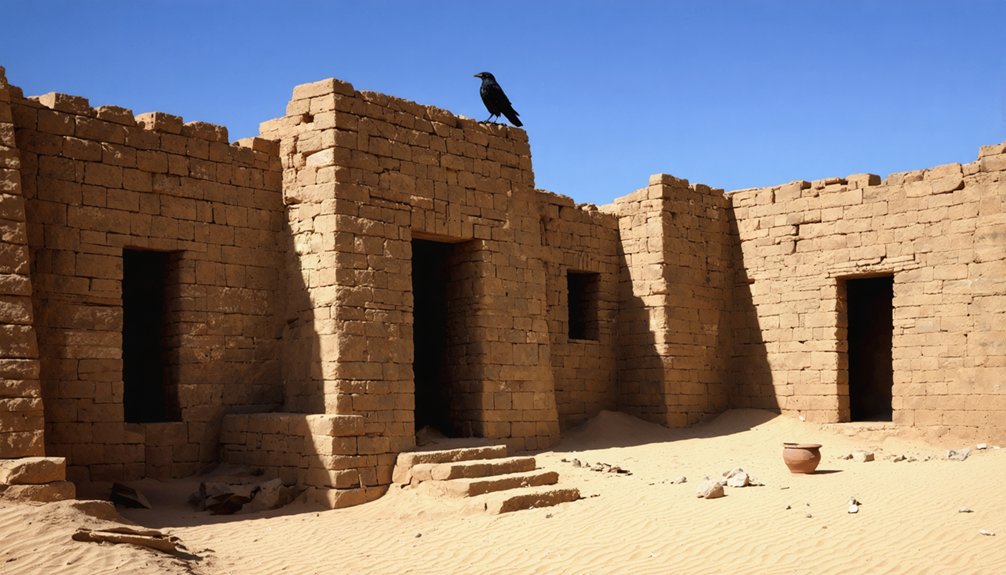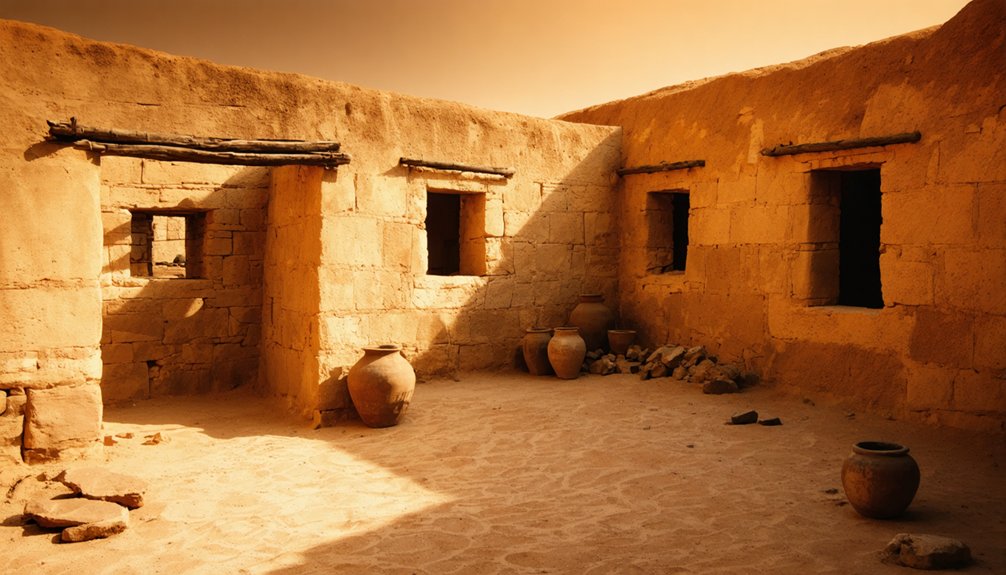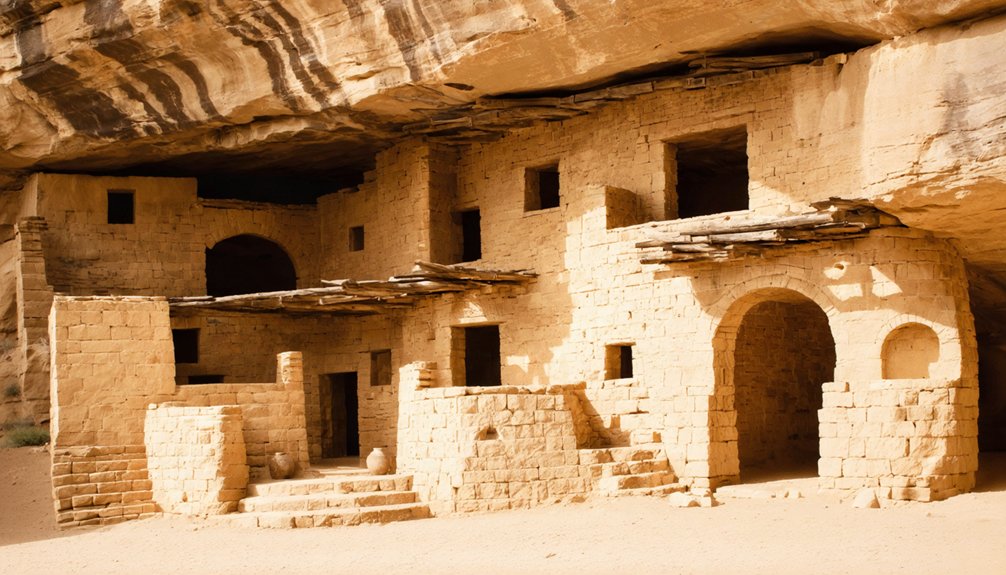
Ancient Native American ruins across the USA span thousands of years, from 23,000-year-old White Sands footprints to 1,000-year-old cliff dwellings. You’ll find southeastern mound complexes like Cahokia, southwestern pueblos built by Ancestral Puebloans, and astronomical sites like Chaco Canyon showing sophisticated celestial knowledge. These archaeological treasures feature innovative architectural techniques adapted to harsh environments and contain artifacts revealing daily life. Their varying states of preservation tell a deeper story of America’s first inhabitants.
Key Takeaways
- Mesa Verde in Colorado features 600 cliff dwellings built by Ancestral Puebloans between 1100-1300 CE.
- Cahokia Mounds in Illinois was the largest pre-Columbian settlement north of Mexico, housing up to 20,000 people.
- Chaco Canyon in New Mexico contains structures with sophisticated astronomical alignments and celestial observation features.
- Canyon de Chelly in Arizona showcases ancient cliff dwellings with continuous habitation for over 5,000 years.
- Visitors should respect cultural significance by staying on designated paths and consulting with local tribes about proper etiquette.
The Magnificent Mound Builders of the Southeast
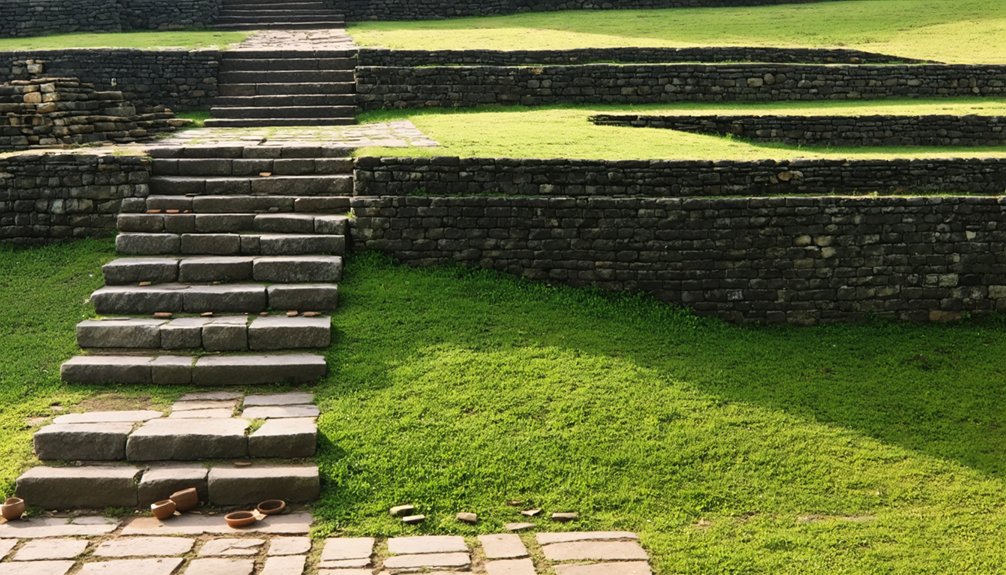
While often overshadowed by more famous archaeological sites, the Southeastern Mound Builders created some of North America’s most impressive prehistoric earthworks. Beginning around 3500 BCE, these cultures predated Egyptian pyramids, developing sophisticated mound construction techniques over 5,000 years.
You’ll find diverse architectural forms across the Southeast, from Cahokia’s massive Monks Mound (30 meters tall) to animal-shaped effigy mounds representing sacred cosmology. These structures weren’t merely ceremonial purposes—they functioned as burial sites, platforms for temples, and community gathering spaces. Cahokia reached its peak around 1050 CE with 15,000 to 20,000 inhabitants, making it the largest pre-Columbian settlement north of Mexico.
The most impressive development occurred during the Mississippian period (800-1600 AD), when advanced agricultural societies built planned ceremonial centers like Winterville and Ocmulgee. The Fort Ancient culture, considered an offshoot of Mississippian culture, established settlements with central plazas for rituals and community activities.
Despite eventual abandonment due to resource stresses and conflicts, these monumental earthworks remain powerful indicators of Native American engineering prowess and cultural sophistication.
Cliff Dwellings and Pueblos of the Desert Southwest
How did ancient Native Americans adapt to the harsh desert environment of the Southwest? They engineered remarkable cliff architecture throughout the Four Corners region between 1100-1300 CE.
These Ancestral Puebloans constructed multi-storied stone dwellings in natural alcoves, creating defensible positions during a period of resource competition. Yellow Jacket represented the largest prehistoric settlement with approximately 1,800 rooms capable of housing 3,000 people.
You’ll find these structures at Mesa Verde, Gila Cliff Dwellings, and Bears Ears—sites where sandstone masonry and adobe construction techniques enabled communities to thrive.
The buildings feature ground-floor rooms without doors (accessed by retractable ladders), ceremonial kivas, and strategic positioning near water sources. The intensifying cycles of drought by 1200 CE forced these civilizations to seek higher locations with better access to limited resources.
This ancestral heritage faced abandonment by the mid-1300s due to drought and social upheaval, yet remains well-preserved in the arid climate, maintaining cultural connections to modern Pueblo descendants.
America’s Oldest Archaeological Treasures
Long before the Ancestral Puebloans constructed their cliff dwellings, much earlier inhabitants walked the North American continent, leaving behind archaeological evidence that challenges our understanding of human migration patterns.
You can explore America’s oldest ancient habitation sites at locations like Cooper’s Ferry in Idaho, dated to 16,000 years ago, or the White Sands footprints in New Mexico—remarkably preserved tracks dating back 23,000 years.
These prehistoric settlements represent the earliest confirmed human presence in North America. The recently discovered Nipéhe village stands as the oldest site with artifacts dating back 16,560 years. The continent’s archaeological record expands with massive earthwork complexes like Poverty Point in Louisiana (1650-700 BCE) and Cahokia in Illinois (800 CE), demonstrating sophisticated engineering capabilities. The Serpent Mound in Ohio, measuring 1,348 feet long, stands as the largest prehistoric effigy mound ever discovered.
Sites like Meadowcroft Rockshelter and Topper remain controversial but potentially push human occupation even further back, offering you glimpses into humanity’s earliest footsteps across this land.
Astronomical Knowledge and Sacred Alignments
Ancient Native American societies developed sophisticated astronomical knowledge systems, expressed through precise architectural alignments and ceremonial structures.
You’ll witness this expertise at the Bighorn Medicine Wheel, where solstice alignments remain accurate today, reaching peak precision around 1200 AD. These astronomical alignments served practical purposes—tracking ideal planting times through celestial navigation markers like Aldebaran, Rigel, and Fomalhaut.
At Ancestral Puebloan sites, architectural integration of cosmic cycles is evident. Aztec West’s walls mark solstices through angular construction, while Chaco Canyon’s buildings align with the 18.6-year lunar cycle. The Medicine Wheel’s structure with 28 stone spokes radiating from a central cairn represents the lunar month and demonstrates deep understanding of celestial cycles.
Native astronomers created complex timekeeping systems by tracking star positions and lunations, knowledge preserved through generations. Most indigenous populations utilized two types of lunar calendars – one descriptive based on seasonal events and another tracking astronomical phenomena. These weren’t merely scientific endeavors but sacred practices connecting communities to celestial rhythms that continue in modern Pueblo traditions.
Artifacts That Tell Ancient Stories
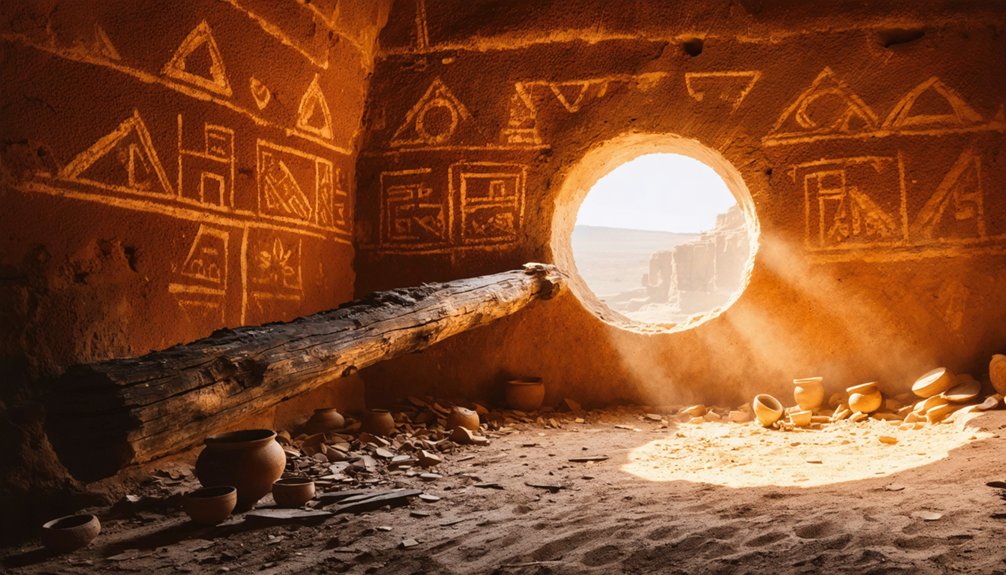
Discovered across archaeological sites throughout North America, artifacts provide tangible connections to Native American civilizations that once thrived in these landscapes.
The ancient ruins of native american villages reveal intricate social structures and cultural practices that defined these communities. These remnants serve as a testament to their ingenuity and resilience, offering insights into their daily lives and spiritual beliefs. As researchers continue to explore these sites, they uncover stories that enrich our understanding of America’s diverse heritage.
You’ll find arrowheads, pottery fragments, and stone tools that reveal technological innovations and daily practices of ancient peoples.
These objects aren’t merely historical curios—they embody profound artifact significance through their designs, materials, and craftsmanship.
Pottery patterns and ceremonial objects reveal spiritual beliefs while trade materials expose extensive networks spanning hundreds of miles.
When examining these artifacts, you’re witnessing cultural connections that link contemporary Native communities to their ancestors.
The strategic placement of turquoise in jewelry or symbolic imagery on ceremonial pipes reveals sophisticated social structures and belief systems.
Modern archaeological techniques now allow for deeper analysis of tool wear patterns and material composition, continuously enriching our understanding of these resilient cultures.
Arrowheads in particular serve as remnants that encapsulate the rich cultural history of Native American tribes through their distinctive shapes and materials.
Expert appraisal services can help determine the authentic value of discovered artifacts based on age, condition, and documented provenance.
Frequently Asked Questions
Can Visitors Touch or Climb on Ancient Ruins?
Walking on eggshells applies here—you can’t touch or climb ruins. Cultural preservation requires following visitor guidelines strictly. Scientific evidence confirms physical contact accelerates deterioration, compromising these irreplaceable historical treasures.
What Indigenous Tribes Still Maintain Connections With These Sites?
Navajo, Pueblo, Apache, Menominee, and Sonoran descendants actively maintain tribal heritage at ancestral sites through dual management systems, cultural preservation initiatives, ongoing ceremonies, and collaborative archaeological research with federal authorities.
How Were These Massive Structures Built Without Modern Technology?
Like master weavers threading history, you’d find ingenious construction techniques involving basket-carried earth, sophisticated adobe fabrication, precise astronomy-based planning, and patient layering of ancient materials over generations through coordinated communal efforts.
Are There Undiscovered Ruins Researchers Are Currently Searching For?
Yes, researchers actively seek hidden sites across America’s remote regions. You’ll find archaeological potential concentrated in the Southwest, Appalachians, Alaska, and riverways—areas challenging conventional exploration but promising significant discoveries.
How Do Archaeologists Date These Ancient Native American Sites?
Precise periods peek through when you look at archaeological artifacts. Scientists use radiocarbon dating to measure organic carbon decay and dendrochronology methods to analyze tree ring patterns, establishing chronological sequences spanning centuries.
References
- https://choctawspirit.wordpress.com/2019/08/16/oldest-native-american-structures-in-north-america/
- https://www.letsroam.com/explorer/ancient-ruins-in-america/
- https://www.youtube.com/watch?v=7v9iBpxdEck
- https://maps.apple.com/guides?curated=2426176765318900615&_provider=9902
- https://www.campfiresandconcierges.com/indian-ruins-in-arizona/
- https://www.travelawaits.com/2870171/best-ancient-sites-to-visit-in-the-us/
- https://www.wilderness.org/articles/article/10-extraordinary-native-american-cultural-sites-protected-public-lands
- https://en.wikipedia.org/wiki/Native_American_Heritage_Sites_(National_Park_Service)
- https://therestlessbeans.com/amazing-native-american-ruins/
- https://historyguild.org/interesting-stories-of-the-mound-building-native-american-civilizations-of-the-midwest/