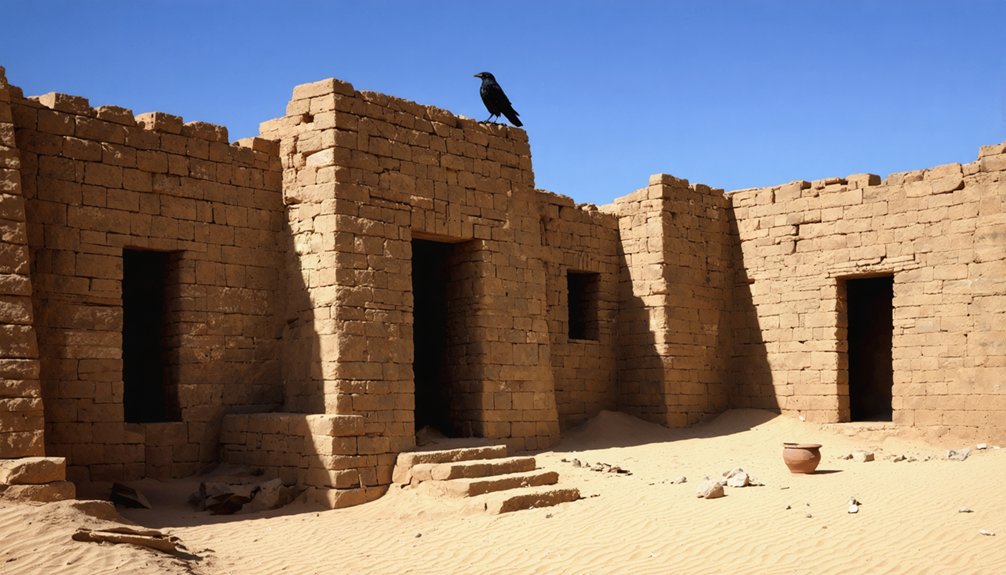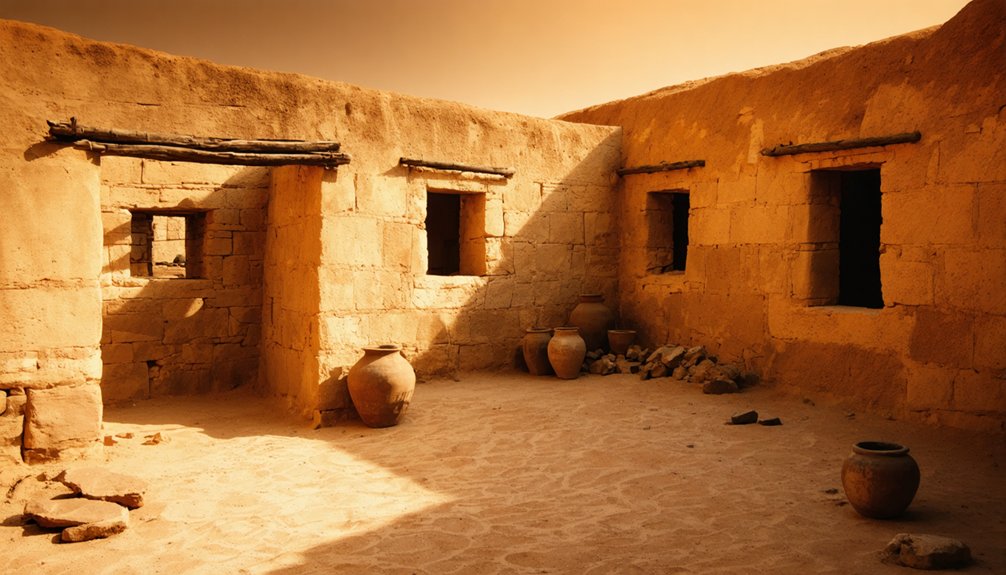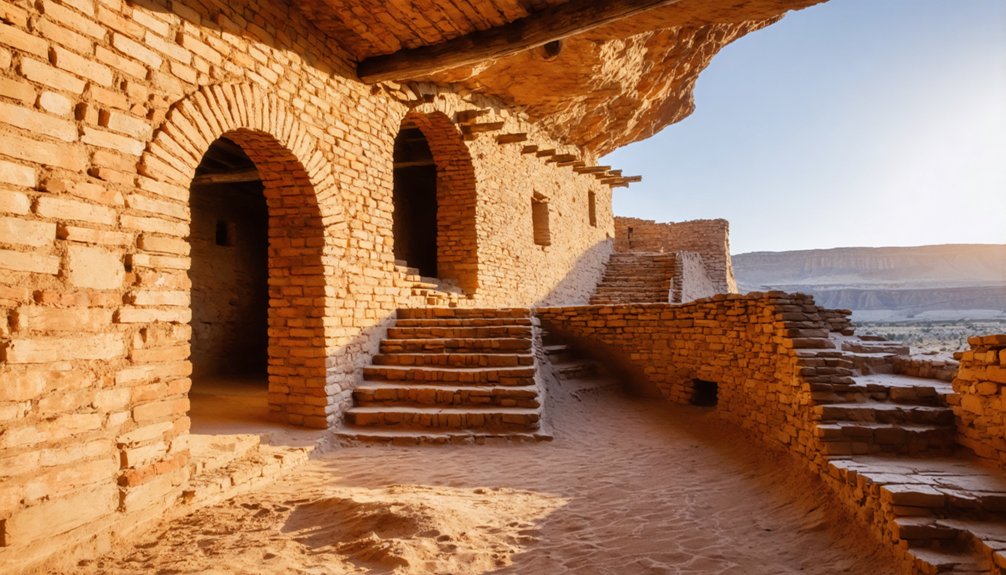
You’ll find America’s most impressive ancient Native American ruins at Mesa Verde and Chaco Canyon, with their multi-story cliff dwellings and astronomical alignments. For fewer crowds, explore Tuzigoot, Canyon de Chelly, or Canyons of the Ancients. Plan your visit during November-April for ideal weather and accessibility. When exploring these sacred spaces, respect their cultural significance by avoiding vandalism and supporting Native-led preservation efforts. The architectural genius of these civilizations awaits your discovery.
Key Takeaways
- Mesa Verde features 4,300+ archaeological sites and 600 cliff dwellings dating from 450-1300 CE with multi-story construction.
- Chaco Culture National Historical Park showcases Great Houses with celestial alignments and an extensive 400-mile road network.
- Canyon de Chelly, Navajo National Monument, and Canyons of the Ancients protect significant cliff dwellings and archaeological treasures.
- Visit between November and April for optimal weather conditions, avoiding summer heat and monsoon flash flood risks.
- Practice respectful tourism by avoiding vandalism, honoring offerings, and supporting Native-led preservation initiatives at these sacred sites.
Magnificent Ancestral Puebloan Structures of Mesa Verde
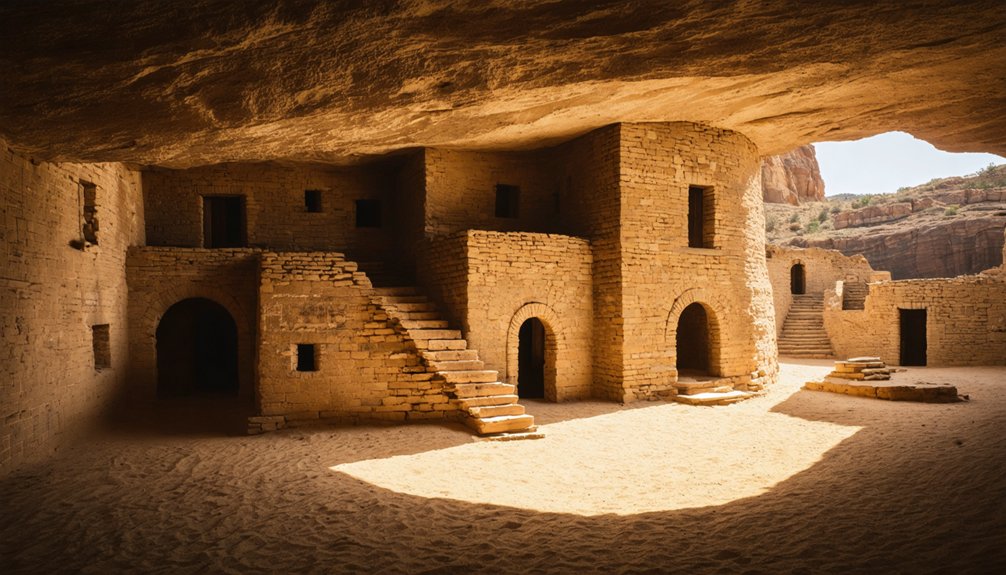
While traversing the rugged landscape of southwestern Colorado, you’ll encounter the magnificent Ancestral Puebloan structures of Mesa Verde, architectural marvels that have endured for nearly a millennium.
These sophisticated dwellings, inhabited from 450 CE to 1300 CE, showcase remarkable Ancestral Puebloan innovations in construction techniques.
Ancestral Puebloan architecture stands as testament to ingenious construction innovations spanning more than eight centuries.
You’ll observe how their building methods evolved from simple adobe structures to complex stone masonry buildings nestled into protective cliff alcoves. The transition from traditional pit houses to above-ground structures represents a significant architectural advancement in their building history.
Cliff dwelling techniques included multi-story construction, retractable ladders for security, and circular kivas for ceremonial purposes. The most famous site, Cliff Palace, exemplifies their engineering prowess with numerous rooms and ceremonial spaces.
These communities cultivated “The Three Sisters” crops while developing intricate pottery, murals, and jewelry that reveal extensive trade networks and cultural sophistication during their 700-year presence.
Mesa Verde stands as the largest archaeological site in the United States, containing over 4,300 sites and 600 cliff dwellings for visitors to explore.
The Architectural Marvel of Chaco Culture National Historical Park
In the heart of northwestern New Mexico, Chaco Culture National Historical Park stands as one of North America’s most remarkable prehistoric engineering achievements.
You’ll discover massive Great Houses like Pueblo Bonito with its 800 rooms and 39 kivas, all pre-planned and precisely oriented to celestial alignments. The Chacoan architecture displays unprecedented sophistication through multi-story construction and the unique columned colonnade. Builders created these structures without using metal tools, relying instead on local materials and advanced techniques.
Built between the mid-800s and 1125 AD, these structures formed the hub of a 400-mile road network radiating outward with remarkable straightness. The ceremonial significance is evident in specialized kivas, including the Great Kiva with its encircling masonry bench and floor vaults.
The site’s 34,000 acres contain approximately 4,000 archaeological sites revealing a complex society that participated in extensive trade networks stretching into Mesoamerica. Designated as a World Heritage site in 1987, Chaco Culture National Historical Park preserves this extraordinary archaeological treasure for future generations.
Hidden Treasures: Lesser-Known Native American Ruins Worth Visiting
You’ll find extraordinary archaeological sites tucked away in remote canyons throughout the American Southwest, far from the crowds of well-known destinations.
The Tonto Basin Salado Ruins offer backcountry solitude with both accessible Lower Ruins and more challenging Upper Ruins requiring reservations. Visitors can enjoy spectacular 360-degree valley views at Tuzigoot National Monument’s hilltop pueblo overlook. Canyon de Chelly National Monument presents remarkable cliff dwellings preserved within the spiritually significant Navajo Nation.
For those seeking easier access to hidden historical treasures, Casa Grande‘s impressive four-storey Great House provides a glimpse into Hohokam engineering while Ironwood Forest National Monument combines petroglyphs with spectacular desert landscapes.
Remote Canyon Treasures
Deep within the rugged landscape of the American Southwest, remarkable Native American ruins lie tucked away in remote canyons, offering archaeological treasures beyond the well-trodden tourist paths.
Your canyon exploration might begin at Canyon de Chelly, where sheer walls protect Ancestral Puebloan dwellings like White House Ruin.
Further west, Navajo National Monument houses the pristine cliff structures of Betatakin and Keet Seel, occupied around 1250-1300 AD.
For the truly adventurous, Canyons of the Ancients contains America’s highest density of Native archaeological sites, including Sand Canyon Pueblo with its panoramic views.
Ancient artifacts remain remarkably preserved in these protected environments. The Three Rivers Petroglyph Site showcases over 21,000 petroglyphs created by the Mulan people that have survived centuries of exposure.
Chaco Culture National Historical Park presents an expansive collection of stone pueblos, once a ceremonial hub between 850-1250 AD. The park’s impressive structures were ultimately abandoned due to a severe drought that began around 1130 AD, making agriculture unsustainable in this arid region.
Accessible Hidden Gems
While many travelers flock to well-known archaeological sites like Mesa Verde, numerous accessible Native American ruins remain hidden in plain sight across the American landscape.
You’ll discover Chaw’se Indian Grinding Rock State Historic Park, just an hour from Sacramento, showcasing 1,185 bedrock mortars and 363 petroglyphs created by Miwok people across millennia.
Explore hidden archaeological sites like Poverty Point in Louisiana, a UNESCO World Heritage mound site predating Cahokia, featuring six C-shaped ridges radiating from a central plaza.
Ocmulgee National Monument offers North America’s only intact spiral mound among its seven total earthworks.
For indigenous heritage trails with minimal crowds, visit Hovenweep National Monument along the Utah-Colorado border, where six prehistoric villages with distinctive stone towers await your exploration, particularly during spring and fall seasons.
The complex pueblo structures of Chaco Culture National Historical Park in New Mexico feature extensive road systems and astronomical alignments dating back to the 9th century.
Turtle Mound in Florida stands as the largest shell mound remaining in the United States, containing nearly a million cubic feet of shells and rising 50 feet above the coastal landscape.
Seasonal Planning Guide for Ancient Village Exploration
When planning a visit to Native American village ruins, timing becomes a critical factor that greatly impacts both comfort and accessibility. The ideal window spans late fall to early spring (November-April), when desert temperatures moderate and visitor safety risks diminish considerably.
Southwestern sites demand different timing than Rocky Mountain or southeastern locations. Monsoon season (July-September) brings flash flood dangers near cliff dwellings, while winter snow can limit access to Mesa Verde and similar northern ruins.
Consider regional variations carefully—Arizona’s desert monuments become treacherous during 100°F+ summers, while Colorado’s high-elevation sites may be inaccessible in winter.
For maximum freedom to explore, target shoulder seasons when ranger-guided tours operate more frequently and crowds thin out, allowing deeper connection with these ancient spaces.
Understanding the Cultural Significance Behind Ancient Dwelling Designs
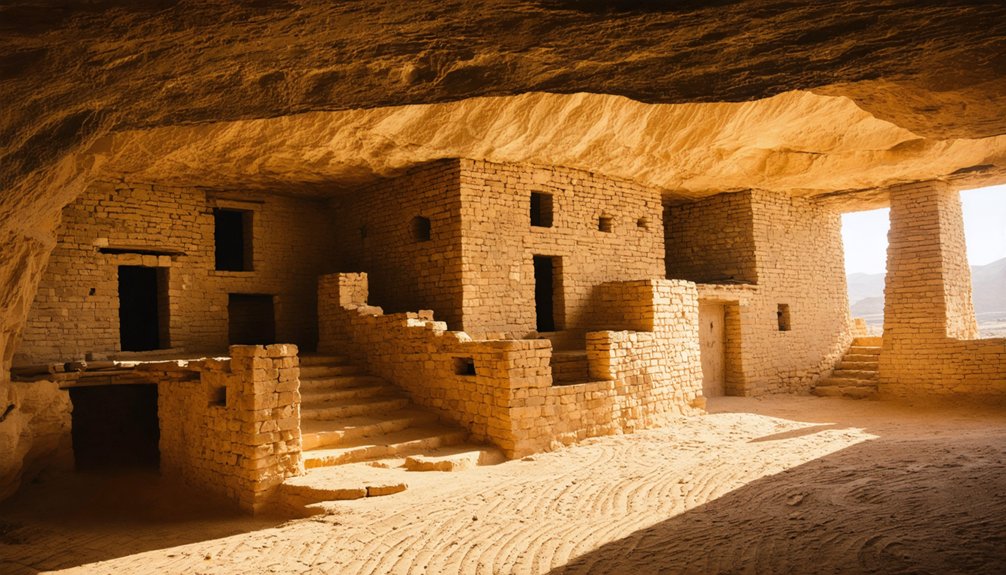
The cultural significance embedded within Native American dwelling designs extends far beyond mere architectural functionality, offering profound insights into these societies’ worldviews, spiritual beliefs, and ecological adaptations.
As you explore these ancient ruins, you’ll notice how symbolic architecture reflects spiritual cosmologies—hogans facing east to greet the dawn, and rounded shapes mimicking a pregnant woman’s belly.
Communal living spaces, like longhouses and pueblo complexes with central plazas, reveal sophisticated social organization and collective values.
The architecture of connection—where shared spaces forged social bonds and manifested collective tribal wisdom.
Each architectural element tells a story of environmental mastery: cliff dwellings utilizing natural rock faces, subterranean pit houses regulating temperature, and water retention systems demonstrating ecological knowledge.
These structures weren’t just buildings; they were physical manifestations of cultural identity, passed down through generations, connecting ancient peoples to land, cosmos, and community.
Preservation Challenges and Respectful Tourism at Sacred Sites
Preservation of Native American sacred sites faces multifaceted challenges that demand immediate attention from both governmental bodies and visitors.
When you visit these culturally significant places, you’re entering areas where legal protections often fail despite frameworks like the Native American Graves Protection Act. Court decisions have consistently undermined sacred site protection, allowing development that damages spiritual locations.
You’ll encounter access restrictions that prevent Indigenous practitioners from conducting ceremonies at their ancestral places, requiring government permission on lands they once freely inhabited.
Effective preservation requires your commitment to respectful tourism—avoiding vandalism of petroglyphs, honoring natural offerings, and supporting Native-led preservation initiatives.
The most promising approach combines collaborative stewardship with tribal sovereignty, ensuring these irreplaceable cultural treasures survive for future generations despite urbanization and infrastructure threats.
Frequently Asked Questions
Why Were These Ancient Villages Suddenly Abandoned?
You’re witnessing the aftermath of complex collapses triggered by climate change, resource depletion, social conflicts, and warfare. Communities strategically relocated when environmental stresses and political instability made their settlements unsustainable.
this has led to an economic decline in nevada ghost towns, where once-thriving communities now stand as reminders of prosperity lost. As resources dwindled and jobs evaporated, many residents were forced to leave, further isolating these towns. The remnants of their history tell a story of resilience amid abandonment, providing insights into the broader challenges faced by similar locales.
What Tools Did Native Americans Use to Build Cliff Dwellings?
You’ll find they utilized harder riverbed stones to shape sandstone blocks, stone axes, drills, and hatchets for quarrying, while employing ingenious building techniques incorporating wooden beams, chinking stones, and ash-mixed mortar.
How Did Different Tribes Communicate or Trade With Each Other?
Over 50 tribal languages facilitated trade across North America. You’ll find tribes established extensive trade routes spanning thousands of miles, using sign language and interpreters to overcome linguistic barriers while exchanging goods and knowledge.
Can Visitors Take Artifacts Found at These Archaeological Sites?
No, you can’t legally take artifacts. Federal law prohibits removal from public lands, with severe penalties. Artifact preservation and ethical considerations require leaving items undisturbed for scientific study and cultural respect.
What Spiritual Ceremonies Were Performed in These Ancient Communities?
Ancient natives sought spiritual freedom through methodical rituals you’ll never witness: harvest ceremonies, vision quests, healing sweat lodges, and seasonal community gatherings—each with precise ceremonial significance to their existence.
References
- https://maps.apple.com/guides?curated=2426176765318900615&_provider=9902
- https://www.campfiresandconcierges.com/indian-ruins-in-arizona/
- https://www.wilderness.org/articles/article/10-extraordinary-native-american-cultural-sites-protected-public-lands
- https://www.travelawaits.com/2870171/best-ancient-sites-to-visit-in-the-us/
- https://guides.loc.gov/native-american-spaces/cartographic-resources/indian-sites
- https://www.youtube.com/watch?v=uy65g6CcKl8
- https://therestlessbeans.com/amazing-native-american-ruins/
- https://www.nps.gov/meve/learn/historyculture/cliff_dwellings_home.htm
- https://orias.berkeley.edu/resources-teachers/societies-americas/ancestral-pueblo
- https://smarthistory.org/mesa-verde-cliff-dwellings/