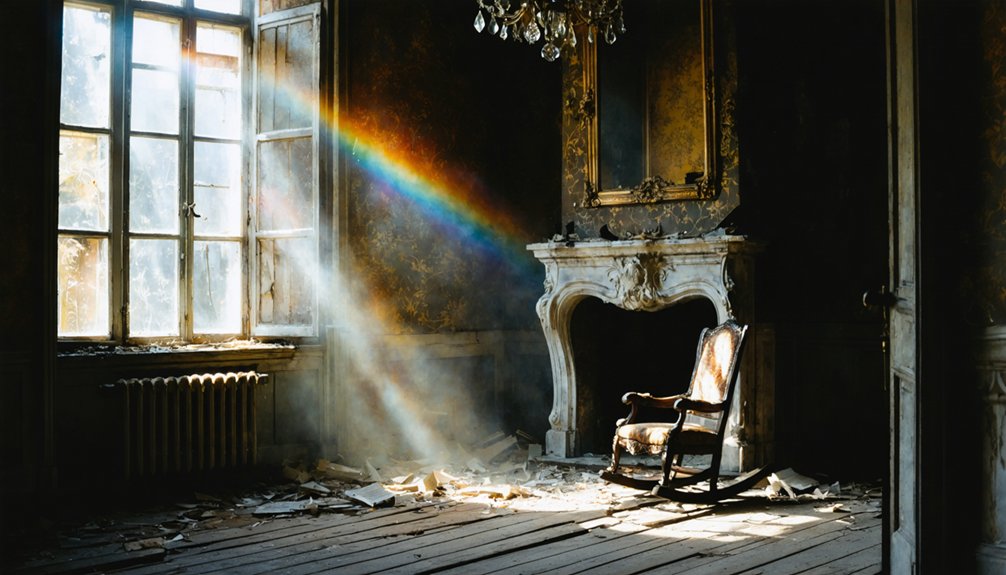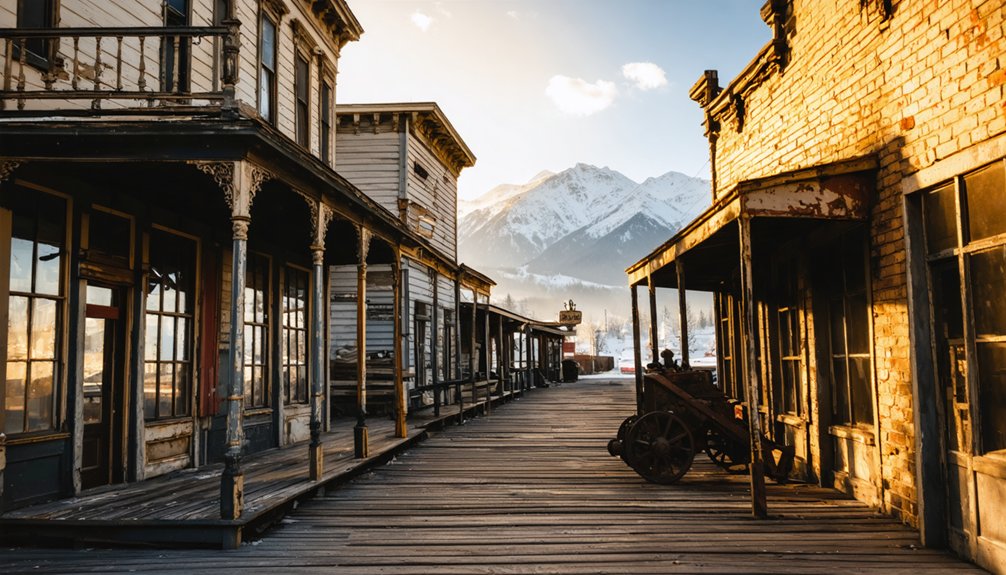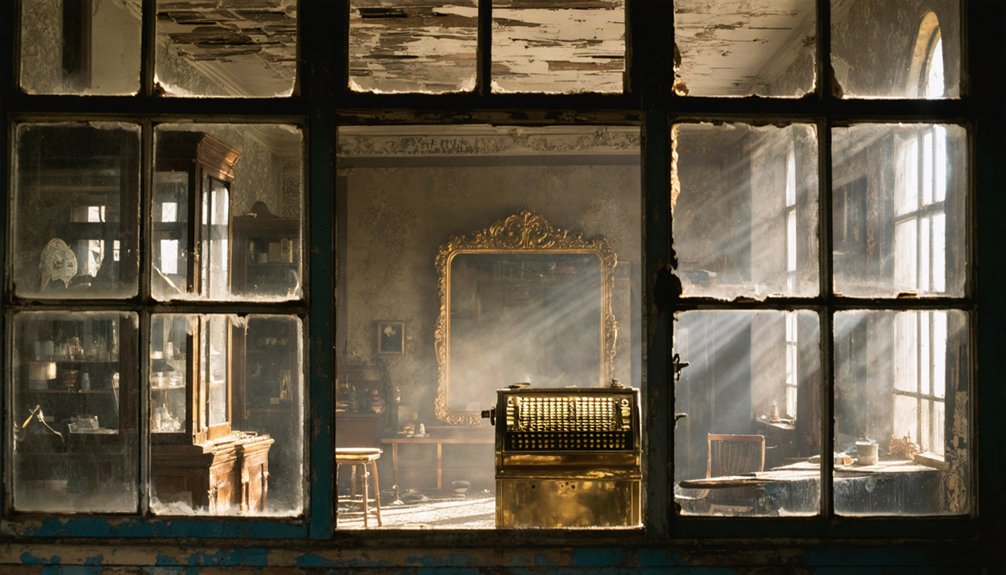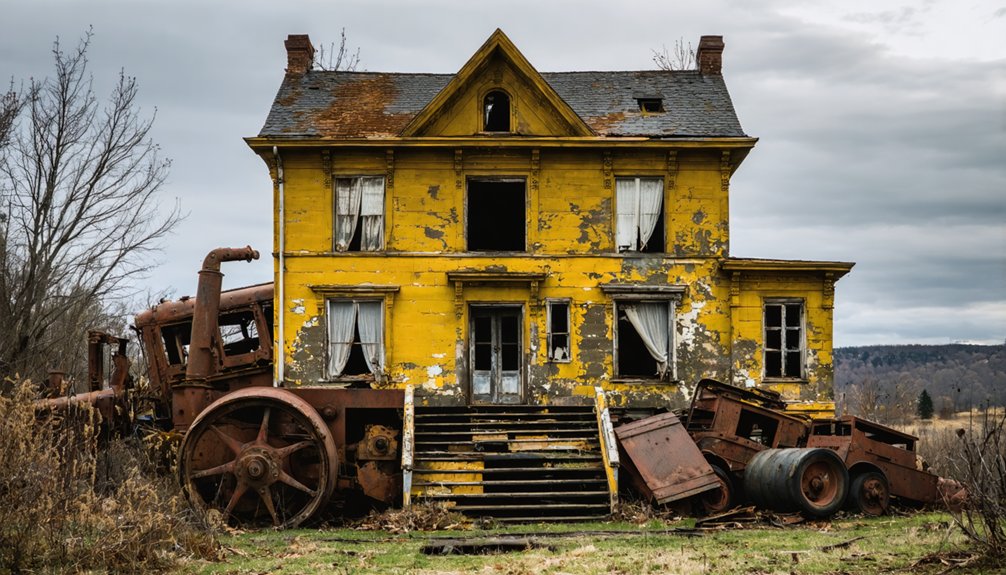
You’ll find America’s Victorian ghost towns scattered across Western states, each telling stories of boom-and-bust cycles that defined frontier expansion. Places like Bodie, California and St. Elmo, Colorado preserve authentic 19th-century structures in various states of “arrested decay,” with original furnishings and architectural details intact. These abandoned settlements offer both atmospheric historical exploration and insights into economic volatility. Their wooden storefronts and ornate buildings reveal fascinating chapters of American pioneering ambition.
Key Takeaways
- Bodie, California maintains 200 buildings in “arrested decay” complete with original furnishings and Victorian-era architecture.
- Virginia City, Nevada preserves its Victorian elegance with wooden sidewalks, historic museums, and former mining infrastructure.
- St. Elmo, Colorado features forty original structures from the 1880s and is considered America’s best-preserved ghost town.
- Ghost towns like Garnet, Montana showcase over 30 well-preserved log buildings reflecting late 19th century mining community life.
- Many abandoned Victorian-era towns have ghostly legends, with visitors to St. Elmo reporting unsettling sensations.
The Rise and Fall of America’s Most Famous Ghost Towns
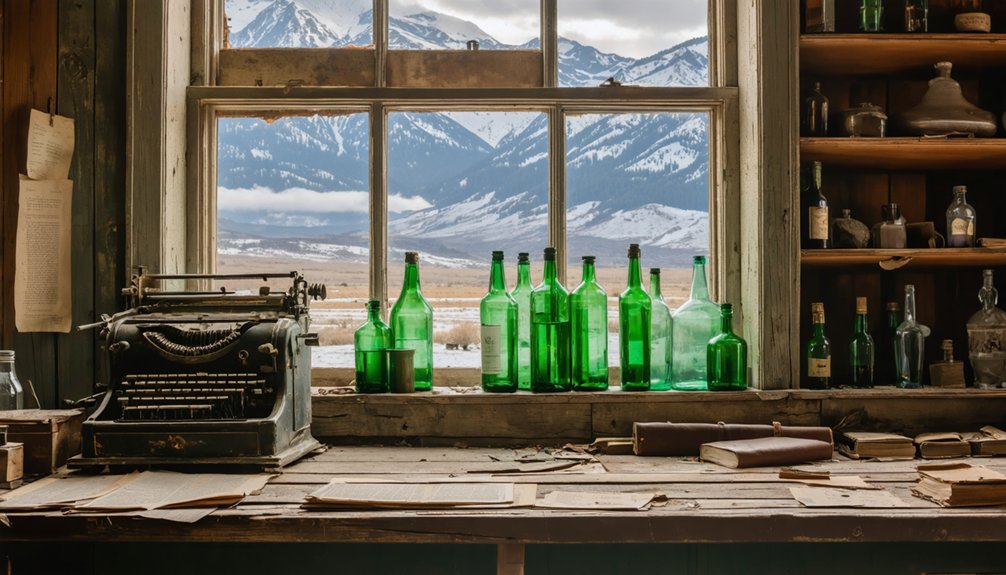
While America’s westward expansion fostered countless settlements throughout the nineteenth century, many of these communities experienced dramatic booms followed by equally spectacular busts, leaving behind what we now recognize as ghost towns.
You’ll find Bodie, California exemplifies this pattern perfectly—its population soared to 10,000 during the 1880s gold rush before its swift abandonment by the 1940s.
Similarly, Virginia City’s Comstock Lode discovery sparked intense silver mining town development before economic collapse transformed it into a heritage tourism destination.
Rhyolite, Nevada demonstrates the extreme volatility of these frontier communities, springing up “overnight” in 1904 complete with electric lights and an opera house, only to be abandoned shortly thereafter.
These settlements’ dramatic lifecycles reflect America’s rapid resource exploitation during western expansion.
Calico, California became famous for its 500 silver mines during its peak before being abandoned in the 1890s when the silver market collapsed.
In Centralia, Pennsylvania, a different kind of abandonment occurred when an underground coal mine fire forced most residents to evacuate, leaving behind a hazardous ghost town with smoke still rising from the ground today.
Gold, Silver, and Abandonment: Why Victorian Towns Became Deserted
Although seemingly destined for permanence during their heyday, Victorian-era ghost towns across America primarily succumbed to the fundamental economic principle that guided their very creation: resource exhaustion.
When you visit these abandoned settlements today, you’re witnessing the aftermath of failed resource management. Once precious metals became depleted or mining turned financially unfeasible, these boomtowns lost their economic foundation. For example, Kennecott, Alaska generated over $200 million worth of copper ore before falling victim to the Great Depression.
Towns like Bodie, California and Virginia City, Nevada flourished briefly, then collapsed when mines closed. Without economic sustainability or diversification, populations fled.
Transportation changes accelerated abandonment—towns bypassed by railroads or highways quickly became isolated. Environmental contamination from mining sometimes forced evacuation, while changing transportation networks left once-bustling communities disconnected from commerce. These towns exemplify what T. Lindsey Baker described as places where the reason for being no longer exists.
These ghost towns stand as stark reminders of prosperity’s fragility when built on finite resources.
Preserved in Time: Victorian Ghost Towns You Can Visit Today
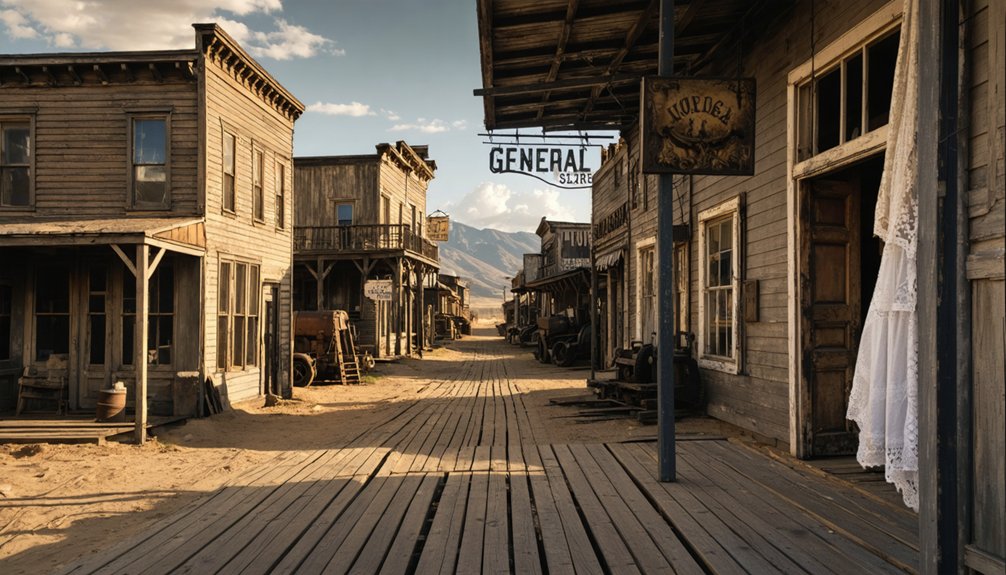
Despite their economic collapse, many Victorian ghost towns stand remarkably preserved today, offering visitors immersive glimpses into 19th-century frontier life.
Virginia City, Nevada retains its Victorian elegance with wooden sidewalks and the Mackay Mansion Museum, while Bodie, California‘s 200 buildings remain in “arrested decay” with tables still set for meals never served.
For authentic Victorian preservation, visit St. Elmo, Colorado, considered the best-preserved ghost town in the Western United States with forty original structures. The town’s rich history began in 1880 when nearby mines were established, creating a bustling community before its eventual decline. Visitors can purchase sunflower seeds at the seasonal General Store to participate in the beloved local tradition of feeding friendly chipmunks on the porch.
On the East Coast, Batsto Village, New Jersey offers revolutionary-era buildings dating to 1766, showcasing the evolution from iron works to glassblowing.
Wyoming’s South Pass City provides another exceptional ghost town tourism experience with nearly two dozen restored buildings available for self-guided exploration year-round.
The Unique Architecture and Culture of 19th Century Ghost Settlements
Victorian ghost towns reveal architectural legacies that have withstood the ravages of time and abandonment. Walking through Garnet, Montana, you’ll find over 30 remarkably intact log structures frozen in late 19th-century condition.
Time stands frozen in America’s ghost towns, where Victorian architecture defies decay and tells stories of forgotten frontier dreams.
In Bodie, the architectural styles remain particularly striking, with a schoolhouse, church, and saloons still containing their original furnishings and cultural artifacts.
St. Elmo’s preserved rows of buildings offer glimpses into 1880s mining life, while Bisbee‘s 110 surviving structures (of an original 2,000) house period goods that illuminate Victorian commercial sensibilities.
These settlements weren’t merely utilitarian—they featured diverse architectural styles reflecting community aspirations. The wooden sidewalks of Virginia City and the brick fortress construction of Fort Jefferson demonstrate how various building materials shaped these frontier communities before environmental challenges and economic shifts rendered them obsolete. Many of these abandoned towns have been transformed into educational sites that showcase American heritage and history for modern tourists. Kennecott’s National Historic Landmark status recognizes the significant impact of early copper mining on Alaska’s development.
Beyond the Wild West: Lesser-Known Victorian Ghost Towns Across America
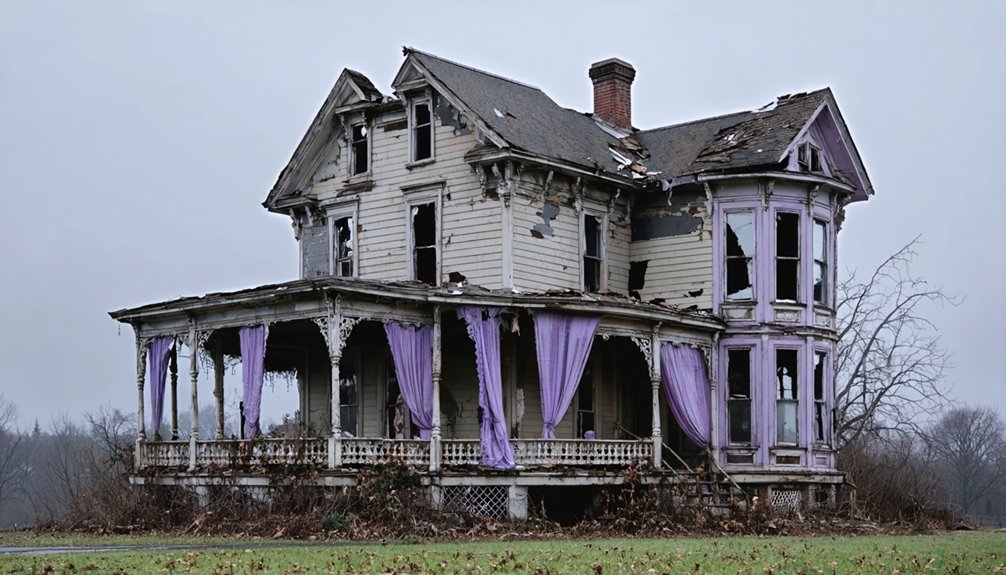
While the Western frontier dominates popular imagination when considering America’s ghost towns, lesser-known Victorian abandoned settlements exist across the entire country, each with unique abandonment stories that transcend the typical mining boom-and-bust narrative.
The decline of the timber industry has left many small communities struggling to adapt, prompting discussions around strategies for revitalizing lumber towns. These initiatives often focus on sustainable practices, tourism, and diversifying local economies to breathe new life into these once-thriving hubs. Community leaders are coming together to explore innovative solutions that honor their heritage while paving the way for future growth.
You’ll find Centralia, Pennsylvania, where underground coal fires have created an apocalyptic landscape of toxic fumes and sinkholes since 1962.
In Colorado, both St. Elmo and Animas Forks preserve ghostly legends of former residents like Annabelle Stark and spectral miners with bobbing lanterns. Visitors to St. Elmo often report an unsettling sensation of being watched as Annie Stark’s spirit is said to observe from hotel windows. The environmental impacts range from catastrophic in Centralia to the severe winter that devastated Animas Forks in 1884. With a remarkable total of 4,531 ghost towns across the United States, each abandoned settlement represents a unique chapter in American history.
Ruby, Arizona’s violent frontier history contrasts with Cahawba, Alabama’s significance as a former state capital brought down by recurring floods rather than mining decline, showcasing the diverse fates of America’s Victorian-era settlements.
Frequently Asked Questions
Are Ghost Towns Legally Protected From Development or Demolition?
Many ghost towns are protected through historic preservation laws, but protection varies by ownership status and specific legal regulations at federal, state, and local levels.
Can Visitors Spend the Night in Any Victorian Ghost Towns?
Step into history’s shadow! You’ll find ghost town accommodations at several Victorian-era sites like Virginia City’s Silver Queen Hotel and Eureka Springs’ Crescent Hotel, with some locations offering specialized overnight tours for paranormal enthusiasts.
What Dangerous Wildlife Commonly Inhabits Abandoned Ghost Towns?
During urban exploration, you’ll encounter rattlesnakes, feral dogs, predatory mammals, and disease-carrying rodents as primary wildlife hazards. Many species thrive in these deteriorating structures, often contaminated by industrial toxins.
Are Metal Detecting and Artifact Collection Permitted in Ghost Towns?
You’re generally prohibited from metal detecting in ghost towns. Most have metal detecting regulations requiring permission from landowners and artifact preservation policies that protect historical sites under federal and state laws.
Do Any Ghost Towns Still Have Active Mining Claims?
Despite 90% of ghost towns appearing abandoned, you’ll find active claims in places like Vulture City, Arizona, where mining rights continue under separate ownership, balancing historical preservation with resource extraction opportunities.
References
- https://devblog.batchgeo.com/ghost-towns/
- https://www.christywanders.com/2024/08/top-ghost-towns-for-history-buffs.html
- https://albiongould.com/ghost-towns-to-visit-in-the-states/
- https://stephentravels.com/top5/ghost-towns/
- https://savingplaces.org/guides/ghost-towns-on-route-66
- https://www.geotab.com/ghost-towns/
- https://en.wikipedia.org/wiki/Lists_of_ghost_towns_in_the_United_States
- https://www.atlasobscura.com/lists/americas-best-preserved-ghost-towns
- https://nightofthejack.com/2025/01/23/top-creepy-ghost-towns-in-america/
- https://www.visittheusa.com/experience/5-us-ghost-towns-you-must-see