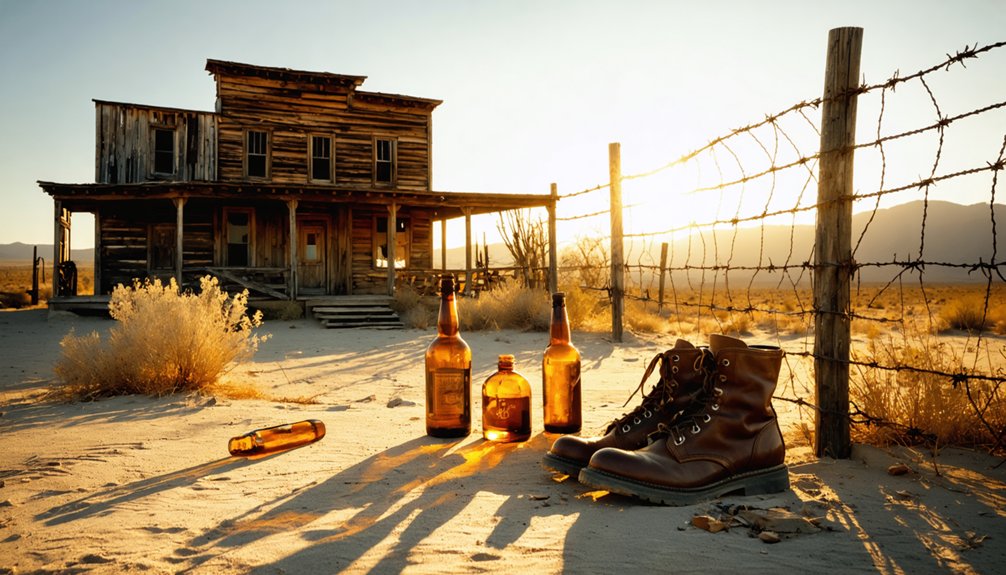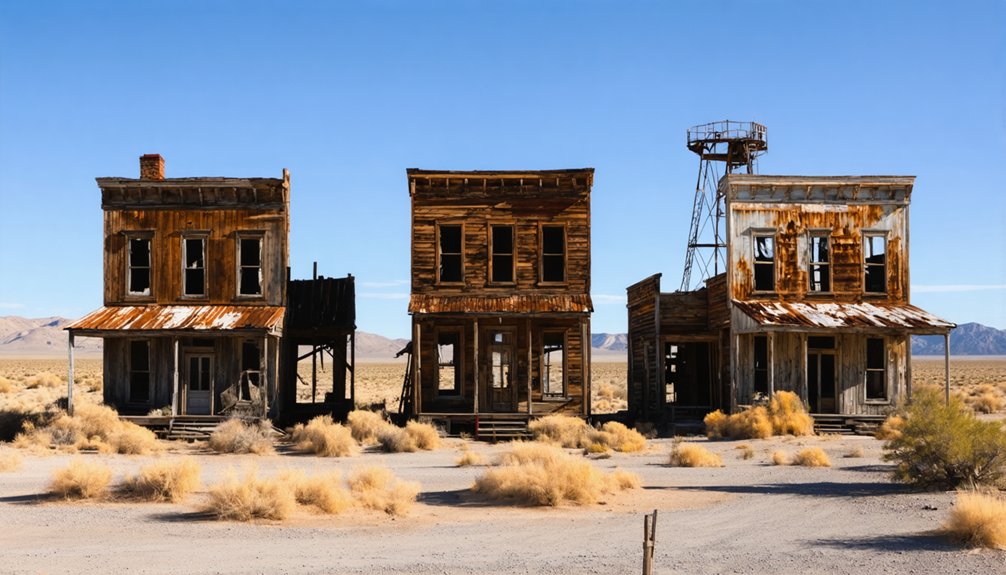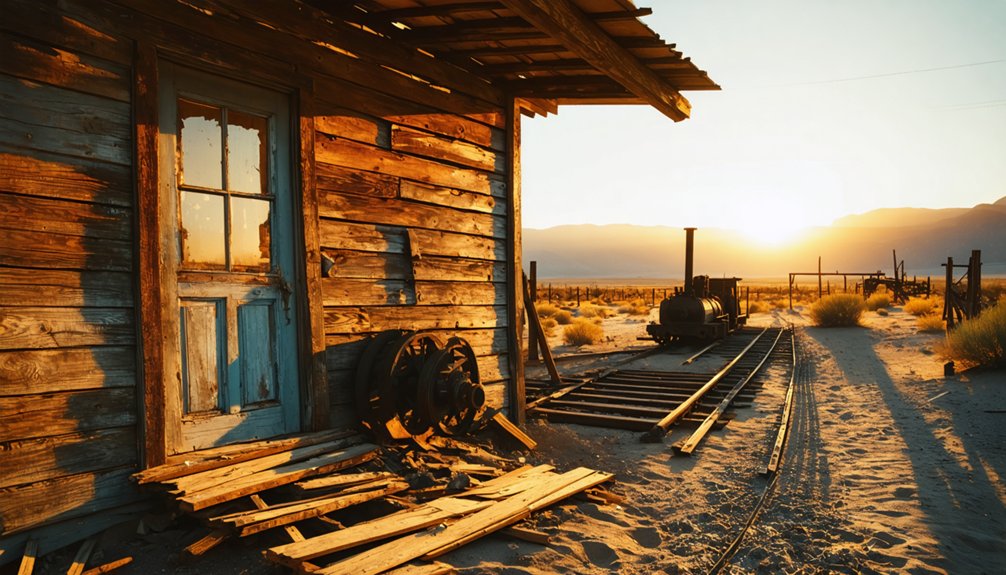
To explore Nevada’s forgotten mining communities safely, you’ll need a high-clearance 4×4 vehicle, extensive supplies, and multiple navigation tools. Research each town’s unique history through online databases and local historical societies before visiting. When exploring sites like Rhyolite or Goldfield, respect preservation guidelines and cultural resource laws protecting these structures. Understanding the boom-bust cycles adds context to your discoveries. These ghost towns hold fascinating stories of innovation and diversity waiting beneath the desert dust.
Key Takeaways
- Use a high-clearance 4×4 vehicle with appropriate tires and recovery equipment for navigating remote terrain safely.
- Research ghost town histories through resources like Western Mining History before visiting to enhance your experience.
- Bring abundant water, food, and navigation tools while informing someone of your exploration plans.
- Respect preservation laws protecting mining structures, artifacts, and potential burial sites during your visit.
- Explore significant sites like Rhyolite, Goldfield, and Berlin-Ichthyosaur State Park for well-preserved mining heritage.
Prepare for Remote Desert Exploration With Safety in Mind

When venturing into Nevada’s remote mining ghost towns, detailed preparation isn’t merely advisable—it’s essential for your survival. Your expedition demands a high-clearance 4×4 with off-road tires capable of traversing unpaved, rocky terrain.
Prioritize vehicle maintenance by checking all systems before departure and carrying extensive recovery tools.
Emergency preparedness requires abundant water—at least one gallon per person daily—plus extra food and medications sufficient for several days.
Travel using multiple systems: GPS, topographic maps, and compass, as cellular service is virtually nonexistent. Always inform a reliable contact of your itinerary and expected return.
Travel during cooler hours to prevent heat-related illnesses, wear appropriate clothing, and carry a satellite messenger for emergencies. The desert’s lack of humidity significantly accelerates your body’s moisture loss, making dehydration a serious danger. Always travel with a companion or group to ensure someone can seek help if you experience vehicle issues in these isolated locations.
These ghost towns offer freedom to explore, but demand respect for the unforgiving environment surrounding them.
Research Mining Town Histories Before Your Visit
Before starting your journey to Nevada’s ghost towns, thorough historical research will transform your experience from casual sightseeing to meaningful exploration. Knowing that Rhyolite once boasted a stock exchange before its 1916 abandonment or that Pioche earned its reputation as the “wildest town in the Silver State” adds layers to what you’ll witness.
Begin your ghost town research with online databases like Western Mining History and Wikipedia’s extensive catalog of Nevada ghost towns. Local historical societies offer archival photos and detailed mining history. The majority of these towns showcase Nevada’s rich mining history through their remaining structures and artifacts. Ghost towns like Tonopah and Virginia City remain active communities while preserving their historic character.
Understanding key events—like the 1907 financial panic that devastated Rhyolite or the silver demonetization of the 1890s—provides context for the ruins you’ll encounter. You’ll appreciate that many of these 600+ towns rose and collapsed within decades, leaving behind the haunting structures you’re about to discover.
Discover the Authentic Remains of Nevada’s Gilded Past
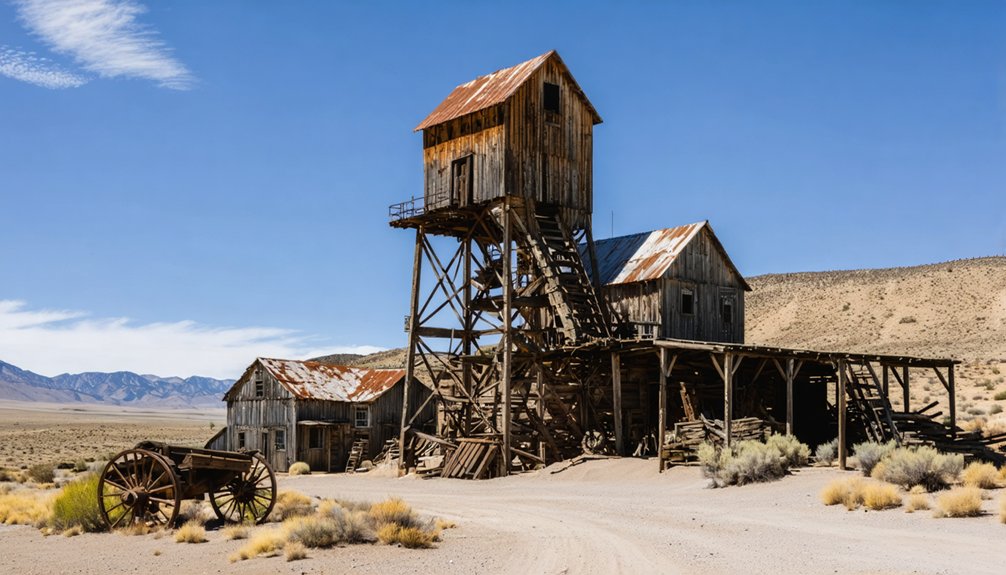
The landscape of Nevada harbors extraordinary physical remnants of its mining heritage, standing as weathered sentinels of America’s westward expansion.
You’ll discover ghost town photography opportunities in remarkably preserved locations where “arrested decay” from Nevada’s dry climate maintains structures in near-original condition decades after abandonment.
- Rhyolite offers striking concrete ruins including a three-story bank, alongside Tom Kelly’s restored Bottle House—perfect subjects for authentic mining artifacts documentation.
- Goldfield’s Belmont Courthouse displays mysterious graffiti, potentially linked to Charles Manson.
- Techatticup Mine provides operating tours connecting you to early Spanish prospecting history.
- Berlin-Ichthyosaur State Park combines paleontological wonders with $849,000-producing mine ruins.
- Pioneer Saloon in Goodsprings features its original century-old mahogany bar, bridging past and present.
Jarbidge offers a more inhabited ghost town experience with about a dozen residents still living amid the scenic backcountry that first attracted gold prospectors in 1909.
When exploring these historical sites, always remember to respect preservation efforts to ensure these treasures remain intact for future generations to study and appreciate.
Maneuvering Nevada’s complex framework of preservation guidelines requires careful attention to both legal requirements and ethical responsibilities before you explore its historic mining sites.
You’re legally bound by Nevada’s robust cultural resource management laws (Chapter 383) that protect archaeological treasures on public lands from unauthorized disturbance or collection.
Remember that many mining structures qualify for the Nevada State Register of Historic Places, granting them specific legal protections.
When visiting, maintain appropriate distance from head frames, mills, and railroad grades—these aren’t merely abandoned relics but protected historic resources.
Always respect potential Indian burial sites, which receive stringent protection under state law.
The BLM’s archaeological inventory standards govern these lands, requiring permits for any ground-disturbing activities.
Before exploring, check if your destination is listed in the cultural resources inventory maintained by the Office of Historic Preservation, which catalogs significant historical and archaeological sites throughout Nevada.
Capture the Stories and Legacy of Nevada’s Mining Booms

Although largely forgotten today, Nevada’s mining booms left behind more than just crumbling buildings and abandoned equipment—they created rich historical narratives that continue to shape our understanding of the American West.
When exploring Nevada’s ghost towns, you’re witnessing the physical remnants of dramatic economic cycles that transformed both landscape and society.
To fully appreciate Nevada’s mining heritage:
- Research specific discoveries like the 1859 Comstock Lode or 1900 Tonopah find before visiting
- Notice ethnic diversity patterns in different communities’ architectural remains
- Connect technological advancements visible in mine structures to broader industrial timelines
- Identify boom-bust cycles through town development patterns
- Recognize how each community’s fate reflected broader economic forces beyond local control
These forgotten communities weren’t just places of resource extraction—they were complex social experiments that tested human adaptability. Evidence shows Native Americans were engaged in turquoise mining around 1200 A.D. at Crescent Peak, long before modern mining activities began in the state. The 1864 achievement of Nevada statehood was largely driven by the wealth generated from the Comstock mining district.
In addition to their mining activities, many forgotten towns in the United States served as vital hubs for trade and cultural exchange. As they flourished, they attracted diverse populations, each seeking new opportunities and contributing to the unique tapestry of American frontier life. The legacy of these communities lives on, reminding us of the rich history that often goes unnoticed.
Frequently Asked Questions
What Licenses or Permits Are Required for Ghost Town Metal Detecting?
You’ll need written permits for BLM lands and state permission for public areas. Metal detecting regulations mandate landowner consent for private ghost towns, with strict enforcement of these required permits.
Are Children Allowed in Abandoned Mines During Guided Tours?
Most guided mine tours accept children, though 75% enforce specific tour regulations. You’ll find age restrictions vary—Lehman Caves prohibits under-5s, while The Mine Experience requires 45″ height for safety measures.
How Did Mining Communities Handle Law Enforcement and Crime?
You’ll find mining communities relied on irregular community justice rather than formal systems. They often bypassed mining regulations through bribery, hired gunmen for protection, and accepted violence as commonplace in remote areas.
Which Ghost Towns Have Paranormal Activity or Haunted Reputations?
Over 80% of visitors to Goldfield report ghostly encounters. You’ll find haunted legends in Rhyolite, Belmont’s courthouse, Pioche’s Boot Hill, and Nelson’s mines—all sites where violent mining history fuels paranormal activity.
Can I Camp Overnight in Nevada’s Abandoned Mining Towns?
You can legally camp near Nevada’s ghost towns on BLM land for up to 14 days, but not within historic structures. Adhere to camping regulations and heed safety concerns regarding unstable buildings.
References
- https://www.youtube.com/watch?v=lXyHDThvoLU
- https://www.smithsonianmag.com/sponsored/nevadas-living-and-abandoned-ghost-towns-180983342/
- https://pinatravels.org/ghost-towns-near-las-vegas/
- https://westernmininghistory.com/state/nevada/
- https://savingplaces.org/stories/explore-wild-west-mining-history-in-nevada-ghost-towns
- https://en.wikipedia.org/wiki/List_of_ghost_towns_in_Nevada
- https://www.rainesmarket.com/other-nevada-mining-towns.html
- https://www.youtube.com/watch?v=Bp2IcEQsWEM
- https://nvtami.com
- https://sdlawyers.com/desert-season-safety-tips-avoiding-off-roading-accidents/