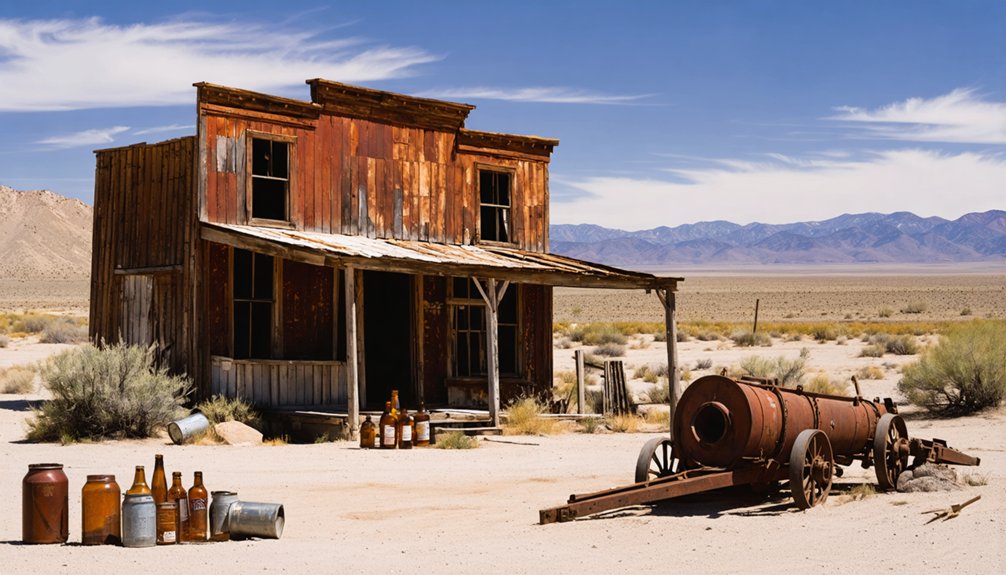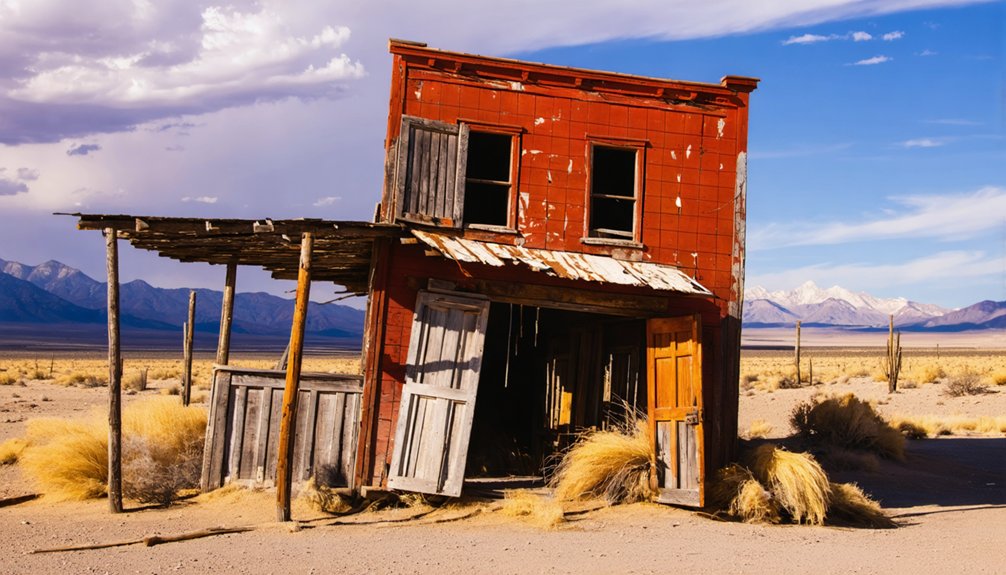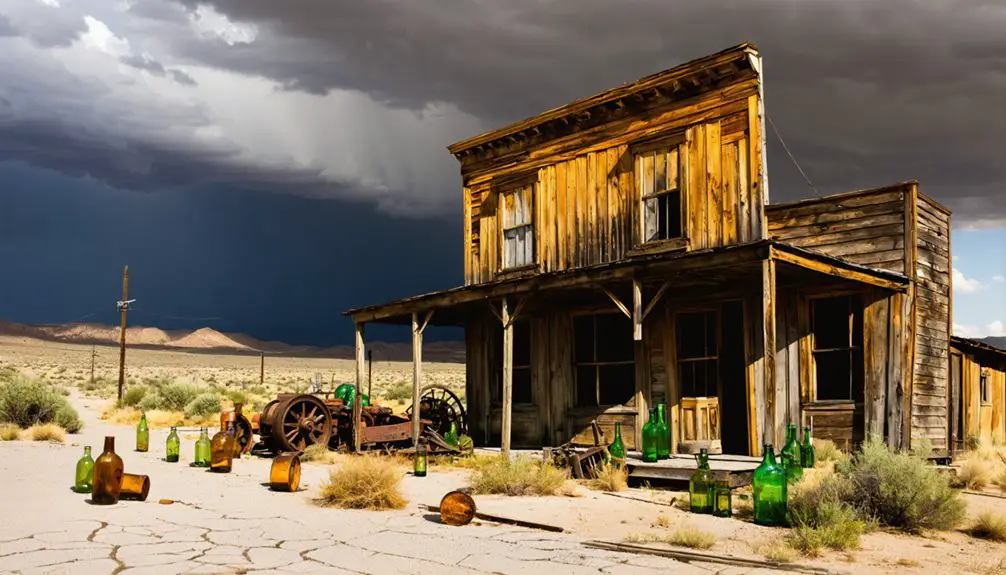
You’ll find Nevada’s ghost towns scattered across desert valleys like open-air museums, where weathered saloons, crumbling courthouses, and towering mine chimneys tell stories of fortune-seekers who chased gold and silver dreams. From Rhyolite’s haunting concrete ruins to Goldfield’s mysterious hotel, these abandoned settlements offer tangible connections to the Wild West’s boom-and-bust cycles. Each crumbling foundation represents human ambition meeting harsh desert reality, creating atmospheric destinations where you can explore preserved structures and discover what transformed these thriving communities into monuments of abandonment.
Key Takeaways
- Nevada’s ghost towns like Goldfield and Rhyolite once housed thousands during mining booms before economic collapse.
- Preserved structures include Rhyolite’s three-story train depot, Goldfield Hotel, and Belmont’s 1860s courthouse with original architecture.
- Abandoned mining infrastructure features towering brick chimneys, crumbling ore processors, and explorable mine shafts throughout desert valleys.
- Tourist attractions offer guided tours, museums, and art installations like Rhyolite’s Goldwell Open Air Museum sculptures.
- Fort Churchill State Park provides restored adobe buildings with interpretive trails and educational programming for visitors.
Nevada’s Ghost Town Legacy: From Gold Rush to Abandonment
Nevada’s mining heritage reflects raw human ambition and the price of single-industry dependency.
Each crumbling foundation and rusted piece of machinery represents dreams deferred, fortunes lost, and the relentless pursuit of freedom through wealth that defined the American West. These settlements emerged rapidly during mining booms but faced inevitable decline when the precious metals were exhausted. Some towns like Berlin produced substantial wealth, generating $849,000 total before complete abandonment in the early 1900s.
Famous Ghost Towns and Their Peak Populations
While today’s Nevada ghost towns sit eerily silent beneath desert skies, their peak populations once rivaled established cities across the American West.
You’ll discover that Goldfield’s economy supported 20,000 residents around 1906, making it Nevada’s largest city.
Rhyolite’s history shows 8,000-12,000 inhabitants enjoyed concrete sidewalks and electricity—luxuries unimaginable in most frontier settlements.
Belmont’s infrastructure included county administrative offices serving 2,000 silver miners during the 1870s boom.
Unionville’s culture attracted Mark Twain himself, drawn to this 1,500-person community’s mining prospects.
Jarbidge mining operations brought 1,200 fortune-seekers to Nevada’s remote northeastern mountains after 1909.
These weren’t sleepy outposts—they were thriving metropolises with newspapers, railroads, and bustling commercial districts before ore played out. Belmont maintained its status as the NY County Seat from 1867 until 1905, demonstrating the political importance these boom towns held in territorial governance. Today’s preservation efforts ensure that visitors can still witness the architectural remnants and artifacts that tell the stories of these once-bustling communities.
Northwest Nevada’s Historic Mining Settlements
You’ll discover Humboldt City’s crumbling stone foundations scattered across the desert floor, where ambitious settlers once envisioned a thriving metropolis that never materialized beyond a few hundred residents.
The remote mining camp of Jarbidge offers a different story—its weathered buildings still whisper tales of gold strikes and harsh winters that shaped this isolated community nestled in Nevada’s northeastern mountains.
These northwest settlements reveal how geography and mineral wealth determined whether a town would flourish briefly or endure just long enough to leave haunting reminders of frontier dreams. Seven Troughs exemplifies this pattern, where flash floods ultimately contributed to the abandonment of what was once a bustling silver mining camp in the early 1900s. Nevada’s mining heritage began with the Mormon 49ers who first discovered gold near Dayton in 1849, setting the stage for countless boom-and-bust cycles that would define the state’s frontier character.
Humboldt City Ruins
Hidden within the rugged mountains of Pershing County, Humboldt City’s crumbling ruins tell the story of Nevada’s first northwestern mining boom.
You’ll navigate rocky roads and stream washouts to reach these weathered adobe, stone, and wooden remnants that once housed 500 prospectors chasing $2,700-per-ton silver ore.
Walking through the ghost town’s skeletal remains, you can envision Louis Barbeau’s 1860 discovery that sparked this remote settlement.
The Humboldt history reveals how miners developed innovative mining techniques to extract precious metals from over 1,000 identified deposits throughout the canyon.
The community once featured two hotels alongside saloons and a blacksmith shop, creating a surprisingly well-developed settlement in the remote wilderness.
Residents enjoyed running water from a stream that flowed directly through the town, allowing families to cultivate gardens and vegetables in their yards.
Though Paiute conflicts and market crashes ended the dream by 1869, these ruins preserve the untamed spirit of fortune-seekers who refused to let wilderness, warfare, or economic uncertainty crush their pursuit of independence and wealth.
Jarbidge Mining Heritage
Moving deeper into Nevada’s northwestern mining frontier, you’ll discover Jarbidge Canyon, where one of America’s last great gold rushes unfolded against a backdrop of ancient Shoshone legends and untamed wilderness.
When Dave Bourne struck gold in 1908, you’re witnessing history’s final chapter of classic Western prospecting. Within three years, this remote canyon swelled to 2,000 fortune-seekers defying harsh winters and isolation.
The Jarbidge legends speak of Tsaw-haw-bitts, an evil giant that kept Shoshone tribes away for centuries.
Today, you’ll find remnants of this mining heritage scattered throughout the canyon—weathered buildings, abandoned claims, and stories of the 1919 fire that destroyed twenty-two establishments. The canyon also witnessed the last stagecoach robbery in U.S. history when bandits struck the Idaho stage in December 1916, killing the driver and stealing mail along with $3,000 in cash. By 1918 and 1919, the district reached its peak as Nevada’s largest gold producer, attracting major mining operations and mills to the remote canyon.
Walking these trails, you’re experiencing authentic frontier spirit where independence and opportunity once collided.
What Caused These Boom Towns to Become Ghost Towns
When you explore Nevada’s scattered ghost towns today, you’re witnessing the remnants of communities that fell victim to a perfect storm of economic and environmental forces.
These once-thriving settlements couldn’t withstand the brutal realities of frontier life when their foundations crumbled.
The primary catalysts behind Nevada’s ghost towns include:
- Depleted mineral resources – Gold and silver veins ran dry, leaving entire economies worthless overnight
- Economic decline – Silver demonetization and market crashes devastated local prosperity
- Mining failures – Mill destructions and operational disasters crippled production capabilities
- Harsh living conditions – Desert isolation and extreme weather drove families toward civilization
- Natural disasters – Fires and floods destroyed critical infrastructure beyond repair
You’ll find these abandoned places scattered across Nevada’s landscape, each telling stories of dreams that couldn’t survive reality’s harsh judgment.
Preserved Structures and Ruins You Can Still Visit

You’ll discover remarkable architectural remnants that have weathered decades of desert storms, from Tom Kelly’s famous Bottle House constructed with 50,000 glass bottles to the elegant Goldfield Hotel with its original gold leaf ceilings and crystal chandeliers.
These ghost towns offer you tangible connections to Nevada’s mining heritage through preserved courthouses, crumbling saloons, and abandoned mill sites that tell stories of once-thriving communities.
Whether you’re exploring the stone foundations of Humboldt City or walking through Belmont’s 150-year-old structures, each ruin provides a window into the lives of the miners and merchants who built these frontier settlements.
Historic Buildings Still Standing
The skeletal remains of Nevada’s boom towns rise from desert valleys like monuments to ambition and abandonment.
You’ll discover authentic structures that’ve weathered decades of desert winds, each building telling stories of fortune-seekers and frontier life.
These standing ruins showcase remarkable historic preservation and architectural significance:
- Rhyolite’s three-story train depot – Impressive concrete and stone ruins perfect for photography
- Goldfield Hotel’s multi-story shell – Preserved elevator shaft and ornate interior details visible
- Esmeralda County Courthouse – Original Tiffany-style lamps and sandstone construction from 1907
- Belmont’s masonry courthouse – Mid-19th-century government architecture still intact
- Fort Churchill’s adobe walls – Military blockhouse remains within state historic park boundaries
You’re free to explore these authentic remnants where Nevada’s pioneering spirit crystallized into stone and mortar.
Abandoned Mining Infrastructure Remains
Massive brick smokestacks and crumbling ore processors punctuate Nevada’s desert landscape like industrial tombstones, marking where fortunes were extracted from stubborn earth.
You’ll discover Belmont’s towering 100-foot chimneys standing sentinel over combination stamp mill ruins, while abandoned mine shafts beckon the adventurous.
At Tybo, mining relics scatter around the prominent Trowbridge Store’s brick skeleton, telling stories of boom and bust.
Berlin’s preserved abandoned structures offer guided tours through the Diana Mine, where $849,000 worth of ore once flowed.
Techatticup’s gold-stained infrastructure clings to Eldorado Canyon walls, accessible via winding desert roads.
These industrial monuments remind you that Nevada’s ghost towns aren’t just empty buildings—they’re graveyards of ambition where machinery rust and dreams crystallized into abandoned fortunes.
Restored Tourist Attractions
While some ghost towns crumble into desert dust, Nevada’s restored attractions blend preservation with accessibility, transforming abandoned settlements into cultural destinations you can safely explore.
These sites demonstrate how art installations and historic preservation create compelling visitor experiences:
- Rhyolite’s Goldwell Open Air Museum showcases dramatic sculptures like “The Last Supper” ghost figures alongside original stone ruins.
- Goldfield’s restored downtown features the iconic Goldfield Hotel and operational saloons within preserved historic fabric.
- Belmont’s 1860s courthouse stands as Nevada’s best-preserved civic architecture from the mining boom era.
- Fort Churchill State Park offers CCC-restored adobe buildings with interpretive trails and educational programming.
- International Car Forest near Goldfield presents modern vernacular art complementing traditional ghost town exploration.
You’ll discover how thoughtful restoration respects historical integrity while ensuring these cultural treasures remain accessible for future generations.
Visitor Attractions and Exploration Opportunities
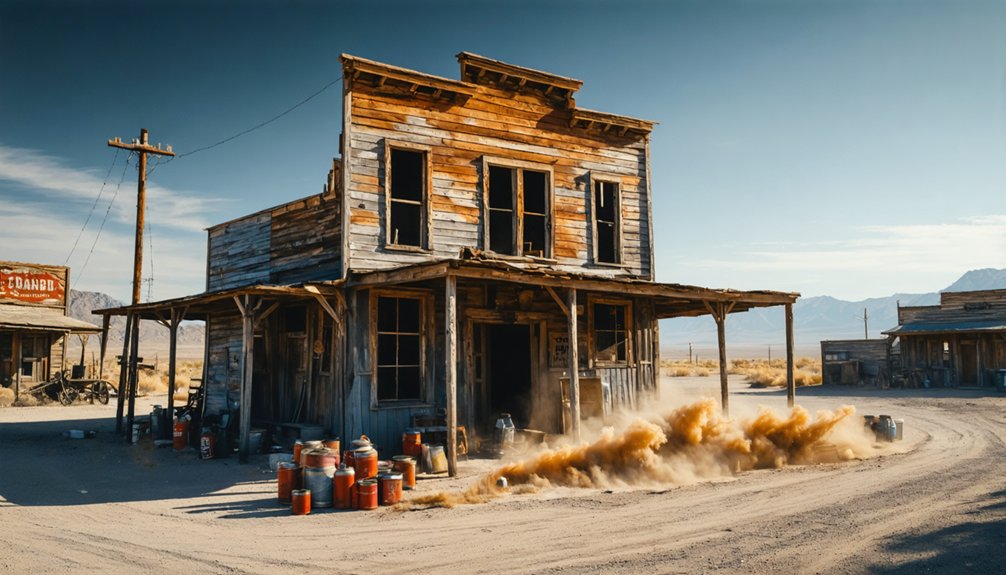
Among Nevada’s sprawling desert landscape, five ghost towns stand out as must-see destinations that’ll transport you back to the Wild West era.
Rhyolite’s haunting train depot ruins and crumbling cellars create perfect photography opportunities, while Belmont’s 150-year-old courthouse and Monitor-Belmont chimney tell tales of mining prosperity.
Goldfield offers the mysterious Goldfield Hotel and Tom Kelly’s Bottle House, plus surreal outdoor art installations that’ll spark your imagination.
You can choose between guided tours with local performers sharing folklore and history, or embrace self guided exploration using walking maps from visitor centers.
Pioche’s Million Dollar Courthouse and Boot Hill Cemetery provide spine-tingling experiences, while remote Jarbidge lets you discover original miners’ huts in complete solitude.
Frequently Asked Questions
What Safety Precautions Should Visitors Take When Exploring Nevada Ghost Towns?
You’ll need essential safety gear including sturdy boots, sun protection, and first-aid supplies while maintaining constant wildlife awareness for rattlesnakes and scorpions. Carry ample water, avoid unstable structures, and respect these haunting desert monuments.
Are There Entrance Fees or Permits Required to Visit These Sites?
You’ll find entrance regulations vary dramatically—some ghost towns like Rhyolite offer completely free access, while permit requirements and fees apply at privately-owned sites like Nelson, giving you choices that match your budget and exploration style.
What Is the Best Time of Year to Visit Nevada’s Ghost Towns?
Spring and fall offer ideal seasonal weather for ghost town exploration, with comfortable temperatures and fewer crowds. You’ll capture stunning photography with wildflowers blooming or autumn colors, while enjoying unrestricted access to Nevada’s haunting ruins.
How Long Does It Typically Take to Explore Each Ghost Town?
You’ll spend 30-90 minutes at roadside ruins, but larger sites demand 4-8 hours. Smart time management and flexible exploration strategies let you discover hidden stories at your own pace, whether chasing quick thrills or deep historical connections.
Are Guided Tours Available or Is Self-Exploration the Only Option?
You’ll find both ghost town tours and self-exploration options available. Guided exploration offers safety and expert knowledge at preserved sites, while independent wandering lets you discover Nevada’s hundreds of forgotten settlements at your own adventurous pace.
References
- https://nvtami.com/top-10-ghost-towns-nevada-northwest/
- https://www.visittheusa.com/experience/6-nevada-ghost-towns-explore-if-you-dare
- https://www.smithsonianmag.com/sponsored/nevadas-living-and-abandoned-ghost-towns-180983342/
- https://www.nevadaghosttownsandmininghistory.com
- https://nvtami.com
- https://travelnevada.com/ghost-town/
- https://forgottennevada.org/sites/newlist.html
- https://en.wikipedia.org/wiki/List_of_ghost_towns_in_Nevada
- https://savingplaces.org/stories/explore-wild-west-mining-history-in-nevada-ghost-towns
- https://storymaps.arcgis.com/stories/124e04142d3147078fb4519a6b9a5c64