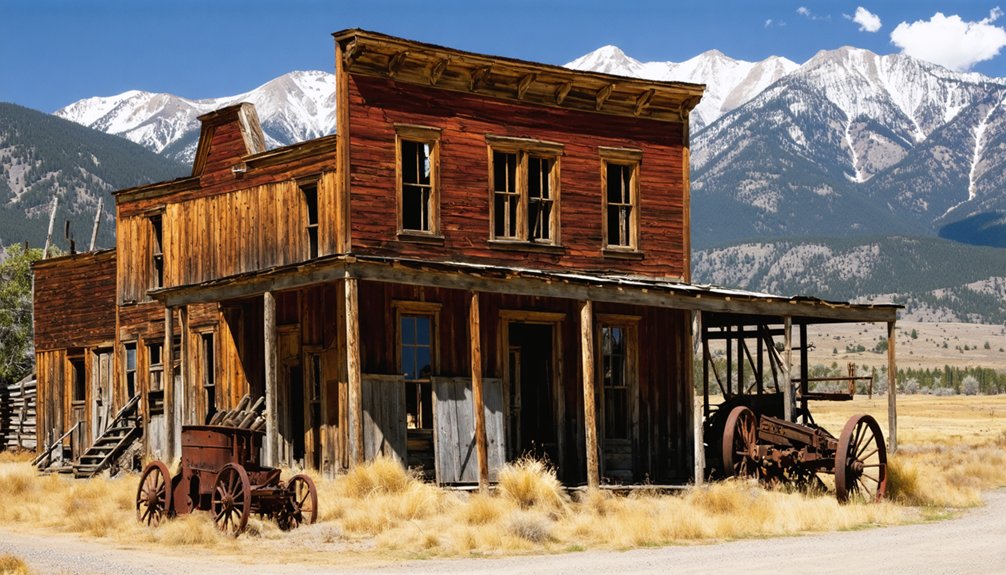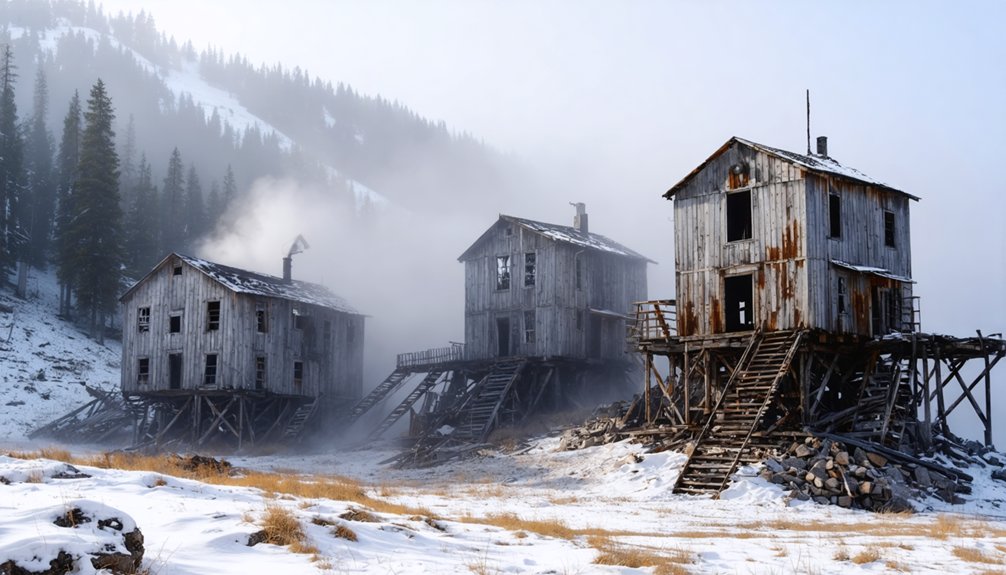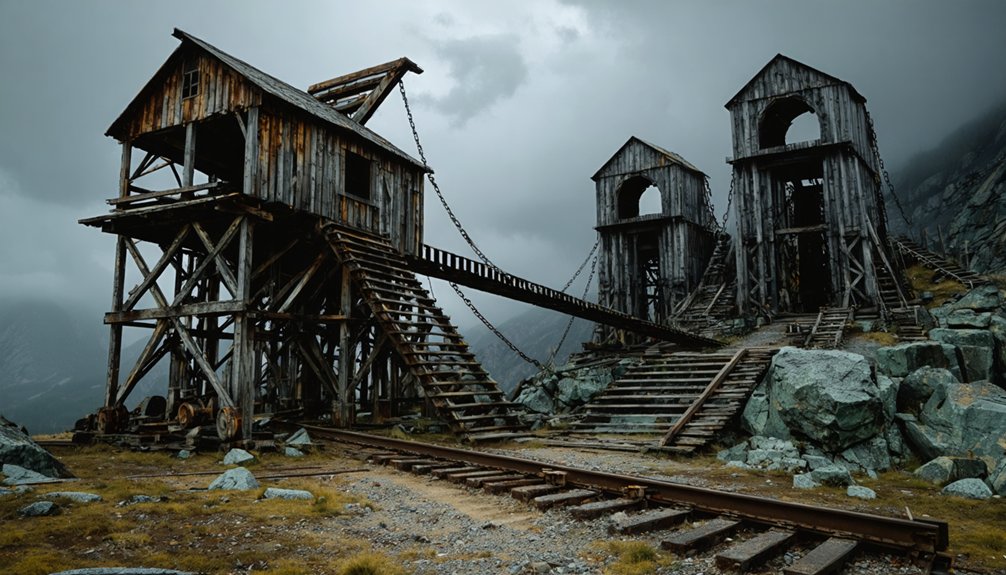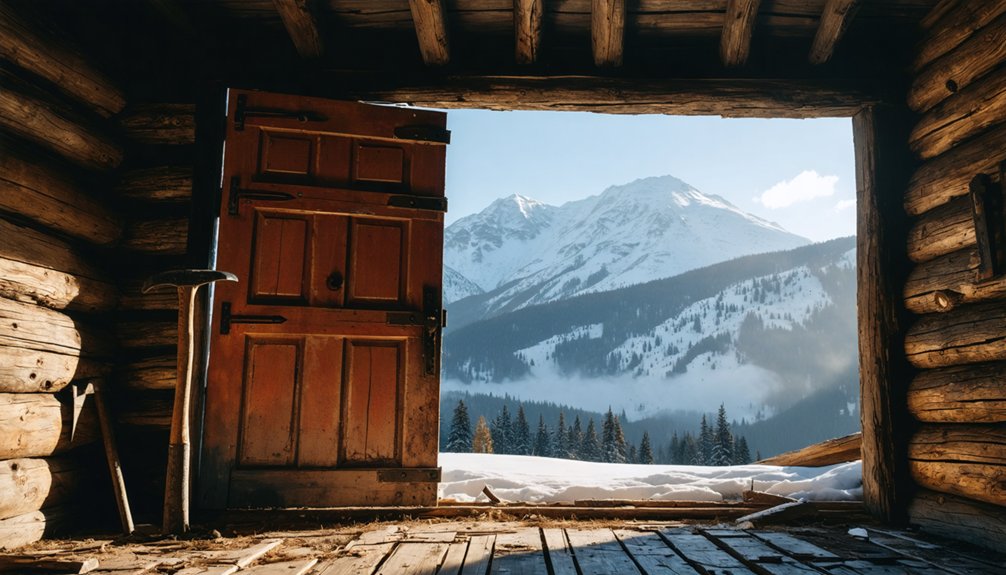
Colorado’s abandoned mining camps offer a window into the state’s gold and silver booms of the 1800s. You’ll find weathered structures at elevations exceeding 10,000 feet, with sites like Animas Forks (11,180 ft) showcasing high-altitude mining history. Pack layered clothing, navigation tools, and camera gear for exploring between June and October. Don’t forget to practice responsible tourism at these fragile historic sites. The mountains’ silent stories await your discovery.
Key Takeaways
- Colorado’s mining ghost towns date to the 1859 Pike’s Peak Gold Rush and 1879 Silver Boom, with many abandoned after the 1893 silver market collapse.
- Alpine ghost towns like Animas Forks (11,180 ft) and Carson City (12,000 ft) showcase high-altitude mining infrastructure above 10,000 feet.
- Visit between late June and early October with layered clothing, navigation tools, emergency supplies, and proper footwear for rugged terrain.
- Document historic structures with wide-angle lenses, tripods for stability, and LED panels to illuminate artifacts without causing damage.
- Practice responsible tourism by following “leave no trace” principles and supporting local preservation organizations that protect these fragile heritage sites.
The Rise and Fall of Colorado’s Mining Boom Towns
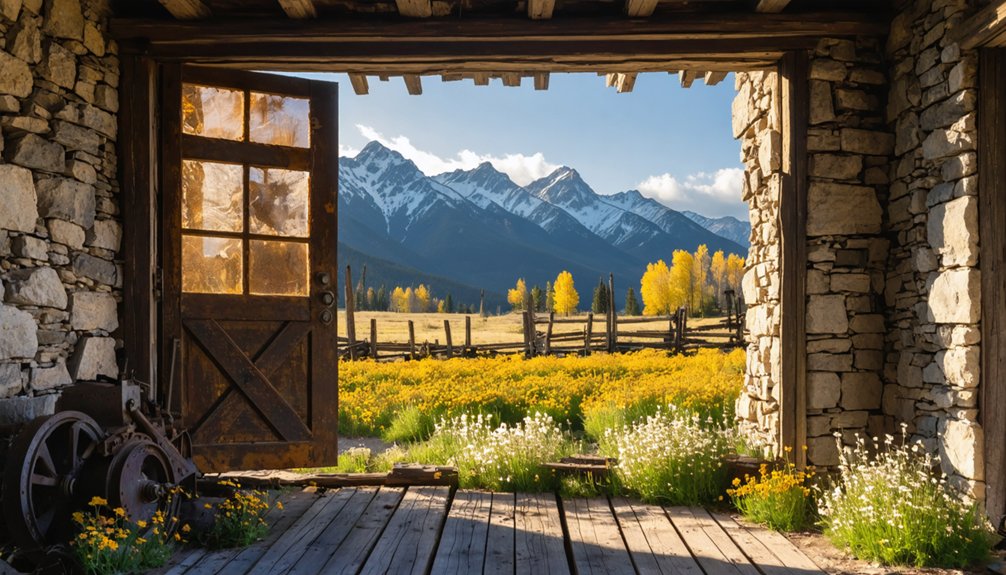
When gold was first discovered along the South Platte River in 1858, few could have anticipated the transformative wave of settlement that would reshape Colorado’s rugged landscape.
The 1859 Pikes Peak Gold Rush triggered remarkable population shifts, turning mining camps into thriving communities virtually overnight. Central City exemplified this phenomenon, expanding from just 15 people to 10,000 within a single summer. During this period, the rallying cry “Pikes Peak or bust” emerged as prospectors flooded into the territory.
Towns like Leadville flourished during the subsequent Silver Boom starting in 1879, generating extraordinary wealth—some $82 million from silver alone. The discovery of Tom’s Baby, a 13-pound gold nugget near Breckenridge in 1887, further fueled mining enthusiasm across the state.
But these prosperity periods proved tragically brief. When Congress repealed the Sherman Silver Purchase Act in 1893, silver prices collapsed, releasing devastating economic challenges.
Once-vibrant communities emptied as rapidly as they’d filled, leaving behind the haunting remnants you’ll explore today.
Hidden Alpine Treasures: Ghost Towns Above 10,000 Feet
Above the timber line where oxygen thins and winter reigns supreme for much of the year, Colorado harbors some of its most remarkable historic treasures—ghost towns that once thrived at elevations exceeding 10,000 feet.
These alpine sanctuaries preserve hidden histories of American determination. You’ll find Animas Forks at 11,180 feet—once the highest city of its size worldwide—while Carson City sits atop the Continental Divide at a breathtaking 12,000 feet.
- Alta (11,800 ft) offers preserved structures against the backdrop of a pristine mountain lake
- Governor Basin (12,000+ ft) showcases extreme high-altitude mining infrastructure
- Animas Forks features the historic Duncan House with its distinctive bay window
- Carson’s isolated location has left its buildings remarkably undisturbed
These alpine adventures require preparation—many sites demand 4×4 vehicles or hiking—but reward you with authentic glimpses into America’s resource frontier. Visitors should exercise extreme caution when exploring these sites due to unprotected mine portals and shafts. Most of these high-elevation ghost towns experienced the typical boom and bust cycle that characterized Colorado’s mining history.
What to Pack for Your Ghost Town Adventure
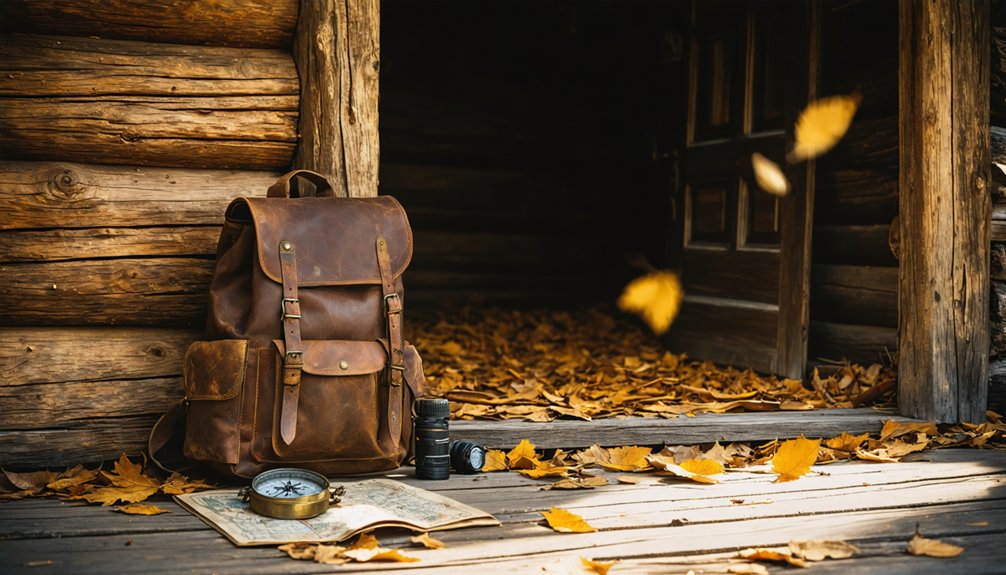
When venturing into Colorado’s historic mining camps, you’ll need properly curated equipment to navigate the challenging alpine terrain and document these remarkable remnants of the past.
Your backpack should include weather-appropriate layered clothing, adequate hydration supplies, navigation tools, and emergency provisions that address the unique challenges of high-altitude exploration. Always carry a reliable topographical map and compass since electronic devices can fail in remote mountainous regions. Be sure to include an emergency shelter such as a bivvy or space blanket for unexpected overnight stays at these remote locations.
A thoughtful selection of photography equipment—including protective cases, extra batteries, and lens options suitable for both landscape vistas and architectural details—will guarantee you capture the haunting beauty of these disappearing cultural treasures.
Essential Gear Recommendations
Five essential categories of equipment must be thoughtfully prepared before starting on any expedition to Colorado’s remote mining settlements. Your backpack should balance capacity (20-25L) with comfort, containing waterproof organization systems to protect gear essentials from mountain precipitation.
Navigation tools demand careful consideration beyond digital dependence—paper maps and compass remain irreplaceable when electronic devices fail in these historically significant landscapes.
- Layer clothing strategically, combining moisture-wicking base layers with insulating mid-layers and protective outer shells.
- Select footwear providing adequate support and traction for traversing unstable mining structures and rugged terrain.
- Carry illumination tools including headlamps with spare batteries for possible underground exploration.
- Pack emergency shelter and signaling devices to guarantee self-reliance in these remote historical sites.
These packing tips assure preparedness for variable conditions while preserving your freedom to explore these remnants of Colorado’s frontier legacy. Consider using the Platypus Quickdraw filter that allows direct attachment to Smartwater bottles for convenient water filtration during your ghost town adventures. Always include a first aid kit containing basic supplies to address any minor injuries that might occur during your exploration of abandoned mining structures.
Weather Preparation Strategies
Colorado’s dramatic alpine environments demand meticulous weather preparation strategies that extend well beyond standard hiking protocols. Your awareness of mountain weather patterns becomes essential when exploring ghost towns above 11,000 feet, where conditions shift dramatically within hours.
Plan your visits during summer through early fall, with early autumn offering fewer crowds and vibrant colors. Implement a thorough layering system with moisture-wicking base layers, insulating mid-layers, and windproof outer shells to manage the 30°F temperature fluctuations common at these elevations.
Precipitation preparedness means scheduling exploration before afternoon thunderstorms typically develop. The region experiences frequent rain and lightning during afternoon hours, making morning explorations significantly safer. Always verify road conditions after weather events, as narrow mountain passes may become impassable.
Remember that UV exposure intensifies at altitude, necessitating robust sun protection even on seemingly mild days. The mobility and convenience of Grech RVs allow travelers to quickly relocate if weather conditions deteriorate suddenly at these historic mining sites.
Photography Equipment Tips
Selecting appropriate photography equipment for ghost town expeditions requires strategic consideration of both technical capabilities and practical limitations in these remote historical settings. Your lens selection dramatically impacts documentation quality—wide-angle captures provide context while telephotos preserve distant architectural details that remain inaccessible.
Colorado’s unpredictable mountain weather demands weather-sealed gear with adequate protection against dust storms and sudden precipitation.
- Prioritize a versatile camera system with full-frame capabilities for capturing nuanced light in shadowed mining structures.
- Guarantee tripod stability through adjustable spiked feet that anchor securely in uneven terrain.
- Pack polarizing filters to minimize glare on weathered metal surfaces and enhance textural details.
- Consider battery redundancy—cold temperatures at elevation notably reduce power longevity.
Balance thorough documentation against weight constraints when hiking to remote settlements, focusing on adaptable equipment that serves multiple photographic needs.
Photographing the Remnants of Colorado’s Mining Past
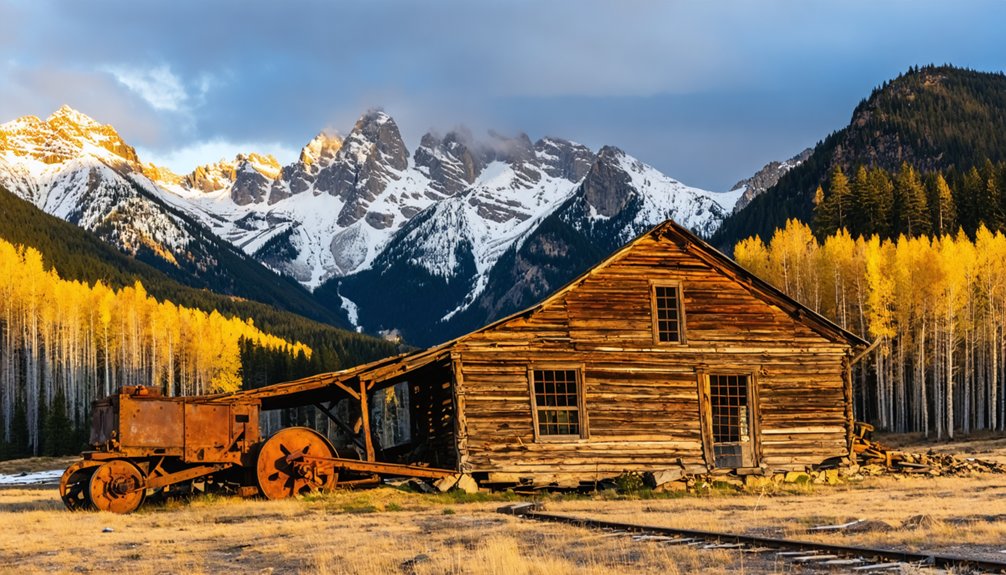
Colorado’s mining camps offer photographic opportunities that demand careful equipment selection, including wide-angle lenses for capturing structural details and tripods for low-light conditions.
You’ll find that abandoned headframes, stamp mills, and boarding houses create compelling compositions when framed against the dramatic mountain backdrops or bathed in golden hour light.
The challenging lighting conditions within these historical sites—from deep shadows inside weathered buildings to harsh midday sun reflecting off metal remnants—can be overcome through bracketing exposures or using graduated neutral density filters to balance your final images.
Best Equipment For Success
The right photographic equipment serves as an essential foundation for documenting Colorado’s historic mining camps with both clarity and reverence. When preparing your kit, prioritize versatility and durability to capture these weathered monuments to frontier industrialism.
Your camera settings should balance preservation of shadow detail in mine interiors while maintaining highlight integrity for exterior structures.
- Wide-angle zoom lenses (16-35mm) excel for confined spaces yet preserve architectural composition techniques
- Sturdy tripods enable critical long-exposure work during golden hour when ghostly atmospherics emerge
- LED panels and reflectors provide non-invasive illumination of fragile artifacts without damaging historical surfaces
- Protection equipment serves dual purpose—safeguarding both photographer and irreplaceable heritage sites
Remember that successful documentation requires technical preparation and respect for these silent sentinels of Colorado’s mining legacy.
Capturing Abandoned Mining Structures
With proper equipment in hand, you’re ready to approach the weathered sentinels of Colorado’s mining heritage. Focus on iconic structures like the Yankee Girl Mine near the Million Dollar Highway, where headframes and ore bins create compelling abandoned aesthetics against dramatic mountain backdrops.
Experiment with various lenses to capture both intimate details and environmental contexts. Telephoto options reveal textural contrasts of decaying timber, rusted metal, and stone foundations, while wide-angle shots incorporate the stark, historically deforested landscapes surrounding these sites.
Consider how seasonal elements enhance mining narratives—snow accentuates structural lines, while fog adds mystery to these isolated monuments. Frame your compositions to highlight the geometric tension between man-made remnants and natural terrain.
Remember that these structures tell layered stories through their mixed construction methods and weathered surfaces.
Lighting Challenges And Solutions
Photographing abandoned mining structures presents dramatic lighting challenges that can make or break your historical documentation efforts. The remote nature of these sites means you’ll face complete darkness without city glow or ambient light. Your approach to illumination must balance authenticity with practicality.
When implementing lighting techniques in these heritage locations, consider:
- Combining LED panels with traditional tungsten lights for depth while minimizing equipment weight
- Positioning lights strategically to highlight architectural details while respecting structural integrity
- Planning shoots around moonrise to complement artificial lighting with natural ambience
- Layering multiple light sources to reveal textures without washing out the scene’s ghostly character
Always prioritize safety precautions—unstable terrain, hidden mine shafts, and deteriorated structures pose significant risks as you navigate with equipment and cables through these freedom-filled but dangerous historical spaces.
Seasonal Access: When to Visit These Historic Sites
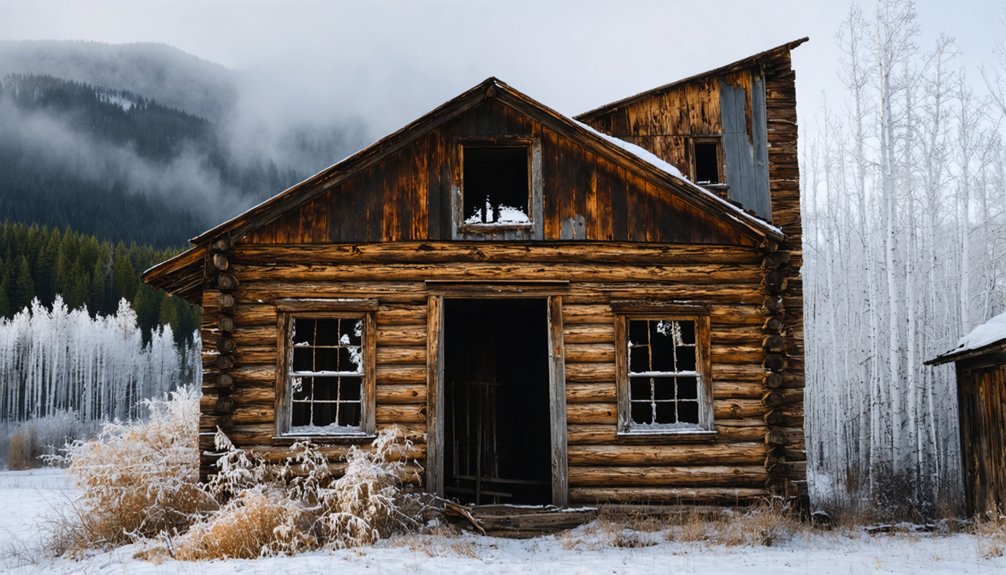
Timing your visit to Colorado’s ghostly mining camps requires careful consideration of seasonal variations that dramatically affect accessibility. The ideal window falls between late June and early October, when mountain passes are open and trails remain clear of snow.
You’ll find high-elevation sites like Independence accessible only during summer months, while lower-elevation towns like Ashcroft offer year-round possibilities.
Summer provides the most reliable conditions, though early mornings or evenings help you avoid crowds and capture better photographs.
For adventurous spirits, winter presents unique opportunities to experience these abandoned settlements via snowshoe or cross-country ski, though this requires proper equipment and planning.
Fall rewards visitors with golden aspens framing weathered structures, creating a photographer’s paradise despite access limitations approaching the season’s end.
Preservation Efforts and Respectful Tourism
Preserving Colorado’s ghostly mining camps requires a delicate balance between accessibility and protection, as these fragile remnants of frontier life stand vulnerable to both natural elements and human impact.
Organizations like the Mountain Studies Institute and Aspen Historical Society have secured substantial funding—including Animas Forks’ $330,000 grant—to combat unique preservation challenges posed by high-altitude locations, harsh winters, and wildlife damage.
Historic preservation efforts require significant financial investment to shield Colorado’s mountain mining sites from harsh alpine conditions.
When visiting these National Register-listed sites, you’ll contribute to responsible tourism by:
- Following “leave no trace” principles at all historic structures
- Supporting local preservation groups through donations or volunteerism
- Learning from interpretive signage and guided tours rather than disturbing artifacts
- Respecting access limitations designed to minimize tourism impact
Your conscientious exploration guarantees these heritage sites will endure for future generations to experience Colorado’s remarkable mining history.
Frequently Asked Questions
Are There Any Reported Hauntings in Colorado’s Mining Ghost Towns?
You’d expect abandoned mines to be peacefully silent, yet Colorado’s ghost towns teem with reported hauntings. You’ll discover abundant ghost sightings throughout St. Elmo, Creede, Animas Forks, and Gilman—all subjects of extensive paranormal investigations.
The mysteries of ghost stories from Colorado mining towns often captivate those who seek thrills in the supernatural. Legend has it that the spirits of miners still linger in the shadows, their whispers echoing through the long-abandoned shafts. Visitors often report an unsettling chill in the air, adding to the eerie atmosphere that surrounds these once-bustling settlements.
Can I Legally Collect Artifacts From Abandoned Mining Sites?
No, you cannot legally collect artifacts from abandoned mining sites. Mining regulations prohibit removing historic materials from public lands. Artifact preservation laws protect these irreplaceable pieces of cultural heritage for everyone’s benefit.
Which Ghost Towns Are Accessible With Standard Vehicles?
You’ll find Independence, St. Elmo, Douglass City, Vicksburg, Winfield, and Alta accessible with standard vehicles along scenic driving routes that honor Colorado’s mining heritage without requiring specialized off-road equipment.
Are Any Ghost Towns Still Inhabited by Permanent Residents?
Amid history’s silent echoes, you’ll find a handful of Colorado’s ghost towns with permanent residents maintaining historic preservation efforts, their resident stories keeping heritage alive through seasonal occupancy and dedicated caretaking.
How Dangerous Are Unstable Mine Shafts and Tunnels?
Unstable mine features pose extreme peril to your exploration. You’ll risk sudden shaft collapse, oxygen deprivation, toxic gas exposure, and drowning—perils often invisible until it’s too late. Mine safety demands utmost caution.
References
- https://en.wikipedia.org/wiki/List_of_ghost_towns_in_Colorado
- https://www.sandradallas.com/colorado-ghost-towns-and-mining
- https://www.colorado.com/articles/colorado-ghost-towns
- https://www.visitouray.com/ghost-towns
- https://gunnisoncrestedbutte.com/blog/hike-to-colorados-abandoned-mining-camps/
- https://www.durango.com/colorado-ghost-towns/
- https://www.legendsofamerica.com/co-ghosttowns/
- https://www.coloradolifemagazine.com/blog/post/11-colorado-ghost-towns
- https://www.coloradoan.com/story/news/2025/10/10/here-are-8-of-colorados-best-ghost-towns-to-visit-in-fall/86579217007/
- https://westernmininghistory.com/state/colorado/