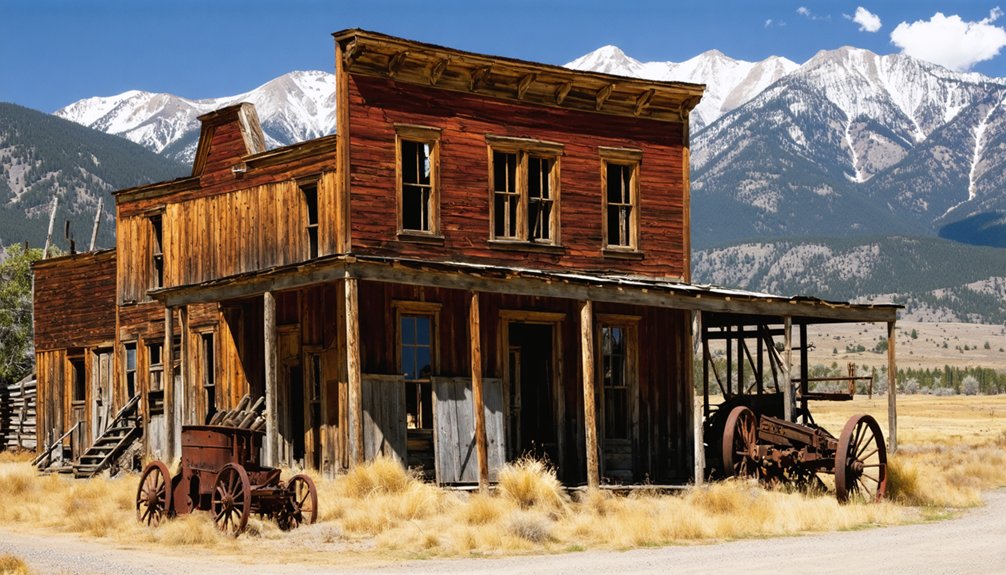
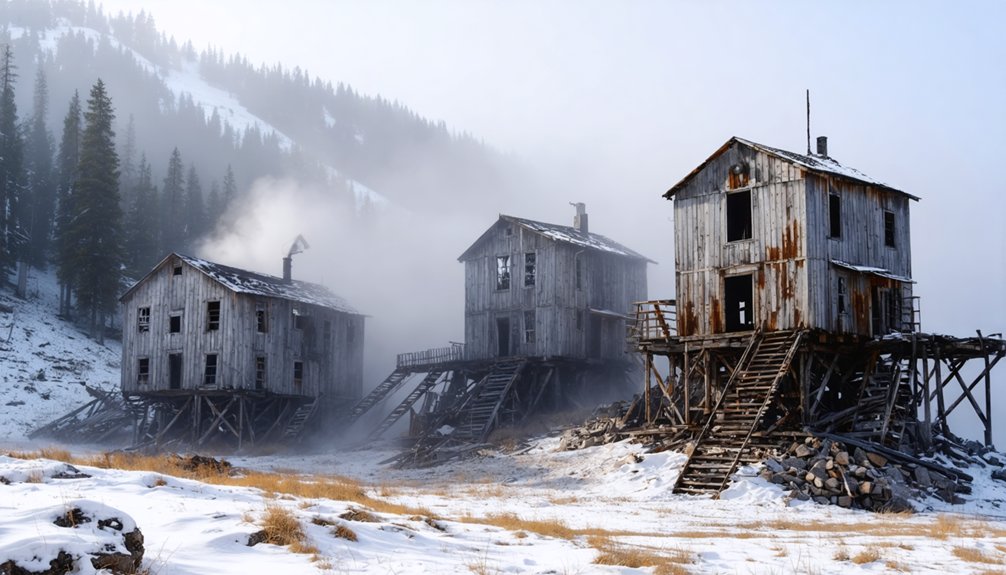
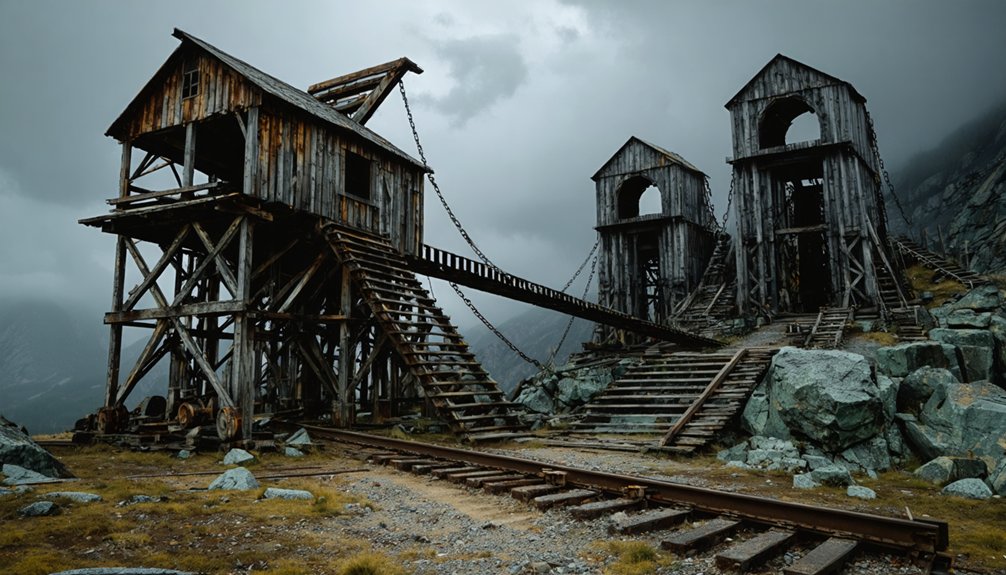
Colorado’s mountains harbor over 1,500 ghost towns from the 1893 Silver Crash era when plummeting prices forced 435 mines to close. You’ll encounter weathered structures at high elevations like Ashcroft and Cripple Creek, where paranormal activity reportedly occurs. When exploring these historic sites, respect property boundaries, watch for dangerous sinkholes, and leave artifacts undisturbed. The stark beauty of these abandoned settlements reveals compelling stories about the harsh realities miners faced at 12,000 feet.
Key Takeaways
- Colorado contains over 1,500 ghost towns from the mining era, many becoming abandoned after the 1893 Silver Crash.
- Popular haunted locations include Ashcroft’s View Hotel, Buffalo Billy’s Casino in Cripple Creek, and the Stanley Hotel.
- Ghost towns like St. Elmo, Crystal Mill, and Animas Forks offer well-preserved structures ideal for photography.
- Phantom Canyon Road features spectral encounters including an apparition of an escaped inmate.
- When exploring, respect private property boundaries, watch for dangerous sinkholes, and leave historical artifacts undisturbed.
The Silver Crash of 1893: How Colorado’s Mining Boomtowns Became Ghost Towns
When the Silver Crash of 1893 struck Colorado, it transformed thriving mining communities into desolate ghost towns almost overnight. The economic collapse was swift and devastating—435 mines and 377 businesses shuttered by September, leaving 45,000 Coloradans jobless.
The Silver Crash of 1893 turned Colorado’s vibrant mining towns to ghost towns, erasing livelihoods in the blink of an economic collapse.
As silver prices plummeted from 83 to 62 cents per ounce, entire communities that had built their existence around mining found their livelihoods vanishing. The repeal of the Sherman Silver Purchase Act delivered the fatal blow, removing government demand for silver and deepening the crisis.
You’ll still find the mining legacy of this catastrophe scattered throughout Colorado’s mountains—abandoned structures where unemployment once reached nearly 100% in single-industry towns. Denver saw an influx of desperate mining workers seeking employment as companies shut down operations in mountain communities.
These silent ruins stand as evidence to boom-and-bust capitalism, their architectural remains preserving stories of prosperity, desperation, and ultimate abandonment. The historic Matchless Mine, where the once-wealthy Baby Doe Tabor lived in poverty until her death in 1935, serves as a poignant reminder of the Silver Crash’s devastation.
High-Altitude Hauntings: Paranormal Legends of Abandoned Mountain Settlements
While silver and gold once drew thousands to Colorado’s mountains, the spectral inhabitants of these abandoned settlements now attract a different kind of seeker.
With over 1,500 ghost towns scattered throughout the state, Colorado boasts an unparalleled concentration of high-altitude hauntings, particularly in settlements above 11,200 feet where original structures still stand.
Your explorations might lead you to Ashcroft’s View Hotel, where inexplicable shadows and unsettling noises create a palpable sense of unease. The ghostly activity is attributed to the spirits of miners who perished during the area’s booming Gold Rush era.
As you delve deeper into local lore, you may uncover ghost stories from historic mill towns that recount the chilling tales of those who labored long after sunset. Such narratives weave a rich tapestry of the past, revealing secrets held by the very buildings that once housed industrious lives. Each story offers a glimpse into the haunted heritage that shapes the community today.
At Cripple Creek, you’ll encounter Buffalo Billy’s Casino, where a young girl’s spirit leaves drawings on walls and moves glassware. Similar to the Stanley Hotel, visitors frequently report hearing children’s laughter echoing through the empty hallways when no children are present.
For the truly adventurous, Phantom Canyon Road traverses three centuries-old ghost towns where spectral encounters include the uniformed apparition of an 1890s inmate walking the abandoned railway tracks.
Red Mountain Mining District: Exploring the Eerie Remains of Million-Dollar Operations
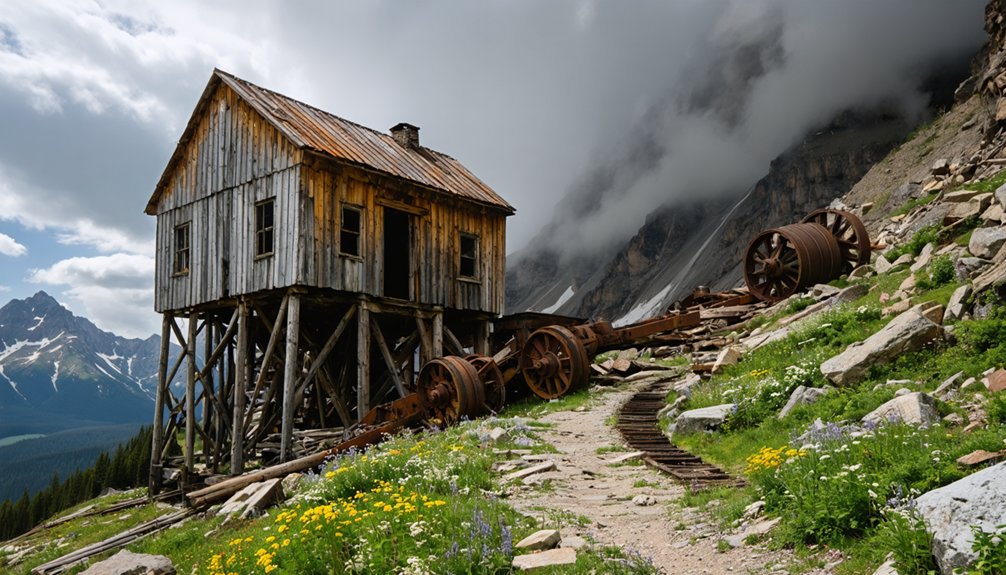
Between Silverton and Ouray lies the Red Mountain Mining District, a once-bustling center of Colorado’s silver boom that now stands as one of the state’s most atmospheric ghost town areas.
When you explore these ruins today, you’re walking through the remnants of an operation that exploded into activity after rich silver “pipes” were discovered in 1882.
By 1883, nearly 40 mines dotted these slopes, their fortunes linked to Otto Mears’ treacherous road—later known as the Million Dollar Highway.
The miners’ hopes clung to Mears’ precarious pathway as tenaciously as the road itself clung to the mountainside.
The district’s mining legacy is visible in the weathered remains of vertical shafts that once yielded silver, lead, zinc, and gold.
Towns like Ironton and Red Mountain Town, despite devastating fires in the 1890s, still offer glimpses of a time when 3,000 people called this harsh landscape home.
The Yankee Girl Mine, with its iconic headframe still standing, was once considered one of America’s most valuable mines, producing nearly twelve million dollars in ore before closing in 1898.
Miners here faced incredible challenges including deadly avalanches and extreme cold temperatures that could plunge to 20-30 degrees below zero at night.
Surviving Winter at 12,000 Feet: The Harsh Realities That Drove Residents Away
Life at 12,000 feet in Colorado’s mining settlements tested the limits of human endurance, particularly through the punishing winter months. You’d face temperatures plummeting below -20°F while blizzards deposited snowdrifts reaching 10 feet, cutting off essential supply routes for weeks.
Winter survival meant constantly battling frozen water sources and poorly insulated structures that couldn’t retain precious heat. Unlike the welcoming Victorian buildings of Crested Butte today, these mining-era structures offered little protection against brutal mountain conditions.
Isolation challenges extended beyond physical hardship. Mail and medical care became luxuries as mountain passes disappeared under snow from October through May. Many residents dismantled their own homes to fashion escape equipment when supplies dwindled.
The thin air compounded these difficulties, causing altitude sickness and respiratory problems that couldn’t receive proper treatment. Mining accidents were commonplace, with shaft fires claiming lives and destroying valuable infrastructure as happened in the Amethyst mine.
These harsh realities ultimately emptied many mining towns, their abandoned structures standing as proof to the unforgiving conditions that drove pioneers away.
Ghost Town Photography Guide: Capturing Colorado’s Deteriorating Mining Heritage
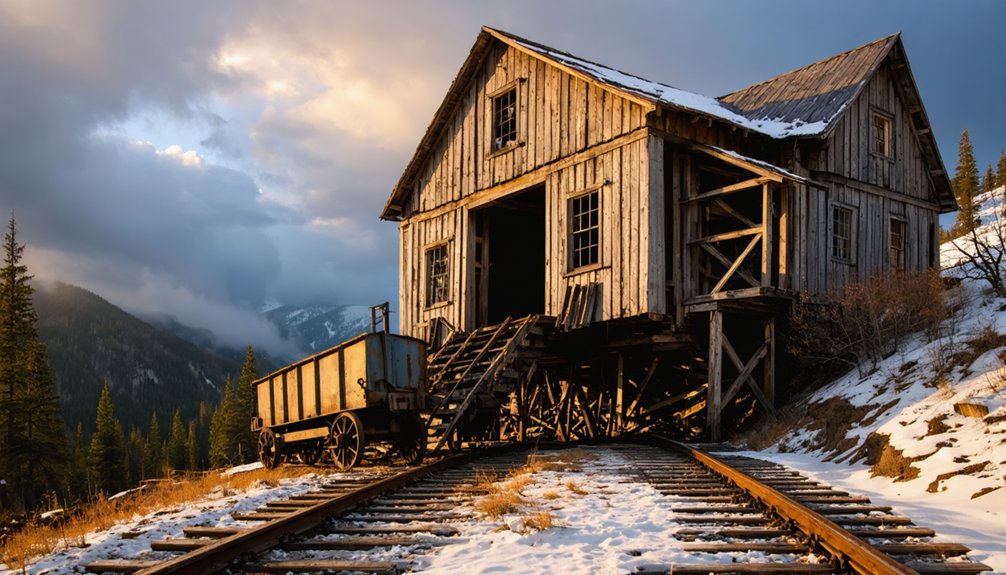
Colorado’s abandoned mining communities offer photographers unparalleled opportunities to document a vanishing piece of American frontier history.
Crystal Mill, perched dramatically above a waterfall, remains the quintessential subject for those willing to hike or take a 4WD adventure. When location scouting, consider Alta and Animas Forks for their well-preserved structures against high-alpine backdrops.
Your photography techniques should adapt to these unique environments. Shoot in black and white or use HDR to emphasize the weathered character of deteriorating structures.
These forgotten places demand your creative flexibility—let monochrome or HDR reveal what time has written upon weathered wood and rusted metal.
Arrive early morning for ideal lighting and fewer visitors. Always carry a tripod for interior shots, and don’t forget portable lighting to illuminate shadowy corners. Early morning fog can create an eerie atmosphere that enhances the ghost town photography experience.
St. Elmo’s well-preserved buildings, including the historic General Store, provide excellent historical architecture to photograph during winter months when the scenic quietness adds to its charm.
Remember: respect private property boundaries, never remove artifacts, and stay clear of dangerous sinkholes near Old Glory Hole. Your safety guarantees these treasures remain for future photographers to document.
Frequently Asked Questions
Are There Guided Tours Available for Families With Young Children?
Yes, you’ll find family friendly tours throughout Colorado’s ghost towns, offering kid safe activities like gold panning and guided exploration of preserved mining structures, while ensuring historic authenticity and adventure freedom.
What Wildlife Hazards Should Visitors Be Aware of When Exploring?
Nature’s guardians await your exploration. You’ll need to watch for bear encounters—never approach or leave food unattended. Practice snake safety by staying on paths. Historical mining areas attract wildlife seeking shelter in preserved structures.
Can Visitors Legally Collect Artifacts From Ghost Town Sites?
No, you can’t legally collect artifacts from ghost towns. Colorado’s legal regulations strictly prohibit removal to guarantee artifact preservation. These sites are protected historical resources that must remain undisturbed for future generations to appreciate.
How Have Preservation Efforts Changed Over the Past Decade?
Preservation pioneers have shifted toward collaborative conservation, blending public-private funding models, digitized surveys, and community involvement. You’ll notice increased integration of environmental remediation with traditional preservation techniques protecting architectural details while respecting local autonomy.
What Accessibility Accommodations Exist for Visitors With Mobility Challenges?
You’ll find wheelchair ramps at historic lodgings like Beaver Creek Lodge, accessible trails with crushed stone paths like Reiling Dredge Trail, and ADA-modified shuttles connecting these preserved mining towns throughout Colorado.
References
- https://www.coloradolifemagazine.com/printpage/post/index/id/172
- https://www.visitouray.com/ghost-towns
- https://www.uchealth.org/today/ghost-towns-abound-in-colorado/
- https://en.wikipedia.org/wiki/List_of_ghost_towns_in_Colorado
- https://www.mountainliving.com/3-historic-mountain-ghost-towns-in-colorado/
- https://www.colorado.com/articles/colorado-ghost-towns
- https://www.uncovercolorado.com/ghost-towns/
- https://www.coloradoan.com/story/news/2025/10/10/here-are-8-of-colorados-best-ghost-towns-to-visit-in-fall/86579217007/
- https://www.durango.com/colorado-ghost-towns/
- https://www.americansky.co.uk/colorado-holidays/explore-colorados-most-fascinating-gold-rush-towns