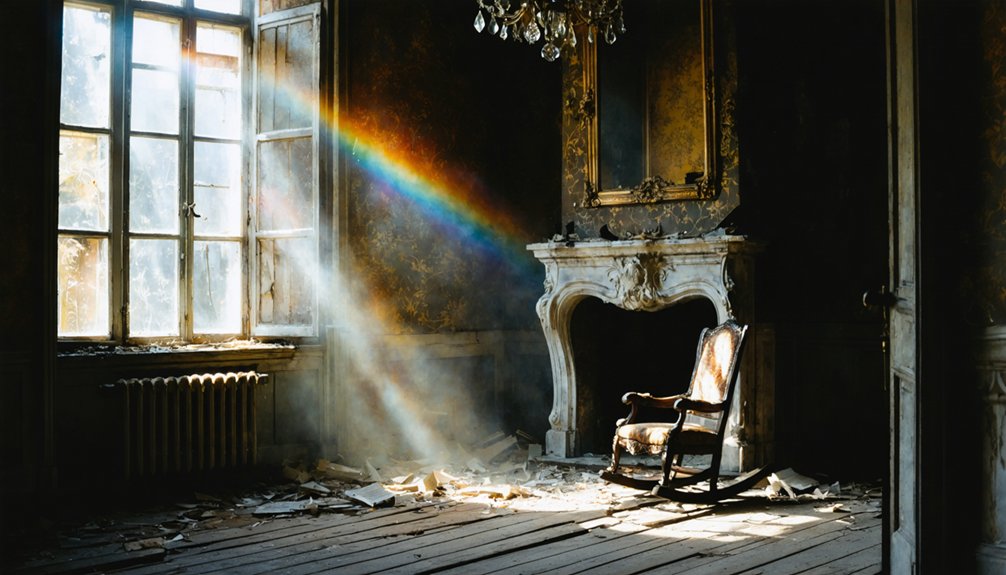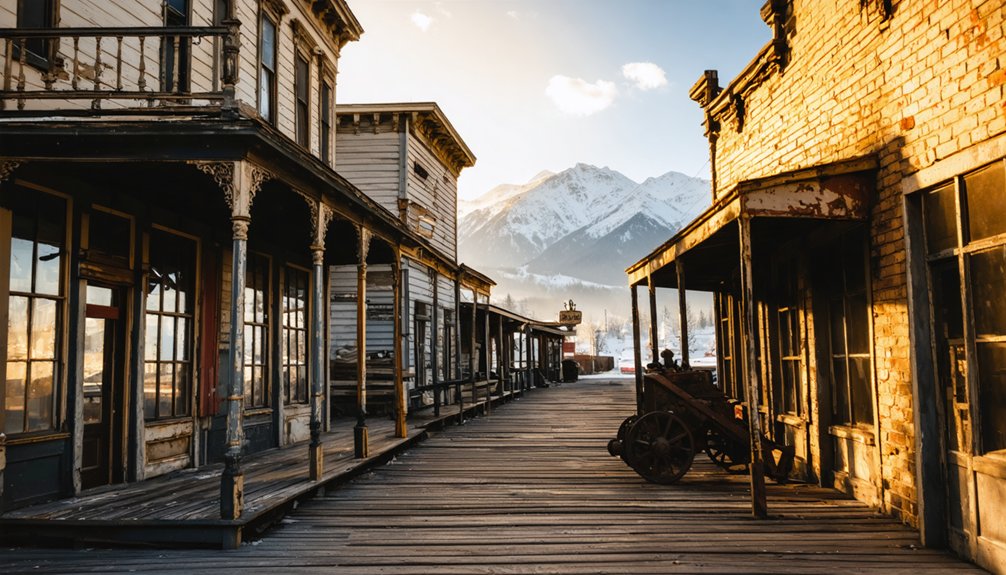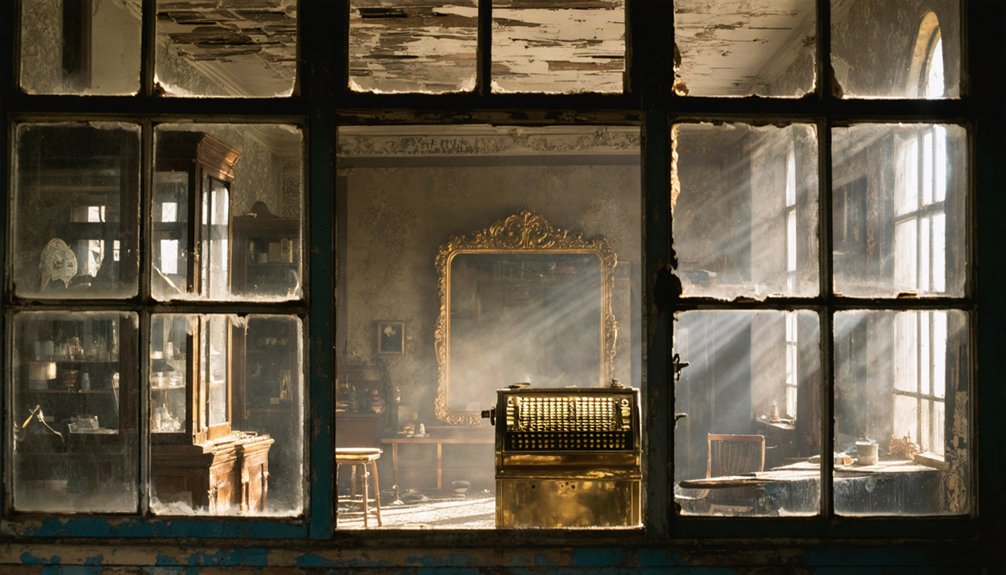
America’s landscape is dotted with remarkably preserved Victorian ghost towns that offer authentic glimpses into the country’s past. You’ll find ornate architecture with decorative woodwork and pressed tin ceilings in towns like St. Elmo, Colorado and Bodie, California. These settlements emerged during the Gold Rush era, experiencing dramatic boom-and-bust cycles that transformed bustling communities into abandoned relics. Beyond their architectural significance, these towns harbor rich paranormal legends tied to their tumultuous histories.
Key Takeaways
- St. Elmo, Bodie, and Rhyolite stand as America’s best-preserved Victorian ghost towns, offering authentic glimpses into 19th-century mining life.
- The 1848 California Gold Rush created boom-to-bust cycles that transformed mining camps into thriving Victorian towns before their eventual abandonment.
- Victorian architectural elements persist in these ghost towns, featuring ornate woodwork, stained glass, and distinctive asymmetrical towers.
- “Arrested decay” preservation techniques maintain authenticity while stabilizing structures through non-invasive methods like structural bracing and weatherproofing.
- Rich paranormal traditions exist in these abandoned towns, from Jerome’s spectral miners to St. Elmo’s “Dirty Annie” who reportedly rearranges hotel furniture.
The Golden Remnants: America’s Most Preserved Ghost Towns
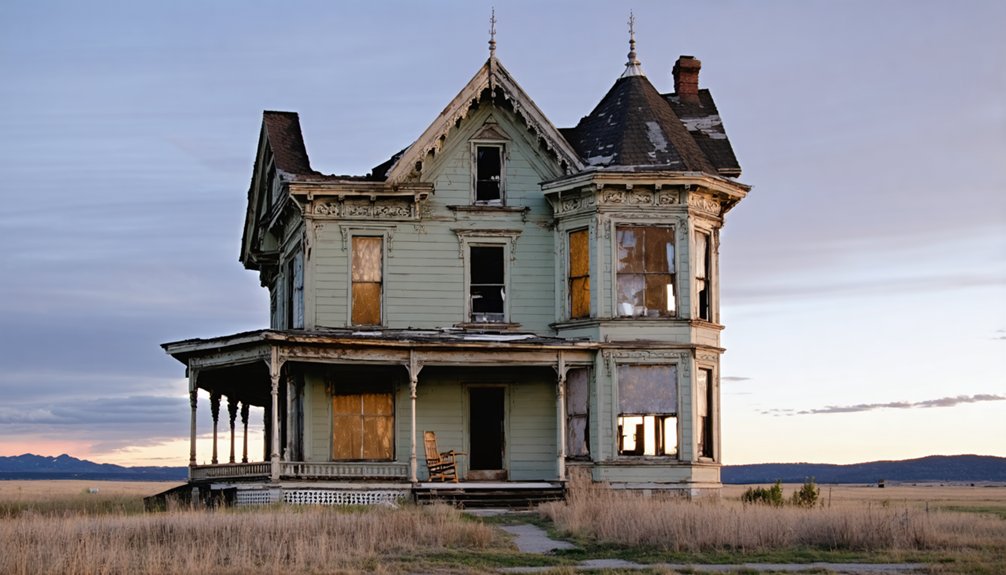
While America’s historical narrative often focuses on bustling metropolises and thriving communities, the nation’s landscape is dotted with remarkably preserved Victorian-era ghost towns that offer authentic glimpses into the country’s past.
Beyond our cities’ neon glow lies America’s forgotten treasure—silent Victorian ghost towns frozen perfectly in time.
You’ll find St. Elmo, Colorado standing as perhaps the best-preserved ghost town in the Western United States, with forty original structures still intact.
California’s Bodie remains in “arrested decay,” preserving over 100 original buildings where visitors report ghostly encounters within its abandoned Methodist church.
Rhyolite, Nevada—the most photographed ghost town in Nevada—showcases the innovative Tom Kelly Bottle House constructed from 50,000 glass bottles.
Historic preservation efforts at Batsto Village, New Jersey have maintained immaculate 18th-century buildings that served the Revolutionary War, while Virginia City’s wooden sidewalks transport you directly to America’s silver rush era.
Calico, California draws tourists with its fully restored 1880s buildings and 500 silver mines that once flourished during its peak before abandonment.
These ghost towns provide visitors with an immersive experience through walking tours that bring history to life in authentic settings.
Mining Booms and Busts: The Rise and Fall of Victorian Settlements
You’ll find that America’s Victorian ghost towns originated primarily from the 1848 California Gold Rush, which triggered a pattern of rapid settlement followed by eventual abandonment across the western frontier.
These boom-to-bust cycles created instant cities like Virginia City, Nevada, which swelled to 25,000 residents following the 1859 Comstock Lode discovery before economic conditions eventually reversed.
The initial mining settlements were characterized by rough-and-tumble atmosphere with fluctuating fortunes as prospectors chased dreams of wealth.
The trajectory from bustling mining camp to ghost town typically involved an initial mineral discovery, frenzied development of infrastructure and Victorian architecture, and ultimate decline when deposits were exhausted or mineral prices collapsed.
Towns like Bisbee, Arizona transformed from rugged encampments into thriving communities that showcased progressive values through public works and early electric streetcars.
Gold Rush Fever
When gold was discovered at Sutter’s Mill in January 1848, few could have predicted the profound transformation that would sweep across the American landscape.
This pivotal moment ignited gold rush fever, propelling thousands westward with dreams of instant wealth. Unlike the earlier Carolina Gold Rush of 1799, California’s discovery triggered unprecedented mass migration, fundamentally altering America’s demographic composition. News of the discovery spread rapidly, and by 1852, San Francisco had transformed from a small settlement of 500 people to a booming metropolis of over 150,000 residents.
You’ll find that mining legends emerged from this period, though most prospectors never struck it rich. The Georgia Gold Rush of 1829 near Dahlonega had already created tensions between miners and Cherokee tribes, leading to forced removals.
As surface gold diminished, independent miners yielded to corporate interests with capital for industrial operations. Boomtowns materialized overnight, complete with banks, saloons, and merchants who often profited more reliably than miners themselves.
This pattern repeated across the continent, creating vibrant communities that would eventually become the abandoned Victorian-era ghost towns you can explore today.
Boom-to-Ghost Trajectory
The meteoric ascent and subsequent collapse of Victorian mining communities followed a predictable yet dramatic pattern across the American West. You’ll find haunting narratives etched into places like Virginia City, where populations swelled to 25,000 before inevitably declining as silver veins thinned.
This cycle manifested dramatically in Butte, which dwindled to just 61 prospectors by 1874, only to resurrect through copper discoveries—a proof of economic resilience amid resource volatility.
The completion of railroads, particularly the transcontinental connection in 1869, initially fueled these boomtowns’ expansion.
While Leadville and Cripple Creek showcase remarkable perseverance through depression-era hardships, most mining settlements eventually succumbed to market forces. Georgetown exemplifies this pattern with its transformation into a thriving center after gold and silver discoveries reshaped the town’s destiny.
The remnants—headframes, rail grades, and brick buildings—stand as Victorian monuments to ambition’s temporary triumph over wilderness. Silverado in the Santa Ana Mountains followed this pattern precisely, with its boom peaking in October 1878 before experiencing a gradual decline as ore deposits were exhausted.
Architectural Time Capsules: Victorian Structures Frozen in Time
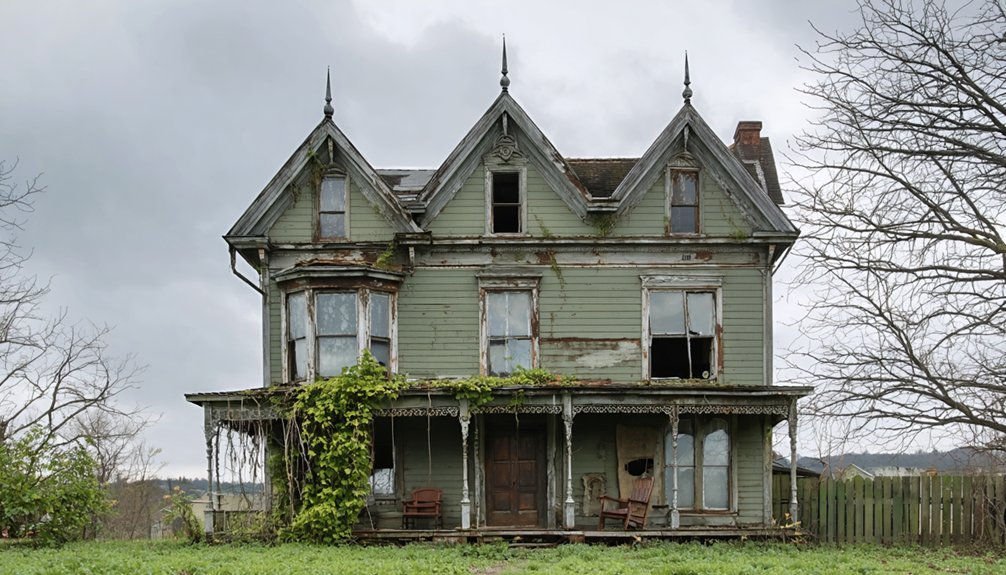
Victorian ghost towns preserve authentic architectural elements like ornate woodwork, stained-glass transoms, and asymmetrical towers that you’ll rarely encounter in modernized historical districts.
These abandoned settlements showcase the period’s primary building materials—wood, brick, and stone—often maintaining their structural integrity despite decades of exposure to the elements. The eerie character of these structures is enhanced by their picturesque decay, creating an atmosphere of mystery that draws visitors and historians alike. Johnsonville in Connecticut stands as a prime example, featuring an impressive collection of period-specific items that Raymond Schmitt meticulously gathered before his death in 1998.
Through the cast-iron balustrades, decorative gables, and patterned shingles found in places like Johnsonville and Virginia City, you’re witnessing the frozen aesthetics of 19th-century craftsmanship that defined America’s Victorian architectural landscape.
Victorian Architectural Preservation
Standing as extraordinary monuments to a bygone era, America’s Victorian ghost towns represent architectural time capsules that have largely escaped the transformative forces of modernization.
These sites showcase preservation techniques focused on “arrested decay,” where structures remain authentic through minimal intervention rather than extensive restoration.
As you explore these towns, you’ll witness the architectural significance of intact Queen Anne, Italianate, and Stick style buildings featuring ornate woodwork, pressed tin ceilings, and period-appropriate details.
Preservation efforts prioritize stabilization over modernization, employing non-invasive methods like structural bracing and weatherproofing to maintain integrity without altering appearance.
Sites like Bodie, California and Animas Forks, Colorado exemplify this approach, where Victorian-era buildings stand with their wraparound porches, decorative trim, and original fixtures—all carefully maintained to preserve their historical essence while battling the relentless forces of time and nature.
Building Materials Showcase
Five distinct categories of building materials combine to create the remarkable architectural time capsules found in America’s Victorian ghost towns.
You’ll discover how wood framing dominated early settlements until devastating fires prompted brick construction mandated by city ordinances. Stone foundations and retaining walls showcase regional geology while sheet metal roofing and cast iron decorative elements reflect industrial innovation of the era.
The rich history of these settlements can be traced back to the historic logging villages in Oregon, where timber was abundant and served as the backbone of the local economy. These villages not only provided essential materials for construction but also cultivated a unique culture centered around the logging industry and its impact on community life. As the demand for wood grew, so did the innovation in building techniques, setting the stage for the architectural transformations that followed.
The Victorian materials preserve structural techniques that defined the period—balloon framing allowed taller, lighter buildings while load-bearing walls of brick or stone supported multiple stories.
Timber trusses and large wooden-framed windows reveal practical engineering solutions that maximized natural light.
These architectural remnants face preservation challenges from material degradation—wood rot, brick spalling, metal corrosion—yet persist as authentic chronicles of America’s rapid westward expansion and industrial revolution.
Ornate Design Elements
Throughout the silent streets of America’s Victorian ghost towns, ornate architectural elements stand as frozen moments in time, offering glimpses into an era defined by decorative excess and meticulous craftsmanship.
These architectural time capsules reveal the aesthetic aspirations of Gilded Age wealth through their intricate woodwork and ornate facades.
When exploring these hauntingly preserved structures, you’ll encounter:
- Multi-gabled rooflines adorned with finials and decorative cresting that create distinctive silhouettes against the sky
- Elaborate gingerbread trim and scrollwork that transform wooden surfaces into delicate lacework
- Gothic Revival elements featuring pointed arches and tracery alongside classical Doric columns
- Interior spaces anchored by half-spiral staircases and unique fireplaces that showcase the craftsmanship of bygone artisans
These design elements tell stories of ambition, prosperity, and the inevitable passage of time.
Spirits Among the Ruins: Paranormal Legends of Abandoned Towns
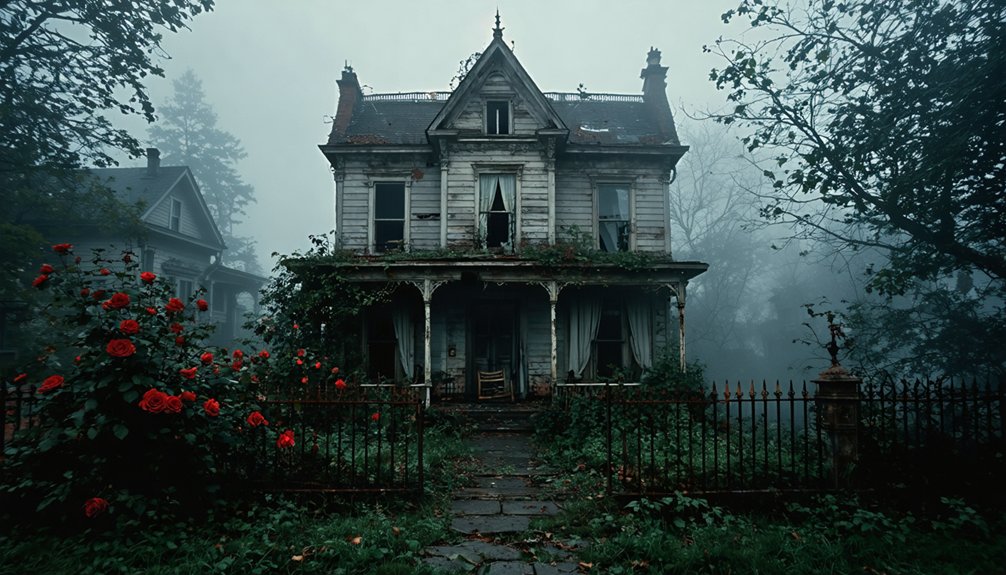
While abandoned Victorian-era settlements across America stand as physical reminders of economic booms and busts, they’ve simultaneously cultivated rich paranormal traditions that transcend their material remains.
In Jerome, Arizona, spectral miners continue their eternal shifts, their phantom pickaxes echoing through sealed tunnels. You’ll find similar ghostly encounters in Crystal City, where a determined miner appears at dusk, lantern bobbing as he completes work started a century ago.
These haunted locales often reflect violent histories—Frisco’s lawless past manifests in cemetery apparitions, while St. Elmo’s “Dirty Annie” rearranges furniture in abandoned hotels.
Perhaps most unsettling are physical anomalies like Centralia’s perpetually burning underground fire, where toxic smoke rises through cracked earth, creating an apocalyptic backdrop for supernatural legends that continue to captivate paranormal investigators and curious travelers alike.
Natural Disasters and Economic Downturns: Forces of Abandonment
Natural disasters carved devastating paths through Victorian-era settlements, functioning as swift arbiters of a town’s fate when economic foundations proved insufficient to withstand environmental calamity.
You’ll discover that water-related catastrophes played a particularly decisive role, with recurring floods and altered waterways undermining once-thriving communities.
- Water devastation: Communities like Ironton faced 16 major hurricanes in 30 years, overwhelming flood resilience strategies and rendering rebuilding futile.
- Geological upheaval: Earthquakes redirected crucial waterways, eliminating economic lifelines for port towns.
- Permanent submergence: At least 46 American towns disappeared beneath waters, whether through natural flooding or intentional reservoir creation.
- Economic recovery initiatives: Federal buyout programs existed but frequently overlooked vulnerable communities, forcing residents to choose between financial ruin or remaining in hazardous locations.
From Boom to Bust: Resource Depletion and Town Exodus
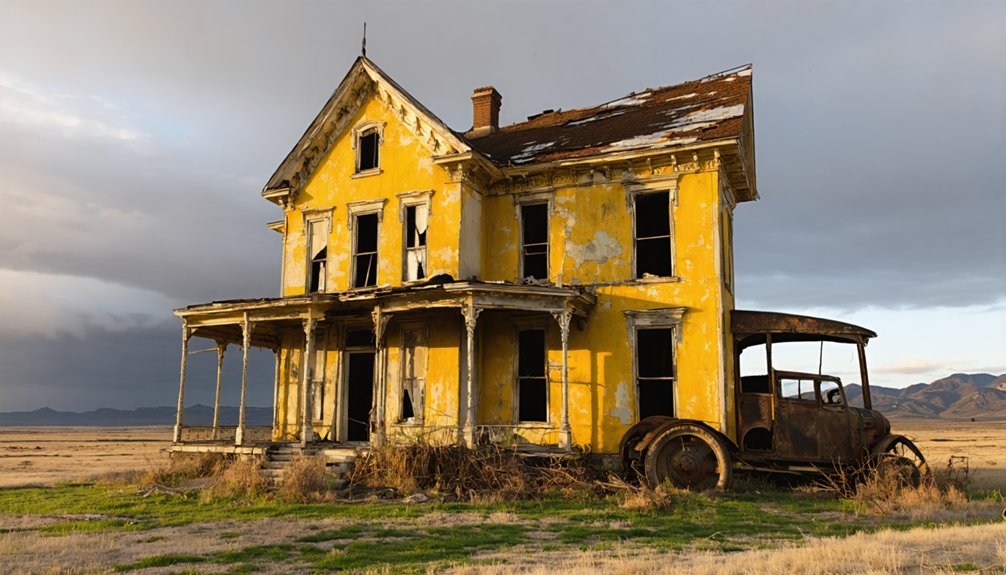
Resource-dependent Victorian settlements embodied the classic boom-to-bust cycle that characterized America’s westward expansion, with their spectacular rise and precipitous fall demonstrating the inherent fragility of single-industry economies.
When you visit these abandoned towns today, you’re witnessing the aftermath of failed resource management. Once-thriving communities like Leadville and Kennecott collapsed rapidly when their mineral wealth—silver and copper respectively—vanished. The depletion triggered immediate unemployment, prompting mass exodus of miners and support workers.
These settlements lacked economic resilience due to their singular focus on extraction. Their temporary infrastructure—wooden structures and tent cities—reflected the inherent uncertainty of their existence.
Environmental degradation further accelerated abandonment, with some sites becoming uninhabitable due to contamination. Transportation shifts delivered the final blow, isolating communities when rail lines changed course or new technologies rendered old routes obsolete.
Modern Pilgrimages: Heritage Tourism in America’s Ghost Towns
Throughout the late twentieth century, heritage tourism emerged as a potent revitalization force for America’s Victorian ghost towns, transforming these abandoned settlements from forgotten relics into popular destinations.
You’ll discover these sites now serve as living museums where the architectural and cultural significance of America’s industrial past remains tangible.
Visitor motivations vary widely, creating distinct tourism experiences:
- Historical enthusiasts explore preserved structures and interpretation centers
- Photographers capture decaying Victorian architecture against natural landscapes
- Families engage with interactive exhibits and educational programs
- Paranormal tourists seek encounters with reported supernatural phenomena
This tourism renaissance has revitalized local economies in regions like Colorado and Texas, where ghost towns attract seasonal visitors who contribute to preservation efforts while satisfying their desire for authentic historical experiences.
Frequently Asked Questions
Can Children Safely Visit Ghost Towns?
Children’s visits require structured ghost town tours with adult supervision. You’ll need to address child safety concerns including structural hazards, toxic contamination, and psychological impacts present in abandoned settlements.
How Do Weather Conditions Affect Ghost Town Preservation?
Weather assaults ghost towns with a vengeance. You’ll observe how freeze-thaw cycles crack foundations, while UV radiation deteriorates exteriors. Modern preservation techniques include hazardous material testing, roof reinforcement, and climate-controlled artifact storage to combat these impacts.
Are There Legal Consequences for Taking Artifacts From Ghost Towns?
Yes, you’ll face severe legal consequences. Artifact laws establish hefty fines and imprisonment for unauthorized collection. Your obligation to preservation ethics transcends personal desire for historical souvenirs from these protected sites.
What Survival Supplies Should Visitors Bring to Remote Ghost Towns?
Like moths to flame, you’re drawn to desolation. Carry water purification systems, shelter materials, first aid kits, navigation tools, fire-starting equipment, and appropriate clothing. Always prepare for extreme weather and emergency situations.
Do Any Ghost Towns Host Period-Authentic Reenactments or Festivals?
You’ll encounter abundant ghost town festivals featuring historical reenactments at Tombstone’s daily gunfights, Jerome’s artistic celebrations, Calico’s competitive Victorian-era events, and Bodie’s authentic preservation approach with minimal theatrical intervention.
References
- https://www.christywanders.com/2024/08/top-ghost-towns-for-history-buffs.html
- https://devblog.batchgeo.com/ghost-towns/
- https://nightofthejack.com/2025/01/23/top-creepy-ghost-towns-in-america/
- https://stephentravels.com/top5/ghost-towns/
- https://www.geotab.com/ghost-towns/
- https://www.atlasobscura.com/lists/americas-best-preserved-ghost-towns
- https://www.youtube.com/watch?v=ONtJ-QTcMWo
- https://en.wikipedia.org/wiki/Lists_of_ghost_towns_in_the_United_States
- https://www.mentalfloss.com/geography/american-ghost-towns-can-still-walk-through
- https://www.islands.com/1689909/best-preserved-most-photographed-ghost-towns-nevada-rhyolite/