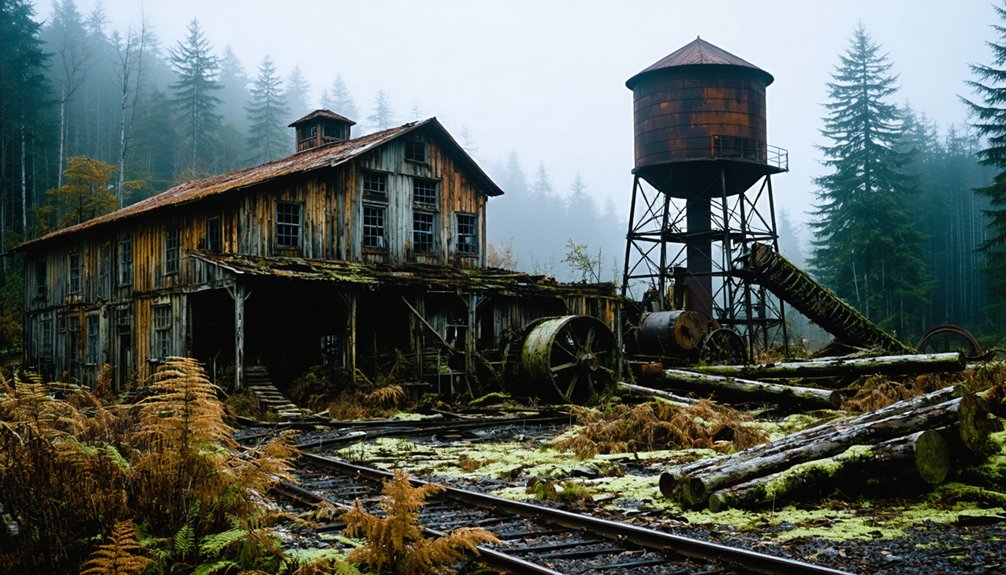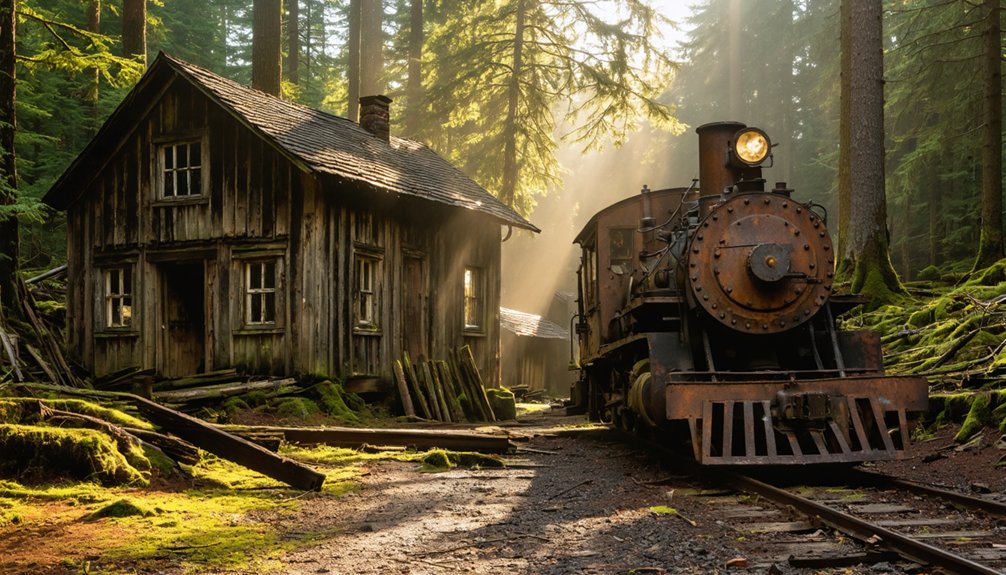
Historic logging villages showcase America’s timber industry evolution, from early waterway settlements to railroad-connected communities. You’ll discover distinctive horizontal log structures with unique chinking and roofing techniques that reflect regional influences. As you explore these preserved sites, notice transportation networks, seasonal work patterns, and social hierarchies that shaped frontier life. These settlements’ architectural and cultural elements reveal how logging transformed America’s landscape and economy for generations.
Key Takeaways
- Look for horizontal log construction with distinct notching styles that reveal the cultural origins of historic logging settlements.
- Visit preserved sites along waterways where early logging communities developed for easy timber transportation.
- Explore seasonal living patterns, with winter harvesting and spring log drives shaping community rhythms.
- Identify remnants of wooden rail systems or tram networks that revolutionized timber extraction from remote forests.
- Examine how logging villages transformed from resource extraction sites into community hubs with distinct social hierarchies.
Origins and Evolution of American Logging Settlements
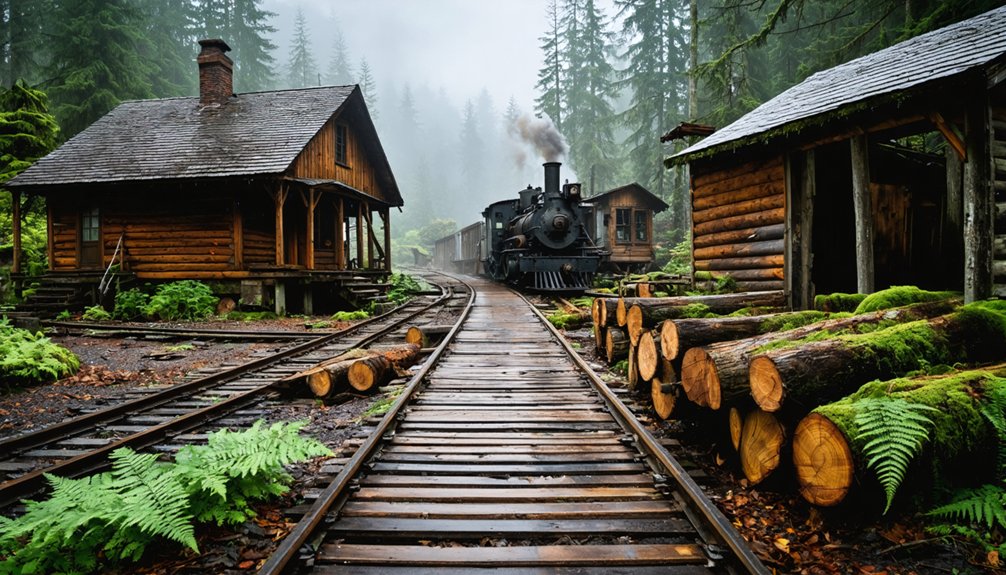
While indigenous peoples had been shaping North American forests for centuries through systematic burning and clearing, formal American logging settlements trace their origins to the early 1600s around Jamestown.
When visiting these historic sites, you’ll discover that early settlers initially cleared forests for basic survival needs rather than commercial purposes.
As you explore these villages, you’ll notice how their development followed waterways—the economic lifelines that transported timber to markets.
The cultural influences of logging transformed as the frontier moved westward from depleted New England forests to the Great Lakes region by the 1800s.
Industrial Revolution demands dramatically expanded the industry’s economic impacts, with Michigan becoming the nation’s lumber leader by 1880.
Early logging settlements often implemented local timber restrictions to preserve resources for community use before commercial interests took precedence.
the history of old logging hamlets reveals a rich tapestry of community cooperation and sustainable practices. These settlements not only prioritized the welfare of their inhabitants but also laid the groundwork for modern forestry management. As commercial pressures grew, many of these traditions were lost, leading to significant changes in land use and resource management strategies.
Railroad expansion later revolutionized access to remote timberlands, forever changing the scale and reach of American logging operations. The arrival of the Henderson-Brevard Railroad in 1895 caused logging industries to proliferate rapidly throughout Western North Carolina.
Architectural Features and Camp Layouts to Identify
When touring historic logging villages, you’ll encounter distinctive architectural elements that reveal the industry’s cultural heritage and practical needs.
Look for horizontal log construction with various notching techniques that signal cultural origins—V-notches indicate German influence, while square notching suggests Anglo-American or Scots-Irish builders.
The notching techniques in log structures serve as cultural fingerprints—V-notches whispering of German heritage, square joints revealing Anglo roots.
Examine wall materials carefully; authentic structures feature clay, mud, or stone chinking between logs, sometimes with sphagnum moss for insulation. Modern preservation techniques often utilize Log Jam compound to maintain these historic structures while ensuring their longevity.
Roofs typically display side-gabled designs with distinctive purlin structures, while chimneys reflect ethnic traditions through placement and materials.
Floor plans tell stories of origins—German-influenced camps often feature central chimneys with kitchen (Küche) and heated living room (Stube).
Notice foundations of local stone and small, irregularly spaced windows that speak to both necessity and cultural preference.
Many structures feature siding applied only to walls with significant weather exposure, a traditional preservation technique that maintains the character of the log structure while protecting it from environmental damage.
Must-Visit Preserved Logging Communities Across the U.S
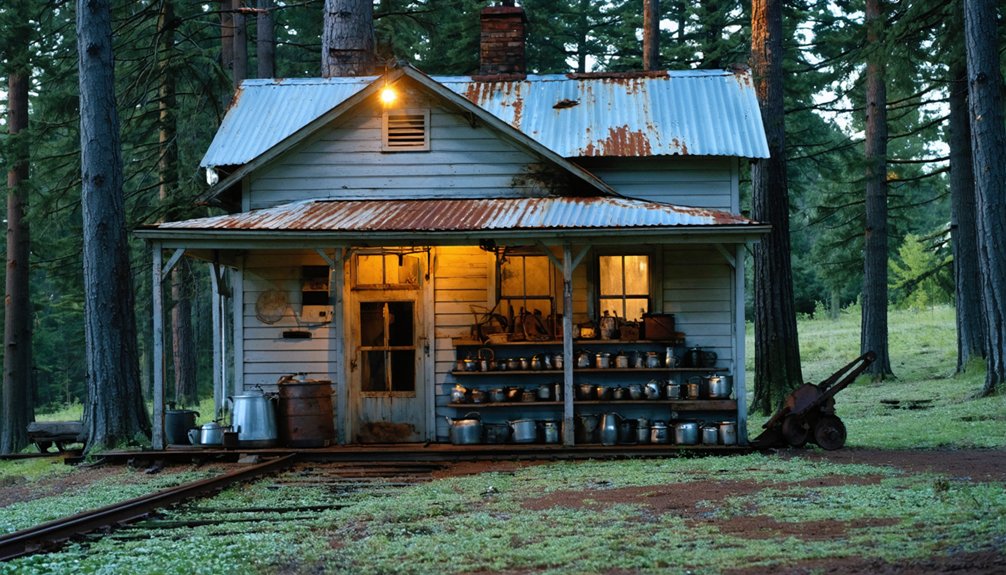
Having identified the architectural markers of historic logging villages, you’ll want to explore the remarkably preserved communities that stand as living museums to America’s timber heritage.
Port Gamble stands as Washington’s crown jewel—North America’s longest continuously operating mill (142 years) until 1995 and the West’s first purpose-built company town. The town was originally named Teekalet when established in 1853, making it the first planned company town in the Northwest. Its preservation under Rayonier Inc. makes it an iconic landmark of 19th-century lumber industry.
For cultural heritage enthusiasts, Onalaska reveals complex labor history through its 1930s union conflicts, while McKenna showcases remarkably intact early-20th-century structures with its former company store and bunkhouse repurposed as modern establishments. Visitors to Onalaska can still view the remnants of the mill, including a decaying smokestack that marks the site of the once-productive Carlisle-Pennell Lumber Company.
Don’t overlook Port Townsend and Langley, whose preserved wooden architecture and strategic isolation from modern development have maintained their authentic historical character despite not being exclusively timber-focused communities.
Transportation Networks: Rivers, Railroads and Ice Roads
The intricate transportation networks that developed around logging communities represent some of the most ingenious adaptations in America’s industrial history.
You’ll discover how river logistics initially dictated settlement patterns, with logs floated downstream to mills before mechanical transport emerged.
As you explore these historic villages, note how portable tram networks revolutionized the industry, allowing timber extraction from increasingly remote forests.
These wooden rail systems were continually dismantled and rebuilt as logging operations moved.
In Tyler County, commercial railroads such as Trinity and Sabine (T&S RR) and Texas and New Orleans (T&NO RR) were vital for distributing lumber beyond local markets.
When winter arrived, frozen waterways became crucial ice roads, supporting heavy loads without permanent infrastructure.
The evolution of transportation continued with the introduction of logging trucks that could access areas where trains couldn’t reach, effectively chasing timber into steep hillsides and valleys.
Seasonal Life and Labor in Historic Timber Communities
Within the rhythmic pulse of America’s timber history, human labor and seasonal cycles formed the backbone of logging communities that operated alongside the transportation networks previously discussed.
The seasonal heartbeat of logging camps synchronized men and timber in a rugged dance of survival and production.
When you visit historic logging sites, you’ll witness how winter’s frozen ground enabled intensive harvesting, while spring brought the dramatic log drives downstream. This seasonal migration of workers followed nature’s calendar, creating a transient workforce that endured harsh conditions—from crowded bunkhouses housing 70+ men to grueling 10-hour workdays in extreme weather.
The labor hierarchy structured camp life: the authoritative “bull of the woods” directed operations while cooks prepared massive 5,000-calorie meals to fuel workers. Workers often demonstrated remarkable loyalty to companies during economic hardships, supporting the businesses that provided their livelihoods. The Industrial Workers of the World attempted to improve these challenging conditions through organized strikes, including the infamous 1916 Everett Massacre that highlighted the tensions between laborers and timber companies.
You’ll appreciate how these isolated communities, almost exclusively male, sustained themselves through brutal labor and simple pleasures, creating an economic rhythm that shaped America’s forests and frontier settlements.
Frequently Asked Questions
What Clothing and Equipment Did Individual Lumberjacks Typically Own?
You’d own practical logging gear including plaid shirts, wool coats, heavy boots with spikes, utility pants, suspenders, and lumberjack attire like wool hats and protective neckerchiefs for demanding forest work.
How Were Women and Families Integrated Into Logging Communities?
You’ll discover women’s contributions encompassed cooking, cleaning, and laundry in “Flunkies Shacks,” while family roles evolved from support positions to shared leadership, challenging gender norms in this demanding, tight-knit community environment.
What Medical Care Was Available in Remote Logging Camps?
You’d find minimal care in remote camps—typically just basic first aid stations with limited medical supplies. Serious injuries required arduous travel to distant towns, as dedicated facilities were exceptionally rare.
How Did Ethnic Groups Influence Logging Camp Culture and Cuisine?
You’ll find remarkable cultural fusion in logging camps, where ethnic groups maintained their culinary traditions despite harsh conditions. Chinese workers prepared traditional dishes while European immigrants introduced hearty stews and French Canadian specialties.
What Entertainment and Leisure Activities Existed in Isolated Logging Communities?
You’d wait anxiously for Saturday’s arrival when logging camp recreation transformed isolation into celebration. Through stag dancing, musical performances, lumberjack competitions, and community events, freedom from labor was vigorously embraced.
References
- https://www.youtube.com/watch?v=x8-OHPZ2bN4
- https://www.nps.gov/piro/learn/historyculture/logging-history.htm
- https://www.historylink.org/File/23208
- https://www.mnhs.org/foresthistory/learn/logging
- https://www.seattlepi.com/local/seattle-history/article/Photos-NW-logging-towns-127-years-on-11142863.php
- https://en.wikipedia.org/wiki/Logging_camp
- https://www.youtube.com/watch?v=Z3hdcWurBeY
- https://www.oregonhistoryproject.org/articles/historical-records/illustration-of-housing-amp-feeding-lumber-camp-outfit-on-wheels/
- https://historictoxaway.org/logging-1900-1920/
- https://en.wikipedia.org/wiki/History_of_the_lumber_industry_in_the_United_States