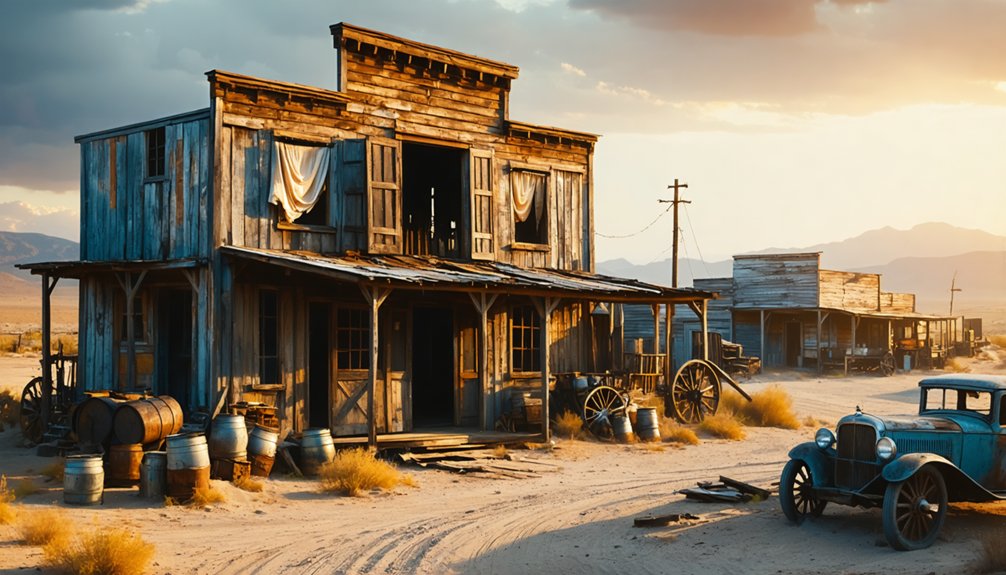
Western ghost towns offer haunting glimpses into America’s frontier past, where bustling mining communities once thrived before being abandoned to the elements. You’ll discover weathered wooden structures, rusting iron artifacts, and architectural remnants that tell silent stories of boom-and-bust economies. These atmospheric sites, from Bodie’s preserved interiors to Virginia City’s opulent buildings, often harbor spectral legends of miners and saloon patrons. The fragile balance between preservation and decay reveals America’s industrial ambitions in every crumbling doorway.
Key Takeaways
- Preserved architectural remnants like weathered wooden structures and collapsing buildings showcase the distinctive decay patterns of frontier settlements.
- Abandoned mining equipment and rusted iron artifacts tell stories of industrial ambition and technological innovation in 19th-century boomtowns.
- Ghost towns like Bodie, California maintain a state of “arrested decay” allowing visitors glimpses into untouched interiors from the 1880s.
- Spectral legends of miners, saloon keepers, and mining widows persist in historically significant locations like Tombstone and Crystal City.
- Hidden gems like St. Elmo (Colorado) and Kennecott (Alaska) offer well-preserved historical treasures requiring respectful visitation practices.
The Rise and Fall of Mining Boomtowns
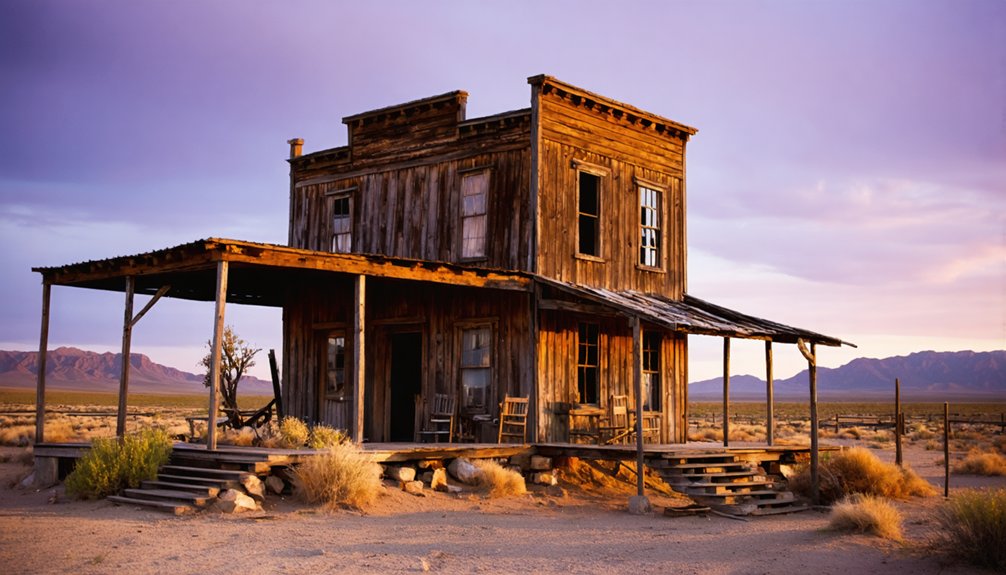
When the glint of gold was discovered in the streambed at Sutter’s Mill in 1848, it triggered one of the most significant migration events in American history.
The golden promise of Sutter’s Mill beckoned hundreds of thousands to California, forever altering America’s western frontier.
You’re witnessing the aftermath of a remarkable mining evolution that transformed the American frontier. By 1852, over 300,000 people had flocked to California, creating instant communities where none existed before.
As precious metals were discovered in Nevada, Colorado, and South Dakota, the pattern repeated. Boomtown culture emerged with distinctive characteristics—male-dominated populations, ethnic diversity, and thriving entertainment economies.
The discovery of valuable minerals often led miners to shout “Bonanza” to announce their fortune-changing finds. Towns like Virginia City exploded to 25,000 residents at their peak, only to collapse when the ore ran out. Many towns followed paths similar to Independence, Missouri, which served as a crucial departure point for prospectors heading west to seek their fortunes. While some settlements evolved into permanent cities like Denver, most withered into the ghost towns you can explore today, standing as haunting monuments to America’s mineral-driven westward expansion.
Architectural Remnants: What Time Left Behind
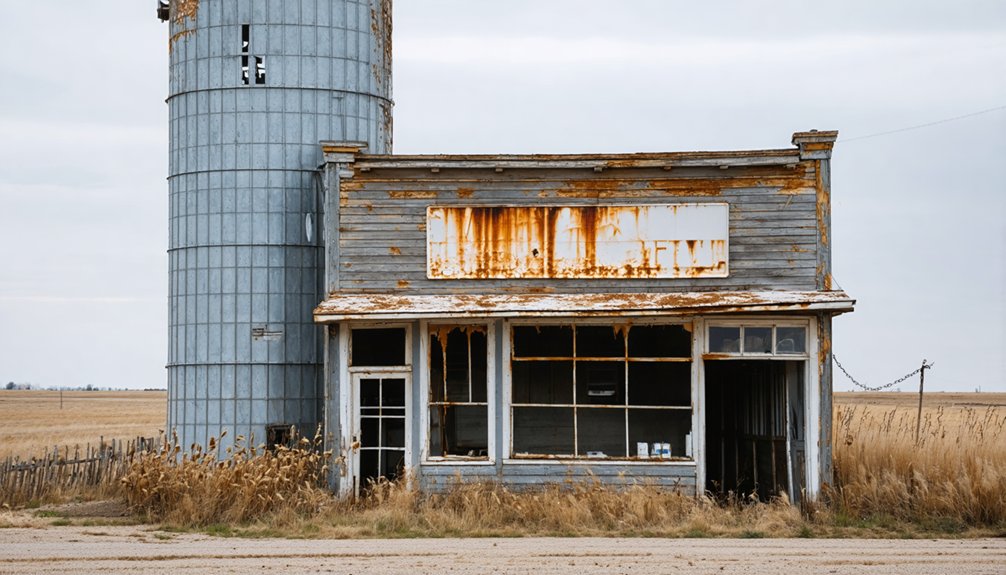
You’ll find that ghost towns‘ wooden structures narrate their own history through weathered planks, warped doorframes, and sun-bleached facades that have endured decades of harsh elements.
Blacksmith shops, livery stables, and hardware stores still display rusting tools, nails, and hinges that demonstrate both practical craftsmanship and the remarkable resilience of iron artifacts amid environmental exposure.
These deteriorating materials—from bottle-embedded walls to lopsided timber frames—serve as physical timestamps, allowing preservationists to document construction techniques and architectural adaptations specific to frontier boom-and-bust settlements.
In Bodie, California, visitors can observe nearly 100 collapsing buildings that stand as silent witnesses to the once-thriving gold mining community that flourished there in the 1880s.
Virginia City’s architectural legacy reflects the immense wealth generated by copper mining, which funded elaborate buildings that symbolized the town’s brief prominence as a territorial capital.
Weathered Wood Whispers
Every abandoned structure in America’s ghost towns tells a silent story through its weathered wooden remains, creating a tangible timeline of frontier life, environmental impact, and material degradation.
You’ll witness distinctive decay patterns across various buildings—log cabins with eroded load-bearing joints, commercial structures with warped false fronts, and skeletal rooflines stripped by decades of exposure.
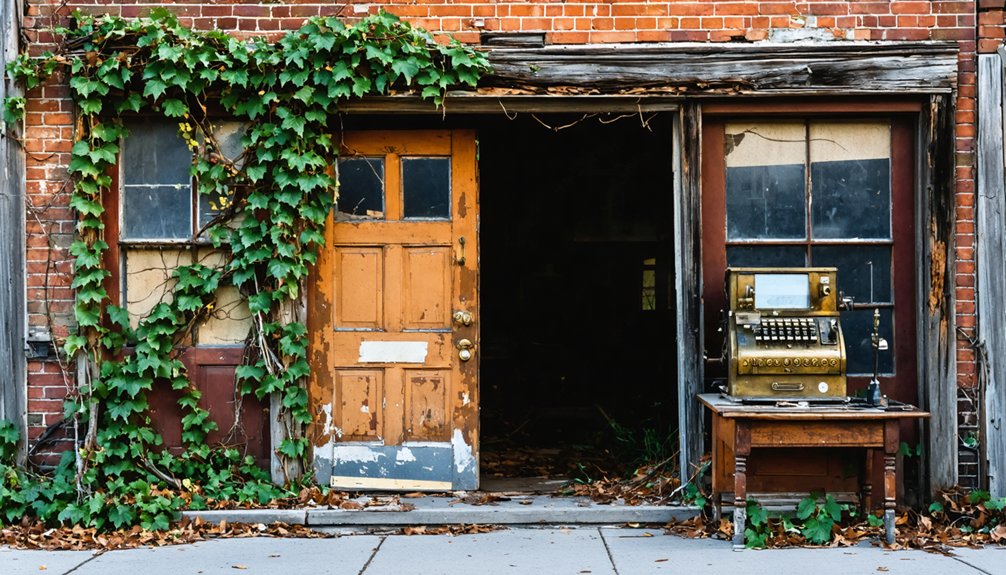
The weathered silhouettes of window frames and doorways stand as portals to the past, revealing construction techniques unique to their era. Square-shanked nails and hand-hewn beams speak to frontier resourcefulness. In Bodie, California, visitors experience the town’s preserved state of arrested decay, allowing them to peer through broken windows at untouched interiors. At Grafton, the renovated schoolhouse stands as one of Utah’s most pristine abandoned buildings, offering a glimpse of pioneer life in the West.
Environmental factors dictate preservation states: desert towns feature brittle but intact wood, while mountain settlements show accelerated breakdown from moisture and biological growth.
These wooden remnants aren’t just architectural fragments but historical documents—each split beam and lichen-covered board encoding the town’s final chapter.
Iron Artifacts Endure
While wooden structures whisper their histories through decay, the iron artifacts scattered across America’s ghost towns speak more boldly of industrial ambition and technological prowess.
As you explore these abandoned settlements, you’ll find beehive-shaped charcoal kilns and robust stone furnaces standing as evidence of 19th-century innovation.
The rusted remnants in places like Old Iron Town, Utah reveal stories of boom-and-bust economies.
These iron relics—once central to Western development—now face constant battles against corrosion, vandalism, and souvenir hunters.
Yet their sturdy construction has allowed many to endure where wooden structures failed.
The beehive-shaped kiln at Old Iron Town requires repairs every decade to preserve its historical significance as one of Utah’s most intact ghost town structures.
Visitors can observe the remnants of the 19th century furnace that once produced iron for the growing western territories, offering tangible connections to Southern Utah’s industrial heritage.
The haunting industrial beauty of furnace bases, chimney stacks, and ore grinders creates a visual narrative of frontier resilience, transforming utilitarian designs into evocative historical markers that continue to resist time’s relentless march.
Spectral Stories: Legends That Linger in Abandoned Streets
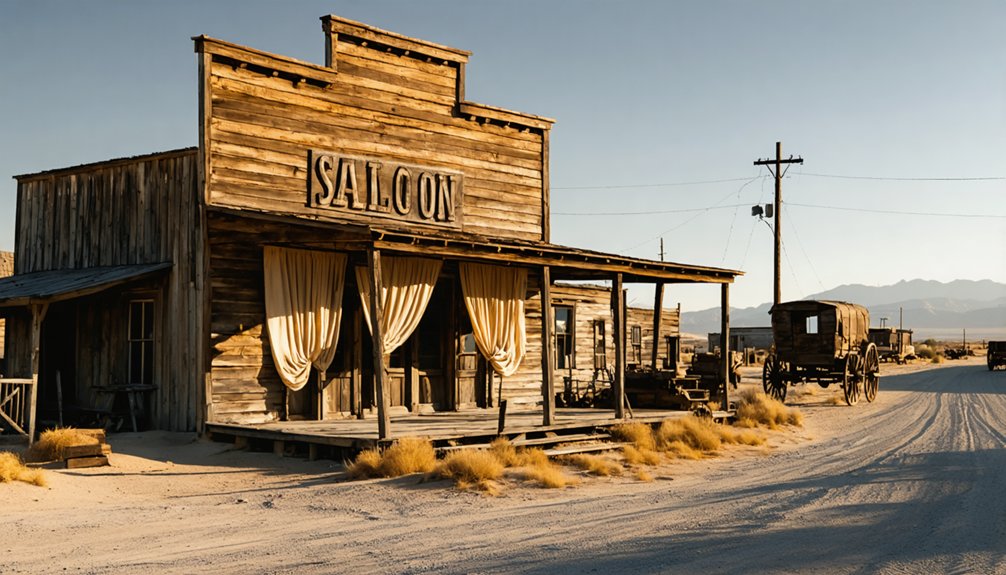
You’ll encounter persistent tales of spectral miners still working their claims in abandoned Western ghost towns, where eyewitnesses report shadowy figures disappearing into sealed mine entrances.
Historic saloons like Bodie’s and Tombstone’s Bird Cage Theatre harbor some of the most active paranormal sites, with visitors documenting unexplained footsteps, disembodied voices, and glassware moving without human intervention.
These enduring legends serve as intangible cultural heritage, preserving the emotional resonance of these once-thriving communities long after their economic purpose vanished. The abandoned town of Spokane, just 16 miles from Custer, provides an atmospheric backdrop for these ghostly narratives with its eerily intact structures from the 1920s mining boom. At Crystal City, Colorado, many hikers have reported seeing a mysterious ghostly miner working near the historic Crystal Mill, complete with the sounds of pickaxes echoing at dusk.
Ghostly Mining Legends
Deep beneath the weathered timbers of abandoned mining towns, spectral narratives emerge from the collective memory of America’s resource-driven past.
You’ll encounter tales of spectral miners whose shadowy figures traverse abandoned tunnels in the Black Hills and Nevada, their footsteps echoing where 15,000 tons of Radcliffe gold once emerged.
Mining widows haunt these settlements too—their apparitions documented in Deadwood—women whose economic devastation left emotional imprints on the landscape.
Lawless spirits permeate these forgotten places, from Eldorado Canyon’s Civil War deserters to frontier vigilantes whose violent disputes over claims generated lasting supernatural energy.
The boom-and-bust trauma of places like Belmont and Berlin—abruptly abandoned when silver and gold no longer yielded profit—created haunted shadows where dreams and $849,000 worth of ore were extracted before the silence fell.
Saloon Spirits Remain
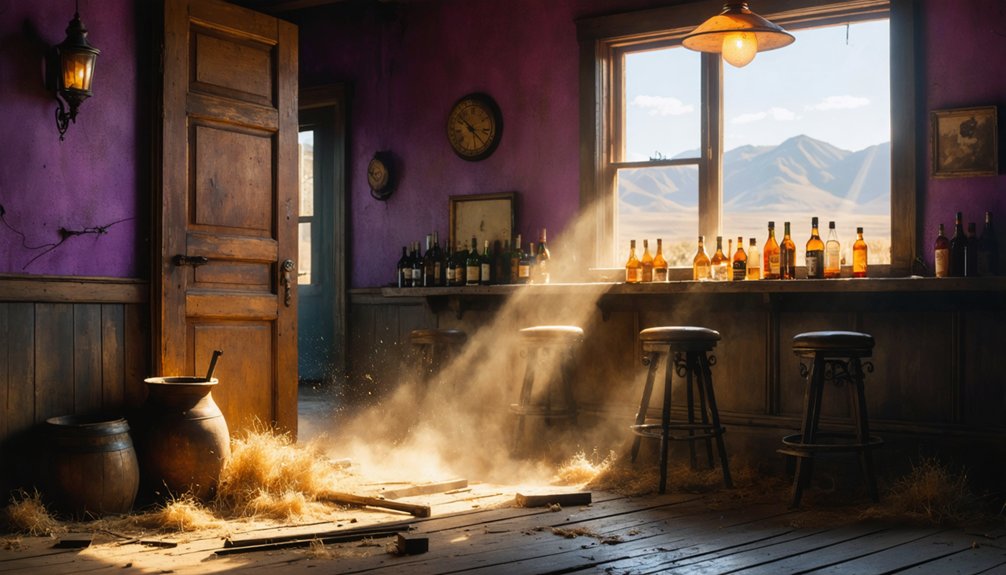
Long after the last shots were fired and final drinks poured, spectral energies linger in the skeletal remains of Western saloons—perhaps the most spiritually charged locations in America’s ghost towns.
Walking through places like Bodie or Calico, you’ll encounter the epicenters of frontier social life where over 60 establishments once served a thirsty populace.
These saloon hauntings frequently manifest as unexplained footsteps, disembodied voices, or shadowy figures. Visitors regularly report encounters with ghostly bartenders still tending their spectral establishments, particularly in locations where violent deaths occurred.
At preserved sites like Dirty Dick’s Belmont Saloon, dating to 1867, preservation efforts maintain these atmospheric portals to the past without sacrificing historical authenticity.
The spirits remain because their stories weren’t finished—disputes unsettled, lives cut short in gambling quarrels and gunfights that now fuel both tourism and historical understanding.
Life in the Wild West: Social Dynamics of Mining Communities
Mining communities of the American West represented complex social ecosystems shaped by extreme gender imbalances, ethnic stratification, improvised governance, and cultural preservation efforts.
You’d witness staggering male-to-female ratios of 9-to-1 in these settlements, with women’s arrival later catalyzing social stabilization through churches, schools, and civic organizations.
The ethnic diversity was remarkable yet hierarchical. British miners controlled management while immigrants from Italy, Eastern Europe, China, and Mexico performed the dangerous underground work.
Without established courts, these communities developed ad hoc legal systems and mining codes, often resorting to vigilante justice through popular vote.
Despite discrimination, immigrant groups maintained cultural cohesion through fraternal lodges, religious institutions, and ethnic enclaves.
Multiple churches dotted these towns, allowing diverse populations to preserve their traditions across generations in the harsh frontier environment.
Hidden Gems: Lesser-Known Ghost Towns Worth Visiting
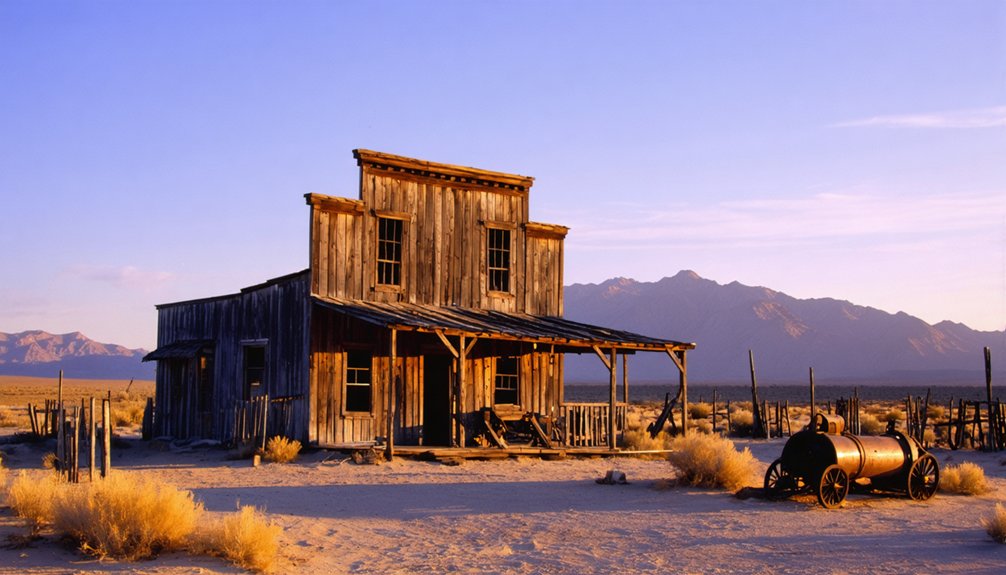
While the mining communities of the American West flourished in their heyday, many have since fallen silent, leaving behind architectural treasures and material culture that historians and preservationists now cherish.
Beyond the famous boom-and-bust towns, you’ll find remarkable hidden gems worthy of your exploration. St. Elmo, Colorado stands as one of America’s best-preserved ghost towns, while Kennecott, Alaska offers copper mining remnants within a national park.
For authentic urban exploration, visit Grafton, Utah—featured in “Butch Cassidy and the Sundance Kid”—with its detailed frontier cemetery records.
The remote Panamint City, California, founded by outlaws after a silver heist, requires 4WD access but rewards adventurers with outlaw cabins and mining ruins.
Ghost town preservation efforts in Lake Valley, New Mexico have maintained the schoolhouse, protecting these fragile windows into our frontier past.
Preservation Efforts: Saving America’s Vanishing History
Across the nation, preservationists race against time and weather to rescue America’s vanishing ghost towns, which represent irreplaceable chapters of our frontier history.
Through community engagement and innovative funding strategies like specialized license plates and preservation funds, these historical treasures find new life through “arrested decay” approaches that maintain authenticity.
When you explore these preserved sites, you’ll witness:
- Carefully stabilized structures lacking traditional foundations
- Buildings maintained in weathered states rather than modernized
- Collaborative restoration work between volunteers and professionals
- Repurposed historic spaces that serve new cultural purposes
- Evidence of legal advocacy that prevented demolition of irreplaceable landmarks
Your visit supports ongoing preservation efforts that balance tourism with protection, ensuring these tangible connections to America’s past remain standing for future generations to experience.
Photography Tips for Capturing Ghost Town Aesthetics
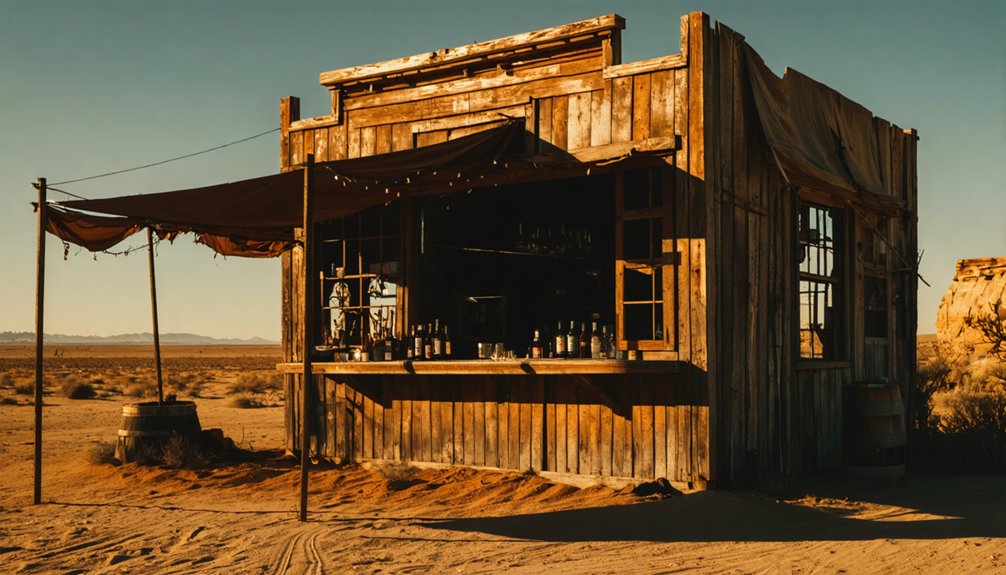
How can one capture the haunting beauty of abandoned settlements that whisper stories from America’s frontier past? Visit during golden hours when angled light accentuates weathered textures in abandoned structures.
Carry a DSLR or mirrorless camera with varied lenses—wide-angle for sweeping vistas and primes for intimate details of decay.
During urban exploration, prioritize composition by framing shots through doorways and including distinctive elements that reveal the town’s character. A sturdy tripod enables long exposures at dawn or dusk, creating ethereal atmospheres.
Consider black and white processing to emphasize contrast and timelessness.
Always respect these fragile sites—obtain necessary permissions, leave artifacts untouched, and tread carefully. Your images preserve essential history while allowing viewers to experience freedom through glimpses of places time forgot.
Planning Your Ghost Town Road Trip Adventure
Planning a ghost town expedition across America’s forgotten frontiers requires meticulous preparation and thoughtful route selection. Montana’s Glacier-to-Yellowstone route and California’s Shasta-to-Calico journey offer immersive glimpses into ghost town history while traversing breathtaking scenic routes.
One of the highlights of such an adventure is discovering the best preserved ghost towns in Utah, where unique architecture and rich histories await exploration. Each town tells a story of the past, offering insights into the lives of those who once inhabited these now-deserted places. With their stunning landscapes and intriguing remnants, these ghost towns are a must-visit for any history enthusiast.
Consider both practicality and preservation when mapping your adventure through these fading fragments of western heritage.
- Download offline maps for remote locations where cell service vanishes like the towns themselves
- Pack emergency supplies, extra water, and vehicle repair equipment for isolated stretches
- Research seasonal accessibility—mud, snow, and flooding can block passage to historic sites
- Balance itineraries with varied experiences: preserved buildings, museums, and natural wonders
- Book accommodations in advance, particularly if planning overnight stays in historic hotels or campgrounds near protected ghost town areas
Frequently Asked Questions
Are Ghost Towns Legally Accessible for Metal Detecting or Artifact Collection?
Most ghost towns aren’t legally accessible for metal detecting due to legal restrictions protecting artifact preservation. You’ll need proper permissions and must avoid sites on historical registers or federal lands.
What Safety Precautions Should Visitors Take When Exploring Abandoned Mines?
Don’t enter abandoned mines at all—they’re deathtraps. If you’re determined, bring proper exploration gear including helmets, lighting, and gas detectors. Always inform others of your whereabouts and expected return time.
How Do Seasonal Changes Affect Ghost Town Accessibility and Appearance?
Like a ghost’s ever-changing form, you’ll encounter seasonal weather transforming these towns—winter brings snow-draped isolation and accessibility challenges, while summer offers clear paths but intense heat affecting historic preservation.
Which Ghost Towns Are Considered Authentically Haunted by Paranormal Investigators?
You’ll find Ruby, Arizona most authenticated by investigators due to documented paranormal sightings. Bodie’s curse, Centralia’s lingering spirits, and St. Elmo’s Annabelle hauntings also substantiate haunted legends through consistent reports.
Do Any Ghost Towns Still Have Permanent Residents Living There?
Prominently populated places like Jerome and Virginia City retain current residents who maintain ghost town history, preserving architectural heritage while embracing an independent lifestyle amidst the atmospheric remnants of bygone mining communities.
References
- https://www.blackhillsbadlands.com/blog/post/old-west-legends-mines-ghost-towns-route-reimagined/
- https://www.youtube.com/watch?v=2sIM72082jc
- https://www.geotab.com/ghost-towns/
- https://www.britannica.com/topic/ghost-town
- https://jasontdunn.com/files/ghost_towns_big_cities.pdf
- https://en.wikipedia.org/wiki/Ghost_town
- https://wildwestcity.com/old-west-ghost-towns/
- https://www.usawelcome.net/news/explore-ghost-towns-west-usa.htm
- https://www.ushistory.org/us/41a.asp
- https://en.wikipedia.org/wiki/Timeline_of_the_American_Old_West