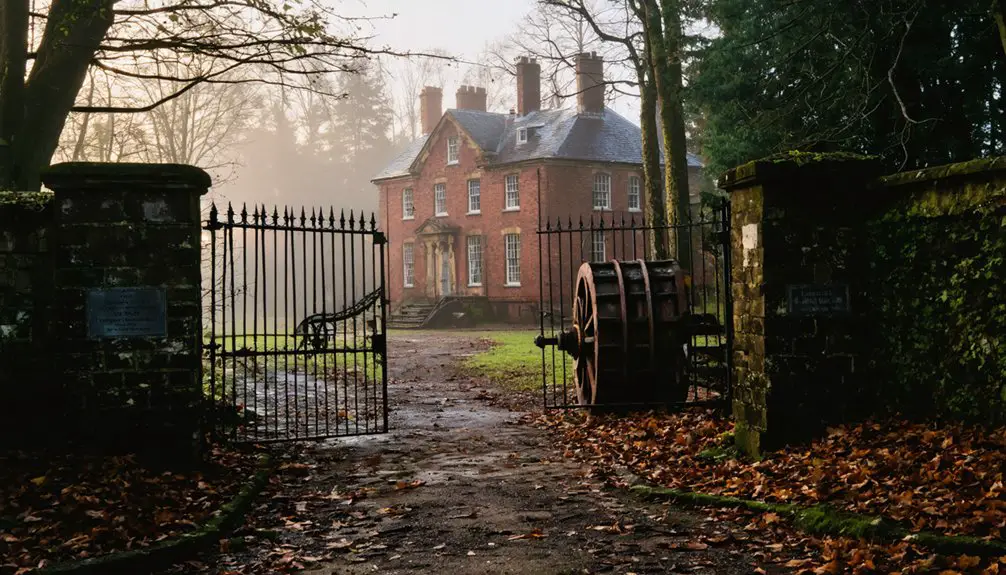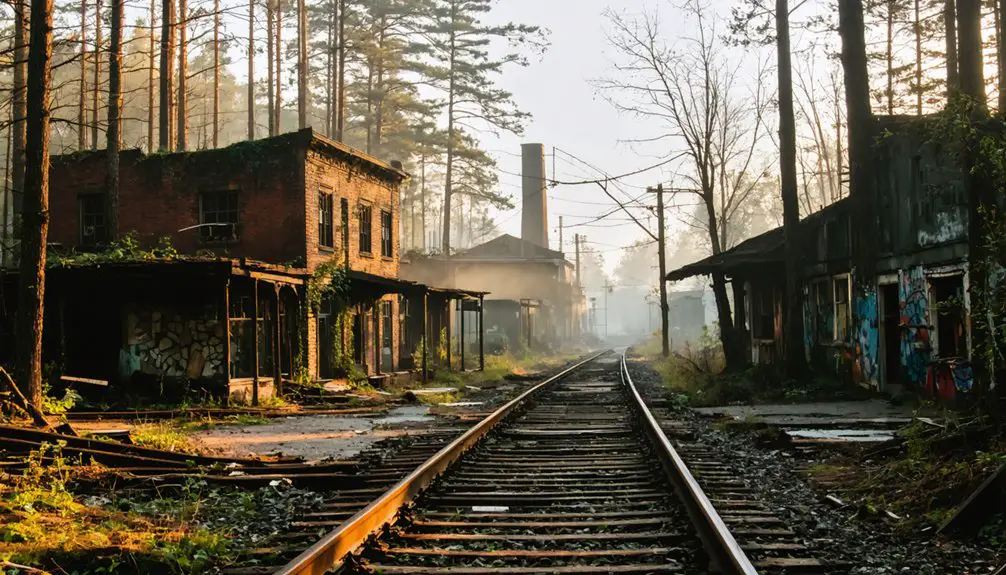
You’ll find New Jersey’s most famous ghost towns scattered throughout the Pine Barrens, each telling unique stories of industrial rise and decline. Batsto Village showcases Revolutionary War-era ironworks preserved as a state historic site, while Feltville reveals the remnants of David Felt’s 1840s company town. Ong’s Hat carries mysterious legends and documented disappearances, and Waterloo Village operates as a living museum along the historic Morris Canal. These abandoned settlements offer fascinating glimpses into the state’s forgotten industrial heritage and economic transformation.
Key Takeaways
- Batsto Village in the Pine Barrens operated as an ironworks settlement from 1766, later preserved with over thirty restored structures.
- Feltville transformed from a sawmill to David Felt’s company town in 1844 before complete abandonment by the 1870s.
- Ong’s Hat appeared on Revolutionary War maps in 1778 and became abandoned after its last resident departed in 1936.
- Waterloo Village serves as a restored 19th-century canal settlement showcasing Morris Canal history with nineteen preserved structures.
- Atsion Village features Samuel Richards’ 1826 mansion and represents New Jersey’s iron industry heritage within Wharton State Forest.
Batsto Village: From Iron Works to Historic Preservation
Nestled within New Jersey’s Pine Barrens, Batsto Village stands as a tribute to America’s industrial evolution from colonial ironworks to modern historic preservation.
You’ll discover Charles Read’s 1766 iron works that transformed bog ore into Continental Army cannons and munitions during the Revolutionary War.
The Richards family expanded operations from 1784 through 1854, creating a self-sustaining community complete with stores, sawmills, and glass production facilities.
When iron declined, Joseph Wharton’s lumber operations kept the village alive until the mid-1900s. The Batsto Mansion became a centerpiece of the village during the Richards family’s transformative period.
Today’s Batsto Ironworks history lives through New Jersey’s acquisition in the 1950s.
New Jersey’s state acquisition in the 1950s preserved Batsto’s industrial legacy for future generations to experience and understand.
Historic preservation efforts restored over thirty structures, ensuring you can explore three centuries of industrial heritage that helped forge America’s independence and economic foundation. The village’s recognition on both the New Jersey and National Register reflects its significant contribution to American history.
Feltville: The Rise and Fall of David Felt’s Industrial Community
While Peter Willcox’s sawmill had operated along Blue Brook since the 1730s, transforming the forested Watchung Mountains into a lumber-producing settlement known as Peter’s Hill, it wasn’t until David Felt’s arrival in 1844 that this quiet colonial outpost would evolve into one of New Jersey’s most ambitious industrial experiments.
Felt purchased 760 acres and built a printing factory, papermill, and company town housing 175 residents by 1850. The Feltville community operated under “King David’s” strict oversight, requiring weekly church attendance and providing schooling.
However, the 1857 financial panic forced Felt’s retirement, leading to rapid decline. Despite attempts at various manufacturing ventures, the settlement was completely abandoned by the 1870s, cementing David Felt’s legacy as both visionary entrepreneur and cautionary tale. The property later became Glenside Park, a summer resort that attracted visitors from New York City before eventually declining as the Jersey Shore grew in popularity. In 1921, the abandoned resort was incorporated into a county park, preserving the remnants of this once-thriving industrial community for future generations.
Ong’s Hat: Mystery and Legend in the Pine Barrens
You’ll find Ong’s Hat nestled deep in the Pine Barrens, where its name appeared on Revolutionary War maps as early as 1778, marking what was likely “Ong’s Hut”—a waystation for grain transport that evolved into a small settlement.
The community’s history took darker turns through the early 20th century, when Polish immigrants John Chininiski and his wife vanished without trace, followed by other mysterious disappearances and a brutal 1925 double homicide near Reed’s Bogs. By 1936, the last resident had departed, completing the transformation into New Jersey’s most notorious ghost town.
While some visitors report strange phenomena and search for evidence of interdimensional portals popularized by 1980s internet conspiracy theories, the area’s genuine mysteries stem from its documented crimes and unexplained vanishings that predate any connection to New Jersey’s legendary Jersey Devil. Today, the location exists as little more than a small clearing at the intersection of Magnolia Road and routes 70 and 72, accessible only through forest trails that lead visitors to one of America’s most enigmatic abandoned places.
Early Settlement History
Among the earliest Quaker families to venture into New Jersey’s Pine Barrens, the Ongs left a lasting mark on both the landscape and local folklore.
You’ll trace their American story back to Francis Ong, who arrived at Boston Harbor aboard the ship Lyon from Bristol, England, on February 5, 1631. Like many Quakers, the Ong Family sought religious tolerance in the Massachusetts Bay Colony.
Around 1700, Francis’s son Jacob purchased 100 acres in Northampton Township, Burlington County, becoming one of the Pine Barrens’ earliest named settlers. The settlement that would bear their name appears on 18th-century maps, marking its historical significance in New Jersey’s colonial period.
Rather than building a permanent home, Jacob focused on cedar harvesting while his family established themselves in Little Egg Harbor. They’d transport grain from the shore to Burlington for grinding, constructing a rest hut midway through their journey. The name “Ong’s Hat” first appeared in Thomas Gordon’s Gazetteer of 1834, officially documenting this historic settlement.
Dark Tales and Deaths
The peaceful Quaker settlement that Jacob Ong established would eventually become synonymous with some of New Jersey’s most chilling unsolved mysteries.
You’ll discover that the Chininiski Disappearance marked the beginning of Ong’s Hat’s dark transformation. Polish immigrant John Chininiski and his wife vanished without trace in the early 20th century, leaving only a female skeleton hunters found years later in nearby woods.
Burlington County Sheriff Ellis Parker kept the skull in his office as a haunting reminder of justice denied.
The violence escalated in 1925 when farmer Ellwood Anderson discovered a grisly scene—three murdered men, two slumped in their vehicle and another body hidden in the surrounding woods. Decades later, the area would attract the Institute for Chaos Studies and the Physics of the Impossible, adding another layer of mystery to this already enigmatic location.
These brutal killings cemented Ong’s Hat’s reputation as a place where people disappeared and death lingered unexplained.
Jersey Devil Connections
Deep within Burlington County’s Pine Barrens, Ong’s Hat sits in the same mystical landscape that birthed New Jersey’s most enduring cryptid legend—the Jersey Devil.
You’ll find this abandoned settlement nestled among the cedar swamps and dense woodlands that have harbored supernatural tales for centuries. The Pine Barrens’ isolated, haunting atmosphere naturally breeds folklore, and Ong’s Hat’s ghost town status perfectly complements the region’s cryptid mythology.
The hat-tree landmark that gave the town its name served as a wilderness beacon for travelers maneuvering through these treacherous swamps—the same forbidding terrain where the Jersey Devil allegedly roams. Historical records show this location appeared on a Hessian encampment map dating back to 1778, marking its significance even during the Revolutionary War era.
Local legends blend seamlessly here, where abandoned settlements and cryptid sightings share common ground in Burlington County’s most mysterious wilderness, creating a concentrated hub of New Jersey’s darkest folklore.
Waterloo Village: Canal Town Turned Living Museum
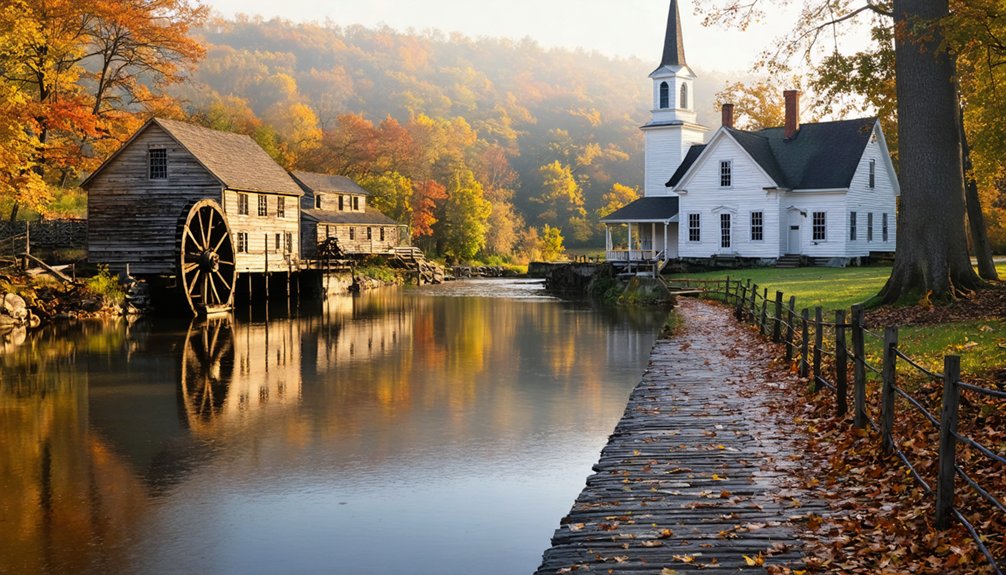
You’ll find Waterloo Village‘s story differs from typical ghost towns, as this restored 19th-century canal settlement in Sussex County now serves as a living museum within Allamuchy Mountain State Park.
The Morris Canal, which opened in 1829 and transported Pennsylvania anthracite coal to northern New Jersey factories, made Waterloo a vital midway point on the 102-mile waterway before railroad competition led to the canal’s abandonment in 1924.
Today, you can explore the New Jersey Division of Parks & Forestry’s restoration efforts that have preserved 19 structures including the general store, blacksmith shop, and Methodist church that tell the story of four generations of the Smith family who developed this transport hub.
Morris Canal Heritage
You can trace the canal’s impact through Waterloo’s strategic positioning at the halfway point, where mule-drawn barges stopped overnight during five-day journeys.
The village showcased all major canal elements within one mile, making it a perfect microcosm of this engineering marvel that peaked in 1866 before railroads rendered it obsolete.
Museum Restoration Efforts
When Percival Leach founded the Waterloo Foundation for the Arts in 1967, he launched an ambitious restoration project that would transform this decaying canal town into New Jersey’s premier living museum.
You’ll discover how Leach and Louis Gualandi acquired the village in the early 1970s, operating it for history enthusiasts who valued preserving America’s industrial heritage.
The restoration challenges were immense – twenty buildings from the 1760s-1860s required careful restoration and period furnishings.
Concert series featuring Bob Dylan, Neil Young, and the Beach Boys funded these efforts until 2007.
Today, you can explore fourteen restored buildings showcasing the site’s historical significance.
The 2019 $3 million state grant continues revitalizing three additional structures, ensuring future generations can experience this authentic slice of canal-era freedom.
Atsion Village: The Richards Family Legacy in Wharton State Forest
Deep within Wharton State Forest’s 115,000 acres, Atsion Village stands as one of New Jersey’s most accessible and well-preserved ghost towns, where the ambitious legacy of the Richards family still echoes through restored mansion walls and crumbling iron furnace ruins.
You’ll discover Samuel Richards’ 1826 mansion, built when he served as ironmaster of the thriving iron works that produced Revolutionary War materials. The Richards Mansion, restored with $1.3 million in funding, operates without electricity or plumbing for authentic historical interpretation.
After Richards’ death in 1842, the mansion served as a cranberry facility before abandonment in 1882.
Today’s Atsion Recreation Area offers camping, swimming, and hiking while preserving this industrial heritage. You can explore furnace walls, slag piles, and Saltar’s Ditch along accessible trails through this fascinating intersection of industry and wilderness.
Double Trouble: Pine Barrens Industrial Remnants
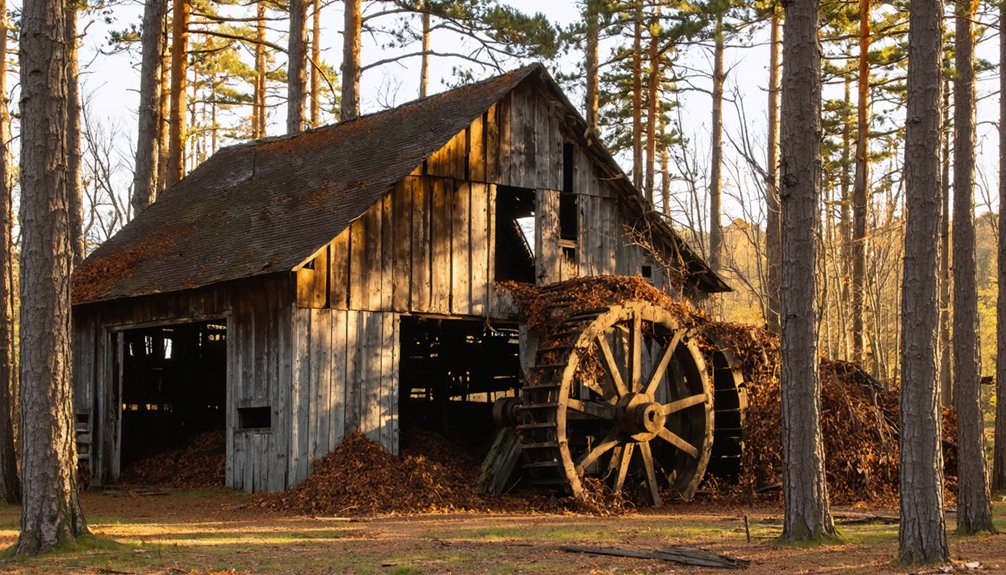
Legends swirl around Double Trouble‘s peculiar name, but there’s nothing mysterious about this remarkably complete Pine Barrens company town that preserves three centuries of industrial evolution.
You’ll discover Anthony Sharp’s 1698 settlement transformed into New Jersey’s largest cranberry cultivation operation under Edward Crabbe’s Double Trouble Company. The 260-acre enterprise included the state’s biggest cranberry bog at 56 acres, supporting white cedar logging and shingle production until 1964.
Today, you can explore this preserved industrial heritage spanning over 8,000 acres of protected Pinelands.
The complete company town features original sawmills, cranberry packing houses, and marked trails through Pine Barrens ecosystems. Self-guided tours reveal how persistent flooding challenges earned this resilient community its colorful name while protecting essential Cedar Creek watershed resources.
Exploring New Jersey’s Abandoned Settlement Network
Beyond Double Trouble’s industrial legacy, New Jersey’s landscape holds dozens of abandoned settlements that reveal the state’s complex economic evolution from colonial mills to failed resort towns.
You’ll discover Feltville’s abandoned architecture where David Felt’s 1850 printing community housed 175 residents before economic decline forced desertion.
The government’s 1960s Tocks Island dam project created Walpack Center’s haunting emptiness, reducing 24 square miles to eight remaining residents.
Throughout the Pine Barrens, iron settlements vanished overnight when Pennsylvania’s cheaper ore dominated markets by 1869.
Each site carries immense historical significance—from Peter Willcocks’ 1720 colonial sawmill to Warren Ackerman’s failed Glenside Park resort.
These settlements document America’s industrial transformation and remind you that economic freedom often demands adaptation or abandonment.
Visiting These Historic Ghost Towns Today
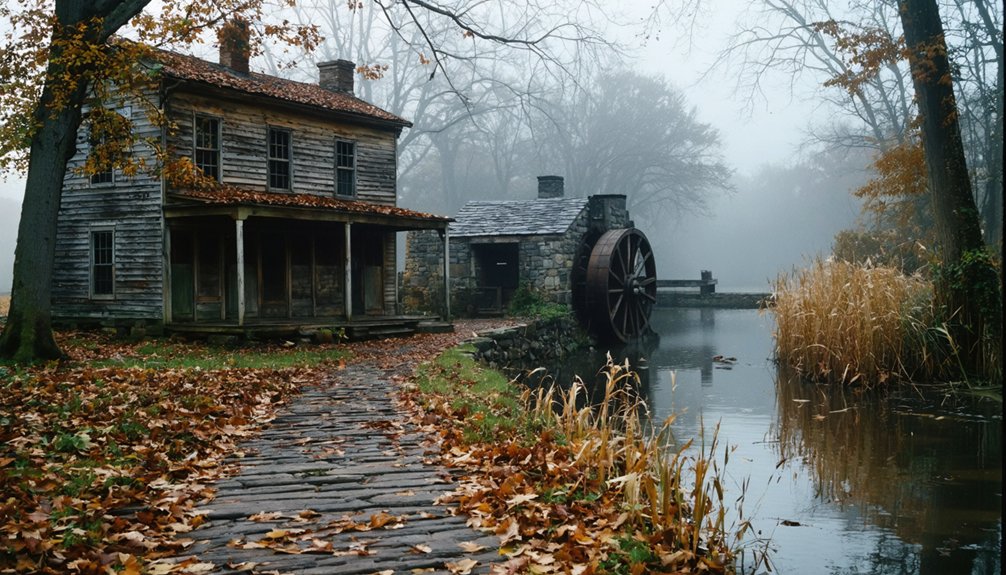
Five major ghost towns across New Jersey offer you direct access to the state’s abandoned past, each providing unique glimpses into different eras of economic rise and decline.
exploring ghost towns in New Jersey can reveal the stories behind these lost communities, from thriving industries to their eventual abandonment. As you wander through their empty streets and crumbling buildings, you can almost hear echoes of the past whispering the secrets of those who once lived there. Each visit can spark a deeper appreciation for the rich history that shapes the Garden State today.
You’ll find Batsto Village‘s 33 preserved buildings operating as an outdoor museum within Wharton State Forest, while Feltville’s 19th-century structures sit uninhabited in Watchung Reservation.
Waterloo Village functions as a free open-air museum showcasing canal town life, and Whitesbog Village reveals agricultural innovations through cranberry and blueberry operations.
Ong’s Hat remains the most authentic abandoned settlement, where you can explore actual ruins without modern restoration.
These ghost towns maintain their historical significance through different preservation approaches, from fully restored museums to completely untouched remnants awaiting your discovery.
Frequently Asked Questions
Are These Ghost Towns Safe to Visit Alone at Night?
You shouldn’t attempt solo exploration at these ghost towns after dark. Nighttime safety risks include park closures, unlit trails, wildlife encounters, and isolation without cell service in remote Pine Barrens locations.
Which Ghost Town Has the Most Paranormal Activity Reported by Visitors?
Allaire Village generates the most paranormal sightings from visitors. You’ll find ghostly encounters with 1800s iron miners appearing in abandoned homes, contrasting sharply with the peaceful historic village setting that draws unsuspecting tourists daily.
Can You Camp Overnight in Any of These Abandoned Settlements?
You can’t camp overnight in these abandoned settlements due to strict camping regulations. However, you’ll find designated camping areas with proper overnight permits available in the surrounding state forests and parks.
What’s the Best Time of Year to Photograph These Historic Sites?
October’s nature’s spotlight for seasonal photography—you’ll capture stunning fall foliage contrasting weathered ruins. Spring offers wildflower foregrounds, summer extends golden hour windows, while winter’s bare branches reveal complete structures with dramatic shadows.
Are Metal Detectors Allowed When Exploring These Ghost Town Areas?
Metal detectors aren’t freely allowed in New Jersey’s ghost towns due to strict metal detector regulations protecting historical sites. You’ll need specialized permits for historical artifact preservation, and many locations completely prohibit detecting activities.
References
- https://en.wikipedia.org/wiki/List_of_ghost_towns_in_New_Jersey
- https://jerseydigs.com/ghost-towns-in-nj/
- https://southjerseytrails.org/2017/03/16/six-pine-barrens-ghost-towns-to-explore/
- https://www.jerseysbest.com/community/take-a-road-trip-through-n-j-s-spooky-ghost-towns-to-see-peculiar-pieces-of-history/
- https://www.youtube.com/watch?v=ZIp3AYb0ulw
- https://pinelandsalliance.org/learn-about-the-pinelands/pinelands-history-and-culture/ghost-towns-of-the-pine-barrens/
- https://ucnj.org/parks-recreation/deserted-village/
- https://njhistoryandsites.org/2024/01/14/historic-batsto-village-in-hammonton-nj/
- https://batstovillage.org/history/
- https://wadingpines.com/explore-batsto-rivers-forgotten-iron-ore-canal-ruins/