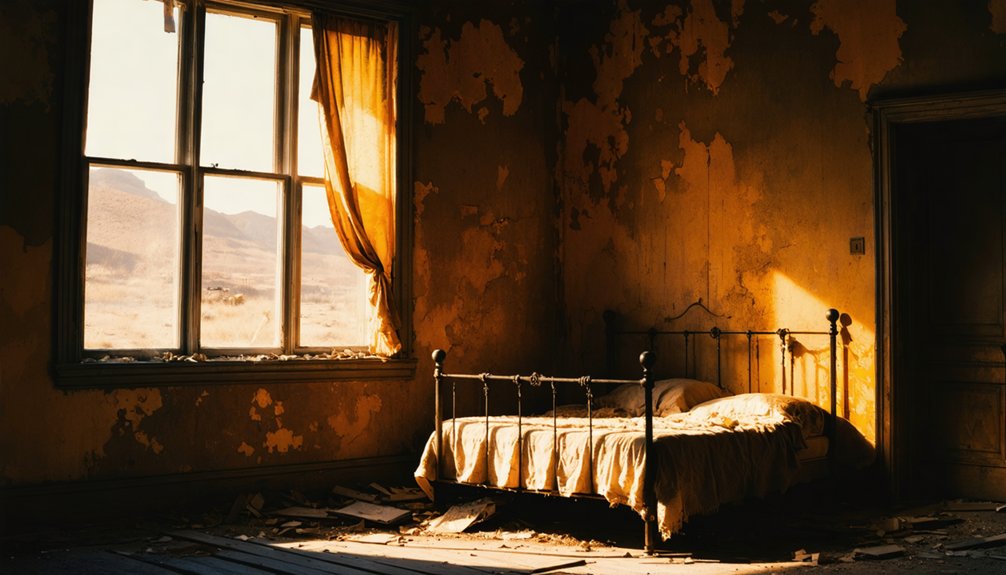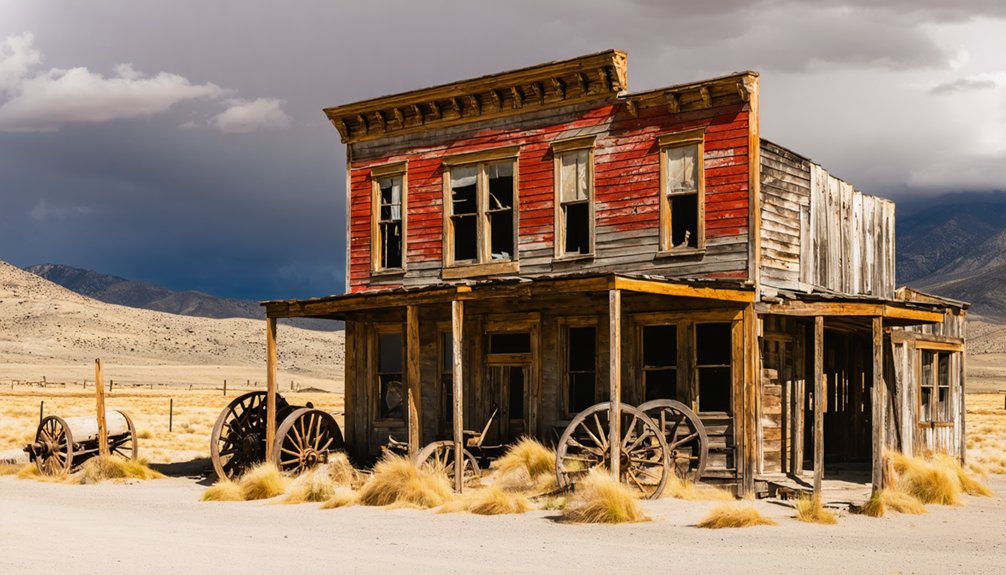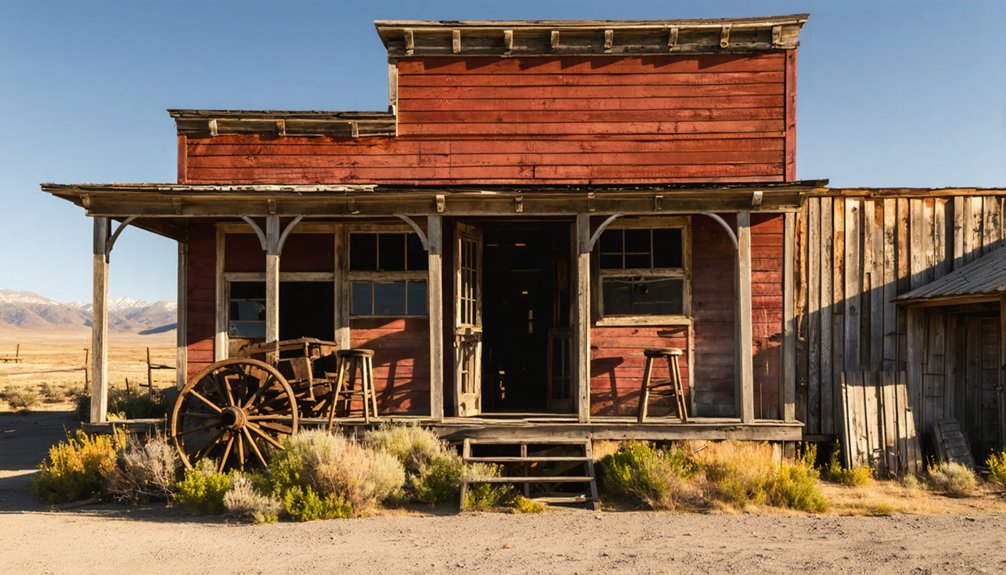
You’ll find America’s most famous ghost towns scattered across the West, born from 1800s mining booms that attracted thousands before inevitable busts. Bodie, California peaked at 10,000 residents during its gold rush, while Virginia City, Nevada’s silver deposits produced over $230 million. Centralia, Pennsylvania’s underground coal fire has burned since 1962, and Bannack, Montana’s lawless gold camp required vigilante justice. These preserved settlements offer authentic glimpses into frontier life that shaped the nation’s expansion westward.
Key Takeaways
- Bodie, California peaked at 10,000 residents during its gold rush and remains one of America’s most authentic preserved ghost towns.
- Virginia City, Nevada produced over $230 million in silver, reaching 25,000 residents before devastating fires and depleted mines caused decline.
- Centralia, Pennsylvania has only five residents remaining due to an underground coal fire burning since 1962 at 900-degree temperatures.
- Cahawba, Alabama served as the state’s first capital until flooding and disease forced abandonment, leaving archaeological ruins today.
- Bannack, Montana attracted 5,000 gold seekers but became notorious for lawlessness before eventually being abandoned and preserved.
Bodie, California: The Golden Dream Frozen in Time
When William S. Bodey discovered gold near Mono Lake in 1859, he couldn’t have imagined you’d one day walk through America’s most authentic ghost town.
Bodey history began tragically when the founder died in a blizzard that same year, but his legacy endured.
The 1875 mine cave-in that revealed rich ore sparked the real boom when Standard Company purchased the mine in 1877. The town’s name became associated with multiple meanings as Bodie grew into a significant settlement that would eventually lend its name to various other places and people across America.
At its peak, Bodie housed up to 10,000 residents who frequented dozens of saloons and gambling halls in this notorious Wild West boomtown.
Virginia City, Nevada: Silver Riches of the Comstock Lode
Two years before William Bodey struck gold in California, brothers Evan and Hosea Grosh discovered what would become America’s richest silver deposit in Nevada’s Virginia Range.
Though they died before claiming their fortune, Henry Comstock capitalized on their find in June 1859, sparking an unprecedented silver boom.
Henry Comstock seized the Grosh brothers’ discovery in 1859, transforming their tragic loss into Nevada’s legendary silver rush.
You’ll find Virginia City transformed from wilderness to the “Richest Place on Earth” within fifteen years.
The Comstock legacy produced over $230 million in precious metals, with mines like Ophir and Consolidated Virginia yielding massive fortunes for the Bonanza Kings. The town’s immense wealth significantly aided the U.S. government during the Civil War when federal resources were desperately needed.
By 1874, 25,000 residents enjoyed luxuries including Nevada’s first elevator and 110 saloons.
However, depleted mines and the devastating 1875 fire ended this extraordinary chapter, leaving today’s 500 residents guardian to preserved nineteenth-century remnants. Underground mining required innovative square-set timbering to prevent dangerous cave-ins as miners extracted ore from bodies hundreds of feet thick.
Centralia, Pennsylvania: The Town That Burns Beneath
Unlike Virginia City’s glittering silver fortune, Centralia’s wealth lay buried in coal seams that would ultimately doom the town.
You’ll discover how Alexander Rae’s 1860s mining settlement became a battleground for the violent Molly Maguires labor movement, culminating in Rae’s murder and subsequent executions.
The town’s fate sealed itself in May 1962 when volunteer firefighters burned trash in an abandoned strip-mine pit.
The flames ignited underground coal veins, creating an unstoppable underground fire that spread through interconnected tunnels.
Despite multiple suppression attempts, toxic gases and shifting ground forced residents to flee. Ground temperatures reached 900 degrees Fahrenheit, making containment efforts futile and forcing authorities to abandon suppression. Experts predict the fire could burn for another 250 years.
Today, you’ll find ghostly echoes of Centralia’s past among five remaining residents and weekly church services, while the underground fire continues burning beneath reclaimed forests.
Cahawba, Alabama: From State Capital to Haunted Ruins
Alabama’s first capital rose from the ashes of a destroyed Native American settlement, transforming a strategic river confluence into the state’s political and economic heart.
You’ll discover that Cahawba history began in 1818 when Governor William Wyatt Bibb selected this blufftop site for Alabama’s territorial capital. The town flourished as a cotton distribution hub, reaching 3,000 residents by the Civil War’s onset.
However, you’ll find that seasonal flooding and disease outbreaks drove the capital to Tuscaloosa in 1826. The devastating 1865 flood sealed Cahawba’s fate, forcing the county seat’s relocation to Selma. During Reconstruction, the abandoned courthouse became a meeting place for freedmen as the former political center transformed into a rural community.
Today, visitors can explore the archaeological park where Crocheron Columns stand as enduring monuments to the town’s former grandeur and prosperity.
Bannack, Montana: Where Gold Rush Met Lawlessness
When prospectors discovered gold in Grasshopper Creek in 1862, they couldn’t have imagined their strike would spawn one of the West’s most lawless settlements.
You’ll find Bannack’s story epitomizes the chaotic nature of America’s Gold Rush era, where fortune-seekers extracted over $500,000 worth of gold within the first year alone.
The town’s rapid growth to 5,000 residents attracted dangerous criminals, including Sheriff Henry Plummer, who secretly led the notorious “Innocents” gang.
Bannack’s explosive growth created a perfect storm where outlaws flourished and even the sheriff was secretly a gang leader.
This corruption forced citizens to take justice into their own hands. The Vigilance Committee‘s brutal campaign of Vigilante Justice resulted in 22 executions within two months, including Plummer himself.
After gold deposits depleted and the territorial capital relocated, Bannack transformed into the preserved ghost town you can visit today. The gold found at Grasshopper Creek measured an exceptional 99-99.5% purity, significantly higher than typical gold deposits of the era. Today, thousands of tourists visit this state park to experience authentic 1800s American frontier life and explore the town’s remarkably preserved buildings.
Frequently Asked Questions
Can Visitors Camp Overnight in Any of These Ghost Towns?
You can’t camp at three-quarters of these ghost towns directly. Camping regulations prohibit stays in Bodie and Rhyolite’s core areas, while overnight permits aren’t needed for nearby alternatives at all locations.
What Are the Best Months to Visit Ghost Towns for Photography?
You’ll find September through October delivers best lighting with golden hour illumination and seasonal colors from autumn aspens. Winter’s December-February offers cooler temperatures and fewer crowds, while summer provides ideal dark skies for night photography.
Are There Any Ghost Town Festivals or Special Events Held Annually?
Ironically, “dead” towns host lively ghost town festivals annually. You’ll find September’s Pie Town Festival, Calico Days with gunfights, Vulture City’s Wild West reenactments, and Ghost Ranch’s music celebration bringing history alive.
These events attract many visitors who are eager to wander the streets of these forgotten places. Exploring abandoned towns in California offers a glimpse into the past, revealing stories of resilience and adventure. As you venture through these historic sites, you’re not just witnessing remnants of architecture but also experiencing the rich tapestry of California’s history.
Which Ghost Towns Allow Metal Detecting or Artifact Hunting?
You can metal detect at Silver City Idaho’s surrounding districts, Garnet Montana’s outlying areas, and Berlin Nevada’s permitted zones. Follow metal detecting regulations carefully and research artifact hunting tips before exploring these accessible ghost town locations.
Do Any of These Towns Have Restaurants or Gift Shops?
You’ll find limited restaurant options and shopping experiences in these preserved ghost towns. Most prioritize historical authenticity over commercial amenities, though some tourist-oriented locations like Calico may offer basic visitor services.
References
- https://devblog.batchgeo.com/ghost-towns/
- https://www.christywanders.com/2024/08/top-ghost-towns-for-history-buffs.html
- https://www.visittheusa.com/experience/5-us-ghost-towns-you-must-see
- https://www.geotab.com/ghost-towns/
- https://en.wikipedia.org/wiki/Lists_of_ghost_towns_in_the_United_States
- https://whakestudios.com/us-ghost-towns/
- https://en.wikipedia.org/wiki/Bodie
- https://www.youtube.com/watch?v=2Foz-2R_mH8
- https://www.mammothres.com/blog/best-mammoth/spooky-story-bodie-ghost-town
- https://www.nps.gov/places/bodie-historic-district.htm