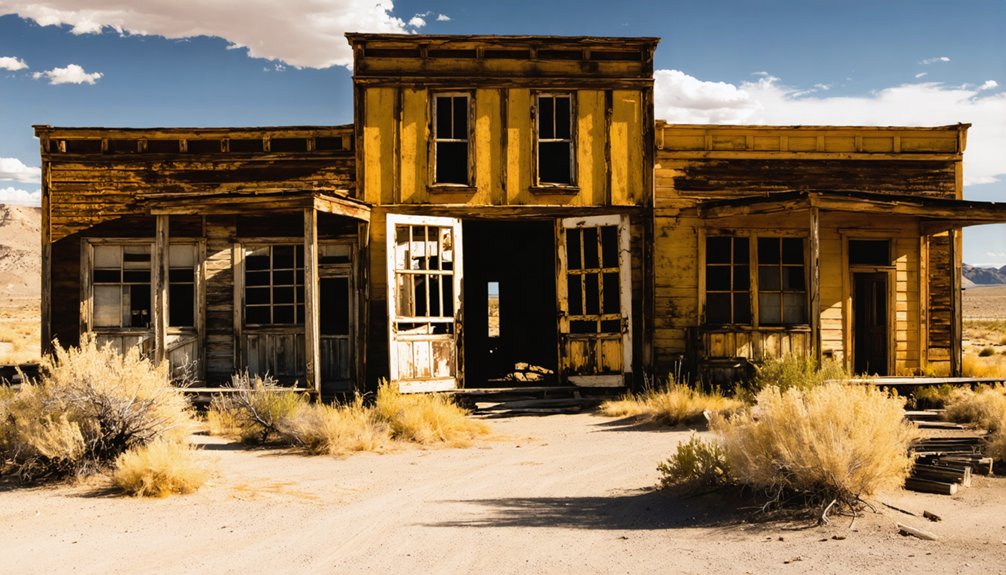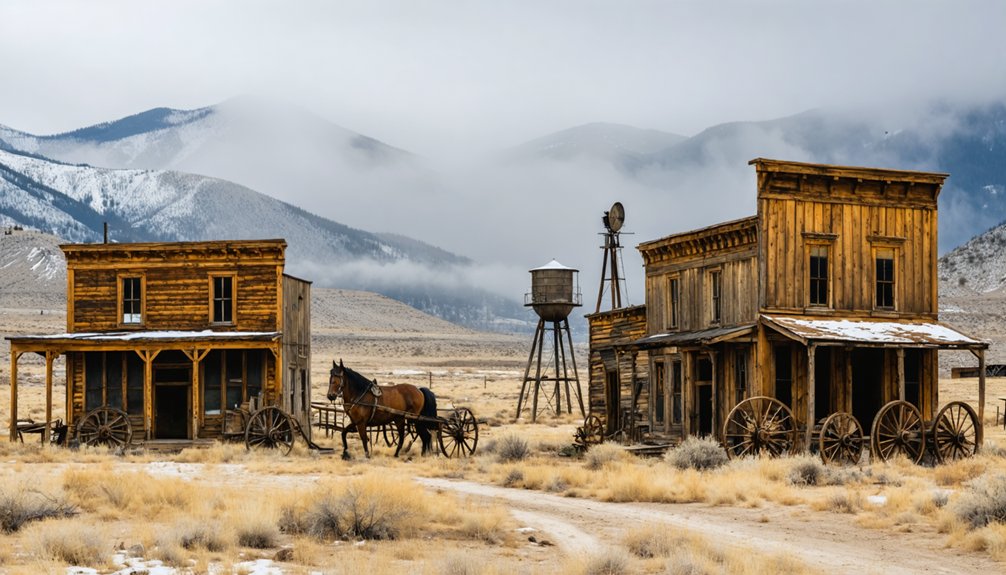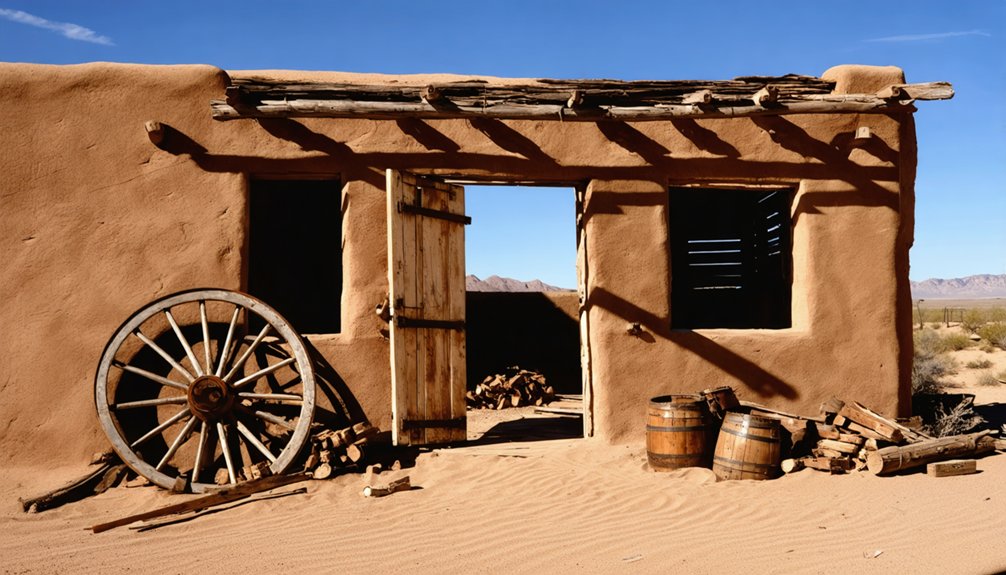
19th century frontier outposts formed a complex network beyond famous forts like Abraham Lincoln and Laramie. You’ll find redoubts and temporary installations positioned at strategic sixteen-mile intervals along military roads, securing supply lines and providing early warnings. Many began as trading posts before shifting to military use, evolving from crude mud stockades to sophisticated permanent structures. Daily life combined harsh military discipline with makeshift entertainments that helped garrison soldiers endure isolation and supply shortages. Their stories reveal America’s forgotten expansion frontiers.
Key Takeaways
- Many trading posts like Fort Union served as economic hubs before transitioning into military installations while maintaining commercial functions.
- Smaller defensive structures like redoubts and temporary outposts formed crucial tactical networks at sixteen-mile intervals along military routes.
- Fort architecture evolved from crude mud enclosures to sophisticated lime-grout concrete and masonry structures adapted from European designs.
- Garrison life featured military discipline alongside makeshift entertainments that helped maintain morale despite isolation and supply shortages.
- Outposts declined rapidly, with military presence decreasing from three dozen forts in 1880 to only twelve by 1898.
The Northern Plains Defense Network: Missouri River Fortifications
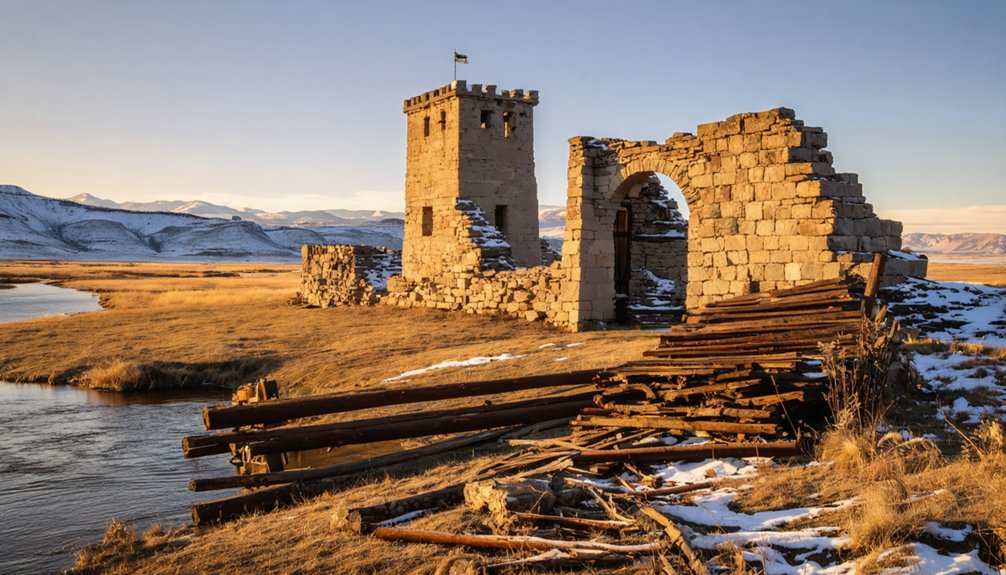
Sentinels of the wilderness, the Missouri River fortifications formed a strategic military network that defined America’s northern frontier during the late 19th century. You’d find these outposts strategically positioned at key river confluences—Fort Abraham Lincoln where the Heart meets the Missouri, Fort Buford at the Yellowstone junction, and Fort Rice near the Cannonball.
This military strategy wasn’t haphazard. These forts served dual purposes: containing Teton Dakota tribes whose treaty boundary was the Missouri while protecting Northern Pacific Railroad construction crews pushing westward.
Fort Abraham Lincoln’s 650-soldier garrison demonstrates the government’s commitment to this frontier policy.
Indigenous relations were managed through strategic positioning—Fort Yates supported the Standing Rock Reservation while maintaining military presence for containment.
Fort Yates exemplified the dual strategy of reservation management and military containment along the Missouri frontier.
These fortifications weren’t merely defensive structures but instruments of westward expansion, controlling commerce and movement across the northern plains. With the decreasing military presence, many of these posts were among the three dozen forts that existed in 1880 but were reduced to barely a dozen by 1898.
Following the Civil War, the Corps of Engineers increased their presence along the Missouri River to conduct navigation improvement efforts and surveys that supported both military operations and commercial development.
Redoubts and Temporary Outposts Along Military Roads
While the Missouri River forts represented America’s permanent military presence on the northern plains, a network of smaller, less documented defensive structures dotted the military roads connecting these larger installations.
These redoubts, typically constructed from earth, timber, or stone, served as essential links in America’s frontier defense strategy. You’d find them positioned at sixteen-mile intervals along vulnerable routes, particularly at river crossings or areas prone to ambush.
Redoubt construction prioritized tactical significance over comfort, allowing small detachments to secure supply lines, relay communications, and provide early warnings of hostile movement. These structures were specifically designed to enhance existing fortifications against modern artillery threats.
From the Advanced Redoubt at Fort Barrancas to the earthworks between Fort Dodge and Camp Supply, these outposts enabled America’s westward expansion despite chronic understaffing. The Advanced Redoubt in Pensacola, costing approximately $150,000 to construct, represented a significant investment in America’s Third System of Coastal Forts.
Armed with light artillery and serving as patrol bases, these forgotten sentinels helped secure the nation’s developing frontier transportation network.
From Trading Posts to Military Strongholds: Dual-Purpose Installations
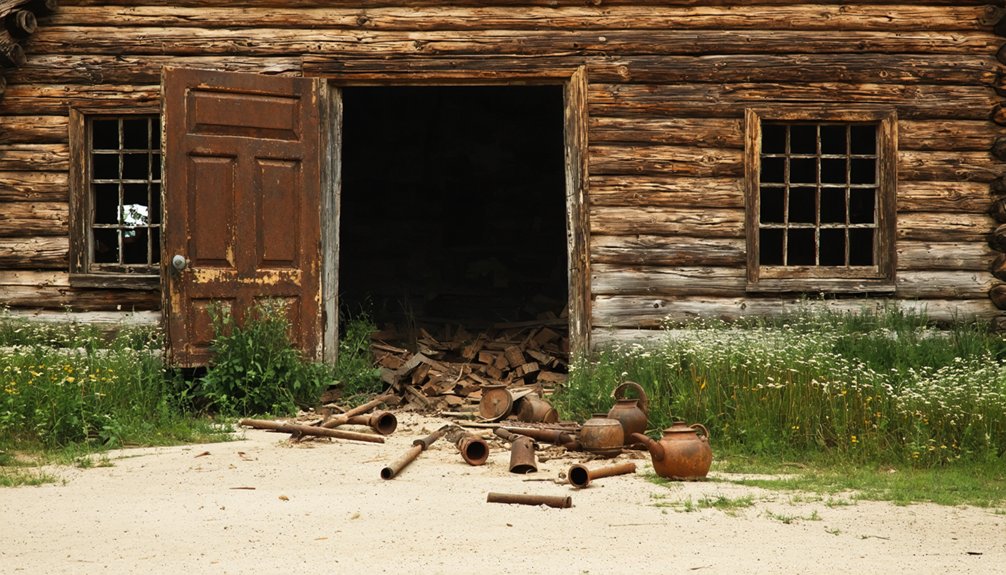
As frontier commerce evolved throughout the nineteenth century, America’s system of trading posts gradually transformed into military strongholds that maintained their commercial significance while adopting critical defensive roles.
Fort Laramie exemplifies this trading post evolution, shifting from commercial outpost (1834) to pivotal military installation serving diverse frontier populations for 56 years.
The pattern of military conversion followed strategic waterways where established commerce already thrived:
- Fort Gibson (1824) pioneered government intervention on the Arkansas River with integrated sutler stores.
- Fort Benton became Montana’s birthplace through its critical Upper Missouri position.
- Fort Bridger shifted from Oregon Trail supply stop to military outpost.
- Fort Vancouver changed from Hudson’s Bay Company fur trading to regional military supply depot. Many of these outposts, like Fort Michilimackinac, were originally established by French traders who recognized the strategic value of controlling water routes.
Fort Union Trading Post demonstrated this evolution as an economic hub on the upper Missouri River where Native American tribes and frontiersmen engaged in crucial commerce exchanges.
You’ll find these dual-purpose installations represented America’s pragmatic approach to territorial control through established commercial networks.
Architectural Evolution: From Crude Mud Forts to Permanent Structures
Frontier outposts underwent dramatic architectural transformation throughout the 19th century, evolving from hastily constructed mud enclosures into sophisticated permanent installations.
You’d hardly recognize early outposts with their crude single-story mud construction, jacal frameworks, and basic log stockades—all pragmatic responses to isolation and material scarcity.
As frontier development progressed, you’d witness the shift toward architectural permanence through innovative building techniques.
Lime-grout concrete replaced vulnerable adobe, while strategic masonry-first-story designs enhanced durability and defense.
Engineers adapted European military architecture to frontier realities, implementing simplified bastions and defense-in-depth strategies that required fewer troops.
Stockades frequently incorporated firing steps on walls to enhance crossfire capabilities and improve defensive positions against threats.
Fort Laramie exemplified this evolution when it transitioned from Fort William, a fur trading post, to a military installation purchased by the U.S. Army in 1849 for about $4,000.
These architectural evolutions weren’t merely structural—they reflected the changing role of frontier outposts from purely military installations to multifunctional hubs serving as trade centers, treaty negotiation sites, and the nuclei of frontier communities.
Garrison Life and Supply Chains in Remote Frontier Posts
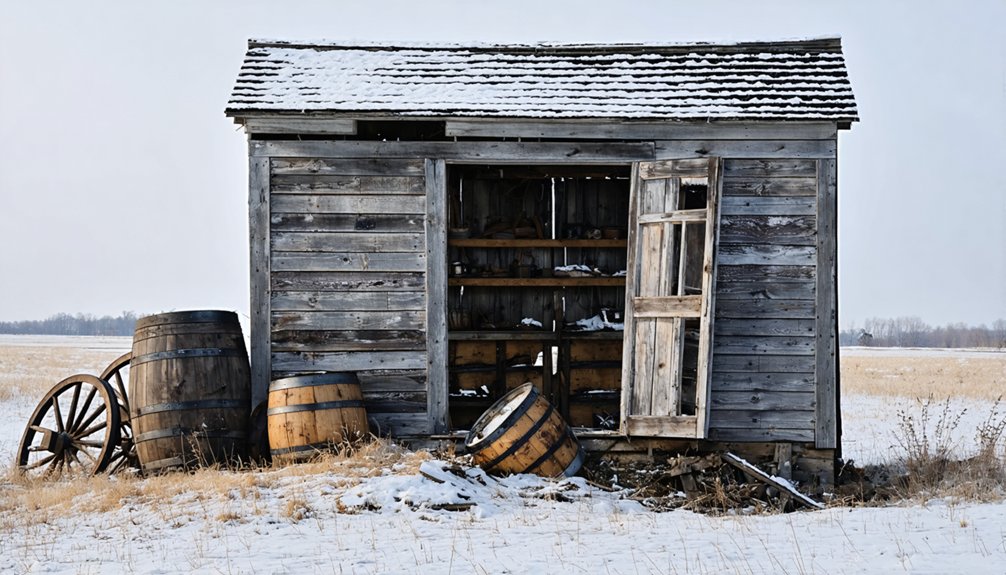
Beyond the imposing walls of remote frontier outposts, a meticulously structured daily existence unfolded for garrison soldiers, shaped by the shrill calls of bugles and the relentless rhythm of military discipline.
You’d find garrison routines dominated by endless drills, construction tasks, and guard duty, with precious little respite from the monotony. The parade ground served as the central hub for military ceremonies and visible representation of government authority in these isolated posts.
Supply chains stretched tenuously across vast territories, creating four persistent challenges:
- Government rations often arrived spoiled or insufficient
- Quartermasters struggled to maintain essential items during supply shortages
- Remote posts sometimes went months without fresh provisions
- Locally grown foods became vital for supplementing bland official rations
Women endured these hardships alongside soldiers, forming tight-knit communities that sustained morale.
When isolation became unbearable, makeshift entertainments—cards, improvised dances, storytelling—briefly transformed dreary barracks into places where liberty of spirit, if not body, could be found.
The instability of relations between colonists and native tribes often made these frontier outposts targets for violent sieges, as exemplified by Fort Loudoun’s fall to Cherokee forces in 1760.
Frequently Asked Questions
How Did Native American Women Influence Frontier Fort Culture?
You’ll find Native women reshaped fort culture through cultural exchange in diplomacy, trade networks, and intermarriage. They transformed daily life with indigenous food practices, healing knowledge, and domestic adaptations that guaranteed survival.
What Entertainment Options Existed for Soldiers at Isolated Outposts?
You’d find card games, reading, and practical jokes on-post, while musical performances and social gatherings organized by officers’ wives provided relief. Off-post, you’d seek freedom in town saloons, gambling halls, and brothels.
How Did Extreme Weather Events Impact Fort Operations?
You’d face severe weather challenges at forts: storms destroyed shelters, cut supply lines, and impaired your health and readiness, forcing operational adjustments like postponing patrols and reinforcing vulnerable structures.
What Happened to Abandoned Forts After Military Withdrawal?
After military withdrawal, you’d find forts repurposed as homes, schools, or businesses. Fort Scott’s buildings became part of town. Others underwent historical preservation, like Fort Randall, while many simply decayed into ruins.
The haunting remnants of Bethlehem Steel continue to evoke memories of a bygone industrial era. Their skeletal structures stand as a testament to both innovation and decline, reminding us of the people who once thrived in their shadows. As nature slowly reclaims these sites, they serve as a stark reminder of the impermanence of progress.
Did Frontier Forts Experience Significant Disease Outbreaks?
Yes, you’d find frontier forts devastated by typhoid, measles, and cholera outbreaks. Poor disease management in cramped quarters magnified health impacts, often killing more soldiers than enemy action ever did.
References
- https://plainshumanities.unl.edu/encyclopedia/doc/egp.war.017.html
- https://www.crazycrow.com/site/resources/historic-sites/
- https://www.archives.gov/publications/prologue/2009/fall/frontier.html
- https://www.okhistory.org/sites/fsredoubts
- https://en.wikipedia.org/wiki/American_frontier
- https://www.youtube.com/watch?v=F-eLk9802LI
- https://passingthru.com/exploring-20-iconic-frontier-forts-in-the-wild-west/
- https://www.nps.gov/subjects/forts/find-a-fort.htm
- https://www.texasbeyondhistory.net/forts/frontier.html
- https://247wallst.com/special-report/2023/04/28/33-forts-that-are-as-old-as-america/3/