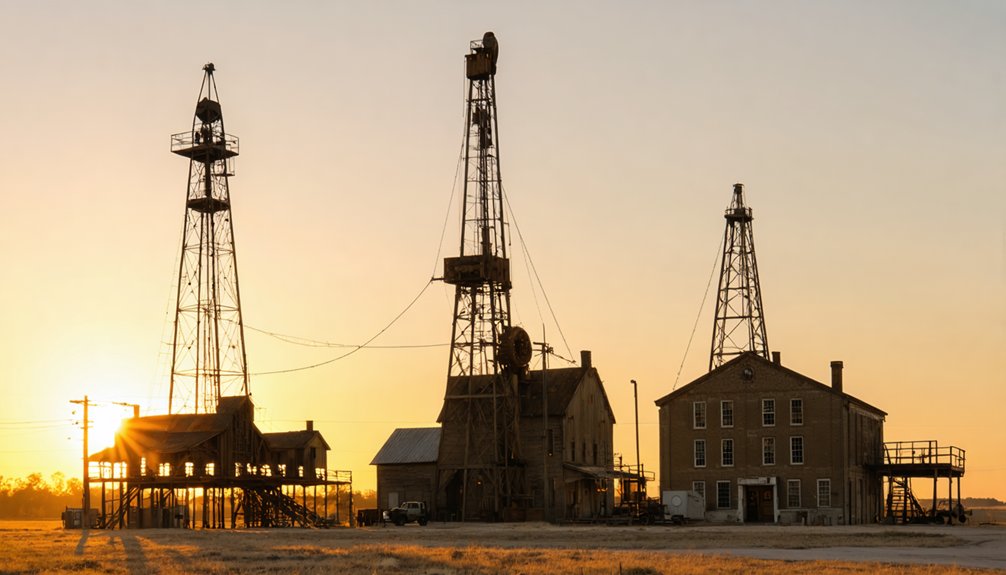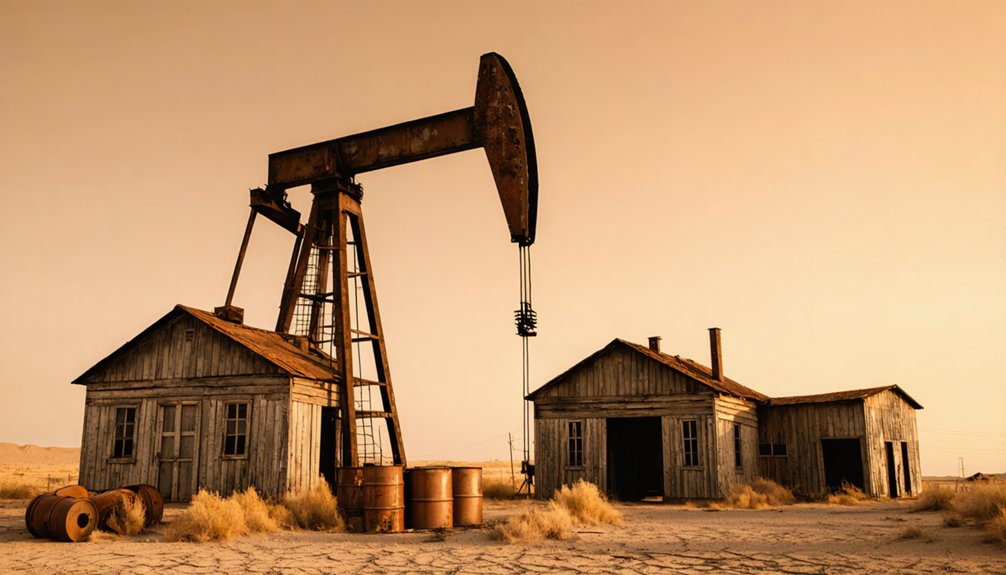
In America’s forgotten oil towns, you’ll find layers of untold stories hidden within industrial ruins. These sites harbor dangerous environmental legacies, including 2.1 million unplugged wells leaking methane and toxic contaminants. You’ll discover personal artifacts that reveal mid-20th century daily life, from work clothes to vintage kitchenware, while archival records expose the boom-and-bust cycle‘s impact on local communities. The complex interplay of preservation challenges and heritage tourism opportunities awaits further exploration.
Key Takeaways
- Personal artifacts like photographs, letters, and diaries reveal intimate stories of daily life in mid-20th century oil towns.
- Untouched work clothes, household items, and vintage kitchenware provide snapshots of past lifestyles and living conditions.
- Hidden environmental hazards include methane leaks and toxic groundwater contamination from deteriorating oil infrastructure.
- Oral histories and preserved documents uncover forgotten narratives about boomtown dynamics and industrial transformation.
- Abandoned structures contain evidence of rapid economic collapse, showing how communities adapted to boom-and-bust cycles.
The Silent Witnesses: Abandoned Infrastructure and Equipment
Ghosts of the petroleum age linger across America’s landscape in the form of abandoned oil and gas infrastructure.
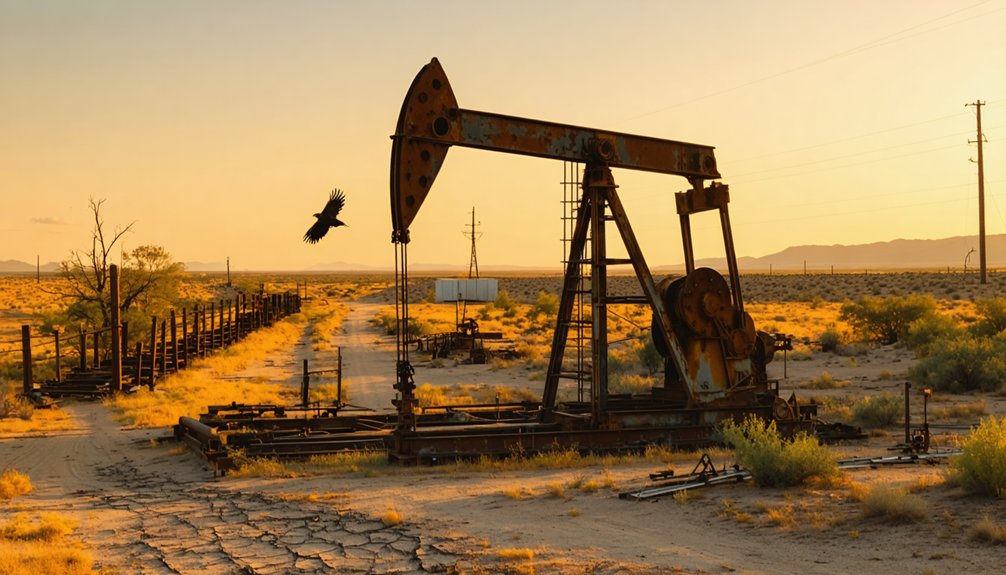
You’ll find derelict pump jacks and rusting storage tanks scattered across remote fields, silent sentinels of a bygone era of extraction. The infrastructure decay extends beyond what’s visible at first glance – an estimated 2.1 million unplugged wells dot the nation, many still connected to deteriorating surface equipment.
In Pennsylvania’s forests and Texas’s wildlife refuges, abandoned machinery tells a stark tale: corroding wellheads, concrete foundations, and miles of old pipeline corridors cutting through the wilderness. Recent assessments estimate a staggering cleanup backlog cost between $40 billion and $70 billion. The Texas Railroad Commission struggles with limited funding to address these widespread cleanup needs.
The scale is staggering – 90,000 orphan wells with their associated equipment stand as monuments to an industry’s hasty retreat, leaving behind physical hazards and potential environmental risks for future generations to address.
Environmental Legacy: Hidden Dangers Beneath the Surface
As you explore the remnants of this abandoned oil town, you’ll notice the telltale signs of methane leaking silently from unplugged wells, its invisible presence 28-36 times more potent than CO2 in warming our atmosphere.
You’ll find evidence of toxic groundwater contamination where brine and produced water, laden with arsenic and radioactive materials, have seeped into local aquifers.
Surface expressions reveal themselves through oil-saturated soil patches and contaminated pools, marking where hydrocarbons have migrated upward to poison the landscape. With over 560,000 abandoned wells scattered across Pennsylvania, these environmental hazards represent a massive threat to public health and safety.
The Texas Railroad Commission has already spent tens of millions plugging orphaned wells, yet thousands more await remediation across the state.
Methane’s Silent Escape
Deep beneath the ruins of this forgotten oil town lies an invisible threat: methane gas silently seeping from thousands of abandoned wells.
You’re facing a complex challenge: these wells release anywhere from 0.2 to 81,000 mg of methane per hour, with emissions varying dramatically over time.
What makes tracking these emissions particularly difficult is their unpredictable nature – high-emission events often last less than an hour.
You won’t find a simple pattern to predict these releases. Temperature, humidity, and atmospheric pressure don’t correlate with emission rates.
In Northern Louisiana alone, abandoned wells emit an average of 57.4 grams per hour of methane into the atmosphere.
To truly understand the scope of this problem, you’ll need continuous monitoring rather than quick measurements.
The reality is sobering: while many wells emit negligible amounts, just 10% of them account for most methane emissions, silently contributing to climate instability.
These environmental hazards pose significant risks to the estimated 4.6 million people living within one kilometer of documented orphaned wells.
Groundwater at Risk
Three major threats loom over groundwater resources in this abandoned oil town: refinery discharges, injection wells, and pipeline spills.
You’ll find aging refineries, some over 70 years old, dumping billions of pounds of pollutants into waterways, while outdated pollution controls fail to protect essential aquifers. Data shows that in 2021, refineries discharged 1.6 billion pounds of harmful dissolved solids into water systems.
Deeper underground, injection wells pose an insidious risk – they’re pumping millions of gallons of wastewater daily, threatening aquifer protection as toxic fluids migrate upward through failing well casings. Local ranchers have reported abandoned wells leaking contaminated wastewater into surrounding areas.
The legacy of pipeline ruptures compounds these dangers. Just as the Bemidji spill demonstrated, crude oil creates persistent plumes that contaminate groundwater for decades.
Once these contaminants reach your drinking water aquifers, there’s often no turning back – the costs of remediation typically exceed any practical solution.
Toxic Surface Seepage
Beneath the seemingly dormant surface of this forgotten oil town, toxic fluids and gases continuously seep upward through abandoned wells and deteriorating infrastructure.
You’ll find hazardous chemicals like benzene, toluene, and polyaromatic hydrocarbons penetrating soil, brick, and concrete – creating an invisible web of environmental contamination that spreads far beyond visible oil stains.
As you explore these ruins, you’re witnessing the aftermath of decades of toxic seepage. The nearly 1,000 orphaned wells in Los Angeles continue to release harmful emissions into surrounding communities.
The cleanup costs for these environmental hazards could reach over $7 billion in Oklahoma alone.
Petroleum compounds have worked their way into building foundations, while hydrogen sulfide gas drifts silently through the air.
The damage isn’t just superficial – these chemicals trigger chain reactions, producing acidic byproducts that steadily erode infrastructure.
Even after surface cleanup, the contamination persists, locked within porous materials and continuing its destructive march through the town’s skeletal remains.
Life Frozen in Time: Personal Artifacts and Daily Remnants
Walking through the abandoned oil town ruins reveals a remarkably intact snapshot of mid-20th century life, preserved through an extensive array of personal artifacts and household remnants.
You’ll discover intimate personal connections through photographs, letters, and diaries that tell stories of residents’ everyday life. In closets and drawers, work clothes and linens remain exactly as their owners left them.
Kitchen cupboards still hold enamelware and cast-iron cookware, while bathroom cabinets contain personal grooming items frozen in time.
Dusty shelves cradle vintage kitchen vessels and forgotten toiletries, each item a portal into ordinary moments of long-departed lives.
The domestic landscape extends to furniture, appliances, and period-specific décor that paint a vivid picture of working-class existence.
These artifacts serve as silent witnesses to the rhythms of daily life, from morning routines to evening leisure activities, in these once-bustling communities.
Economic Ghosts: From Boom to Bust
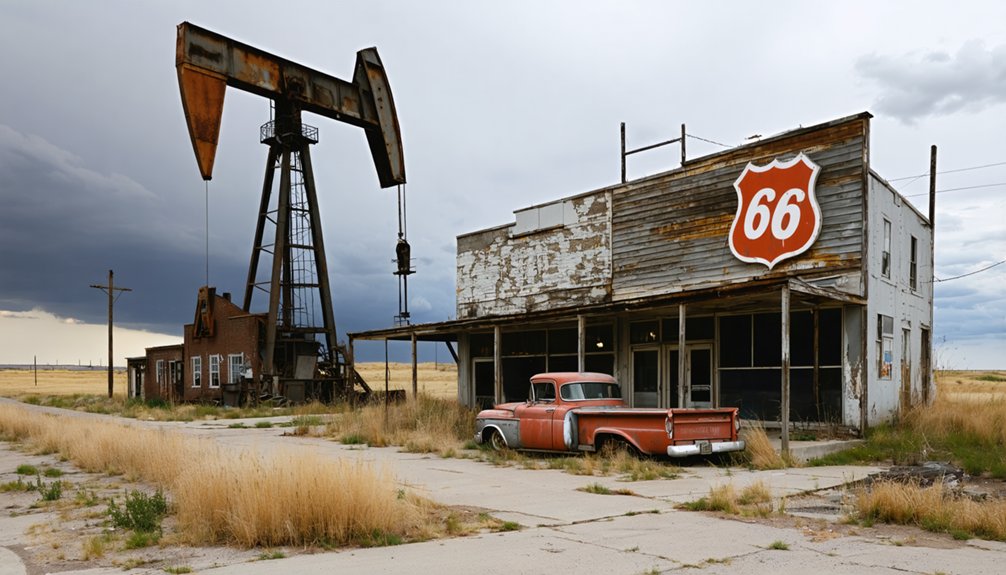
The devastating financial collapse of oil-dependent communities reveals the stark realities of boom-and-bust economics. You’ll find stark evidence in places where rig counts plummeted from 221 to just 45, triggering massive job losses and economic decline.
What’s left are towns where former oil workers now struggle in low-wage positions, while landlords maintain boom-time rents despite the bust.
You’re witnessing a complex pattern of community resilience: those who stay accumulate more debt and fewer credit accounts, while those who leave open additional credit lines to survive.
The impact extends globally – 28 of 40 major oil-producing regions risk losing half their revenue by 2040.
Even the mighty Permian Basin shows cracks, with companies announcing cuts amid falling prices, suggesting these ghost towns may multiply.
Untold Stories: Archives and Oral Histories
Within forgotten oil towns, archival photographs and oral histories reveal a complex tapestry of industrial transformation and human experience.
You’ll find black-and-white images depicting raw wooden structures and steel frameworks that mirror battlefield landscapes, while photographic archives showcase heavily laden wagons traversing challenging terrain in places like Neodosha, Kansas.
Through oral history collections, you’ll discover firsthand accounts of life in these volatile communities. Workers’ descendants share stories of harsh conditions and transient lifestyles, filling gaps in official records.
When you compare these personal narratives with company documents and archival photographs, you’ll reveal a more nuanced understanding of boomtown dynamics.
Business ledgers, drilling logs, and correspondence preserved in historical societies unveil operational insights, while museum collections validate the dramatic rise and fall of these once-thriving communities.
Safety Concerns and Legal Complexities
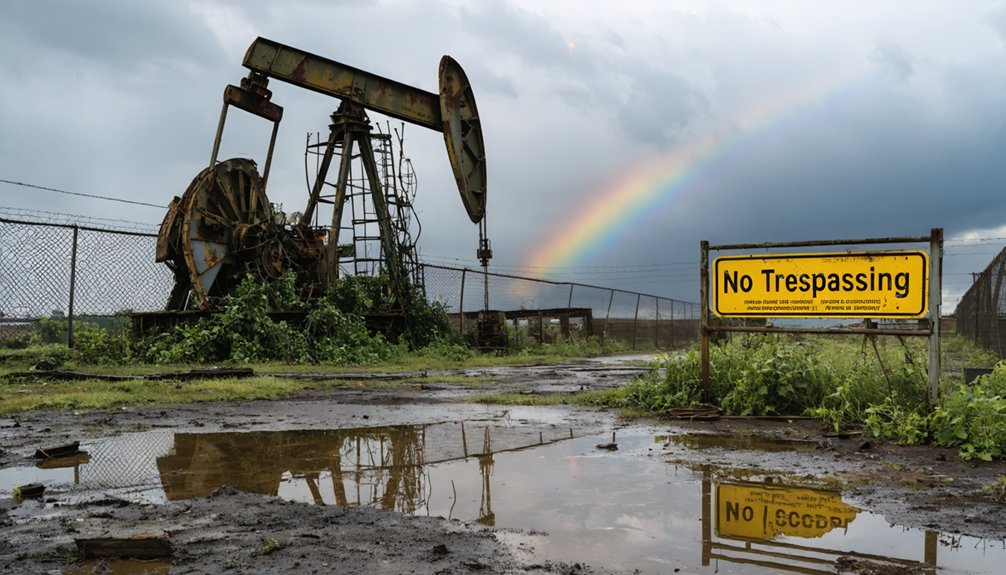
You’ll encounter severe hazards when exploring abandoned oil town ruins, from invisible methane leaks and benzene contamination to unstable infrastructure and physical fall risks.
These dangers are compounded by the complex legal landscape surrounding orphaned wells, where responsibility for cleanup and liability often remains unclear between former operators, landowners, and government agencies.
Your investigation of these sites requires understanding both the immediate safety threats and the regulatory gaps that have allowed thousands of these hazardous wells to remain untended across the American landscape.
Hazardous Abandoned Well Risks
Lurking beneath the surface of abandoned oil towns, hazardous wells pose severe risks to public health and environmental safety.
You’ll find dangerous well leakage releasing toxic cocktails of chemicals, including benzene, arsenic, and radioactive materials, with some wells spewing up to 600 gallons of contaminated fluid per minute.
What’s more alarming is that 4.6 million Americans live within 1 km of these ticking time bombs.
The threat to community health intensifies when you consider that 22% of these wells sit within 328 feet of buildings, and hundreds are mere steps from homes in western Pennsylvania alone.
These aging structures, many predating modern regulations, continuously deteriorate due to corrosion and environmental stressors.
Without regular inspections, you’re facing increasing risks of sudden toxic gas releases, groundwater contamination, and potential structural collapses.
Unclear Property Ownership Issues
Beyond the physical dangers of abandoned wells lies a maze of complex property ownership issues that create significant safety and legal risks.
You might own the land’s surface, but separate mineral rights holders can legally access your property to extract oil and gas, often without your consent. These split estates frequently spark property disputes when mineral rights owners construct roads, well pads, and storage facilities across your land.
The situation becomes even more complicated with orphaned wells, where ownership histories have fragmented over decades.
You’ll need to conduct thorough due diligence before purchasing property to identify potential wells and understand your liability risks. Without proper investigation, you could inherit contamination cleanup costs or face unexpected surface use claims from mineral rights holders you never knew existed.
Preservation Challenges in Modern Times
While abandoned oil town ruins hold significant historical value, they face mounting preservation challenges that threaten their structural integrity and cultural significance.
You’ll find that modern preservation techniques struggle against increasingly complex environmental and social pressures that demand immediate attention.
- Environmental degradation accelerates structural decay through oil contamination, weather exposure, and chemical pollutants that compromise historical materials.
- Fragmented regulatory systems and insufficient legal protections create gaps in preservation efforts, especially regarding Indigenous sacred sites.
- Community involvement often faces roadblocks due to competing interests between preservationists, developers, and local residents.
- Technical conservation difficulties require specialized expertise to address oil contamination while protecting vulnerable historic materials, yet funding remains limited and preservation often takes a backseat to economic interests.
Heritage Tourism: Exploring Industrial History

As abandoned industrial sites transform into heritage tourism destinations, you’ll discover a rapidly expanding sector that generates substantial economic value while preserving essential historical narratives.
The market’s projected growth from $604 billion to $1.4 trillion by 2034 reflects increasing global interest in industrial heritage experiences.
You’ll find these sites create significant economic ripples, with heritage corridors like Erie Canalway and MotorCities each generating over $300 million in output and supporting thousands of jobs.
When you explore these preserved industrial landscapes, you’re participating in a system that revitalizes communities through museums, educational centers, and cultural programming.
The transformation of abandoned refineries and company towns into tourism destinations doesn’t just protect physical structures—it preserves cultural narratives and technological history while creating sustainable economic opportunities for local communities.
The revitalization effort often extends to remote coastal villages in New England, where fishing traditions and artisanal crafts thrive. By fostering local businesses and tourism, these communities can leverage their unique cultural assets. Additionally, engaging visitors with authentic experiences strengthens the bond between residents and their heritage.
Frequently Asked Questions
How Did Communities Decide Which Buildings to Abandon Versus Relocate?
Like a triage nurse, you’d weigh abandonment criteria including economic viability, infrastructure access, and community value. Buildings with high relocation challenges and low strategic importance were typically left behind.
What Happened to the Children’s Education When Oil Towns Suddenly Collapsed?
You’ll find widespread educational displacement disrupted learning as schools closed or merged. Students faced unstable shifts, while remaining communities adapted through consolidation, distance learning, and emergency support programs.
Were There Successful Attempts to Diversify Local Economies Before Decline?
While millions dreamed of diversifying, you’ll find most oil towns failed at economic diversification before decline. Only rare examples like Gonzales, Texas achieved community resilience through tourism alongside their oil operations.
How Did Neighboring Towns Handle the Influx of Displaced Residents?
You’ll find neighboring towns struggled with displacement challenges like overcrowded housing and strained services, though some communities provided support through local integration programs and emergency assistance networks.
What Role Did Local Newspapers Play in Documenting Town Abandonments?
Through local journalism and historical archives, you’ll find newspapers chronicled the mass exodus, environmental hazards, economic decline, and community struggles while serving as watchdogs exposing regulatory failures in oil town abandonments.
References
- https://www.geotab.com/ghost-towns/
- https://en.wikipedia.org/wiki/List_of_ghost_towns_by_country
- https://www.fractracker.org/2019/08/pa-abandoned-wells/
- https://www.marineinsight360.com/worlds-abandoned-oil-rigs/
- https://www.fws.gov/story/abandoned-oilfield-equipment
- https://www.youtube.com/watch?v=MDkyUF7RZrU
- https://texags.com/forums/34/topics/2768011
- https://www.youtube.com/watch?v=pBMBe9Oldiw
- https://en.wikipedia.org/wiki/Orphaned_wells_in_the_United_States
- https://capitalandmain.com/new-mexicos-billion-dollar-oilfield-orphans