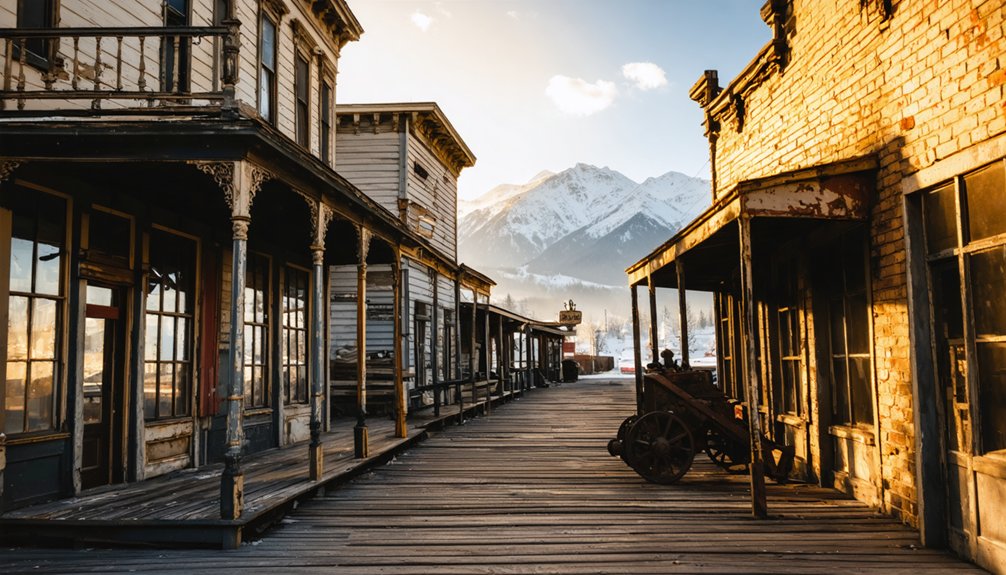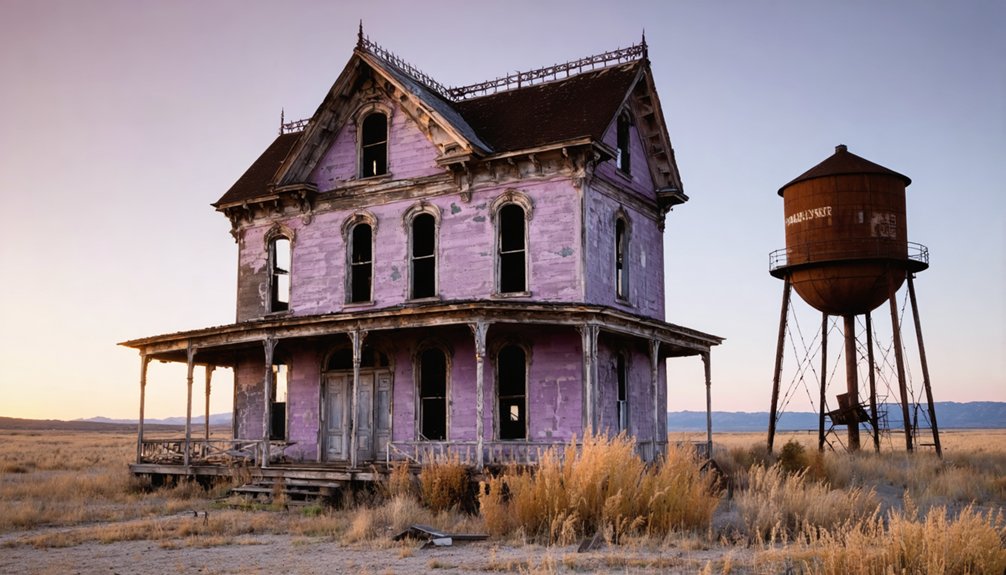
You’ll find Victorian ghost towns scattered across America’s landscape, proof of the rapid boom-and-bust cycle of 19th-century mining. Places like Virginia City, Nevada and Bodie, California preserve ornate architecture, wooden sidewalks, and artifacts from their heyday. These abandoned settlements reveal how communities thrived until mineral deposits depleted or natural disasters struck. Their silent buildings and artifacts offer glimpses into frontier life that shaped American expansion during the Victorian era.
Key Takeaways
- Victorian ghost towns like Bodie, California and Virginia City, Nevada remain preserved in “arrested decay” as living museums of America’s mining era.
- Abandoned mining settlements feature remarkable Victorian architecture, from ornate mansions to preserved wooden sidewalks and frontier storefronts.
- These ghost towns emerged from rapid boom-and-bust cycles where thriving communities collapsed when mineral resources were depleted.
- Daily life artifacts found in ghost towns reveal Victorian consumer habits through preserved saloons, general stores, and personal belongings.
- Many forgotten settlements maintain original structures and artifacts from the 1880s, offering authentic glimpses into 19th-century frontier life.
The Victorian Mining Boom That Built America’s Ghost Towns
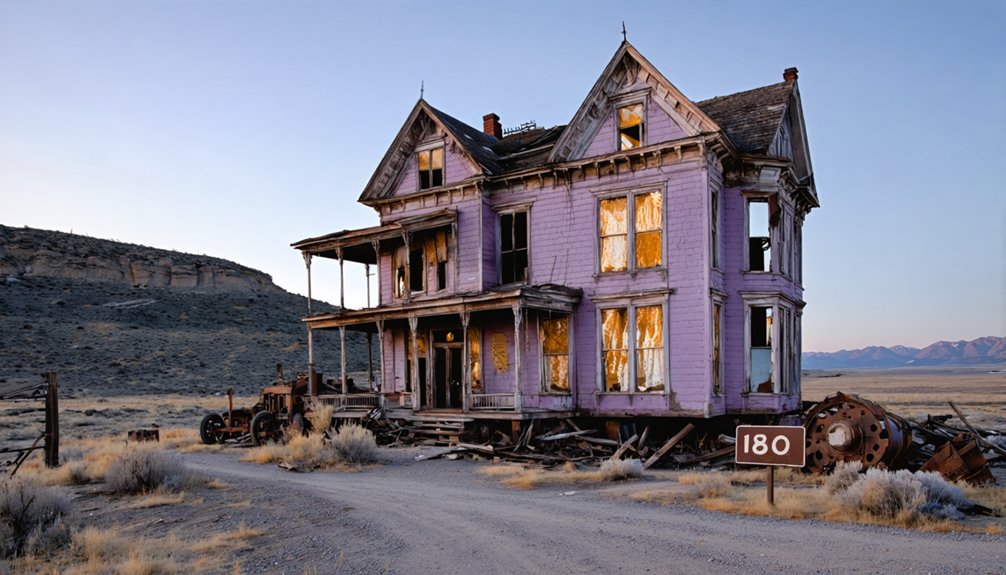
When the cry of “Gold!” echoed from California in 1848, it triggered a transformative period in American history that would reshape the western landscape.
You can still find the skeletal remains of this era scattered across mountains and valleys from Nevada to Montana.
The Victorian mining boom created instant communities where nothing existed before. Prospectors rushed to strike it rich, establishing towns that grew from tents to thousands of residents within months. One such example was Silverado, where over 280 mining claims were filed by September 1878, reflecting the frenzied pace of development.
From barren wilderness to booming settlements overnight—the frenzied pace of frontier dreams shaped by silver and gold.
Mining folklore tells of fortunes made and lost overnight as men pursued elusive veins of silver and gold.
Ghost town legends abound in places like the Comstock Lode, where miners extracted $50 worth of precious metals from each ton of ore.
These towns flourished briefly, then faded as quickly as they appeared when resources dwindled. Some of these abandoned settlements, like Rhyolite in Nevada, became famous ghost towns after their mining booms collapsed.
Preserved Architectural Remnants: Windows to the Past
Ghostly silhouettes of Victorian architecture stand as silent sentinels across America’s abandoned mining towns, preserving the ambitious spirit of a bygone era.
You’ll find three-story mansions in Virginia City, Nevada showcasing the silver barons’ wealth alongside intact wooden sidewalks and saloons that maintain their architectural integrity despite decades of mountain winters.
Throughout these settlements, original structures—from general stores and blacksmith shops to jails and churches—offer tangible connections to 1880s daily life.
In Garnet, Montana, approximately 30 residential buildings reveal domestic living conditions of the period.
The historical significance of these remnants hasn’t gone unnoticed; the National Park Service has restored 16 cabins for public access, while state designations like Wyoming’s South Pass City protect nearly two dozen authentically preserved buildings through private-public partnerships. At Bodie, California, visitors can view a remarkably well-preserved ghost town with buildings and artifacts still intact from its gold mining heyday. In Terlingua, Texas, tourists can explore decaying buildings and abandoned mine shafts that offer an authentic glimpse into the region’s mining past.
Visiting these historic towns of the Wild West allows travelers to step back in time and experience the rugged lifestyle of the pioneers. Each site tells a unique story of resilience and adventure, from the bustling saloons of Deadwood to the quiet streets of Tombstone. Exploring the remnants of these towns can ignite a sense of wonder about the past and the people who shaped the American frontier.
Daily Life and Cultural Heritage in Abandoned Settlements

When you visit these abandoned settlements, you’ll witness the remnants of a vibrant social culture where saloons—numbering over 60 in Bodie alone—served as the epicenters of daily interactions among miners who embraced a distinctive “work hard, play hard” ethos.
These communities’ material culture reveals the Victorian-era consumer habits through artifacts like liquor bottles, ornate glassware, and imported goods that connected even remote outposts to broader commercial networks. Many of these ghost towns are now heritage tourism destinations, preserving an important chapter of American history.
The wooden sidewalks and preserved storefronts in places like Virginia City offer tangible connections to the ordinary routines of residents who navigated boom-and-bust cycles while maintaining the social customs and entertainment practices that defined frontier life. Visitors to Bannack, Montana can explore over sixty historical buildings that remain standing, including the Masonic Hall and Meade Hotel.
Frontier Social Dynamics
Beyond the physical remnants of abandoned buildings and mine shafts, the social fabric of Victorian ghost towns reveals a complex tapestry of human resilience and struggle. You’d find tight-knit social networks developed out of necessity, as miners and their families faced harsh living conditions and constant danger together.
Despite precarious circumstances, communities established schools, churches, saloons, and fraternal organizations to maintain normalcy. Community resilience manifested through public gathering spaces that fostered cohesion during boom years.
When miners died—a frequent occurrence—widow eviction policies exposed the brutal economic realities of company towns. Recreation halls and entertainment venues provided essential relief, while brothels and saloons reflected the complexity of frontier morality.
These communities, though often short-lived, created intricate social structures that balanced survival with human connection in America’s harshest environments. Unlike Richwoods, Missouri, which stands as a living museum showcasing historical American life despite its small size, many Victorian settlements completely disappeared when economic conditions changed. In places like Ashcroft, the rapid transition from bustling mining town to ghost town by 1912 illustrates how quickly these delicate social ecosystems could collapse when economic conditions changed.
Victorian Material Culture
The material artifacts left behind in Victorian ghost towns offer a remarkable window into the daily lives of those who once inhabited these now-deserted settlements.
Walking through these abandoned homes, you’ll find domestic items ranging from porcelain dolls to hand-stitched quilts preserved in time. The Victorian artifacts tell stories of technological change—gas lamps beside early telephones, mechanical clocks ticking silently for decades. Explorers often discover old black chalkboards with writings still visible, preserving moments frozen in educational history.
You can explore personal worlds through leather-bound diaries and jewelry boxes containing cameo pendants and lockets. Many homes contain handwritten letters and Christmas cards dating as far back as January 1946, offering glimpses into personal correspondence of the era.
The architecture itself—with its high ceilings, ornate woodwork, and stained glass windows—reveals the aesthetic preferences of frontier Victorians.
Even mundane objects like sewing kits and school slates offer intimate connections to those who sought freedom and opportunity in these once-thriving communities.
Natural Forces That Drove Settlers Away
Natural forces played a decisive role in the abandonment of once-thriving Victorian settlements across America, often leaving residents with no choice but to flee their homes and livelihoods.
The mighty Mississippi River devastated towns like Rodney and Valmeyer through course changes and flooding, while dam construction submerged Robinette and Detroit beneath reservoir waters. You’ll find evidence of nature’s wrath in Johnstown, where a catastrophic dam failure killed thousands.
Environmental changes proved equally destructive. Greensburg lost 95% of its structures to a tornado, while coastal erosion gradually consumed Holland Island until residents abandoned it by the 1920s.
Natural disasters transformed vibrant communities into ghost towns almost overnight—Hinckley disappeared in the “Great Fire” of 1894, while Bayou Corne residents fled permanently after a massive sinkhole devoured their town in 2012.
Economic Collapse and the Path to Abandonment
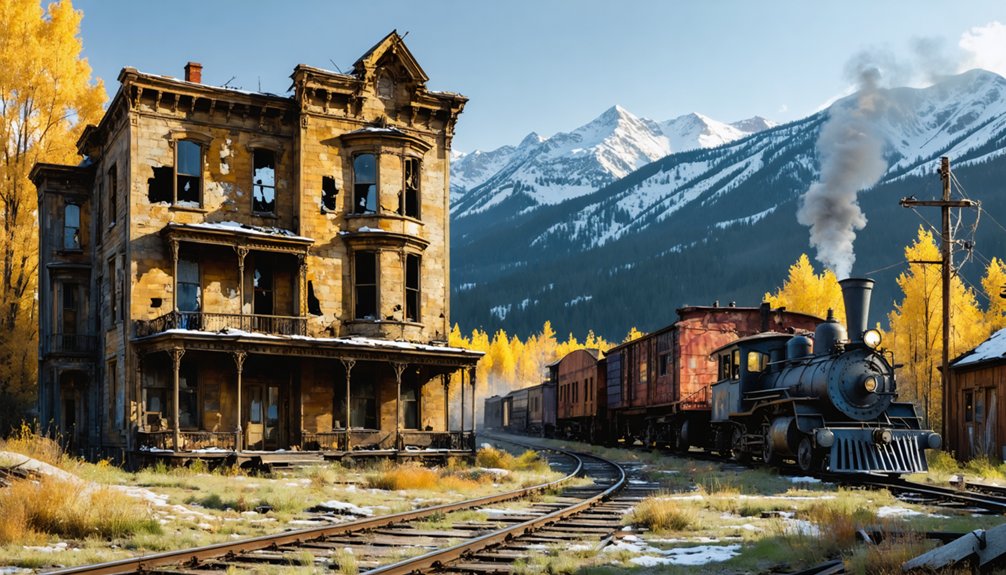
You’ll find the boom-bust cycle was particularly brutal in Victorian mining settlements, where intense resource extraction fueled rapid development without long-term planning.
These communities thrived until mineral veins played out, leaving behind elaborate infrastructure with no economic purpose.
The collapse often happened within a single generation, as miners and supporting businesses moved on to the next promising location, abandoning their former homes to the elements.
Boom-Bust Lifecycle
Victorian boom towns followed a predictable economic lifecycle, shifting from explosive growth to eventual abandonment through distinct phases of development and decline.
You’d witness the initial boom cycles as population surged around mining, railroads, or trade routes, spawning diverse businesses from general stores to medical practices. Housing construction accelerated to accommodate workers while economies appeared to display economic resilience through multiple employment opportunities.
This stability proved illusory. When silver prices plummeted, oil markets crashed, or resources depleted, these single-industry dependencies triggered cascading failures.
Workers migrated to new opportunities, decimating the customer base for supporting businesses. The abandoned infrastructure deteriorated rapidly—brick façades crumbled, windows boarded up, and residential neighborhoods succumbed to neglect.
Some buildings were even dismantled for firewood, erasing architectural heritage from the landscape.
Extraction Without Sustainability
The economic collapse of Victorian ghost towns exemplifies the harsh realities of extraction without sustainability. When you examine these abandoned settlements, you’re witnessing the aftermath of short-sighted resource management practices that prioritized immediate profit over longevity.
These towns flourished briefly on single-industry economies—mining gold, silver, or coal—but lacked economic diversity to weather depletion. Once the resources vanished or became unprofitable, extraction practices ceased abruptly. Workers departed en masse, triggering cascading failures throughout local economies.
Businesses, services, and social institutions crumbled without their customer base.
Transportation shifts compounded these problems. When railroads bypassed former boomtowns or routes changed, these isolated communities lost their remaining economic lifelines.
The stark lesson of these ghost towns remains clear: extraction without diversification creates prosperity that vanishes as quickly as it appears.
Forgotten Towns That Shaped Transportation Routes
Throughout America’s expansive frontier, transportation routes once served as lifelines that breathed importance into small settlements, determining their rise and eventual abandonment.
You’ll find these patterns in railroad towns like Thurmond, West Virginia, where coal shipments created bustling transportation hubs before economic shifts rendered them obsolete.
Similarly, Route 66 created prosperity for stops like Glenrio, until Interstate 40 bypassed it completely.
Shaniko, Oregon thrived as a wool shipping center until better rail routes emerged elsewhere.
Mining settlements like Bodie, California and Cisco followed this pattern too, booming with rail connections before being abandoned.
These ghost towns reveal how America’s development was shaped by ever-changing transportation networks that ruthlessly favored efficiency over established communities, leaving behind architectural remnants of once-vibrant commercial centers.
Modern Preservation Efforts and Heritage Tourism

While transportation changes doomed hundreds of Victorian settlements, many of these abandoned places have found new life through dedicated conservation initiatives. You’ll find towns like Bodie, California preserved in “arrested decay,” allowing you to experience authentic historical settings without modern intrusions.
Preservation challenges abound—from weathering and vandalism to funding shortages and private land access issues. Despite these obstacles, partnerships between government agencies, nonprofits, and private investors have transformed many sites into vibrant attractions.
The tourism impact extends beyond ghost towns themselves. When you visit places like Virginia City or Calico, your spending supports local economies through hospitality services and retail.
These preservation efforts create jobs while offering you immersive historical experiences through overnight stays, guided tours, and reenactments that connect you with America’s past.
Frequently Asked Questions
Were Ghost Towns Targets for Outlaws and Criminal Activity?
Like shadowy havens in forgotten landscapes, ghost towns were perfect targets for outlaws. You’ll find they served as ideal outlaw hideouts due to isolation and lack of law enforcement, breeding criminal activity.
What Happened to the Residents Who Abandoned These Towns?
You’ll find that residents migrated following key abandonment reasons: they chased economic opportunities elsewhere, fled mine closures, escaped environmental disasters, or relocated after essential services disappeared.
Can Visitors Stay Overnight in Any Ghost Town Buildings?
You dream of ghostly sleepovers, but preservation trumps comfort. Some living ghost towns like Virginia City offer overnight accommodations, while most prioritize historic preservation through strict no-lodging policies to protect fragile structures.
Did Any Indigenous Communities Reclaim Abandoned Ghost Town Territories?
Yes, you’ll find indigenous land reclamation efforts have successfully returned ghost town territories to Native communities, enabling cultural heritage preservation through treaty rights and legal actions spanning decades.
What Valuable Artifacts Have Been Discovered in These Locations?
You’ll find artifacts with remarkable historical significance in these towns: silver ore, bottles, jewelry, glass structures, mining tools, domestic items, and archaeological evidence—all awaiting proper preservation for future generations to explore.
References
- https://www.mythfolks.com/haunted-us-ghost-towns
- https://www.geotab.com/ghost-towns/
- https://stephentravels.com/top5/ghost-towns/
- https://savingplaces.org/guides/ghost-towns-on-route-66
- https://www.youtube.com/watch?v=yeTVfoQxqJc
- https://backroadplanet.com/10-ghost-towns-in-the-west-that-tell-forgotten-stories/
- https://en.wikipedia.org/wiki/Lists_of_ghost_towns_in_the_United_States
- https://www.atlasobscura.com/lists/americas-best-preserved-ghost-towns
- https://www.legendsofamerica.com/gt-hiddentales/
- https://www.ochistoryland.com/silverado