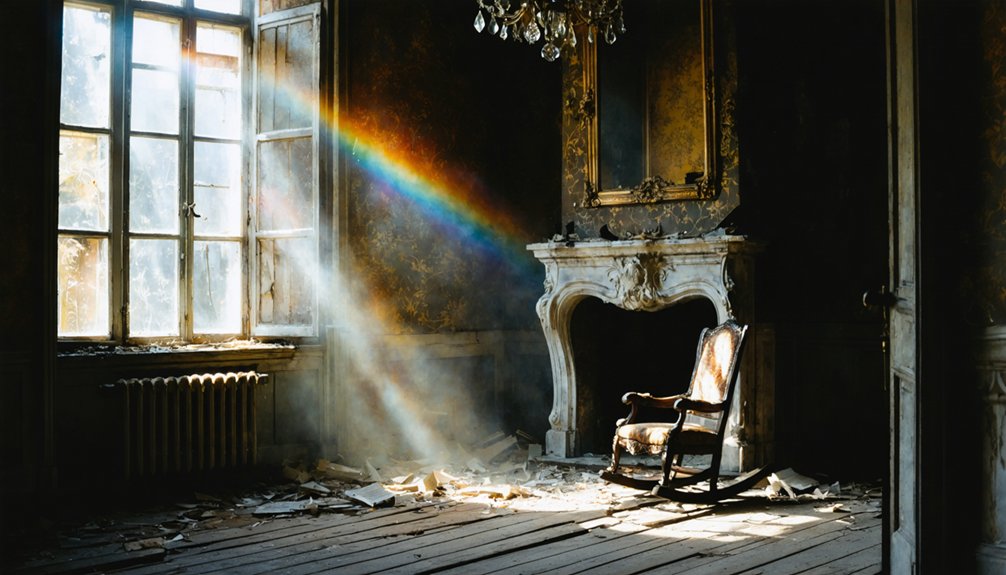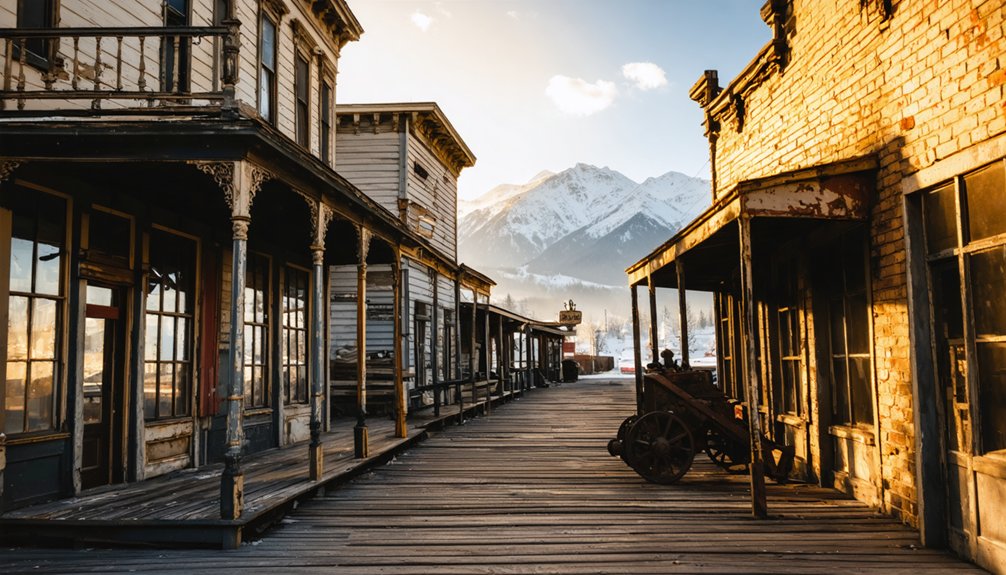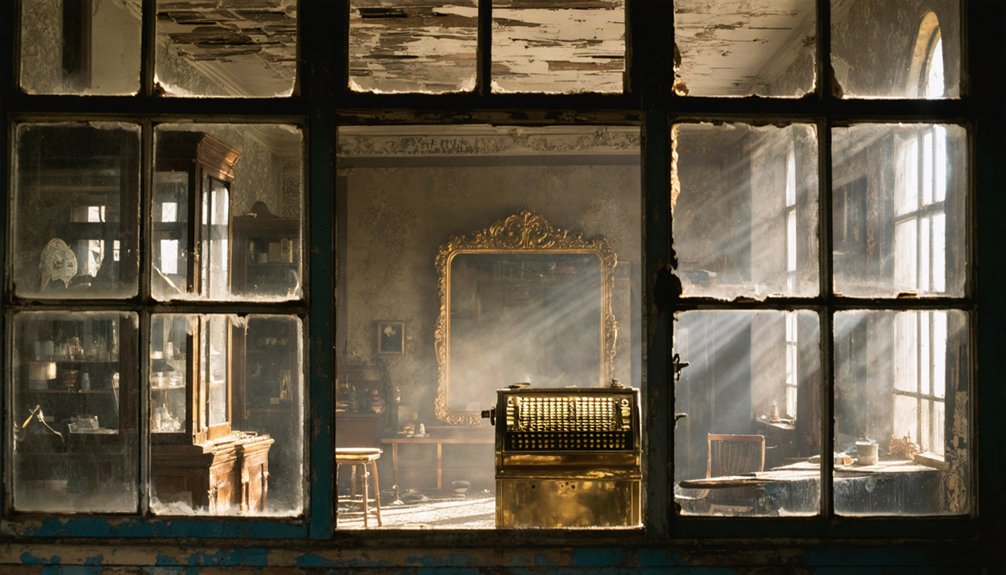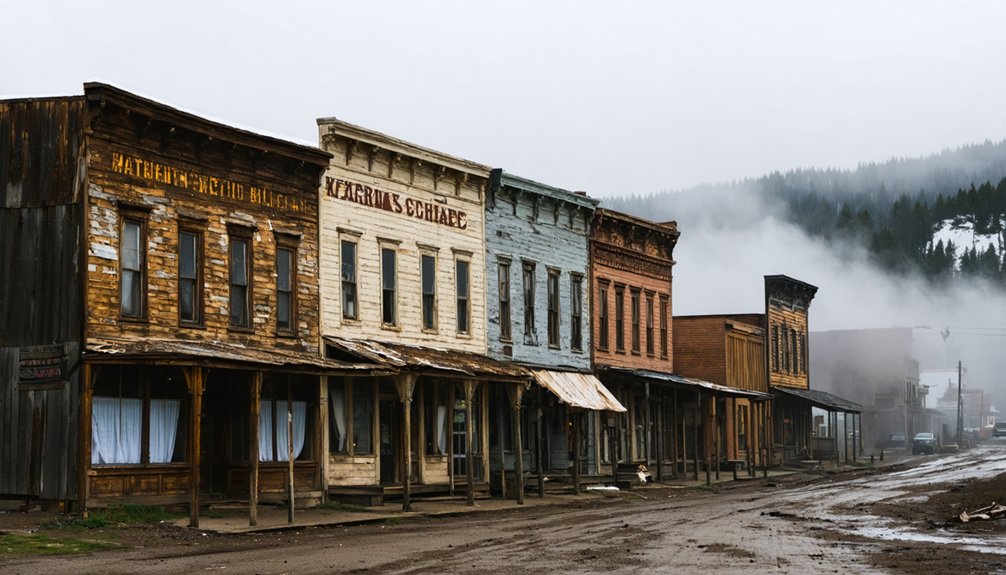
You’ll find America’s forgotten Victorian villages in unexpected places like Old Louisville, Kentucky, with the nation’s largest concentration of Victorian homes, and Ferndale, California, known for its “Butterfat Palaces.” Don’t miss coastal gems such as Galveston, Texas, and Cape May, New Jersey, or former mining boomtowns like Virginia City, Nevada. These living museums offer authentic Victorian architecture while supporting modern businesses in historic structures. Their preservation stories reveal America’s architectural heritage.
Key Takeaways
- Powelton Village in Philadelphia features historic Victorian homes built between 1860-1910 that are often overlooked by tourists.
- Jackson Ward in Richmond, known as “Black Wall Street,” showcases unique Victorian designs with distinctive cast-iron porches.
- Ferndale, California achieved National Register status for its entire community of Victorian “Butterfat Palaces.”
- Lewes, Delaware blends colonial and Victorian styles reflecting Dutch maritime heritage in a lesser-known coastal setting.
- Virginia City, Nevada preserves elaborate Victorian structures built from Comstock Lode silver wealth despite declining from its 25,000 peak population.
Hidden Victorian Gems Within Larger Towns
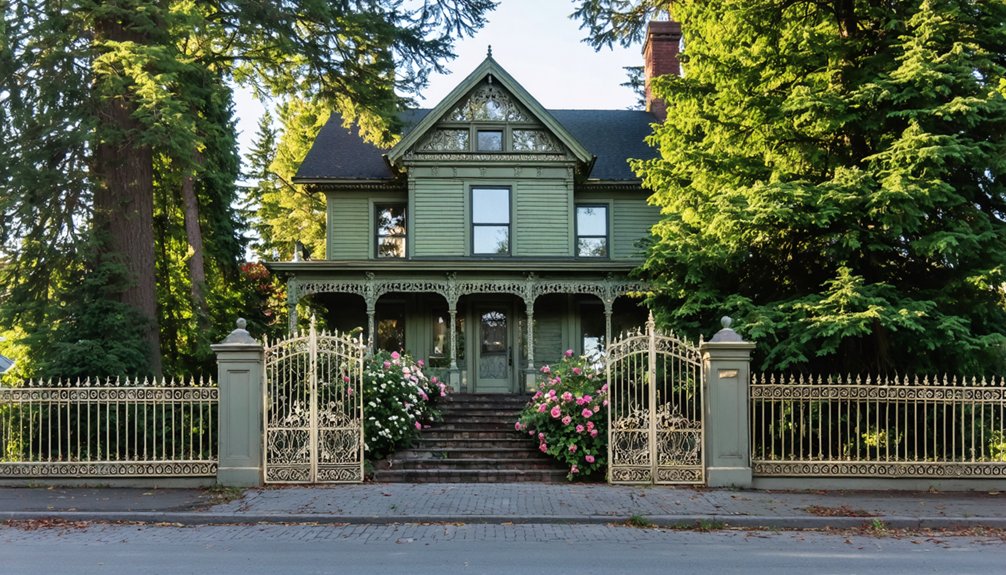
While America’s major metropolitan areas receive considerable attention for their modern architecture and urban planning, numerous historic Victorian neighborhoods remain tucked away within these larger municipalities, often overlooked by casual visitors.
Beneath the gleaming skyscrapers of American cities lie Victorian treasures, architectural gems hiding in plain sight.
You’ll discover impressive Victorian architecture in Old Louisville, Kentucky, which contains the nation’s largest concentration of restored Victorian homes in a 48-block area.
Detroit’s Woodbridge district preserves late 19th-century mansions that replaced earlier cottages.
Philadelphia’s Powelton Village developed after 1854, featuring Victorian homes built between 1860-1910, many listed on the National Register of Historic Places. These hidden neighborhoods reflect America’s architectural golden age amid urban expansion.
In Richmond, Virginia, Jackson Ward—once known as “Black Wall Street”—showcases Victorian designs alongside Federal and Greek Revival styles, distinguished by unique cast-iron porches that reflect its entrepreneurial heritage.
Lafayette Square in St. Louis offers visitors a chance to explore one of the city’s oldest neighborhoods with historically fashionable Victorian-era homes that have been meticulously preserved.
Inman Park in Atlanta stands out as the city’s first planned suburb, attracting wealthy residents like Coca-Cola founder Asa G. Candler with its picturesque landscaping and elegant Victorian mansions.
America’s Well-Preserved Victorian Architectural Treasures
You’ll discover America’s “Butterfat Palaces,” the ornate Victorian mansions built by prosperous dairy industry magnates, showcasing their wealth through elaborate architectural detailing and decorative elements.
These coastal Victorian treasures often remain overlooked within maritime districts where shipping and fishing industries once fueled architectural innovation. Galveston stands as a remarkable testament to this heritage with one of the largest concentrations of Victorian architecture in the United States. The impressive 1892 Bishop’s Palace survived the devastating Great Storm of 1900 while most of Galveston suffered significant damage, demonstrating the exceptional durability of its steel and stone construction.
The concentrated preservation of these structures provides scholars and enthusiasts with intact examples of period-specific adaptations to coastal environments, including widow’s walks, weather-resistant materials, and nautical design motifs.
Coastal Butterfat Palaces
Along America’s diverse coastlines stand magnificent Victorian-era mansions colloquially known as “Butterfat Palaces,” architectural treasures that epitomize the wealth and aesthetic sensibilities of the late 19th century.
These coastal architecture marvels showcase Queen Anne, Second Empire, and Shingle Style elements, often adapted to maximize ocean views and withstand maritime conditions. The Gothic Revival Style was particularly impressive in these coastal settings, with its tall chimneys and steep roofs creating dramatic silhouettes against ocean backdrops.
Victorian preservation efforts have saved remarkable examples in forgotten coastal enclaves:
- Cape May’s “Painted Ladies” feature vibrant polychromatic exteriors highlighting their ornate details
- Port Townsend maintains an extensive seaport ensemble combining maritime scenery with period craftsmanship
- Galveston houses one of America’s largest Victorian collections, including the Renaissance-influenced Bishop’s Palace
You’ll find these structures distinguished by their multi-porch verandas, cupolas, and asymmetrical facades—architectural features that facilitated sea breezes while showcasing the owners’ prosperity. Cape May houses the second-largest concentration of Victorian buildings in the United States, creating an architectural time capsule for visitors and historians alike.
Hidden Maritime Districts
Beyond the grand Butterfat Palaces, America’s coastline harbors numerous hidden maritime districts that constitute the nation’s most exceptional Victorian architectural treasures.
Port Townsend, Washington showcases impeccably preserved Victorian seaport architecture against dramatic Olympic Mountain vistas.
Lewes, Delaware’s waterfront district blends colonial and Victorian styles, reflecting its Dutch maritime heritage. These hidden harbors offer architectural authenticity officially recognized through National Historic Landmark designation.
Cape May, New Jersey presents America’s premier Victorian collection with over 600 buildings spanning 380 acres, featuring iconic “Painted Ladies” in Gothic Revival, Queen Anne, and Stick-Eastlake styles.
The district’s survival resulted from preservation initiatives that prevented mid-20th-century demolition.
Maritime heritage remains embedded in these towns’ DNA, with structures designed to embrace coastal views and withstand maritime elements while maintaining their architectural integrity. Cape May earned its reputation as America’s first seaside resort, attracting notable visitors including Henry Clay and Ulysses Grant in its early years. Similar to these preserved districts, New York’s South Street Seaport Historic District exhibits 200 years of mercantile architectural styles including Georgian, Federal, Greek Revival, Italianate, and Romanesque Revival.
Small Victorian Towns That Balance History With Tourism
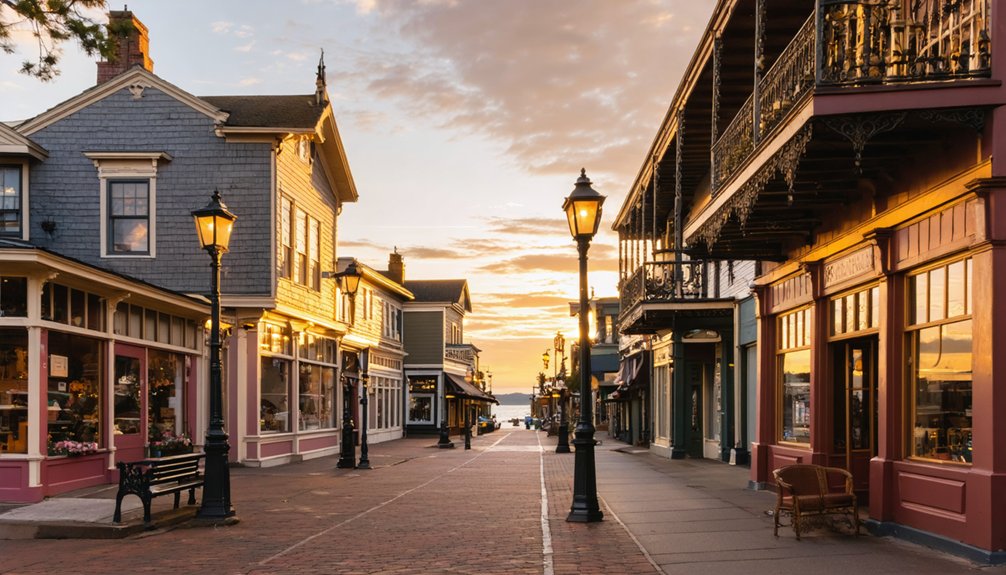
Scattered across the American landscape, several small Victorian towns have mastered the delicate balance between preserving their historical integrity and developing sustainable tourism economies.
These communities demonstrate exceptional historic preservation while creating viable Victorian tourism destinations that maintain authenticity.
Towns like Ferndale, California and Eureka Springs, Arkansas have achieved National Register status for their entire communities, not merely individual structures.
You’ll find Jim Thorpe’s mountain setting complements its Victorian architecture, while Galena’s well-preserved 19th-century streetscape creates a living museum. Nevada City showcases its rich mining history through carefully restored Victorian buildings that now house modern businesses. Ferndale exemplifies this preservation with its exquisite Butterfat Palaces that stand as testaments to its prosperous dairy industry heritage.
These locations succeed through:
- Adaptive reuse of historic structures for contemporary businesses
- Maintaining architectural integrity while accommodating modern infrastructure
- Creating distinctive cultural programming that honors Victorian heritage
Each town represents a representation of America’s architectural legacy while providing economic sustainability through thoughtful tourism development.
Reconstructed Pioneer and Victorian-Era Villages
While America’s Victorian architectural heritage remains visible in numerous historic districts, the deliberate reconstruction of complete period villages offers a more immersive historical experience.
Genesee Country Village & Museum exemplifies pioneer reconstruction at its finest, spanning 70+ acres with authentic Victorian mansions and farmsteads that document rural Northeastern life.
Old Bethpage Village Restoration similarly preserves Long Island’s Victorian rural architecture through meticulously furnished interiors and live demonstrations.
For Victorian preservation enthusiasts, Heritage Park in San Diego represents a different approach—relocating endangered homes from 1960s-70s demolition into a curated collection featuring Queen Anne architecture.
These reconstructed environments, along with Ferndale’s 150+ preserved Victorian buildings and Historic Richmond Town’s evolution-focused collection, provide technical insights into period construction methods while allowing visitors to experience authentic Victorian-era community dynamics firsthand.
Victorian Villages With Notable Historical Significance
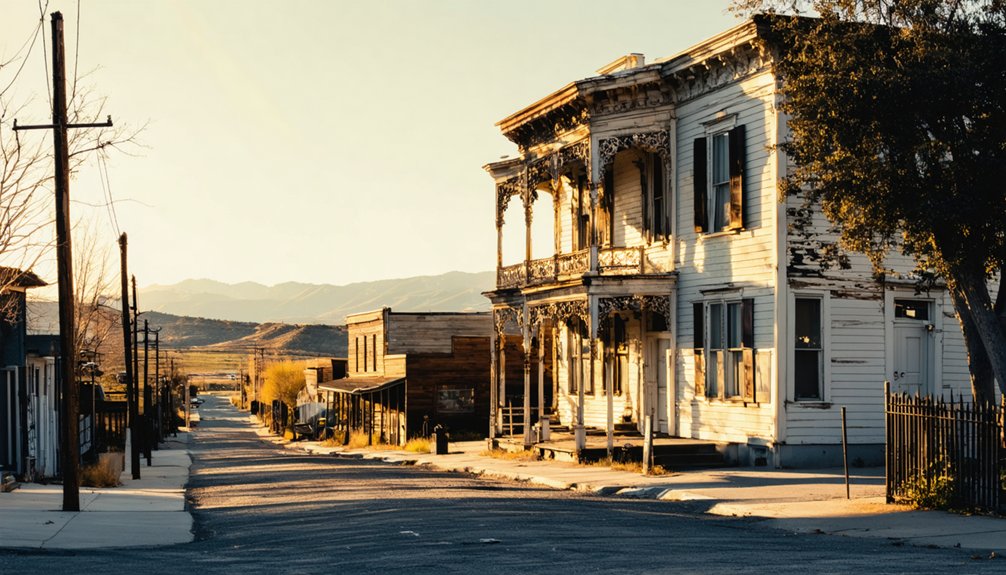
You’ll find that Victorian-era mining boomtowns offer remarkable historical windows into America’s industrial past, with towns like Galena, Illinois showcasing how lead mining wealth transformed frontier settlements into architectural showcases.
Presidential connections add another dimension of historical significance, exemplified by Galena’s Ulysses S. Grant Home, which serves as both a National Historic Landmark and a demonstration of the town’s prominence during America’s Gilded Age.
These Victorian villages, whether established around natural resources or influential figures, represent significant intersections of economic development, architectural innovation, and political history that shaped regional identities across the United States.
Victorian Mining Boomtowns
Throughout America’s western frontier, Victorian mining boomtowns emerged as architectural and cultural marvels during the late 19th century’s resource extraction boom. Virginia City, Nevada, soared to 25,000 residents after the Comstock Lode discovery, while Cripple Creek and Bisbee flourished from gold and copper wealth, respectively.
These settlements left behind remarkable mining legacies and architectural remnants that persist today.
Historic sites in California ghost towns draw visitors keen to explore these fascinating remnants of the past. Many of these locations offer guided tours and information that highlight their rich history and cultural significance. As you wander through the streets, the stories of those who once called these towns home come alive, enhancing the experience of each site.
You’ll find these historic communities distinguished by:
- Elaborate Victorian structures built with mineral wealth, including ornate opera houses and mansions
- Engineering marvels of underground tunnels and shafts that supported industrial-scale extraction
- Preserved historical landscapes that document America’s resource-driven expansion
The transformation of these once-booming centers—from Lead’s 125-year Homestake operation to Bisbee’s “Queen of the Copper Camps”—represents a fascinating chapter of industrial development on the frontier.
Presidential Hometown Histories
America’s presidential legacy finds physical expression in several forgotten Victorian villages that once housed future or sitting commanders-in-chief. These presidential legacies materialize in William Henry Harrison’s Federal-style Grouseland mansion and Benjamin Harrison’s Italianate brick residence, both in Indiana.
You’ll find Harry Truman’s Victorian “Summer White House” in Independence preserves early 20th-century middle-class domestic life, while Garfield’s Mentor, Ohio estate showcases his rapid rise from educator to president.
The Greek Revival and Victorian structures of William Howard Taft’s Cincinnati birthplace complete this architectural presidential narrative.
Each site offers historical tours illuminating distinctive aspects of American political development—from Harrison’s frontier diplomacy with Native Americans to Taft’s unprecedented service in both executive and judicial branches.
These preserved Victorian presidential hometowns constitute essential, if overlooked, chapters in America’s architectural heritage.
America’s Secret Victorian Seaports
While many of America’s major ports continue to thrive as commercial hubs, several Victorian-era seaports have faded into relative obscurity despite their historical significance.
These forgotten ports preserve America’s maritime heritage through their architecture and infrastructure, offering glimpses into our nation’s seafaring past.
America’s forgotten harbors stand as physical chronicles of our nautical legacy, inviting exploration of a vanished maritime world.
Port Townsend, Washington exemplifies this phenomenon—recognized by the National Register of Historic Places but bypassed by the transcontinental railroad that would have secured its prominence.
Similarly, Charleston’s Victorian harbor facilities now stand as historical artifacts rather than commercial assets.
- Hampton Roads, Virginia hosted the revolutionary ironclad battle of 1862
- San Francisco processed thousands of Asian immigrants through “Ellis Island of the West”
- New Orleans handled over 550,000 immigrants during the Victorian era
These historical seaports now exist as architectural time capsules, preserved for those seeking freedom to explore America’s maritime foundations.
Visiting Victorian America: What These Historic Villages Reveal
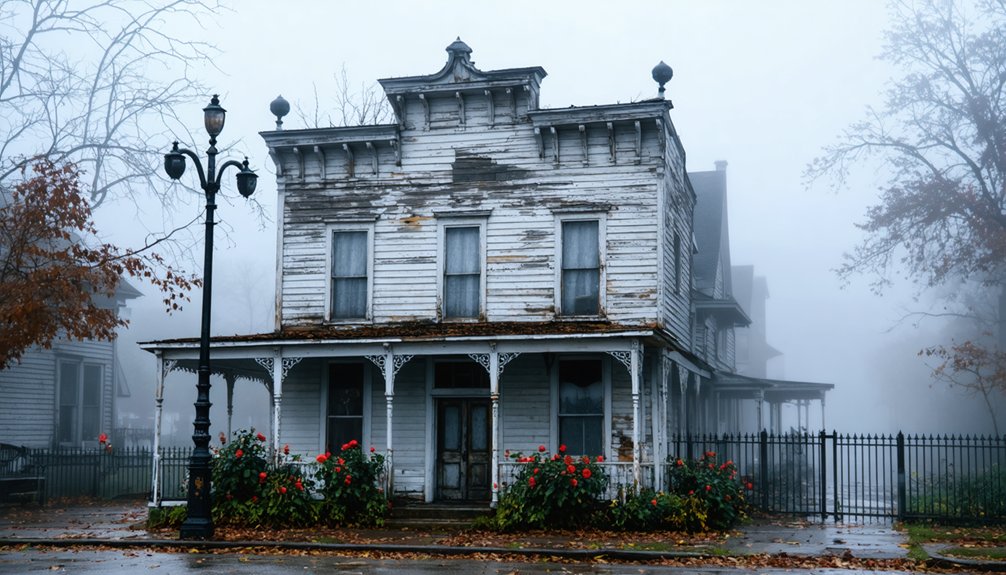
Moving beyond the maritime focus of America’s coastal Victorian heritage, the interior landscape reveals equally fascinating historical treasures in the form of preserved Victorian villages.
When you explore these towns, you’ll encounter authentic Victorian architecture virtually frozen in time—often the result of geographic isolation and economic shifts that bypassed these communities.
In places like Eureka Springs, Arkansas, the state’s first designated Historic District, you’ll find over 50 years of dedicated cultural preservation efforts protecting ornate “gingerbread” trim and decorative brackets.
The walkable historic districts of Natchez, Mississippi, with America’s largest collection of Antebellum homes, offer insights into pre-Civil War prosperity.
These communities weren’t just preserved by chance—their remote locations in mountains, along rivers, and in rural landscapes shielded them from modernization’s homogenizing effects.
Frequently Asked Questions
How Did Victorian Villages Adapt to Changing Transportation Technologies?
Like flowers wilting from sunlight, many Victorian villages faced decline when railroad expansion bypassed them, causing urban migration. You’ll notice they’ve either preserved their historic character or transformed into tourist destinations with pedestrian-focused infrastructures.
What Happened to Residents When Victorian Villages Were Absorbed?
You’d face urban migration as economic downturns forced community displacement. You’d relocate to nearby cities, potentially selling your property, while watching social networks fragment and local governance shift to larger administrations.
Were Victorian Villages Racially Segregated Like Larger Cities?
Yes, you’ll find Victorian villages reflected broader racial dynamics of their era, implementing segregation through less formal but still effective social hierarchies rather than the explicit legal frameworks seen in metropolitan areas.
How Did Victorian Village Economies Differ From Modern Rural Towns?
You’ll find Victorian village economies relied on localized agricultural practices and manual labor, with limited technology and rigid economic structures, unlike today’s rural towns with diversified industries and digital connectivity.
What Role Did Women Play in Forgotten Victorian Village Businesses?
Women entrepreneurs operated boarding houses, managed hotels, established shops, and created business opportunities through property ownership—enabling economic independence in an era when traditional employment options remained limited for female proprietors.
References
- https://www.youtube.com/watch?v=0dqg5mpyo5I
- https://pastlanetravels.com/historic-small-towns-in-america/
- https://www.visitredwoods.com/listing/ferndale-the-victorian-village/353/
- https://africawanderlust.com/food-lifestyle/11-beautifully-preserved-historical-villages-in-the-u-s-worth-visiting/
- https://www.homestratosphere.com/most-charming-small-towns-with-victorian-era-architecture/
- https://www.ourhiddenearth.com/post/the-secret-victorian-city-hiding-on-a-forgotten-american-peninsula
- https://wheninyourstate.com/usa/rediscovering-historic-small-towns-that-time-forgot/
- https://www.explore.com/1083257/towns-that-look-like-theyre-stuck-in-time/
- https://www.youtube.com/watch?v=JGLhSHQkPuw
- https://www.businessinsider.com/beautiful-historic-districts-us-2019-9