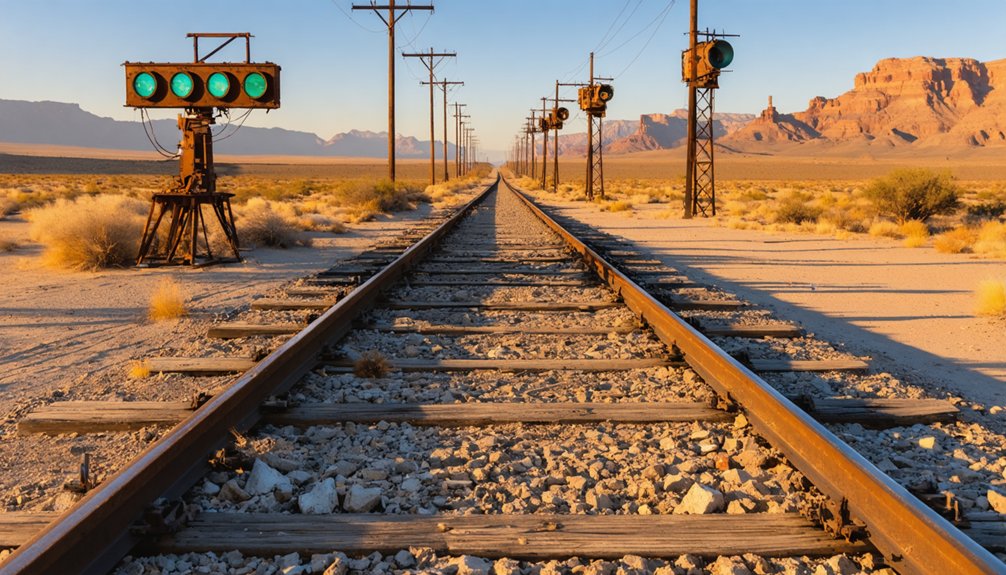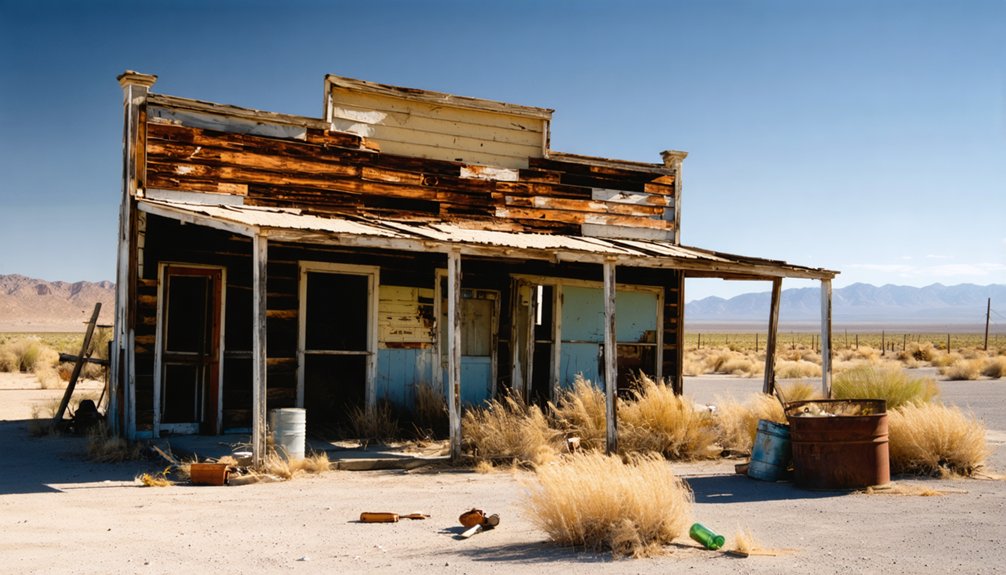
Planning a ghost town road trip to Fairbank, Arizona starts with heading 10 miles west of Tombstone along Highway 82 into the San Pedro Riparian National Conservation Area. You’ll find free admission, seven surviving historic structures, and self-guided interpretive trails through authentic ruins that tell the real story of Arizona’s silver boom. Visit October through April for the best weather and wildlife. There’s far more to this forgotten railroad town than first meets the eye.
Key Takeaways
- Fairbank sits 10 miles west of Tombstone along Highway 82, within the San Pedro Riparian National Conservation Area, with free admission and parking for 12 vehicles.
- Visit October through April for mild temperatures; summer visits require early morning starts to avoid extreme heat and bring at least two liters of water.
- Seven historic structures remain, including a restored 1920s schoolhouse open Friday–Sunday, plus interpretive trails leading to the cemetery and Grand Central Mill ruins.
- Fairbank anchors a Highway 82 corridor connecting Tombstone and Bisbee, offering an authentic, crowd-free exploration of Arizona’s mining boom-and-bust history.
- A notable 1900 train robbery attempt, where express messenger Jeff Milton fatally shot outlaw Three-Fingered Jack Dunlop, highlights Fairbank’s railroad and outlaw-era significance.
Why Fairbank Arizona Is Worth the Drive?
Tucked 10 miles west of Tombstone along Arizona Highway 82, Fairbank sits quietly within the San Pedro Riparian National Conservation Area — a genuine ghost town that doesn’t charge admission or demand much planning.
You can wander freely through seven surviving examples of historical architecture, reading outdoor interpretive plaques at your own pace. No crowds, no entrance fees, no rigid schedules holding you back.
Local legends add serious texture to your visit. The 1900 train robbery attempt, where express messenger Jeff Milton single-handedly fought off Bert Alver’s gang, unfolded right here. Three-Fingered Jack Dunlop didn’t survive it.
Beyond the stories, the San Pedro River trails and nearby cemetery give you room to roam. Fairbank rewards the curious traveler who values authenticity over manufactured tourist experiences.
How to Get to Fairbank From Tombstone
Getting to Fairbank from Tombstone is invigoratingly straightforward — it’s just a 10-mile drive west on Arizona Highway 82.
You’ll follow a scenic stretch of road through Cochise County that cuts through open desert and rolling grasslands before reaching the San Pedro Riparian National Conservation Area.
Once you spot the San Pedro River, you’re practically there.
Tombstone To Fairbank Distance
Fairbank sits just 10 miles west of Tombstone along Arizona Highway 82, making it an easy and scenic detour from the famous silver boom town. You’ll cruise through open desert landscape before arriving at this remarkable historical preservation site within the San Pedro Riparian National Conservation Area.
Here’s what to know before you go:
- Route: Head west on Highway 82 directly from Tombstone
- Drive time: Roughly 15 minutes from downtown Tombstone
- Navigation: Search “Fairbank Townsite” in any major map application
- GPS coordinates: 31.72283° N, -110.186229° W for pinpoint accuracy
Visitor amenities are minimal but functional — a small parking area accommodates up to 12 vehicles. Admission is completely free, so you’re hitting the open road without spending a dime.
Arizona Highway 82 Route
Heading west out of Tombstone on Arizona Highway 82, you’ll follow a straightforward desert route that delivers you to Fairbank in about 15 minutes. The two-lane highway cuts through open Sonoran Desert terrain, offering clean sightlines and minimal traffic on most days.
Keep your speed reasonable — local wildlife, including mule deer and javelinas, frequently cross this stretch, especially at dawn and dusk. Weather conditions can shift quickly in southern Arizona, so check forecasts before heading out.
Summer monsoon rains occasionally flood low-lying road sections, while winter mornings can bring unexpected frost.
You’ll spot a small signed turnoff directing you toward the Fairbank Townsite parking area, which sits right along the San Pedro River. The drive itself sets the tone for what’s ahead.
The Forgotten Railroad Town Behind the Ghost Town
While most visitors come to Fairbank for its ghost town mystique, the town’s railroad roots are what put it on the map in the first place. Named after Chicago investor Nathaniel Kellogg Fairbank, this stop served as Tombstone’s closest rail connection during the silver boom era. Its mining history and historical architecture tell a story bigger than the ghost town label suggests.
Here’s what shaped Fairbank’s railroad identity:
- Originally called Junction City, then Kendall, then Fairbanks before settling on “Fairbank” in 1883
- Served as the primary rail hub linking Tombstone’s silver mines to the outside world
- Hosted a dramatic 1900 train robbery attempt that ended with outlaw Three-Fingered Jack Dunlop dead
- Declined steadily after mining collapsed, with the post office closing permanently in 1973
The 1900 Train Robbery at Fairbank
If you think Fairbank’s history begins and ends with silver and railroads, the 1900 train robbery will change your mind fast.
Bert Alver and his gang targeted a Benson-bound train, but they hadn’t counted on express messenger Jeff Milton, a former lawman who fought back with lethal precision.
Three-Fingered Jack Dunlop took a fatal stomach wound in the firefight, turning a brazen heist into a bloody footnote in Arizona’s outlaw era.
Bert Alver’s Daring Heist
What’s a ghost town without a legendary tale of outlaws and gunfire? Fairbank delivers one straight from 1900, when Bert Alver’s gang targeted a Benson-bound train — a railroad development cornerstone tied directly to the region’s mining history.
Here’s what went down:
- Alver’s gang attempted to rob the express car on a moving train near Fairbank.
- Express messenger Jeff Milton, a former lawman, refused to surrender.
- Milton fought back, wounding several gang members during the exchange.
- Outlaw Three-Fingered Jack Dunlop took a stomach shot and later died.
Milton’s fierce resistance foiled the entire heist. You’re walking ground where that real confrontation unfolded. Standing at Fairbank today, you’ll feel the raw, unfiltered spirit of Arizona’s outlaw era pressing through every dusty corner.
Jeff Milton’s Heroic Stand
Behind Bert Alver’s failed heist stands one man who made the difference — Jeff Milton, the express messenger who turned a routine train run into a defining moment of Old West grit. A former lawman, Milton didn’t hesitate when Alver’s gang stopped the Benson-bound train in 1900.
He took a bullet but kept fighting, wounding several outlaws and fatally shooting Three-Fingered Jack Dunlop, who later died from stomach injuries.
Today, you can walk Fairbank’s self-guided interpretive trail and absorb this story through outdoor plaques honoring Milton’s courage. The townsite’s preservation efforts guarantee that historical artifacts and written records of this confrontation remain accessible to every visitor.
Milton’s stand wasn’t just survival — it was a reminder that ordinary people can shape extraordinary history.
Three-Fingered Jack’s Fate
While Jeff Milton walked away a hero, Three-Fingered Jack Dunlop wasn’t so lucky. During the 1900 robbery attempt, Milton’s return fire caught Dunlop in the stomach. The wound proved fatal, closing the chapter on one of the Southwest’s notorious outlaws.
This moment captures how raw and dangerous life was here, where railroad development and mining history collided daily.
Here’s what made Dunlop’s story significant:
- He led the Bert Alver gang’s bold strike against Fairbank’s crucial rail connection
- His nickname came from a distinguishing physical trait that made him recognizable
- Milton’s trained lawman instincts proved deadlier than Dunlop anticipated
- His death effectively ended the robbery attempt, protecting the train’s express cargo
You’re standing on ground where these legends actually played out.
The Seven Surviving Structures at Fairbank Townsite
Despite the passage of nearly a century and a half, seven historic structures still stand at the Fairbank Townsite, offering you a rare, tangible glimpse into life during Arizona’s silver boom era. These survivors of historical architecture tell stories that no museum exhibit can fully replicate.
You’ll walk among buildings that once buzzed with miners, merchants, and outlaws, feeling the weight of genuine frontier history beneath your boots.
Preservation efforts have kept these structures accessible, and interpretive signage throughout the self-guided trail helps you understand what each building once meant to the community.
The crown jewel is the 1920s schoolhouse, restored in 2007 and open Friday through Sunday. It now serves as the Visitor Center, welcoming explorers like you who crave authentic, unfiltered history on their own terms.
Grand Central Mill Ruins and Fairbank Cemetery Trails
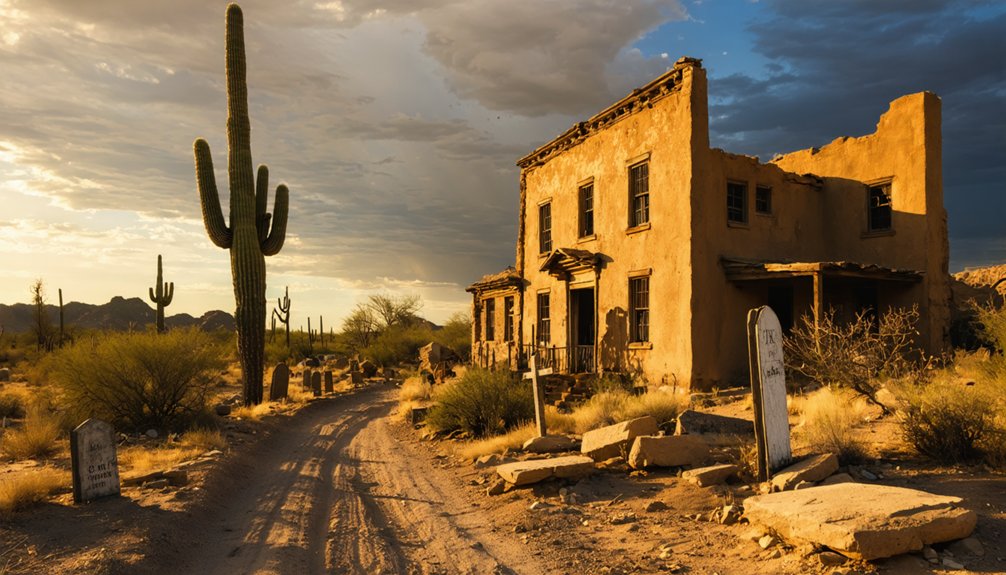
Beyond the townsite’s standing structures, two rewarding trails pull you deeper into Fairbank’s layered past. Lace up your boots and explore on your own terms.
- Grand Central Mill ruins sit 1.25 miles north along a gravel trail, showcasing raw mining history where ore was once processed during Tombstone’s silver boom.
- Fairbank Cemetery rests on a hilltop 0.5 miles north, accessible via a scenic loop trail with genuine frontier atmosphere.
- Interpretive plaques along both routes explain preservation efforts that keep these fragile sites accessible and protected.
- The San Pedro River loop north of town adds natural beauty alongside historical remnants worth discovering.
Both trails are free and self-guided, giving you the freedom to move at your own pace through Arizona’s compelling past.
When Is the Best Time to Visit Fairbank Ghost Town?
Timing your visit to Fairbank can make the difference between a comfortable, memorable trip and a sweltering slog through the Arizona desert. October through April offers the sweetest window, when mild temperatures let you explore the historical architecture at a leisurely pace without the brutal summer heat bearing down on you.
Spring and fall are especially rewarding for wildlife observation, as migratory birds crowd the San Pedro River corridor and deer move freely through the riparian vegetation.
If you’re planning to visit the schoolhouse, remember it’s only open Friday through Sunday, 9:30 a.m. to 4:30 p.m.
Summer visits aren’t impossible, but arrive early before temperatures climb.
The townsite stays open daily during daylight hours, so you’ve always got flexibility to roam on your own schedule.
What Should You Pack for a Day at Fairbank?
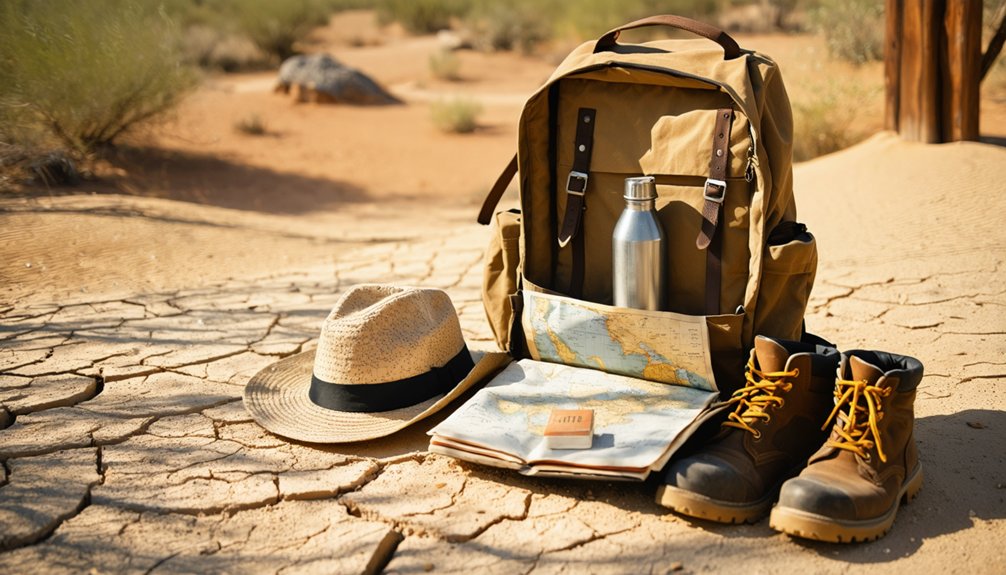
Since Fairbank sits in the open Sonoran Desert with minimal shade and no concessions on-site, what you bring with you directly shapes how much you’ll enjoy the visit. You’ll be walking gravel trails, reading outdoor plaques about local legends, and soaking in historical artifacts scattered across the townsite. Pack smart so nothing cuts your exploration short.
- Water – Bring at least two liters per person; desert heat drains you faster than you’d expect
- Sun protection – Hat, sunscreen, and sunglasses are non-negotiable under Arizona’s open sky
- Sturdy footwear – The 1.25-mile trail to Grand Central Mill ruins demands solid, closed-toe shoes
- Camera or notebook – You’ll want to document the interpretive signs and surviving structures firsthand
Freedom here means arriving prepared and leaving on your own terms.
Ghost Towns Near Fairbank on Highway 82
Highway 82 strings together some of Arizona’s most compelling ghost towns, and Fairbank sits right in the middle of that historical corridor. Head west and you’ll reach Tombstone, where silver fever once drove thousands into the desert.
Highway 82 connects Arizona’s most compelling ghost towns, with Fairbank anchoring the historical corridor between silver and copper country.
Push east and Bisbee’s copper-era architecture rises from canyon walls, its cultural significance drawing visitors who appreciate living history alongside abandoned streets.
Fairbank itself anchors this stretch through serious historical preservation — seven surviving structures and interpretive trails keep the 1880s mining era tangible rather than theoretical. Unlike more commercialized stops along the route, Fairbank lets you move freely through genuine ruins without crowds or entry fees.
String these three towns together on a single drive and you’ve got a road trip that covers Arizona’s boom-and-bust story completely.
Frequently Asked Questions
Is Overnight Camping Allowed at Fairbank Townsite in Arizona?
Yes, you can camp overnight at Fairbank Townsite! You’ll need a backcountry permit costing just $2 per person nightly. It’s perfect for historic preservation exploration and wildlife observation under Arizona’s breathtaking, freedom-filled starry skies.
You’ll find Fairbank Townsite at 31.72283° N, -110.186229° W, guiding you straight to this remarkable historical preservation gem. Plug these coordinates in and you’re ready for unforgettable ghost town tours on your own terms!
How Many Vehicles Can Park at Fairbank Townsite at One Time?
You’ll find parking capacity holds just 12 vehicles, so you’ll want to arrive early, plan smart, and explore freely. Keep visitor restrictions in mind — spots fill fast, especially on busy Friday-through-Sunday schoolhouse hours.
Is There an Admission Fee to Enter Fairbank Ghost Town?
You don’t pay a dime to explore Fairbank’s historic preservation wonders! Visitor amenities, including the schoolhouse, are completely free. You’ll enjoy unrestricted access daily during daylight hours — no permits required for daytime adventures.
What Days and Hours Is the Fairbank Schoolhouse Open to Visitors?
You’ll unseal a treasure trove of historical artifacts and preservation efforts when the Fairbank Schoolhouse swings open its doors Friday through Sunday, from 9:30 a.m. to 4:30 p.m., welcoming your free, unrestricted exploration!
References
- https://en.wikipedia.org/wiki/Fairbank
- https://www.blm.gov/visit/fairbank-historic-townsite
- https://www.youtube.com/watch?v=5lZ9oG0PcjE
- https://www.gvrhc.org/Library/FairbankGhostTown.pdf
- https://www.youtube.com/watch?v=NHSjfwV4qaw
- https://wheninyourstate.com/arizona/fairbank-the-arizona-railroad-town-that-lived-and-died-with-tombstone/
- https://www.youtube.com/watch?v=s2Fd7kRs1Io
- https://tucson.com/lifestyles/article_d1a7e5fa-b739-5cf4-b2ab-6a6b9c2030c7.html
- https://southernarizonaguide.com/fairbank-az-ghost-town/
- https://www.youtube.com/watch?v=R9_YJ1bt6lQ