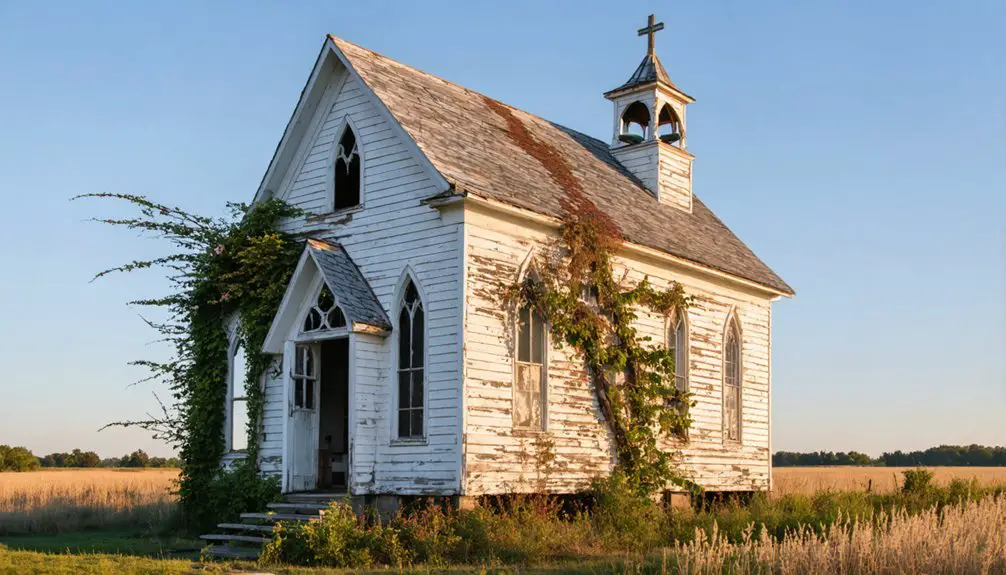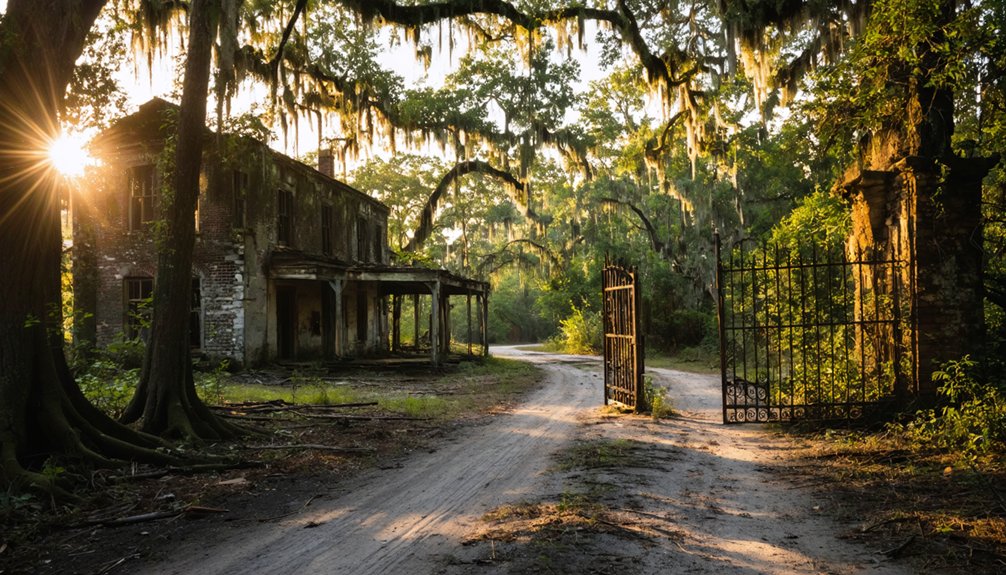
Grand Gulf, Mississippi pulls you back to a world frozen in time — where a cotton empire crumbled beneath tornadoes, an encroaching river, and Civil War fire. You’ll find Confederate earthworks, a battlefield museum, and haunting quiet across 400 acres of history. Plan at least two to three hours on-site, arrive early, and pair your visit with Windsor’s ghostly ruins and Port Gibson’s antebellum streets. There’s far more to this story than first meets the eye.
Key Takeaways
- Grand Gulf, located 10 miles northwest of Port Gibson, MS, is open daily 8 a.m.–5 p.m., with a recommended 3-hour visit.
- Explore Civil War earthworks at Fort Cobun and Fort Wade, climb the observation tower, and visit the on-site museum.
- The town was devastated by an 1853 tornado, river erosion, and Civil War destruction, leaving it “frozen at its moment of collapse.”
- Nearby attractions include Windsor ruins, Alcorn State University, Claiborne County Courthouse, and the Grand Gulf Nuclear Station overlook.
- Arrive early between 8–9 a.m. and combine Grand Gulf with Port Gibson’s antebellum architecture and local dining for a fuller experience.
What Made Grand Gulf, Mississippi a Ghost Town?
Once a thriving cotton port rivaling Mississippi’s greatest cities, Grand Gulf’s fate unraveled through a brutal combination of natural disaster and human conflict.
In 1853, a devastating tornado tore through the town, weakening its foundation just as the Mississippi River began its relentless environmental impact — eroding 52 city blocks by 1860 and swallowing what thousands had built.
Population collapsed from 1,000 to just 158 desperate souls.
You’d think that was enough, but the Civil War delivered the final blow. Confederate fortifications attracted Union assault, and whatever buildings survived erosion were destroyed and never rebuilt.
Historical preservation efforts couldn’t reclaim what nature and warfare consumed together.
Today, Grand Gulf stands as Mississippi’s most haunting reminder that even prosperous communities can vanish when geography and history conspire against them.
How Do You Get to Grand Gulf Military State Park?
You’ll find Grand Gulf Military State Park at 12006 Grand Gulf Rd., Port Gibson, MS 39150, tucked 10 miles northwest of Port Gibson in Claiborne County.
From Port Gibson, follow the highway connections northwest until the landscape opens onto this storied stretch of Mississippi River bottomland.
Plug coordinates 32.0167, -91.0667 into your navigation system to avoid any wrong turns on the rural roads leading to this forgotten corner of American history.
Park Location And Address
Grand Gulf Military State Park sits 10 miles northwest of Port Gibson, Mississippi, tucked into unincorporated Claiborne County at 12006 Grand Gulf Rd., Port Gibson, MS 39150. You can reach the park by phone at (601) 437-5911. Use coordinates 32.0167, -91.0667 for precise navigation.
- Walk among historical architecture echoing local legends of cotton prosperity and Civil War battles.
- Plan roughly 2 hours to explore the full 400-acre grounds.
- Visit any day of the week between 8 a.m. and 5 p.m.
- Access the park easily from Port Gibson via nearby highway connections.
- Bring your camera — the observation tower delivers sweeping views of earthworks and batteries that once repelled Grant’s forces.
The open road leads here. Don’t overthink it — just go.
Driving Routes And Access
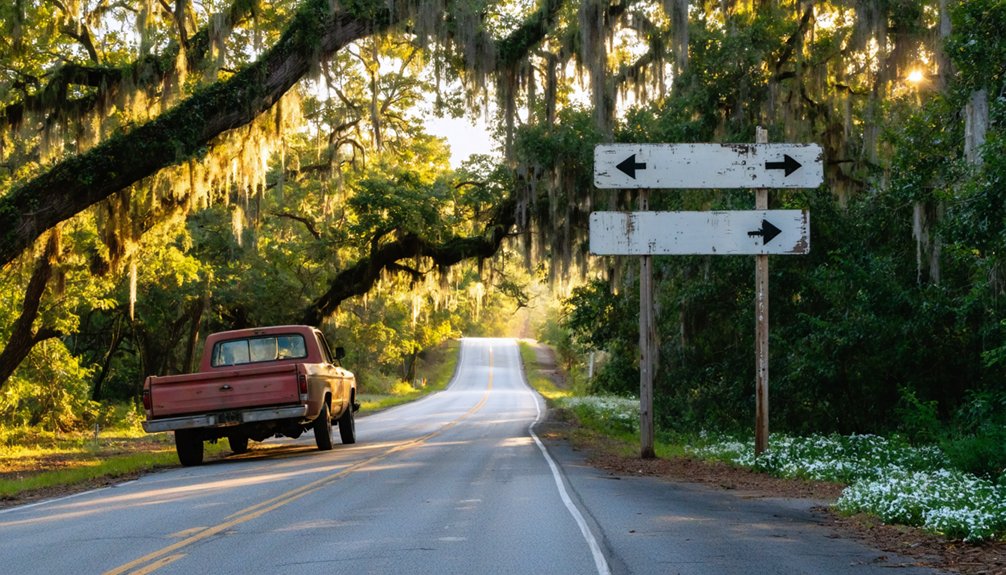
Getting to Grand Gulf Military State Park means threading through the quiet backroads of Claiborne County, where cotton fields and Spanish moss set the tone long before you arrive.
From Port Gibson, head northwest along Grand Gulf Road for roughly 10 miles. The drive itself feels deliberate, almost ceremonial, like the landscape is preparing you for what’s ahead.
You’ll find the park at 12006 Grand Gulf Rd., Port Gibson, MS 39150, with coordinates 32.0167, -91.0667 ready for your navigation app. Highway connections through Port Gibson make the approach straightforward.
Once you’re there, visitor amenities and thoughtful historical preservation reward the journey completely.
Plan around the park’s 8 a.m. to 5 p.m. window, seven days a week, and budget roughly two hours to absorb everything properly.
Once you’ve locked in the coordinates 32.0167, -91.0667, your navigation app will handle the heavy lifting, routing you through Port Gibson and northwest along Grand Gulf Road for those final 10 quiet miles.
These tips’ll sharpen your arrival:
- Save the coordinates offline — cell signals thin out near the river
- Plan two hours minimum to absorb the historical significance properly
- Visit any day — the park runs seven days weekly, 8 a.m. to 5 p.m.
- Call ahead at (601) 437-5911 to confirm seasonal preservation efforts or event closures
- Note the address: 12006 Grand Gulf Rd., Port Gibson, MS 39150
You’re navigating toward a place the river tried erasing. Every mile closer feels earned.
What the Civil War Left Behind at Grand Gulf
When you walk the grounds of Grand Gulf Military State Park, you’re treading on history that’s remarkably intact — Confederate earthworks like Fort Cobun and Fort Wade still rise from the landscape, silent testaments to the 1863 battle that repelled Ulysses S. Grant’s forces.
You can climb the observation tower to survey these fortifications, the same batteries that held Union troops at bay and gave the Confederates one of their fleeting victories.
Grant ultimately absorbed the setback, pivoting after the Battle of Port Gibson to use Grand Gulf as his base of operations — leaving behind a town already broken that would never find its way back.
Confederate Earthworks Still Standing
Though the town of Grand Gulf has long since crumbled and surrendered to the Mississippi River, the Civil War earthworks that once defended it still rise from the ground as quiet, stubborn reminders of the battle fought here.
Historical preservation efforts have kept Fort Cobun and Fort Wade intact, and their earthworks significance becomes clear the moment you walk their weathered ridgelines.
Don’t miss these features when you visit:
- Fort Cobun – commanding bluff fortification overlooking the Mississippi
- Fort Wade – lower battery position, fiercely contested during battle
- Two Confederate batteries that repelled Grant’s Union forces
- Observation tower offering sweeping views of both earthworks
- Hiking trails weaving directly through preserved battlefield terrain
You’re walking ground that actually held.
Battle Of Grand Gulf Aftermath
The earthworks held — but the town didn’t. After Grant’s forces withdrew following the Battle of Grand Gulf, Confederate troops eventually abandoned the site themselves. When Union soldiers returned, they destroyed what little remained of the already-battered town. Nobody ever rebuilt it.
What you’re walking through today is the result of that final erasure. The Civil War relics scattered across this landscape aren’t just remnants of battle — they’re evidence of a complete ending.
Historical preservation efforts here capture something rare: a place frozen at its moment of collapse.
Grant later used Grand Gulf as a base after his victory at Port Gibson, cementing the town’s role in his Vicksburg campaign. The irony is that the battle saved the earthworks while finishing off everything else.
What to See and Do at Grand Gulf
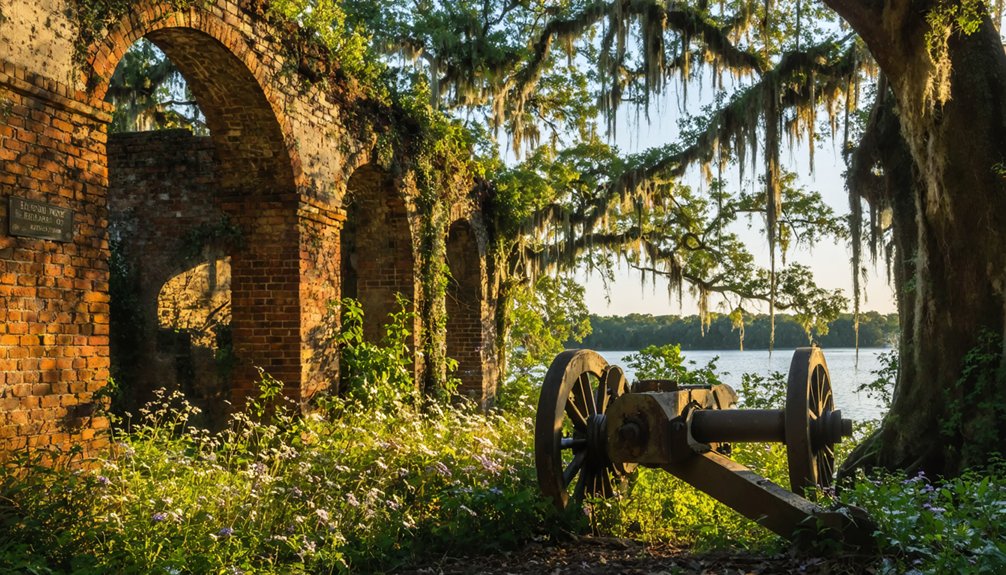
Spanning 400 acres of storied Mississippi terrain, Grand Gulf Military State Park packs a remarkable amount of history into a two-hour visit. You’ll find Civil War earthworks, scenic views from an observation tower, and echoes of a vanished cotton port waiting around every trail bend.
After exploring, seek out local dining in nearby Port Gibson to complete your journey.
Don’t miss these park highlights:
- Fort Cobun and Fort Wade earthworks, preserved Confederate batteries that repelled Grant’s forces
- The observation tower, offering sweeping scenic views of the Mississippi River landscape
- The on-site museum, chronicling the town’s rise, destruction, and abandonment
- Hiking trails weaving through 400 acres of historically charged terrain
- The Spanish House, one of Mississippi’s oldest surviving structures
How Long Should You Plan for Your Visit?
Most visitors find that two hours strikes the perfect balance at Grand Gulf Military State Park — enough time to climb the observation tower, wander the earthworks at Fort Cobun and Fort Wade, and step inside the museum without feeling rushed or overstaying the site’s quiet, weathered charm.
Historical preservation efforts here reward the curious, not the hurried.
If you’re drawn to lingering — reading every exhibit panel, photographing crumbling foundations, tracing the Mississippi’s slow erasure of those original 80 city blocks — budget closer to three hours.
The visitor amenities, including picnic facilities and hiking trails, make that extra time easy to fill meaningfully.
The park opens daily at 8 a.m. and closes at 5 p.m., so an early arrival gives you the most unhurried experience.
What Else to See Near Grand Gulf on the Same Trip
Grand Gulf sits close enough to Port Gibson that you’d be shortchanging yourself by not spending another hour there — a town so well-preserved that Ulysses S. Grant reportedly spared it from destruction.
Pair your ghost town exploration with local dining and nearby lodging to make a full weekend of it.
Don’t miss these stops along the way:
- Port Gibson’s antebellum churches, frozen in pre-war elegance
- Ruins of Windsor, 23 haunting columns standing alone in open fields
- Alcorn State University campus, Mississippi’s oldest public Black university
- Claiborne County Courthouse, a quiet monument to 19th-century craftsmanship
- Grand Gulf Nuclear Station overlook, where history collides with modern energy infrastructure
You’ll leave understanding why this forgotten corner of Mississippi carries such extraordinary weight.
Frequently Asked Questions
What Is the Admission Fee to Enter Grand Gulf Military State Park?
Ready to roam free through history? The knowledge doesn’t specify an admission fee, so you’ll want to call (601) 437-5911 to confirm costs before exploring Grand Gulf’s historical significance and wildlife observation opportunities firsthand.
Are Pets Allowed on the Hiking Trails at Grand Gulf Military State Park?
The knowledge doesn’t confirm pet-friendly trails or leash regulations at Grand Gulf. You’d want to call (601) 437-5911 directly—they’ll give you the most accurate, up-to-date answer before you roam freely through history.
Is Grand Gulf Military State Park Accessible for Visitors With Disabilities?
Like open gates welcoming all, Grand Gulf’s accessibility features and visitor accommodations aren’t fully detailed in available information. You’d want to call (601) 437-5911 directly to confirm specific disability accommodations before planning your visit.
Can Visitors Camp Overnight at Grand Gulf Military State Park?
You can camp overnight at Grand Gulf Military State Park! The park’s amenities include campgrounds where you’ll find freedom under open skies. Review camping regulations before you go, as the park’s hours run 8 a.m. to 5 p.m. daily.
Who Founded Grand Gulf, and What Were Their Occupations?
Ezra Marble, Turpin White, and Amos Whiting founded Grand Gulf in 1828 on their own property — free men carving civilization from wilderness. Their historical preservation efforts and local legends still echo through this hauntingly nostalgic ghost town you’ll explore.
References
- https://en.wikipedia.org/wiki/Grand_Gulf
- https://marieqrogers.com/2015/08/31/the-ghost-town-that-wont-die/
- https://ghost-towns.close-to-me.com/states/mississippi/grand-gulf-ms/
- https://en.wikipedia.org/wiki/Grand_Gulf_Military_State_Park
- https://en.wikipedia.org/wiki/List_of_ghost_towns_in_Mississippi
- https://www.tripadvisor.com/ShowUserReviews-g43963-d263740-r786479636-Grand_Gulf_Military_Park-Port_Gibson_Mississippi.html
- https://www.onlyinyourstate.com/nature/mississippi/historic-park-one-of-ms-best-kept-secrets
- https://www.legendsofamerica.com/ms-grandgulf/