Planning a ghost town road trip to Layland, West Virginia puts you on a quiet stretch of Route 41 in Fayette County, where Appalachia’s coal-boom past lingers in abandoned foundations and aging structures. Use ZIP code 25864 for accurate mapping and approach from Meadow Bridge, about 6.5 miles away. Visit in late spring through fall for the best conditions. Nearby ghost towns like Kaymoor and Nuttallburg round out an unforgettable route — and there’s much more to discover ahead.
Key Takeaways
- Layland sits along West Virginia Route 41 in Fayette County; use ZIP code 25864 and approach via Meadow Bridge for accurate navigation.
- Nearby ghost towns Kaymoor, Nuttallburg, and MacDougal offer additional coal-era ruins worth including on your itinerary.
- No lodging exists in Layland; book accommodations in Oak Hill, Fayetteville, or camp at New River Gorge National Park.
- Avoid entering condemned structures, watch for hidden mine shafts, and research land ownership before exploring any abandoned sites.
- Visit late spring through fall for best conditions; photograph rather than collect artifacts to preserve site integrity.
What Makes Layland, WV a Ghost Town Worth Visiting?
Tucked along West Virginia Route 41 in Fayette County, Layland is one of those quiet, almost-forgotten places that tells a bigger story than its size suggests. It’s a remnant of West Virginia’s coal-boom era, where company towns once bustled with miners and families before mine closures stripped away the population.
What’s left reflects the raw, unpolished truth of Appalachian industrial history. Historical preservation isn’t always about grand museums — sometimes it’s about standing where everyday people once lived and worked.
History doesn’t always wear a museum’s polish — sometimes it simply asks you to stand still and bear witness.
You’ll want to bring your camera, because the landscape offers compelling photography opportunities. For the best photography tips, shoot during golden hour to capture the mood of the terrain.
Layland rewards curious travelers who value authentic history over curated tourist experiences.
Why Did Layland’s Coal Mining Past Lead to Its Decline?
When you explore Layland’s history, you’ll find that coal companies once controlled nearly every aspect of life there, owning the homes, stores, and facilities that kept the community running.
Once the mines closed, those jobs vanished, and residents had little reason to stay.
That boom-and-bust cycle left behind the kind of hollowed-out landscape you’ll recognize as a classic West Virginia ghost town.
Mine Closures Caused Decline
Like many communities across West Virginia, Layland’s decline traces directly back to the coal industry that built it. When mines closed, jobs vanished overnight, and families had little reason to stay. That’s the boom-and-bust cycle that shaped so much of Appalachian mining history — towns rose fast and fell just as quickly.
Once the economic engine stopped, Layland’s population shrank, leaving behind abandoned structures that quietly tell the story of what once was. You can still sense that history when you visit, seeing how a thriving company town transformed into a near-ghost community.
For travelers who value exploring real, unfiltered places, Layland offers an honest look at how mine closures reshaped lives and landscapes across West Virginia’s coal country.
Company Towns Left Behind
Coal companies didn’t just employ miners in places like Layland — they built entire worlds around them. Understanding this historical context helps you appreciate what you’re actually seeing when you walk through what’s left. These weren’t ordinary towns; they were company-controlled ecosystems.
Company towns typically included:
- Company-owned housing rented directly to mining families
- Commissary stores where workers spent company-issued scrip
- Schools and churches funded and managed by the coal operator
- Roads and utilities maintained only as long as mines stayed profitable
When the mines closed, companies had no reason to maintain anything. That’s where preservation challenges become real — without institutional support, structures decay fast.
What you encounter in Layland today reflects both coal’s ambition and its sudden, indifferent departure.
How Do You Get to Layland on WV Route 41?
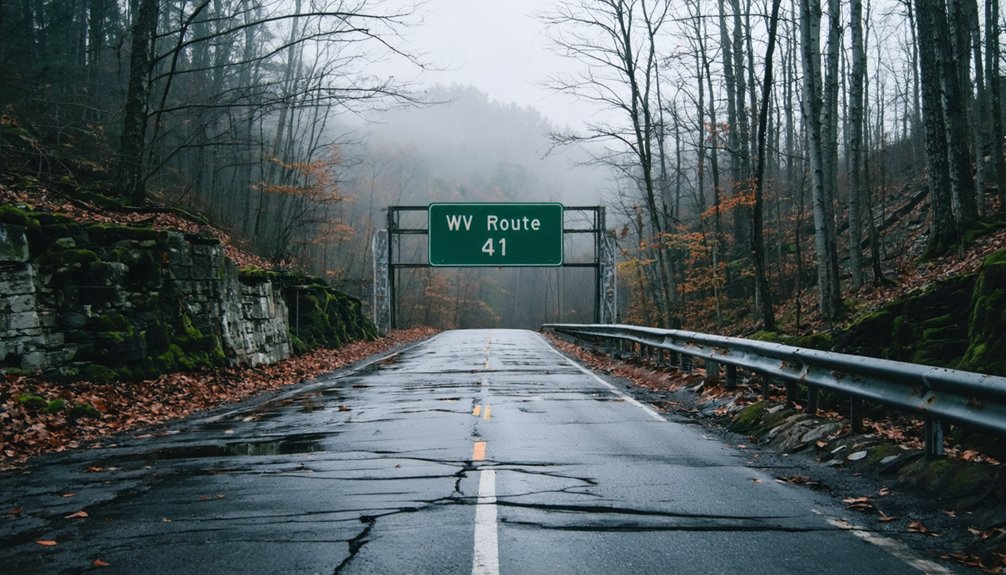
To reach Layland, you’ll want to get yourself onto West Virginia Route 41, the road that runs directly through this quiet Fayette County community.
Your easiest landmark reference is Meadow Bridge, which sits just 6.5 miles to the east-southeast of Layland.
From Meadow Bridge, you can follow WV Route 41 west-northwest until Layland appears along the route.
Finding WV Route 41
Once you’ve set your sights on Layland, getting there is straightforward — the town sits directly on West Virginia Route 41 in Fayette County, making it accessible by car without any complicated detours.
Use these navigation tips to reach WV Route 41 confidently:
- Set Meadow Bridge as your reference point — Layland lies 6.5 miles west-northwest from there.
- Use ZIP code 25864 to pin Layland accurately on any mapping app.
- Watch for historical preservation markers along Route 41 that signal coal-country heritage.
- Slow down near mining relics — remnants often appear roadside without much warning.
The route rewards curious travelers who appreciate open roads, Appalachian landscapes, and the freedom to explore forgotten communities at their own pace.
Approaching From Meadow Bridge
Meadow Bridge serves as your practical launchpad for reaching Layland, sitting just 6.5 miles east-southeast of the ghost town along WV Route 41. From there, you’ll head west-northwest, following the route as it cuts through Fayette County’s rugged Appalachian terrain.
The drive itself sets the tone. You’re not just covering miles — you’re moving through a landscape shaped by coal’s rise and fall, where historical preservation efforts keep the memory of mining communities alive.
Every bend in the road hints at cultural significance, reminding you that these hollows once hummed with industry and working families.
Keep your eyes open as you close the distance. Layland won’t announce itself with signage or spectacle, but that quiet arrival is exactly what makes this kind of road trip worth taking.
What’s Left to See in Layland Today?
Although Layland’s population has dwindled dramatically since its coal-town heyday, you’ll still find remnants worth stopping for. The landscape itself tells the story — hollow streets, aging structures, and a quiet that speaks volumes about what once thrived here.
Layland whispers its past through hollow streets, aging structures, and a silence that remembers everything.
Local folklore ties the community to hardworking mining families who built lives around the coal economy before it collapsed beneath them. Historical preservation efforts, however modest, keep those memories alive.
Here’s what to look for on your visit:
- The active post office — proof Layland still holds an official community identity
- WV Route 41 corridor — where the town’s original layout remains traceable
- Abandoned building foundations — scattered echoes of company-town infrastructure
- The surrounding landscape — raw Appalachian terrain that framed miners’ daily lives
When Is the Best Time to Visit West Virginia Ghost Towns?
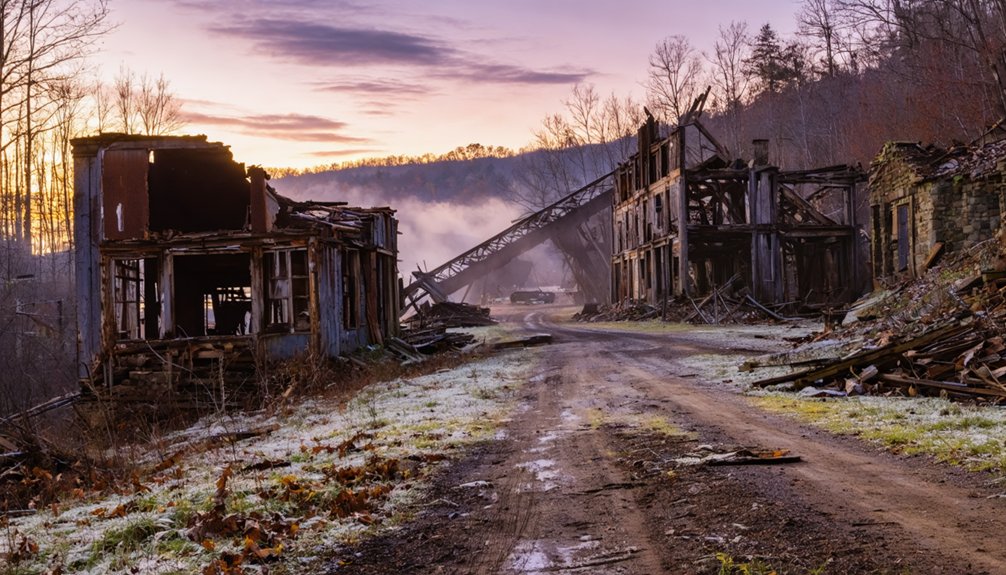
Timing your visit to West Virginia’s ghost towns can make or break the experience. Late spring through early fall offers the clearest roads and most comfortable conditions for exploring places like Layland. You’ll move freely through Fayette County without worrying about icy mountain routes cutting your trip short.
That said, avoid peak summer weekends if you prefer a quieter, more reflective atmosphere. These sites carry deep community memories, and overcrowding can disrupt that connection.
Fall brings stunning foliage that frames abandoned structures beautifully, making your photos far more striking.
Historical preservation efforts sometimes include seasonal events or guided walks, so check local Fayette County listings before you go.
Whatever season you choose, arrive with respect for what these places represent — real lives built around coal.
Which Ghost Towns Near Layland Should You Add to Your Route?
Fayette County holds more than just Layland within its coal-scarred landscape, so you’ll want to build a route that captures the full weight of the region’s boom-and-bust past. Community nostalgia runs deep here, and historical preservation efforts give these stops real meaning.
Consider adding these four destinations to your route:
- Thurmond – A nearly abandoned railroad town with remarkable surviving architecture
- MacDougal – A stripped-down coal camp that reflects industrial decline honestly
- Kaymoor – A former mine site with ruins accessible through New River Gorge National Park
- Nuttallburg – Another park-preserved coal operation showing intact tipple structures
Each stop deepens your understanding of how entire communities rose and collapsed around a single industry.
Travel WV Route 41 as your spine, then branch outward deliberately.
What Trespassing Laws and Hazards Apply to WV Ghost Towns?
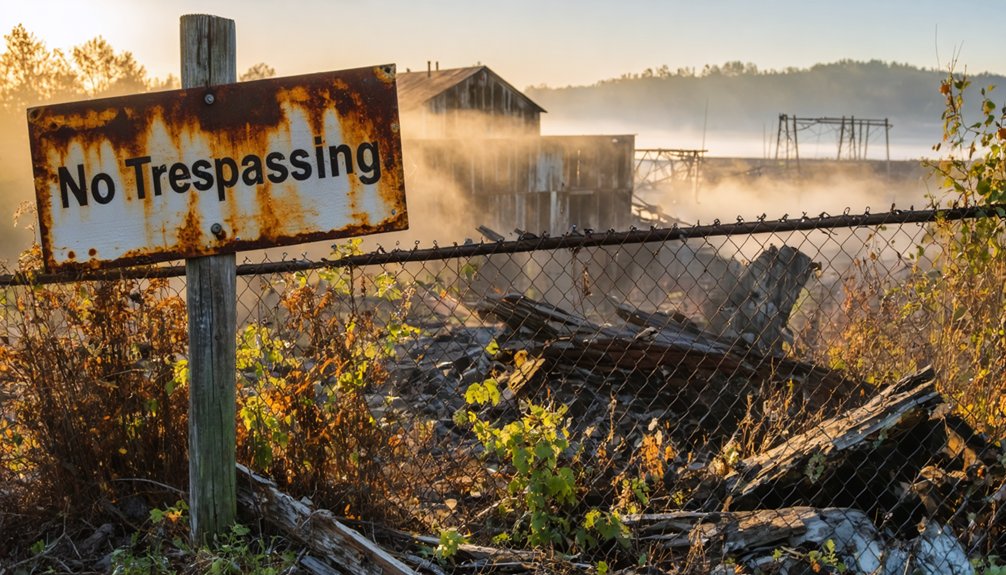
Before you pull off WV Route 41 and start wandering through the remnants of a coal camp, you need to understand where you’re legally allowed to walk. West Virginia enforces legal restrictions on private and posted land, meaning trespassing carries real consequences, including fines. Always research land ownership before exploring any ghost town site.
Safety hazards are equally serious. Abandoned structures can collapse without warning, old mine shafts may sit hidden beneath overgrowth, and rotting floors offer zero support. Rusty metal, broken glass, and unstable foundations turn curiosity into injury fast.
Your freedom to explore Appalachian history depends on doing it responsibly. Check public land boundaries, carry a map, and never enter a condemned or fenced structure. Respecting these rules keeps you safe and out of legal trouble.
Where Do You Stay and Eat Near Layland, West Virginia?
Since Layland itself offers no lodging or restaurants, you’ll need to base your trip out of nearby towns in Fayette County, where options range from budget motels to locally owned diners serving up home-cooked Appalachian staples. Planning ahead keeps your road trip flexible and stress-free.
Here are four practical lodging options and local dining tips:
- Oak Hill and Fayetteville offer the closest concentration of motels and local dining spots within easy driving distance.
- Bed-and-breakfasts near the New River Gorge area provide a more atmospheric overnight stay.
- Local diners in Fayetteville serve regional comfort food worth stopping for after exploring.
- Camping at nearby New River Gorge National Park gives you a budget-friendly, independent lodging option with natural surroundings.
How Do You Explore Ghost Towns Without Damaging Them?

Exploring a ghost town like Layland feels like stepping into a living museum, so you’ll want to treat it that way. Responsible tourism means you leave everything exactly as you found it. Don’t pull boards from old structures, carve into walls, or pocket artifacts. Those remnants tell the story of the people who once lived there.
Preserving sites depends on visitors like you making smart choices. Stick to visible paths, avoid entering unstable buildings, and keep noise low. Bring a camera instead of a souvenir. If you spot trash, carry it out.
You’re free to explore, but that freedom works best when you protect what’s left. Ghost towns survive through respect, and your choices today determine what future travelers get to discover.
Frequently Asked Questions
Does Layland’s Post Office Still Operate for ZIP Code 25864?
Yes, Layland’s post office still operates under ZIP code 25864, keeping its postal history alive. You’ll find it’s a rare lifeline connecting rural communities like Layland to the outside world, even as the town fades.
Is Layland Suitable for Children Interested in West Virginia History?
You’ll find Layland’s historical significance engrossing for curious kids. Explore West Virginia’s coal-mining past through family-friendly activities like discovering remnants of company towns, sparking meaningful conversations about Appalachian heritage and the freedom communities once built together.
Are There Guided Tours Available Specifically for Fayette County Ghost Towns?
No specific guided tours for Fayette County ghost towns appear in available data, but you’ll find local legends and historical preservation efforts that make self-guided exploration of places like Layland richly rewarding and independently adventurous.
Can You Combine a Layland Visit With New River Gorge National Park?
Like two puzzle pieces, you can combine both! Drive WV Route 41 to explore Layland’s historic architecture, then chase scenic viewpoints at New River Gorge National Park — it’s your ultimate Fayette County freedom adventure.
Is Photography of Abandoned Structures in Layland Legally Permitted?
We don’t have confirmed details on Layland’s specific legal considerations for urban exploration photography. You’ll want to research local ordinances, respect private property boundaries, and always get permission before photographing abandoned structures you don’t own.
References
- https://en.wikipedia.org/wiki/Layland
- https://kids.kiddle.co/List_of_ghost_towns_in_West_Virginia