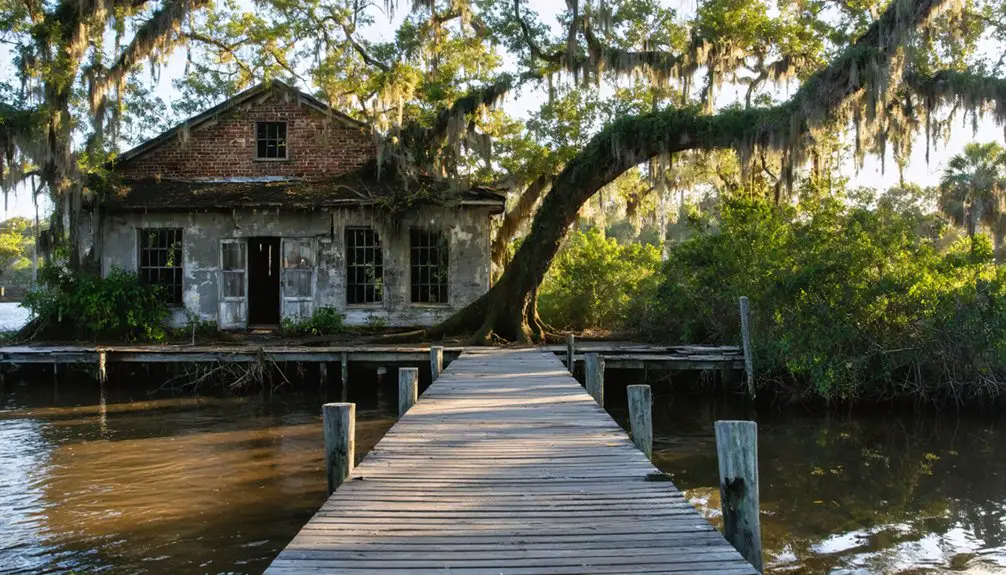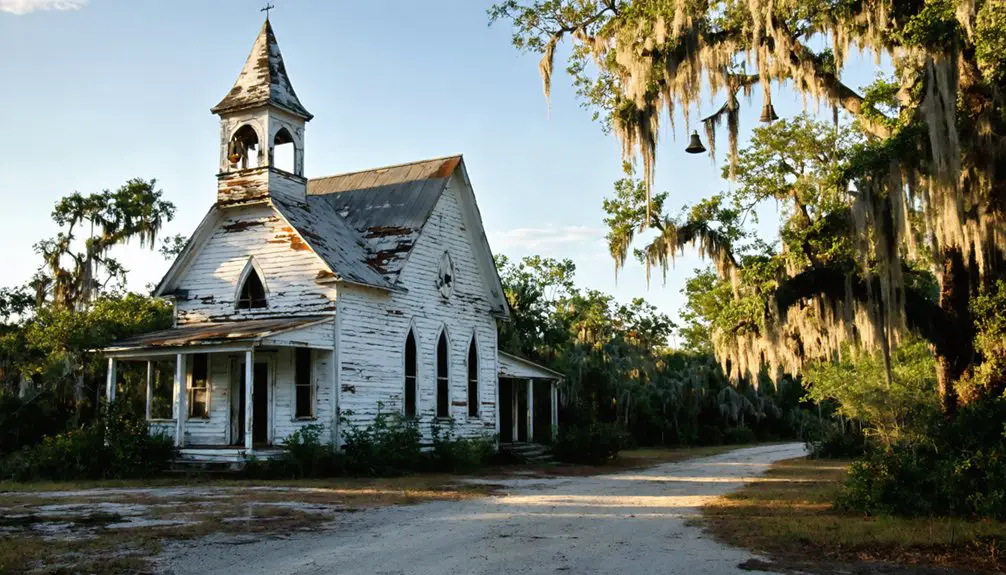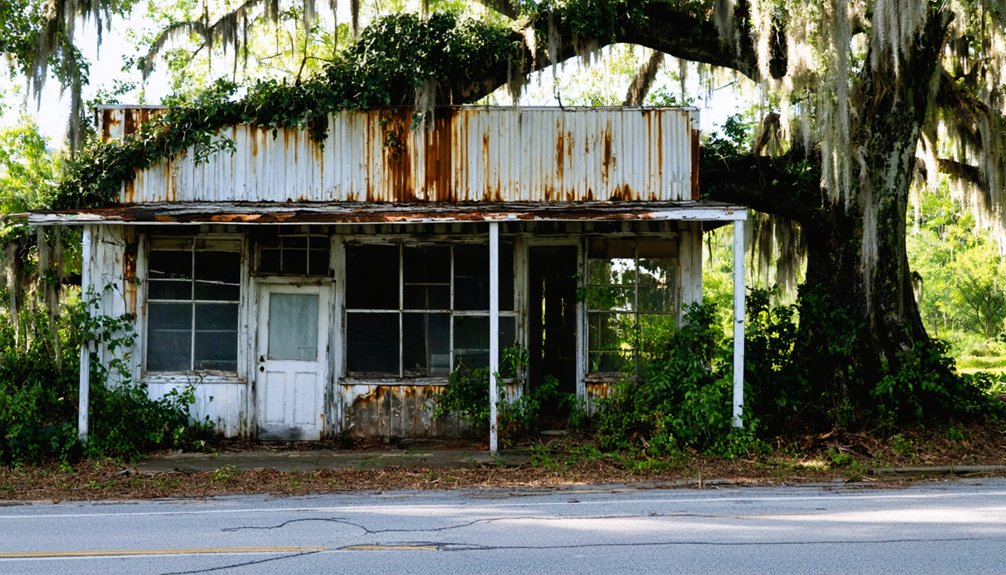
Your Tiger Bay ghost town road trip starts just 7 miles west of Daytona Beach, tucked between Interstate 95 and Interstate 4. Head to 4316 W International Speedway Blvd and choose from four public entrances into 31,000 acres of Florida scrub. You’ll find ruins of forgotten settlements, a historic 1917 brick highway, and folklore about families who vanished when the land changed hands. There’s far more waiting beneath the surface than you’d expect.
Key Takeaways
- Tiger Bay State Forest lies 7 miles west of Daytona Beach, accessible via four entrances including historic Pershing Highway, Old DeLand Road, and International Speedway Blvd.
- Ruins of a forgotten settlement hide beneath Florida scrub, with folklore of vanished turpentine workers and homesteaders adding ghost town intrigue.
- Pershing Highway, an all-brick road built in 1917, connects Daytona Beach to DeLand and remains a drivable historic landmark within the forest.
- Bring offline maps, waterproof boots, insect repellent, and extra water, as cell service is limited across the remote 31,000-acre wilderness.
- Overnight camping is restricted to designated areas; always check hunting season dates and obtain required permits by calling (386) 317-3277.
The Tiger Bay Ghost Town Story Locals Still Talk About
Deep in the heart of Tiger Bay State Forest, seven miles west of Daytona Beach, the ruins of a forgotten settlement have been quietly reclaiming their place beneath the Florida scrub. You’ll find historical legends woven into the landscape here, where turpentine workers and homesteaders once carved out lives before vanishing without ceremony.
Local folklore keeps their memory alive. Longtime Volusia County residents still trade stories about the families who disappeared when the land shifted from private hands into state management. Walk the old brick Pershing Highway, built in 1917, and you’re tracing a road those residents once depended on daily.
Tiger Bay doesn’t announce its ghost town history loudly. It waits for curious travelers willing to read the silence between the cypress trees.
How To Get To Tiger Bay State Forest?
You’ll find Tiger Bay State Forest seven miles west of Daytona Beach, tucked between Interstate 95 to the east and Interstate 4 to the south. The forest office sits at 4316 W International Speedway Blvd, giving you a reliable landmark to anchor your navigation.
Four public entrances — including the historic all-brick Pershing Highway built in 1917 — serve three separate tracts, so you’ll want to plan which access road best matches your destination within the forest.
Location And Nearby Highways
Nestled seven miles west of Daytona Beach, Tiger Bay State Forest sits conveniently between two major interstates — Interstate 95 to the east and Interstate 4 to the south — making it surprisingly easy to reach from multiple directions.
The forest’s historical significance runs deep, with local legends tied to the iconic 1917 all-brick Pershing Highway connecting Daytona Beach to DeLand.
Here’s how you’ll navigate your approach:
- Exit Interstate 95 heading west toward Daytona Beach
- Follow International Speedway Blvd to reach the office at 4316 W International Speedway Blvd
- Use the historic Pershing Highway entrance for an authentically atmospheric arrival
- Access three separate tracts via five public roadways spread across the area
Call (386) 317-3277 before heading out to confirm current access conditions.
Public Entrances And Access
Getting to Tiger Bay State Forest is straightforward once you understand its layout — three separate tracts spread across Volusia County, connected by five public roadways that aren’t clustered in one convenient spot. You’ll want to plan your route deliberately.
One standout among the entrances is the historic all-brick Pershing Highway, built in 1917 and functioning as one of the forest’s most compelling historical landmarks. It connects Daytona Beach to DeLand and sets an atmospheric tone before you’ve even arrived.
For visitor amenities and general orientation, head to the forest headquarters, located half a mile west of the Old DeLand Road entrance. You can also contact the office at (386) 317-3277 before your visit.
The office address is 4316 W International Speedway Blvd, Daytona Beach.
The Four Ways Into Tiger Bay State Forest
With four public entrances spread across three separate tracts, Tiger Bay State Forest isn’t the kind of place where a single road gets you everywhere. Each entry point opens a different chapter of this wild landscape, including historical landmarks and routes tied to local legends.
With four entrances across three tracts, Tiger Bay State Forest isn’t a place where one road tells the whole story.
Your four access options:
- Historic Pershing Highway – An all-brick road built in 1917, connecting Daytona Beach to DeLand with serious old-Florida character.
- Old DeLand Road Entrance – Positioned near forest headquarters, just half a mile east of the main office.
- International Speedway Boulevard – The most recognizable approach for first-timers.
- Western Tract Entrance – Reaches the forest’s more remote sections beyond I-95.
Pick your entry point based on which tract you’re exploring — they’re not interchangeable.
What To See and Do Inside Tiger Bay?
Once you’re inside Tiger Bay State Forest, you’ll find the wetlands teeming with Carolina chickadees, red-shouldered hawks, and dozens of other bird species that make this one of Central Florida’s top birdwatching destinations.
You can also launch a kayak or canoe onto the forest’s lakes and ponds, paddling through an expansive wetland ecosystem that stretches across more than 31,000 acres.
If you time your visit right, five distinct hunting seasons—including archery, muzzle-loading, and general gun—give sportsmen ample opportunities to pursue game throughout the year.
Wildlife And Birdwatching Opportunities
Tiger Bay State Forest is one of Central Florida’s premier birdwatching destinations, and you’ll understand why the moment you step onto its trails. The 31,500 acres of wetlands carry their own cultural heritage — local legends speak of pristine wilderness unchanged for generations.
Keep your eyes open for:
- Carolina chickadees darting through the forest canopy
- Red-shouldered hawks circling above the wetland marshes
- Wading birds stalking the shallow lake edges at dawn
- Migratory species passing through during seasonal shifts
Every trail doubles as a natural observation platform, putting you directly inside one of Florida’s most diverse ecosystems. Bring binoculars, move quietly, and let the wetlands reveal what they’re hiding just beyond the tree line.
Paddling Forest Lakes
Beyond the birdwatching trails, the lakes and ponds scattered across Tiger Bay’s 31,000-plus acres open up an entirely different way to experience the forest — from the water itself. Launching a kayak or canoe here puts you inside a wetland ecosystem steeped in local legends, where old-timers whisper about vanished settlements swallowed by cypress and water.
You’ll paddle through habitats that define Florida’s wild interior, surrounded by the same landscapes that drew hunters, trappers, and settlers generations ago. Historical preservation efforts protect these waters, keeping them largely untouched and genuinely remote.
No crowds, no motor noise — just open sky, bird calls, and dark tannic water beneath your hull. It’s the kind of freedom that’s increasingly hard to find.
Hunting Season Activities
Hunters have worked Tiger Bay’s wetlands for generations, and the forest still runs five separate seasons each year to keep that tradition alive.
Historical legends and local folklore paint these marshes as prime ground, and the regulations back that reputation up.
Here’s what the season calendar looks like:
- Archery Season – September 15 to October 14
- Muzzle-loading Gun Season – October 20–22
- General Gun Season – November 3 to December 30
- Small Game and Spring Turkey Seasons – dates listed in current regulations
You’ll need a valid permit before stepping foot inside — no exemptions exist.
Plan your entry through one of five public access roads and check conditions at headquarters before heading out.
Tiger Bay’s Best Trails, Lakes, and Paddling Routes
Whether you’re lacing up hiking boots or loading a kayak, Tiger Bay State Forest delivers an impressive spread of trails, lakes, and paddling routes across its 31,000-plus acres.
Trails weave through 31,500 acres of wetlands, doubling as prime birdwatching corridors where red-shouldered hawks and Carolina chickadees cut across open sky.
You’ll spot historical landmarks along the way, including the 1917 all-brick Pershing Highway entrance that once connected Daytona Beach to DeLand — a route steeped in cultural events and regional history.
The forest’s scattered lakes and ponds offer calm, uncrowded paddling for those who prefer water over land.
With five public access roads serving three separate tracts, you can explore freely, cover new ground each visit, and rarely retrace the same path twice.
Why Tiger Bay Is Central Florida’s Top Birdwatching Destination
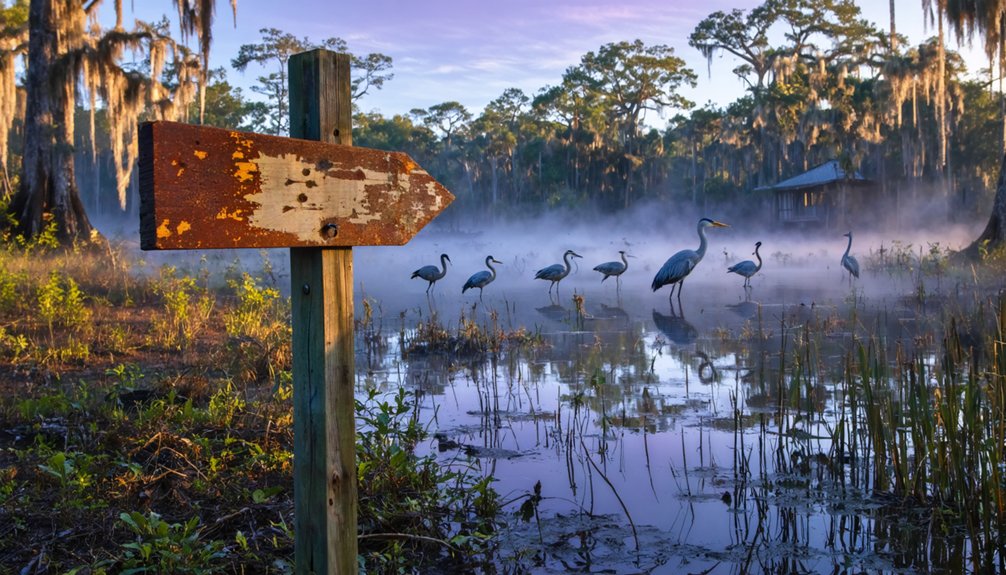
Tiger Bay’s trails and waterways set the stage for one of the region’s richest birdwatching experiences. Once you’ve spent time moving through its 31,500 acres of wetlands, you’ll understand why it ranks as Central Florida’s top spot for birding.
Local folklore suggests early travelers along historical landmarks like the 1917 Pershing Highway often paused just to listen to the forest come alive. Here’s what you’ll find:
- Carolina chickadees darting through cypress canopies
- Red-shouldered hawks commanding open wetland corridors
- Wading birds congregating around interior lakes and ponds
- Migratory species passing through during seasonal shifts
Every trail doubles as a natural observation point, giving you unfiltered access to avian life that thrives precisely because this landscape remains largely undisturbed.
When To Hunt at Tiger Bay and What Permits You Need
Across five distinct seasons each year, Tiger Bay opens its gates to hunters pursuing everything from white-tailed deer to wild turkey. Archery season kicks off September 15th through October 14th, followed by muzzle-loading gun season October 20th–22nd.
General gun season stretches November 3rd through December 30th, with small game and spring turkey rounding out your opportunities.
Local folklore suggests hunters have roamed these wetlands for generations, weaving historical legends into Tiger Bay’s rugged identity. That tradition continues today — but you’ll need proper permits before stepping foot inside. No exemptions exist, so secure yours in advance. Call (386) 317-3277 for current requirements.
Overnight camping stays are restricted to designated areas only. Come prepared, follow the regulations, and Tiger Bay rewards you with an unforgettable hunt across 31,000 wild acres.
What To Bring to Tiger Bay State Forest
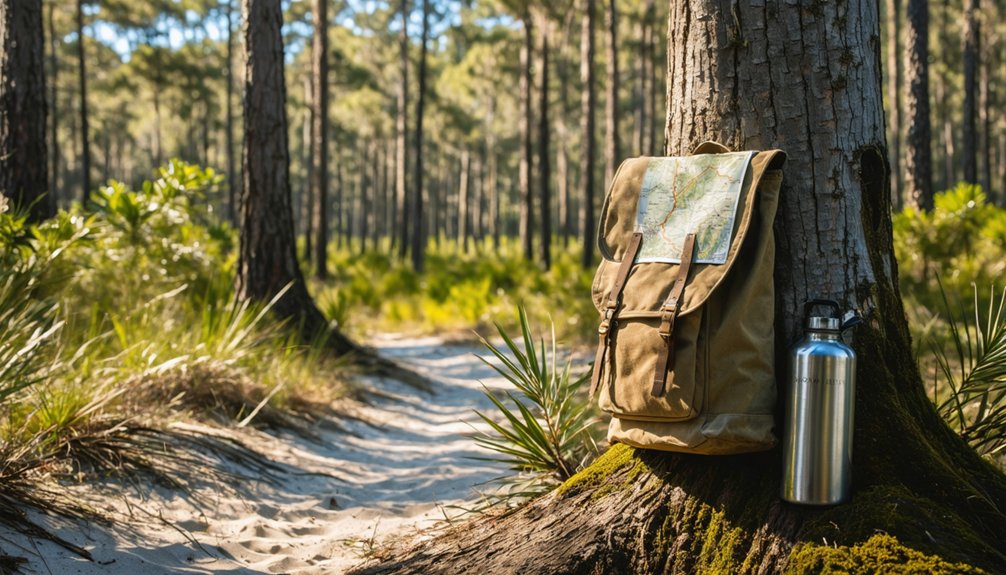
Packing smart makes the difference between a frustrating visit and a rewarding one at Tiger Bay’s 31,000 wetland acres. You’re entering raw Florida wilderness, so prepare accordingly and move freely through every trail and waterway.
- Navigation tools – Download offline maps; cell service disappears fast out here.
- Binoculars and field guides – Carolina chickadees and red-shouldered hawks reward patient watchers.
- Camera gear – Historical artifacts like the 1917 brick Pershing Highway deserve documentation.
- Family amenities – Pack sunscreen, insect repellent, extra water, and snacks for kids tackling longer observation trails.
Waterproof boots aren’t optional in wetland terrain — they’re essential. Bring your paddling gear if you’re hitting the forest lakes.
Freedom here rewards preparation, not improvisation.
Frequently Asked Questions
What Is the Contact Phone Number for Tiger Bay State Forest?
Like Thoreau seeking nature’s call, you can reach Tiger Bay State Forest for wildlife conservation and recreational activities by dialing (386) 317-3277 — your direct line to untamed Florida wilderness awaiting your free spirit.
Is Trapping Allowed Anywhere Within Tiger Bay State Forest Boundaries?
You can’t trap within Tiger Bay’s boundaries — wildlife regulations strictly prohibit it. However, hunting restrictions don’t limit your freedom to fish or frog year-round, letting you embrace the forest’s wild, untamed spirit freely.
Where Exactly Is Tiger Bay State Forest Headquarters Located?
Like a hidden gem tucked away, you’ll find Tiger Bay’s Forest management and Wildlife conservation headquarters half a mile west of the Old Deland Road entrance, where the forest’s free spirit truly comes alive.
Can Visitors Camp Overnight Anywhere Inside Tiger Bay State Forest?
You can’t camp just anywhere — Tiger Bay’s camping regulations restrict overnight accommodations to designated areas only. Embrace your freedom wisely by honoring these boundaries, ensuring the wild, untamed wetlands remain preserved for every adventurous soul after you.
What Is the Official Office Address for Tiger Bay State Forest?
You’ll find Tiger Bay State Forest’s official office at 4316 W International Speedway Blvd, Daytona Beach — your gateway to wildlife management and forest conservation, where untamed wilderness and boundless freedom await your exploration.
References
- https://en.wikipedia.org/wiki/List_of_ghost_towns_in_Florida
- https://www.paranormalghostsociety.org/Tiger Bay.htm
- https://polkhistorycenter.contentdm.oclc.org/digital/api/collection/pchaquarterly/id/248/download
- https://www.ghosttowns.com/states/fl/fl.html
- https://www.tripadvisor.ca/Attraction_Review-g34172-d3518728-Reviews-Tiger_Bay_State_Forest-Daytona_Beach_Florida.html
- https://explore-mag.com/exploring_tiger_bay_state_forest_in_daytona_beach/
- https://mosaicdaytona.com/tiger-bay-state-forest-mosaics-all-natural-neighbor/
- https://www.tripadvisor.co.nz/ShowUserReviews-g34172-d3518728-r453867775-Tiger_Bay_State_Forest-Daytona_Beach_Florida.html
- https://floridahikes.com/tiger-bay-state-forest/
- https://myfwc.com/recreation/cooperative/tiger-bay/