Washington Basin sits tucked inside Idaho’s White Cloud Mountains, where a late 1800s mining camp quietly collapsed and never came back. You’ll need a high-clearance 4WD vehicle, recovery gear, and plenty of water to reach this forgotten valley. The road typically opens in late June or early July, with July through September offering the best conditions. Everything you need to plan your trip and explore it safely is waiting ahead.
Key Takeaways
- Washington Basin, Idaho, is a remote 1800s mining ghost town in the White Cloud Mountains, featuring abandoned cabins, rusted boilers, and mining tailings.
- A high-clearance 4WD vehicle with terrain-appropriate tires and recovery gear is essential for navigating the steep, rugged access road.
- The best time to visit is July through September, after snowmelt clears the road, typically by late June or early July.
- Pack layered clothing, rain gear, at least three liters of water per person, and a first aid kit for rapidly changing mountain conditions.
- Respect structural instability by avoiding climbing on ruins, carry bear spray, and monitor for altitude sickness symptoms during exploration.
Where Washington Basin Sits in Idaho’s White Cloud Mountains
Tucked within Idaho’s remote White Cloud Mountains, Washington Basin emerged in the late 1800s as a rugged mining camp that never quite grew into the thriving settlement its prospectors had envisioned. Unlike nearby Bonanza or Custer, it remained isolated, swallowed by steep alpine terrain that challenged everyone who dared haul equipment through it.
Today, you’ll find scattered cabins, abandoned boilers, and tailings lining the valley floor — quiet monuments to historical preservation in one of Idaho’s most untamed corners. The basin’s remoteness that once limited its growth now works in your favor, keeping crowds away and wildlife encounters frequent.
Expect to share this sky-high ghost town with the mountains themselves, where freedom isn’t just a concept — it’s the entire landscape surrounding you.
What’s Left of the Ghost Town Today?
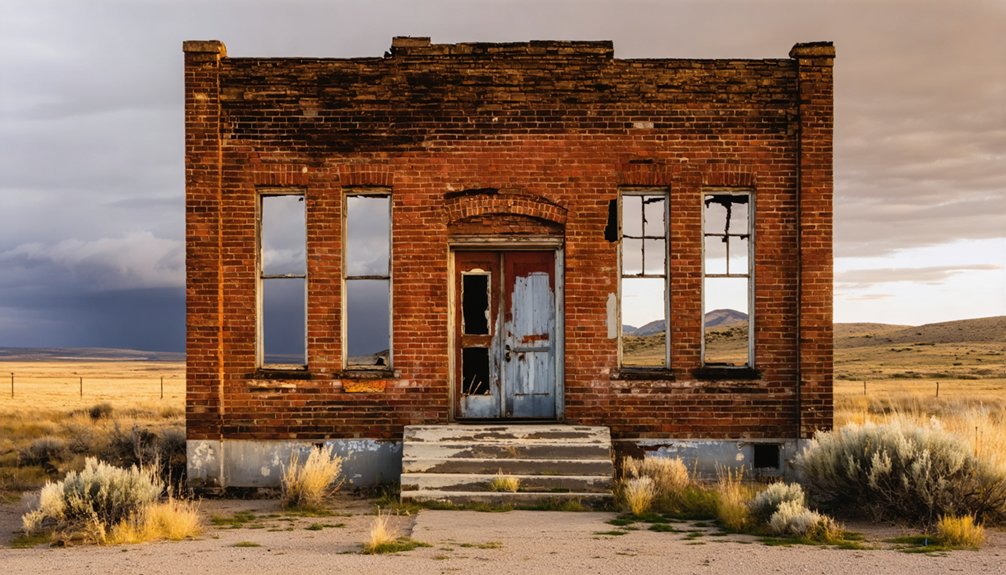
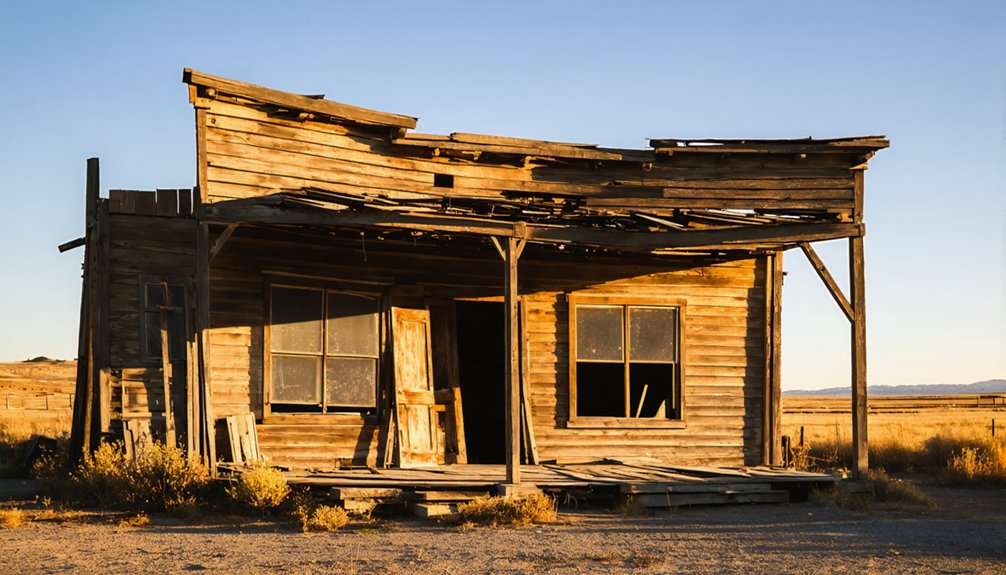
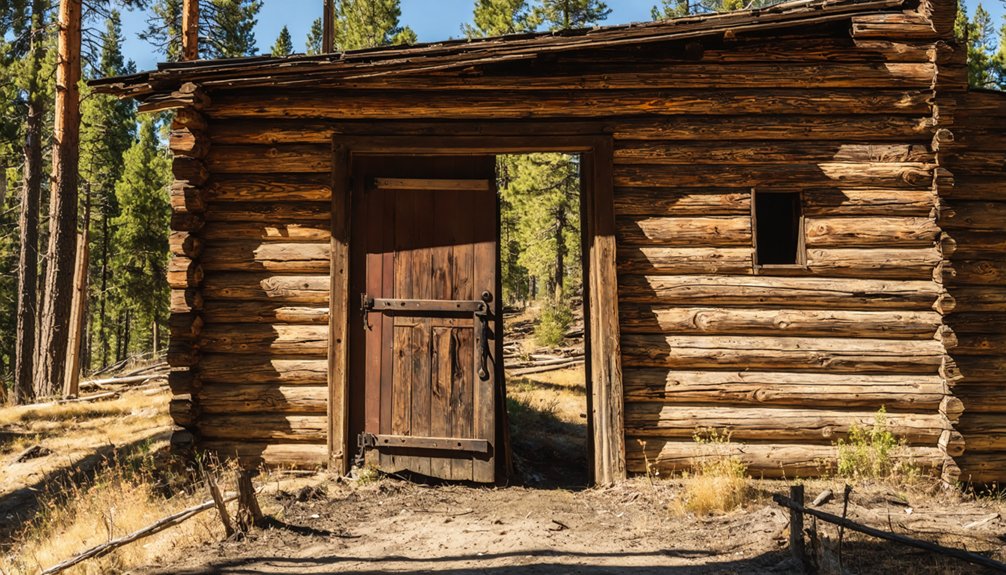
When you finally reach Washington Basin, you’ll find scattered ruins that whisper of the camp’s hardworking past—old mining cabins still punctuate the landscape in fragmented form.
You can’t miss the industrial debris either, with boilers and crushers left exactly where miners abandoned them decades ago.
Lining the valley floor, tailings from countless claims serve as the most tangible proof that this remote mountain site once hummed with determined human effort.
Remaining Structures and Ruins
Although nature has slowly reclaimed Washington Basin, you’ll still find enough scattered remnants to piece together the camp’s rough-and-tumble past. Old mining cabins still stand in various states of collapse, their weathered timber walls whispering stories of the determined prospectors who once called this alpine wilderness home.
Rusted boilers and crushers dot the landscape, serving as powerful mining relics that remind you just how hard-won every ounce of ore truly was. Tailings line the valley floor, marking the footprints of countless claims staked by ambitious men chasing silver dreams.
Historical preservation here is informal at best, meaning you’re walking through an untouched open-air museum. Every crumbling wall and rusted machine fragment rewards the curious explorer willing to make the rugged journey up into these mountains.
Industrial Debris Still Visible
Beyond the collapsed cabins and weathered timber, the real industrial heart of Washington Basin reveals itself in the heavy machinery left behind. You’ll find rusting boilers and ore crushers scattered across the valley floor, silent monuments to brutal labor performed at punishing elevation.
This debris preservation isn’t accidental—the sheer remoteness that once challenged miners now protects these remnants from salvagers and developers alike.
Consider what it took to haul this equipment up steep, unforgiving terrain using only determination and draft animals. The industrial history embedded in these corroding hulks tells a story no museum replica can match.
Standing beside machinery that once roared with purpose, you’re experiencing authentic evidence of human ambition colliding with mountain reality. Touch the cold iron and feel that history directly.
The 4-Wheel Drive Road Into Washington Basin
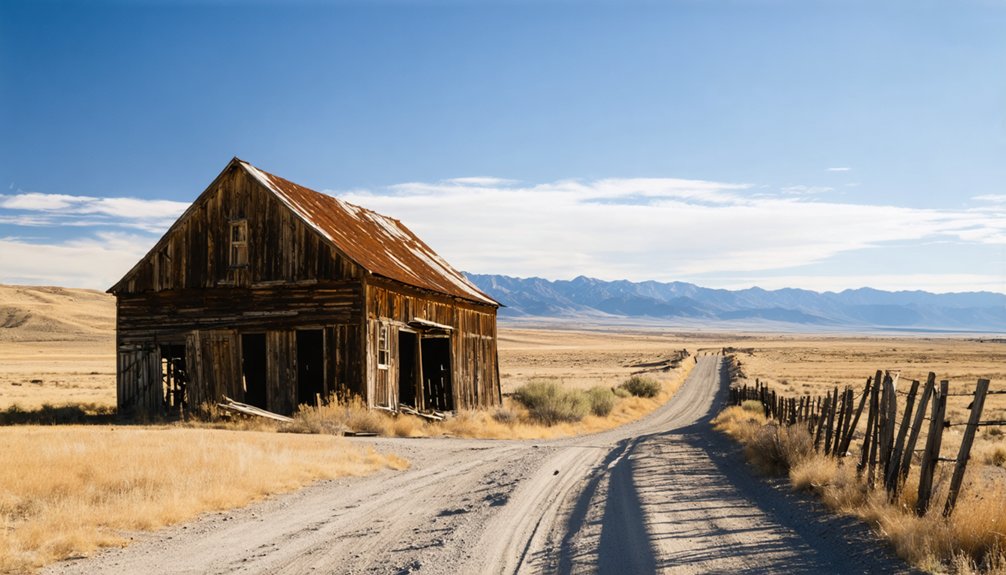
Reaching Washington Basin demands a capable 4-wheel drive vehicle and a willingness to tackle steep, unforgiving alpine terrain. The road climbs relentlessly through Idaho’s White Cloud Mountains, rewarding your determination with sweeping views and raw solitude.
Consider what miners once endured hauling heavy mining equipment across these same rugged slopes — no paved shortcuts, no easy passage. That same defiant spirit now carries you forward.
Plan your fuel carefully, check your tires, and respect the mountain’s unpredictability. Weather shifts fast at elevation, and the road won’t forgive careless driving.
But push through, and you’ll arrive where historical artifacts scatter quietly across the valley floor, remnants of ambition frozen in time. This isn’t a casual Sunday drive — it’s an earned adventure into Idaho’s forgotten high country.
How Does Washington Basin Compare to Bonanza and Custer?
Washington Basin never grew into the storied legacy of Bonanza or Custer, and that contrast tells you everything about what separates a hardscrabble camp from a full-blown mining town.
The mining history here reflects modest yields against punishing geological features that made extraction brutally difficult. When you stand in the basin, you feel that gap immediately.
Here’s what sets Washington Basin apart:
- Scale – Bonanza and Custer developed infrastructure, populations, and permanence; Washington Basin left scattered cabins and industrial debris.
- Output – Modest ore yields couldn’t sustain growth the way richer veins fueled neighboring towns.
- Survival – Custer and Bonanza built legacies; Washington Basin simply vanished into the mountains.
That raw incompleteness is exactly what makes exploring it feel like reclaiming forgotten ground.
When Snow Clears and Washington Basin’s Road Actually Opens
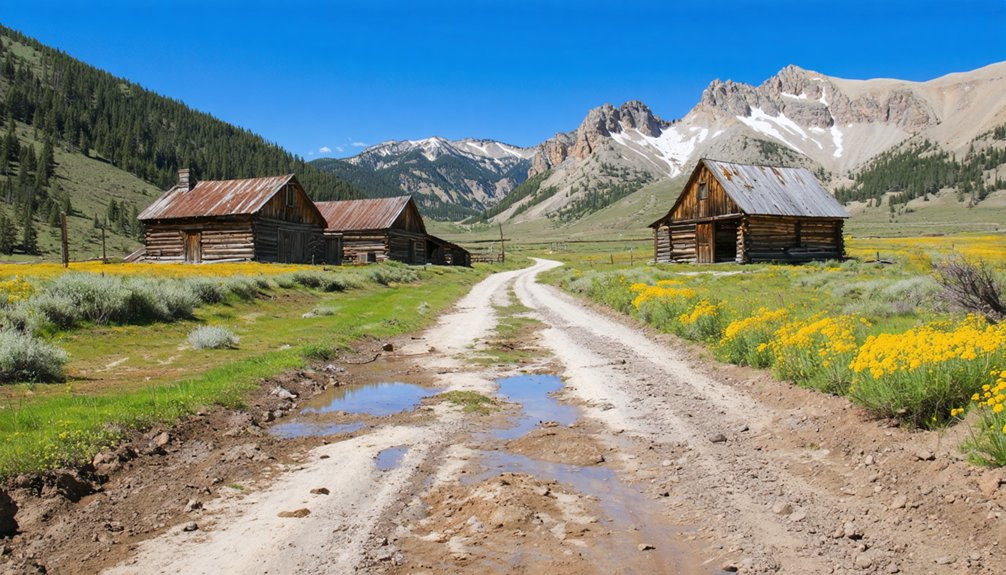
Washington Basin’s road typically doesn’t open until late June or early July, when snowpack finally retreats from the steep alpine terrain of the White Cloud Mountains.
Even after the official opening, you’ll want to check current conditions before committing to the climb, since late-season storms can rebury the route overnight.
The same harsh environment that discouraged miners from building a lasting settlement still dictates your access on its own unforgiving schedule.
Typical Season Opening Timeline
Because Washington Basin sits high in Idaho’s White Cloud Mountains, snow typically keeps its rugged access road locked shut well into summer—don’t count on driving in before late June or early July.
Time your arrival right, and you’ll roll into a valley scattered with historical artifacts and abandoned mining equipment frozen in time.
Plan around these seasonal realities:
- Late June: Snow lingers at elevation; road conditions remain unpredictable and potentially impassable even for 4-wheel drive vehicles.
- Early-to-Mid July: The access window typically opens, revealing tailings, boilers, and cabin remnants emerging from snowmelt.
- August through September: Prime exploration months offering stable conditions before early autumn storms reclaim the high country.
Miss the window, and the mountains simply swallow the basin whole again.
Snow Conditions Affecting Access
Perched deep in Idaho’s White Cloud Mountains, Washington Basin doesn’t surrender its roads easily—snow can grip the access route well past Memorial Day, and even a capable 4-wheel drive won’t negotiate a buried alpine road. Snowpack typically lingers into late June, sometimes July, sealing off the mining remnants beneath feet of white silence.
Before committing to your departure date, check current road conditions through the Custer County Sheriff’s office or local ranger stations. That extra patience pays off—once the route finally opens, you’ll roll into a basin carrying genuine historical significance, where 19th-century miners hauled heavy equipment through this same brutal terrain.
Timing your arrival right means accessing the ruins on your terms, not the mountain’s.
Tire, Clearance, and Fuel Requirements for the Washington Basin Road
Reaching Washington Basin demands serious mechanical preparation before you ever leave pavement. The same terrain that exhausted nineteenth-century miners hauling boilers through alpine country will punish any unprepared modern rig without mercy.
Check these three essentials before departure:
- Tire pressure — Lower PSI improves traction on loose rock and steep switchbacks; run terrain-appropriate tires, not all-seasons.
- Vehicle clearance — High-clearance 4WD isn’t optional; exposed rock shelves and rutted climbs will destroy low-riding vehicles.
- Fuel reserves — No services exist near the White Cloud Mountains; carry extra fuel because the basin offers nothing but silence and ruins.
The road demands respect. Give your vehicle what it needs, and Washington Basin rewards you with a ghost town experience few ever witness.
Gear, Water, and Weather Essentials for Washington Basin’s Elevation
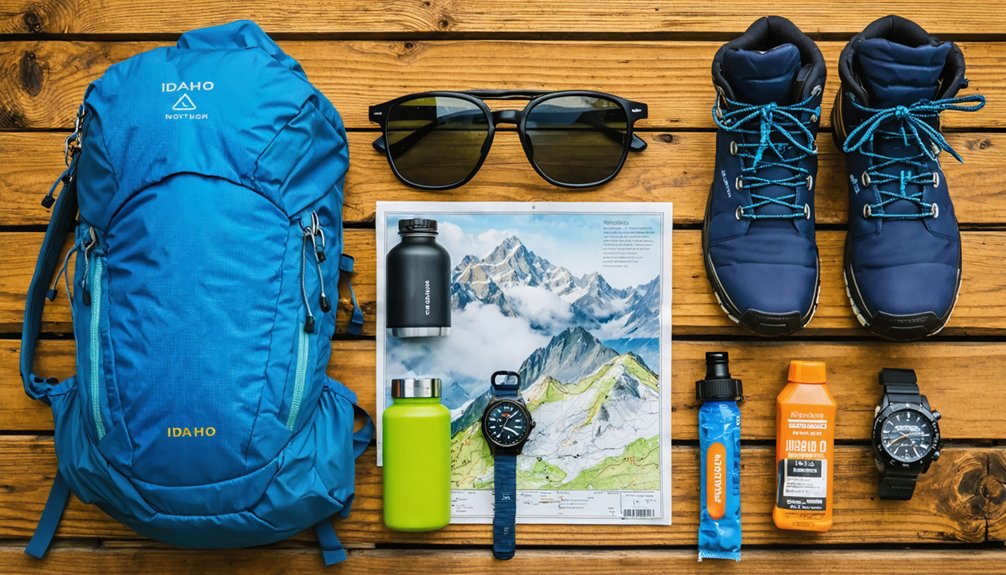
Washington Basin’s sky-high elevation in the White Cloud Mountains means weather can shift from blazing sun to freezing wind within minutes, so you’ll need layered clothing and rain gear ready at all times.
Carry more water than you think you need, since strenuous alpine driving and hiking at altitude accelerates dehydration fast.
Pack an emergency kit stocked with first aid supplies, navigation tools, and extra food, because the same remote terrain that swallowed a mining camp whole won’t offer you any shortcuts if something goes wrong.
High-Altitude Weather Preparation
Because Washington Basin sits sky-high in Idaho’s White Cloud Mountains, you’ll face weather that can shift from blazing sun to sleet within hours. Miners who hauled heavy equipment through this alpine terrain learned that lesson brutally. You can’t afford that surprise today.
Before you roll out, master these three essentials:
- Check weather forecasting tools obsessively — mountain conditions change faster than valley forecasts predict, so monitor hourly updates before departure.
- Recognize altitude sickness symptoms early — headaches, nausea, and dizziness signal your body’s protest against elevation; descend immediately if they appear.
- Layer aggressively — pack rain gear, insulating mid-layers, and sun protection simultaneously, because you’ll likely need all three within a single afternoon.
The mountains don’t negotiate. You prepare, or you retreat.
Essential Hydration Supplies
Altitude strips moisture from your body faster than you’d expect, and the same thin air that makes Washington Basin’s ruins feel otherworldly is quietly working against your hydration levels every hour you spend up there.
The White Cloud Mountains don’t forgive careless planning, and miners who hauled heavy boilers across this brutal terrain understood that survival demanded respect for the environment.
Your hydration strategies should include carrying at least three liters of water per person, plus a reliable backup source. Mountain streams exist throughout the basin, but don’t trust them untreated — water purification tablets or a quality filter are non-negotiable gear.
Dehydration sneaks up quickly at elevation, dulling your judgment precisely when you need it sharpest orchestrating steep 4-wheel drive terrain far from any help.
Must-Have Gear Checklist
Packing for Washington Basin demands the same hard-won logic that once drove miners to haul boilers across the White Cloud Mountains — every item earns its weight or it doesn’t come.
You’re entering alpine country steeped in mining legacy, where the terrain punishes the unprepared just as ruthlessly as it punished those early prospectors.
- 4WD recovery gear — traction boards, tow straps, and a hi-lift jack for steep, unforgiving climbs.
- Layered weatherproof clothing — elevation shifts temperatures fast; dress for the mountain’s terms, not the forecast.
- Navigation tools — a paper topographic map and GPS unit, because cell service respects the historical significance of silence out here.
Pack deliberately. The mountains haven’t gotten easier since the 1880s.
Ghost Towns Near Washington Basin: Sawtooth City and Custer
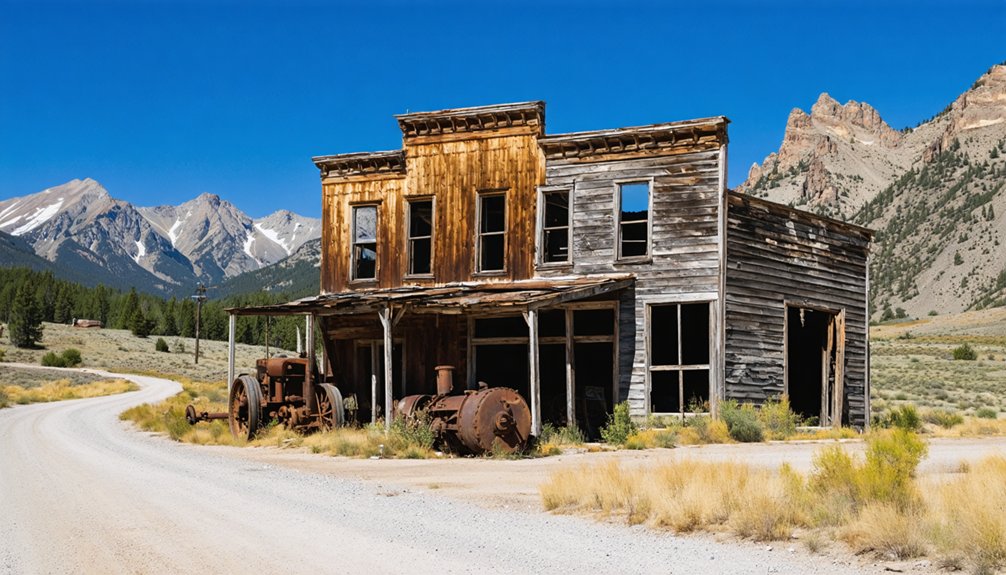
While Washington Basin tells its own quiet story of ambition and abandonment, two neighboring ghost towns offer equally compelling chapters in the region’s mining history. Sawtooth City once buzzed with 600 residents before silver and lead deposits dried up by 1889, leaving historical artifacts and mining equipment scattered across a landscape later ravaged by fire. Today, you’ll find only silence where a boomtown once stood.
Custer developed into a far more prominent settlement, commanding greater historical weight than Washington Basin ever achieved.
Together, these three sites form a triangle of forgotten ambition across Idaho’s remote backcountry. If you’re willing to navigate rugged terrain, you can piece together the full story of a region that burned bright, then quietly disappeared into the mountains.
How to Explore Washington Basin’s Ruins Without Getting Hurt
Reaching these ruins demands more than curiosity—it demands preparation. You’re venturing into steep alpine terrain where one wrong step near crumbling cabins or unstable boilers ends your adventure fast.
Curiosity gets you here. Preparation keeps you safe when crumbling ruins and alpine terrain test every step.
- Respect structural instability — Treat every cabin remnant and crusher like fragile art preservation; don’t touch, climb, or disturb what remains standing.
- Stay wildlife-safe — Wildlife safety isn’t optional in the White Clouds. Bears and mountain lions roam freely here, so carry bear spray and stay alert on the valley floor near tailings.
- Pack emergency essentials — Fuel, first aid, and navigation tools are non-negotiable. No population exists here, and no rescue arrives quickly.
Move through Washington Basin like a respectful guest—because freedom out here belongs to those who plan for it.
Why Washington Basin Delivers a Ghost Town Experience Nothing Else in Idaho Matches
Few ghost towns in Idaho sit this high, this remote, or this raw. Washington Basin doesn’t hand you a polished experience — it drops you into alpine silence where historical artifacts still scatter across the valley floor and rusting mining equipment tells the story without a single interpretive sign.
You’re standing where determined men hauled boilers and crushers up brutal terrain, chasing ore yields that never quite paid off. That struggle is still visible everywhere you look. Unlike Bonanza or Custer, Washington Basin never grew into something manageable or tamed. It simply stopped. The mountains swallowed it.
What remains belongs to anyone willing to drive the road, read the ruins, and feel the full weight of a place that refused to become ordinary.
Frequently Asked Questions
Are There Any Guided Tours Available for Washington Basin Ghost Town?
No guided tours are available, so you’ll forge your own path through history. You’re free to explore Washington Basin’s historical preservation independently, capturing stunning photography opportunities among haunting ruins that whisper forgotten mining stories.
Is Camping Permitted Overnight Within Washington Basin’s Remote Alpine Area?
The knowledge doesn’t confirm camping regulations for Washington Basin, but you’ll want to verify permits before sleeping under those wild stars. Prepare for wildlife encounters amid ruins where determined miners once braved Idaho’s untamed, historically rich alpine wilderness.
Were Any Significant Gold Deposits Ever Discovered in Washington Basin?
No gold exploration ever struck it rich in Washington Basin — the mineral deposits yielded only modest returns. You’ll find silver and lead defined this rugged alpine frontier, where dreams ran deeper than the earth’s actual treasures.
Can Children Safely Visit Washington Basin’s Ruins and Mining Debris?
You can bring children, but you’ll want to prioritize historical preservation and wildlife safety. Supervise them closely around unstable ruins and mining debris, as the rugged alpine terrain demands constant vigilance and adventurous respect for nature’s untamed freedom.
Is Washington Basin Located Within Any Protected National Forest Boundaries?
The knowledge doesn’t confirm that, but you’ll find Washington Basin nestled in Idaho’s White Cloud Mountains, where wildlife habitats flourish and historical landmarks await. You’re venturing into untamed terrain that’s shaped explorers and freedom-seekers for generations!
References
- https://seattlerefined.com/lifestyle/ghost-town-road-trip-7-locations-8-hours
- https://www.youtube.com/watch?v=1RS6qsZt6bA