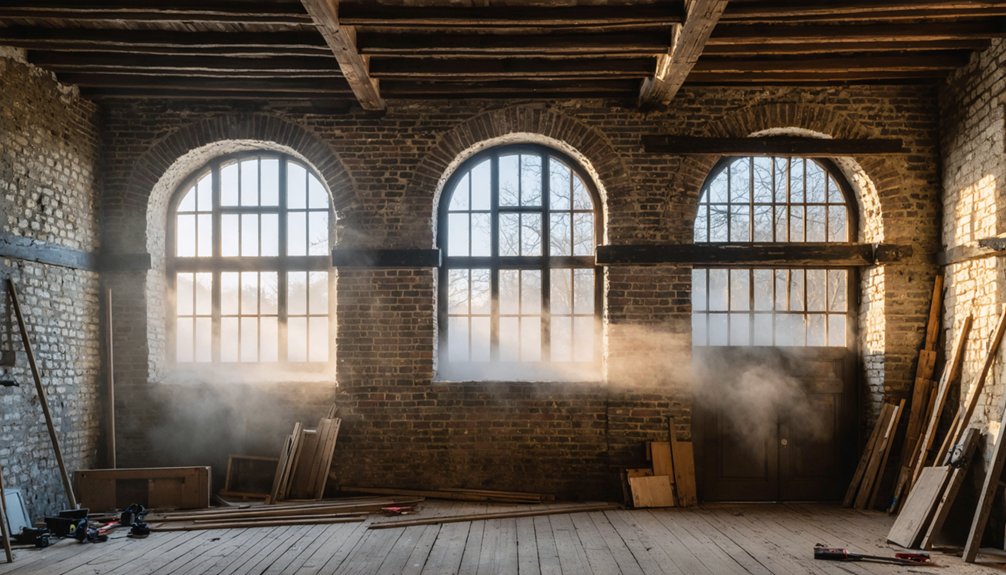
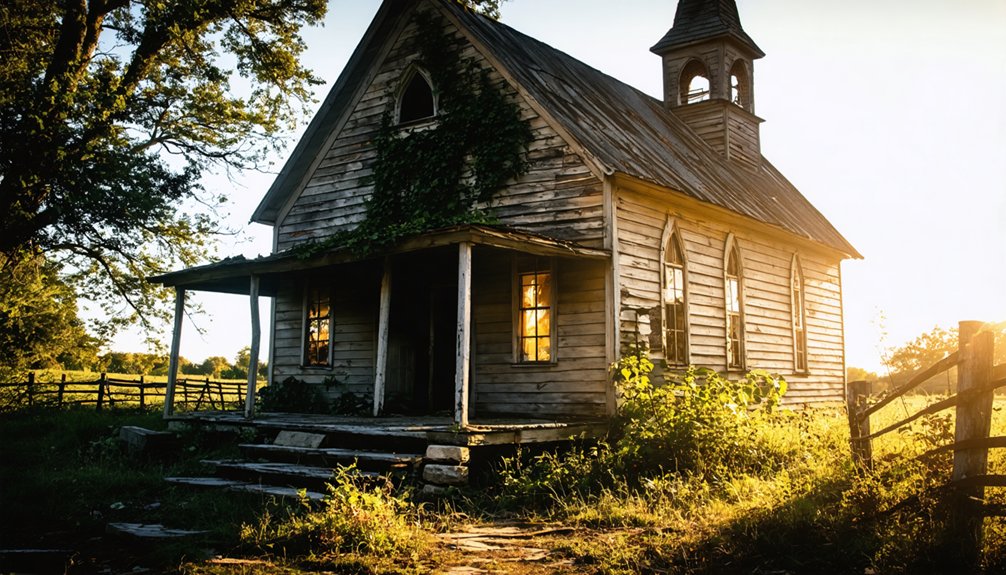
Colonial ghost towns offer glimpses into European expansion’s economic cycles. When exploring, you’ll need sturdy footwear, first aid supplies, and legal permission from property owners. Assess structural integrity before entry and respect photography restrictions at historical sites. Spring and fall provide ideal exploration conditions with moderate temperatures and reduced crowds. Always document hazards and carry emergency communication devices. The architectural remains you’ll encounter reveal colonial social hierarchies and trade patterns that shaped early settlement development.
Key Takeaways
- Legal access requires written permission from property owners; trespassing can result in fines or criminal charges.
- Conduct structural assessments before entry to identify hazards in roofs, walls, floors, and surrounding geological features.
- Spring and fall offer optimal exploration conditions with moderate temperatures and reduced visitor traffic.
- Essential equipment includes sturdy boots, protective clothing, multiple light sources, and comprehensive first aid supplies.
- Colonial ghost towns were typically established near waterways for resource extraction and trade before abandonment.
The Evolution and Significance of Colonial Ghost Towns
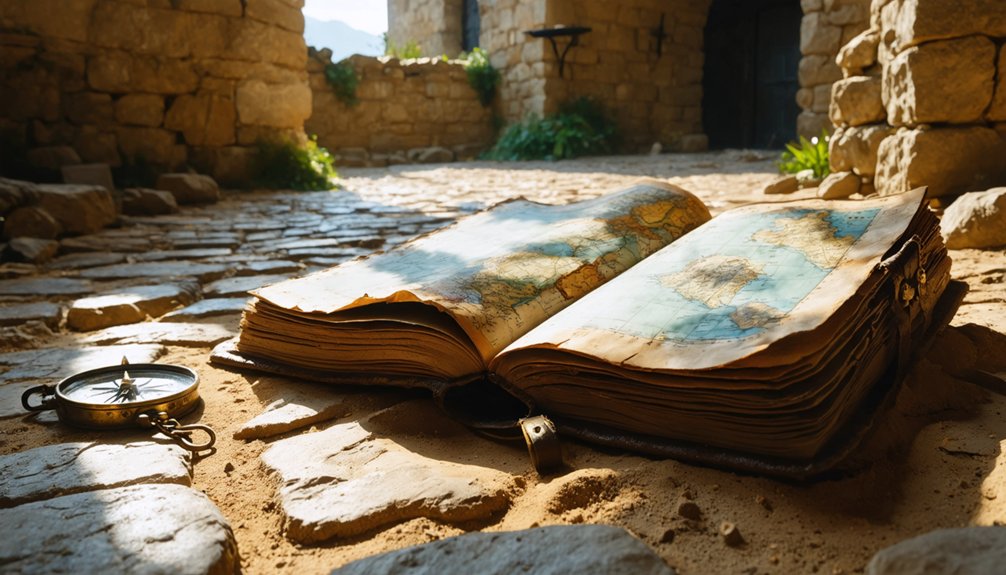
The silent remnants of colonial ghost towns stand as physical monuments to the complex patterns of European expansion across the globe.
When you explore these abandoned settlements, you’re witnessing the aftermath of boom-and-bust cycles that defined colonial economics. Founded near waterways and transportation routes, these towns once thrived on resource extraction before falling victim to depletion or shifting trade priorities.
The cultural influences evident in their architectural remains—churches, administrative buildings, and residences—reveal colonial social hierarchies and power structures.
The faded facades of former glory still whisper tales of who ruled and who served.
You’ll notice how economic impacts rippled through these communities when technologies evolved or colonial powers withdrew. These sites preserve the intersection of indigenous and European worlds, often marked by displacement and conflict. Many of these locations were abandoned due to resource depletion which rendered their primary economic function obsolete. Some ghost towns, like Bodie and Calico in California, remain well-preserved examples of colonial mining settlements.
Today, these ghost towns serve as powerful reminders of colonialism’s enduring legacy across the Americas, Africa, and Asia.
Essential Safety Preparations for Ghost Town Expeditions
When venturing into colonial ghost towns, you’ll need essential safety equipment including first aid supplies, sturdy footwear, navigation tools, and appropriate clothing for variable weather conditions.
Before your expedition, secure written permission from property owners and research local regulations to guarantee legal access to these historically significant sites.
You must conduct thorough structural assessments upon arrival, maintaining distance from unstable buildings, rotting wooden structures, and compromised foundations that have deteriorated over centuries of abandonment. Always inform someone about your expected return time before exploring these remote historical locations. Carry reliable communication devices like a Garmin InReach Plus since cell service is typically limited or non-existent in these isolated areas.
Safety Equipment Essentials
Exploring colonial-era ghost towns requires meticulous preparation with appropriate safety equipment to mitigate the numerous hazards these deteriorating sites present.
Your safety gear must include sturdy boots with ankle support to navigate unstable floors and protect against protruding nails. Protective clothing, particularly cut-resistant gloves, long sleeves, and heavy-duty pants, shields you from contaminated surfaces and harmful materials like asbestos or mold.
Always carry multiple lighting tools—headlamps for hands-free movement and spare batteries for emergencies. Don’t rely on electronic navigation; pack physical maps and compasses.
Your exploration kit should include an extensive first aid kit, emergency signaling devices, and personal protective equipment like N95 respirators. A quality waterproof backpack will keep your essential gear protected from the elements during your exploration. Before entering any site, thoroughly assess the layout to identify all potential exits and structural hazards. In remote locations, satellite phones or two-way radios become essential lifelines when standard communication fails.
Legal Access Considerations
Federal protections prohibit artifact removal or disturbance at historically significant locations, regardless of their apparent abandonment.
State regulations vary considerably, so verify local ordinances before proceeding. Remember that insurance won’t cover injuries sustained during unauthorized access. Trespassing violations can result in legal penalties that may include fines and potential jail time depending on the jurisdiction.
Consider legal alternatives like sanctioned “pay for access” locations that offer colonial-era exploration without legal liability concerns. Building relationships with local residents can often lead to legitimate access opportunities that wouldn’t otherwise be available.
Drone photography provides another lawful option for documenting restricted sites without physical trespass.
Structural Danger Assessment
Before entering any colonial-era structure, you’ll need to conduct a thorough hazard evaluation to identify potential life-threatening conditions.
Assess structural integrity by examining roofs for collapse risk, walls for stability, and floors for weak spots that may give way beneath you. Look for rotting timbers that have lost their load-bearing capacity over centuries of exposure.
Pay particular attention to geological threats unique to colonial sites, including unstable ground conditions and compromised retaining walls. Be aware that you may encounter epi-thermal deposits that create crumbly formations increasing collapse risk.
Underground hazards demand special vigilance—mine shafts may contain unexploded dynamite, bad air, or flooded passages. Always respect posted signs and avoid areas marked as restricted or dangerous. Biological threats like bats and fungal growth present additional concerns.
Document hazard identification findings and establish clear pathways away from danger zones.
Professional engineering evaluations are essential before venturing into severely dilapidated structures where colonial-era construction methods have deteriorated beyond safe access.
When exploring colonial sites, you’ll need to carry proper documentation including research permits, tribal permissions, and site access authorizations that comply with National Historic Preservation Act requirements.
Determining whether you’ve secured legitimate access versus engaging in illegal trespassing requires verifying ownership through county records, consulting State Historic Preservation Offices, and respecting clearly posted restriction signs.
Your photography rights at historic locations are frequently limited by conservation concerns, cultural sensitivities regarding Indigenous sites, and intellectual property restrictions that may prohibit commercial use or publication of images without additional permissions.
Legal Documentation Requirements
Maneuvering the complex legal landscape of colonial-era site exploration requires thorough understanding of both federal and state documentation requirements.
Federal legal frameworks like the Archaeological Resources Protection Act (1979) and National Historic Preservation Act (1966) mandate specific permits before you can access sites on public lands.
You’ll need to complete Section 106 documentation processes for sites listed on the National Register of Historic Places. This includes impact assessments that demonstrate your exploration won’t damage historic properties.
Colorado’s stringent ghost town statutes impose $2,000 fines and potential jail time for non-compliance, so maintain proper permits at all times.
Remember that some documentation intentionally obscures site locations to prevent looting.
Always secure written authorization before conducting surveys or collecting artifacts, as state laws establish clear liability chains for materials obtained during archaeological explorations.
Permission Versus Trespassing
Beyond legal documentation, understanding the boundary between permission and trespassing forms the cornerstone of ethical colonial-era exploration.
Remember that abandoned appearances don’t equate to abandoned ownership—those crumbling walls still belong to someone.
Even without posted signs, entering private historical properties without authorization constitutes trespassing.
Property rights remain intact regardless of a structure’s condition, with trespassing consequences ranging from fines to criminal charges if artifacts are disturbed.
Written permission provides your strongest defense against legal troubles.
If you’re asked to leave by owners or authorities, comply immediately—returning afterward elevates the offense.
For publicly managed sites, adhere to posted regulations and restricted areas.
Before visiting any colonial ruins, research ownership status and access requirements to guarantee your exploration remains on the right side of both law and ethics.
Photography Rights Limitations
Despite the allure of documenting colonial ruins, photography at historical sites operates under strict legal and ethical constraints that every explorer must navigate.
Many locations require permits, especially for commercial work, while prohibiting flash photography that damages fragile surfaces and artifacts.
You’ll encounter varying access restrictions—public sites may allow casual photography while private properties demand prior authorization.
Preservation challenges have prompted organizations to implement “leave no trace” principles, restricting tripods and specialized equipment that might compromise structural integrity.
Photography ethics demand respecting cultural significance by avoiding artifact manipulation or sensationalistic documentation of decay.
When planning your colonial ghost town expedition, research site-specific regulations beforehand.
Consider joining official preservation society workshops that grant authorized access while teaching you to document history responsibly without contributing to its deterioration.
Equipment and Photography Tips for Documenting Colonial Ruins
The documentation of colonial ruins demands careful consideration of both technical and practical challenges that photographers faced during the imperial era.
When exploring these sites, you’ll need to navigate similar constraints that shaped historical photographic records.
Prepare for challenging terrain by establishing your own carrier system for equipment—unlike colonial photographers who exploited local labor. Your modern photographic techniques benefit from advanced technology, but equipment maintenance remains essential in remote locations.
Consider how composition choices either reinforce or challenge the occidental gaze that dominated colonial documentation.
Remember that colonial photographers operated under significant censorship, carefully staging scenes while avoiding documentation of unrest.
Your freedom to capture authentic perspectives presents an opportunity to recontextualize these spaces beyond the deliberately constructed colonial narratives that historical archives perpetuate.
Northeastern American Colonial Settlements: Trade Port Remains
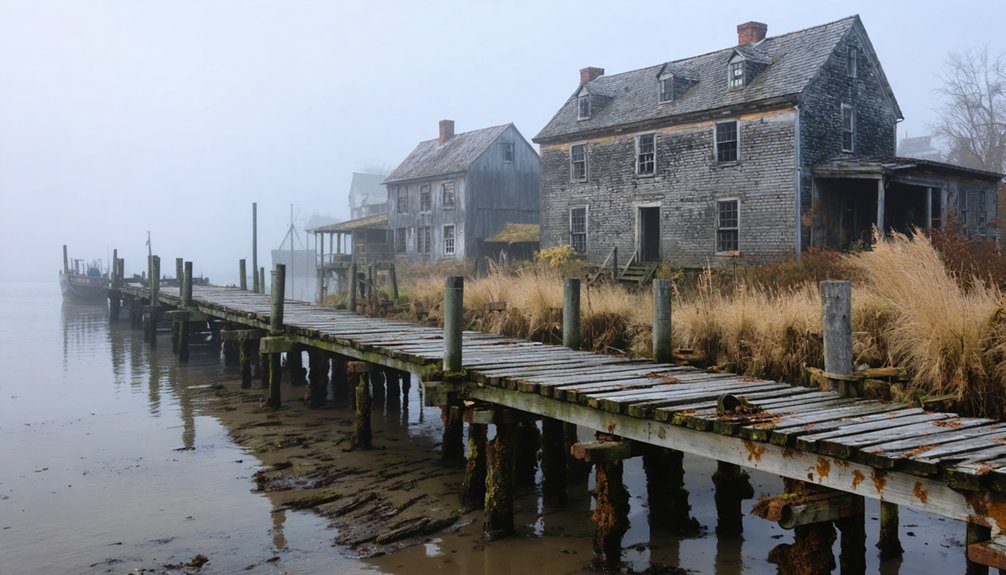
While documenting colonial architecture can capture the physical remnants of imperial expansion, exploring the northeastern trade port remains reveals America’s economic foundation and global connections.
Boston, New York, and Philadelphia formed an interconnected commercial hub by 1660, with harbor structures designed for handling diverse global commodities.
The colonial Northeast’s economic trinity created America’s first international marketplace through carefully engineered maritime infrastructure.
When visiting these colonial trade sites, remember:
- Port architecture often reveals class stratification—waterfront warehouses for merchants contrasted with modest dockworker quarters
- Wharves and piers were engineered for specific cargo types—fish processing areas in Boston, slave auction blocks on New York’s Wall Street
- Strategic locations demonstrate how geography determined economic destiny
- Remaining customs houses symbolize resistance to imperial control through smuggling and tax evasion
These physical spaces embodied both oppression and early revolutionary sentiment through their economic functions.
Southern Plantation and Military Outpost Ghost Towns
Southern ghost towns scattered across the American South paint a haunting portrait of abandoned ambition and colonial enterprise, where have you ever wondered what became of these once-thriving centers of commerce and military significance?
Colonial ghost towns to explore offer a glimpse into the past, revealing the stories of settlers and their struggles. Each site carries whispers of long-lost lives and the dreams that faded away, inviting curious adventurers to uncover their mysteries. As you walk through these remnants, you can almost hear the echoes of history resonating through the empty streets.
Old Cahawba reveals plantation history through its ruins, including the 1860s Barker Mansion and Slave Quarters at the Alabama and Cahaba Rivers’ confluence.
Virginia’s Elko Tract demonstrates military strategies through deceptive ingenuity—a fake airbase constructed to protect Richmond’s actual installations.
Matildaville, part of Washington’s grand canal vision, and No Business, established on post-Revolutionary War land grants, exemplify commercial aspirations gone fallow.
Meanwhile, Dorchester’s 1697 settlement on South Carolina’s Ashley River flourished until Revolutionary conflict forced its evacuation.
These sites offer you unfiltered windows into colonial ambitions ultimately surrendered to time.
Western Mining and Railroad Ghost Town Circuit Routes
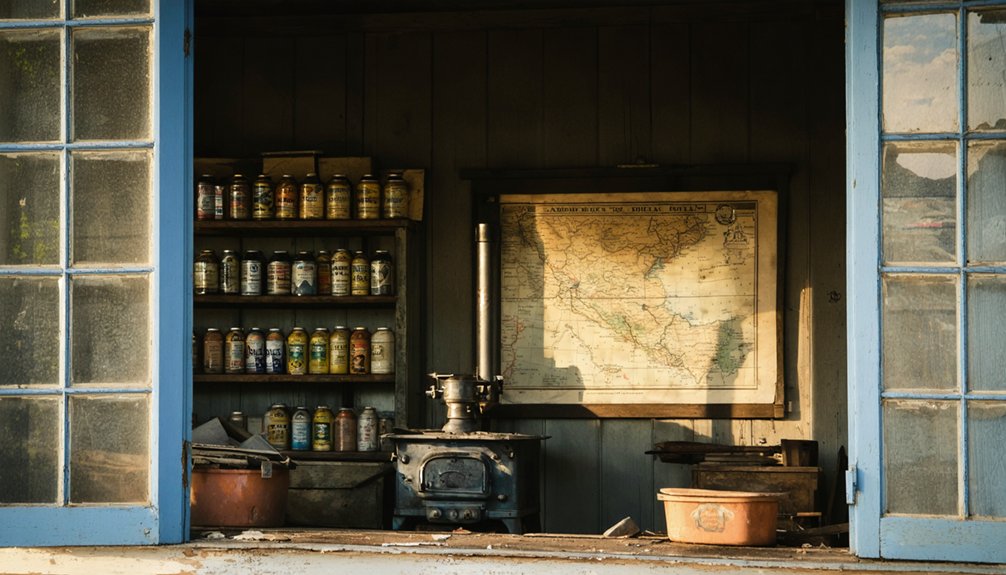
Scattered across America’s Western frontier, mining and railroad ghost towns form intricate circuit routes that tell the dramatic story of boom-and-bust cycles during the nation’s westward expansion from 1880-1940.
These weathered remnants whisper tales of American ambition, where frontier dreams lived and died by the vein of ore.
You’ll find these ghost town circuits concentrated in Nevada and California, where over 800 documented settlements await your exploration.
For ideal mining history immersion, consider these strategic routes:
- Southwest Montana byways connecting multiple preserved sites
- Utah’s Highway 6 coal camp corridor west of Price
- New Mexico’s “Arrow Route” following the El Paso & Northeastern Railroad
- Alaska’s remote Kennicott copper mining complex
As you travel these pathways, you’ll witness firsthand how narrow-gauge railroads connected isolated mines to markets, how settlements flourished around processing facilities, and how resource depletion triggered mass exodus.
These abandoned settlements represent freedom’s frontier spirit—risk-takers who gambled everything on precious metal dreams.
Interpreting Architectural Clues in Abandoned Colonial Structures
When approaching abandoned colonial structures, you’ll find that architectural elements serve as tangible historical texts waiting to be decoded.
Look for T-shaped churches positioned against pyramids—this architectural symbolism reflects deliberate power dynamics of Spanish colonialism.
Notice how gridded streets radiating from central plazas reveal colonial planning ideals, while the presence of effigy censers in elite houses demonstrates cultural resilience beneath European façades.
Examine brick and stone exterior walls with plastered surfaces that distinguished elite residences from common housing.
Pay attention to gambrel roofs with dormer windows—Spanish innovations that maximized interior space.
The placement of ritual objects in hidden locations throughout residential zones tells a story of indigenous persistence despite Franciscan prohibitions.
These physical remnants reveal how colonial inhabitants negotiated their identities through subtle architectural strategies.
Seasonal Considerations and Optimal Visiting Windows
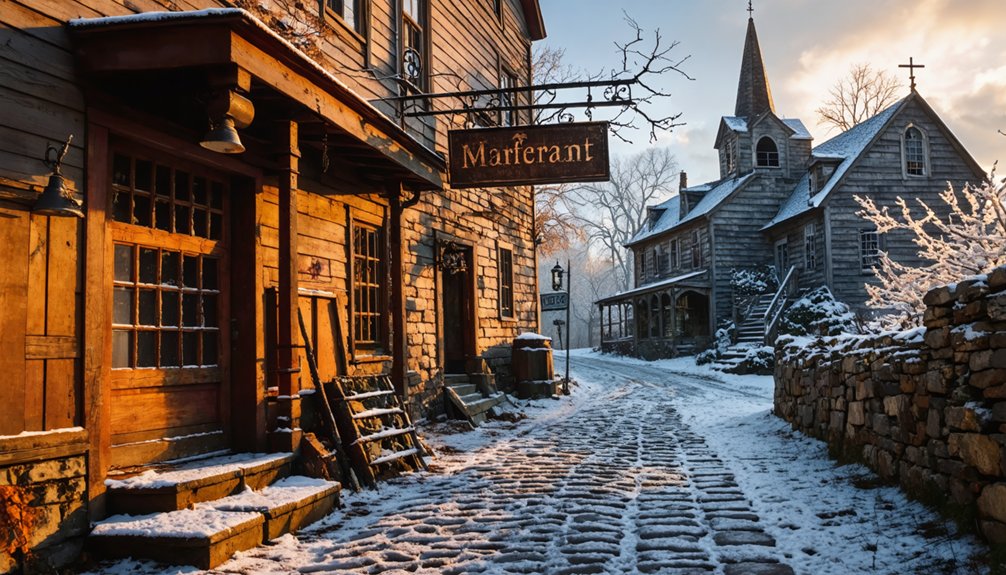
The physical remnants of colonial architecture tell only part of the story—timing your visits proves equally important for thorough exploration.
Experiencing colonial history requires strategic timing—the when matters as much as the where.
Spring and fall offer ideal conditions for examining colonial ghost towns, with moderate temperatures between 50-70°F and reduced visitor traffic that allows undisturbed documentation of preservation challenges.
- Summer’s extended daylight provides 15+ hours for investigating urban legends, but heat exceeding 90°F necessitates early morning exploration.
- Fall delivers atmospheric conditions for photography, with Halloween ghost walks offering guided historical context.
- Winter’s frozen ground temporarily stabilizes foundations but poses access difficulties via snow-blocked roads.
- Spring wildflowers enhance visual documentation while stabilized soil conditions reduce path hazards.
Consider microclimate variations between elevated and valley locations, as these create distinct seasonal experiences within single geographic areas.
Frequently Asked Questions
Are Ghost Towns Legally Accessible Without Official Permission?
No, you can’t legally explore most ghost towns without permission. Ghost town regulations vary by ownership, with trespassing penalties enforced regardless of abandonment status. Exploration ethics demand respecting property rights.
How Can I Differentiate Between Authentic Ruins and Modern Reconstructions?
Like miners uncovering precious treasure, you’ll spot authentic features through undisturbed soil layers, in-situ artifacts, and irregular settlement patterns. Modern reconstruction signs include uniform building techniques and pristine material conditions.
What Should I Do if I Discover Artifacts During Exploration?
Stop immediately, don’t touch or remove artifacts. Document location, notify authorities, and respect ethical considerations for artifact preservation. You’re legally obligated to report findings on state-owned land.
Do Any Colonial Ghost Towns Have Indigenous Significance or Connections?
Yes, virtually all colonial ghost towns occupy Indigenous territories. You’ll find Cultural Heritage layers where Indigenous Narratives reveal continuous spiritual connections to these lands, despite colonial attempts to erase these relationships.
Can I Collect Small Souvenirs From Abandoned Colonial Structures?
No, you can’t—despite your frontier dreams, souvenir ethics and preservation laws prohibit collecting artifacts. Archaeological Resources Protection Act and state regulations criminalize your colonial treasure-hunting fantasies, regardless of land ownership.
References
- https://www.ancient-origins.net/history/ghost-towns-0017764
- https://en.wikipedia.org/wiki/Ghost_town
- https://www.youtube.com/watch?v=inRD6vYBy8M
- https://www.visitutah.com/things-to-do/history-culture/ghost-towns
- https://www.atlasobscura.com/lists/tour-south-carolinas-living-history-storied-ruins-and-abandoned-haunts
- https://www.life.com/history/ghost-towns-the-places-that-time-forgot/
- https://www.britannica.com/topic/ghost-town
- https://www.explore.com/travel/25-ghost-towns-around-us-and-history-behind-them/
- https://exploraspective.wordpress.com/2015/03/01/why-ghost-towns/
- https://www.loveexploring.com/gallerylist/188219/the-us-state-with-the-most-ghost-towns-revealed