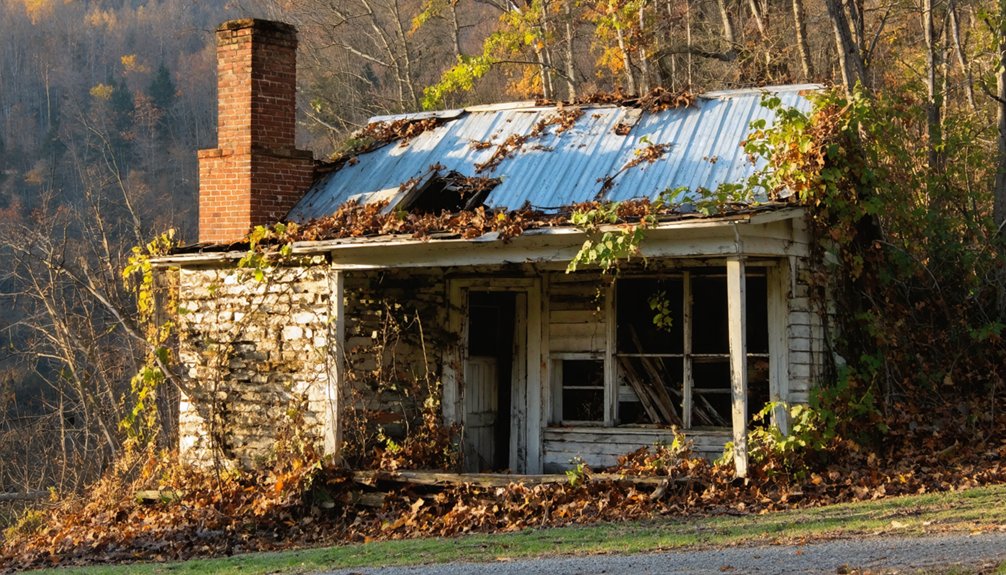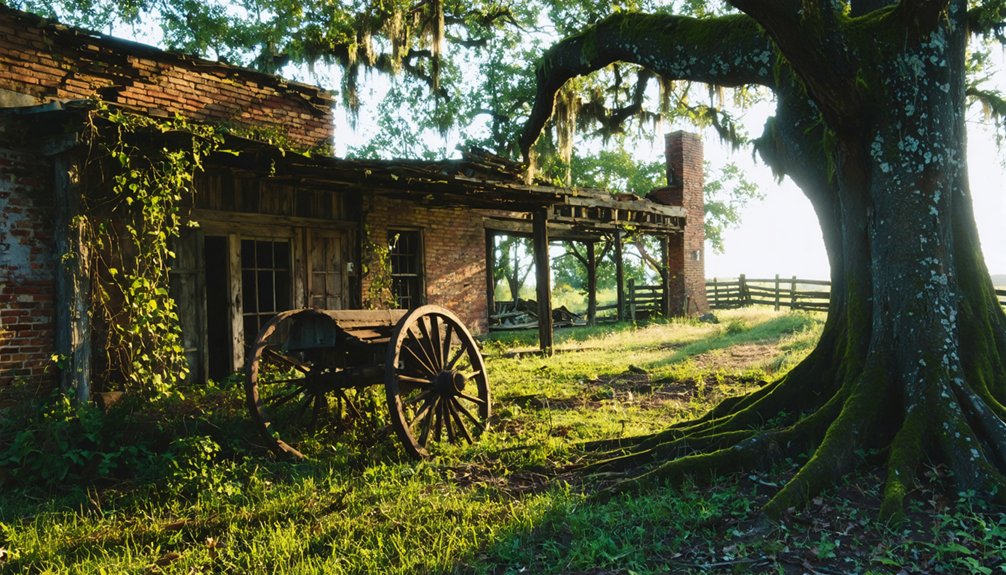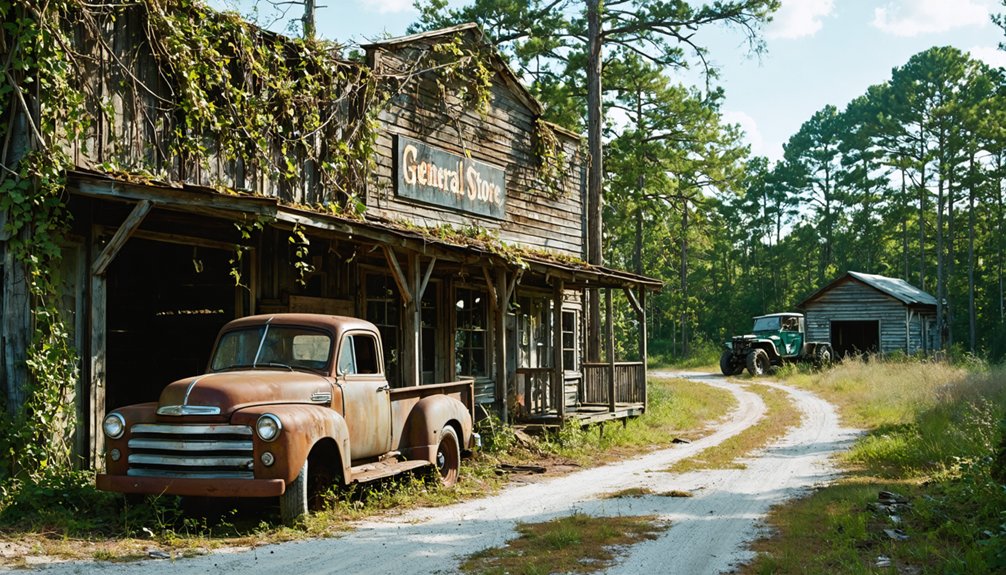
You can explore Arkansas’s abandoned settlements using the Ozark National Forest’s 200-mile ATV trail network to reach ghost towns like Rush, a former zinc mining camp, and the submerged Monte Ne resort ruins accessible via Beaver Lake. Remote destinations include Bonanza mining camp, Oakvale’s collapsed mill foundations, and Booger Hollow’s hillbilly trading post remnants. These challenging backcountry routes require proper equipment and GPS navigation to discover the state’s most authentic historical treasures hidden throughout the rugged terrain.
Key Takeaways
- Arkansas has nearly 200 miles of marked ATV trails across five major systems in Ozark National Forest.
- Oakvale, Albert, and Lydalisk ghost towns feature mill foundations, schoolhouse ruins, and mining remnants accessible by ATV.
- Rush Historic Mining Town offers trails to zinc mining ruins including Morning Star Mine’s foundations and equipment.
- Monte Ne’s submerged resort ruins are accessible via ATV to boat ramps, with exposed foundations during low water.
- Bonanza Mining Camp provides remote exploration of scattered foundations and rail beds from former coal mining operations.
Ozark National Forest ATV Trail Network and Ghost Town Access
While Arkansas’s Ozark National Forest doesn’t house traditional ghost towns within its boundaries, the extensive ATV trail network serves as your gateway to abandoned settlements and forgotten communities scattered throughout the surrounding region.
You’ll discover nearly 200 miles of marked trails across five major systems, including Mill Creek’s 50-mile network and Buckhorn’s 60-mile system around Lee Creek. These routes wind through diverse terrain—from rocky outcrops to hardwood forests—offering prime ATV navigation through stunning Ozark scenery.
Your machine handles everything from clay paths to technical rock gardens, while GPS-enabled apps guide you toward remote areas where forgotten homesteads and mining camps once thrived, waiting for adventurous riders to uncover their stories. The Shores Lake Area features multiple easy trails with access to historic sites like Campbell Cemetery, where early settlers once established their community. Adventure seekers can rent POLARIS RZR XP 1000s from Mulberry Mountain for those who don’t own their own off-highway vehicles.
Oakvale, Albert, and Lydalisk: Railroad Bed Ghost Towns
Though Arkansas’s railroad boom era ended decades ago, you can still follow the iron pathways that once carried fortune-seekers and industrial dreams through the Ouachita Mountains.
These converted rail beds now serve as your gateway to three fascinating ghost towns accessible only by ATV.
Oakvale remnants include collapsed mill foundations and rusted machinery from its logging camp heyday, scattered along a five-mile moderate trail.
Albert exploration rewards you with schoolhouse ruins and a historic cemetery near the scenic Little Missouri River, though spring flooding requires caution.
Lydalisk history unfolds through mine adits and boiler remnants from its manganese mining days, accessible via a challenging four-mile rocky route requiring high-clearance vehicles. Similar to Rush near Buffalo River, these settlements thrived when zinc demand surged during wartime but couldn’t survive the inevitable price collapses.
Pack water and maps—these remote sites offer true backcountry freedom. Many of Arkansas’s abandoned settlements suffered a similar fate to Hopefield, where repeated flooding eventually washed away foundations and scattered artifacts throughout the Mississippi River floodplain.
Rush Historic Mining Town via ATV Trails
Deep in the Ozark Mountains of Marion County, Rush Historic Mining Town stands as Arkansas’s most authentic ghost town experience, where zinc fortunes once flourished before crashing into abandonment.
Your ATV exploration reveals the dramatic rise and fall of this 1880s mining community that housed up to 5,000 residents during World War I’s zinc boom.
Rush mining operations left behind fascinating ruins you’ll discover along accessible trails. The Morning Star Mine‘s waste rock piles tower above you, while the interpretive trail from Rush campground guides you through mill foundations and structural remains.
You’ll ride past the Taylor-Medley General Store and Hicks family’s 1916 stone buildings that still stand as evidence of this once-thriving community. This 1,316-acre district preserves the most complete collection of mining structures in the North Arkansas Lead and Zinc District.
The area showcases remnants from fourteen mines that operated under ten different companies during the height of production.
- Feel the weight of history as you explore underground mine entrances carved into Buffalo National River bluffs
- Experience the haunting silence where 2,000-5,000 miners once worked zinc-rich veins using room-and-pillar methods
- Witness Arkansas’s last visible remnants of commercial zinc mining dating from 1880-1940
Monte Ne Submerged Ruins: ATV to Water Access
You’ll discover Monte Ne’s fascinating transformation from Arkansas’s premier luxury resort in 1901 to partially submerged ruins beneath Beaver Lake’s waters.
When the Corps of Engineers flooded the area in the early 1960s, miscalculated water levels left William Hope Harvey’s grand hotel foundations and concrete structures jutting above the shoreline like mysterious monuments.
Your ATV can transport you directly to the boat ramp access point near Rogers, where you’ll park and explore the exposed basement ruins, crumbling fireplaces, and tower remnants that low water levels reveal. The site once featured Italian gondolas that transported guests across the lagoon between the elegant hotels and amenities.
Harvey’s vision included Oklahoma Row, which was the largest log building in the world at the time and served as one of the resort’s main attractions.
Luxury Resort History
When you ride your ATV through the wooded trails near Rogers, Arkansas, you’re approaching the remnants of what was once America’s most ambitious luxury resort.
William Hope Harvey’s Monte Ne, established in 1901, transformed 620 acres into an opulent destination featuring world-record log buildings and unprecedented luxury amenities. Harvey’s ambitious vision attracted significant investment through the Monte Ne Investment Company, formed in December 1900 with substantial capital backing.
The Hotel Monte Ne boasted 300-foot wings, while Missouri Row became the world’s largest log structure.
You’ll discover the historical significance of Arkansas’s first indoor heated pool, imported Italian gondolas, and a dedicated railway line that ferried wealthy guests. Each luxurious guest room featured its own private fireplace, ensuring comfort during cooler Arkansas evenings.
- Imagine the echoes of jazz music from the dance pavilion where America’s elite once waltzed
- Picture the splash of children’s laughter around springboards in that pioneering indoor pool
- Feel the weight of dreams that sank beneath Beaver Lake’s waters
Lake Formation Impact
The grandeur Harvey envisioned met its match in the 1960s when the U.S. Army Corps of Engineers began constructing Beaver Lake.
You’ll discover how this lake history forever changed Monte Ne’s destiny. By 1965, rising waters submerged most structures, though miscalculated water levels left some ruins tantalizingly exposed.
When you visit during low water periods, you can walk directly to Oklahoma Row’s basement rooms, complete with fireplaces and original plumbing.
The submerged structures become visible beneath the surface, including amphitheater remains and hotel foundations. Missouri Row’s chimney and retaining walls stand as silent sentinels above the waterline.
You’ll find the boat ramp provides perfect ATV-to-water access, letting you explore these haunting remnants where luxury once reigned supreme.
ATV Access Routes
Since Beaver Lake’s waters claimed Monte Ne in the 1960s, reaching these submerged ruins requires a strategic approach that combines highway access with waterfront positioning.
You’ll take Highway 94 East until the lake comes into view, then pull into the first parking area on your right. From there, you can walk directly to the tower and Oklahoma Row foundations when water levels drop below 1,113 feet.
For closer inspection of the submerged ruins, continue driving to the boat launch parking lot. This position gives you direct access to the fireplace, chimney, and retaining walls that emerge during low water conditions.
- Stand where a grand resort once welcomed guests before the lake swallowed their dreams
- Touch concrete foundations that survived decades beneath Arkansas waters
- Witness history’s resilience emerging from its watery grave
Booger Hollow Outpost on Scenic Highway 7
You’ll discover Booger Hollow Trading Post‘s quirky legacy when you ride your ATV along the winding curves of Scenic Highway 7 near Dover.
This abandoned roadside attraction once drew tourists with its famous double-decker outhouse and hillbilly-themed merchandise during its 40-year run from 1961 to 2004.
The mountaintop location offers easy ATV access to explore what remains of this mid-20th-century Americana ghost town, complete with its iconic structures still standing as photo opportunities.
Roadside Attraction History
Twenty-two miles north of Russellville along Arkansas’s winding Scenic Highway 7, you’ll discover the weathered remains of what was once the Booger Hollow Trading Post—a quirky roadside attraction that captured travelers’ imaginations for over four decades.
Built in 1961 on a ridgetop in the Boston Mountains, this beloved stop attracted countless Ozark vacationers with its famous entrance sign reading “Population 7…countin’ one coon dog.”
The trading post capitalized on local roadside legends and haunted folklore dating back to the 1800s, when ghost stories emerged from the hollow between two cemeteries in Bull Frog Valley.
- Stand where thousands of freedom-seeking travelers once laughed at the iconic two-story outhouse
- Feel the mountain winds that carried decades of adventure stories through these abandoned buildings
- Experience the haunting silence of nature reclaiming this once-bustling attraction
Trading Post Features
The abandoned Booger Hollow Trading Post still showcases remnants of its eclectic commercial offerings that once drew thousands of travelers annually to this mountain ridgetop location.
You’ll discover traces of hillbilly-themed merchandise that defined this quirky establishment’s trading post history. The main building housed knick-knacks, antiques, local honey, sorghum, and lye soap alongside tourist novelties. An adjacent store sold cured hams while the Chuckwagon restaurant served “boogerburgers” and “boogerdogs” to hungry travelers.
The crown jewel among these roadside curiosities remains the two-story outhouse with its infamous “upstairs closed til we figure out plummin” sign.
Though operations ceased in 2004, you can still explore these fascinating remnants of Arkansas’s colorful tourist attraction era while experiencing the freedom of backcountry exploration along Scenic Highway 7.
Bonanza Mining Camp: Remote Off-Road Adventure
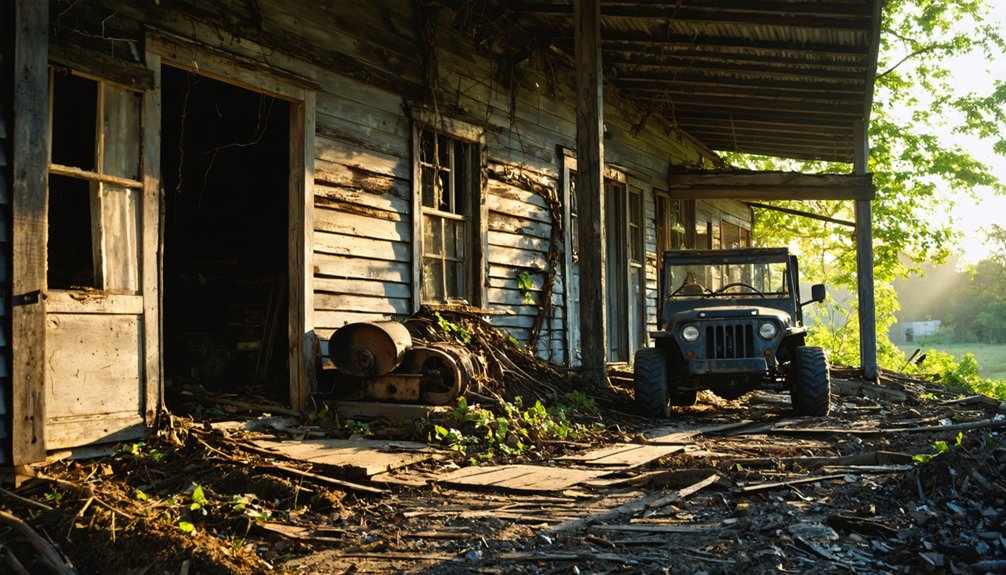
Deep within Arkansas’s coal-rich river valley, Bonanza stands as one of the state’s most fascinating ghost towns, where abandoned mining infrastructure tells the story of a once-thriving community that housed over 900 residents at its 1900 peak.
You’ll discover Bonanza history through remnants of Central Coal and Coke Company operations, where three major mines once employed hundreds of workers. The mining legacy remains visible in scattered foundations and overgrown rail beds that carried coal via the Frisco Railway.
Your ATV adventure reveals a community that featured banks, churches, and bustling businesses before economic decline and racial violence shaped its fate.
Today’s remote location offers authentic exploration opportunities.
- Ride through ghostly foundations where miners’ families once called home
- Experience the haunting silence of abandoned coal shafts and company infrastructure
- Discover freedom in untouched wilderness reclaiming this forgotten American story
Shirley Area: Abandoned Railroad and Hidden Ghost Towns
Nestled within Van Buren County’s rugged Ozark Mountains, Shirley offers ATV enthusiasts a unique journey through railroad history where the abandoned Missouri and North Arkansas line once connected thriving communities to the outside world.
You’ll discover Shirley history through tangible railroad remnants that tell stories of a once-bustling town with 350 residents, sawmills, and multiple businesses at its peak.
The crown jewel is the converted 1908 train bridge over Middle Fork Little Red River, now serving as a sketchy one-lane roadway perfect for adventurous riders.
You can access this historic crossing and explore bridge abutments that mark America’s longest rail abandonment in 1946.
The old right-of-way provides drivable segments, letting you trace paths where steam engines once carried timber and passengers through Arkansas’s wilderness.
Essential ATV Equipment and Safety Guidelines for Ghost Town Exploration
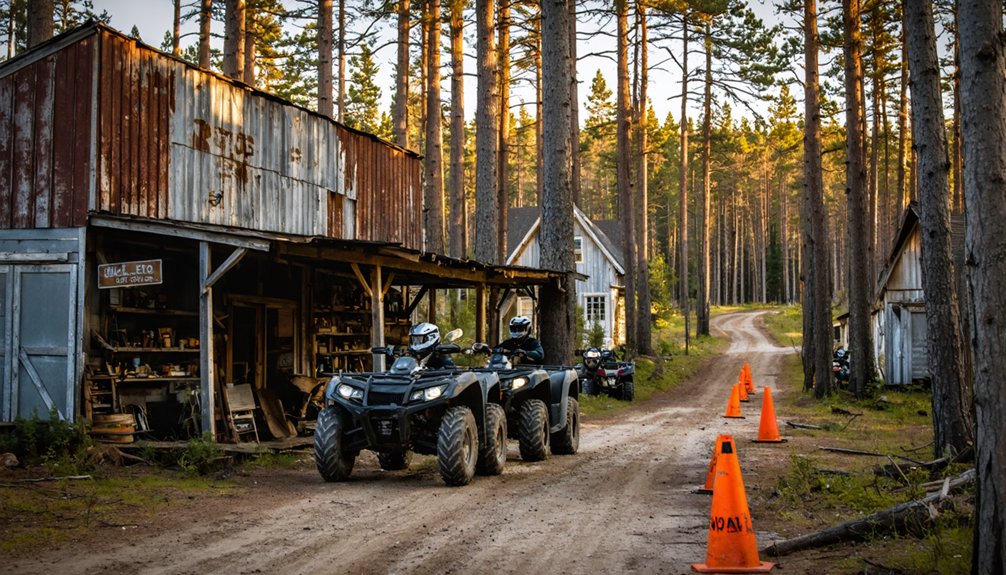
While ghost town exploration promises adventure and discovery, venturing into Arkansas’s remote wilderness demands proper equipment and unwavering attention to safety protocols. Your ATV safety depends on essential gear that transforms risky expeditions into confident journeys through forgotten settlements.
In the search for abandoned places to explore in Mississippi, adventurers should be aware of the potential hazards lurking in these decaying locales. Unearthing the history behind each site can be as thrilling as the exploration itself, revealing stories of times long past. With the right mindset and equipment, these hidden gems can provide unforgettable experiences that resonate with the echoes of history.
Equip your machine with large all-terrain tires and protective armor for traversing overgrown trails to abandoned sites. Pack an extensive repair kit including tire plugs, tools, and tow straps—you’ll need them when exploring isolated locations.
Your protective gear must include a secure helmet, goggles, and sturdy gloves for handling unexpected obstacles.
- Feel the confidence of exploring Arkansas’s hidden history with proper safety equipment
- Experience the freedom of remote discovery knowing you’re prepared for any challenge
- Discover forgotten settlements while protecting yourself and your adventure companions
Frequently Asked Questions
What Permits or Licenses Are Required for ATV Ghost Town Exploration?
You don’t need special permits for ATV ghost town exploration in Arkansas. Follow standard ATV regulations, stay on existing trails, and get landowner permission for private property access while discovering fascinating ghost town history.
Are There Guided Ghost Town ATV Tours Available in Arkansas?
While you’ll find excellent guided ATV tours through operators like ATV Excursions and Hog Wild Adventures, these focus on scenic trails rather than dedicated ghost town attractions, leaving those mysterious abandoned settlements for your own independent exploration.
What’s the Best Time of Year for Ghost Town ATV Adventures?
Spring and fall offer the best seasons for ghost town ATV adventures. You’ll enjoy milder weather conditions, avoiding summer’s intense heat while traversing those rugged trails to Arkansas’s hidden historical treasures comfortably.
Can You Camp Overnight Near These Ghost Town Locations?
You’ll find camping options at multiple locations, with Hot Springs ORV Park spanning 1,242 acres offering year-round tent, RV, and cabin accommodations. Check camping regulations beforehand and explore nearby attractions.
Are There Fuel Stations Along the Ghost Town ATV Routes?
No fuel stations exist along these remote ghost town ATV routes. You’ll need careful route planning for fuel availability, refueling in nearby towns like Mena or Hot Springs before venturing into Arkansas’s backcountry wilderness areas.
References
- https://www.mulberrymountainlodge.com/things-to-do/atv-trails/
- https://arkansasfrontier.com/ghost-towns-in-arkansas/303766/
- https://goseedoar.org/adventures/
- https://www.trailsoffroad.com/US/arkansas
- https://everafterinthewoods.com/forgotten-ghost-towns-in-arkansas-that-are-eerially-scenic/
- https://www.tripadvisor.com/Attractions-g28925-Activities-c47-t14-Arkansas.html
- https://www.ezhomesearch.com/blog/best-places-in-arkansas-for-off-roading/
- https://www.youtube.com/watch?v=ofyTASIiMHw
- https://www.onxmaps.com/offroad/beginner-offroad-trails-near-me/ozark-ar
- https://www.macks-pines.com/maps.htm