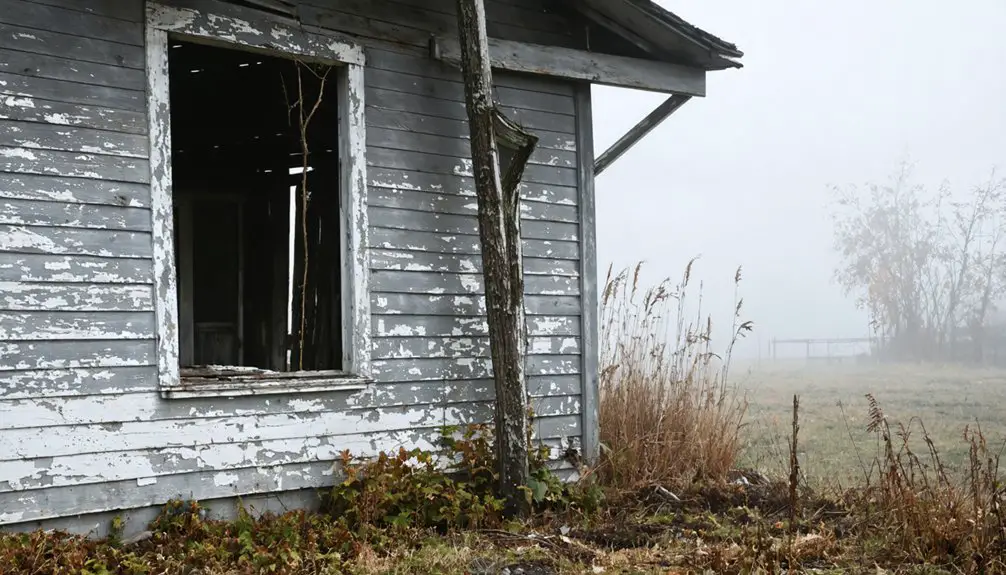
You can explore Michigan’s Upper Peninsula on ATV trails that wind through over 100 abandoned mining communities from the copper boom era. The Keweenaw Peninsula’s Mining Heritage Trails span 160 miles of former railway grades, connecting ghost towns like Central Mine and Atlantic Mine with their crumbling smokestacks and stone ruins. You’ll need a $36.25 annual ORV permit to access these designated trails that reveal Michigan’s forgotten mining heritage and hidden wilderness adventures.
Key Takeaways
- Michigan’s Keweenaw Peninsula features 160 miles of ATV trails connecting nearly 100 abandoned copper mining communities from the 1880s era.
- The Bill Nicholls Trail spans 41 miles from Mass City to Calumet, following original railway grades through historic mining settlements.
- Pere Cheney Ghost Town near Grayling offers cemetery trail access to a former lumber community devastated by plague.
- Annual ORV permits cost $36.25 total ($26.25 license + $10 trail permit) and are required for accessing state-designated ghost town trails.
- Essential gear includes GPS navigation, first aid kit, tow straps, and extra water for safe exploration of remote mining ruins.
Keweenaw Peninsula’s Mining Heritage Trails
Spanning 160 miles across Michigan’s Keweenaw Peninsula, designated ORV trails transform forgotten railway grades into adventure corridors that’ll take you through the heart of America’s copper mining legacy.
These rugged paths follow the original routes where trains hauled copper ore and timber during the mining boom of the 1800s and early 1900s.
You’ll discover authentic trail history as you navigate past towering smokestacks marking former smelters and crumbling stone structures reclaimed by wilderness.
The mining legacy comes alive near Atlantic Mine and South Range, where remnants of the Copper Range Railroad tell stories of industrial ambition. While exploring these historic sites, exercise caution around unstable structures that remain from the copper mining era.
Adventure Mine near Greenland offers direct access to this preserved mining legacy, letting you explore where fortune-seekers once carved prosperity from Michigan’s copper-rich earth. The trails feature scenic views including pristine lake shore vistas that showcase the natural beauty surrounding these historical mining sites.
Pere Cheney Ghost Town Cemetery Trail Access
Deep in Crawford County’s wilderness, nine miles southeast of Grayling, you’ll find one of Michigan’s most haunting destinations accessible by ATV.
Pere Cheney’s ghost town cemetery sits across abandoned railroad tracks, marking the final chapter of a lumber community that vanished after plague devastated its population in the late 1800s.
Your Cemetery Exploration begins on narrow, sandy trails that challenge even experienced riders.
Park near the railroad crossing and walk the final stretch to avoid disturbing this sacred ground.
The cemetery holds approximately 90 graves, many marked only with rocks after vandals destroyed original headstones.
This Haunted History location attracts paranormal investigators reporting mysterious lights and disembodied voices.
Beaver Creek Township maintains the site, though restoration efforts continue addressing decades of neglect. The town originally thrived around George Cheney’s sawmill before devastating fires and disease led to its abandonment.
Local legends tell of handprints appearing on visitors’ cars parked near the cemetery entrance.
Drummond Island Turtle Ridge ORV Adventures
While Pere Cheney offers eerie historical exploration, Drummond Island’s Turtle Ridge delivers pure adrenaline through 100+ miles of challenging ORV terrain.
You’ll access this private paradise only by ferry, where limestone formations create epic rock crawling adventures across 190 acres of untamed wilderness.
Turtle Ridge’s rugged trails wind through steep hillsides and massive rock ledges, testing your machine’s limits on routes carved from natural stone.
Navigate bone-jarring limestone obstacles where every turn demands precision and every climb pushes your rig to its breaking point.
You’ll navigate wooded paths that crisscross the wildlife preserve, with some trails diving deep into forests while others offer extended backcountry rides.
Since it’s privately owned, you’ll avoid state trail closures and restrictions.
A weekly pass costs just $20, granting access from dawn to dusk year-round. The park offers varied terrain that accommodates everyone from beginners to expert riders seeking maximum challenges.
The trails welcome all vehicle types including ATVs, UTVs, and Jeeps for maximum versatility.
Contact 906-493-1000 for reservations and embrace true off-road freedom.
Upper Peninsula’s 100 Abandoned Mining Communities
Michigan’s Upper Peninsula harbors nearly 100 abandoned communities where copper and iron fortunes once flourished before economic collapse left entire towns to nature’s reclaim.
You’ll discover Central’s red sandstone Methodist Church standing sentinel among overgrown fields, while Mandan’s complete disappearance leaves only scattered bricks marking former streets.
Redridge offers photogenic ruins and an engineering marvel steel dam, perfect for exploration. The area around Freda and Redridge contains mining waste materials that required environmental investigation due to decades of copper processing activities.
Freda’s deteriorated buildings tell stories of the devastating 1913 miners’ strike, though you’ll need caution maneuvering hidden hazards.
Cliff’s abandoned mineshafts drop 25+ feet into darkness, marked only by wild apple trees from forgotten backyards. Fayette’s limestone peninsula location in Lake Michigan provides stunning shoreline views alongside its 20 remarkably preserved buildings.
This mining history creates an adventurer’s playground where ATV trails wind through Michigan’s most authentic ghost town experiences.
Tobacco River Park and Historic Gay Area
Adventure awaits at Tobacco River Park, where the 14-mile Tobacco River meets Lake Superior‘s pristine shores near the historic Gay area on Keweenaw Peninsula’s eastern edge.
Adventure beckons where the pristine Tobacco River flows into Lake Superior’s majestic waters along Keweenaw Peninsula’s historic eastern shores.
You’ll discover a roadside sanctuary on Gay Lac La Belle Road featuring picnic areas and public beach access. The forested wetlands surrounding this river once echoed with French Canadian and Ojibwa loggers floating timber to sawmills.
Historic Gay’s landscape tells stories of copper mining prosperity, where stamp mills processed ore from Wolverine and Mohawk mines. You can explore remnants of milling operations while enjoying Buffalo Reef’s offshore fishing habitat. The mining boom that shaped the Keweenaw region left behind numerous commercial buildings that reflect the area’s economic growth and changing consumer needs. Further south along the Tobacco River in Clare, you’ll find an 80-acre ranch with century-old structures that once housed notorious Purple Gang connections.
The Precambrian rock formations beneath your feet contain native copper deposits that shaped this region’s destiny. This destination offers perfect freedom for ATV enthusiasts seeking both recreation and history.
Copper Harbor to Mass City Railway Corridor
You’ll discover the abandoned Copper Range Railroad corridor stretching from Houghton to Mass City offers prime ATV access to forgotten mining settlements scattered throughout the Keweenaw Peninsula.
The historic railway grade provides a ready-made trail system connecting you to remnants of copper boom towns, complete with foundation ruins, equipment debris, and overgrown mining infrastructure.
Key trail junctions at McKeever, Dollar Bay, and Mill Mine Junction serve as launching points for exploring branch lines that once served now-vanished communities like Winona Mine and Gay.
Historic Railway Grade Access
Today’s recreational trail benefits let you access abandoned mining towns via ATV along preserved grades that slice through dense forests and forgotten valleys.
You’ll discover the same routes that once carried 75-pound rails and heavy freight trains.
The former corridor aligns perfectly with the Copper Country Trail National Byway, offering freedom-seekers an authentic wilderness experience through Michigan’s most remote ghost town territory.
Mining Town Ruins
While most Michigan explorers focus on the scenic Copper Harbor shoreline, the real treasures lie scattered along the abandoned Copper Range Railway corridor where crumbling foundations and rusted machinery mark the graves of once-thriving mining communities.
You’ll discover copper mine artifacts embedded in overgrown lots where miners’ families once lived and worked. Mass City’s remnants tell stories of boom-and-bust cycles, while ghost town legends surround the isolated settlements between Winona and Gay.
Your ATV can navigate old railway grades to reach abandoned stamp mills and mine shafts that dot this 75-mile network. The Firesteel River trestles still stand as monuments to industrial ambition, offering perfect vantage points for photographing Michigan’s forgotten copper empire.
Trail Connection Points
The 41-mile Bill Nicholls Trail forms the backbone of Michigan’s most extensive ghost town exploration network, connecting Mass City’s mining ruins to Calumet along the historic Copper Range Railroad corridor.
You’ll discover countless trailway landmarks marking vanished settlements where copper miners once lived and worked. The soft-surface path lets your ATV cruise through rolling terrain dotted with forgotten foundations and rusted machinery.
Connect seamlessly with the 13.4-mile Hancock/Calumet Trail at Houghton, extending your ghost town adventure across two historic rail systems.
You’ll find these connection points perfectly positioned for exploring remnants of Michigan’s copper boom era. The trails intersect near Portage Lake, where ghost town lore comes alive through visible mining artifacts scattered along both corridors.
Bill Nichols Trail Ghost Town Connections
Spanning 41 miles through Michigan’s Upper Peninsula Copper Country, the Bill Nicholls Trail delivers you directly into the heart of one of America’s most concentrated ghost town regions.
You’ll ride past Champion Mine remnants, where old buildings stand as silent witnesses to the 1800s copper boom. At mile 25.2 near Toivola, mining ruins and tailings piles mark another ghost town exploration opportunity.
The trail connects you to over 100 abandoned settlements scattered throughout the Keweenaw Peninsula.
Over 100 abandoned settlements await discovery across the Keweenaw Peninsula’s historic copper mining landscape.
You’ll discover mining site discoveries like Adventure Mine, operational from 1850-1920, and signs marking Senanaka Number Three Mine. Near mile 34.4, South Range offers access to the Copper Range Historical Museum, where you can learn about these vanished communities before continuing your ghost town adventure.
Calumet and Houghton County Ruins
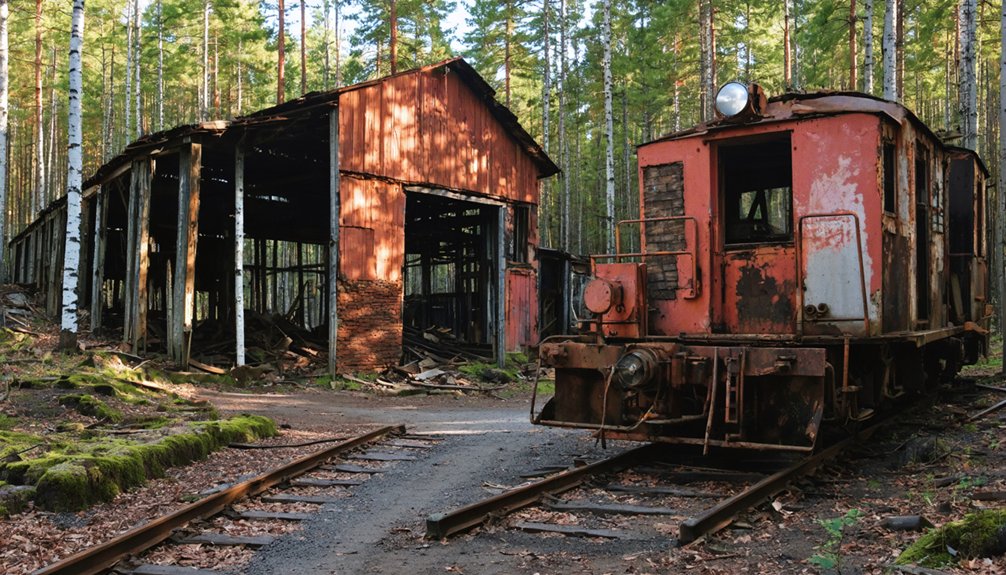
You’ll find some of Michigan’s most haunting copper mining remnants scattered throughout the Keweenaw Peninsula, where ATV trails wind through dense forests to reveal crumbling foundations and abandoned settlements.
The rugged terrain around Calumet opens up multiple route options, letting you navigate dirt roads and connecting trails that lead to ghost towns like Central Mine and the atmospheric ruins of Clifton.
Your ATV becomes essential transportation here, especially after rain turns these remote Upper Peninsula access roads into challenging muddy passages that would stop most vehicles.
Historic Mining Town Remnants
Deep within Michigan’s Keweenaw Peninsula, remnants of America’s richest copper mining empire await ATV explorers willing to navigate overgrown trails and forgotten industrial landscapes.
You’ll discover Calumet’s ghost town atmosphere among structures dating to the 1880s, where Calumet and Hecla Mining Company once produced 12-16% of the world’s copper.
Historic mining sites stretch along the copper lode, marked by abandoned headframes and crumbling foundations that housed 4,000 workers at peak operation.
Navigate carefully around mine shafts that plunged 4,000 feet deep by 1900.
The Calumet Historic District preserves these industrial monuments within Keweenaw National Historical Park boundaries.
You’ll find authentic remnants of mining buildings scattered throughout areas accessible via old railroad grades and mining roads, offering unparalleled freedom to explore America’s copper heritage off-grid.
ATV Trail Access Routes
Multiple trail networks crisscross Houghton County, connecting you directly to these copper mining ruins through a web of former railroad grades and logging roads.
You’ll discover over 50 miles of designated ATV routes that’ll take you deep into Michigan’s forgotten mining heritage.
- Keweenaw Peninsula Trails offer year-round access via old railway grades, leading you to abandoned settlements and forestlands where copper barons once ruled.
- BD Route provides 14 miles of restricted ORV access from Calumet to Hancock, passing ghost town remnants near Laurium and Torch Lake.
- Jack Stevens Hancock-Calumet Trail spans 13 miles of mixed terrain, connecting both regions through less-traveled backcountry.
For trail safety, you’ll need proper ORV licensing and trail permits.
Navigation tips include downloading offline maps and following established DNR Rail-Trails to avoid getting lost in dense wilderness areas.
Essential ORV Permits and Trail Regulations
Before you fire up that ATV and head toward Michigan’s forgotten settlements, you’ll need the proper paperwork to legally access these remote destinations.
The ORV regulations overview requires a $26.25 annual license for riding on eligible county roads, state forest roads, and frozen public waters where ghost towns often hide. If you’re tackling state-designated trails leading to abandoned settlements, add a $10 trail permit, bringing your total to $36.25.
Your permit purchasing options include Michigan’s eLicense system, the DNR Hunt Fish mobile app, or visiting license agents throughout the state.
Both permits run April 1 through March 31, giving you a full year to explore Michigan’s haunting past. Remember, you’ll also need a Michigan Recreation Passport for accessing state trailheads near these mysterious destinations.
Planning Your Ghost Town ATV Expedition

You’ll need proper ORV permits and safety gear before venturing into Michigan’s remote ghost towns like Pere Cheney, where narrow Cemetery Trail demands ATVs under 50 inches wide.
Your route planning should account for the rugged Keweenaw Peninsula terrain, from copper stamp sands to forested paths that wind through abandoned mining settlements.
Pack essential supplies for these backcountry expeditions, as you’ll traverse vast forestlands where the nearest fuel stop or lodge might be miles away from your ghost town destination.
Essential Gear and Permits
Two essential permits will determine whether your ghost town expedition becomes an unforgettable adventure or an expensive encounter with law enforcement.
You’ll need an ORV license costing $26.25, plus a trail permit for another $10, totaling $36.25 annually. These permit requirements cover state-designated trails and forest roads where most ghost towns hide.
Your essential gear extends beyond licensing:
- Navigation equipment – GPS devices and paper maps since cell service vanishes in remote areas
- Safety essentials – First aid kit, emergency whistle, and extra water for isolated locations
- Recovery tools – Tow straps and basic repair kit for mechanical breakdowns
Purchase permits online through Michigan’s eLicense system or the DNR mobile app.
Route Mapping Strategies
Three digital mapping resources transform your ghost town hunting from guesswork into strategic exploration. The DNR’s interactive map reveals designated ORV routes, closures, and parking areas while providing downloadable GPX files for seamless GPS integration.
EagleEyeExplorer plots Michigan’s 73 ghost towns, including shadow settlements lost to time. OnX Maps delivers detailed trail conditions and difficulty ratings for specific destinations like Pere Cheney Ghost Town.
Your route optimization begins with layering these mapping tools together. Plot ghost town coordinates, identify connecting trail networks, and mark fuel stops along extended expeditions.
Download PDF maps as backup when cell service fails in remote forestlands. The Keweenaw Peninsula’s railway grades and Michigan Cross Country Trail system offer proven pathways to abandoned mining camps and forgotten settlements waiting for your discovery.
Frequently Asked Questions
What Safety Equipment Is Recommended When Exploring Remote Ghost Town Sites?
You’ll need USDOT-approved helmets, protective goggles, sturdy boots, and long sleeves for ghost town exploration. Pack essential safety gear and emergency kits when venturing into these remote, rugged territories where adventure meets unpredictable terrain.
Are Camping Facilities Available Near Ghost Town Trail Access Points?
You’ll strike gold with camping options! Jack Pine Lodge offers midway trailhead facilities along Haywire Grade, while Miners Cottage provides unique overnight stays at Central Mine with basic campground amenities supporting your ghost town adventures.
What Is the Best Time of Year for Ghost Town ATV Exploration?
June through August offers the best seasons for your ghost town adventures, when dry weather conditions keep trails firm and dust-free. You’ll find ideal riding with warm temperatures, stable black sands, and accessible community services.
Can Children Ride as Passengers on ATVS During Ghost Town Tours?
Envision this adventure unfolding: you can bring children as ATV passengers during ghost town tours, but Michigan’s ATV age restrictions require they’re six-plus, wear helmets, and have proper seating for passenger safety.
Are Guided Ghost Town ATV Tours Available for First-Time Visitors?
Yes, guided tours are perfect for first-time visitors exploring Michigan’s ghost towns. You’ll discover copper mining ruins, historic railway grades, and abandoned settlements with experienced guides ensuring safe, memorable adventures through remote wilderness areas.
References
- https://www.treadworld.com/michigan-atv-guide/
- https://www.visitkeweenaw.com/outdoors/sports-recreation/atv-trails/
- https://www.onxmaps.com/offroad/trails/us/michigan/cemetery-trail-pere-cheney-ghost-town
- https://www.youtube.com/watch?v=7-vjuqiGWJU
- https://www.uptravel.com/things-to-do/attractions/fayette-historic-state-park-townsite/
- https://www.visitkeweenaw.com/blog/post/our-top-4-places-to-ride-in-the-keweenaw/
- https://www.michigan.org/keweenaw-peninsula
- https://atvtracks.com/reporter-areas/gogebic-ontonogon-county-michigan/
- https://www.vvmapping.com/trails/keweenaw.html
- https://www.traillink.com/trail/bill-nicholls-trail/