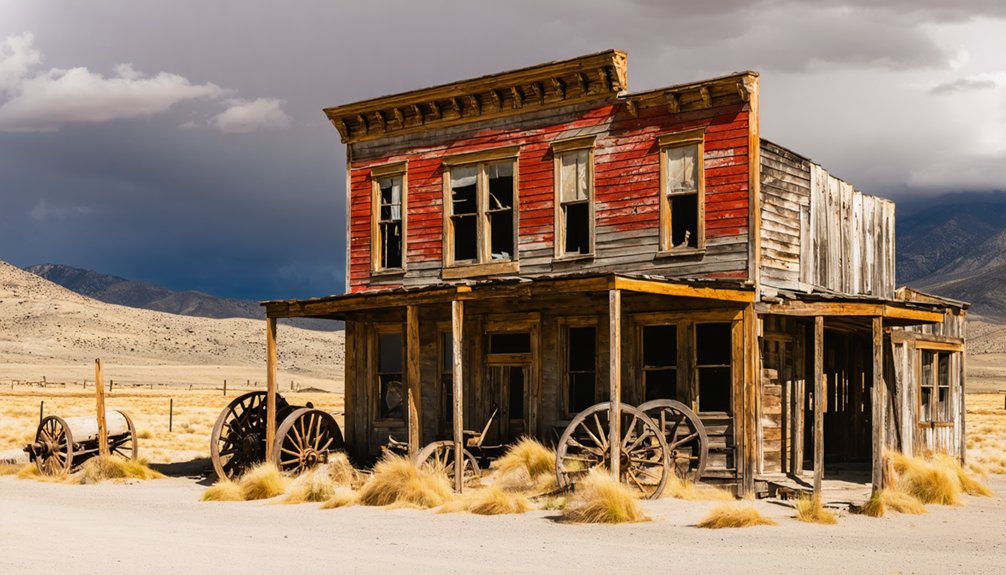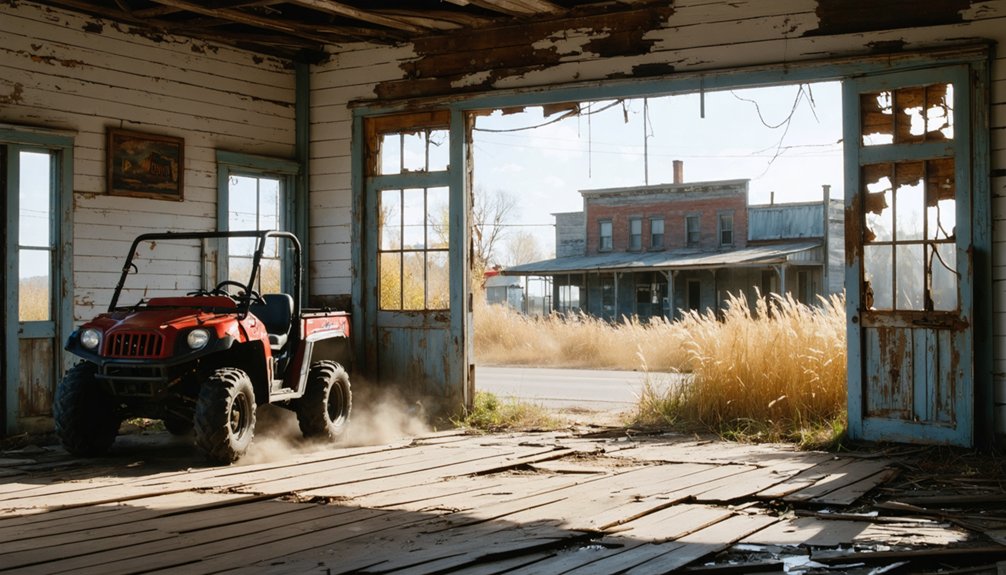
You’ll find incredible ghost town adventures across the Midwest’s mining heritage, from South Dakota’s Black Hills with over 600 abandoned settlements to Michigan’s Keweenaw Peninsula featuring nearly 100 copper boom ruins accessible via old railway trails. Wisconsin’s Iron County offers 250 miles of interconnected ATV paths through historic mining landscapes, while Idaho’s White Knob Mining District near Mackay showcases preserved smelter sites and ghost camps. These weathered foundations and crumbling structures await your exploration through designated trail networks that’ll reveal their complete stories.
Key Takeaways
- Keweenaw Peninsula, Michigan features nearly 100 ghost towns with 160+ miles of ORV trails through historic copper mining sites.
- Iron County, Wisconsin offers 250 miles of interconnected ATV trails accessing abandoned mines and historic mining communities like Montreal.
- Central Mine in Michigan provides hiking trails past schoolhouse ruins with accessible routes carved from old railway grades.
- Pence, Wisconsin features the state’s greatest concentration of historic log buildings accessible via the extensive ATV trail network.
- Plummer Mine in Wisconsin showcases the state’s only remaining 80-foot mining head frame accessible through interconnected trail systems.
Black Hills Ghost Towns: Historic Mining Settlements of South Dakota
When you fire up your ATV and head into the pine-covered hills of South Dakota’s Black Hills, you’re riding through landscapes that once echoed with the clang of pickaxes and the dreams of fortune seekers.
The 1874 gold discovery triggered a rush that transformed this sacred Native American territory into bustling mining camps. You’ll discover remnants of hard rock operations at sites like Galena, where 600 residents once extracted silver near Deadwood.
Navigate forest trails to reach Tinton on Negro Hill, where tin mining persisted for nearly a century. The Black Hills mining heritage comes alive as you explore Spokane’s standing structures and examine tailings piles containing quartz and mica, evidence of dreams both realized and abandoned.
These abandoned settlements represent over six hundred ghost towns that exist throughout the Black Hills region, each marking communities that once flourished before losing their original populations and purposes. The arrival of mining families brought women and children to these remote camps, establishing schools and churches that transformed rough settlements into civilized communities.
The aftermath of natural disasters, such as abandoned towns after major hurricanes, evokes a profound sense of loss and nostalgia. These locations often tell the stories of resilience and the desperate struggle to rebuild amid overwhelming challenges. As nature reclaims these areas, they stand as stark reminders of both human vulnerability and the relentless power of the elements.
Keweenaw Peninsula: Copper Mining Ruins Along Michigan’s ATV Trails
The rumble of your ATV engine mingles with echoes of Michigan’s copper boom as you navigate forest trails carved from old railway grades that once hauled precious ore from the Keweenaw Peninsula’s depths.
You’ll discover nearly 100 ghost towns scattered across these forestlands, where towering smokestacks and crumbling foundations tell stories of 1800s mining prosperity.
Central Mine offers two hiking trails past schoolhouse ruins and valley overlooks, while Freda’s Champion Mill resembles a concrete amphitheater reclaimed by nature.
Your route spans from Mass City to Copper Harbor, accessing hidden settlements along Lake Superior’s coast. The peninsula’s over 160 miles of ORV trails provide extensive access to these remote historical sites.
Remember ATV safety when exploring—these unmaintained structures can be unstable.
Keweenaw history unfolds with every turn as you traverse this haunting landscape where copper once ruled supreme. The Cliff Mine stands as a testament to this legacy, serving as the first successful copper mine in the United States from 1845 to 1878.
Mackay Idaho: Gateway to White Knob Mining District Adventures
You’ll find excellent ATV rental options in Mackay, Idaho, where local outfitters equip you with machines perfectly suited for exploring the rugged White Knob Mining District terrain.
This small town of 540 residents serves as your launching point into a landscape where copper fever once drove thousands of miners into the surrounding mountains starting in 1901.
As you throttle through sagebrush and rocky trails, you’re retracing the paths that led to boom towns like White Knob and Cliff City, where fortunes were made and lost in the pursuit of copper, silver, and lead. The district’s remarkable productivity generated approximately $3.75 million in total mineral wealth by 1914. The town was named after John W. Mackay, a major investor who helped establish this mining hub that would become central Idaho’s key terminal for rail shipments and exports.
ATV Rental Options
Nestled along Highway 93 in the heart of Idaho’s rugged mining country, Mackay serves as your launching pad into the White Knob Mining District‘s abandoned settlements and weathered ruins.
Two local rental companies provide the freedom you crave for exploring these forgotten places.
Lost River Adventures stands as Mackay’s exclusive Polaris UTV rental provider at 4255 N. US Highway 93. They’ll also equip you with paddle boards, kayaks, and camping gear for extended adventures.
Polaris Adventures offers another route to liberation with rentals starting at $292.95.
Your ATV rental options include:
- Street-legal riding through Mackay’s city streets and alleys
- Direct trail access from White Knob Motel & RV Park
- UTV rental receipts qualifying for lodging discounts
- Hundreds of miles of trails radiating from the ATV Capital of the West
The routes feature winding switchbacks that provide access to elevated vantage points throughout the mountainous terrain. The historic mining district features remnants of mining operations including the preserved smelter site, Cossack Tunnel, and the ghost settlement of Cliff City scattered throughout the mountainous terrain.
White Knob History
When copper gleamed in Alder Creek’s rocky veins in 1901, fortune seekers flooded into what would become the White Knob Mining District, transforming empty wilderness into a bustling network of claims, camps, and dreams.
You’ll discover how investor John W. Mackay funded the railroad extension that birthed the town bearing his name, creating a gateway to copper heritage that defined Idaho’s mining frontier.
Empire Copper Company’s massive smelters roared to life with two 125-ton blast furnaces, while streets buzzed with saloons and boarding houses. Mining operations expanded beyond copper to extract lead and zinc from the mountain’s rich deposits, diversifying the district’s economic foundation.
Though boom-bust cycles plagued operations and companies squandered millions without profit, the Mackay Mining legacy endures. The White Knob Historical Preservation Committee has worked with multiple partners including Idaho Heritage Trust, National Park Service, Bureau of Land Management, and U.S. Forest Service to safeguard this heritage.
Today, you can explore preserved tramway towers, stabilized trestles, and miners’ cabins that whisper tales of fortunes won and lost in these rugged mountains.
Iron County Wisconsin: Mining Heritage on 250 Miles of Connected Trails
Deep beneath Wisconsin’s Iron County Forest lies a network of abandoned mines that once produced millions of tons of ore.
Today, 250 miles of interconnected ATV trails wind directly through this historic mining landscape. You’ll discover authentic ghost towns where Italian and Corsican immigrants once lived in mining camps, accessing these forgotten places through exceptional ATV trail accessibility that connects four counties.
Iron County history comes alive as you explore:
- Montreal – Complete utopian mining community on the National Register
- Pence – Wisconsin’s greatest concentration of historic log buildings
- Plummer Mine – State’s only remaining 80-foot mining head frame
- Stateline Mining Ghost Town – Accessible via Far West Trail System
Your machine carries you past waterfalls and heritage sites, with trails connecting to ATV-friendly towns offering fuel, food, and lodging along your journey.
Essential ATV Licensing and Permit Requirements by State
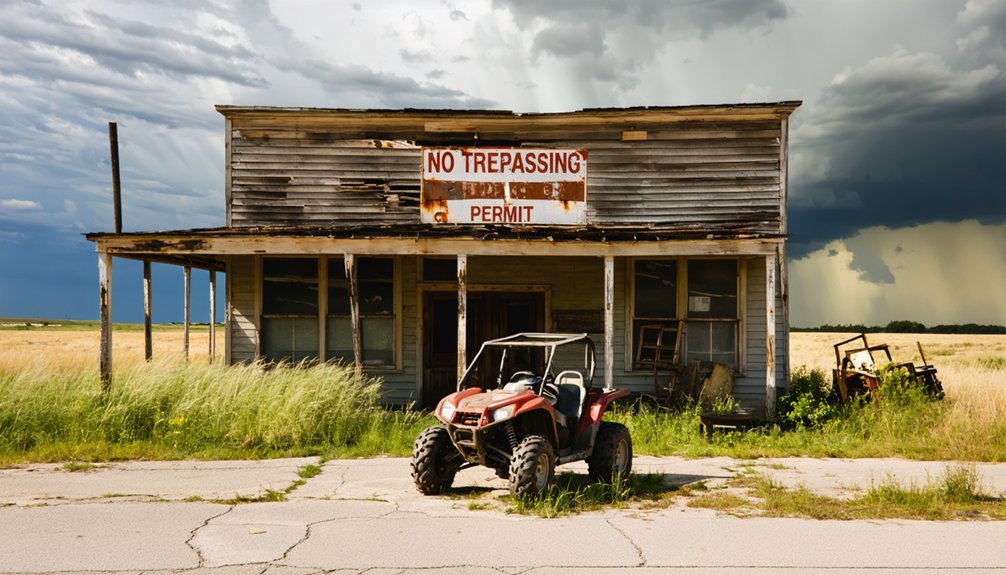
Before you fire up your ATV and head toward those haunting remnants of abandoned settlements, you’ll need to navigate the maze of state licensing requirements that vary dramatically across the country.
Some states like Nevada won’t require any driver’s license or minimum age for off-highway adventures, while others like Wisconsin demand safety certification and set strict age limits that could derail your ghost town expedition.
You can streamline this process by checking online registration options in your destination state, ensuring you’re legally covered whether you’re exploring Minnesota’s registered trails or securing New Mexico’s non-resident permits for those remote desert ruins.
State-Specific License Requirements
As you prepare for your ghost town adventure, understanding each state’s unique ATV licensing requirements becomes essential for a legal and safe journey.
License regulations vary widely across Midwest states, creating a complex web you’ll need to navigate before hitting those dusty trails.
Age restrictions differ greatly between destinations:
- Minnesota: You’ll need safety certificates at specific ages, with minimum requirements starting at 10 for supervised riding.
- Missouri: Demands a driver’s license or learner’s permit for riders 16 and older on certain terrain.
- Ohio: Requires full registration and titling for every machine, plus proper lighting equipment.
- Pennsylvania: Mandates biennial registration renewal with numbered plates and safety certificates for minors.
These freedom-seeking adventures require proper preparation, so research your route’s specific requirements beforehand.
Online Registration Options
Once you’ve mastered your state’s licensing landscape, the digital highway offers streamlined paths to get your paperwork sorted from your couch.
Wisconsin’s GoWild.wi.gov delivers instant 21-day temporary receipts, while Minnesota’s DNR website handles three-year trail access with a few clicks. Missouri keeps things flexible with PIN-based renewals and phone options through local offices.
These online platforms transform traditional registration procedures from bureaucratic marathons into quick sprints. You’ll submit vehicle details, pay fees, and receive official documentation without stepping foot in government buildings.
Wisconsin requires dealer submissions within seven days, individuals get ten. Minnesota maintains the same process whether you’re local or out-of-state. Missouri adds sales tax calculations but streamlines everything digitally.
Freedom-seekers can now focus on trail planning rather than paperwork headaches.
Safety Considerations When Exploring Abandoned Mining Sites
When you’re maneuvering your ATV through the remnants of an old mining town, the rusted equipment and weathered structures tell stories of boom and bust—but beneath this fascinating history lurk deadly hazards that claim lives every year.
Your freedom to explore these ghost towns comes with serious responsibility for hazard awareness and proper safety gear.
Critical dangers you’ll encounter include:
- Concealed mine shafts hidden by vegetation or rotting boards that plunge hundreds of feet deep
- Toxic gases like methane and carbon monoxide accumulating in underground passages
- Unstable highwalls and refuse piles that collapse without warning, burying riders
- Contaminated water sources harboring dangerous chemicals and unpredictable depths
Always wear protective equipment, travel with companions, and maintain constant vigilance—your adventure shouldn’t become a rescue mission.
Trail Difficulty Levels and Vehicle Requirements for Ghost Town Access
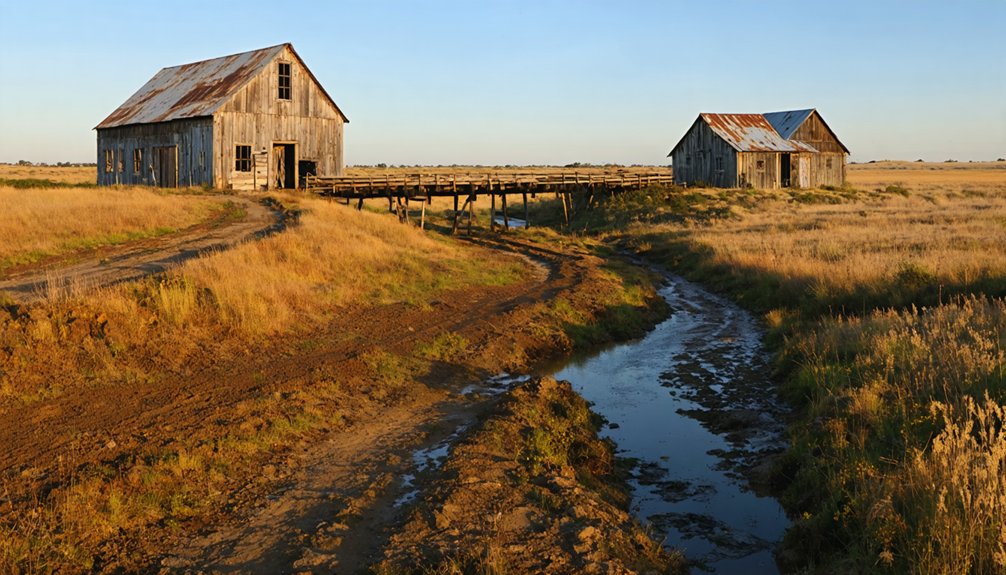
Your ATV’s capabilities and your riding experience will determine which ghost town trails you can safely conquer, as these abandoned sites range from gentle gravel roads perfect for weekend warriors to bone-jarring technical challenges that’ll test even seasoned riders.
Trail access varies dramatically—beginner-friendly paths through former mining operations offer smooth riding, while advanced routes demand serious suspension and ground clearance.
Ghost town trails split into two worlds: gentle former mining roads for casual exploration and brutal technical routes demanding maximum suspension and clearance.
You’ll encounter vehicle restrictions at certain locations, with some areas limiting ATVs to specific trail sections while reserving technical rock quarries for larger 4x4s.
Check your machine’s specs against terrain requirements: sand dunes need different capabilities than steep glacial valleys or muddy mining pits that’ll swallow underpowered rides whole.
Rental Options and Local Outfitters for ATV Adventures
Dozens of rental outfitters across the Midwest have transformed ghost town exploration from a niche hobby into an accessible weekend adventure, offering everything from budget-friendly half-day excursions to premium guided tours with GPS tracking.
Local outfitters understand your craving for authentic wilderness experiences. Mad-Peak Rentals in Deadwood positions you minutes from trail access, while Bear Bogging Adventure Tours equips you with 2024 Polaris four-seaters starting at $399.
These ATV rental tips guarantee success:
- Choose outfitters offering permits and trail maps included
- Book locations with on-site parking for trailers
- Select providers including safety gear like goggles
- Prioritize companies with flexible timing options
Adventure Rentals at Indiana’s Badlands Off-Road Park delivers half and full-day backcountry access, while Wyoming’s Kirwin Rides provides real-time GPS tracking for ghost town adventures.
Historical Significance of Midwest Mining Communities
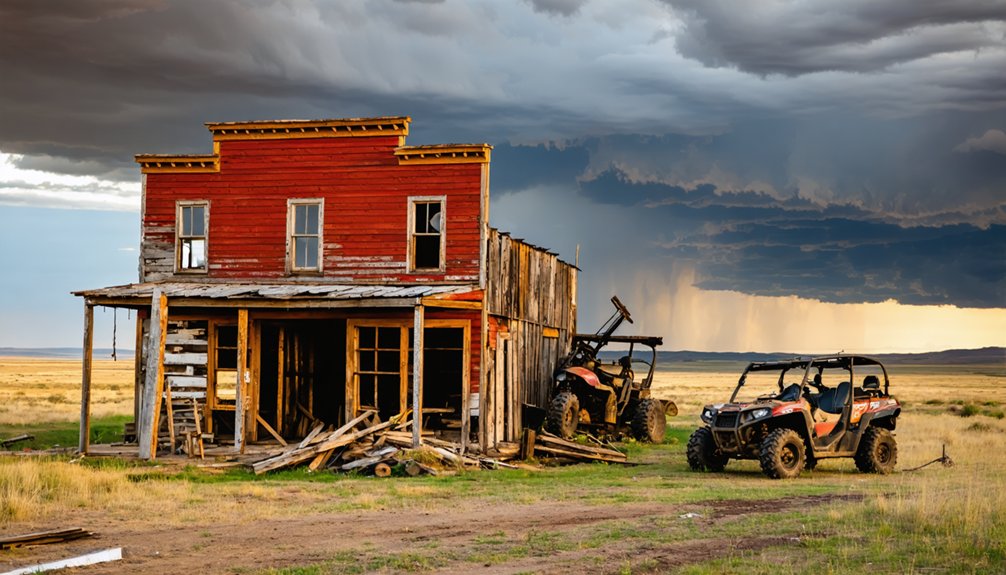
Long before your ATV tires carved fresh tracks through abandoned mining sites, Native American communities shaped the Midwest’s mineral landscape with hand-dug copper pits that stretched across Michigan’s Keweenaw Peninsula for over 5,000 years.
You’re riding through layers of cultural heritage where Ojibwe traders once transported copper jewelry from Lake Superior to the Rocky Mountains and Gulf Coast.
When European settlers arrived, they followed these ancient paths to strike it rich. The 1841 geological reports sparked frenzied rushes that transformed wilderness into bustling industrial centers.
Cornish miners brought underground mining technology while Swedes, Finns, and Croats built tight-knit communities around dangerous work.
These ghost towns you explore today represent decades of backbreaking labor that powered America’s industrial revolution through copper wiring and steel production.
Planning Your Multi-Day Ghost Town ATV Expedition
Transforming those historical discoveries into your own adventure requires careful preparation that’ll make the difference between an unforgettable expedition and a dangerous mishap.
Your route logistics demand serious attention—these ghost towns aren’t on Google Maps, and cellular service vanishes quickly in remote areas. You’ll need detailed trail maps, local ATV club contacts, and backup navigation methods.
Ghost towns exist beyond digital maps and cell towers, demanding old-school navigation skills and local knowledge for safe exploration.
Essential gear planning separates experienced riders from weekend warriors:
- Compact waterproof storage for clothing, permits, and emergency supplies
- Extra fuel containers since ghost towns rarely offer refueling stations
- Recovery equipment including winches for at least one ATV per group
- Multi-day camping gear sized appropriately for ATV cargo limitations
Share your complete itinerary with trusted contacts before departing.
These abandoned settlements hold incredible stories, but they’re unforgiving to unprepared explorers.
Frequently Asked Questions
What Are the Best Months for ATV Ghost Town Exploration in the Midwest?
You’ll find May through October offers perfect seasonal weather for your ghost town adventures. Avoid peak travel months of July-August for quieter exploration, while September delivers stunning foliage and cooler temperatures for unforgettable rides.
Can I Camp Overnight Near Ghost Town Sites During ATV Trips?
You’ll find excellent overnight camping near most ghost town sites, from Idaho’s Mackay Reservoir to Wisconsin’s resort options. Check camping regulations and overnight permits beforehand—your adventure awaits with endless freedom to explore.
Are There Guided ATV Tours Available for Ghost Town Exploration?
Timber Ghost Tours offers guided ATV adventures along Michigan’s North Shore, but you’ll find limited formal guided tours for Midwest ghost town exploration—most riders create their own self-guided adventures through historic mining sites.
What Should I Bring for Photographing Ghost Town Ruins From ATVS?
You’ll need weatherproof camera gear including a DSLR, wide-angle lens, and sturdy tripod secured in your ATV. Don’t forget essential safety equipment like protective cases, extra batteries, and dust covers for those rugged adventures.
How Do I Find Accurate GPS Coordinates for Remote Ghost Towns?
Like prospectors following faded treasure maps, you’ll need reliable GPS resources and mapping tools. Download onX Offroad beforehand, verify coordinates through local stores, and cross-reference multiple sources since cell coverage disappears.
References
- https://blackhillsatvdestinations.com/ghost-towns/
- https://www.islands.com/1921538/mackay-idaho-atv-capital-off-road-trails-ghost-town-desert-view/
- https://www.visitkeweenaw.com/outdoors/sports-recreation/atv-trails/
- https://mad-peak.com/f/black-hills-ghost-towns-are-real—and-you-can-ride-through-them
- https://www.travelwisconsin.com/article/atv-utv/must-experience-wisconsin-atv-trails
- https://www.onxmaps.com/offroad/blog/ghost-towns-off-roading
- https://www.youtube.com/watch?v=w-aGYEP9fiY
- https://www.youtube.com/watch?v=7-vjuqiGWJU
- https://www.standard.net/lifestyle/recreation/2023/oct/05/atv-adventures-burnt-woods-and-ghost-towns-on-the-state-line-trail/
- https://www.sdpb.org/rural-life-and-history/2023-08-21/some-black-hills-ghost-towns-and-their-origins