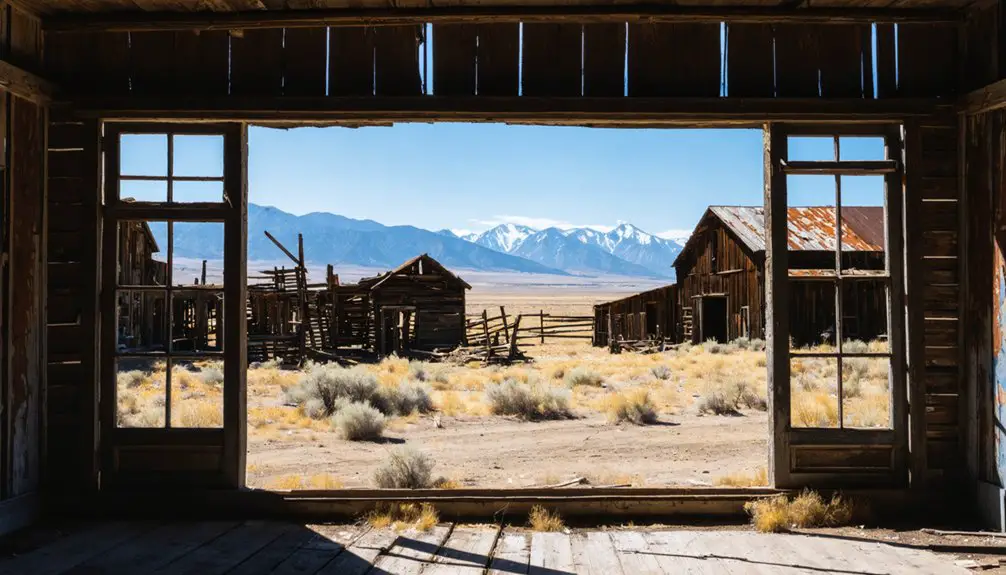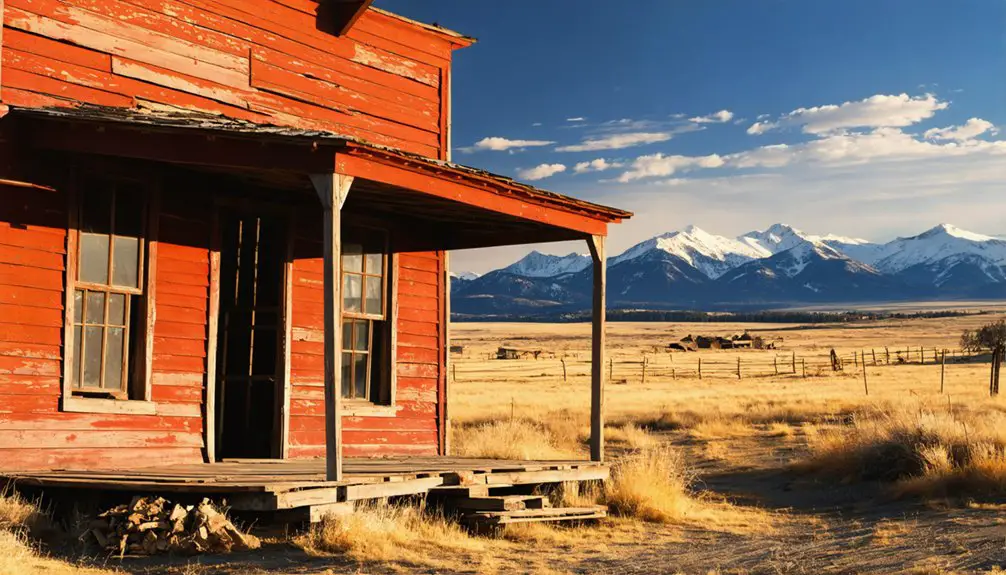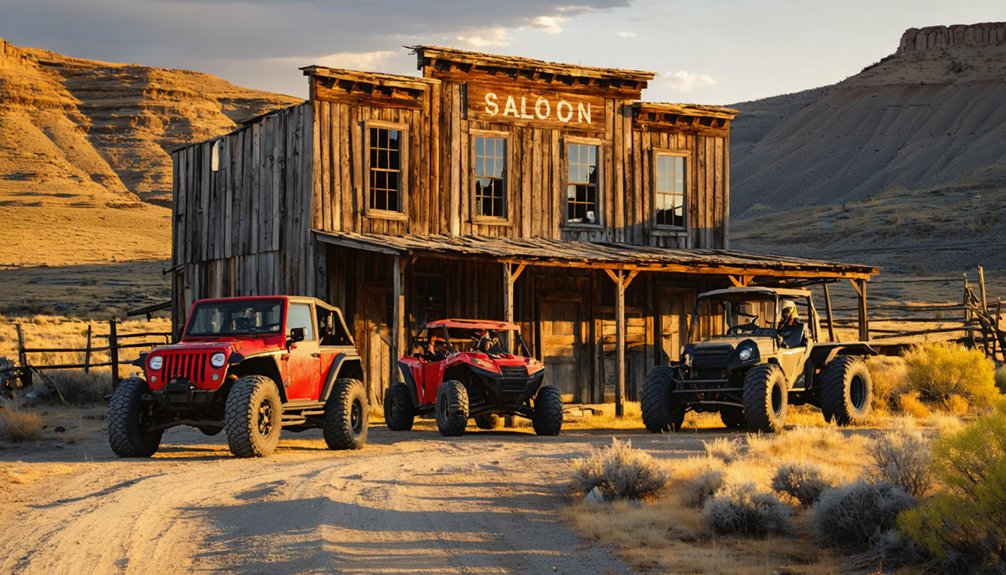
You’ll find Montana’s best ATV-accessible ghost towns scattered across mountain ranges where gravel roads lead to preserved mining history. Garnet offers the state’s most intact 1890s settlement at 6,000 feet, while Elkhorn provides family-friendly exploration with well-maintained trails. Cable sits remotely at 6,821 feet near Georgetown Lake, and Glendale serves as your gateway to Pioneer Mountains backcountry. Each site demands proper gear preparation and navigation skills to safely explore these historic mining camps where fortunes were won and lost.
Key Takeaways
- Elkhorn Ghost Town offers well-maintained gravel roads ideal for family ATV adventures, located 18 miles from Boulder.
- Garnet Ghost Town sits at 6,000 feet elevation and represents Montana’s most intact 1890s mining settlement accessible by trail.
- Glendale Ghost Town provides year-round trail access near the freeway, serving as a base camp for Pioneer Mountains exploration.
- Cable Ghost Town requires ATV access to reach the remote 6,821-foot elevation mining camp with authentic historical relics.
- Granite Ghost Town State Park features established trails through ruins where over 3,000 miners once extracted $40 million in silver.
Garnet Ghost Town: Montana’s Best-Preserved Mining Settlement
Tucked away at 6,000 feet in the Garnet Mountain Range east of Missoula, Garnet Ghost Town stands as Montana’s most intact mining settlement—a place where your ATV’s knobby tires can carry you back to the 1890s gold rush era.
You’ll navigate remote mountain trails to reach this remarkably preserved town, where weathered buildings tell the Garnet history of boom and bust cycles that defined the American West.
When you explore the remaining structures, you’re witnessing the legacy of mining techniques that extracted millions in gold between 1862-1916. A devastating fire in 1912 destroyed half the town, marking the beginning of its decline as rebuilding efforts fell short and mining operations dwindled after 1917.
The Nancy Hanks Mine‘s rich veins once supported 1,000 residents, seven saloons, and bustling commerce. The Silver Panic of 1893 created many ghost towns across Montana as economic turmoil forced miners to abandon their claims.
Today, you’ll find authentic remnants of cabins, stores, and mining operations—all accessible through Montana’s backcountry freedom.
Coloma Ghost Town: Hidden Gem in the Blackfoot Valley
You’ll find Coloma ghost town tucked away in Montana’s Garnet Mountain Range, where gold fever struck hard in the 1890s and created what locals called “Mystery Camp” due to scarce historical records.
This remote settlement sits just two miles southwest of Garnet, offering you prime ATV access through the Blackfoot Valley’s rugged terrain from May through January.
Pack your gear for backcountry exploration—you’re heading into territory where the Mammoth and Comet mines once pulled $200,000 worth of gold from these hills. The town operated its own post office from 1895 to 1908, with Anna Richards serving as postmaster during those bustling mining years.
Today, researchers explore the site’s mining remnants including abandoned shafts, old ventilation systems, and deteriorating railroad tracks that tell the story of Coloma’s industrial past.
Remote Mining History
While most ATV riders flock to the well-known Garnet ghost town, seasoned explorers know that Coloma lies hidden just two miles away in the Blackfoot Valley, offering a more authentic and untouched glimpse into Montana’s mining past.
You’ll discover a place locals called “Mystery Camp” due to its limited records and secretive operations from the 1890s through 1916.
The camp’s remote location protected it from tourist crowds, preserving original mining shafts, ventilation systems, and narrow-gauge railroad tracks.
Placer mining discoveries on Bivins Gulch and Elk Creek in 1865 sparked the initial rush, but Coloma’s peak came during the Mammoth and Comet mine operations at the century’s turn.
The district produced $250,000 in gold, silver, lead, and zinc before abandonment in 1918. Today, only a few cabins and mining remnants stand among scenic rock formations that overlook the stunning Blackfoot Valley and Swan Mountain Range. The site maintains an upbeat atmosphere with fellow ATV enthusiasts sharing their discoveries and creating lasting connections.
Blackfoot Valley Adventures
Forty miles east of Missoula, Coloma ghost town rewards ATV adventurers with unmatched solitude and a million-dollar view spanning the Blackfoot Valley to the Swan Mountain Range.
You’ll find this hidden gem perched in the Garnet Mountain Range, where wheeled vehicles can access the site from May through January, depending on snow conditions.
Your ATV trails lead through terrain that once bustled with $250,000 worth of gold, silver, lead, and zinc production.
The adventure offers:
- Exploration of remaining mining shafts and narrow-gauge railroad tracks
- Discovery of authentic cabins with 1920s-1930s newspaper insulation
- Breathtaking panoramic views across untamed wilderness
You’re riding through history where the Mammoth and Comet mines operated at their peak around 1900, making Coloma a perfect destination for freedom-seeking riders.
Elkhorn Ghost Town: Family-Friendly Historical Adventure
You’ll find Elkhorn’s well-maintained gravel roads perfect for family ATV adventures, offering an easier ride than most ghost town destinations in Montana.
This former silver mining boomtown tells the story of families who built schools, churches, and community halls rather than just rough mining camps. The town reached its peak population of 2,500 residents when railroad workers arrived in 1889. Today, visitors can explore two remaining buildings that stand as testament to the community’s social spirit: Fraternity Hall and Gillian Hall.
After exploring the preserved buildings and cemetery, you can soak tired muscles at nearby Boulder Hot Springs, making this a perfect multi-day basecamp for your ghost town expedition.
Easy Access Route
Since Elkhorn Ghost Town sits just 18 miles from Boulder, you’ll find one of Montana’s most accessible historical adventures without sacrificing authentic backcountry character.
The journey splits into two distinct phases: seven paved miles followed by 9.2 miles of maintained gravel through Beaverhead-Deerlodge National Forest.
Your route includes these key waypoints:
- Turn left at Elkhorn sign onto White Bridge Lane, cross Boulder River
- Navigate right 3 miles, keep left at junction onto Elkhorn Road
- Drive 7.5-8 miles to reach ghost town, continue left 0.4 miles through town
While two-wheel drive handles the first half, you’ll need high-clearance vehicles for the gravel sections. From Elkhorn, adventurous drivers can access the nearby Skyline Mine Trail for additional historical exploration dating back to the 1860s. The trail features shallow water crossings that are manageable for most vehicles during normal conditions.
ATV trails branch throughout the Elkhorn Mountains, offering scenic views toward Elkhorn and Crow Peaks for extended backcountry exploration.
Family Mining History
Once you arrive at Elkhorn’s weathered buildings, you’re stepping into a mining camp that defied the rough-and-tumble stereotype of Montana’s 1880s boom towns.
Unlike typical single-male camps, this family mining community attracted wives and children who built lasting roots. By 1900, nearly 950 people called Elkhorn home, creating genuine community development around A.M. Holter’s silver operation.
You’ll discover remnants of a town that prioritized families—schools, churches, and social halls replaced the usual collection of saloons and gambling dens.
The preserved Fraternity Hall stands as evidence of their commitment to civilized life. Even with 1,500 mules hauling ore and 500 woodsmen cutting timber, families remained central to Elkhorn’s identity until silver prices collapsed around 1900.
Boulder Hot Springs
After exploring Elkhorn’s preserved halls and walking among the weathered headstones of its hilltop cemetery, a rejuvenating soak awaits just minutes down the mountain at Boulder Hot Springs.
This natural thermal oasis has drawn travelers since the 1880s, when Elkhorn’s miners would descend from their grueling shifts to ease aching muscles in the mineral-rich waters. The springs’ historical significance runs deep—they’ve witnessed Montana’s entire mining era unfold.
- Therapeutic Waters: Natural hot springs maintain consistent temperatures year-round, perfect after dusty trail exploration.
- Historic Resort: Original lodge buildings showcase authentic frontier hospitality and period architecture.
- Strategic Location: Positioned perfectly between multiple ghost town sites for efficient adventure planning.
You’ll find Boulder Springs an ideal basecamp for your Montana ghost town circuit, offering modern amenities while preserving that authentic frontier atmosphere.
Glendale Ghost Town: Gateway to National Forest Exploration
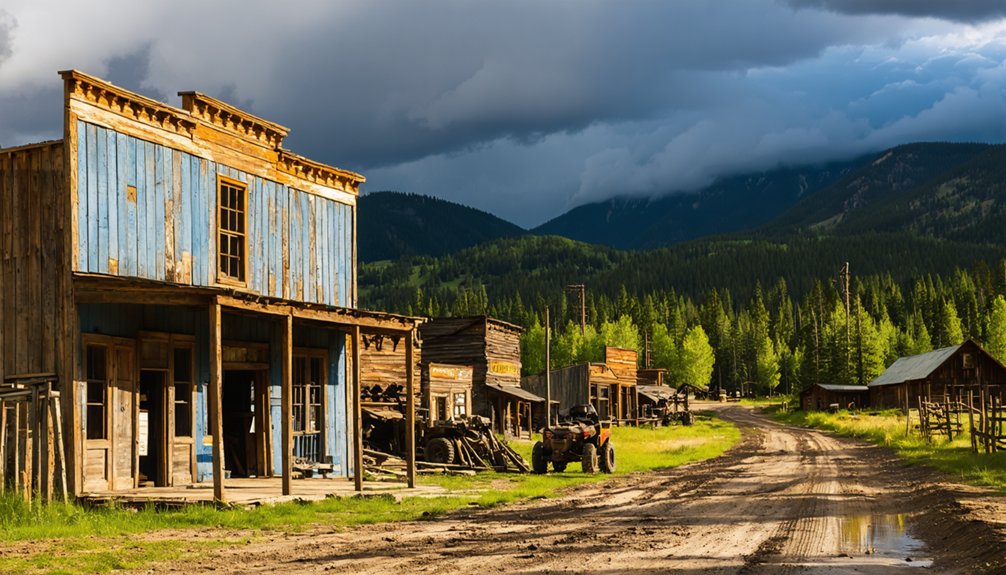
When you fire up your ATV and head 15 miles west from Melrose along Trapper Creek Road, you’ll discover Glendale Ghost Town perched above 7,000 feet in the Pioneer Mountains—a perfectly positioned base camp for exploring the surrounding National Forest.
This ghost town exploration reveals excellent building remains from a community that peaked at 2,000 residents in the early 1880s. Glendale history includes silver mining operations, a 40-ton smelter, and amenities like saloons, hotels, and even an opera house.
You’ll find accessible trails year-round near the freeway, making it ideal for extended backcountry adventures. The town’s strategic location in the Hecla Mining District opens endless National Forest routes for serious trail riders seeking remote mountain terrain.
Cable Ghost Town: Remote Mining History Near Georgetown Lake
While most riders stick to well-marked trails around Georgetown Lake, adventurous ATV enthusiasts can push deeper into Deer Lodge County’s backcountry to reach Cable Ghost Town—a remote mining camp perched at 6,821 feet where three prospectors struck it rich after discovering a massive quartz pillar while searching for their horses.
Cable City produced gold, silver, tungsten, and copper during Montana’s late 1800s boom, including the world’s largest gold nugget that sold for $19,000.
Your high-clearance machine will handle the rugged terrain leading to authentic mining relics:
- Three weathered cabins and a log-sided barn
- Boarding house still containing original furniture
- Mill ruins featuring firebricks and iron boiler remnants
You’ll find freedom exploring this genuine piece of mining history, though remember you’re on private property requiring respectful passage.
Granite Ghost Town: Silver Boomtown State Park Experience
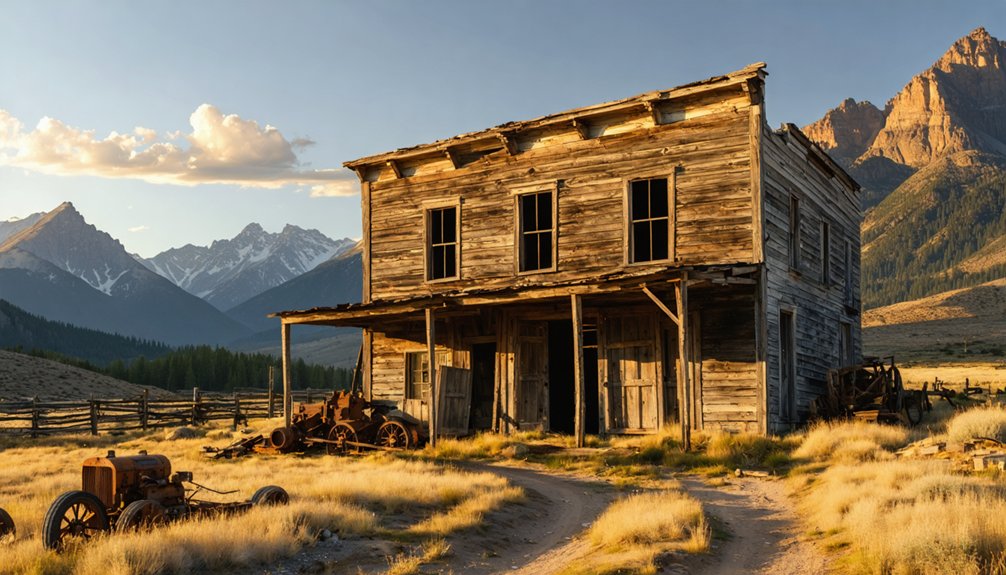
Since Hector Horton’s 1865 silver discovery sparked one of Montana’s spectacular boom-and-bust cycles, your ATV can now tackle the rough, narrow road leading to Granite Ghost Town State Park—where over 3,000 miners once extracted $40 million in silver from the legendary Bonanza Chute.
You’ll navigate trails threading through ruins of what was Montana’s premier silver camp. The Miners’ Union Hall shell and company hospital stand as monuments to cutting-edge mining technology that produced $250,000 monthly by 1889.
Pack your camera and hiking boots to explore the economic impact this boomtown wielded before the 1893 silver crash ended everything overnight. Georgetown Lake’s nearby waters reflect the engineering ambition that once powered this mountain empire through freedom-seeking prospectors’ relentless determination.
Essential ATV Preparation for Ghost Town Expeditions
Three critical systems demand your attention before firing up that ATV for Montana’s ghost town trails: your machine’s mechanical readiness, your personal safety gear, and your navigation strategy.
Your ATV’s health determines expedition success. Check tire pressure for those sub-50-inch mining trails, inspect brakes and suspension for rocky terrain, and verify fluid levels. Test your battery—dead power means you’re stranded miles from civilization.
A dead battery or flat tire transforms your Montana adventure into a dangerous survival situation miles from help.
Essential preparation includes:
- Safety Equipment: DOT-approved helmets for riders 5+, protective clothing, gloves, and first-aid kits for remote backcountry emergencies
- Navigation Tools: Forest Service maps, GPS with offline capabilities, and landmark identification for historic mining routes
- Emergency Supplies: Extra fuel, repair tools, water, and communication devices for unexpected situations
ATV safety extends beyond gear—trail etiquette respects these historic sites while ensuring everyone’s freedom to explore responsibly.
Planning Your Multi-Site Ghost Town Adventure
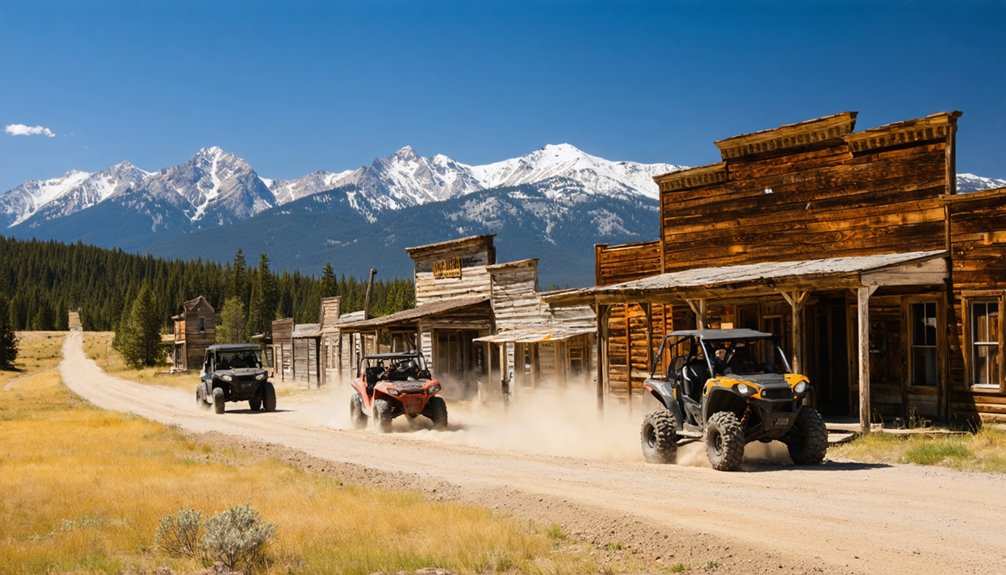
Montana’s ghost towns cluster in regions that let you knock out multiple sites in single expeditions, maximizing your ATV adventures while minimizing drive time between trailheads.
You’ll find Garnet and Coloma sitting close together in the Blackfoot Valley – perfect for a two-day exploration combining preserved buildings with rugged 4×4 paths.
Down south, pair Glendale near Melrose with Cable near Anaconda for mining history plus Georgetown Lake scenery.
Plan your route navigation around seasonal access windows. Garnet’s wheeled vehicle restrictions lift May through December, while Ashley Lake ATV Trail opens June to October.
Factor ATV safety into multi-site planning by checking weather conditions and trail difficulty. High-clearance vehicles work for Cable, but Elkhorn near Boulder accepts standard vehicles, letting you strategically vary your approach methods.
Frequently Asked Questions
Are Pets Allowed at Montana Ghost Town Sites?
Most sites welcome leashed pets! With Montana’s 4.8-rated Bannack leading ghost town destinations, you’ll find pet regulations require 6-foot leashes at state parks, while pet friendly accommodations include outdoor exploration areas perfect for adventurous trail companions.
What Are the Typical Operating Hours for Ghost Town Visits?
You’ll find guided ghost town history tours typically run 11am-4pm during summer and fall seasonal visits. Self-guided exploration offers more freedom with year-round access, though weather conditions affect trail availability and timing.
Can Visitors Camp Overnight Near These Ghost Town Locations?
You’ll find designated sites, dispersed options, and varied access—camping regulations differ by location. Bannack offers full ghost town amenities while Garnet, Rimini, and Glendale provide backcountry freedom through national forest dispersed camping.
Are Guided Tours Available at Any of These Sites?
No guided experiences await you at these ghost towns. You’ll explore independently with your trail-savvy instincts and gear. Tour options don’t exist here—just pure freedom to discover mining history at your own adventurous pace.
What Restroom Facilities Are Available at Ghost Town Locations?
Like desert mirages, restroom facilities vanish at these remote sites. You’ll find no guaranteed restroom cleanliness or facility accessibility here. Pack your own portable toilet, tissues, and sanitizer—true freedom means complete self-reliance on these backcountry adventures.
References
- https://lmmrv.com/activity/ghost-towns/
- https://www.onxmaps.com/offroad/trails/us/montana/garnet-ghost-town
- https://www.trailsoffroad.com/US/montana
- https://blog.glaciermt.com/hit-the-trails-on-side-by-sides-and-other-off-road-vehicles/
- https://www.tripadvisor.com/Attractions-g28947-Activities-c47-t14-Montana.html
- https://visithopecounty.com/atvs-in-hope-county-montana/
- https://www.atvrider.com/where-to-ride-atvs-and-utvs-in-montana/
- https://www.rvtravel.com/independence-montana-ghost-town-time-4th-july-rvt-1110/
- https://fwp.mt.gov/stateparks/granite-ghost-town
- https://www.roadunraveled.com/blog/garnet-ghost-town-montana/