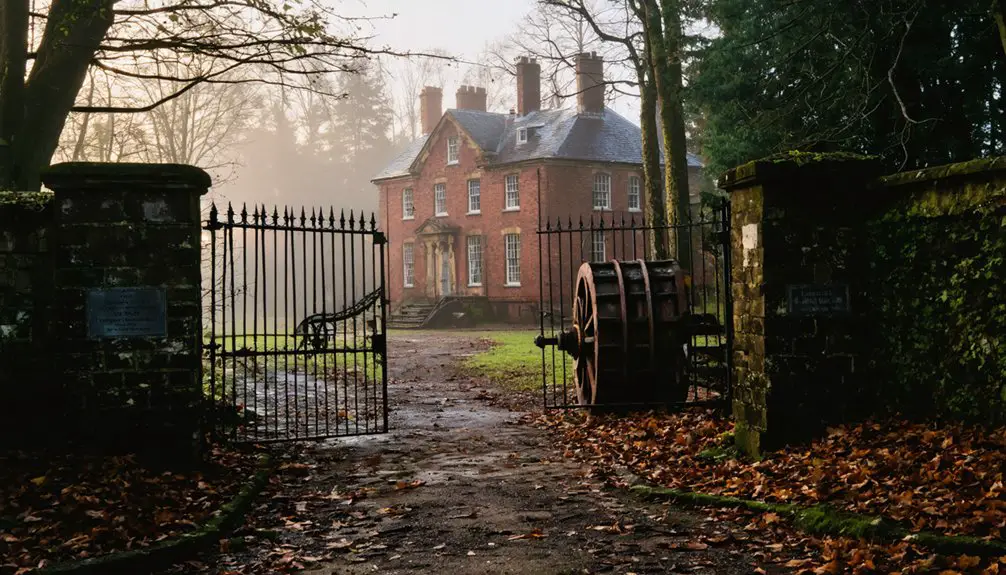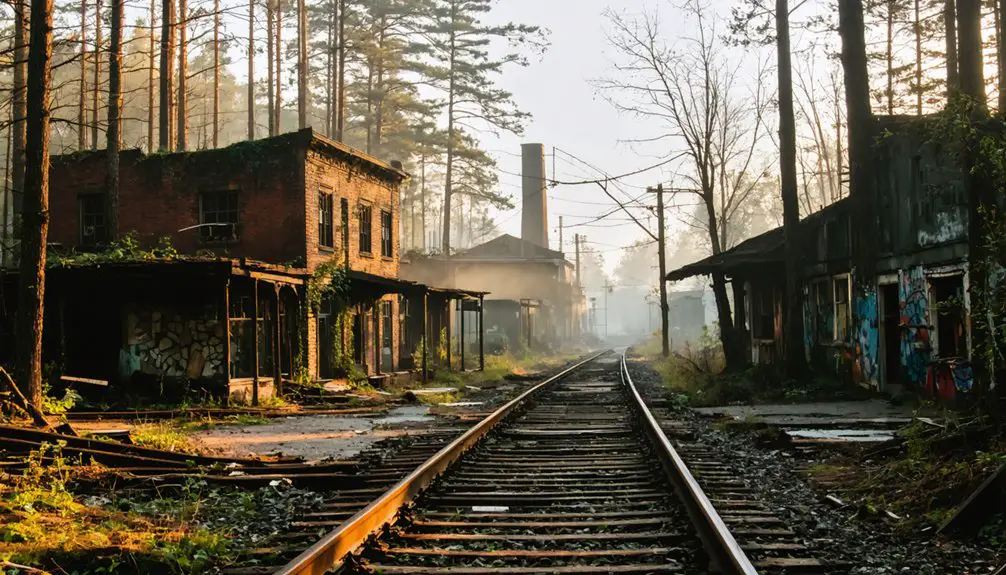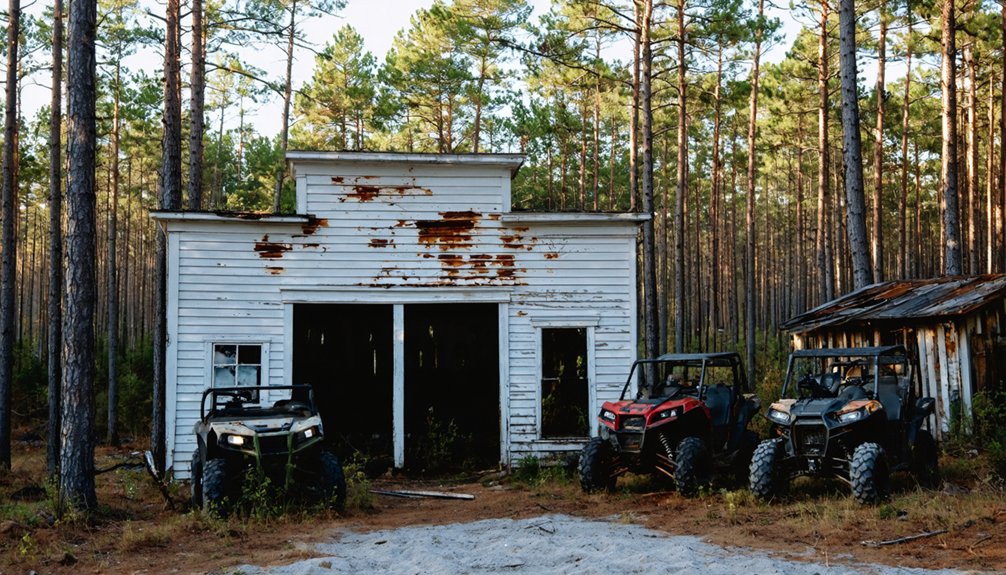
You’ll find New Jersey’s Pine Barrens hiding some of the East Coast’s most accessible ghost towns, where ATV trails wind directly through abandoned cranberry farms, crumbling iron furnaces, and the haunting remains of 19th-century industrial settlements. Friendship Ruins offers 3,000 acres of exploration through former Quaker farmland, while Harrisville’s paper mill remnants sit deep in the pinelands alongside the dammed Wading River. Weymouth Furnace provides county park access to towering brick chimneys and stone foundations that’ll transport you back to America’s industrial dawn.
Key Takeaways
- Weymouth Furnace in Atlantic County offers thrilling ATV exploration access to preserved ghost town remnants and industrial ruins.
- County parks dedicated to ghost town preservation actively promote ATV adventures for engaging with historical sites and heritage.
- Pine Barrens ghost towns feature accessible ruins including Friendship’s 3,000-acre site with concrete foundations and cranberry bog remnants.
- Harrisville Ruins in deep Pine Barrens provide ATV access to haunting paper mill remains and Wading River dam structures.
- Wharton State Forest contains furnace ruins and historical villages accessible by ATV, showcasing iron production and worker housing sites.
Friendship Ruins: A 3,000-Acre Cranberry Farm Adventure
Today, you’ll find concrete foundations, cellar holes, and remnants of cranberry bogs scattered throughout this accessible ghost town.
The historical significance of this Quaker settlement comes alive as you explore old roads and equipment storage foundations.
Located east of Carranza Road, these peaceful ruins offer adventure seekers a glimpse into New Jersey’s agricultural past. Founded in 1869, this prosperous cranberry village declined in the 1950s, leaving few remnants of its once-thriving community.
The original schoolhouse was relocated when the village was abandoned, though other structures remain as foundation remnants throughout the wooded area.
Harrisville Ruins: Deep Pinelands Ghost Town Exploration
Deep within New Jersey’s Pine Barrens, Harrisville’s haunting ruins emerge from dense forest like remnants of a forgotten industrial empire.
You’ll discover massive stone walls where paper mills once thundered with mill machinery, powered by the dammed Wading River. This ghost town’s Harrisville history spans from Evi Belangee’s original sawmill through the Harris brothers’ ambitious industrial expansion in the 1850s.
Navigate forest trails to explore scattered foundation outlines and the impressive south wall remnant. The 1914 fire destroyed most structures, leaving evocative rubble throughout the reclaimed wilderness. The mill’s innovative use of local salt hay for paper production showcased the ingenuity of 19th-century Pine Barrens industry.
You’ll find gas light foundations and worker housing remains scattered among towering pines. The town once supported a company store that generated nearly $3,000 annually, equivalent to approximately $95,000 today. Contact Wharton State Forest at (609) 561-3262 for trail maps to this isolated archaeological treasure.
Batsto Village: Historic Mansion and Mill Complex
You’ll discover Batsto Village’s remarkably preserved 32-room Italianate mansion and three-story stone grist mill nestled deep in the Pine Barrens.
Tour fourteen mansion rooms including elegant parlors and dining areas while exploring the extensive museum that chronicles this iron-making settlement’s transformation from Revolutionary War supplier to 19th-century glassmaking hub. The mansion served as a residence for generations of ironmasters who oversaw the village’s industrial operations.
The village’s self-contained complex offers you an authentic glimpse into New Jersey’s industrial heritage through its intact farm buildings, historic structures, and restored ironmaster’s estate. The mill features cranberry cultivation that was introduced during the Joseph Wharton Era from 1876 to 1909.
Preserved Historic Buildings Tour
When you park your ATV and step into Batsto Village, you’re entering one of New Jersey’s most complete historic industrial complexes, where 33 preserved buildings showcase nearly three centuries of iron-making history.
This remarkable example of historic preservation lets you explore everything from the imposing 32-room Italianate mansion to working blacksmith shops and mills.
Your self-guided architectural tours cover 18 historic sites via cell phone, giving you freedom to explore at your own pace.
You’ll discover the gristmill, sawmill, general store, and stone horse barn built from Jersey ironstone in 1830.
The mansion’s guided tours run Wednesday through Sunday, revealing fourteen rooms that housed the village’s ironmasters.
Each building tells the story of America’s industrial heritage. The village was a key player in the iron industry during the Revolutionary War, producing essential materials for the colonial forces. The village hosts war reenactments throughout the year, bringing the historic site to life with immersive demonstrations and period activities.
Pine Barrens Museum Experience
Beyond the preserved buildings lies the Pine Barrens Museum experience, where Batsto Village’s Visitor Center transforms into your gateway for understanding three centuries of industrial evolution in New Jersey’s wilderness.
You’ll discover museum exhibits showcasing the shift from bog iron production to glassmaking, revealing how enterprising families like the Richards carved prosperity from pine barrens resources.
Interactive displays detail the extraction of bog ore, charcoal production methods, and glass manufacturing techniques that sustained this remote community. Archaeological evidence reveals thousands of years of land use extending far beyond the industrial era, with prehistoric life discoveries adding deeper historical layers to your museum experience.
The museum shop offers regional artifacts and guides for deeper exploration. You can grab trail maps, plan your smartphone-guided tour of 18 historic sites, and learn about monthly interpretive programs. Historical plaques throughout the village provide detailed information about each building’s unique significance and architectural features.
This isn’t just static history—it’s your launching point for adventures throughout Wharton State Forest’s endless trails.
Whitesbog Village: Cranberry Industry Heritage Site
Fifty years after cranberries first took root in these Pine Barrens wetlands, Whitesbog Village stands as New Jersey’s most significant agricultural ghost town, where you can explore the remnants of what once ranked as the state’s largest cranberry operation.
Your ATV will navigate through 3,000 acres where cranberry cultivation transformed natural meadows into industrial bogs between 1857 and 1967.
Industrial progress left its mark across these wetlands as natural ecosystems gave way to systematic agricultural development over more than a century.
You’ll discover Elizabeth White’s 1923 Suningive house, abandoned workers’ cottages from the early 1900s, and the empty general store that served this self-sufficient company town.
Historic preservation efforts maintain the village’s authentic character, allowing you to experience where 600 seasonal workers once harvested cranberries and developed America’s first commercial blueberry varieties.
Atsion Village: Richards Mansion and Cotton Mill Remnants
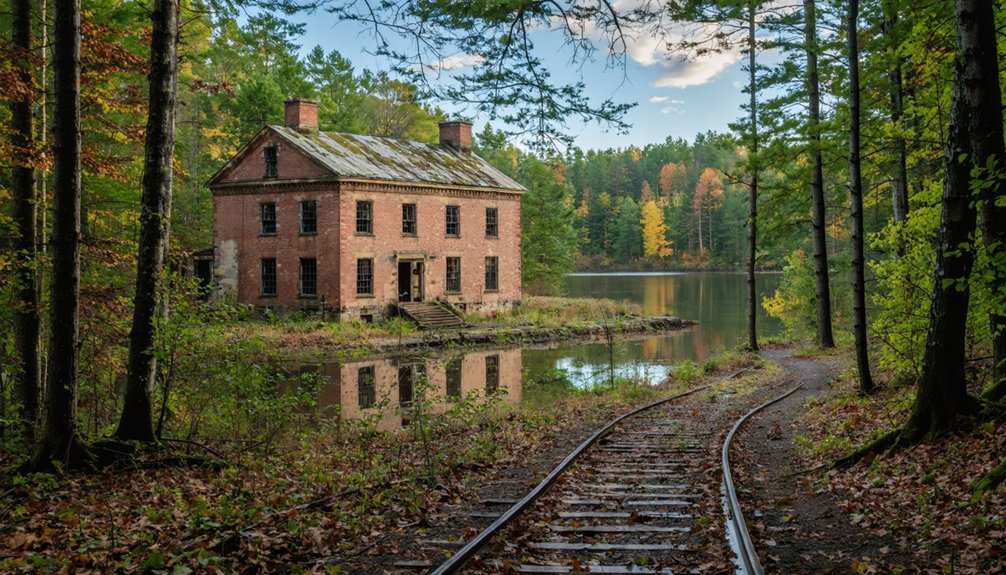
Your ATV journey through New Jersey’s industrial past leads you from cranberry bogs to the iron-forged legacy of Atsion Village, where Samuel Richards built his empire along the Mullica River.
You’ll discover Atsion history dating back to 1757, when Charles Read established the forge that would produce Revolutionary War armaments. The crown jewel remains Richards’s 1826 mansion, showcasing Greek Revival Richards architecture in its restored 14-room glory.
While cotton mill remnants are scarce—operations focused on iron casting, not textiles—you’ll find furnace ruins and worker dwellings scattered throughout Wharton State Forest. The village once housed 100 workers producing everything from cannon shot to Philadelphia’s waterworks equipment.
Today’s ranger-led sunset tours reveal this industrial ghost town’s secrets.
Weymouth Furnace: County Park Ghost Town Discovery
Your ATV adventure leads to Atlantic County’s preserved remnants:
Atlantic County’s preserved industrial remnants await discovery through thrilling ATV exploration of this historic ghost town’s haunting legacy.
- Towering brick chimney standing sentinel over collapsed ruins
- Stone arches marking the original furnace foundation
- Fenced paper mill ruins from the post-iron era
- Great Egg Harbor River access through former mill pond areas
Today’s county park preserves this industrial ghost town’s legacy.
Frequently Asked Questions
Do I Need a Special Permit to Ride My ATV in New Jersey State Forests?
No permit exists that’ll grant access—you’re completely banned from riding ATVs in New Jersey state forests. ATV regulations prohibit all off-road vehicles in state parks, crushing dreams of forest adventures.
What Safety Gear Is Required When ATV Riding to These Ghost Towns?
You’ll need DOT-approved full-face helmets, over-the-ankle boots, long pants, long sleeves, and full-fingered gloves. These helmet requirements and protective clothing guarantee you’re ready for epic ghost town adventures while staying safe.
Are There Guided ATV Tours Available for Pine Barrens Ghost Town Exploration?
With 1000+ miles of legal dirt roads available, you’ll find Pine Barrens Adventures offers guided tours to ghost towns, though they’re not ATV-specific. Their expert staff leads scenic explorations through forgotten settlements.
As you venture into the heart of ghost towns in North Carolina, you’ll encounter the rich history and stories that these abandoned places hold. Each stop reveals remnants of life long gone, offering a unique glimpse into the past. With knowledgeable guides, you’ll learn about the intriguing tales that shaped these once-thriving communities.
What’s the Best Time of Year to Visit These Locations by ATV?
Fall’s your best bet for ghost town ATV exploration. You’ll escape summer heat while enjoying stunning fall foliage, cooler riding temperatures, fewer crowds, and stable trail conditions before winter mud sets in.
Can I Camp Overnight Near These Ghost Towns During My ATV Trip?
Yes, you can camp overnight near ghost towns following camping regulations. Primitive sites at Godfrey Bridge and Atsion offer ghost town amenities with pit toilets, connecting via ATV trails to ruins while respecting historic preservation boundaries.
References
- https://southjerseytrails.org/2017/03/16/six-pine-barrens-ghost-towns-to-explore/
- https://www.onxmaps.com/offroad/trails/us/new-jersey
- https://www.jerseysbest.com/community/take-a-road-trip-through-n-j-s-spooky-ghost-towns-to-see-peculiar-pieces-of-history/
- https://www.atlasobscura.com/places/amatol-ghost-town
- https://jerseydigs.com/ghost-towns-in-nj/
- https://www.youtube.com/watch?v=7zrVdmxo9kM
- https://pinelandsalliance.org/learn-about-the-pinelands/pinelands-history-and-culture/ghost-towns-of-the-pine-barrens/
- https://www.youtube.com/watch?v=8RBKlhv6wHw
- https://www.onxmaps.com/offroad/beginner-offroad-trails-near-me/presidential-lakes-estates-nj
- https://rsftripreporter.net/gone-goner-ghost-towns-new-jersey-pine-barrens-part/