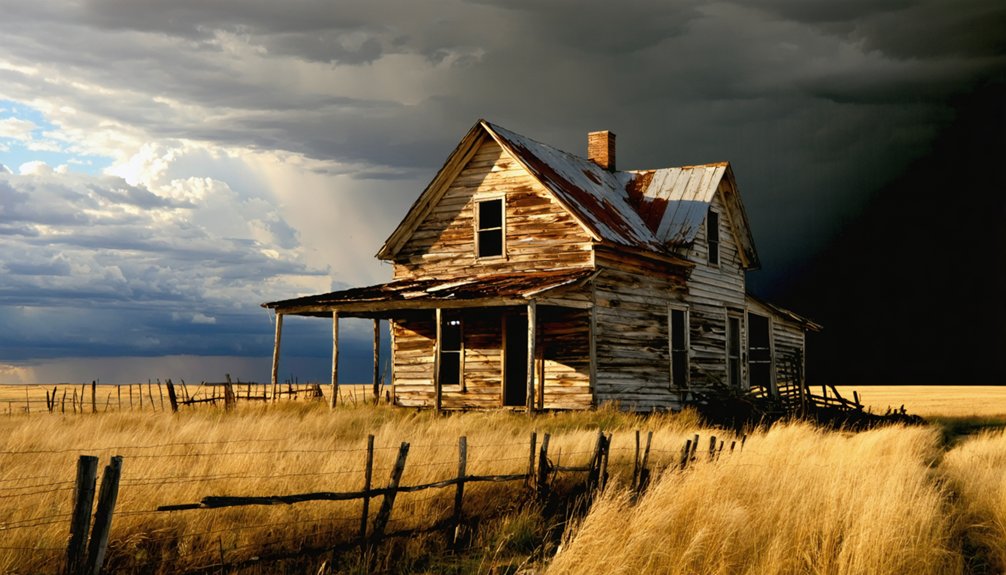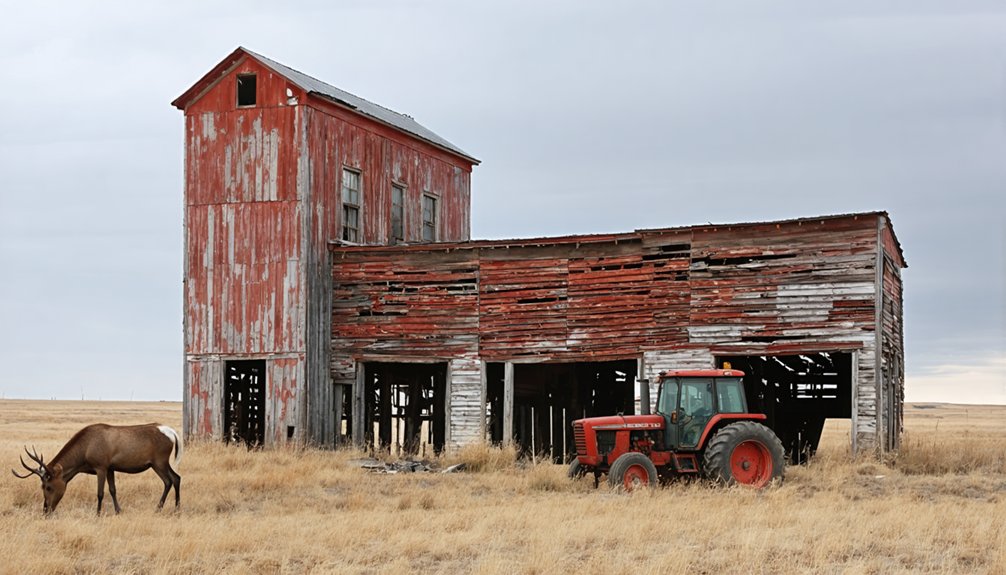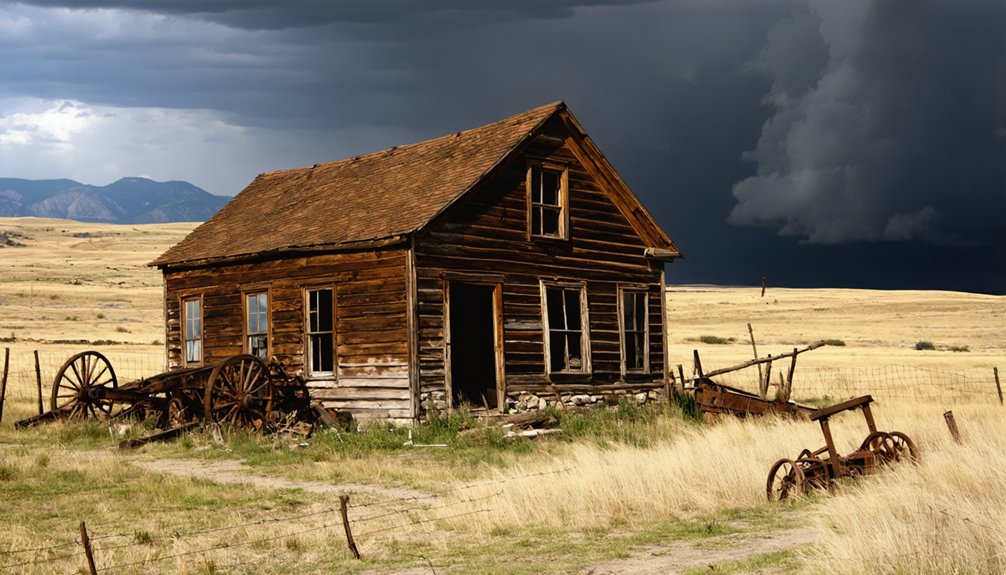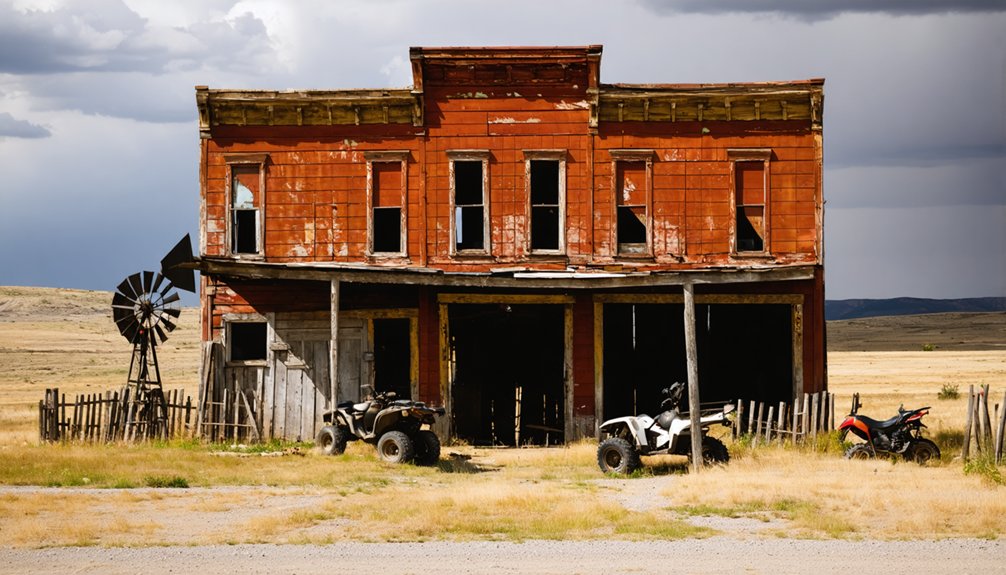
You’ll discover over a dozen abandoned mining settlements scattered across South Dakota’s Black Hills, where 4,200 miles of designated ATV trails wind through ghost towns that once housed thousands of gold rush pioneers. Navigate to Galena’s restored schoolhouse and cemetery, explore Silver City’s century-old church, or ride to Scenic’s historic Longhorn Saloon near the Badlands border. With a $25 annual Forest Service permit, you’ll access trails ranging from easy limestone paths to challenging single-track adventures that reveal hidden frontier histories.
Key Takeaways
- Black Hills National Forest offers 600 miles of designated ATV trails accessing multiple historic ghost towns across 1.2 million acres.
- Galena Ghost Town, eight miles east of Deadwood, features restored buildings from a 2,000-resident mining boom community.
- Silver City maintains preserved structures including a schoolhouse, Catholic church, and cemetery from its 1876 gold rush era.
- Scenic Ghost Town showcases century-old buildings like the Longhorn Saloon where prairie meets the Badlands via ATV trails.
- ATV permits cost $20 for seven days or $25 annually and must be displayed while exploring designated trails.
Black Hills National Forest ATV Trail Network
When you’re ready to explore South Dakota’s ghost towns by ATV, the Black Hills National Forest Motorized Trail System serves as your gateway to adventure across 1.2 million acres of rugged terrain.
You’ll discover 3,600 miles of roads and 600 miles of designated trails connecting remote historical sites scattered throughout the wilderness. The system’s meticulously maintained network provides excellent ATV trail access to forgotten settlements hidden deep within the forest.
For ideal forest navigation, you’ll need Motor Vehicle Use Maps (MVUM) available through the Avenza Maps app or Black Hills Visitor Information Center.
Trail networks like Riley Hill and Merritt systems offer 62-inch width accommodations, while 72 miles remain restricted to narrower vehicles. These trails vary in difficulty from easy routes suitable for beginners to challenging paths that test experienced riders’ skill levels. Along your journey, you’ll encounter multiple water crossings including Gimlet Creek and North Fork Rapid Creek that add excitement to your ghost town exploration.
Your adventure requires a $20 seven-day permit or $25 annual pass, ensuring unrestricted exploration of these historical treasures.
Galena Ghost Town: Gold Rush Pioneer Settlement
As you navigate the winding Galena Road eight miles east of Deadwood through Vanocker Canyon, you’ll discover one of the Black Hills’ most authentic mining settlements where lead-silver deposits sparked a boom that transformed a remote gulch into a thriving community of nearly 2,000 residents.
Galena History reveals fascinating stories of pioneers like Sarah Campbell, the first Black woman to file a mining claim here, and Colonel J.S. Davey who built massive mill operations.
Sarah Campbell blazed trails as Galena’s first Black woman miner while Colonel Davey’s mills shaped the bustling frontier settlement.
Silver Mining operations centered around the famous Sitting Bull and Richmond mines, extracting galena veins rich with precious metals. The McDonald Smelter, established in 1877 as the first smelter in the Black Hills, processed the ore from these productive mines.
Today you’ll find the restored 1882 schoolhouse, Vinegar Hill Cemetery, and preserved buildings that tell tales of frontier determination and the relentless pursuit of mineral wealth. Perched at an elevation of 4,790 feet in the Black Hills, this Lawrence County settlement offers visitors a glimpse into South Dakota’s mining heritage.
Camp Crook: The Town Beneath Pactola Lake
While Galena’s preserved buildings stand proof to Black Hills mining heritage, another fascinating settlement lies hidden beneath 150 feet of water at Pactola Lake.
You’re exploring one of South Dakota’s most inaccessible ghost towns – the original Camp Crook, later renamed Pactola.
General George Crook established this cavalry base in 1875, but miners quickly transformed it into a thriving gold rush community of 300 residents.
The town boasted businesses, a railroad connection, and one of the Black Hills’ first post offices.
However, Pactola history took a dramatic turn when dam construction in the 1950s flooded the entire settlement.
Today’s Pactola history includes legends of submerged structures hiding a bank vault filled with gold.
The original community represents one of over six hundred ghost towns that exist throughout the Black Hills region.
While you can’t ATV to these underwater ruins, the area offers exceptional recreation opportunities above this drowned frontier settlement. The Pactola Dam was built from 1952 to 1956 to control floods and provide water to Rapid City.
Silver City: Mountain Town With Frontier Remnants
Deep within the Black Hills’ rugged terrain, Silver City beckons ATV riders with its authentic frontier remnants and compelling mining history. Founded in 1876 by the Gorman brothers seeking precious metals, this mountain settlement once housed over 300 residents chasing gold and silver dreams.
You’ll discover genuine turn-of-the-century buildings still standing, preserved through dedicated historical preservation efforts. The Silver City Historical Society maintains key sites including:
- Old School House showcasing educational heritage
- Catholic church reflecting community spirit
- Pioneer cemetery with frontier stories
Mining legends persist about lost treasures and failed claims that shaped this town’s destiny. The brothers established two mines known as Diana Lode and The Lady of the Hills during the settlement’s early development. Unlike many ghost towns, Silver City retains active volunteer services while offering you freedom to explore authentic structures, historic mine sites, and rugged terrain that defined the American frontier experience. The town’s eventual decline mirrors that of other boom towns that flourished during major construction projects before populations dwindled as work opportunities disappeared.
Scenic Ghost Town: Badlands Border Abandonment
You’ll discover weathered century-old structures scattered throughout Scenic’s partial abandonment, where the prairie meets South Dakota’s dramatic Badlands formations.
The remnants of the historic Longhorn Saloon stand as evidence to this border town’s Wild West past, offering glimpses into frontier life from over a hundred years ago. When exploring these sites, remember that vandalism damages these irreplaceable historical structures for future generations of visitors and researchers.
These abandoned buildings create perfect waypoints for your ATV exploration, positioned strategically along the grasslands-to-Badlands trail system. Riders can access these historic sites through the region’s extensive network of over 3,600 miles of designated open roads and trails specifically maintained for off-highway vehicles.
Century-Old Abandoned Structures
Weathered remnants of a bygone era dot the landscape where Scenic once thrived as a bustling stopover between the Badlands and Rapid City.
You’ll discover abandoned buildings that showcase the town’s historical significance, from its 1889 founding through its eventual decline. The collapsing church, established in 1904, stands as a haunting memorial to the community’s spiritual heritage.
Notable structures you can explore include:
- Kappa Hotel ruins – Crumbling remains from the mineral bath era when visitors sought healing waters
- Public bath house foundations – Stone remnants that attracted early 1900s tourists seeking therapeutic treatments
- Century-old chapel – The town’s most photographed landmark, though climbing isn’t recommended
These authentic frontier relics offer you an unfiltered glimpse into South Dakota’s pioneering past, accessible through rugged ATV trails.
Longhorn Saloon History
Standing sentinel at Scenic’s dusty T-junction, the Longhorn Saloon represents the town’s most enduring landmark from its 1906 construction through today’s ghost town status.
You’ll find authentic wagon wheels adorning the facade, while hand-hewn beams showcase frontier craftsmanship that’s survived over a century. The Longhorn legacy lives on through preserved details: cattle skulls lining the front, ranch brands painted across the ceiling, and oil barrels converted to bar stools.
Saloon preservation efforts began in the 1960s when Twila Merrill maintained its Wild West character. She kept the sawdust floors and original handmade doors that still creak in Badlands winds.
Though Scenic’s recent sale to a Philippine Catholic organization leaves the saloon’s future uncertain, it continues attracting ATV riders exploring South Dakota’s ghost town trails.
Notable Ghost Towns Along ATV Routes
When you venture into South Dakota’s Black Hills on your ATV, you’ll discover a network of trails that weave through some of the region’s most fascinating ghost towns.
The Galena and Rochford area stands out as your best starting point, offering extensive historic sites along central Black Hills riding paths where you can explore multiple abandoned settlements in one trip.
Your must-ride destinations include:
- Piedmont Trails – Navigate the 62″ Trail System and Trail 8293 to active ghost town areas with water crossings at Deadman and Elk Creek
- Crook City – Access viewpoints from Crook City Road connecting to over 3,500 miles of northern trail networks near Deadwood
- Alta Ghost Town – Explore mining settlement remains through designated Black Hills ATV trail systems
Each location offers unique technical challenges and historical discoveries for freedom-seeking riders.
Essential Safety Guidelines for Ghost Town Exploration

When you’re exploring South Dakota’s ghost towns by ATV, you’ll need to respect private property boundaries and stick to designated public access routes to avoid legal issues.
You must follow all Forest Service regulations and local ordinances, as these abandoned settlements often sit within protected lands with specific rules for motorized vehicles.
Before entering any historic structure, carefully inspect it for structural integrity—rotting timbers, unstable foundations, and collapsing roofs can turn your adventure into a dangerous situation.
Respect Private Property Boundaries
Before you rev up your ATV for ghost town exploration, you’ll need to master the art of recognizing property boundaries that separate public access from private land.
Understanding property rights and trespassing laws protects your freedom to explore while respecting landowners’ rights.
Key boundary indicators include:
- Fences and posted signs – Clear markers around places like Moon Ghost Town signal private property limits
- GPS coordinates and road edges – Use N43.9464, W-104.0083 coordinates to identify Moon’s boundaries and stay on designated trails
- Absence of public trail markers – When official markers disappear, you’ve likely entered private territory
Stick to designated public areas like Crook City Road for viewing Crook City Ghost Town, or accessible ATV paths at Mineral Hill.
Roadside observation keeps you legal while preserving your adventure access.
Follow Forest Service Rules
Maneuvering through ghost towns on public land means following Forest Service regulations that keep trails open and adventures legal.
You’ll need a Motorized Vehicle Use Trail Permit for designated trails in South Dakota’s Black Hills National Forest—grab the annual pass for $25 or a 7-day permit for $20 online. Display it on your ATV’s front left wheel panel where rangers can spot it easily.
Stick to designated roads and trails shown on the Motor Vehicle Use Map. Cross-country travel‘s off-limits, but marked motorized trails offer plenty of exploration freedom.
Your permit fees directly fund trail maintenance, ensuring these backcountry routes to forgotten settlements stay rideable. Respect width restrictions and avoid creating new paths that damage pristine wilderness areas surrounding these historic sites.
Inspect Historic Structures Carefully
Dozens of ghost town structures across South Dakota’s backcountry appear solid from the outside but hide dangerous structural weaknesses that can trap or injure unwary explorers.
Exploring these ghost towns submerged in South Dakota can lead to unexpected discoveries, as remnants of a once-thriving past emerge from the earth. However, adventurers should remain cautious, as many locations are not only hazardous but also prone to flooding during seasonal rains. The allure of forgotten history must be weighed against the potential dangers that lurk around every corner.
Before entering any building, walk the perimeter to assess structural integrity and identify multiple exit routes. Look up immediately upon entry—ceilings often collapse without warning in these historic sites.
Smart exploration requires these essential precautions:
- Stay near walls and support columns rather than walking through room centers where floors are weakest
- Wear N95 or P100 respirators to protect against asbestos in old insulation and hazardous materials
- Test wooden stairs and floors before putting full weight on them—humidity damage makes them treacherous
Keep your exit path clear and never enter areas showing prior structural damage.
Planning Your Black Hills Ghost Town Adventure
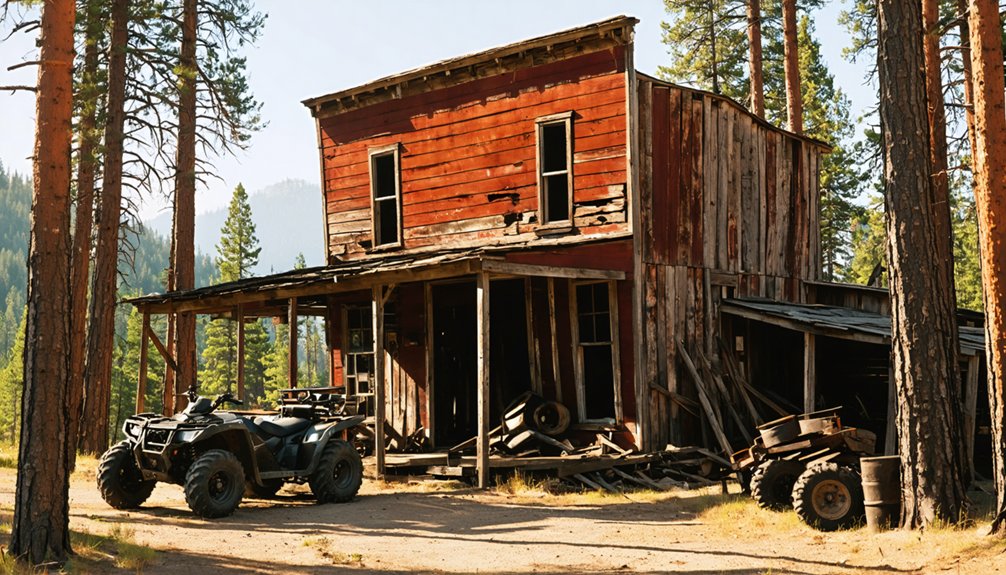
When you’re ready to explore South Dakota’s ghost towns by ATV, the Black Hills offer an unparalleled network of over 3,800 miles of trails and roads that’ll take you deep into mining history.
Effective trail planning starts with selecting your base—Mad Peak Rentals in Deadwood puts you directly on the trail system, eliminating road travel hassles. The Northern Black Hills provide access to over 600 miles threading through canyons and rock formations where ghost towns hide.
For ghost town navigation, focus on the Galena and Rochford areas as your primary hunting grounds. You’ll find accessible sites like Alta, Apex, and Crook City, plus viewable locations from designated roads.
Secure trail permits where required, respect private property boundaries, and prepare for terrain ranging from wide limestone paths to challenging single-track adventures.
Frequently Asked Questions
What Permits or Fees Are Required for ATV Access to Ghost Towns?
You’ll need a $50 Black Hills National Forest trail permit for ATV regulations compliance. Street-legal requirements and permit costs vary for road access. Respect private property boundaries around historic ghost towns during your freedom-seeking adventures.
Are Metal Detectors Allowed When Exploring Historic Ghost Town Sites?
Metal detecting’s generally prohibited at ghost town sites due to strict metal detecting regulations and historical preservation concerns. You’ll need special permits for most areas, and many sites ban detecting entirely to protect cultural artifacts.
Which Ghost Towns Have the Best Preserved Structures Still Standing?
Ironically, you’ll find the most intact historic architecture in Silver City and Scenic’s abandoned buildings. Silver City’s original log cabins stand preserved without modern intrusions, while Scenic’s saloon and church-jail combo remain authentically untouched.
Can You Camp Overnight Near Ghost Town Locations in the Black Hills?
You can camp overnight near several ghost town locations using Black Hills National Forest’s 30 campgrounds and dispersed camping options, but follow camping regulations since ghost town amenities are nonexistent at these remote sites.
What’s the Best Time of Year to Visit Ghost Towns by ATV?
With 3,800 miles of trails available, you’ll find late spring through early fall ideal for ghost town exploration. Seasonal considerations favor May-October when weather conditions support safe ATV access before winter closures hit.
References
- https://blackhillsatvdestinations.com/ghost-towns/
- https://mad-peak.com/f/black-hills-ghost-towns-are-real—and-you-can-ride-through-them
- https://blackhillsatvdestinations.com
- https://www.tripadvisor.com/Attraction_Review-g54799-d22999414-Reviews-Scenic_Ghost_Town-Scenic_South_Dakota.html
- https://thumperfab.com/blogs/the-atv-utv-blog-with-thumper-fab/exploring-the-best-atv-trails-in-south-dakota
- https://www.trailhoundcabins.com/ghost-towns-of-the-black-hills/
- https://www.youtube.com/watch?v=DcS2VifEnZI
- https://adventurerentalssd.com/places-to-go-off-road-in-south-dakota/
- https://www.travelsouthdakota.com/trip-ideas/atv-riding-northern-black-hills
- https://blackhillsatvdestinations.com/riley-hill-62″-atv-utv-ride-merritt-62″-trail-system/