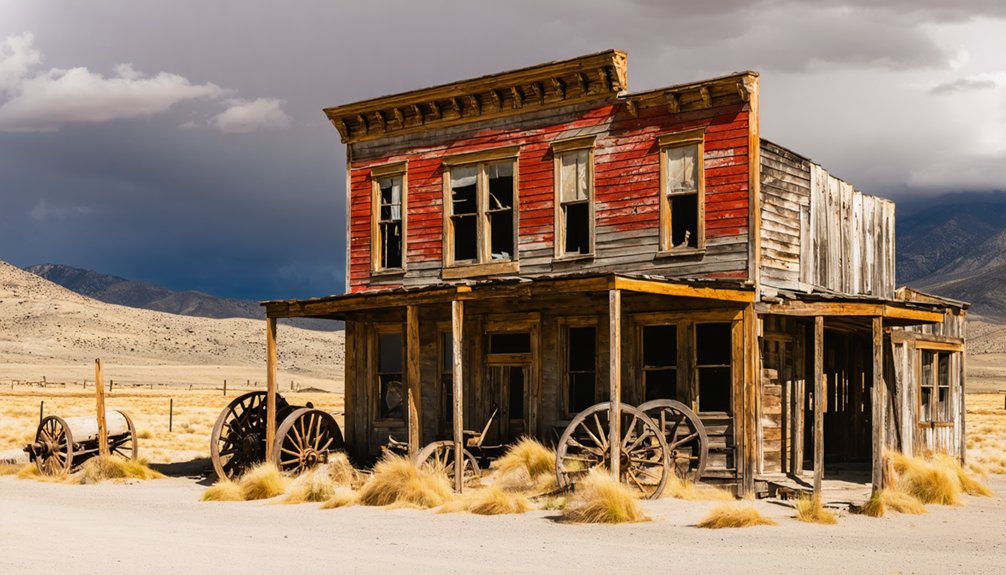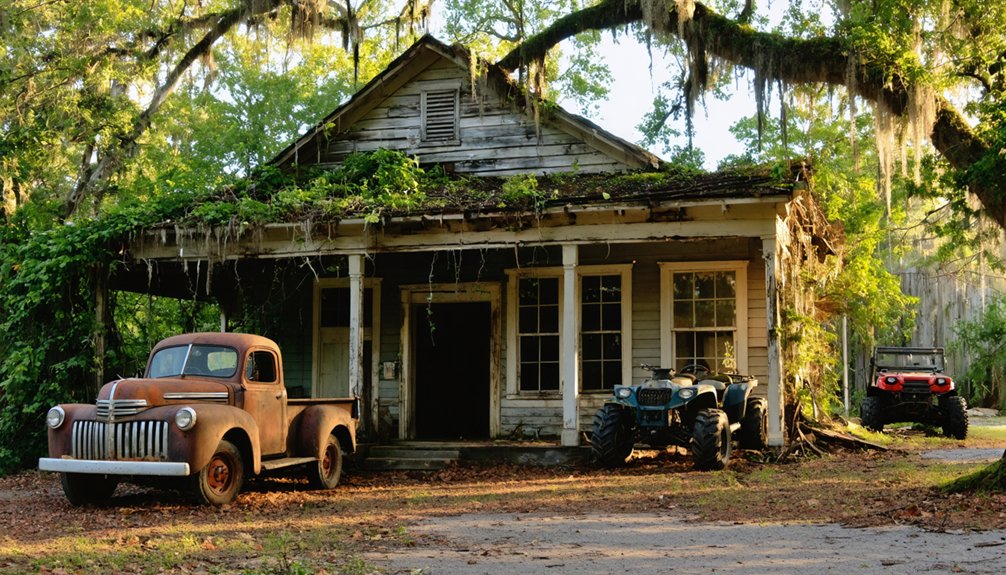
You’ll find incredible ATV-accessible ghost towns throughout the South’s rugged terrain. The Hatfield-McCoy Trail System offers over 1,000 miles connecting abandoned coal camps in West Virginia, while forgotten railroad corridors in Tennessee and South Carolina provide natural trail networks through crumbling depot towns. East Texas oil boomtowns feature overgrown paths between 1930s derrick sites, and Arkansas timber towns hide mill foundations accessible via old rail grades. Your adventure awaits deeper exploration.
Key Takeaways
- The Hatfield-McCoy Trail System offers over 1,000 miles accessing abandoned coal communities in West Virginia and Kentucky mountains.
- McDowell County features free trail networks with legal riding between ghost towns and coal camp ruins throughout Appalachian terrain.
- Abandoned railroad corridors like Embreeville’s 13-mile stretch provide natural ATV trails connecting forgotten Southern Railway depot towns.
- East Texas oil boomtown sites near Joinerville offer ATV circuits through 1930s derrick locations in Gregg and Upshur counties.
- Timber boom towns in Arkansas and Louisiana connect via abandoned rail grades leading to mill foundations and worker housing sites.
Abandoned Mining Towns in the Appalachian Mountains
When you fire up your ATV and head into the Appalachian Mountains, you’ll discover a network of abandoned mining towns that tell the story of America’s coal boom and bust cycles.
These ghostly landscapes offer rugged terrain perfect for off-road exploration, though you’ll need to navigate carefully around restricted areas within national parks.
Places like Kaymoor and Nuttallburg in West Virginia’s New River Gorge require hiking access due to park regulations, but nearby regions offer ATV-friendly routes to similar abandoned mines.
You’ll encounter steep climbs, rocky paths, and industrial ruins that demand proper protective gear and a reliable machine.
The decaying tipples, company housing foundations, and mining infrastructure create an atmospheric backdrop for adventurous riders seeking freedom beyond conventional trails. These remnants represent over 60 mining towns that once flourished throughout the coal-rich regions of Appalachia. Along your journey, you’ll witness how moss and ivy have gradually reclaimed the abandoned structures, creating an eerie testament to nature’s persistence.
Historic Coal Mining Communities in West Virginia and Kentucky
You’ll find some of the most authentic coal camp ruins scattered across West Virginia and Kentucky’s rugged mountain terrain, where your ATV can navigate abandoned railroad grades and mining access roads.
These historic communities offer challenging rides through steep hollows and creek beds that lead directly to crumbling coke ovens, mine tipples, and company town foundations. At Kaymoor, one of the most productive operations in the gorge, you can explore where 800 workers once extracted over 16 million tons of coal between the early 1900s and 1962.
Many of these abandoned settlements were constructed as company towns where coal operators built entire communities, complete with identical miners’ houses, schools, and company stores that served as the economic and social center of daily life.
Pack your recovery gear and GPS because these remote sites require serious off-road capability to reach the best-preserved mining structures.
Coal Camp Ruins
Crumbling foundations and rusted machinery mark the remnants of coal camps scattered throughout the hollows of West Virginia and Kentucky, where your ATV can access dozens of historic mining communities that once housed thousands of workers.
You’ll navigate rocky trails to reach places like Nuttallburg, where doctor’s offices and blacksmith shops stand in decay after 85 years of operation.
Coal camp history reveals itself through identical house foundations built along abandoned railroad grades, while mining community legacies persist in segregated neighborhoods where African Americans comprised over 55 percent of residents. These communities developed tight-knit societies where coal mining culture fostered strong bonds among families who depended on the dangerous work underground. The era of intense labor struggles brought mine guards to patrol these camps, particularly during the turbulent unionization efforts between 1912 and 1929.
Your machine handles the terrain to forgotten camps like Eckman, operational from 1892 to 1942, where forests were stripped for construction and communities thrived before economic cycles claimed these isolated settlements.
ATV Trail Access
Since West Virginia’s Hatfield-McCoy Trail System spans over 1,000 miles across southern counties, your ATV gains access to countless abandoned coal communities through ten designated trail networks including Bearwallow, Devil Anse, and Pocahontas systems.
You’ll ride past former coal towns, tipples, and mine fan houses while traversing rocky terrain and creek crossings that demand proper equipment preparation.
McDowell County’s free trail networks let you legally ride roads between ghost towns, though ATV regulations vary by county.
Cabwaylingo State Forest offers nearly 100 miles of multi-use trails threading old mine sites, but seasonal restrictions affect access.
Trail maintenance depends on volunteer groups and county resources, so expect muddy, challenging conditions. The region’s trails showcase remnants of old mines and mining infrastructure from the area’s coal mining heritage.
Eastern Kentucky’s outlaw trails provide extensive mileage through coal districts, though trespass risks exist on unpermitted routes. From elevated viewpoints like Death Rock, riders can observe downtown Williamson and surrounding communities across the Tug River.
Forgotten Railroad Towns Along Southern Rail Lines
When the Southern Railway system expanded across the Appalachians and Gulf Coast regions, it created dozens of bustling depot towns that have since faded into ATV-accessible ghost settlements.
Your machine can navigate these forgotten railroads where original roadbeds now serve as natural trail corridors.
Prime Southern Railway Ghost Town Routes:
- Embreeville, Tennessee – Follow Arnold Road’s 13-mile stretch built on the original 1891 roadbed. Your ATV will handle the terrain that once carried iron ore trains to mountain furnaces.
- Glenn Springs, South Carolina – Track the abandoned Charleston & Western Carolina branch through Stone Station and Pauline. Rolling hills provide excellent riding between crumbling depot foundations.
- Alabama’s Tennessee, Alabama & Georgia corridor – Explore remnants between Chattanooga and Gadsden where forgotten railroads carved paths through challenging Appalachian terrain, perfect for serious ghost town exploration. The Tweetsie Trail connects Johnson City to Elizabethton along the former East Tennessee & North Carolina Railroad route, offering ATV enthusiasts access to multiple abandoned rail settlements. Many of these railroad towns featured essential infrastructure like water towers that serviced steam engines during their regular stops.
Civil War Era Settlements and Military Outposts
You’ll find Civil War-era ghost towns scattered across the Deep South, where Confederate supply camps and Union military outposts once controlled strategic river crossings and rail junctions.
Your ATV can navigate the dirt roads and levee trails leading to sites like Old Cahawba’s prison ruins or Fort Blakeley’s earthwork remnants, where substantial archaeological features still mark former military positions.
These remote locations require sturdy off-road tires and GPS navigation since many occupy isolated river corridors and abandoned military roads far from modern infrastructure.
Confederate Supply Camp Ruins
Deep pine forests and murky swamplands conceal the haunting remains of Florence Stockade, where your ATV’s knobby tires can traverse the same sandy trails Confederate guards once patrolled during the prison camp’s brutal five-month operation.
You’ll discover stark contrasts between prisoner conditions and Confederate facilities while exploring this 10-acre historical site.
Your off-road exploration reveals:
- Archaeological features – Wells, trenches, and post holes mark where 18,000 Union soldiers endured overcrowded captivity.
- Confederate artifacts – Construction materials, utensils, and warehouse remnants scattered throughout guard areas.
- Cemetery grounds – Burial trenches south of the stockade’s western perimeter.
The rural terrain demands aggressive tread patterns for maneuvering root-tangled paths and muddy swamp edges.
Pack recovery gear and GPS units – these isolated backwoods challenge even experienced riders seeking Civil War history beyond conventional tourist sites.
Abandoned Union Fort Sites
While Confederate strongholds crumbled across the South, Union forces established massive fortifications that your ATV can now access through overgrown military roads and forgotten supply routes.
You’ll discover Union Fortifications scattered across Hilton Head Island, where Fort Mitchel and Fort Sherman’s earthworks emerge from coastal scrublands. These strategic positions once strangled Confederate supply lines, and today their crumbling batteries offer unmatched exploration opportunities.
Your machine handles the sandy approaches to Fort Howell‘s defensive perimeter, where freed slaves once found sanctuary behind Union protection.
Navigate muddy trails leading to Fort Welles’ commanding position overlooking Port Royal Sound. These Civil War Remnants reward adventurous riders with authentic historical experiences far from crowded tourist sites.
Pack extra gear for challenging terrain conditions.
Timber Boom Towns in Arkansas and Louisiana
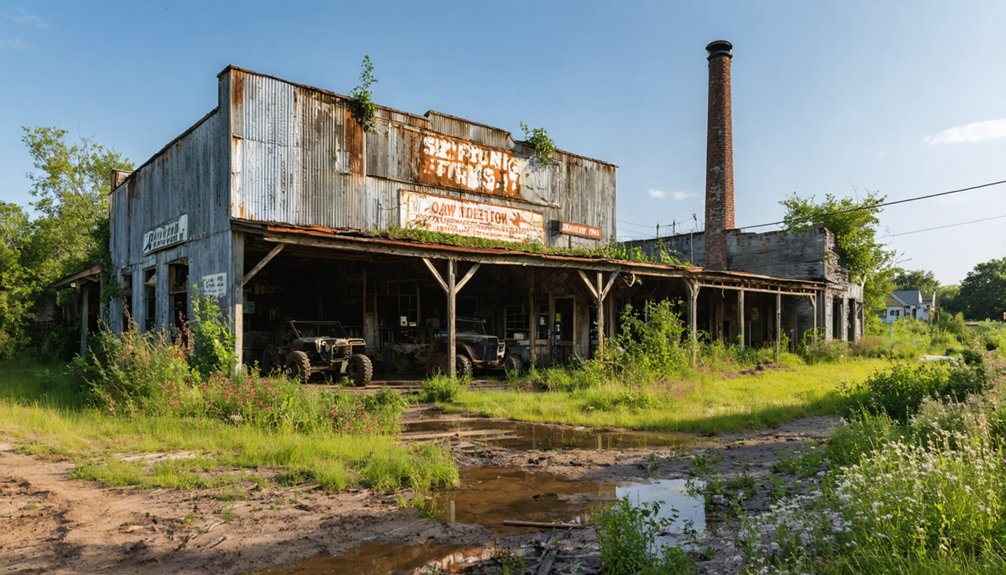
The roar of massive steam-powered sawmills once echoed through the dense pine forests of Arkansas and Louisiana, where industrial logging operations carved entire towns from wilderness in the 1890s.
Thunderous steam engines transformed untamed Southern wilderness into bustling industrial settlements that vanished as quickly as they emerged.
You’ll discover remnants of this timber town history scattered across rugged backcountry trails, where your ATV can traverse old logging roads to explore sawmill culture artifacts.
These boom-to-bust communities followed a “cut-out-and-get-out” pattern, leaving fascinating ruins for modern explorers:
- Mill foundations and boiler houses – Massive concrete structures that housed operations producing up to 1 million board feet daily
- Abandoned rail grades – Perfect ATV corridors connecting former mill sites to loading areas
- Company town remnants – Worker housing foundations, store sites, and infrastructure scattered through overgrown forests
Your machine’s ground clearance and traction will prove essential traversing swampy terrain where these forgotten communities once thrived.
Cotton Mill Villages and Industrial Ghost Towns
Sprawling cotton mill complexes across the Carolinas and Georgia created self-contained industrial villages that flourished for decades before economic shifts left behind accessible ruins perfect for ATV exploration.
You’ll find massive stone foundations and crumbling brick structures at places like Bibb Mill in Columbus, Georgia, where riverfront trails lead directly to the industrial ruins.
Coleridge’s Enterprise Manufacturing complex offers well-preserved mill architecture spanning the 1880s-1920s, though you’ll need landowner permission for access.
Banning Mills provides multi-structure exploration with nineteenth-century masonry remains powered by Snake Creek.
These cotton mill ghost towns became vulnerable when single-industry closures triggered complete community abandonment, leaving intact village infrastructure ripe for off-road discovery adventures.
Oil Boomtowns in East Texas and Oklahoma
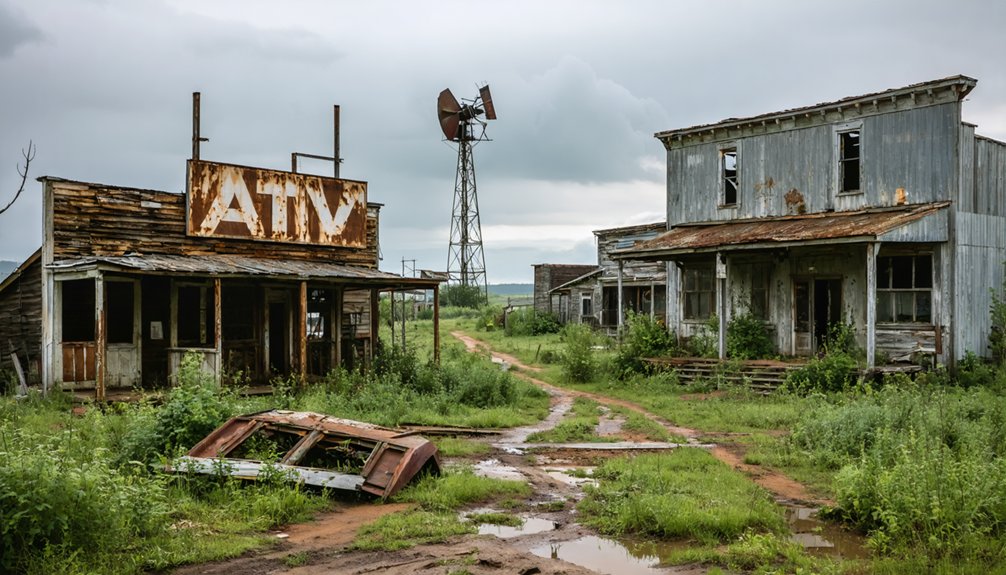
Beyond textile mill ruins, oil boomtown remnants scattered across East Texas and Oklahoma’s panhandle offer rugged ATV adventures through Depression-era ghost sites where fortunes rose and fell with gushing crude.
You’ll navigate unpaved trails through the legendary East Texas field’s 140,000-acre expanse, where Columbus Marion Joiner’s 1930 oil discovery launched the largest boom in the lower 48 states.
Your ATV will handle these prime exploration routes:
These rugged backcountry trails demand serious off-road capability as you traverse authentic Depression-era oilfield terrain.
- Rusk County lease roads – Remote trails connecting abandoned derrick sites near Joinerville
- Gregg and Upshur county backroads – Overgrown paths through 1930s well locations and relic infrastructure
- Panhandle oil patch routes – Rough terrain around Borger’s depleted boomtown edges
Low-traffic county roads link these ghost sites where boomtown culture once thrived, creating perfect ATV circuits through authentic oilfield history.
Planning Your Southern Ghost Town ATV Adventure
When you’re mapping your assault on Southern ghost towns, proper route selection separates successful expeditions from costly recoveries stuck axle-deep in backcountry mud.
Prioritize established southern trails that legally connect to abandoned settlements using state OHV maps and onX overlays. Confirm public versus private boundaries through BLM cadastral data—trespassing kills adventures fast.
Your adventure essentials include dual spare tires for sharp limestone, recovery gear for clay washouts, and two gallons water per person daily in humid heat.
Pack VHF radios and satellite messengers since cell towers don’t penetrate dense Southern forests. Verify seasonal closures before departure—spring rains transform hard-packed trails into impassable quagmires.
Maintain safe distance from collapsed mine shafts and treat historic structures as protected cultural assets.
Your freedom depends on respecting the land.
Frequently Asked Questions
Can I Ride My ATV on Private Property to Reach Ghost Towns?
You can’t legally ride your ATV across private property without written landowner permission. ATV laws strictly protect property rights. Seek documented consent, negotiate easements, or find public trail alternatives for ghost town adventures.
What Permits Do I Need for ATV Access to Southern Ghost Towns?
You’ll need state OHV registration stickers, federal forest permits for designated routes, and written landowner permission for private crossings. Ghost town permits aren’t required, but ATV regulations vary considerably across Southern states and jurisdictions.
Are There ATV Rental Companies Near Southern Ghost Town Locations?
Saddle up, partner! You’ll find ATV rental companies near ghost town hotspots like Nelson, Nevada and Red River, New Mexico. These outfitters provide guided tours and self-guided rentals for exploring abandoned mining camps and historic ruins.
If you’re looking for more adventure, consider the option to explore ghost towns in Arizona as well. This state is rich in history, with remnants of the Old West scattered throughout its rugged landscapes. Venture into these remote locations to uncover fascinating stories of miners and settlers who once called these places home.
What Safety Equipment Is Required for Remote Ghost Town ATV Exploration?
You’ll need DOT-approved helmets, protective gear, first aid kits, and emergency supplies including GPS, satellite communicators, recovery equipment, spare fuel, and survival gear when exploring remote ghost towns on challenging backcountry terrain.
Can I Camp Overnight Near Ghost Towns While ATV Touring?
Ironically, these “dead” towns offer living adventures through overnight camping. You’ll find dispersed camping near most ghost towns, though camping regulations vary and ghost town amenities remain nonexistent—pack self-sufficient gear for true freedom.
References
- https://blackhillsatvdestinations.com/ghost-towns/
- https://www.islands.com/1921538/mackay-idaho-atv-capital-off-road-trails-ghost-town-desert-view/
- https://mad-peak.com/f/black-hills-ghost-towns-are-real—and-you-can-ride-through-them
- https://www.youtube.com/watch?v=8QWmACBsznI
- https://www.colorado.com/articles/colorado-ghost-towns
- https://www.frommers.com/slideshows/848476-9-ghost-towns-to-explore-during-road-trips-through-the-american-west/
- https://visitidaho.org/travel-tips/go-west-great-sxs-atv-riding-opportunities-abound/
- https://newrivergorgecvb.com/abandoned-wv-coal-towns/
- https://appalachianmemories.org/2025/10/16/the-lost-towns-of-appalachia-the-forgotten-mountain-communities/
- https://www.youtube.com/watch?v=3F_Gv_xp3Y4