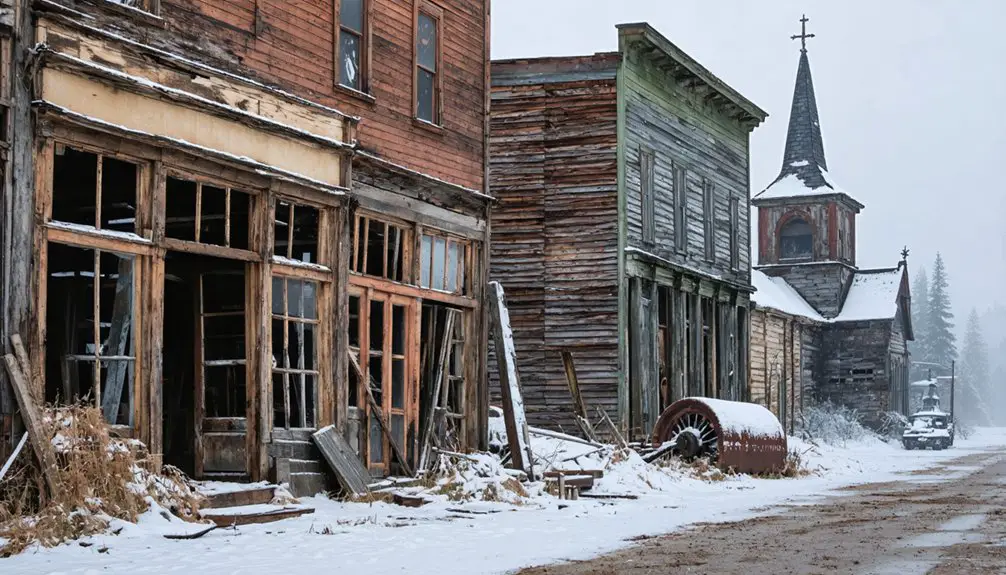
You’ll discover incredible ghost town adventures through West Virginia’s Hatfield-McCoy Trail System, where 800+ miles of trails connect you to preserved coal mining settlements like Nuttallburg, Thurmond, and Kaymoor. Your ATV can access remote coal patch communities scattered throughout the southern coalfields, plus explore the dramatic ruins of beehive coke ovens and abandoned tipples. These year-round trails accommodate all skill levels while showcasing authentic Appalachian mining heritage that’ll transport you back to the coal boom era—and there’s much more territory waiting to be explored.
Key Takeaways
- Nuttallburg, Kaymoor, Sewell, and Thurmond offer preserved coal mining ruins accessible through New River Gorge’s ATV trail network.
- Hatfield-McCoy Trail System provides 800+ miles of year-round access to historic mining communities and abandoned settlements.
- Coal patch settlements from the 1880s feature company housing remnants, sealed mine portals, and cemetery plots along railroad grades.
- ATV permits ($26.50-$50), helmet stickers, and landowner permission are required for legal access to ghost town locations.
- Staging areas at Rockfort Cabins, Indian Ridge, and Pinnacle Creek connect riders to historic mining sites and ruins.
Hatfield-McCoy Trail System Gateway Towns and Historic Mining Sites
When you’re seeking adventure through West Virginia’s rugged terrain, the Hatfield-McCoy Trail System delivers over 800 miles of trails that’ll take you deep into the state’s historic mining country.
You’ll discover gateway towns like Bramwell, Mullens, and Williamson that serve as perfect launching points for exploring this rich mining heritage. These ATV-accessible communities connect you directly to trail systems through former coal mining areas where Appalachian history comes alive.
Your Hatfield McCoy connections extend beyond recreation—you’re riding through authentic coal heritage zones where mining legacy lives alongside modern trail access.
Towns like Northfork and Keystone offer gas, food, and lodging while maintaining their historic character. Each community preserves its mining past, giving you glimpses into the backwoods regions that shaped this rugged landscape’s identity. The trail system operates 365 days annually, ensuring year-round access to these historic mining destinations. With all skill levels accommodated throughout the hundreds of miles of trails, both novice and experienced riders can explore these ghost towns and mining sites at their comfort level.
New River Gorge National Park Ghost Towns and Preserved Coal Communities
You’ll discover some of West Virginia’s most authentic ghost town experiences within New River Gorge National Park, where preserved coal communities offer both historical significance and thrilling ATV access challenges.
These sites require careful planning since you’re maneuvering steep terrain, mine ruins, and limited cell coverage while respecting protected park boundaries. The diverse terrain includes mud holes, rollers, and challenging curves that make these ghost town expeditions particularly exciting for ATV enthusiasts.
Your ATV or UTV becomes essential transportation to reach remote locations like Nuttallburg’s coke ovens and Sewell’s scattered mining remnants that standard vehicles can’t access. Professional guides can lead tours covering up to 90 miles of trails and roads to these historical sites.
Historic Mining Town Ruins
The New River Gorge’s most accessible ghost towns tell the dramatic story of West Virginia’s coal boom through remarkably preserved ruins you can explore on foot after parking your ATV.
Nuttallburg stands as the best-preserved early coal mine in West Virginia, featuring intact conveyor systems, tipples, and coke ovens from its 1870s origins through Ford’s modernization era.
Kaymoor’s massive operation ruins showcase the industrial scale of these historic coal communities, with preserved foundations marking where over 100 homes once housed miners and their families.
Sewell’s nearly 200 beehive coke ovens create an otherworldly landscape that operated until 1956. Originally known as Bowyers Ferry after the area’s first white settler Peter Bowyer, the settlement evolved into the first commercial center for nearby mining communities.
Thurmond once served as the region’s social hub, where coal barons operated some of the richest banks in West Virginia alongside the bustling Chesapeake and Ohio Railway Line.
These sites offer unfiltered access to authentic mining heritage, where you’ll discover house foundations, school remnants, and artifacts scattered throughout reclaimed forests along former railroad corridors.
ATV Staging and Access
Planning your ghost town expedition requires careful coordination between commercial tour operators and park regulations that govern motorized access throughout the New River Gorge.
You’ll find established staging logistics at private outfitter bases and adventure resort parking areas where UTV trailers can be accommodated safely. New River ATV offers guided side-by-side tours covering up to 90 miles of designated trails and country roads, ensuring compliance with NPS rules.
Your access routes depend on verified permissions and road classifications, as off-trail motorized travel inside park boundaries is prohibited. County forest roads and old coal roads provide alternative staging points for reaching preserved communities like Thurmond. The town was originally established by Captain William D. Thurmond in the 1880s to support the growing coal mining industry in the region.
Remember that seasonal closures and trail gating can temporarily block your preferred routes, making advance reservations essential during peak months. Many of these remote locations contain abandoned towns that once housed coal workers before the industry’s decline in the 1950s.
Southern West Virginia Coal Patch Settlements and Abandoned Tipples
When you venture into southern West Virginia’s remote hollows, you’ll discover the haunting remnants of coal patch settlements that once housed thousands of miners and their families.
These company-built towns emerged rapidly in the 1880s, with nearly 80% of West Virginia miners living in company houses by 1922. Coal town history reveals a diverse workforce of native whites, European immigrants, and African Americans, all segregated within standardized housing rows.
You’ll find crumbling tipples, breaker foundations, and rusted rail trestles scattered throughout McDowell, Mingo, and Logan counties.
The patch settlement architecture ranges from basic worker rows to elaborate company structures with theaters and pools. Many of these settlements were controlled by coal companies that owned everything from the company stores to the electricity, creating entirely dependent communities. Most homes featured identical designs constructed from inexpensive materials that have weathered decades of abandonment. Navigate narrow-gauge railroad grades to discover sealed mine portals, slag heaps, and cemetery plots marking these ghost communities.
ATV Access Requirements, Permits, and Safety Protocols for Ghost Town Exploration
Before you fire up your ATV and head toward those haunting remnants of West Virginia’s coal mining past, you’ll need the proper permits and safety gear to legally access these remote ghost towns.
You must navigate complex land ownership boundaries, obtain required trail permits, and prepare for serious structural hazards that abandoned buildings and mining equipment present.
Your adventure depends on understanding which roads you can legally travel, what safety protocols you’ll follow, and how to read official maps that’ll keep you on the right side of private property lines.
Official Permits and Maps
Three essential permits and documentation requirements stand between you and legally exploring West Virginia’s ghost towns by ATV.
First, you’ll need an Individual HMT User Permit—$26.50 for residents, $50 for non-residents—valid through December 31st. Display this helmet sticker on every trail ride or face statutory penalties.
Second, if you’re planning road connections between ghost town sites, register your ATV with WV’s Division of Motor Vehicles for street-legal status and secure liability insurance.
Third, riders under 18 must carry an ATV safety card from approved instruction courses.
For permit acquisition, visit staffed trailheads, Welcome Centers, or participating vendors.
Download official trail maps from HMT’s system to navigate legally accessible routes connecting abandoned settlements throughout Appalachia’s rugged backcountry.
Structural and Environmental Hazards
Although West Virginia’s abandoned settlements offer compelling exploration opportunities, crumbling mine structures and unstable terrain demand serious hazard assessment before you fire up your ATV.
These ghost towns hide dangers that’ll test your risk awareness and require thorough safety precautions.
- Structural collapse zones – Mine entrances, deteriorated buildings, and rusted industrial equipment create puncture risks and sudden ground subsidence that can trap riders and machines without warning.
- Trail-specific environmental threats – Erosion-prone slopes, seasonal flooding, and loose spoil piles reduce traction while overgrown paths conceal stumps and low branches at speed.
- Contamination exposure – Legacy coal dust, asbestos, and lead-based paint persist around processing sites, while wildlife encounters and tick exposure add medical risks on remote approaches far from help.
Land Ownership Boundaries
When you’re planning ATV routes to West Virginia’s ghost towns, traversing the complex web of land ownership determines whether you’ll face legal access or criminal trespass charges.
Federal lands require designated road usage only, while state DNR areas demand specific permits like Hatfield-McCoy trail passes. Private property surrounding abandoned settlements absolutely requires landowner permission—trespass laws don’t disappear because structures are vacant.
County ordinances can restrict your access rights even on seemingly public routes, and utility easements near old mining towns often prohibit recreational use despite appearing accessible.
You’ll need to verify ownership boundaries before each expedition, as ghost town locations frequently span multiple jurisdictions. Carry proof of permits and insurance documentation, since enforcement officers regularly patrol these historically significant areas where land ownership complexity creates legal traps for unprepared riders.
Staging Areas, Visitor Services, and Guided Tour Options
Before you can explore West Virginia’s ghost towns by ATV, you’ll need proper staging areas and support services to make your adventure successful.
Rockfort Cabins at Appalachian Outpost offers excellent staging options with ample trailer parking just ¼ mile from Rock House Trail System. Indian Ridge trails provide easy staging near Northfork and Keystone, while Pinnacle Creek connects you to Mullens and Pineville towns.
Essential visitor amenities await throughout the region:
- Fuel and Food – Gas stations in Welch and Pineville keep you moving, while restaurants in Logan and Chapmanville satisfy your hunger.
- Lodging – Log cabins and hotels near Buffalo Mountain provide comfortable overnight stays.
- Guided Adventures – New River ATV offers ghost town tours near Thurmond, while Adventures on the Gorge combines whitewater rafting with trail access.
Preservation Guidelines and Legal Considerations for Responsible Ghost Town Visits
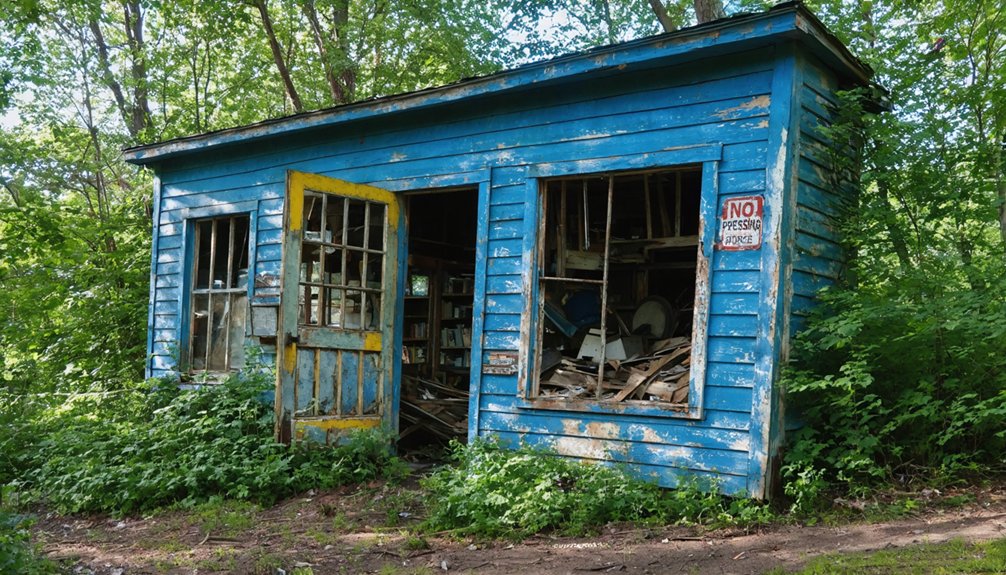
Successful ghost town adventures depend on understanding West Virginia’s ATV laws and respecting the fragile history you’re exploring. Before riding to any ghost town, verify land ownership through county records since many sites sit on private property requiring landowner permission.
Trespassing carries serious legal liabilities including criminal charges and civil penalties.
Historic preservation practices become your responsibility once you arrive. Don’t disturb artifacts, structures, or foundations – they’re irreplaceable pieces of Appalachian heritage. Some ghost towns have preservation easements or archaeological protections that legally restrict motorized access.
Check with local authorities about specific site regulations.
Stay on designated trails to minimize environmental impact. Pack out everything you bring in. Respect “No Trespassing” signs and trail boundaries.
Your responsible riding guarantees these historic treasures remain accessible for future adventurers while protecting you from costly legal consequences.
Frequently Asked Questions
What Time of Year Offers the Best Weather for Ghost Town ATV Exploration?
Spring and fall offer the best seasons for your ghost town adventures, with ideal weather patterns featuring mild 50-70°F temperatures, dry trails, fewer crowds, and perfect conditions for exploring remote mining ruins freely.
Are There Overnight Camping Options Near Popular Ghost Town ATV Destinations?
Yes, you’ll find excellent overnight options like Twin Hollow Campground near Gilbert’s ghost towns, offering direct trail access, campground amenities including private fishing ponds, and nearby attractions spanning multiple Hatfield-McCoy trail systems for extended exploration adventures.
Can Electric ATVS Handle the Terrain and Distance Requirements for Ghost Town Visits?
Electric vehicle performance struggles with West Virginia’s demanding ghost town routes. You’ll face terrain adaptability challenges on steep climbs, technical sections, and extended distances that’ll drain batteries faster than advertised range estimates.
Which Ghost Towns Have the Most Photogenic Ruins and Historic Structures Remaining?
Thurmond’s intact depot and Kaymoor’s dramatic mine structures offer the most photogenic locations. You’ll find exceptional historic preservation at Nuttallburg’s coke ovens and Winona’s commercial buildings for compelling ruin photography.
Are There Age Restrictions for Children Participating in Ghost Town ATV Tours?
Yes, age chains bind young adventurers on ghost town trails. You’ll face safety guidelines requiring kids 6+ for trail access, while tour regulations demand 8+ for passengers and 18+ with licenses to drive ATVs through history.
References
- https://www.islands.com/2019470/williamson-nestled-heart-appalachia-west-virginia-mountain-town-great-outdoor-adventure-massive-hatfield-mccoy-trail/
- https://www.youtube.com/watch?v=oIKh2MuA-gY
- https://trailsheaven.com/wp-content/uploads/2021/09/Trail-Talk-September-2021-ATV-Friendly-Towns.pdf
- https://wvtourism.com/5-wv-ghost-towns/
- https://www.youtube.com/watch?v=fLY985imGXQ
- https://www.tripadvisor.com/Attraction_Review-g59586-d2708213-Reviews-Thurmond_Depot-Thurmond_West_Virginia.html
- https://wvexplorer.com/2018/12/23/ghost-town-hidden-west-virginia-soon-accessible-to-hikers/
- https://thurmondwv.org/pages/visiting-thurmond
- https://www.bramwellwestva.com/hatfieldmccoytrails
- https://trailsheaven.com/plan-your-trip/choose-a-trail/