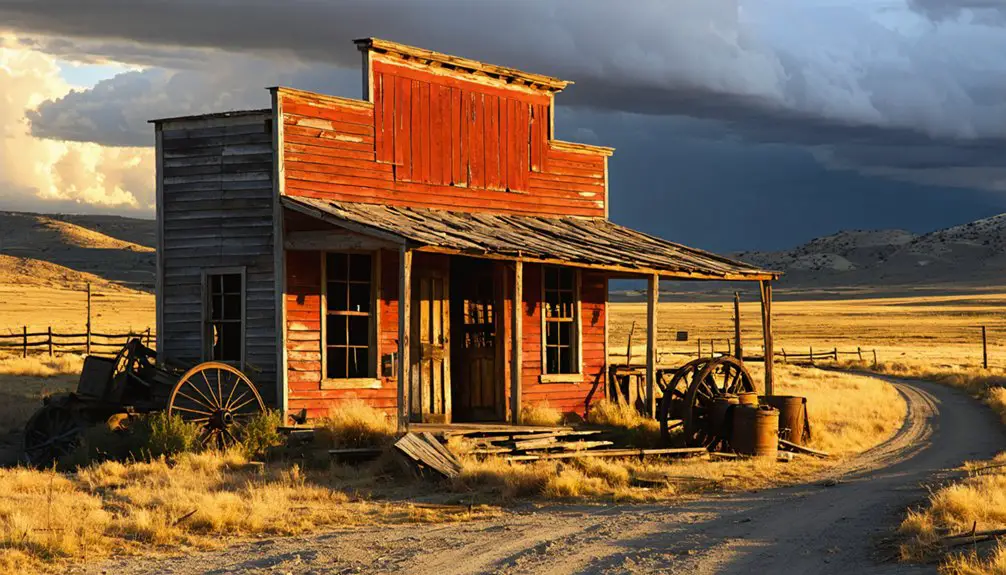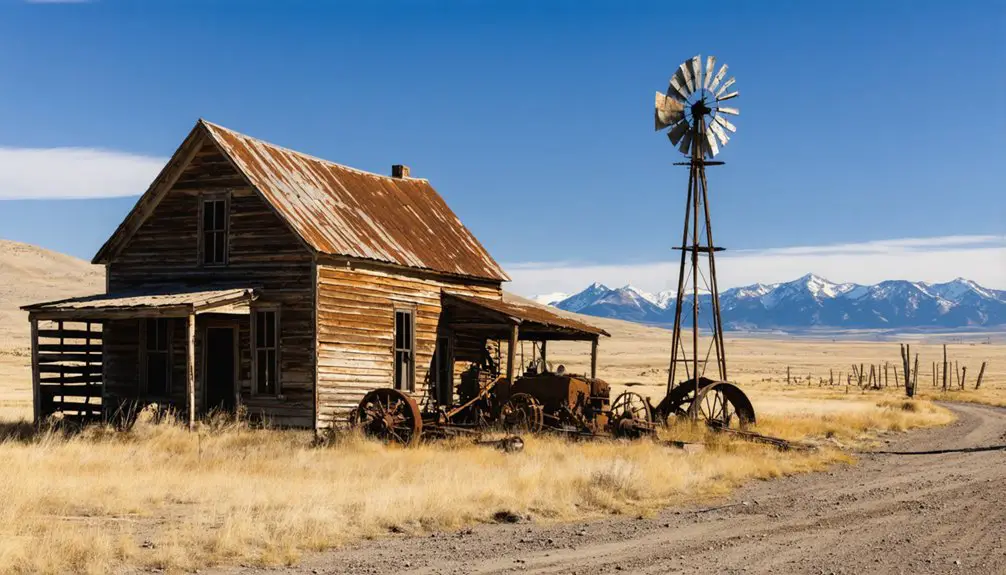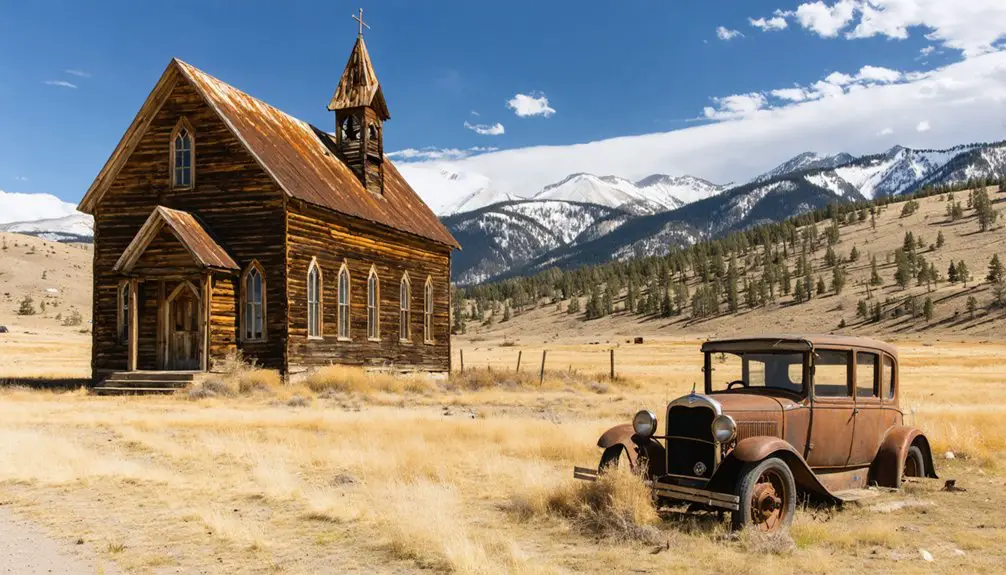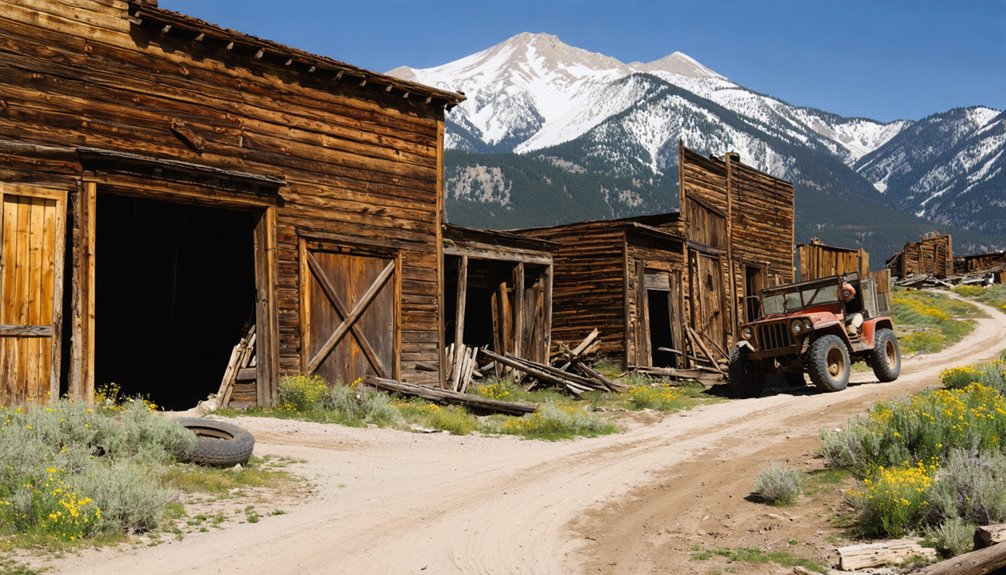
You’ll find Wyoming’s most authentic ghost towns accessible only by ATV, including the remote Kirwin settlement at 9,200 feet in the Absaroka Mountains and historic South Pass City with its preserved gold rush artifacts. The challenging 27-mile trail to Kirwin requires ATVs under 50 inches wide and navigates steep switchbacks, creek crossings, and rocky terrain through Shoshone National Forest. Other accessible sites include high-altitude Eadsville on Casper Mountain, where over 640 miles of interconnected trails await your exploration.
Key Takeaways
- Kirwin Ghost Town sits at 9,200-9,500 feet elevation, requiring ATVs under 50 inches wide for the challenging 27-mile trail access.
- South Pass City preserves authentic gold rush history with seventeen restored structures and over 30,000 artifacts accessible via ATV trails.
- Eadsville on Casper Mountain at 7,800 feet offers high-altitude solitude exploring Charles W. Eads’s failed 1891 mining venture remnants.
- Wyoming features over 640 miles of ATV trails connecting various ghost town sites, with summer access ideal from July through September.
- ATV riders need Wyoming’s $15 annual ORV decal, proper registration, spark-arresting mufflers, and valid driver’s licenses for legal trail access.
Kirwin Ghost Town: A Remote Mining Settlement
Deep in Wyoming’s Absaroka Mountains, where volcanic peaks pierce the sky at 9,500 feet above sea level, lies Kirwin—a remarkably preserved ghost town that tells the story of America’s last great gold rush.
You’ll discover a settlement that once housed 200 souls chasing dreams of fortune after William Kirwin and Harry Adams struck gold on Spar Mountain in 1885.
Unlike typical rough mining camps, Kirwin’s wealthy Eastern investors created Wyoming’s most modern mining town, complete with electricity, telephones, and strict moral codes.
No saloons or gambling existed here. The mining history includes operations like Molly Logan and Smuggler mines, with companies investing millions before a devastating 1907 avalanche triggered the town’s decline. The town was managed by Charles Tewksbury and his wife Sarah, who operated a store and hotel providing essential goods and lodging for miners and visitors.
Today, ghostly encounters and rusted tools mark this extraordinary wilderness destination. Many buildings still stand intact, with visitors reporting mysterious voices and eerie encounters that suggest the spirits of former residents never truly left this remote mountain settlement.
Planning Your ATV Adventure to Kirwin
Before you can explore Kirwin’s haunting remnants and mining artifacts, you’ll need to secure the right ATV and prepare for one of Wyoming’s most challenging backcountry adventures.
Choose vehicles under 50 inches wide for trail compliance, with side-by-sides limited to 60 inches. Meeteetse and Cody providers offer Polaris and Arctic Cat rentals starting around $389, with GPS-equipped models available for essential navigation tips.
Trail-compliant ATVs under 50 inches wide available from Meeteetse and Cody rental providers, with GPS navigation starting at $389.
Plan for 8+ hours round-trip during July through September when water levels drop. The final eight miles demand high-clearance 4×4 capability through river crossings and rocky terrain.
Prioritize ATV safety by taking pre-ride instruction and test drives. Pack for full-day exploration—you’ll discover 75+ miles of scenic backcountry roads beyond Kirwin’s historic mining site. The trail passes through dry creek beds and steep grades that make the journey particularly technical and demanding.
This abandoned gold mining settlement was left behind by prospectors in the early 1900s when their dreams of striking it rich faded away.
The Challenging 27-Mile Trail Through Shoshone National Forest
You’ll need a high-clearance ATV or UTV under 50 inches wide to navigate the narrow two-tracks and rocky sections that define this demanding route through Shoshone’s backcountry.
The trail throws multiple creek crossings at you, along with steep climbs, rutted surfaces, and occasional washouts that’ll test both your machine’s capabilities and your riding skills.
Pack aggressive tires, skid protection, and recovery gear—this isn’t a casual ride, and the remote terrain offers no easy bailout options when things get rough. Consider bringing along dune buggies as an alternative off-road option for tackling the challenging terrain that Wyoming’s backcountry adventures are known for. For those seeking additional OHV adventures, Nevada’s Shoshone system offers varied landscape terrain just 26 miles south of Battle Mountain.
Vehicle Requirements and Restrictions
While the rugged terrain of Shoshone National Forest‘s 27-mile ghost town trail promises unforgettable adventure, Wyoming’s strict vehicle requirements will determine whether you can legally access these remote historical sites.
Your ATV must stay under 50 inches wide to navigate enrolled Shoshone trails legally. You’ll need Wyoming’s $15 annual ORV decal plus proper vehicle registration for trail access, even if your machine has street plates.
Don’t forget trail regulations mandate approved spark-arresting mufflers and valid driver’s licenses.
Before heading out, verify your route’s enrollment status using Motor Vehicle Use Maps—unenrolled paths could land you in legal trouble. Clean your ATV and trailer thoroughly before and after your ride to prevent noxious weeds from spreading between areas.
Check with Shoshone Ranger District for seasonal closures that might block your ghost town expedition. These requirements aren’t suggestions; they’re your ticket to exploring Wyoming’s backcountry legally.
River Crossings and Terrain
As your ATV rumbles toward the first river crossing on Shoshone’s legendary 27-mile ghost town trail, you’ll face shallow but treacherous rocky fords that can trap inexperienced riders in swift mountain currents.
Master river safety by testing water depth on foot first—spring snowmelt transforms gentle streams into raging torrents. Navigate cobble and boulder substrates carefully, as uneven footing challenges your machine’s stability.
Your terrain navigation skills determine survival across this wild corridor. Expect steep switchbacks, talus fields, and technical rocky pitches climbing toward abandoned settlements like Kirwin. Remember to carry a map for navigation and safety in these remote areas where GPS signals may fail.
Trail surfaces shift from dusty loam to exposed bedrock, while seasonal snow patches persist at elevation. The challenging terrain includes over 1,500 feet of elevation gain similar to the demanding climbs found on established mountain trails. Budget extra time for fallen trees and mechanical issues—you’re truly on your own in this remote backcountry paradise.
What to Expect at the Kirwin Townsite
Perched at an breathtaking elevation between 9,200 and 9,500 feet in Wyoming’s rugged Absaroka Mountains, the Kirwin townsite offers visitors a haunting glimpse into one of the state’s most dramatic mining failures.
You’ll discover weathered building foundations scattered across the alpine meadow, remnants of what once housed 200 residents in 38 structures. The preserved assay office stands as a representation of Kirwin history, where ore samples were tested during the town’s 1891-1907 heyday.
Explore mining artifacts among the ruins while towering 12,000-foot peaks surround you. The famous Amelia Earhart cabin foundation lies along your route—an unfinished 1936 project. The community maintained strict regulations with no saloons or brothels permitted, creating an unusually moral atmosphere for a mining town.
You’re walking through genuine bear country, so stay alert. This stabilized historic site rewards adventurous souls with authentic Old West atmosphere and spectacular mountain scenery.
South Pass City: Gold Rush History Preserved
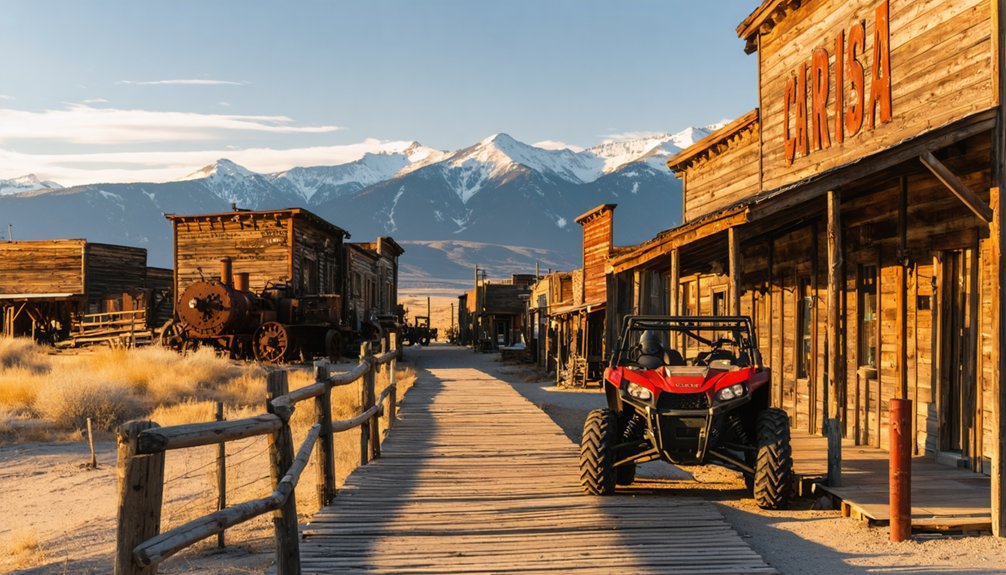
You’ll step into Wyoming’s most authentic gold rush experience at South Pass City, where the 1867 Carissa Mine discovery sparked a frenzied boom that transformed empty wilderness into a bustling frontier town overnight.
The preserved ruins and surviving cabins tell the dramatic story of fortune-seekers who extracted thousands of ounces from local lodes while building one of Wyoming’s first incorporated cities.
Today’s protected historic site lets you explore original stamp mill remains and walk the same canyon paths where miners once hauled ore worth millions in today’s currency.
Gold Rush Boom Era
When gold fever swept through Wyoming’s South Pass region in the 1860s, it transformed a remote mountain crossing into one of the territory’s most bustling mining districts.
You’ll discover how the H.S. Reedall party’s strike at the Carissa deposit in June 1867 triggered an unprecedented rush. By 1868, South Pass City exploded overnight, housing 3,000-5,000 residents who carved fortunes from quartz veins and placer deposits.
The gold mining frenzy reached its peak in 1869 when three operational mills crushed ore with 26 stamps, while prospectors located over 1,500 lodes.
This boomtown legacy created a wild frontier where fortunes vanished as quickly as they appeared, leaving behind the preserved remnants you can explore today on your ATV adventure through Wyoming’s high country.
Protected Canyon Preservation
After Wyoming’s 75th Anniversary Commission purchased South Pass City in 1966, this remarkable ghost town transformed from a crumbling relic into one of the West’s most authentically preserved historic sites.
You’ll discover seventeen meticulously restored structures showcasing over 30,000 artifacts in their original locations. The canyon ecosystems surrounding this settlement provide natural protection while highlighting its historical significance as a gold rush epicenter.
You can explore family cabins, the Carissa Saloon, Exchange Bank, and Wyoming’s oldest jail through self-guided walks.
When volunteer staff’s present, you’ll enjoy ice-cold sarsaparilla and billiards on an 1860s table. The Gold Mining Interpretive Center and restored Carissa Mine buildings offer hands-on experiences that’ll transport you back to 1867’s bustling mining days.
Eadsville: High-Altitude Ghost Town Exploration
Perched at 7,800 feet on Casper Mountain’s windswept summit, Eadsville stands as one of Wyoming’s most dramatically situated ghost towns, where crumbling stone foundations and a lonely grave mark the remnants of Charles W. Eads’s 1891 mining venture.
High above Wyoming’s windswept plains, stone foundations and a solitary grave tell the haunting story of Charles Eads’s failed 1891 dream.
You’ll find this forgotten copper and gold camp roughly twelve miles south of Casper, near today’s Hogadon Ski Area.
Eadsville history reveals a classic boom-and-bust tale—Denver financiers planned smelters while ore shipments headed to Omaha, but viable deposits never materialized.
The promotional bubble burst quickly, leaving scattered cabin foundations and a historic spring that once marked the town center.
Eadsville accessibility requires traversing steep mountain roads through forested terrain.
Winter snow blocks access seasonally, but summer exploration rewards you with authentic remnants spanning twenty acres of high-altitude solitude.
Additional Wyoming Ghost Towns Worth Visiting

Beyond Eadsville’s windswept heights, Wyoming’s rugged terrain harbors seven more remarkable ghost towns that’ll satisfy your appetite for high-altitude exploration and mining history.
These abandoned settlements span from Kirwin’s avalanche-scarred buildings in the Absaroka Range to Kane’s railroad remnants near Bighorn Canyon. Each location offers unique opportunities for ghost town photography, capturing weathered structures against dramatic mountain backdrops.
You’ll discover over 640 miles of ATV trails connecting these sites through Bighorn and Shoshone National Forests.
Historical preservation efforts maintain authentic mining equipment, building foundations, and pioneer cemeteries throughout these locations.
Summer access from July through September provides ideal riding conditions for your high-clearance 4×4 or ATV adventures.
These forgotten communities showcase Wyoming’s boom-and-bust mining legacy across diverse elevation zones and terrain challenges.
Top ATV Trail Networks Beyond Ghost Towns
While Wyoming’s ghost towns capture the imagination with their weathered facades and forgotten stories, the state’s extensive ATV trail networks extend far beyond these historic settlements, offering thousands of miles of high-country adventures through untamed wilderness.
Exploring ghost towns on the oregon trail provides a unique glimpse into the past, as each abandoned structure tells a story of ambition and resilience. Adventurers can wander through the remnants of these settlements and imagine the lives once lived there, while also discovering the breathtaking landscapes that surround them. These journeys not only connect travelers to history but also to the spirit of exploration that defined the westward expansion.
You’ll discover Casper Mountain‘s technical terrain near Eadsville, where mountain biking trails accommodate ATVs through challenging elevation changes. The Point of Rocks Stage Station connects you to historic Overland Trail routes, weaving past 19th-century gravesites that whisper tales of westward expansion.
Shoshone National Forest delivers the ultimate backcountry experience with 40-mile technical roads climbing to 9,000 feet from Meeteetse.
Remember essential ATV safety protocols in bear country—carry protection and inform others of your location. Practice proper trail etiquette by respecting wildlife corridors and maintaining responsible speeds on shared pathways.
Frequently Asked Questions
What Permits or Fees Are Required for ATV Access to Ghost Towns?
Despite seeming complicated, ATV regulations require just Wyoming’s $15 annual permit for ghost town exploration. You’ll complete simple permit applications at dealers or county offices, then freely access designated trails and historical sites.
Can I Camp Overnight Near Kirwin or Other Ghost Town Sites?
You’ll find excellent overnight camping options at Wood River and Brown Mountain campgrounds near Kirwin. Both offer ghost town amenities like vault toilets and follow camping regulations including 16-day limits and mandatory bear-safe food storage.
Are There Guided ATV Tours Available for Multiple Ghost Towns?
You’ll find guided tours focusing on Kirwin, but multi-ghost-town ATV adventures aren’t widely available. RSC Powersports offers Basin area tours with historical insights, while most operators specialize in single-destination experiences for deeper exploration.
What’s the Best Time of Year to Visit Wyoming Ghost Towns?
The best season’s May through October when roads open for ATV access. You’ll face ideal weather considerations with clear trails, wild raspberries blooming, and spectacular mountain views before winter snow blocks your ghost town adventures.
Can I Bring My Metal Detector to Search for Artifacts?
No, you can’t bring metal detectors to Wyoming’s ghost towns in national forests. Picture rangers confiscating equipment while you face $500 fines. Follow metal detecting tips: respect artifact preservation laws and stick to approved private lands instead.
References
- https://www.meeteetsewy.com/places-to-visit/kirwin-ghost-town-wyoming
- https://mycountry955.com/do-you-know-any-good-places-to-ride-off-road-vehicles-in-wyoming/
- https://www.tripadvisor.com/Attraction_Review-g60519-d8454008-Reviews-Kirwin_Ghost_Town-Meeteetse_Wyoming.html
- https://www.livewyldmag.com/live-wyld/ilopkmpwu388kcxsaop2w6de662elv
- https://travelwyoming.com/things-to-do/outdoor-adventure/atv-off-roading/
- https://www.onxmaps.com/offroad/trails/us/wyoming/kirwin
- https://travelwyoming.com/blog/stories/post/5-wyoming-ghost-towns-you-need-to-explore/
- https://www.kirwinghosttown.com
- https://blackhillsatvdestinations.com/mineral-hill-ghost-town/
- https://cowboystatedaily.com/2024/10/20/haunted-wyoming-kirwin-is-a-ghost-town-haunted-by-real-spirits/