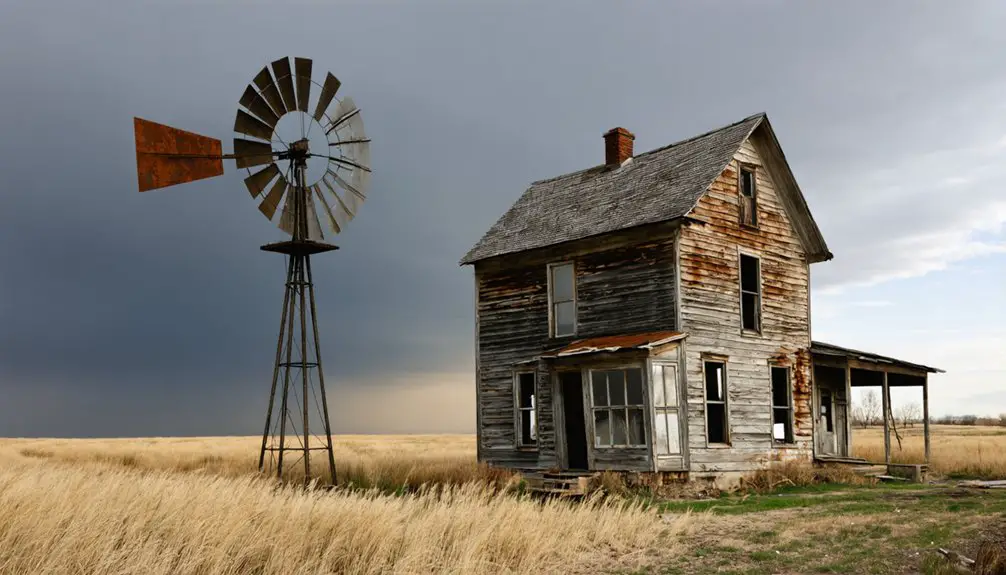
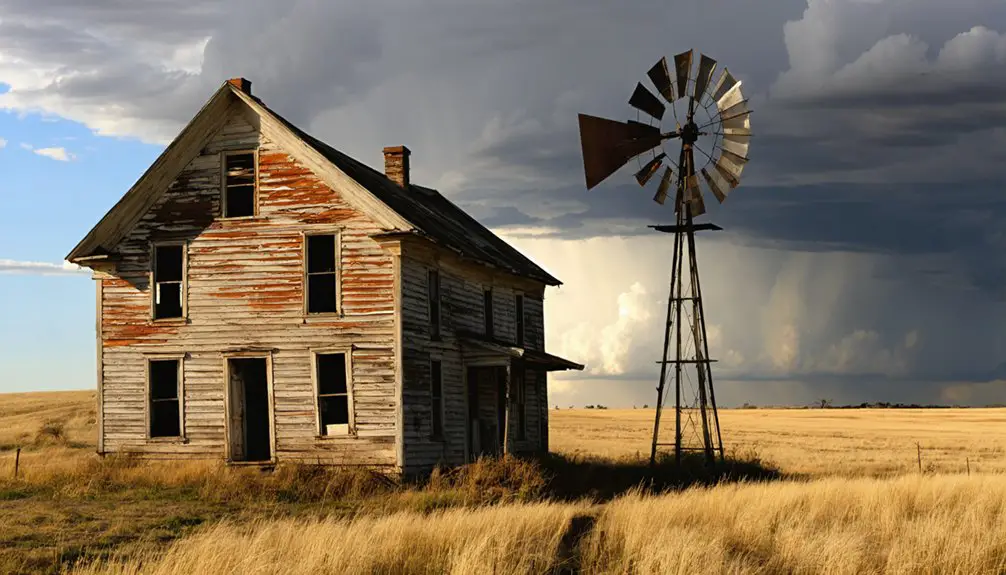
You can explore Nebraska’s fascinating ghost towns like Brocksburg, Roscoe, and Steele City using ATVs on designated trail systems including the Bessey OHV Trail and Cedar Run ATV Trail. These forgotten settlements from the 1870s-1890s railroad boom offer rugged terrain perfect for ATV navigation, with preserved structures and mysterious remnants waiting to be discovered. Follow the Big Blue River Route’s 33.6 miles or Garden County’s network to reach these historical treasures that tell stories of frontier ambition and economic upheaval across the Great Plains landscape.
Key Takeaways
- Notable ghost towns accessible by ATV include Brocksburg, Roscoe, Steele City, Belvidere, and Pauline throughout Nebraska’s countryside.
- The Bessey OHV Trail System provides 36 miles of forest trails for vehicles 64 inches wide or narrower.
- ATVs must be 50 inches wide or less on designated trails and equipped with mufflers and spark arresters.
- The Big Blue River Route offers 33.6 miles of easy-rated trails connecting multiple ghost town locations.
- Operations are restricted to daylight hours with mandatory helmets, eye protection, and liability insurance on public highways.
ATV Trail Systems for Ghost Town Exploration
While many of Nebraska’s converted rail-trails restrict motorized vehicles, dedicated ATV trail systems offer your best shot at reaching remote ghost towns scattered across the state’s rugged landscapes.
The Bessey OHV Trail System in Samuel R. McKelvie National Forest welcomes vehicles 64 inches or narrower, giving you access to forested terrain where forgotten settlements hide.
Navigate the Bessey OHV Trail System’s forested paths where Nebraska’s forgotten settlements await discovery through 64-inch-wide vehicle routes.
Dismal River Trail cuts through central Nebraska’s Sandhills, connecting you to areas rich with historical remnants.
Cedar Run ATV Trail provides dedicated motorized routes near ghost town locations.
These systems require minimal trail maintenance while delivering maximum route challenges through varied terrain. The crushed limestone surface found on converted rail corridors demonstrates how former railroad infrastructure can be repurposed for recreational access.
You’ll navigate sandy hills, dense forests, and isolated valleys where Nebraska’s pioneering past still echoes through abandoned structures. At Indian Cave State Park, visitors can explore the ghost town of St. Deroin, which served as a former ferryboat hub before becoming part of the park’s extensive trail network.
Notable Ghost Town Destinations
Once you’ve mapped out your ATV trail routes, you’ll discover Nebraska’s ghost towns offer distinctly different experiences depending on their histories and locations.
Exploring abandoned towns in Nebraska lakes can lead you to hidden stories of the past, where the remnants of old structures tell the tales of former residents. These secluded spots provide a unique opportunity for photography and exploration, revealing a contrast between nature’s reclaiming touch and man’s once-thriving settlements. Each visit to these ghostly locations can ignite a sense of adventure and curiosity about what life was like in Nebraska’s earlier days.
Brocksburg challenges you with rugged terrain near Highway 137, requiring serious off-road capabilities to reach its minimal remains.
You’ll find better-preserved ghost town attractions like Roscoe along US Highway 30, where grain elevators and Chamberlain’s building showcase railroad-era architecture.
Steele City’s historical significance shines through its 1870s structures, while Belvidere combines Oregon Trail heritage with railroad history.
For true adventure seekers, Pauline’s speculative settlement remnants offer mystery along abandoned main streets. Many riders prefer exploring these areas with vintage ATVs and sport quads, which perform exceptionally well on the varied terrain encountered around ghost town sites. The narrow trails throughout the region are designed for compact vehicles, so ensure your ATV is 64 inches or less in width for optimal access.
Each destination delivers unique historical significance, from agricultural collapse stories to railroad expansion tales that shaped Nebraska’s frontier landscape.
Maneuvering to Nebraska’s remote ghost towns requires careful route planning and the right ATV capabilities for challenging terrain.
You’ll find multiple access points along the Big Blue River Route, where 33.6 miles of easy-rated trails lead past ghost towns Irving and Cleburne. For adventure seekers, rugged roads near Highway 137 connect to the Outlaw Trail Scenic Byway, demanding ATVs for practical navigation through uninhabited settlements.
Route mapping becomes essential when tackling varied difficulty levels across different trail systems.
Garden County’s network near Lewellen offers multiple route options, while Bessey’s 36-mile forest system requires vehicles under 64 inches wide. Many trails feature bridge crossings with weight restrictions that riders must carefully consider before proceeding. The Cowboy Recreation Trail spans over 200 bridges throughout its 202.9-mile route, providing numerous crossing points that connect remote areas.
You’ll discover that spring access points along natural waterways provide reliable navigation markers, helping you navigate safely through Nebraska’s forgotten frontier territories.
Historical Background of Nebraska’s Abandoned Settlements
Beneath Nebraska’s windswept prairies lie the remnants of over 900 abandoned settlements, each telling a unique story of frontier ambition and economic upheaval.
Understanding these ghost town origins reveals patterns you’ll recognize while exploring: land development companies platted speculative settlements between 1870-1890, railroad expansion spawned agricultural centers, and Missouri River crossings created early trading posts.
Population decline followed predictable paths that stripped these communities of life:
- Railroad branch closures in the late 1930s eliminated economic lifelines
- Agricultural economy collapse forced families to seek opportunities elsewhere
- Military fort closures and transportation shifts left worker communities stranded
You’ll discover Knox County holds exceptional examples like Blyville and Mars, where post office closures marked final chapters in these frontier dreams. These settlements often featured general stores that served as vital community hubs, catering to both local farmers and Native American populations who traveled considerable distances to purchase goods. Many communities retained graded streets lined with trees planted by hopeful original settlers, creating distinctive patterns still visible from aerial views today.
OHV Regulations and Safety Requirements
Before you fire up your ATV and head toward Nebraska’s forgotten settlements, you’ll need to understand the state’s OHV regulations that govern where and how you can ride.
Your vehicle must meet specific equipment standards, including state-approved mufflers and spark arresters, while staying within the 50-inch width limit for ATVs on designated trails. Remember that cross-country travel is strictly prohibited in Nebraska National Forests and Grasslands, so you must stick to designated roads and trails when exploring these historic areas.
You’ll also need to maintain proper distances from campgrounds and follow designated routes marked on the Motor Vehicle Use Map to avoid hefty fines during your ghost town adventures. Additionally, operators must carry liability insurance when using ATVs on public highways to comply with Nebraska’s safety requirements.
Designated Route Requirements
When planning your ATV adventure to Nebraska’s ghost towns, you’ll need to navigate a complex web of regulations that govern off-highway vehicle operations throughout the state. Understanding designated trail requirements and proper route planning guarantees you’ll access these forgotten places legally while maintaining your freedom to explore.
Your route planning must account for strict operational boundaries that limit where and when you can ride:
- Speed restrictions cap you at 30 mph maximum during farm operations
- Roadway limitations prohibit controlled-access highways with more than two lanes
- Time constraints restrict all operations to daylight hours between sunrise and sunset
Local ordinances specify which streets and trails you’re permitted to use, while county boards authorize access through unincorporated villages where many ghost towns exist.
Vehicle Equipment Standards
Your ATV must meet specific equipment standards before you can legally explore Nebraska’s abandoned settlements. Your machine needs state-approved mufflers and spark arresters to protect the wilderness you’re riding through.
These vehicle specifications aren’t just bureaucratic hurdles—they’re designed to preserve the very landscapes that make ghost town adventures possible.
You’ll need proper safety features too. Helmet and eye protection are mandatory, just like motorcycle requirements.
However, if your UTV has seatbelts or three-point safety systems, you can skip the helmet hassle and feel the wind while staying legal.
Remember that operating in ways that damage land, wildlife, or vegetation is prohibited.
Respect these rules, and you’ll maintain access to Nebraska’s forgotten places while keeping the adventure alive for future explorers.
Camping Distance Limits
Although Nebraska’s remote ghost towns beckon with promises of solitary exploration, you’ll need to understand camping distance regulations that govern where you can set up base camp during your ATV adventures.
Dispersed camping offers the freedom to camp within 300 feet of MVUM-designated routes, but you can’t venture cross-country unless specifically permitted. Your camping regulations knowledge becomes essential when accessing these abandoned settlements.
Key dispersed camping requirements include:
- Stay within 300 feet of MVUM-designated routes for legal camping access
- Check specific route designations since camping distances vary by location
- Use only open forest roads to prevent land damage during camp setup
Developed campgrounds restrict recreational riding within their boundaries, allowing OHVs only for entry and exit.
You’ll experience true freedom following these guidelines while exploring Nebraska’s forgotten settlements.
Planning Your Ghost Town Adventure
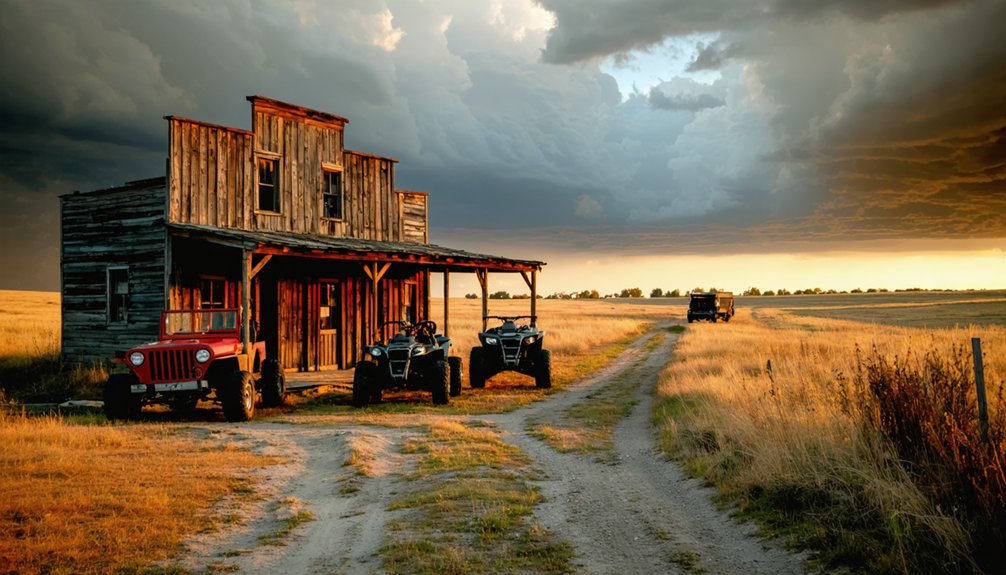
Before you fire up your ATV and head into Nebraska’s backcountry, you’ll need to map out a strategic approach that balances adventure with safety and legal compliance.
Your trip itinerary should prioritize routes like Big Blue River‘s 33.6-mile stretch, which accesses ghost towns Irving and Cleburne during ideal spring through fall seasons.
Plan your adventure around Big Blue River’s scenic 33.6-mile trail system for optimal ghost town exploration from spring through fall.
Pack essential gear including DOT-approved helmets, plenty of water for shade-limited sections, and current maps alongside historic railroad charts.
Compare aerial photos to identify foundations and roadbeds marking forgotten settlements. County histories and oral accounts will verify your discoveries.
Check MVUM guidelines for national forest access, ensuring your vehicle meets 64-inch width restrictions.
Call ahead to confirm Cedar Run availability, and remember that some roads require highway-legal vehicles only.
Additional Attractions Along the Routes
Beyond the ghost towns themselves, Nebraska’s ATV routes weave through landscapes rich with historic landmarks and recreational opportunities that’ll enhance your backcountry exploration.
The Cowboy Trail‘s massive trestle crossing the Niobrara River delivers spectacular scenic viewpoints high above the valley floor, while local wildlife like deer and wild turkeys frequent the corridor.
Highway 12’s forgotten settlements offer nostalgic stops at vintage gas stations and weathered railroad buildings that tell stories of frontier commerce.
Your route planning should include these additional discoveries:
- Historic grist mills – Neligh Mills from the 1880s showcases water-powered grain processing
- Float river access – Niobrara River outfitters provide alternative adventure opportunities
- Lewis and Clark landmarks – Campsite towers mark the expedition’s Nebraska passage
These attractions transform simple ghost town visits into thorough historical expeditions.
Equipment and Preparation Essentials
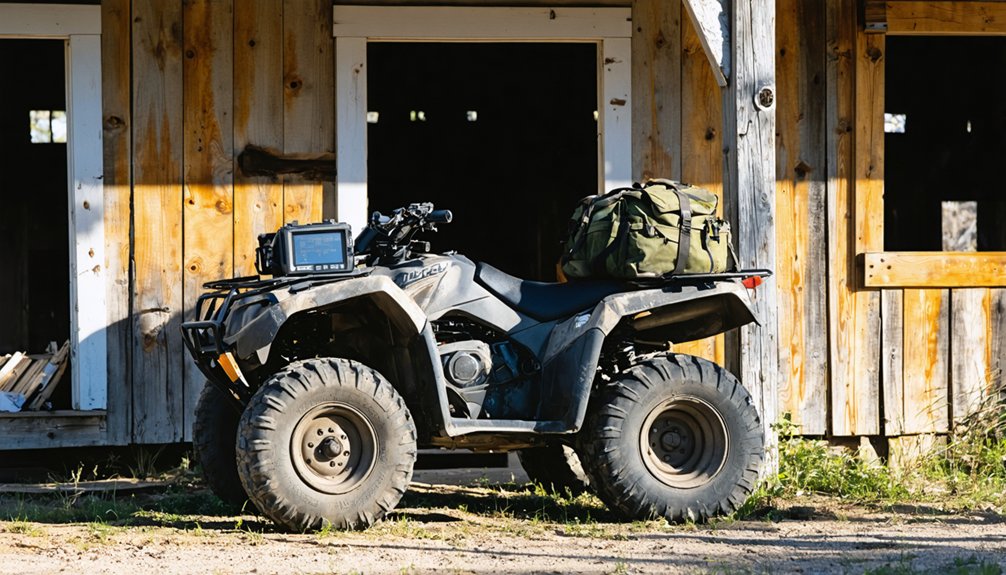
You’ll need proper safety equipment, reliable navigation tools, and essential camping gear to explore Nebraska’s remote ghost towns safely.
Your ATV must meet state requirements including functioning brake systems, proper lighting, and spark arresters, while you’ll want GPS devices and detailed maps since cell service often disappears in these isolated areas.
Pack lightweight camping essentials, emergency supplies, and weather-appropriate gear since these abandoned settlements sit far from modern conveniences and rescue services.
ATV Safety Requirements
When you’re gearing up to explore Nebraska’s abandoned settlements, proper safety equipment and legal compliance transform your ghost town adventure from risky to responsible.
ATV safety starts with mandatory liability insurance requirements if you’ll cross public roads reaching remote locations. Your machine needs functioning brakes, proper mufflers, and Forest Service-approved spark arresters to prevent wildfires in dry grasslands.
Essential safety gear includes:
- DOT-compliant helmet and protective eyewear for debris protection
- Day-glow orange triangular safety flag extending 5 feet above ground
- Long sleeves, pants, boots, and gloves for crash protection
Remember you’ll need headlights and taillights operational during daylight hours.
Stay within 30 mph speed limits, cross highways at 90-degree angles after complete stops, and operate only between sunrise and sunset for maximum visibility.
Five essential digital tools transform your Nebraska ghost town expedition from guesswork into precision navigation through the state’s remote backcountry.
Navigation apps like onX Offroad deliver GPS trail maps with difficulty ratings for routes passing forgotten settlements like Brocksburg and Meadville.
Trailz app provides real-time terrain views and community features, while Trails Offroad offers ghost town filters and waypoint markers for targeted exploration.
You’ll need offline maps when cell towers vanish in Nebraska’s wilderness.
Download Gaia GPS with historical USGS layers marking abandoned mining sites, or grab classic 7.5′ topographic quads for printable backup navigation.
These tools reveal trail conditions, seasonal obstacles, and clearance requirements before you commit to rough dirt roads leading to prairie ghost towns.
Camping Gear Essentials
Although Nebraska’s prairie winds can shift from gentle breezes to bone-chilling gusts within hours, proper camping gear transforms remote ghost town expeditions into comfortable multi-day adventures.
Your safety checklist should prioritize temperature-rated sleeping systems and weather-resistant shelter. Pack a tent with footprint, sleeping bag rated below expected temperatures, and insulated sleeping pad for ground protection.
Essential camping gear for Nebraska’s unpredictable conditions includes:
- Portable stove with backup fuel for reliable meal preparation
- Headlamp with extra batteries for early morning departures and evening camp setup
- Multi-tool and duct tape for emergency ATV repairs in remote locations
Don’t forget water storage solutions and biodegradable soap for Leave No Trace principles.
A well-stocked first aid kit handles minor injuries when you’re miles from civilization, ensuring your ghost town exploration remains an adventure rather than an ordeal.
Frequently Asked Questions
Can I Camp Overnight Near Ghost Towns With My ATV?
You can camp overnight near Irving and Cleburne ghost towns along the Big Blue River Route. Practice proper camping etiquette in dispersed areas and prioritize ATV safety while exploring these historic remnants of Nebraska’s frontier past.
Are There Guided ATV Tours Available for Ghost Town Exploration?
You’ll find guided tours as rare as desert rain for Nebraska ghost town experiences. ReWild Ranch offers UTV tours through Sandhills terrain, while Dusty Trails provides ATV services, though neither specifically targets abandoned settlements.
What’s the Best Time of Year to Visit Ghost Towns by ATV?
Summer’s your best bet for ghost town ATV adventures. You’ll enjoy accessible trails, dry conditions, and extended daylight hours. Consider seasonal conditions and weather considerations – avoid muddy spring terrain and winter restrictions.
Do I Need Special Permits Beyond Standard ATV Registration?
You’ll need municipal permits if exploring ghost towns within city limits, but most abandoned sites sit outside corporate boundaries where standard ATV regulations apply—just valid license, insurance, and safety equipment for your freedom ride.
Are There Any Ghost Towns Completely Off-Limits to ATVS?
Yes, several ghost towns have complete ATV access limitations due to private property ownership, federal land designations, or local ghost town restrictions that prohibit motorized vehicles entirely, blocking your exploration adventures.
References
- https://shop.wetsounds.com/blog/atv-trails-in-nebraska-e21216/
- https://www.youtube.com/watch?v=tJWaL6_ovK8
- https://outdoornebraska.gov/parks/explore-trails/hiking-biking/cowboy-trail/
- https://www.fs.usda.gov/r02/nebraska/recreation/opportunities/highway-vehicles-ohv
- https://visitnebraska.com/trip-idea/explore-7-authentic-ghost-towns-nebraska
- https://history.nebraska.gov/finding-nebraskas-ghost-towns/
- https://www.onxmaps.com/offroad/dirt-bike-trails-near-me/nebraska-city-ne
- https://clubpowersports.com/scenic-rides-trails-for-rentals/4wheelers-for-rent-nebraskas-wild-side-adventure-awaits-on
- https://www.tripadvisor.com/Attractions-g28948-Activities-c47-t14-Nebraska.html
- https://www.nebraskalife.com/blog/post/saint-deroin-ghost-town