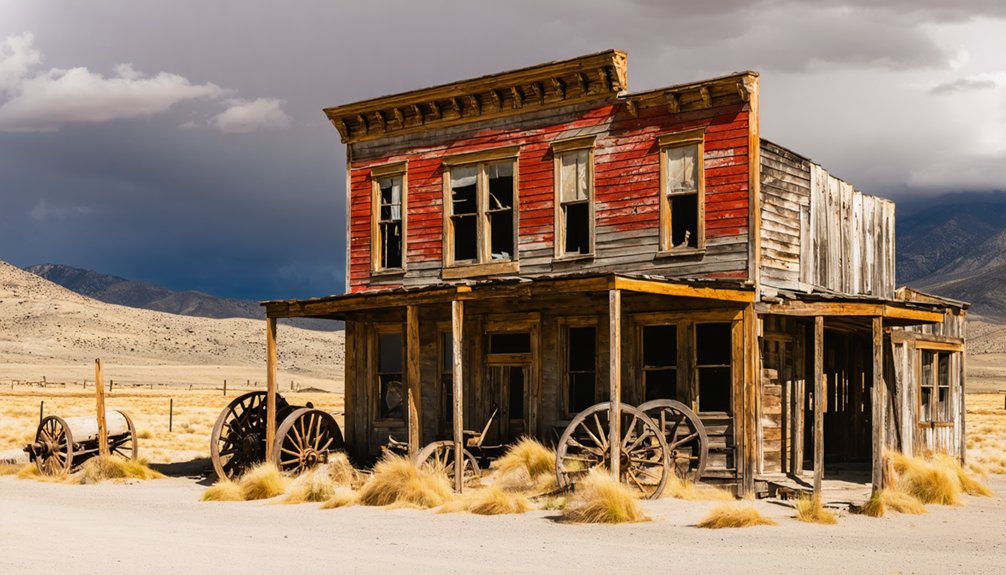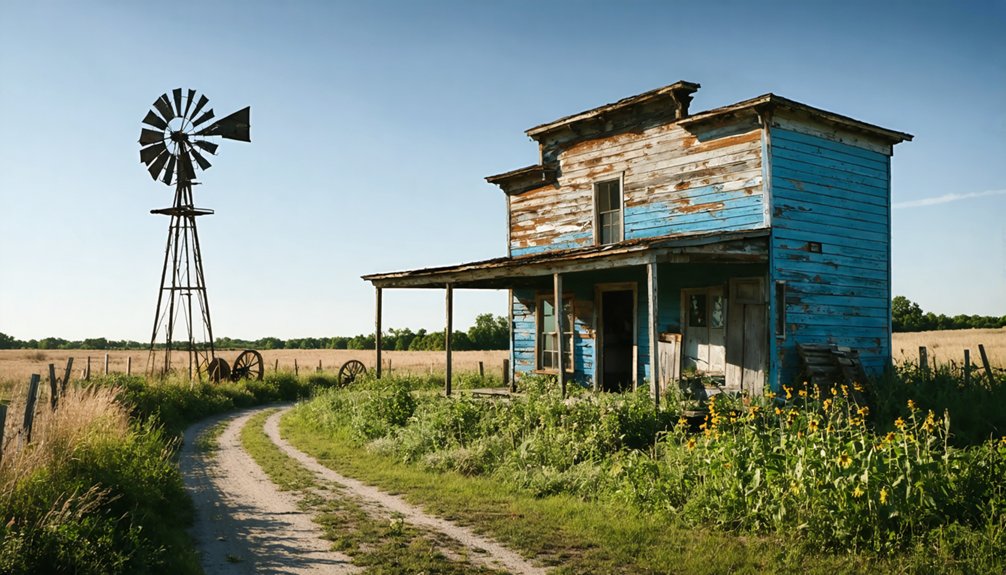
You’ll find haunting remnants of America’s industrial past scattered along the Midwest’s most popular trails, where weathered depot platforms and crumbling smokestacks whisper stories of vanished prosperity. The 63-mile Wabash Trace Nature Trail winds past ghost towns like Strahan, while Michigan’s Keweenaw Peninsula harbors nearly a hundred abandoned copper mining settlements accessible from wilderness routes. These atmospheric ruins, from solitary churches to stamp-sand beaches, offer glimpses into communities that thrived and disappeared, their secrets waiting to unfold.
Key Takeaways
- The 63-mile Wabash Trace Nature Trail in Iowa features ghost towns like Neoga and Strahan with historic depot platforms and markers.
- Michigan’s Keweenaw Peninsula offers nearly 100 abandoned copper mining settlements accessible through established hiking routes and wilderness trails.
- Notable ghost sites include Central Mine with interpretive loops, Cliff Mine overlooking Lake Superior, and Nonesuch Mine in Porcupine Mountains Wilderness.
- Self-guided tours through Delaware Mine’s original shafts and Quincy Mine operations provide immersive experiences of industrial heritage.
- Trail safety requires caution around unstable structures, hidden mine shafts, and contaminated environments while navigating remote ghost town locations.
Vanished Railroad Towns Along the Wabash Trace Nature Trail
As you pedal along the Wabash Trace Nature Trail, you’re retracing the ghostly footsteps of a vanished railroad empire that once thundered through southwestern Iowa’s rolling countryside.
Beneath your wheels lies the haunting echo of steam engines that once ruled these forgotten prairie corridors.
This 63-mile converted rail-to-trail corridor discloses the skeletal remains of forgotten settlements like Neoga and Strahan, where depot platforms crumble beneath prairie grass and rusted boxcars lie scattered along creek beds.
You’ll discover vanished communities through weathered historical markers that whisper tales of bustling grain elevators and Sunday church bells.
In Strahan, only a solitary church stands guard over memories of a once-thriving commercial center.
Near Blanchard, abandoned gas stations and deteriorating farmhouses create an eerie indicator of railroad prosperity’s swift decline.
Each mile reveals another chapter of America’s vanishing small-town heritage.
The trail’s scenic route winds through the ancient Loess Hills, geological formations sculpted by windblown sediments deposited 14,000 years ago during the last ice age. Modern explorers can rent E-bikes at the trailhead to effortlessly navigate this historic corridor while discovering remnants of Iowa’s railroad past.
Copper Boom Settlements of Michigan’s Keweenaw Peninsula
You’ll discover copper mining’s ghostly remnants scattered along the Keweenaw Peninsula‘s winding trails, where rusted headframes pierce through dense forests like skeletal fingers reaching toward gray Michigan skies.
The preserved ruins of once-mighty operations like Quincy Mine and Delaware Mine stand as a testament to an industry that shaped America’s industrial backbone, their weathered structures now accessible through carefully maintained heritage pathways. These sites extracted over 12 billion pounds of native copper from the earth since mining began in earnest during the 1840s.
As you walk these trails, you’re following the same routes where thousands of immigrant miners once trudged to work, their footsteps echoing through time in settlements that thrived for over a century before succumbing to economic reality. Among these forgotten places lies Central, a ghost town that witnessed a dramatic population collapse from 1,300 to 100 residents between its peak in the 1850s and 1905.
Mining Heritage Trail Access
Michigan’s Keweenaw Peninsula stretches into Lake Superior like a weathered finger, its forests concealing the skeletal remains of America’s first great copper rush.
You’ll discover well-marked trailheads within Keweenaw National Historical Park, where parking areas connect you directly to ghostly settlements. The Quincy Mine‘s towering hoist house dominates the landscape, accessible via established visitor routes that showcase historic mining techniques through preserved machinery and underground workings.
Delaware Mine offers you an authentic descent into original shafts, while Central’s restored buildings cluster near interpretive trails.
Cultural heritage preservation efforts have transformed these sites into accessible adventures along existing recreational routes—lakeshore roads, bike paths, and state forest trails. These mining settlements emerged from the Treaty of La Pointe in 1842, when the Ojibwe ceded their mineral-rich ancestral lands to the United States government. The copper industry’s decline left behind extensive stamp sand fields from processing operations, creating the stark industrial landscapes you witness today.
You’re free to explore multiple ghost towns during a single expedition, following marked paths that respect both history and wilderness.
Among these, you will find historic mining towns in Montana that showcase the rich heritage of the gold rush era. Each town tells its own story through preserved buildings and tantalizing ruins, making every stop a journey back in time. As you wander through these remnants, the echoes of the past come alive, inviting you to imagine the lives once lived in these vibrant communities.
Industrial Ruins Preservation Efforts
When preservation efforts began in earnest during the 1980s, Michigan’s Keweenaw Peninsula faced a critical juncture—its industrial heritage crumbling into Lake Superior’s relentless weather while communities grappled with decades of post-mining identity crisis.
You’ll discover how the EPA’s 1986 intervention sparked transformation across this windswept landscape.
Walk through Delaware Mine‘s authentic underground workings, where self-guided tours lead you 100 feet down original shafts through 1700 feet of preserved tunnels. The Quincy Mine Hoist Association now operates “Old Reliable’s” machinery for visitors, while copper mining artifacts tell stories of 7,000 years of extraction—from indigenous stone tools to industrial behemoths. Experienced miners from Cornwall, England brought their expertise to these copper deposits, establishing the technical foundations that made the Keweenaw Peninsula America’s premier copper region.
Today’s Calumet and Keweenaw National Historical Park preserves 400 companies’ legacy across this 50-by-15-mile peninsula, where historical artifacts connect you to America’s copper empire.
Fayette’s Preserved Iron-Smelting Community and Interpretive Trails
Stepping through the towering limestone cliffs that once provided flux for roaring blast furnaces, you’ll discover Fayette’s remarkably preserved iron-smelting community frozen in time along Michigan’s Upper Peninsula shoreline.
You can explore eighteen surviving historic buildings where 500 residents once lived and worked, producing 229,288 tons of pig iron between 1867 and 1891. The stabilized blast furnace complex stands as a symbol of industrial ingenuity, while interpretive signage guides you through the dangerous, sweat-soaked reality of 19th-century iron production.
Fayette preservation efforts have created accessible trails connecting reconstructed charcoal kilns to worker housing and the company store. The town’s essential machine shop served as the operational heart, where skilled machinists like Robert Bassler maintained the furnaces and equipment that kept the entire enterprise running.
You’ll walk the same paths where immigrant families built their lives around the rhythm of furnaces that fed America’s expanding railroads. The Peninsula Railroad, completed in 1864, enabled the vital transport of iron ore from the mines to processing facilities like Fayette.
Mining Ghost Towns Accessible From Long-Distance Hiking Routes
You’ll discover copper-boom ghost towns scattered throughout the Keweenaw Peninsula, where crumbling smokestacks pierce the forest canopy and stamp-sand beaches glitter along remote shorelines accessible only by winding woodland trails.
These industrial graveyards present unique preservation challenges—concrete foundations crack under freeze-thaw cycles while invasive vegetation slowly reclaims massive ore-processing sites that once thundered with machinery. Many communities experienced rapid abandonment during the 1940s as mining operations ceased and families relocated to seek opportunities elsewhere.
When exploring these haunting remnants, you’ll need to navigate carefully around unstable structures and hidden mine shafts that lurk beneath decades of leaf litter and overgrowth.
Copper Boom Ghost Sites
Nearly a hundred abandoned mining settlements dot Michigan’s Keweenaw Peninsula, their copper-stained foundations and crumbling smokestacks beckoning from trailsides where the North Country National Scenic Trail winds through dense hardwood forests.
You’ll discover copper heritage at every turn as weathered headframes pierce fog-shrouded canopies. These ghost sites offer freedom from crowded tourist destinations while connecting you to authentic mining history.
- Central Mine features two short interpretive loops linking cemetery stones to wilderness routes.
- Cliff Mine’s massive concrete foundations tower beside Lake Superior overlooks.
- Nonesuch Mine hides within Porcupine Mountains Wilderness, accessible via backcountry trails.
- Champion Mill’s stamp sand hills create an otherworldly landscape of copper tailings.
- Delaware Mine combines underground tours with surface ruins exploration.
Each site whispers stories of boom-and-bust cycles that shaped Michigan’s Upper Peninsula wilderness.
Industrial Ruins Preservation Challenges
While these copper-stained relics captivate modern trail explorers, preserving mining ghost towns presents a constant battle against time, nature, and neglect.
You’ll discover weathered structures slowly surrendering to Michigan’s harsh winters, their wooden frames groaning under snow loads while foundations crack from freeze-thaw cycles. Historic buildings that once housed bustling communities now stand as skeletal reminders of industrial heritage, their broken windows reflecting empty skies.
Walking through these sites, you’ll notice the delicate balance preservation strategies must strike. Concrete ruins from collapsed grain elevators create hazardous obstacles, while deteriorating mine shafts pose serious safety risks.
Each crumbling wall tells stories of boom-bust cycles, yet protecting this cultural legacy requires careful intervention that respects authenticity while ensuring your safety as you explore these haunting remnants.
Trail Access Safety Considerations
Before you even glimpse the rusted headframes dotting distant ridgelines, accessing these ghost towns demands careful planning that could mean the difference between adventure and disaster.
Trail safety isn’t just about sturdy boots—it’s about understanding what lies beyond the beaten path.
You’ll face unique challenges when venturing off established routes:
- Treacherous approach roads requiring high-clearance vehicles through seasonal washouts
- Private land boundaries where trespassing citations await unprepared explorers
- Communication dead zones demanding offline GPS and emergency beacons
- Unstable mining structures hiding deadly pitfalls beneath weathered facades
- Contaminated environments where toxic residues lurk in seemingly innocent dust
Access regulations exist for reasons written in blood and tragedy.
Respect permits, carry proper navigation tools, and remember—these skeletal remains of ambition can quickly become your own.
Abandoned Lakeshore Industrial Sites and Coastal Settlements
Along the Great Lakes’ windswept shores, you’ll discover the skeletal remains of once-thriving industrial towns that rose and fell with America’s insatiable hunger for timber and iron ore.
At Bay Furnace, abandoned docks stretch into Lake Superior’s depths, where buried timbers emerge from shifting sands like ghostly fingers. You can explore industrial relics throughout Glen Haven and Port Oneida, where dock pilings mark vanished lumber operations within Sleeping Bear Dunes National Lakeshore.
The Keweenaw Peninsula’s Old Abandoned Mill Route circles past deserted stamping mills and forgotten mining towns.
At Torch Lake, contaminated waters tell darker stories—a century of mining waste transformed this pristine lake into an EPA Superfund site, where industrial ruins guard shorelines poisoned by progress.
Former Logging Camps With Short Historical Trail Access
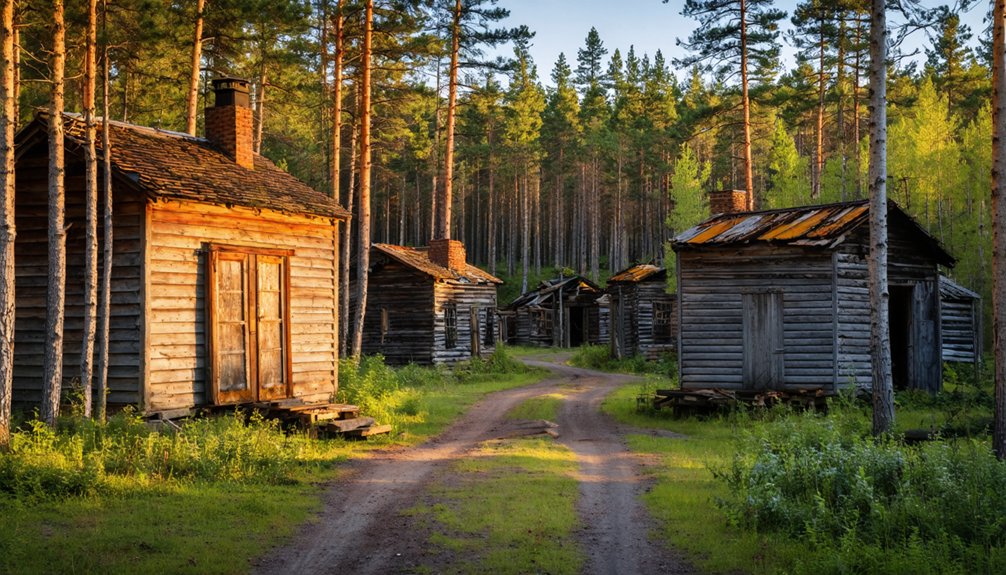
When autumn frost silences the forest, you can still hear echoes of crosscut saws and Shay locomotives where logging camps once carved civilization from wilderness.
These temporary communities vanished decades ago, but interpretive trail features now guide you through their ghostly remains.
Discover logging camp history through accessible trails:
- Wood Lake Loop’s Camp 4 – Follow white blazes past fifteen interpretive signs detailing Rib Lake Lumber Company’s 1906-1910 operations
- Hartwick Pines Museum – Walk among reconstructed bunkhouses and mess halls where Michigan’s lumber barons ruled
- Camp Mercer’s River Drive sites – Find signs marking temporary communities that followed the timber harvest
- Pictured Rocks’ Beaver Lake camp – Explore ice road remnants from 1883-1906 logging operations
- Minnesota’s dismantled winter camps – Trace foundations where lumberjacks gathered seasonally
Planning Your Ghost Town Trail Adventure: Safety and Logistics
As mist clings to abandoned foundations and gravel crunches beneath your boots, proper planning transforms your ghost town adventure from risky wandering into confident exploration.
Trail safety begins with timing—visit during late fall or early spring when vegetation won’t obscure crumbling ruins. You’ll navigate narrow roads like Covered Road to Freda cautiously, where overhanging branches create tunnel-like passages.
Your logistical planning should include checking ferry schedules for North Manitou’s remote villages and securing overnight stays at places like Keweenaw’s Miners Cottage.
Pack essentials for variable terrain, from Nonesuch Mine’s level paths to Lost Valley’s creek crossings. Remember that vault toilets await at Shalda Creek, while Fayette’s preserved structures offer museum access and paranormal encounters that’ll test your nerve.
Preservation Efforts and Volunteer Opportunities at Historical Sites

Behind weathered facades and crumbling stone foundations, dedicated preservationists wage daily battles against time’s relentless advance.
You’ll discover passionate volunteers breathing life back into these forgotten places, employing preservation strategies that transform decay into heritage tourism destinations.
Join these restoration warriors through volunteer programs that offer authentic adventures:
- Document historical structures using photography and archaeological surveys
- Remove invasive vegetation threatening century-old buildings
- Restore original timber frameworks and stone foundations
- Lead educational tours sharing untold stories with visitors
- Participate in hands-on masonry and carpentry workshops
Michigan’s Heritage Restoration Program demonstrates how matching funds create sustainable preservation, while Minnesota’s 55 ghost towns provide endless opportunities.
You’re not just preserving buildings—you’re safeguarding freedom’s frontier legacy for future explorers seeking authentic experiences beyond commercialized attractions.
Frequently Asked Questions
Are Pets Allowed on Ghost Town Interpretive Trails and Historical Sites?
Yes, you’ll find pet policies vary across ghost town interpretive trails. You’re free to explore dog-friendly sites like Ghost Town Trail and Empire Bluff, but always check specific trail regulations before adventuring.
What’s the Best Time of Year to Visit Midwest Ghost Towns?
You’ll find the best seasons are summer and fall for exploring these haunting places. Weather considerations include winter’s harsh conditions blocking trails, while autumn’s golden light transforms abandoned streets into ethereal, fog-kissed corridors of forgotten dreams.
Do Any Ghost Town Sites Offer Overnight Camping or Lodging Options?
You’ll find camping permits available at Fayette Historic State Park’s modern sites, while lodging availability ranges from historic inns marketing paranormal experiences to converted Airbnbs in repurposed town centers throughout the Midwest.
Are Ghost Town Trails Wheelchair Accessible or Suitable for Young Children?
You’ll find surprisingly excellent wheelchair accessibility and child friendly routes at many Midwest ghost town sites! Paved trails with interpretive signs transform spooky adventures into family-friendly explorations where everyone discovers fascinating historical mysteries together.
Can Visitors Metal Detect or Collect Artifacts at Ghost Town Sites?
You can’t metal detect or collect artifacts at most ghost town sites due to strict metal detecting regulations and artifact preservation policies protecting these historical treasures from disappearing into private collections forever.
References
- https://www.backpacker.com/videos-photos/the-best-ghost-town-hikes-in-the-u-s/
- https://www.visitkeweenaw.com/blog/post/our-top-7-keweenaw-ghost-towns-to-explore/
- https://www.youtube.com/watch?v=7-vjuqiGWJU
- https://www.uptravel.com/things-to-do/attractions/fayette-historic-state-park-townsite/
- https://www.wabashtrace.org/trail-history-ghost-towns
- https://www.outsideonline.com/adventure-travel/destinations/haunted-hikes/
- https://www.explore.com/1463125/most-haunted-trails-america-cave-hike-midwest-illinois/
- https://www.tripadvisor.com/Attraction_Review-g28936-d209007-Reviews-Wabash_Trace_Nature_Trail-Iowa.html
- https://en.wikipedia.org/wiki/Wabash_Trace
- https://www.traillink.com/trail-history/wabash-trace-nature-trail/