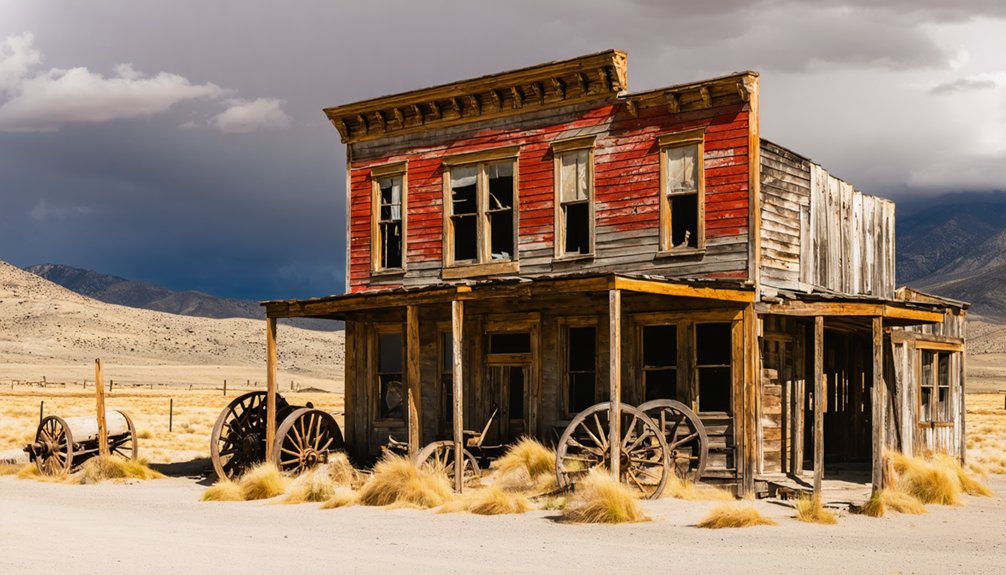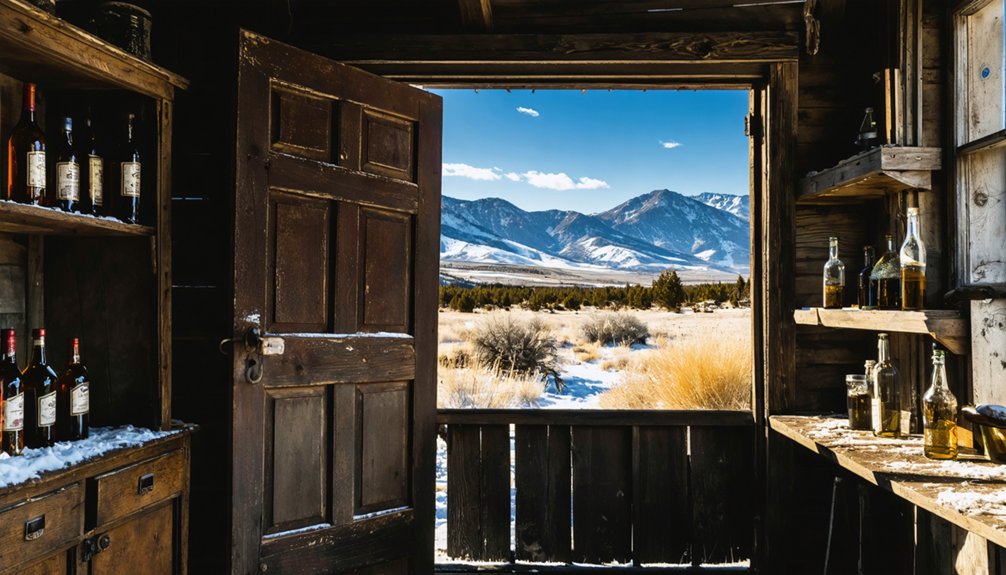
You’ll find five legendary ghost towns positioned along the Mountain West’s most traveled trails, where 19th-century mining booms created preserved settlements perfect for wilderness adventures. South Pass City sits on the historic Oregon Trail, while Virginia City offers entry to Yellowstone backcountry within 20 miles. Garnet features 80 original structures with surrounding wilderness trails, St. Elmo maintains 43 buildings at 10,000 feet elevation, and Bodie preserves authentic Wild West architecture. These historic waypoints provide strategic access to premier wilderness areas and backcountry exploration opportunities.
Key Takeaways
- South Pass City sits along the historic Oregon Trail at 7,400 feet, offering access to wilderness hiking and emigrant history.
- Virginia City provides 150 preserved buildings within 20 miles of Yellowstone backcountry trails and alpine adventures.
- Garnet features 80 original structures with over 30 miles of designated backcountry roads and nearby wilderness study areas.
- St. Elmo maintains 43 authentic buildings at 10,000 feet elevation in Colorado’s Sawatch Range with surrounding mountain trails.
- Bodie’s 170 remaining structures serve as basecamp for Sierra alpine hikes and technical backcountry route exploration.
South Pass City: Oregon Trail Heritage Meets Gold Rush History
Nestled in a small valley along Willow Creek’s banks at 7,400 feet elevation, South Pass City represents where Oregon Trail heritage intersects with Wyoming’s gold rush history.
You’ll find this ghost town ten miles north of the famous trail route, where 350,000-500,000 emigrants crossed the Continental Divide’s gentlest passage between 1841-1869.
The gold discovery in summer 1867 by Mormon prospectors transformed this quiet waystation into Wyoming Territory’s second-largest settlement.
Within a year, over 1,000 fortune-seekers had established 250 buildings and hundreds of claims around the rich Carissa Mine. South Pass City made history when it became the women’s suffrage birthplace, as William Bright introduced Wyoming’s groundbreaking bill granting women voting rights in 1869.
The town’s rapid decline began in the early 1870s, with the 1900 census recording only 142 residents remaining from its once-thriving population.
Though the boom quickly busted, the mining legacy endures through 23 original structures and 30,000 artifacts preserved as Wyoming’s State Historic Site since 1966.
Virginia City: Montana’s Territorial Capital Near Yellowstone
Perched at 5,804 feet in southwestern Montana’s rugged mountains, Virginia City stands as the state’s most significant territorial ghost town, where gold rush fortune and political power converged along the historic routes to Yellowstone.
When prospectors struck gold in Alder Gulch in 1863, you’d witness a boomtown explode from wilderness to 10,000 residents within months. Virginia City became Montana’s Territorial Capital in 1865, hosting the legislature for a decade while serving as the region’s political and social hub.
You’ll find 150 authentic buildings preserved today, certified by Montana’s Historical Society. The town featured a diverse community including Euroamericans, Chinese, Lemhi Shoshone, Mexicans, and African Americans who contributed to its bustling frontier society. Though Helena’s gold discovery triggered the town’s decline by 1875, Virginia City’s restoration as a National Historic Landmark lets you experience authentic frontier governance and mining culture. The historic Opera House continues to showcase Virginia City Players’ productions as part of the oldest continuously operating summer stock theater west of the Mississippi.
Garnet: Remote Mining Town Adventure in the Montana Wilderness
You’ll discover one of Montana’s best-preserved ghost towns at Garnet, where over 80 original structures from the 1890s gold boom remain standing in the remote Garnet Mountains.
The town’s authentic mining-era buildings offer you an unrestored glimpse into frontier life, while surrounding wilderness trails connect you to mine workings, scenic overlooks, and rugged backcountry exploration.
Your adventure requires traversing forest roads or hiking approaches through pine-covered terrain, making Garnet both a historical destination and a true wilderness experience. The community once supported nearly 1,000 residents at its peak in the 1890s, creating a bustling mountain town complete with families, schools, and social gatherings. The prosperous settlement featured thirteen saloons alongside four hotels and stores, reflecting the rough-and-tumble nature of frontier mining life.
Preserved Mining Town History
When Dr. Armistead Mitchell erected his stamp mill in 1895, he unknowingly created what would become Montana’s best-preserved ghost town.
You’ll discover Garnet’s preserved architecture spanning the 1895-1948 era, with over 30 original cabins and buildings standing proof of boom-and-bust cycles. The town’s mining techniques evolved from simple placer methods using panning and sluice boxes to hard rock operations after silver markets collapsed in 1893.
You can explore structures that housed nearly 1,000 residents at Garnet’s 1898 peak, including remnants of 13 saloons and multiple hotels. The town sits at an elevation around 6,000 feet above sea level, making it accessible from May through mid-December before winter conditions require skis or snowmobiles for entry. The town was originally called Mitchell, renamed to Garnet in 1897.
Listed on the National Register of Historic Places in 2010, the Bureau of Land Management maintains this 80-plus structure district. Each building tells stories of miners who chased freedom through gold strikes, abandoning corporate constraints for wilderness opportunities.
Wilderness Recreation Opportunities
Beyond the preserved buildings and mining history, Garnet’s 6,000-foot elevation in Montana’s wilderness opens access to extensive backcountry recreation spanning multiple seasons.
You’ll discover wilderness exploration opportunities through self-guided trails starting from the parking area, including the 1.5-mile Warren Park Trail leading to historic cabins and natural mountain springs. The nearby Wales Creek Wilderness Study Area encompasses 11,580 acres of pristine hiking terrain just ten miles away.
The town’s restoration began in 1970 with public donations of $90,000 worth of artifacts helping preserve this historic mining community.
Garnet’s recognition by Travel + Leisure as one of America’s coolest ghost towns reflects its exceptional preservation and unique historical significance in the American West.
- Summer Adventures: Over 30 miles of BLM-designated backcountry roads and trails for OHV riding, plus handicapped-accessible facilities
- Winter Recreation: Snowmobile and cross-country ski access with cabin rental options during road closures (January-April)
- Year-Round Outdoor Activities: Self-guided interpretive trails, picnic areas, and remote camping opportunities in Powell County’s rugged landscape
St. Elmo: Colorado’s Haunted Boomtown in the Collegiate Peaks
You’ll discover St. Elmo’s remarkable preservation as Colorado’s best-maintained mining town, where 43 original structures from the 1880s gold and silver boom still line Main Street at nearly 10,000 feet elevation.
The town’s accessible location via the Poplar Gulch Trail and former Denver, South Park & Pacific Railroad grade makes it a premier destination for exploring authentic Victorian-era storefronts, hotels, and mining infrastructure.
Local folklore surrounding the Stark family and reported supernatural encounters has cemented St. Elmo’s reputation as one of the West’s most haunted ghost towns, with visitors frequently documenting unexplained phenomena along the historic boardwalks.
Historic Gold Mining Legacy
Perched at nearly 10,000 feet in Colorado’s Sawatch Range, St. Elmo represents one of America’s most authentic gold mining legacies.
You’ll discover a town that transformed from Forest City in 1880 into a bustling mining hub with 1,500-2,000 residents extracting gold and silver from over 150 patented claims. The Denver, South Park & Pacific Railroad connected this remote operation to outside markets, enabling the boom that created saloons, hotels, and dance halls.
Today, you’re witnessing exceptional historic preservation efforts. The Stark family’s decades-long stewardship saved 43 original structures from decay, earning National Historic District status in 1979.
- Mining operations peaked in the late 1800s with extensive gold and silver extraction
- Railroad closure in 1922 triggered rapid population decline
- Private ownership prevented demolition and tourist exploitation
Poplar Gulch Trail Access
After exploring St. Elmo’s weathered structures, you’ll find the Poplar Gulch Trail #1436 begins just north of town on the Tincup Pass approach.
Your trailhead access requires traversing rough dirt roads and a short 4WD spur to reach the small parking area 0.2 miles up from the old trail start. You can approach via 16 miles north from Salida or 8 miles south from Buena Vista, then west into St. Elmo.
The elevation challenges start immediately at over 10,000 feet, demanding proper acclimatization before tackling this 4.2-mile round trip.
June through October provides your best access window, as high-elevation snow blocks spring and late-fall attempts on this San Isabel National Forest trail.
Ghostly Boardwalk Encounters
St. Elmo’s ghostly legends center around Annabelle Stark, whose family remained as the town’s sole year-round residents after the mining decline.
You’ll discover spectral sightings tied to the eccentric Stark children and their mother, who maintained the general store and tourist cabins for decades. Local accounts describe hotel room doors slamming shut, temperatures dropping twenty degrees suddenly, and children fleeing in terror after Annabelle’s death.
The Stark family’s presence shaped this haunted reputation at 9,961 feet elevation in the Sawatch Range:
- Victorian-era spirits reportedly patrol storefronts and town boundaries
- Annabelle Stark allegedly maintains her ghostly watch over Main Street
- Spectral encounters enhance tourism to Colorado’s best-preserved ghost town
These supernatural tales complement St. Elmo’s authentic Wild West atmosphere along its historic boardwalks.
Bodie: California’s Authentic Gold Rush Preservation
When William S. Bodey discovered gold near Bodie Bluff in 1859, he couldn’t have imagined the authentic preservation you’ll witness today.
Though Bodey died in a blizzard months after his discovery, Bodie history unfolded dramatically when the Standard Company struck rich veins in 1876.
You’ll explore a boomtown that swelled from dozens to 10,000 residents by 1879, where advanced mining techniques extracted over $30 million in gold by 1942.
Walking through California’s official State Gold Rush Ghost Town, you’ll experience “arrested decay” preservation at its finest.
The devastating 1932 fire that destroyed most structures ironically created today’s authentic snapshot.
You’ll find 170 remaining buildings frozen in time, including the Boone Store and Miners Union Hall, representing genuine Wild West freedom.
Panamint City: Death Valley’s Hidden Backcountry Challenge
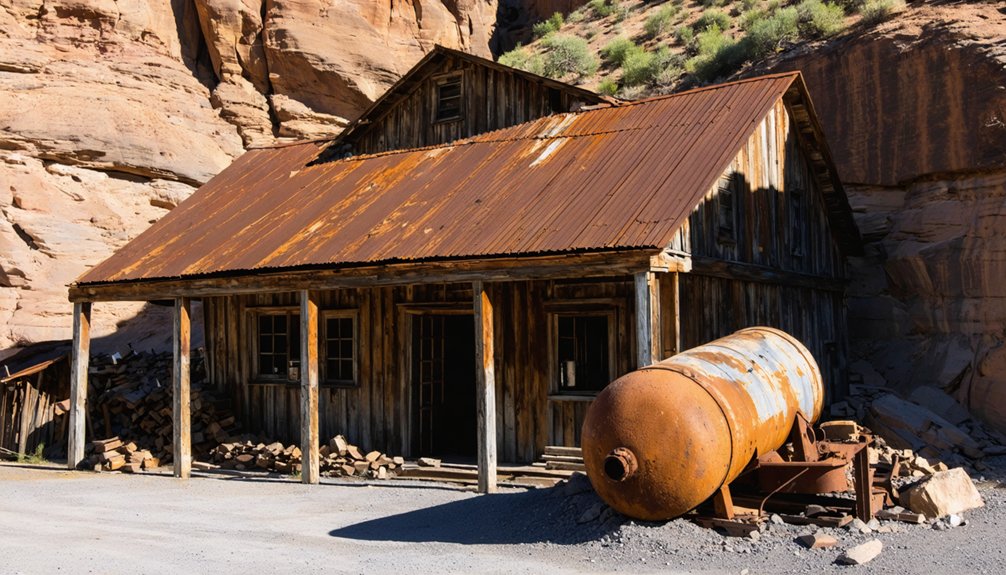
Deep within Death Valley’s remote Panamint Range, you’ll discover one of the West’s most inaccessible ghost towns, where silver-crazed prospectors and desperate outlaws carved out Panamint City in 1873.
This silver-mining settlement stretched nearly one mile along Surprise Canyon, reaching 2,000 residents by 1874 before Black Friday’s economic collapse ended the boom.
Today’s hiking challenges mirror the town’s legendary inaccessibility. You’ll face a strenuous five-mile backcountry trek through rugged terrain that once deterred all but the most determined fortune-seekers.
The five-mile wilderness trek to Panamint City remains as unforgiving as it was during the lawless 1870s silver rush.
- Over 50 shootings occurred during the town’s brief existence
- Main street featured 50 buildings including 12+ saloons and a brewery
- Only crumbling foundations and an 1875 smokestack remain today
Your reward? Experiencing authentic Wild West isolation where lawlessness once ruled.
Trail Access and Hiking Difficulty Levels for Each Destination
Planning your ghost town adventure requires understanding the wide spectrum of hiking challenges these destinations present.
Exploring abandoned places along Appalachian Trail can reveal fascinating stories of the past, as well as breathtaking views that often go unnoticed by the average hiker. Each location holds a unique history, offering a glimpse into the lives of those who once thrived in these now-silent spots. As you navigate the rugged terrain, be prepared for both the physical and emotional challenges that come with uncovering these hidden gems.
You’ll find easy options like Virginia City’s paved streets and Yankee Fork’s interpretive trails, perfect for casual exploration.
Monte Cristo demands more commitment—four miles on flood-damaged roadway with log crossings and route-finding challenges. Trail safety becomes critical here, especially crossing Mountain Loop Highway’s fast traffic.
Garnet offers moderate difficulty with 500-foot elevation gain over three miles, while backcountry extensions into surrounding ranges turn strenuous.
Practicing proper hiking etiquette means respecting abandoned structures and avoiding unstable buildings with protruding nails.
You’ll encounter surfaces ranging from maintained paths to technical boot-beaten routes.
Seasonal considerations affect access—high-elevation approaches remain snow-blocked into summer, limiting your exploration window considerably.
Best Seasons and Weather Considerations for Ghost Town Exploration

Although weather patterns vary considerably across ghost town locations, your exploration success depends heavily on choosing the right season for each destination.
Summer months from June through August deliver ideal conditions for high-elevation sites like Garnet and St. Elmo, ensuring clear roads and mild temperatures.
Fall brings exceptional opportunities with warm sunshine illuminating High Sierra locations and peak aspen coverage creating dramatic backdrops for your adventures.
Winter transforms accessibility completely—snow renders many roads impassable at Bodie while Garnet requires snowmobiles or cross-country skis for access.
- Summer advantage: Clear roads, mild weather, and special events like Gold Rush Days in July
- Fall benefits: Warm sunshine, peak foliage, and enhanced spooky atmosphere
- Winter challenges: Snow-blocked access requiring specialized equipment and advanced weather preparation
Ghost town seasons demand strategic planning for maximum exploration freedom.
Essential Gear and Preparation for Remote Historical Sites
Three critical gear categories separate successful ghost town explorers from those who face dangerous situations or missed opportunities in remote historical sites.
Your safety kits must include thorough first-aid supplies, emergency communication devices beyond cellphones, and navigation tools with offline capabilities. You’ll need cut-resistant gloves, dust-rated respirators, and eye protection when entering deteriorating structures.
Lighting gear essentials require primary and backup illumination—headlamps, flashlights, and portable LED panels for documenting interiors safely.
Don’t forget helmets and sturdy footwear with puncture-resistant soles for unstable terrain.
Documentation equipment should include weather-resistant cameras, archival storage materials, and field notebooks.
Pre-downloaded historical maps and property status printouts prove invaluable for research verification.
Multi-tools, spare batteries, and weatherproof storage complete your essential preparation for these remote historical adventures.
Combining Ghost Town Visits With Nearby Outdoor Activities
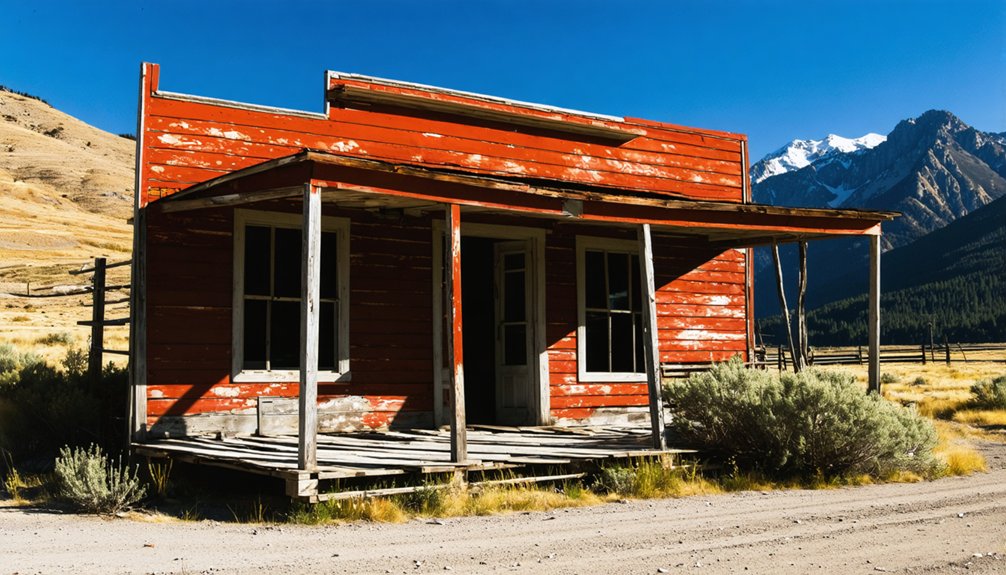
When you combine ghost town exploration with outdoor recreation, you’ll discover that many preserved sites serve as perfect basecamp locations for multi-activity adventures.
Bodie’s 100+ structures pair excellently with Sierra alpine hikes, while Grafton offers seamless access to Zion’s canyon trails. Virginia City puts you within 20 miles of Yellowstone backcountry, and Yankee Fork borders the Frank Church Wilderness.
Historic ghost towns unlock access to America’s premier wilderness areas, transforming abandoned settlements into strategic launching points for backcountry exploration and multi-day adventures.
- Short interpretive trails (0.5-3 miles) loop through preserved buildings, perfect for ghost town photography and historical storytelling.
- Moderate singletrack within 20 minutes enables quick shifts from touring to cardio activities like trail running.
- Technical backcountry routes incorporate ghost towns as waypoints for overnight adventures in extreme locations.
Plan around seasonal constraints—summer peaks for high-elevation sites, shoulder seasons for desert locations.
Respect preservation rules and wildlife closures.
Frequently Asked Questions
Are Pets Allowed at These Ghost Town Sites and Nearby Trails?
Like a loyal companion on an adventure, your pet’s trail access depends on the land’s guardian. Pet regulations vary widely—you’ll find freedom on BLM lands but restrictions in national parks and state-managed ghost towns.
What Are the Entrance Fees and Operating Hours for Each Location?
Franklin, Wellington, and Liberty ghost towns don’t charge entrance fees and aren’t restricted by operating hours—you’re free to explore anytime. However, Bodie costs $10 for adults with 9 AM-6 PM hours.
Can I Camp Overnight at or Near These Ghost Town Sites?
You can’t exactly livestream your camping experience everywhere—camping regulations vary drastically by land ownership. Check BLM dispersed rules, state park restrictions, and local wildlife warnings before pitching your tent near these historic sites.
Are Guided Tours Available or Is Exploration Strictly Self-Guided?
You’ll find guided exploration at all these locations. Goldfield offers walking ghost tours, Museum of the Mountain West provides guided walks, Vail features jeep tours, and Old Trail Town offers historical tours—no strictly self guided tours.
What Photography Restrictions Exist at These Historic Preservation Sites?
Despite seeming overly restrictive, you’ll need photography permits at most sites, with flash restrictions protecting fragile interiors. Tripods remain generally allowed, though professional shoots require advance management approval at preserved locations.
References
- https://www.backpacker.com/videos-photos/the-best-ghost-town-hikes-in-the-u-s/
- https://familytraveller.com/usa/national-parks/american-west-ghost-towns/
- https://www.youtube.com/watch?v=WCbhdQVaWA4
- https://www.tripadvisor.com/Articles-loOISRppph64-American_ghost_towns.html
- https://explorethearchive.com/western-ghost-towns
- https://backpackinglight.com/forums/topic/88131/
- https://www.outsideonline.com/adventure-travel/destinations/haunted-hikes/
- https://www.legendsofamerica.com/wy-southpasscity/
- https://westernmininghistory.com/towns/wyoming/south-pass-city/
- https://www.nps.gov/places/000/south-pass.htm