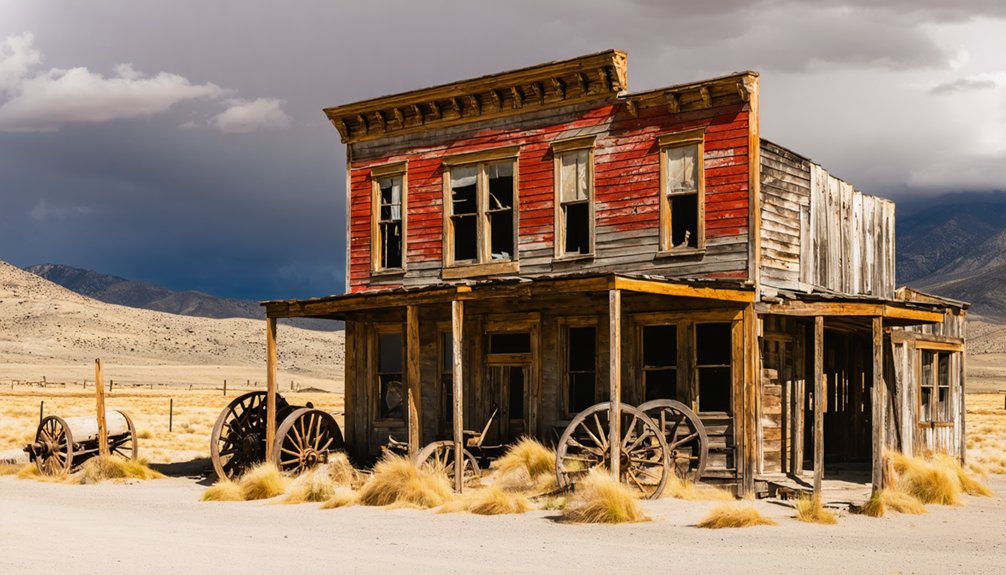
You’ll find numerous ghost towns along Northeast hiking trails, from Batsto Village’s preserved 1766 iron works in New Jersey’s Pine Barrens to abandoned mining camps scattered throughout the Appalachian Trail’s ridgeline sections. Stone foundations mark former homesteads in Pennsylvania’s Allegheny National Forest, where timber companies once stripped the land bare. Trail difficulty varies dramatically—Weymouth Furnace offers easy walks while Dogtown, Massachusetts presents dangerous ledges. These historical remnants hold deeper stories about America’s forgotten industrial heritage.
Key Takeaways
- The Appalachian Trail provides established access to abandoned Northeast settlements and mining camps along ridgeline routes.
- Allegheny National Forest’s 513,175 acres contain stone foundations and old logging roads connecting vanished mill towns and homesteads.
- Batsto Village and Eckley Miners Village offer preserved ghost town experiences with historical reenactments and 1800s artifacts.
- Trail networks at Estell Manor (18 miles) and Little River combine ghost town exploration with scenic overlooks.
- Winter months provide optimal visibility for discovering artifact zones and foundation patterns near established hiking trails.
Preserved Villages With Museum Experiences
While most ghost towns exist as crumbling ruins reclaimed by nature, several Northeast settlements have been carefully preserved as living museums that transport visitors back in time.
You’ll discover authentic experiences at Batsto Village, where you can mail letters through their operational post office and explore the 1766 iron works that supplied the Continental Army.
At Eckley Miners Village, you’ll witness historical reenactments showcasing European immigrant life in Pennsylvania’s coal country. This settlement was established in 1854 to house workers in the thriving coal mining industry.
Village artifacts from the 1800s glassblowing era await your examination at Batsto’s preserved mansion and workshops. These preserved structures help maintain cultural heritage while serving as reminders of economic booms and busts throughout the region’s industrial past.
These sites offer you unrestricted exploration opportunities, allowing you to freely wander through authentic structures while experiencing Northeast America’s industrial heritage firsthand.
Hidden Settlements in State and National Forests
Pennsylvania’s Allegheny National Forest, covering 513,175 acres, emerged from tax-delinquent lands where families once lived.
Corporate timber companies stripped forests bare, then fled west for fresh timber, leaving behind degraded soils and exposed bedrock where settlements had flourished. The mid-19th century marked the peak of this devastating land clearance across the region.
Industrial loggers devastated entire landscapes before abandoning them, leaving scarred earth where thriving communities once called home.
- Stone foundations mark former homesteads swallowed by regenerating forests
- Old logging roads reveal routes between vanished mill towns and worker camps
- Cemetery plots persist as lonely monuments to displaced families
- Rusted machinery fragments indicate where sawmills and settlements operated
The federal government acquired these abandoned lands through the Weeks Act of 1911, which authorized purchases for National Forest establishment across the region.
Mountain Ghost Towns and Mining Camps
Beyond the lowland timber settlements, the Northeast’s mountain ranges harbor dozens of abandoned mining camps where 19th-century prospectors chased copper, iron, and gold deposits through Vermont’s Green Mountains, New Hampshire’s White Mountains, and New York’s Adirondacks.
You’ll discover collapsed stamp mills, tailings piles, and stone foundations along ridgeline trails where boom-bust cycles played out between the 1850s-1890s. These operations typically lasted 10-40 years before ore depletion or price collapse forced abandonment.
When exploring abandoned mines, you’ll find historical artifacts scattered among charcoal pits and furnace ruins. Some mountain ghost towns like Glastonbery Mountain in Vermont are now associated with mysterious disappearances that have become part of local folklore. Similar to the Southwest, many of these sites contain mining equipment remnants that tell the story of extractive industries that once thrived in remote locations.
Exercise caution around unstable ground and collapsed structures. Many sites require route-finding skills on steep slopes, and several fall within state forests subject to historic preservation restrictions that protect these fragile archaeological remnants.
Trail Difficulty and Distance Planning
When planning your ghost town expeditions, you’ll need to assess trail difficulty based on terrain, distance, and accessibility to match your hiking experience and available time.
Trail length varies greatly across Northeast ghost towns, from Weymouth Furnace‘s short walks to Estell Manor’s 18-mile network. Terrain type ranges from paved access at Weymouth to boulder fields and dangerous ledges at Dogtown Massachusetts.
Monson Village offers moderate 2.5-mile loops rated for 1-2 hours, while Little River’s extensive trails combine historical exploration with scenic overlooks. Sites like Smithville now function as county parks with factory building remains and dedicated museum facilities for visitors. The Appalachian Trail provides excellent access to abandoned settlements, allowing hikers to discover historical remnants while following established trail systems.
- Beginner-friendly: Weymouth Furnace provides paved access with minimal walking distance
- Intermediate exploration: Monson Village’s flat loops through varied landscapes offer manageable challenges
- Advanced terrain: Dogtown’s boulder fields and climbing opportunities require experienced hikers
- Extended adventures: Estell Manor’s 18-mile trail system accommodates full-day expeditions
What Remains: Foundations, Cellars, and Cemeteries
You’ll encounter distinct stone foundation patterns that reveal the original layout of vanished settlements, with rectangular cellar holes and linear wall formations marking where homes, barns, and commercial buildings once stood.
These structural remnants create concentrated artifact zones within hiking distance of trailheads, particularly visible during winter months when reduced vegetation exposes stonework and foundation steps. Some locations like Monson Village feature informational plaques that help visitors understand the historical significance of the ruins they’re exploring.
The small family cemeteries that often survive near these sites face ongoing preservation challenges from weathering and vandalism, though they provide the most reliable chronological evidence of the communities that once thrived here. Many of these abandoned settlements emerged during periods of economic growth tied to specific industries like logging, mining, or agriculture before experiencing economic decline that led to their eventual abandonment.
Stone Foundation Patterns
Scattered across northeastern woodlands, thousands of stone foundations mark where entire communities once thrived before economic shifts and westward migration emptied these settlements by the late 1800s.
These foundation characteristics reveal distinct patterns that help you identify what once stood. Rectangular cellar holes with hearth stones indicate former homesteads, while heavier rubble foundations near streams mark mill sites. Agricultural outbuildings left subsurface stone-lined pits and low walls.
The historical significance becomes clear when you recognize clustered foundations along old road traces—these mark dissolved Main Streets of vanished villages.
- Fieldstone construction reflects local geology and available materials from glacial deposits
- Dry-stacked walls persist longer than wooden superstructures, creating lasting landscape markers
- Linear foundation arrangements follow former settlement axes and transportation routes
- Cut-stone foundations indicate wealthier homesteads or important community buildings
Cemetery Preservation Challenges
While stone foundations endure for centuries, the cemeteries of abandoned northeastern settlements face constant threats that steadily erase these final traces of vanished communities.
You’ll find tombstones toppled by vandals, severed marble markers broken repeatedly, and graves obscured by aggressive vegetation like sumac and wild roses that spread underground. Harsh New England weather and acid rain accelerate deterioration, while poison ivy complicates cleanup efforts.
Neglect consequences compound when families scatter and funding disappears. Towns struggle prioritizing inactive sites against municipal needs, leaving grave marker restoration to volunteers and community groups.
Development pressures threaten sacred spaces as land values rise. Without archaeological oversight, graves get disturbed during construction. GoFundMe campaigns and scout troops now preserve what governmental resources can’t protect in these forgotten burial grounds.
Access Rules and Safety Considerations
Before exploring abandoned settlements in the Northeast, you must navigate complex ownership patterns and access restrictions that can turn a simple hike into a legal nightmare. Many ghost towns sit on private property requiring explicit landowner permission, while others span federal refuges or tribal lands with strict permit requirements.
Safety precautions become critical when approaching these sites, as unmaintained access roads often need high-clearance vehicles and seasonal closures protect wildlife or prevent soil damage.
Accessing abandoned settlements requires high-clearance vehicles due to deteriorated roads and seasonal restrictions that protect local ecosystems.
Historic structures pose serious hazards—unstable foundations, hidden wells, and mine shafts create deadly traps. You’ll face prolonged emergency response times in remote locations, making proper preparation essential.
- Verify current land ownership and obtain written permits before entry
- Check seasonal road closures and wildlife protection restrictions
- Carry emergency communication devices for remote areas
- Never enter historic structures or use them for gear anchoring
Separating History From Local Legends

Once you’ve gained legal access to these abandoned settlements, you’ll encounter a maze of folklore that often obscures the documented historical record. Gay City’s reputation for brawling and murder stories circulated long after documented causes—mill fires in 1830, Civil War casualties, and economic collapse—drove residents away.
Historical accuracy requires separating verified mill failures from sensationalized tales of feuds.
Livermore’s abandonment follows a clear timeline: 1920s flooding destroyed the Saunders family’s mill operations, leading to charter revocation by 1951. You won’t find ghost stories here, just visible ruins and economic reality.
Myth debunking reveals Northeast ghost towns typically died from natural disasters, exhausted resources, or infrastructure projects like Wilder Dam flooding Lewiston in 1950. Local records document mills, wars, and floods—not supernatural causes.
Frequently Asked Questions
Can I Camp Overnight Near Ghost Town Sites on Multi-Day Hiking Trips?
You can camp near ghost towns if you’ve secured proper overnight permits and followed local camping regulations. Check with land management agencies first, as federal wilderness areas and historic sites often restrict backcountry camping.
Are Dogs Allowed on Trails Leading to Abandoned Settlement Areas?
Your four-legged companions can blaze trails to most abandoned settlements, but you’ll need proper dog trail etiquette and must check specific ghost town regulations since some historic sites restrict access.
What’s the Best Time of Year for Wildflower Photography at Ghost Towns?
You’ll find ideal wildflower seasons from late April through early July across Northeast ghost towns. Photography tips include targeting alpine zones peaking into July and coastal areas extending through August for diverse blooms.
Do Any Ghost Town Trails Connect to Longer Distance Hiking Routes?
Most ghost town trails don’t directly connect to major long-distance routes like the Appalachian Trail. You’ll find these sites embedded within state park systems, offering historical significance through local trail connections rather than thru-hiking integration.
Among the lesser-known treasures are the ghost towns in the Pacific Northwest, where remnants of bygone eras tell stories of resilience and change. Exploring these sites often reveals striking landscapes, from lush forests to rugged coastlines, further enhancing the adventure. Each visit offers a unique glimpse into the region’s rich history and the lives that once thrived in these now-abandoned places.
Are There Guided Ghost Town Tours Available During Peak Foliage Season?
You won’t find guided tours during foliage season at these Northeast ghost towns. Instead, you’ll explore independently through self-guided hikes, museum visits, and driving tours at your own pace through fall colors.
References
- https://nothingbutnewengland.com/new-hampshires-haunted-hikes/
- https://sweptawaytoday.com/2023/08/04/hiking-to-a-mining-ghost-town-in-mayflower-gulch-is-1-of-colorados-best-hikes-for-families/
- https://southjerseytrails.org/2017/03/16/six-pine-barrens-ghost-towns-to-explore/
- https://earlybirdonthetrail.com/haunted-hikes-in-connecticut/
- https://www.youtube.com/watch?v=Hhjm0NhM9HM
- https://vermontcountry.com/2022/09/18/ghost-town/
- https://www.vftt.org/threads/does-anyone-know-of-any-hikes-that-include-a-ghost-town.16760/
- https://www.youtube.com/watch?v=MAMJzdVDCFI
- https://www.outsideonline.com/adventure-travel/destinations/haunted-hikes/
- https://www.mentalfloss.com/geography/american-ghost-towns-can-still-walk-through