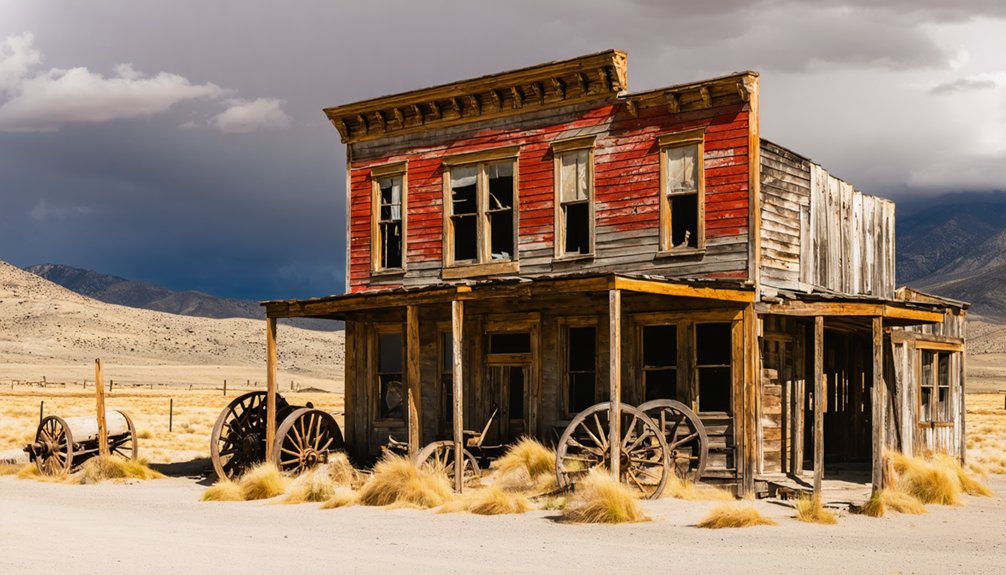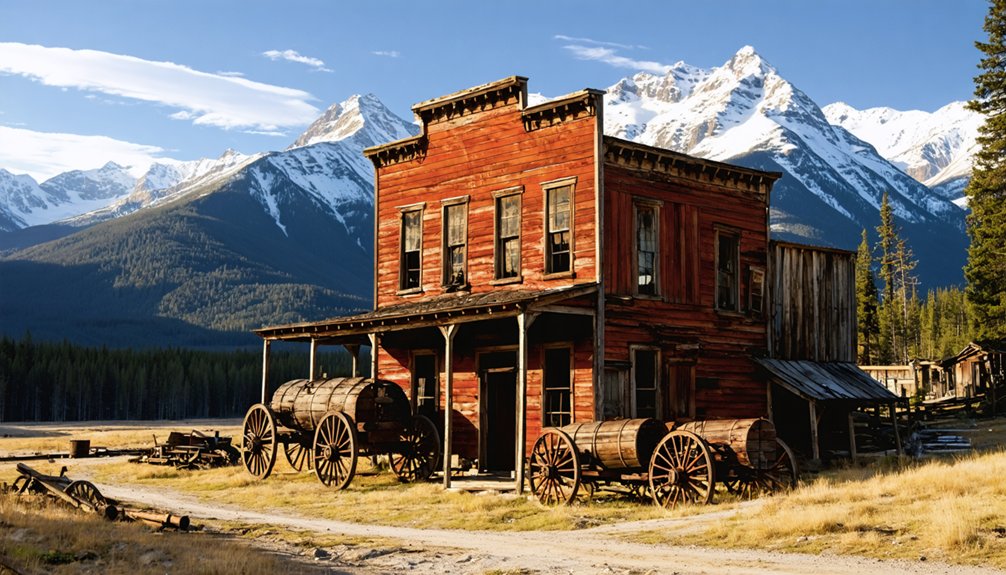
You’ll find incredible ghost town experiences along established Rocky Mountain trails, from the Walker Home ruins on Mount Falcon’s well-marked paths to the high-altitude mining cabins at Mayflower Gulch. Popular destinations include Ironton Townsite off the Million Dollar Highway, Lulu City within Rocky Mountain National Park, and the historic Dearfield Settlement. These sites offer safe access through maintained trail systems while showcasing Colorado’s mining and pioneering heritage. Each location provides unique insights into the region’s fascinating abandoned communities and their compelling stories.
Key Takeaways
- Walker Home Ruins on Mount Falcon offers well-marked trails to haunting stone remnants with commanding Denver views.
- Mayflower Gulch provides a 3-mile round-trip hike to preserved Boston Mine camp remains at 10,996 feet elevation.
- Lulu City within Rocky Mountain National Park requires a three-mile hike from Colorado River Trailhead through scenic terrain.
- Ironton Townsite sits accessible off US-550’s Million Dollar Highway, showcasing preserved 1880s mining heritage and original structures.
- Dearfield Settlement represents Colorado’s largest Black homesteading community, though currently under National Park Service preservation study.
Walker Home Ruins: Lightning-Struck Castle Remnants in Mt. Falcon Park
Perched high on Mount Falcon’s ridge, the haunting stone ruins of John Brisben Walker’s mansion emerge from the landscape like ancient castle walls.
You’ll discover these architectural remnants along well-marked trails accessed from Mount Falcon West Parking lot. Walker’s elaborate 1909 craftsman chalet featured ten bedrooms, eight fireplaces, and a three-story turret built by Italian stonemasons using local red sandstone.
Italian stonemasons carved Walker’s magnificent 1909 chalet from local red sandstone, creating ten bedrooms, eight fireplaces, and an impressive three-story turret.
The mansion’s haunted history began when Walker’s wife Ethel died in 1916, followed by lightning striking the structure in 1918, destroying it completely. Walker had built this grand estate for his second wife, Ethel Richmond Walker, after establishing himself as a prominent developer and entrepreneur. Before relocating to Colorado, Walker edited Cosmopolitan magazine and invested in the early automobile industry.
Today, you’ll find stark stone ribs and rambling remnants offering commanding views of Denver and the Rockies. Stay on designated trails when exploring this preserved Jefferson County Open Space site.
Dearfield Settlement: Preserved African American Pioneer Community in Weld County
Thirty miles east of Greeley, you’ll find the weathered remnants of Dearfield, Colorado’s largest Black homesteading settlement and a remarkable symbol of African American pioneer determination. Founded in 1910 by Oliver Toussaint Jackson, this community once housed 200-300 residents who transformed 15,000 acres of challenging high plains into productive farmland.
When exploring Dearfield history, you’ll discover how African American pioneers overcame racial barriers to create a thriving agricultural town worth over $1 million by 1921. They mastered dry farming techniques, built 44 wooden cabins, and established businesses including hotels and restaurants. The settlement also featured two churches that provided regular services to the growing community.
Today, you can walk among foundation remnants and imagine the vibrant community that provided freedom from discrimination. The town’s decline began during the Great Depression when agricultural challenges forced many families to seek opportunities elsewhere. The National Park Service is studying Dearfield for potential national park designation, preserving this legacy of pioneer resilience and self-determination.
Ironton Townsite: Accessible Mining Camp Ruins Near Million Dollar Highway
While Dearfield represents agricultural pioneering on Colorado’s plains, the San Juan Mountains tell a different story of boom-and-bust mining communities.
You’ll find Ironton’s accessible ruins just off US-550’s Million Dollar Highway, where any 2WD vehicle can reach this fascinating ghost town year-round.
Ironton history spans from 1880’s Copper Glen settlement to the mid-1960s when the last resident died. The town peaked at over 1,000 residents by 1883, with 300 buildings constructed by 1893.
Today, multiple original structures still stand, showcasing remarkable mining heritage preservation. Dispersed camping spots are available near Ironton Park for visitors wanting to extend their ghost town experience.
You can explore the short detour from Highway 550, but remember the property’s privately owned—trespassing risks prosecution. The site is protected under the U.S. Antiquities Act, with violations prosecuted by local authorities.
Summer mornings offer ideal conditions with fewer crowds, stunning mountain views, and abundant wildlife in nearby Ironton Park.
Mayflower Gulch: High-Altitude Mining Cabins and Boston Mine Camp
At 10,996 feet elevation, Mayflower Gulch offers one of Colorado’s most accessible high-altitude ghost town experiences, where you’ll discover the remarkably preserved remains of the Boston Mine camp from the late 1800s.
This 3-mile round-trip hike follows an old jeep road through conifer forests before opening into stunning Alpine Meadows surrounded by 14,000-foot peaks.
You’ll find three weathered log cabins and cable tram remnants stretching halfway up the mountainside, evidence of miners who pursued gold veins despite impurities that eventually forced abandonment. The surrounding mountains still contain gold deposits with an estimated worth ranging from $15 million to $50 million.
During the Great Depression, families like the Kohlsmans relocated from Denver to live in these remote cabins, creating lasting memories of reading by kerosene lamp and surviving off the land.
Essential Trail Elements:
- Historical significance – Explore authentic mining structures where workers used candlelight and hand tools
- Natural beauty – Experience rare blueleaf cinquefoil blooms and panoramic Gore Range views
- Accessible adventure – Reach 12,000 feet elevation on family-friendly terrain
Lulu City and Rocky Mountain Mining Heritage Sites
Moving from Colorado’s high-altitude mining camps to lower elevations, you’ll discover Lulu City’s fascinating story within Rocky Mountain National Park’s protected wilderness.
This ghost town rose from nothing to 500 residents in 1880, complete with hotels featuring crystal dining rooms, saloons, and sawmills. The mining history here tells a classic boom-bust tale—low-grade ore and 100-mile smelter distances doomed operations by 1885.
You’ll access Lulu City via the Colorado River Trailhead, hiking three relatively flat miles before descending 100 feet to the site. Along the way, you’ll pass the Shipler cabin, a weathered remnant from 1876 that predates even Lulu City’s founding.
Nature’s reclaimed most structures, leaving only scattered logs and a historical marker. Founded in 1879 by William B. Baker and Benjamin Franklin Burnett, the town was named after Burnett’s daughter. The trail stays open Memorial Day through mid-October, offering you freedom to explore this vanished frontier town where towering aspens now grow where miners once sought fortune.
Frequently Asked Questions
What Permits or Fees Are Required to Visit These Ghost Town Sites?
You’ll need standard park entrance fees for RMNP ghost towns, plus timed entry permits during peak season. Fee structures vary by location—some remote sites require no specific permit requirements beyond basic access.
Are Dogs Allowed on the Trails to These Abandoned Settlements?
Dog regulations vary by land manager—you’ll find dogs allowed on most Forest Service trails but restricted in National Parks. Check trailhead signs for leash requirements and practice proper trail etiquette to protect wildlife.
What Is the Best Time of Year to Photograph These Ruins?
Late September through early October delivers your best lighting during golden hour while aspen trees provide stunning seasonal colors. You’ll capture dramatic ruins against vibrant backdrops before winter closes high-elevation trail access.
Can Visitors Camp Overnight Near Any of These Ghost Town Locations?
Ironically, you’ll find ghost town amenities include zero modern conveniences, yet camping regulations still apply. Check land jurisdiction first—national parks require permits while some forest lands allow dispersed camping nearby these historic ruins.
Exploring ghost towns near Appalachian Trail offers a unique opportunity to step back in time and witness the remnants of once-thriving communities. As you wander through these abandoned sites, pay attention to the stories etched in the crumbling structures and overgrown paths. It’s essential to tread lightly and respect the history that these ghost towns represent, ensuring they remain a part of the landscape for future adventurers.
Are Guided Tours Available for These Historical Rocky Mountain Sites?
Yes, you’ll find guided excursions available throughout these Rocky Mountain ghost towns. Professional guides provide historical insights while ensuring you’re safe on challenging terrain. Tours range from family-friendly jeep rides to advanced four-wheeling adventures.
References
- https://www.mycoloradoparks.com/park/rocky-mountain-ghost-town-ruins/
- https://myhikes.org/trails/abandoned-ironton-townsite-trail
- https://sweptawaytoday.com/2023/08/04/hiking-to-a-mining-ghost-town-in-mayflower-gulch-is-1-of-colorados-best-hikes-for-families/
- https://www.islands.com/2037323/lulu-city-colorado-enchanting-ghost-village-secret-boomtown-once-thriving-rocky-mountain-national-park/
- https://www.tripadvisor.com/Attractions-g28927-Activities-c47-t14-Colorado.html
- https://www.youtube.com/watch?v=bwRAw2B-ajU
- https://crazyaboutcolorado.com/hiking-around-colorado-ghost-towns/
- https://morrisonhistory.org/people/john-brisben-walker/
- https://www.youtube.com/watch?v=KsWhLNI2H3M
- https://redrockshistory.org/wp-content/uploads/2011/10/walker05-fin.pdf