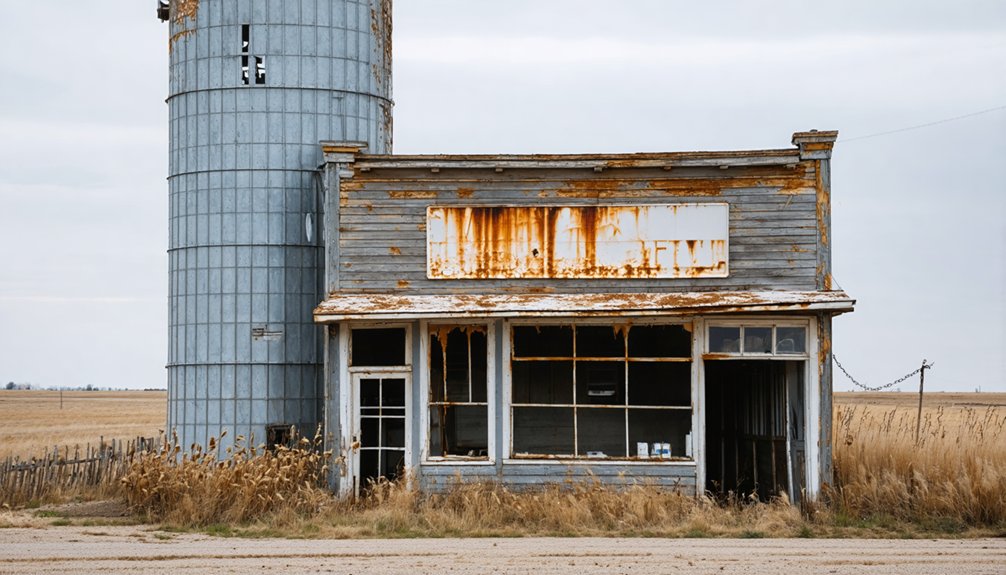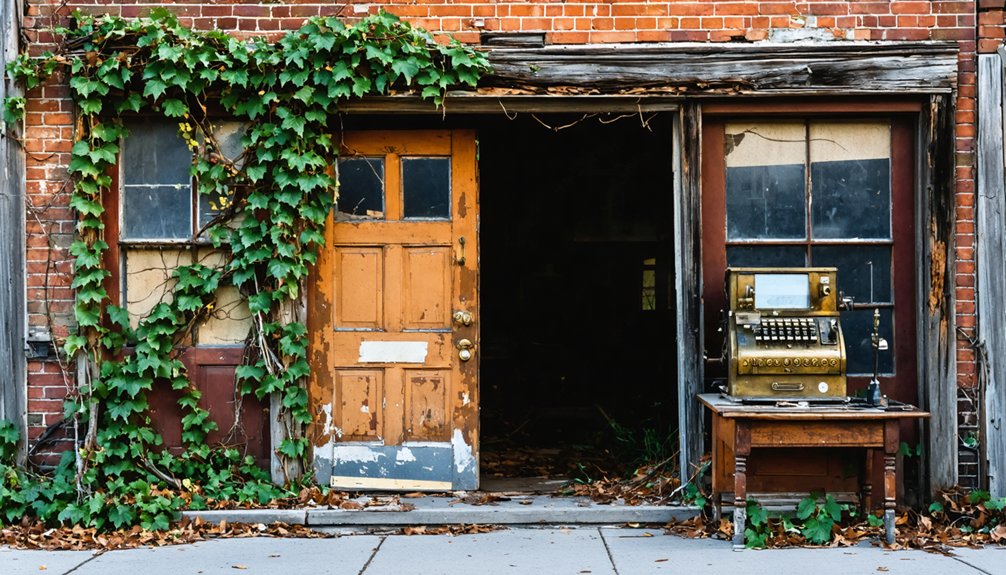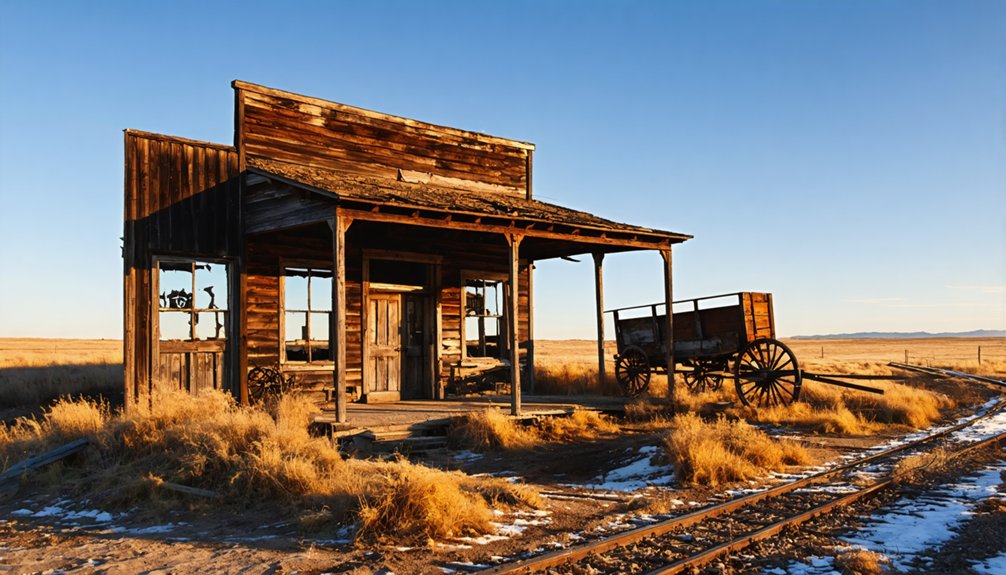
While the Midwest isn’t known for significant gold discoveries, you’ll find numerous ghost towns born from lead, zinc, and copper mining booms across Wisconsin, Michigan, and surrounding states. These abandoned settlements, like Wisconsin’s Mineral Point and Michigan’s Central Mine, preserve authentic structures where “badgers” once extracted valuable minerals. Historical societies now maintain these sites as tourism destinations with guided tours and exhibits. The fascinating stories behind these forgotten communities reveal America’s complex industrial heritage.
Key Takeaways
- The Midwest’s mining heritage is centered around lead mining in Wisconsin, which was the nation’s most important lead-producing region from 1830-1871.
- Ghost towns like Central Mine (copper), Freda, Empire, and Bete Grise emerged and declined following resource extraction cycles.
- Mining communities experienced dramatic population fluctuations tied to commodity price collapses and resource depletion.
- Preservation efforts include building stabilization, artifact documentation, and conservation to maintain authentic historical character.
- Former mining sites now offer tourism opportunities including restored buildings, interpretive exhibits, walking tours, and interactive mining experiences.
Wisconsin’s Hidden Mining Heritage: The Lead Region
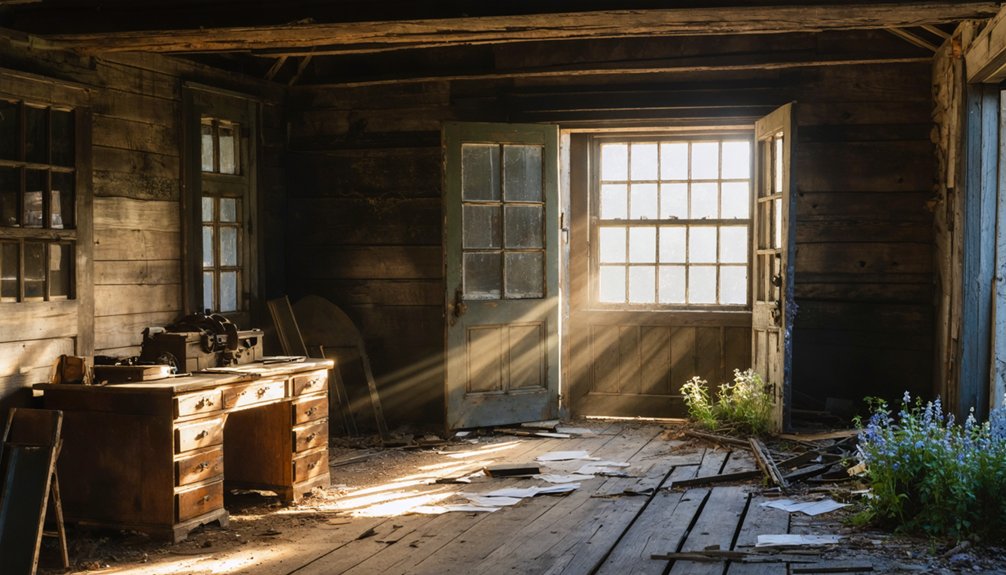
While many associate America’s mining history with the gold rushes of California and Colorado, Wisconsin’s lead mining region represents one of the nation’s earliest and most significant mineral extraction zones.
Dating back to the 1820s, this industry attracted thousands of settlers, primarily Cornish miners who established communities like Mineral Point around the rich deposits. The nickname “badgers” was given to early miners because they burrowed into hillsides to create simple shelters during the initial mining boom. The mining district became the most important lead-producing area in the United States from 1830 to 1871, shaping the economic and cultural landscape of the region.
Boom to Bust: Economic Forces Behind Midwest Ghost Towns
Throughout the Midwestern region, once-thriving mining communities fell victim to powerful economic forces that transformed bustling towns into abandoned landscapes.
These settlements experienced dramatic population fluctuations tied directly to resource extraction cycles, with census data revealing markedly higher variance compared to non-mining areas.
Resource-dependent towns experienced wild demographic swings, showing stark statistical deviation from their more stable neighboring communities.
You’ll find that commodity price collapses—particularly in silver and coal—triggered rapid economic instability across mining counties.
Towns like Gary, Indiana lost over 55% of their population as cheap imports decimated local industries. Communities with higher homeownership rates typically declined more slowly, their residents bound by investment and attachment to place.
Unlike western boomtowns, Midwestern mining settlements often developed substantial commercial and residential infrastructure, making their eventual abandonment all the more striking to today’s preservation historians. The high vacancy rates in these areas frequently correlate with economic decline, particularly in former manufacturing centers throughout the Rust Belt.
Preservation Efforts and Historical Significance

Despite facing decades of neglect and structural deterioration, Midwestern ghost towns have emerged as focal points for extensive preservation initiatives that balance historical authenticity with public accessibility.
You’ll find local historical societies working alongside government agencies to address preservation challenges while maintaining the integrity of these abandoned settlements. These collaborative efforts often include dedicated volunteers who donate time and skills to preservation projects.
The significance of these preservation efforts manifests in four distinct ways:
- Stabilization techniques prevent structural collapse, protecting buildings from harsh Midwestern weather patterns.
- Documentation of historical artifacts creates detailed records of community narratives.
- Conservation arrests decay processes while maintaining authentic character.
- Restoration work repurposes buildings for new cultural and economic functions.
Through these initiatives, ghost towns evolve from forgotten relics to crucial educational resources that connect you to the region’s industrial heritage and collective memory. Similar to Bodie, California, many Midwestern sites are maintained in a state of arrested decay to preserve their historical authenticity while allowing visitors to experience their haunting charm.
The ghostly legends of old west cemeteries add an eerie allure to these locations, drawing in history enthusiasts and paranormal investigators alike. Tales of restless spirits wandering through eternal rest bring a deeper understanding of the lives once lived in these towns, enriching the visitor’s experience. As night falls, guided tours often share these captivating stories, allowing guests to connect with the past in a profoundly personal way.
From Thriving Communities to Abandoned Settlements: Notable Midwestern Cases
The transformation from booming industrial centers to desolate ghost towns characterizes several notable Midwestern settlements whose rise and fall mirror the region’s economic evolution.
Central Mine exemplifies this pattern—prospering through copper extraction from 1854 until 1898, with population peaking at 1,300 before rapid abandonment following resource depletion.
Similar narratives unfolded across the region: Freda’s company town flourished until the Champion Mill’s 1967 closure, while Empire’s meteoric rise around iron mining ended just as swiftly. Bete Grise, whose name translates to “Grey Beast”, served as a crucial harbor before dwindling to just a handful of residents by 1940.
The familiar cycle of boom-bust economics swept through countless Midwestern towns, leaving only memories of industrial glory.
Perhaps most cautionary is Picher’s fate, where extensive lead and zinc extraction created catastrophic environmental impact. These abandoned settlements have become destinations for heritage tourism that educates visitors about America’s industrial past. The Picher contamination resulted in Superfund designation and eventual municipal dissolution by 2013.
These settlements now stand as historical artifacts—physical reminders of prosperity’s impermanence when tethered exclusively to extractive industries.
Tourism Opportunities and Visiting Historical Mining Sites Today
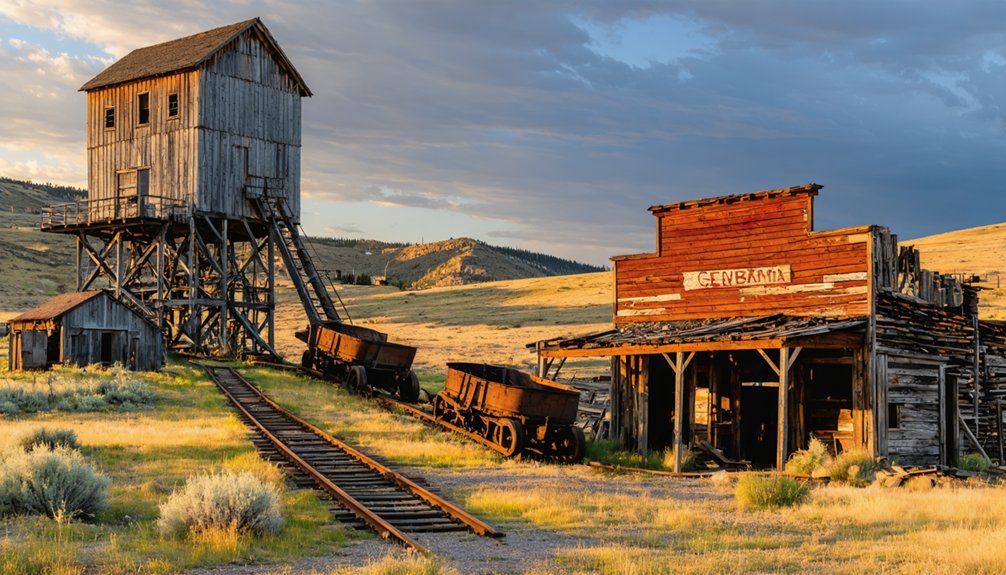
Midwestern ghost towns and abandoned mining sites have transformed from economic casualties into vibrant tourism destinations, offering visitors immersive experiences in America’s industrial past.
Central Mine exemplifies this renaissance, where you’ll find meticulously restored buildings and interpretive exhibits chronicling copper mining’s regional significance. These tourist attractions balance authenticity with accessibility, providing educational value through self-guided walking tours that reconstruct town layouts and daily life. Similarly, Vulture City offers exploration among over 16 original buildings from the 1800s.
Your visit to these preserved sites supports ongoing mining education through:
- Expert-led guided tours through authentic mine shafts and tunnels
- Hands-on participation in historical mining techniques like gold panning
- Engagement with Native American cultural exhibits highlighting indigenous connections
- Exploration of geological formations that once drove economic prosperity
The preservation of these sites guarantees future generations will understand the complex heritage of America’s industrial development while maintaining freedom to explore these tangible connections to our past. Visitors can learn about famous sites like the Techatticup Mine, the oldest and richest gold mine in certain regions of the United States.
Frequently Asked Questions
How Do Ghost Towns Affect Property Values in Neighboring Communities?
Like modern-day Atlantises, ghost towns radiate negative economic effects. You’ll observe your property market suffering from proximity to abandonment—values can plummet by double when vacant properties cluster within 500 feet of your home.
What Legal Procedures Govern Ownership of Abandoned Ghost Town Structures?
You’ll need to follow judicial processes that establish abandoned property status, including court petitions, public notices, and title searches to legally acquire ownership rights to these historical structures.
Are There Paranormal Investigation Opportunities in Midwest Ghost Towns?
Prominent paranormal possibilities await you across Midwest ghost towns. You’ll find structured paranormal tours at Villisca Axe Murder House and ghost hunting opportunities at historically significant sites like McInteer Villa and Squirrel Cage Jail.
How Did Immigrant Populations Influence Ghost Town Cultural Development?
You’ll find immigrant contributions shaped ghost towns profoundly through their cultural heritage, establishing distinct architectural styles, religious institutions, and communal practices that persisted even as these settlements declined into abandonment.
What Environmental Remediation Challenges Exist in Former Mining Communities?
In 40% of former mining communities, you’ll face acid mine drainage requiring costly remediation techniques. Your challenges include heavy metal contamination, inadequate funding for pollution risks, and regulatory gaps undermining restoration of ecological systems.
References
- https://pbswisconsin.org/news-item/southern-wisconsins-ghost-towns-leave-behind-vital-stories/
- https://www.geotab.com/ghost-towns/
- https://jrap.scholasticahq.com/api/v1/articles/9543-the-economics-of-ghost-towns.pdf
- https://www.loveexploring.com/gallerylist/188219/the-us-state-with-the-most-ghost-towns-revealed
- https://www.youtube.com/watch?v=lfj6aeZEVJY
- https://www.lovemoney.com/gallerylist/86648/americas-empty-ghost-towns-and-why-theyre-abandoned-today
- https://en.wikipedia.org/wiki/Lists_of_ghost_towns_in_the_United_States
- https://www.atlasobscura.com/lists/abandoned-places-midwest
- https://battlegroundhistory.com/american-midwest/
- https://www.wisconsinhistory.org/Records/Article/CS408