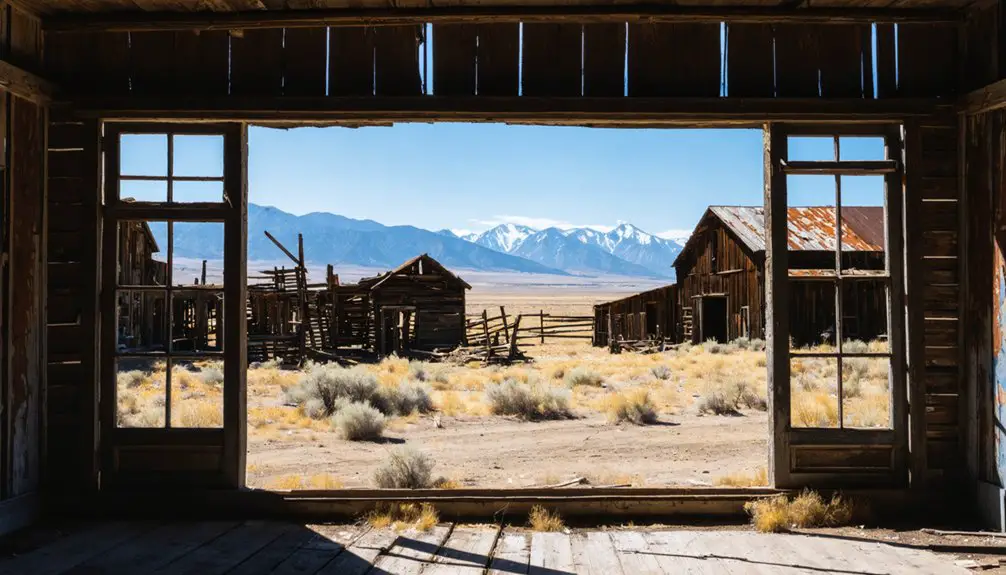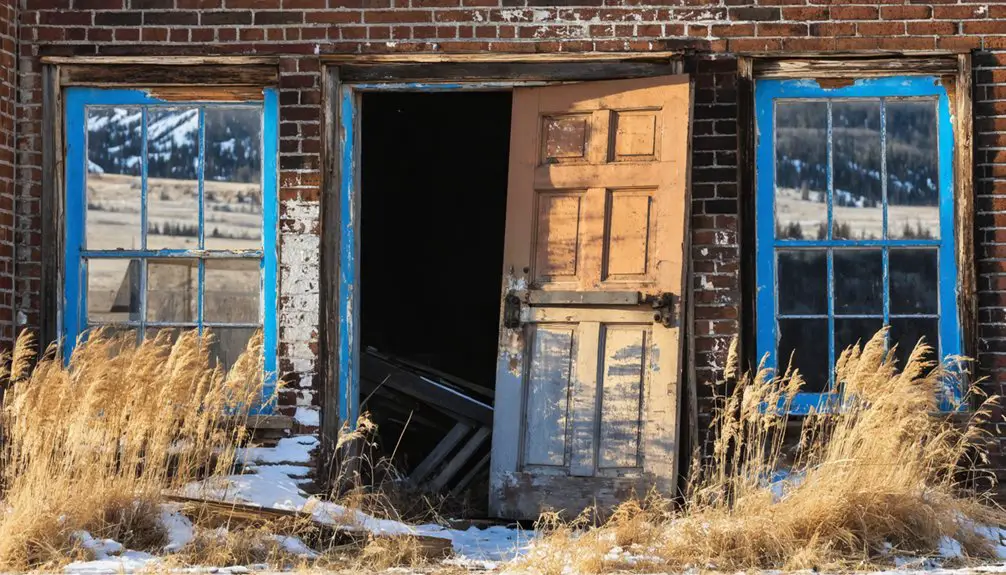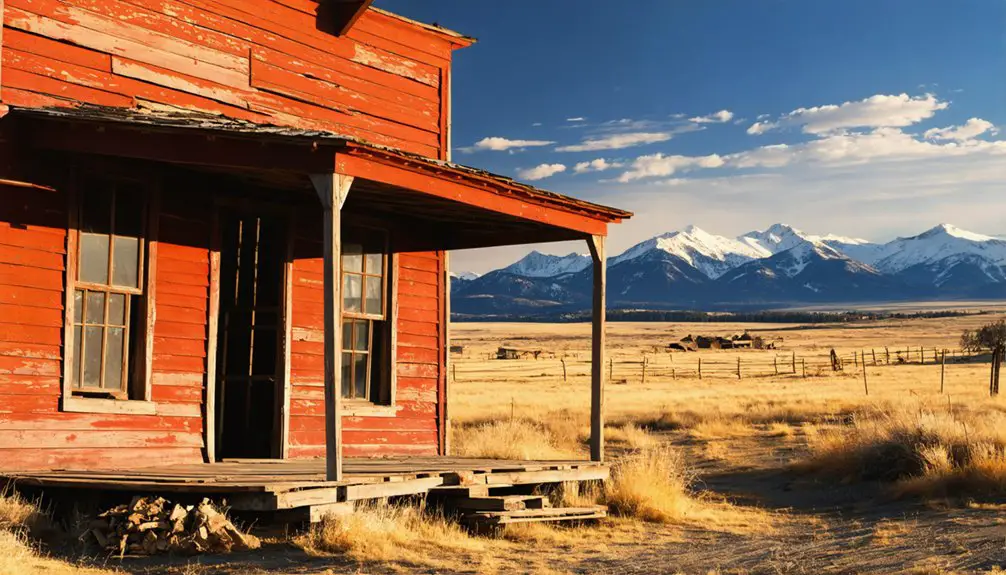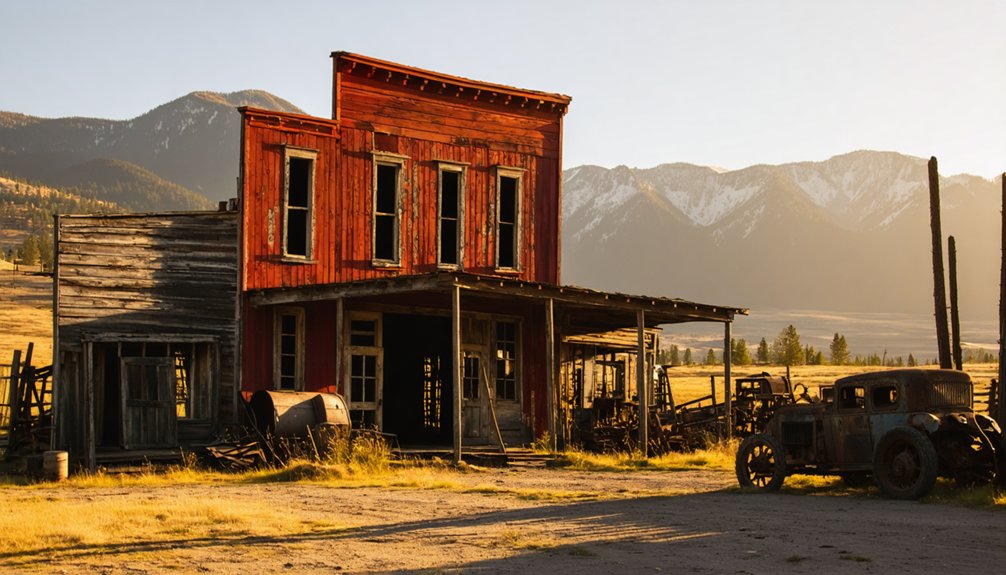
You’ll find Montana’s most authentic ghost towns within two hours of Missoula, where 1860s gold rush camps still preserve their original mining heritage. Garnet Ghost Town along Bear Creek maintains thirteen saloons and miner’s cabins in their exact locations, while Bannack State Park showcases Montana’s first territorial capital with 3,000 former residents. Nevada City’s restored buildings and Coloma’s mysterious Mammoth Mine reveal the territory’s $200,000 gold extraction legacy that shaped these weathered settlements into today’s historical treasures.
Key Takeaways
- Garnet Ghost Town lies along Bear Creek, featuring thirteen preserved saloons, hotels, and cabins from 1860s mining operations.
- Bannack State Park was Montana’s first boomtown in 1862, serving as the territorial capital with 3,000 original settlers.
- Coloma, the “Mystery Camp,” developed from the profitable Mammoth Mine claim in 1868 before declining by 1906.
- Nevada City along Alder Gulch offers over 90 restored historic buildings creating a living museum experience for visitors.
- Rimini prospered in the 1890s through silver and lead mining, connected to markets by the Northern Pacific Railway.
Garnet Ghost Town: Montana’s Best-Preserved Mining Camp
When you drive the winding gravel road toward Garnet, you’re retracing the footsteps of fortune seekers who discovered gold along Bear Creek in the early 1860s, transforming what began as scattered mining claims into Montana’s most intact ghost town.
You’ll find Garnet history preserved in every weathered board and rusted nail, where 1,000 residents once lived freely beyond civilization’s constraints.
The town’s mining techniques evolved from simple placer operations to sophisticated hard-rock extraction at twenty active mines.
From crude pan-and-shovel beginnings to complex underground operations, Garnet’s twenty mines showcased the evolution of Montana’s gold extraction methods.
Samuel Ritchey’s Nancy Hanks mine triggered the main boom after discovering rich veins.
You can explore thirteen saloons, hotels, and miner’s cabins still standing in their original locations. The community established a school early on, reflecting the stable family environment that distinguished Garnet from other mining camps dominated by single men.
Unlike other ghost towns, Garnet’s buildings weren’t moved or reconstructed—they’re exactly where miners hastily erected them on their claims, preserving an authentic Wild West experience. Over thirty structures remain standing today, constructed with original materials that have withstood more than a century of Montana’s harsh elements.
Bannack State Park and the Big Hole Valley Mining Legacy
Sixty-two years before Garnet’s miners struck gold, prospectors from Colorado made Montana’s first major discovery along Grasshopper Creek on July 28, 1862, establishing Bannack as the territory’s original boomtown.
You’ll find Bannack history reads like a frontier thriller—3,000 settlers arrived within months, creating Montana’s first territorial capital before Virginia City claimed that honor.
The mining techniques evolved from simple placer operations to sophisticated lode extraction. You can explore the intact Hendricks/Apex Mill, one of only two cyanide processing facilities open to Montana visitors.
Dakota, Cherokee, and Golden Leaf claims produced hundreds of thousands in gold during peak years.
Railroad bypasses and richer strikes elsewhere emptied Bannack by the 1960s. Bannack pioneered the first successful gold dredging operation in the United States beginning in 1895.
Today’s State Park preserves authentic structures including the Governor’s Mansion, letting you experience genuine ghost town atmosphere without commercialization. Grant funding supports ongoing preservation efforts like the recent mill roof reconstruction project.
Coloma and the Garnet Range Mining Circuit
The Garnet Range holds Montana’s most accessible ghost town concentration, where you’ll discover Coloma nestled in the remote northeast corner at McGinnis Creek’s headwaters.
Just beyond the ghost town, the rugged terrain reveals the remnants of abandoned mines near Helena Montana, offering a glimpse into the area’s rich mining history. Many of these sites, though forgotten, tell stories of the people who once sought their fortunes in the untamed wilderness. As you explore the Garnet Range, be sure to take a moment to appreciate the eerie beauty of these desolate landscapes.
Just a short drive from the Garnet Range, you’ll find several ghost towns around Kalispell Montana, each with its unique history and charm. These abandoned settlements are perfect for those seeking adventure and a glimpse into life during Montana’s boom years. As you wander through the remnants of these once-thriving communities, you may feel the echoes of the past whispering tales of resilience and hope amidst the stillness.
This “Mystery Camp” earned its nickname from scarce records, with historians dating structures using newspaper insulation found in walls. Coloma history began with J.E. Van Gundy’s 1868 Mammoth claim, though real development waited until 1893.
By 1898, fifty-six men worked the Mammoth Mine while 150 people called this precipitous terrain home. The Bear Mountain News documented the mining developments and community growth throughout the Garnet Range.
Garnet mining operations produced substantial returns—the Mammoth Mine alone yielded $200,000 in gold, while the Pearl Mine contributed $20,000. The Mammoth Mine featured a 10-stamp mill with enough ore reserves to sustain two years of continuous operation.
You’ll find remnants of the Comet, Clemantha, and Valley mines scattered throughout. The camp’s isolation, requiring freight loads under few hundred pounds, ultimately sealed its fate by 1906.
Nevada City, Rimini, and the Historic Railroad Corridors
While Garnet Range camps operated in relative isolation, Nevada City’s position along Alder Gulch placed it at the heart of Montana’s most dramatic gold rush story.
You’ll witness where George Ives faced frontier justice in 1863, sparking Montana’s vigilante movement. The Nevada City restoration by Charles and Sue Bovey assembled over 90 historic buildings, creating an authentic living museum you can explore today.
Head southeast to Rimini, where silver and lead mining dominated the 1890s landscape near Helena.
Your Rimini exploration reveals remnants of a thousand-resident community that thrived on Confederate Gulch’s high-grade ore. The Northern Pacific Railway’s 1883 arrival transformed these camps, connecting remote mining operations to national markets through strategic corridors like the Mullan Tunnel, whose abandoned grades now offer hiking trails. The Chinese labor presence was significant in supporting the local economy throughout these mining operations. The dredging operations that followed the initial gold rush processed over 37 million cubic yards of ground through Alder Gulch from 1899 to 1923.
Safety Tips and Planning Your Ghost Town Adventure
Four essential safety principles will transform your ghost town exploration from risky adventure into memorable discovery.
First, you’ll need proper adventure planning—check conditions before departing, pack bear spray, first aid supplies, and extra water. Weather changes rapidly in Montana’s mountains, so bring layered clothing and plan escape routes.
Second, respect wildlife by maintaining distance from bears and mountain lions while making noise on trails. Consider visiting during off-peak times to avoid crowds and reduce your impact on these fragile historic sites.
Third, understand access limitations—Garnet’s southern mining road prohibits RVs due to narrow, rocky conditions, while the northern Route 200 entrance offers smoother travel. Remember that these ghost towns operate under a pack-in/pack-out policy due to limited facilities at remote locations.
Finally, embrace Leave No Trace ethics by packing out garbage and staying on established trails.
These safety precautions guarantee you’ll preserve these historic sites while experiencing authentic freedom in Montana’s backcountry wilderness.
Frequently Asked Questions
Are Pets Allowed at Ghost Town Sites Around Missoula?
Yes, you’ll find pet policies generally allow leashed dogs at most ghost town sites around Missoula. However, prioritize pet safety by checking specific land management rules and preparing for structural hazards beforehand.
What Cell Phone Coverage Can Visitors Expect at These Remote Locations?
You’ll find zero cell service at Garnet and similar ghost towns. Network reliability doesn’t exist in these mountain locations. I’ve researched coverage maps extensively—all major carriers report no signal in these remote, elevated areas.
Are There Entrance Fees for Visiting These Historic Mining Sites?
Yes, you’ll pay entrance fees at most historic mining sites near Missoula. Garnet charges $10 per person (16+), while Granite costs $8 per vehicle. Federal passes work at some locations.
Can Visitors Camp Overnight Near the Ghost Town Locations?
You can camp overnight near most ghost towns through dispersed camping on adjacent BLM/Forest Service lands, though camping regulations vary by site and ghost town amenities remain limited to basic facilities.
What Restroom Facilities Are Available at These Remote Historic Sites?
You’ll find minimal restroom accessibility at these sites—Garnet offers basic pit toilets at parking areas, while Bannack provides maintained facilities with ADA access. Smaller ghost towns lack any facility maintenance entirely.
References
- https://bluemountainbb.com/blog/ghost-towns-montana/
- https://destinationmissoula.org/ghost-towns
- https://glaciermt.com/ghost-towns
- https://www.geotab.com/ghost-towns/
- https://www.tripadvisor.com/Attraction_Review-g45277-d7208472-Reviews-Garnet_Ghost_Town-Missoula_Montana.html
- https://garnetghosttown.org
- https://visitmt.com/things-to-do/ghost-towns
- https://fwp.mt.gov/stateparks/granite-ghost-town
- https://southwestmt.com/specialfeatures/this-is-montana/special-places/garnet-ghost-town/
- https://takingthekids.com/why-this-montana-ghost-town-is-slowly-becoming-a-historic-gem/